Guide Type Selection on an Alaska Draw Application
Navigating the Alaska big game draw application can feel like trying to find your way through a willow thicket in a whiteout, especially when you hit that section asking about guide types. It's not just a simple checkbox; your choice here has real implications for your eligibility, draw odds, and the entire structure of your hunt. This guide is here to untangle that knot, helping you understand each option so you can apply with confidence and clarity.
Understanding Alaska's Guide Requirements for Nonresidents
If you're coming to Alaska from out of state with dreams of big game, there are some fundamental rules about guides you simply must know. These aren't suggestions; they're legal requirements designed to manage resources, ensure hunter safety in remote terrain, and frankly, help sustain the guiding industry that plays a huge role in Alaska's hunting landscape.
The Mandate for Certain Species
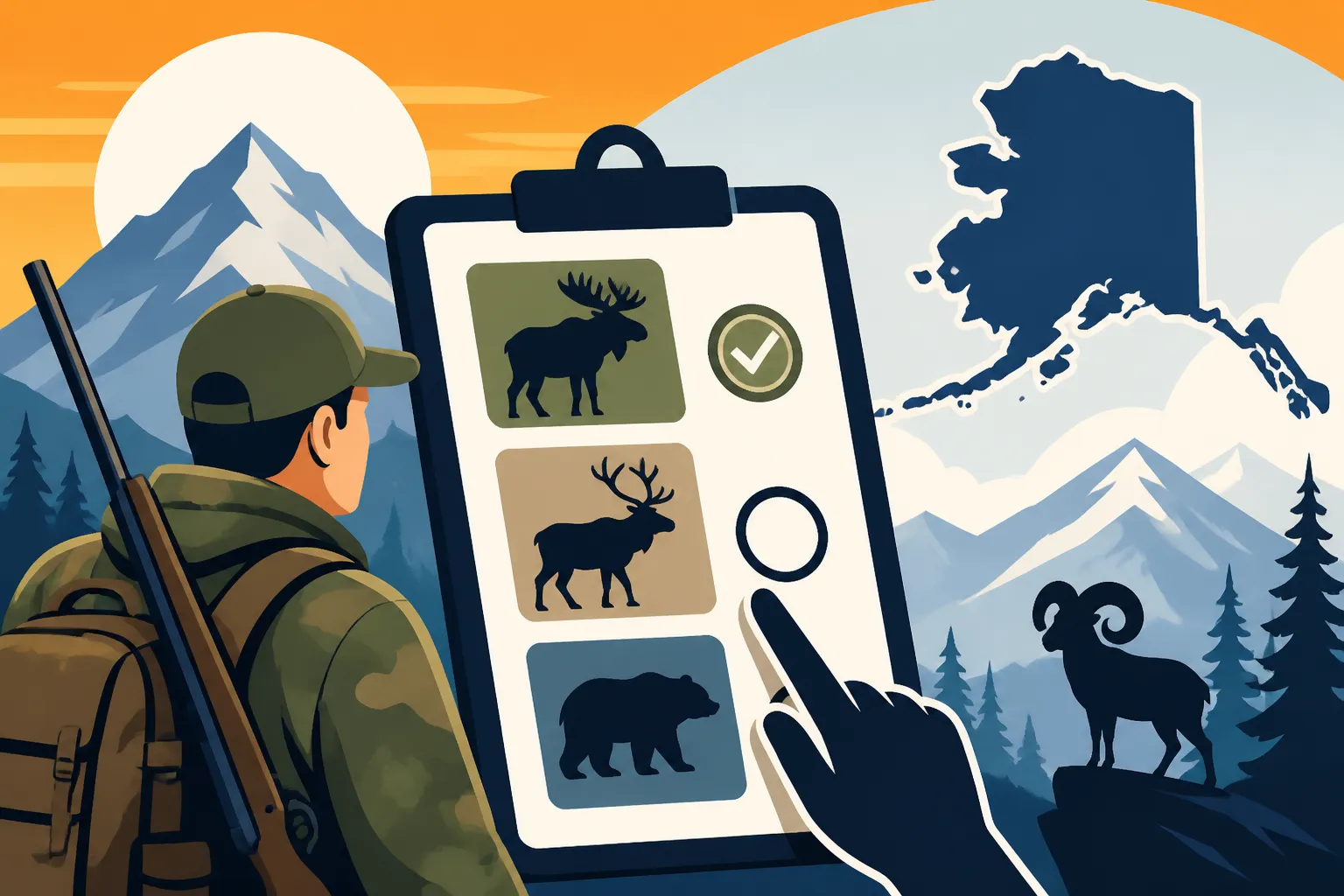
Let's cut right to it: for nonresidents, certain iconic Alaska big game species legally require you to be accompanied by a registered Alaska guide or a close relative who is an Alaska resident. These species are Dall sheep, brown bear (which includes coastal brown bears and interior grizzlies alike), mountain goat, muskox, and bison. You can't just fly into the Alaska Range and start glassing for rams on your own if you're a nonresident. It's a hard and fast rule.
Imagine a hunter from Wisconsin who has spent years dreaming of a Dall sheep hunt, pouring over maps of the Brooks Range. He might think he's skilled enough for a backpack hunt, but when he dives into the regulations, he quickly learns that unless he's got a family member living in Alaska who qualifies, hiring a registered guide isn't just an option—it's the law. This guide requirement ensures that hunters venturing into truly wild, often dangerous country have experienced local expertise with them. It’s about more than just finding the animal; it’s about navigating the terrain, understanding the local game behavior, and ensuring proper trophy care and meat salvage in challenging conditions. You can read more about Alaska's Brown Bear, Sheep and Goat Guide Requirement to understand the nuances.
"Second-Degree-Kinship" as an Alternative
Now, there's a specific exemption to this guide rule that often sparks a lot of interest: the "second-degree-kinship" provision. If you, as a nonresident, are hunting one of the aforementioned guide-required species, you can be accompanied by an Alaska resident who is related to you within the second degree of kindred. This means a parent, grandparent, child, grandchild, sibling, uncle, aunt, or first cousin. Your Alaskan relative essentially steps into the role of a guide, though they can't charge you for their services or profit from the hunt.
Let's consider a scenario: perhaps you're a nonresident with an uncle who lives in Fairbanks and has been hunting moose and caribou for decades. If you both decide to apply for a brown bear draw permit near Delta Junction, your uncle, as an Alaskan resident within the second degree of kindred, could legally accompany you on that hunt. This option allows families to share hunting experiences in Alaska without the substantial cost of a professional guide, but it comes with its own responsibilities. Your relative needs to understand the regulations thoroughly and be prepared for the demands of the hunt. They essentially assume the same legal responsibilities a professional guide would have regarding the hunt itself. It's a fantastic opportunity for many, but it's not to be taken lightly.
Navigating the Guide Section on Your Draw Application
When you're filling out that Alaska Department of Fish and Game (ADF&G) drawing permit application, you'll eventually come to a section where you have to declare your guiding status. This isn't just a formality; it sorts you into different pools for the draw, which can directly affect your chances of success. Understanding these distinctions is critical before you submit your application.
"Guided," "Unguided," and "Resident-Guided" Choices
The application typically presents you with a few choices regarding your guiding status. Let's break down what each means:
- Guided: This option is for nonresidents who plan to hire an Alaska Registered Guide-Outfitter. If you're applying for a draw hunt for species like brown bear, Dall sheep, or mountain goat, and you don't have a qualifying Alaskan relative, this is the box you must check. You're committing to securing a licensed professional to accompany you. For species where a guide isn't legally required for nonresidents (like moose or caribou), you can still choose "guided" if you prefer the full-service experience and expertise a guide provides. These guides are professionals, often booked years in advance, and selecting this option implies you're serious about engaging one. You can explore options by contacting a professional from resources like BookYourHunt.
- Unguided: This selection is primarily for Alaska residents hunting any species, or for nonresidents hunting species that do not legally require a guide. Nonresidents can hunt species like moose, caribou, black bear, and Sitka blacktail deer without a guide. If you're a nonresident planning a self-guided float hunt for moose, for instance, this is the category you'd choose. This implies you're responsible for all aspects of the hunt, from logistics and camp setup to game recovery and meat care. You might use an air taxi service for transportation, but they are legally distinct from guides. Understanding Alaska Transporters and What They Legally Provide is essential here.
- Resident-Guided: This option is specifically for nonresidents utilizing the "second-degree-kinship" exemption we just discussed. If your Alaskan relative is going to accompany you on a guide-required hunt, you would select this. This tells ADF&G that while you're a nonresident, you will still meet the "guide" requirement through family assistance rather than a commercial guide.
Here's a quick comparison to help visualize these options:
| Guide Type Selection | Hunter Type | Species Covered (Nonresident) | Legal Requirement for Nonresident | Key Implication |
|---|---|---|---|---|
| Guided | Nonresident | Brown Bear, Dall Sheep, Mountain Goat, Muskox, Bison (Mandatory) | Yes (for listed species) | Must hire a licensed Alaska Registered Guide-Outfitter. |
| Nonresident | Moose, Caribou, Black Bear, Deer, etc. (Optional) | No | Can choose to hire a guide for these species if desired. | |
| Resident | All | No | Residents do not typically select "Guided" unless part of a specific program, but usually hunt unguided. | |
| Unguided | Nonresident | Moose, Caribou, Black Bear, Deer, etc. (Cannot be used for mandatory species) | No | Must hunt without a professional guide or qualifying relative. Responsible for all aspects. |
| Resident | All | No | Standard choice for most resident hunters. | |
| Resident-Guided | Nonresident | Brown Bear, Dall Sheep, Mountain Goat, Muskox, Bison (Alternative) | Yes (meets requirement) | Must be accompanied by an Alaska resident relative within the second degree of kindred. |
The Impact of Your Selection on Draw Odds
This is where things get a bit more complex, and often, a little frustrating for hunters. Your choice of "Guided," "Unguided," or "Resident-Guided" can absolutely affect your draw odds because ADF&G often allocates a certain number of permits specifically to each category for a given hunt unit and species.
For some highly sought-after hunts, there might be separate permit quotas for guided nonresidents versus resident hunters or nonresident "resident-guided" hunters. This means you're not always competing against everyone who applies for that specific hunt number. For example, a particular brown bear hunt might have 10 permits, but 5 are set aside for guided nonresidents and 5 for residents (or nonresident resident-guided). This can sometimes create situations where the odds are better in one category than another, even for the same hunt area.
It's vital to do your homework. ADF&G publishes draw odds from previous years, and studying these can give you a clearer picture of how competitive each category is for the specific hunt you're interested in. Websites like GoHunt often compile and analyze this data, making it easier to parse. You might find that for a certain moose hunt, the unguided nonresident odds are very slim, but the guided nonresident odds are slightly better, or vice-versa. It’s not a magic bullet, but it’s a factor you need to weigh in your application strategy. Remember, while a "guided" selection might sometimes offer better odds for a nonresident, the cost of a guide is a significant factor.
When to Secure a Guide Versus Applying Unguided
One of the biggest head-scratchers for aspiring Alaska hunters is the timing of guide engagement. Do you find a guide first, or do you apply for the draw and then look for a guide if you're successful? It's a classic chicken-or-egg scenario, and the answer largely depends on the species and the demand.
The Chicken-or-Egg Dilemma: Guide First, Then Apply?
For the highly coveted, guide-required species like Dall sheep or brown bear, the answer is almost always: contact guides before you apply to the draw. Alaska's top guides, especially for sheep and brown bear, often book out years in advance. These aren't hunts you can typically pull together last-minute after drawing a permit.
What often happens is that a guide will work with a client on a conditional basis. You might sign a contract and pay a deposit, with the understanding that the hunt dates are contingent upon you drawing the permit. If you don't draw, the guide may roll your deposit over to the next year's application, or you might have a different arrangement outlined in your contract. This ensures that if you do draw that golden ticket, you already have a reputable guide lined up. It also gives the guide a stable client base. Many guides need to plan their logistics, scout areas, and allocate resources far in advance, so having committed clients, even conditionally, is essential. When you're looking at Booking an Alaska Sheep Hunt With a Guide, you'll quickly realize how far out these schedules extend.
Planning for Unguided Opportunities
For species like moose, caribou, black bear, or Sitka blacktail deer, where a guide isn't mandatory for nonresidents, many hunters choose the unguided route. This offers a more independent, often more budget-friendly experience, but it also places the full burden of planning and execution on your shoulders.
If you're going unguided, you'll need to meticulously plan everything: transportation to and from the field (which often involves an air taxi for a remote drop camp), all your gear, food, navigation, communication, game recovery, and meat care. This requires a significant amount of research, experience, and self-reliance. While you might not need a guide, you will almost certainly need a reputable air taxi service to get you into and out of the backcountry. These transporters specialize in flying hunters to remote locations, often gravel bars or float plane lakes, and picking them up at a predetermined date. They are critical to many unguided Alaska hunts. You can use services like BookYourHunt or GoHunt to research potential air taxis and logistics for your unguided adventure. Even when planning to go unguided, checking out Fly-In Hunting: Working With an Alaska Transporter Pilot can provide invaluable insights into the logistical side of things.
Avoiding Common Pitfalls and Ensuring Compliance
The complexities of Alaska hunting regulations, especially concerning guides and access, can easily lead to misunderstandings that could ruin a hunt or, worse, lead to legal trouble. It's crucial to be meticulous in your planning and adhere strictly to the rules.
Misunderstanding "Transporter" Versus "Guide"
This is one of the most common and critical areas of confusion for nonresident hunters. An Alaska-licensed air taxi or transporter can fly you into a remote area, drop off your gear, and pick you up later. They are invaluable for reaching roadless country. However, they cannot legally act as a guide. This means a transporter cannot:
- Provide advice on where to hunt specific animals (beyond general areas).
- Accompany you in the field.
- Help you track or recover game.
- Assist with field dressing or packing meat.
- Provide any services that would typically fall under the definition of guiding.
The line can seem blurry, but it's a hard line in Alaska. If you're a nonresident hunting a species that requires a guide, and you show up with just a transporter, you are in violation of state law. I've heard too many stories of hunters who thought they were getting a "deal" with an air taxi operator who promised a little "extra help," only to find themselves facing fines or confiscation. Always understand the legal boundaries of what Alaska Transporters and What They Legally Provide can and cannot do for you. When you apply for a permit, checking the "unguided" box means you are truly on your own once the plane drops you off.
Verifying Guide Credentials
If you're going the guided route, whether by choice or by law, the most important step after selecting "Guided" on your application is to ensure the guide you hire is legitimate and reputable. Alaska has specific licensing requirements for guides, including Assistant Guides, Registered Guides, and Master Guides. Anyone offering guiding services must be licensed by the State of Alaska.
Never, ever book a hunt with someone without verifying their credentials. The Alaska Board of Game and ADF&G maintain public records, and you can usually look up a guide's license status online. It's also smart to ask for references from past clients and to thoroughly read their hunt contract. You should be asking questions like: How long have they been guiding this specific species in this unit? What is their safety record? What are their success rates for clients, and how do they define "success"? Are their concession permits for the areas they advertise up to date? These are all critical questions. There's a lot more detail on Alaska Guide Complaints and How to Check a Licence which is a must-read before committing your funds and your precious hunt time. Don't be shy about doing your due diligence; it could save you a world of trouble and disappointment.
Remember that selecting the right guide type on your Alaska draw application is more than a formality—it’s a foundational decision that impacts your entire hunting experience. Take the time to understand the requirements, weigh your options carefully, and always prioritize compliance with Alaska’s robust hunting regulations.
Disclaimer
This article is for general informational purposes only and does not constitute professional advice. Laws, prices and regulations vary by location and change over time. Consult a qualified professional for guidance on your specific situation.