Boot Requirements for Coastal Alaska Hunts
One of the most common frustrations for hunters in Alaska's coastal regions is the relentless battle against wet feet. You spend good money on gear, meticulously plan your trip, only to have your morale – and potentially your hunt – utterly destroyed by soggy socks, cold toes, and debilitating blisters. It's more than just discomfort; it can be a real safety hazard in a place where hypothermia is a genuine concern. This comprehensive guide is here to walk you through exactly what kind of boots you need for coastal Alaska hunts, detailing the features that genuinely matter when the landscape is constantly trying to soak you to the bone.
The Unique Challenges of Coastal Alaska Terrain and Weather
Hunting Alaska's coastlines is an experience unlike any other, but it comes with a very specific set of environmental demands. The sheer amount of moisture, the diverse and often treacherous terrain, and the way temperatures interact with constant dampness all conspire against your feet. Understanding these core challenges is the first step in choosing the right footwear, because what works in the dry, rocky mountains of the Interior simply won't cut it when you're wading through muskeg or scrambling over barnacle-covered rocks at low tide.
Constant Moisture and Rainfall
If you're heading to places like Southeast Alaska, Kodiak Island, or even the coastal fringes of the Alaska Peninsula, you need to accept that you're going to get wet. It's not a matter of if, but when and how much. These regions are famous for their temperate rainforests, which means frequent, often torrential, rainfall. But it's not just the rain falling from the sky. You're constantly walking through saturated vegetation, crossing countless creeks, and potentially dealing with tidal zones if you're Boat-Based Deer Hunting on Alaska's Island Coastlines. Every step is a potential ingress point for water, and if your boots aren't up to the task, your feet will pay the price.
Imagine hiking through dense alder thickets that shed water like a fire hose, or navigating boggy flats where every step sinks into a saturated sponge of moss and decaying matter. Even on clear days, the ground can remain perpetually damp for weeks on end. This constant exposure to moisture doesn't just make you uncomfortable; it softens your skin, making it far more susceptible to blisters and fungal infections, which can quickly put an end to your hunt. You need a boot that acts like a fortress against this relentless assault.
Varied Terrain: Tundra, Muskeg, and Rocky Shores
The ground beneath your feet in coastal Alaska is a constantly changing, often unforgiving, landscape. You might start your day on a gravel beach, transition to a dense, wet forest floor, then climb through slippery alpine tundra, only to encounter vast expanses of muskeg in the lowlands. Each type of terrain presents its own unique challenges for footwear, and a single boot needs to be versatile enough to handle them all without failing.
Muskeg, in particular, is a hunter's bane. It's a type of bog, often covered in sphagnum moss and low-lying vegetation, that can be anywhere from ankle-deep to waist-deep mud. It literally tries to suck your boots right off your feet with every step. Then you have the rocky coastlines, which, when wet, become incredibly slick. Think moss-covered boulders, slimy seaweed, and barnacle-encrusted rocks—all ready to send you sprawling if your traction isn't impeccable. Even the seemingly benign alpine tundra can be a treacherous mix of slippery grasses, hidden rocks, and soft, uneven ground that demands superior ankle support, especially if you're Hunting Sitka Blacktail Deer in the Alpine Before Snow and packing out game.
Temperature Swings and the Cold Soak Effect
Coastal Alaska's weather can be notoriously fickle. You might start your day in a light drizzle with moderate temperatures, only for a cold front to roll in, dropping the mercury significantly. When your feet are already soaking wet, even a relatively mild temperature drop can lead to the dreaded "cold soak" effect. This is where your body rapidly loses heat from your extremities due to constant moisture and lack of insulation, even if the air temperature isn't freezing.
The danger here is real: wet feet can lead to hypothermia much faster than dry ones, making warmth and safety paramount. Even if it doesn't get to that extreme, constantly cold, wet feet sap your energy, reduce your focus, and make every step a miserable chore. This isn't just about comfort; it’s about endurance, decision-making, and overall safety in a remote environment. You need boots that not only keep water out but can also maintain some thermal integrity even when damp, working in conjunction with high-quality socks to manage moisture.
Key Boot Features for Coastal Alaska Hunting Success
When you're facing down the unique gauntlet of coastal Alaska's environment, your boots aren't just foot coverings; they're a critical piece of survival gear. Every feature, from the waterproofing membrane to the sole's lug pattern, plays a vital role in keeping you comfortable, safe, and effective in the field. Skimping on these features is a recipe for a miserable, potentially dangerous, hunt.
Waterproofing is Non-Negotiable
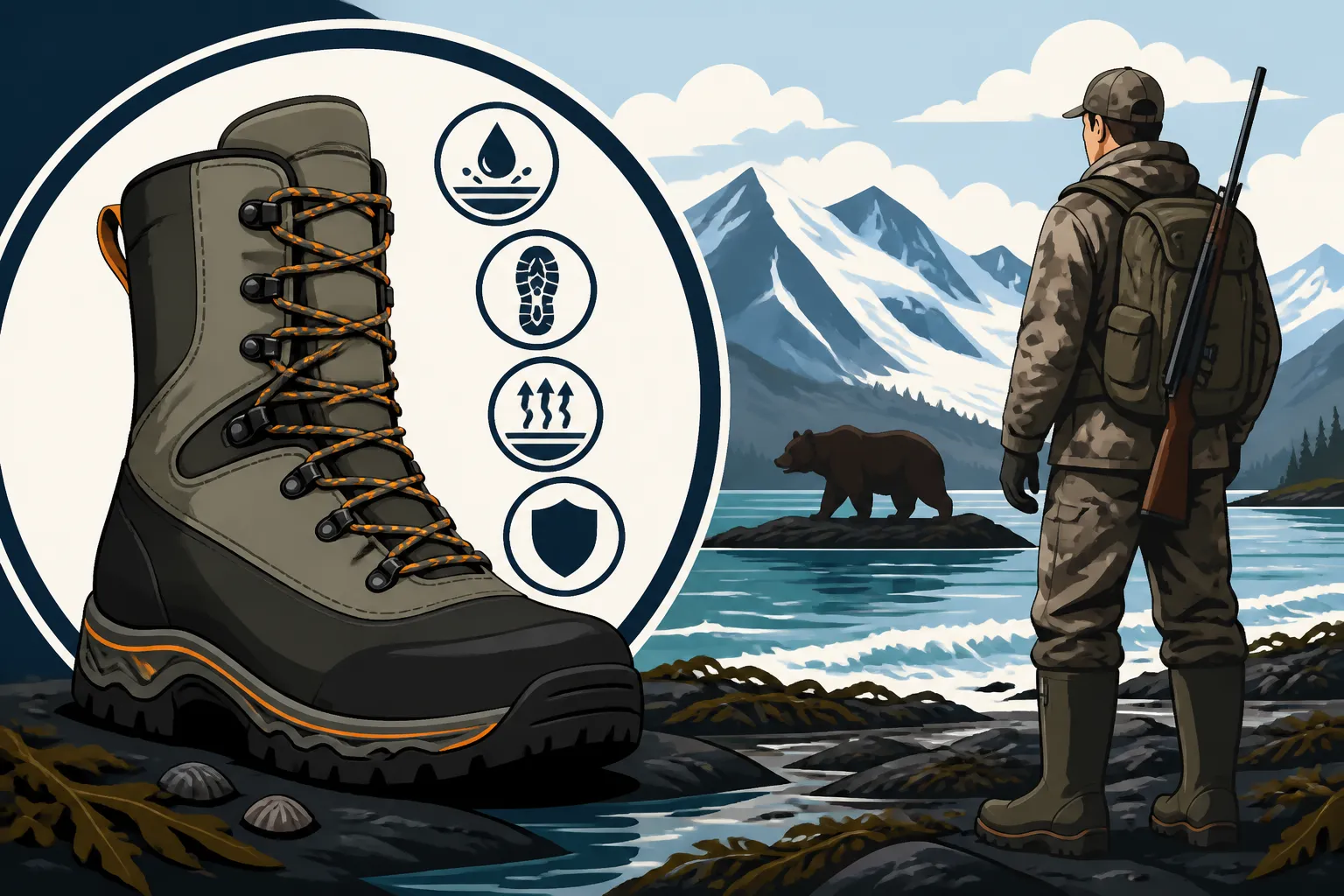
Let's be absolutely clear: if your boots aren't genuinely waterproof, they are utterly useless for coastal Alaska hunting. This isn't about "water-resistant" or "weatherproof" – it's about a complete barrier. Look for boots that boast a high-quality, proven waterproof-breathable membrane like GORE-TEX, eVent, or a similar proprietary technology. This membrane is the frontline defense, designed to keep external water out while still allowing some internal moisture (sweat) to escape. But the membrane alone isn't enough; the entire construction of the boot needs to support this.
Consider the height of the boot. For coastal Alaska, anything less than 10 inches is usually asking for trouble. Many seasoned hunters prefer 12-inch or even taller boots, especially if they anticipate deep muskeg or numerous creek crossings. This extra height provides a crucial margin of error when you inevitably step into something deeper than expected. The tongue of the boot also needs to be fully gusseted to prevent water entry through the lacing system. And remember, the best waterproof boot in the world is only as good as the gaiters you pair it with, which will prevent rain and splashes from running down your leg and into the top of your boot.
Traction and Sole Design for Slippery Surfaces
The surfaces you'll encounter in coastal Alaska are often slick, from wet rocks and mossy logs to greasy mud and saturated vegetation. Excellent traction isn't just a convenience; it's a safety feature that prevents falls, twisted ankles, and potentially disastrous injuries far from any medical help. Look for boot soles with aggressive, multi-directional lug patterns. These deep, widely spaced lugs are designed to bite into soft earth, mud, and uneven terrain, providing stability where other soles would just slide.
Furthermore, consider the rubber compound used in the sole. Softer rubber compounds tend to offer better grip on wet, slick surfaces like rocks and wood, though they may wear faster on abrasive terrain. Many modern boot manufacturers use specialized rubber blends designed for maximum grip in challenging conditions. The sole should also be relatively stiff to prevent punctures from sharp rocks or sticks, and to offer stability when you're traversing sidehills or climbing over obstacles. A self-cleaning lug design, where mud and debris don't get permanently trapped, is also a huge plus, ensuring consistent traction throughout your hunt. This is especially true if you are doing something like Packing a Deer Off a Beach at Low Tide where you may be negotiating varied, slippery ground with a heavy load.
Support and Stability for Uneven Ground
Carrying a heavy pack, whether it’s for a multi-day spike camp or a meat load after a successful harvest, demands exceptional ankle support and stability from your footwear. Coastal Alaska's terrain is rarely flat and predictable. You'll be navigating steep, broken ground, sinking into muskeg, stepping over downed timber, and climbing uneven slopes. Without proper support, your ankles are constantly at risk of rolling or twisting, which can quickly turn a dream hunt into a nightmare.
Look for boots with a stiff shank or midsole. This provides torsional rigidity, meaning the boot resists twisting, offering crucial support to your arch and ankle. A well-designed lacing system that allows you to cinch down the boot tightly around your ankle without creating pressure points is also vital. High-cut designs naturally offer more ankle support, which is why they're so favored for backpacking and hunting in rugged country. When you're carrying hundreds of pounds of moose or sheep meat off a mountain, that stability translates directly to reduced fatigue and a much lower risk of injury.
Durability to Withstand Harsh Conditions
Alaska is not a place for flimsy gear, and your boots are no exception. The relentless moisture, abrasive rocks, dense vegetation, and constant flexing will quickly destroy boots that aren't built to last. Investing in durable boots means they won't fall apart halfway through your hunt, leaving you with soaked, exposed feet and potentially an aborted trip. Look for boots constructed from robust materials like full-grain leather, heavy-duty synthetic fabrics (e.g., high-denier nylon), or a combination of both.
Key areas to scrutinize for durability include reinforced toe caps and heel counters, which protect against impacts and abrasion. A full-wrap rand—a protective rubber strip that goes around the perimeter of the boot where the upper meets the sole—is excellent for fending off cuts and scrapes from rocks and brush. The stitching should be heavy-duty and preferably double-stitched in high-stress areas. Lacing hardware should be made of durable metal, not cheap plastic that can snap under tension or in cold weather. Remember, these boots are an investment, and cheaping out on quality will almost certainly cost you more in the long run through premature failure and potential discomfort. Many hunters use sites like BookYourHunt or GoHunt to research gear recommendations from experienced outfitters, and durability is always a top concern for Alaska.
Types of Boots Best Suited for Coastal Alaska
Navigating the options for hunting boots can be overwhelming, but for coastal Alaska, the field narrows significantly based on the non-negotiable requirements of waterproofing, traction, and support. There isn't a single "perfect" boot, as different styles excel in different aspects, but understanding their strengths and weaknesses will help you make an informed choice for your specific hunt.
Traditional Leather Hunting Boots with Modern Waterproofing
These are the workhorses for many serious hunters. Modern leather hunting boots combine the time-tested durability and support of full-grain leather with contemporary waterproofing membranes. Think of a classic mountaineering or backpacking boot, but often designed with a slightly stiffer sole and more aggressive tread for hunting.
The primary advantage of high-quality leather boots is their exceptional durability and the way they mold to your feet over time, offering unparalleled comfort once broken in. The leather, especially if it's full-grain, offers excellent abrasion resistance and, when properly cared for, can last for many seasons. Paired with a GORE-TEX lining, these boots can be incredibly effective at keeping water out while still allowing your feet to breathe, reducing sweat buildup that can lead to cold feet. However, they tend to be heavier than synthetic options and require a significant break-in period. You absolutely do not want to take brand new, stiff leather boots on a remote Alaska hunt; blisters are a guaranteed outcome. They also require more maintenance, needing regular cleaning, conditioning, and waterproofing treatments to keep the leather supple and functional. This is a solid choice for a varied hunt with significant uphill travel.
Rubber Bottom/Leather Top Hybrid Boots
These boots attempt to offer the best of both worlds: the impenetrable waterproofing of rubber where it matters most (around your foot and ankle) and the comfort and support of a leather or synthetic upper. Brands like Kenetrek and Schnee's are well-known for their hybrid designs. The lower portion of the boot is typically a molded rubber, often extending 6-8 inches up from the sole, ensuring that your foot is completely encapsulated in a waterproof barrier. Above that, the upper transitions to leather or a rugged synthetic material.
The main advantage here is the near-absolute waterproofness of the lower section, making them ideal for wading through shallow streams, traversing perpetually wet muskeg, or slogging through muddy tidal flats without worrying about the stitching or seams failing under water pressure. They often offer better breathability than full rubber boots due to the upper material, and generally provide more ankle support and a more secure fit than many traditional rubber boots. The potential downside is the seam where the rubber and leather meet, which, if not perfectly constructed, can become a point of failure over time. They also might not be as breathable as a full leather boot, and the rubber portion can be less flexible. However, for sheer wet-weather performance in boggy or shallow water environments, these hybrids are often an excellent compromise, particularly for Hunting Unit 8 and the Kodiak Archipelago where conditions are notoriously damp.
Full Rubber Boots for Extreme Wetness
When you know you're going to be submerged in water or mud for extended periods, nothing beats a good pair of full rubber boots. Think brands like LaCrosse or Muck Boots – these are popular for a reason in incredibly wet environments. These boots offer the ultimate in waterproofing because they have no seams or stitching below the waterline, presenting an unbroken barrier to water. They are typically easy to clean and often insulated for cold conditions, though the insulation can sometimes be too much for high-exertion hunting.
However, full rubber boots come with significant trade-offs. They generally offer less ankle support and stability compared to structured leather or hybrid boots, which can be a real issue on uneven terrain, steep sidehills, or when carrying heavy loads. They also tend to be heavier and significantly less breathable. Your feet will sweat inside them, and without a way for that moisture to escape, it can lead to cold, clammy feet and the dreaded "prune feet" effect. This is particularly true if you are hunting in areas where you might need to combine wading with long hikes. Their use is best confined to scenarios where continuous wading or standing in water is the primary mode of travel, such as calling moose in a beaver slough or navigating extensive tidal zones for deer. While they are unbeatable for waterproofing, they are often a specialist tool rather than a general-purpose hunting boot for varied coastal terrain.
Beyond the Boots: Crucial Considerations and Maintenance
Even the best boots in the world can't do their job alone. Your entire foot system – from your socks to your gaiters – needs to work in harmony to keep you comfortable and effective in coastal Alaska. Proper maintenance, both in the field and at home, is also paramount to extending the life of your expensive footwear and ensuring it performs when you need it most.
The Importance of Socks and Layering
This might sound obvious, but the right socks are just as crucial as the right boots. Forget cotton entirely; it absorbs moisture and holds it against your skin, guaranteeing cold feet and blisters. Instead, invest heavily in high-quality merino wool socks. Merino wool excels at wicking moisture away from your skin, maintaining warmth even when wet, and resisting odor. Carry multiple pairs – at least one for every day you'll be in the field, plus extras. Changing into dry socks regularly, even if your boots are wet, can make a monumental difference in comfort and foot health.
Some hunters also swear by a two-sock system: a thin liner sock made of synthetic material or very fine merino wool worn directly against the skin, covered by a thicker, cushioned merino wool outer sock. The liner sock helps to wick moisture and reduces friction, acting as a barrier to prevent blisters by allowing the outer sock to rub against the liner instead of your skin. This system is a game-changer when you're exerting yourself in damp conditions. Having enough dry socks on hand to swap out regularly is often the single most important factor in preventing misery, especially when your boots might never truly dry out.
Gaiters: Your Boots' Best Friend
Think of gaiters as an extension of your boots, providing a critical extra layer of defense against water, mud, and debris. High-quality, waterproof gaiters are not optional for coastal Alaska; they are absolutely essential. They wrap around the top of your boots and extend up your calf, creating a seal that prevents rain from running down your pants and into your boots, and stopping mud, snow, and small rocks from getting inside.
Look for gaiters made from durable, waterproof-breathable fabrics, with strong straps that fit snugly under your boot and secure closures (zippers, snaps, or hook-and-loop). They should be tall enough to cover the top of your boot entirely and overlap with your rain pants. Without gaiters, even the most waterproof boots can become compromised by water pouring in from above. They protect your pants from getting soaked and muddy, which in turn helps keep your boots cleaner and extends their waterproof performance. You might wear the best Rain Gear Guides Actually Recommend, but if water runs down your leg into your boot, you're still in for a bad time.
Drying and Care in the Field and At Home
In coastal Alaska, you might often find yourself in a situation where your boots never truly dry out in the field. However, doing what you can to manage moisture is important. If you’re in a tent with a stove, you can dry boots slowly by placing them on racks or hanging them away from direct heat. Never put boots directly on a stove or too close to a fire; this can damage waterproof membranes, delaminate materials, and shrink or crack leather. Stuffing boots with crumpled newspaper or even dry socks can help absorb internal moisture overnight. In a pinch, a couple of chemical hand warmers dropped inside can create a little warmth to aid drying.
Once you're home, proper cleaning and conditioning are vital to prolonging the life of your boots. Rinse off all mud and debris, paying close attention to the lacing hardware and seams. For leather boots, apply a quality leather conditioner to keep the material supple and prevent cracking, followed by a re-waterproofing treatment specifically designed for boots with membranes. For synthetic or hybrid boots, a spray-on or wash-in DWR (Durable Water Repellent) treatment can restore their external water repellency. Store your boots in a cool, dry place, ideally with boot trees or crumpled paper inside to help them retain their shape. Investing a little time in care will ensure your boots are ready for the next adventure.
| Feature | Traditional Leather Hunting Boots | Rubber Bottom/Leather Top Hybrid Boots | Full Rubber Boots |
|---|---|---|---|
| Waterproofing | High (with membrane) | Excellent (lower half) | Superior (entire boot) |
| Ankle Support | Excellent | Good to Excellent | Fair to Good |
| Traction | Excellent | Excellent | Good to Excellent |
| Durability | Excellent (with care) | Very Good | Good (rubber can puncture) |
| Breathability | Good | Fair to Good | Poor |
| Weight | Moderate to Heavy | Moderate to Heavy | Heavy |
| Break-in Period | Significant | Moderate | Minimal |
| Ideal Use Case | Varied terrain, long hikes, heavy packs | Very wet/boggy, shallow wading, varied terrain | Continuous deep mud/water, tidal zones |
Remember, your gear is an extension of your commitment to a safe and successful hunt. Choosing the right boots for coastal Alaska isn't just about comfort; it's about making sure you can focus on the hunt, not your feet. Good luck out there, and may your feet stay dry!
Disclaimer
This article is for general informational purposes only and does not constitute professional advice. Laws, prices and regulations vary by location and change over time. Consult a qualified professional for guidance on your specific situation.