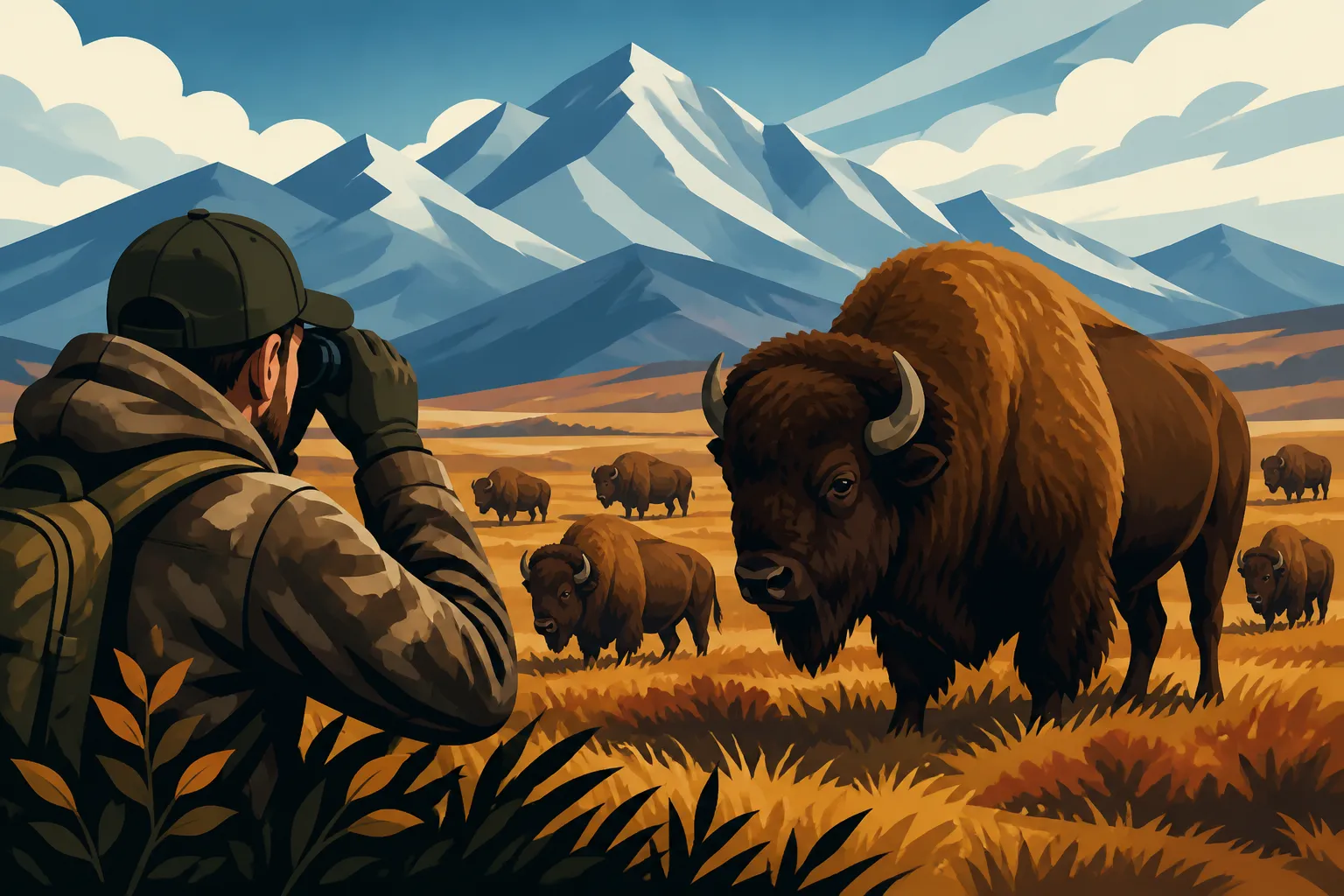
Bison Herds at Delta and Farewell
The dream of hunting bison in Alaska is a rare one, often shrouded in mystery and confusion for many hunters trying to navigate the unique opportunities the state offers. Unlike other big game, Alaskan bison aren't found just anywhere, and the paths to pursuing them are distinct and competitive. This guide is here to demystify the two primary herds that call Alaska home—the iconic Delta bison and the more remote Farewell bison—and help you understand what it truly takes to hunt these magnificent animals.
The Delta Bison Herd: A Modern Success Story
When most people picture bison, they think of the vast plains of the Lower 48. But Alaska has its own incredible story of these majestic animals, particularly with the Delta bison herd. This herd, living near the town of Delta Junction in Interior Alaska, is a testament to successful wildlife management and the rugged adaptability of these animals.
Origins and Growth of the Delta Herd
The Delta bison herd didn't just appear overnight; their presence in Alaska is the result of a deliberate, visionary effort to reintroduce a species that had once roamed these lands. In the 1920s, a transplant of bison from the National Bison Range in Montana was carefully undertaken, with a small number of animals released near what is now Delta Junction. The idea was to re-establish a viable population in an area that could support them, recognizing Alaska's vast wild spaces.
Over the decades, these transplanted animals, surprisingly adaptable, have thrived in the Interior Alaska environment. They've learned to navigate the deep snows of winter, browse on willow and other hardy vegetation, and survive the cold. The Delta herd has grown into a substantial population, providing significant hunting opportunities and adding a unique dimension to Alaska's rich wildlife tapestry. Their success is a point of pride for Alaskan conservation.
Today, the Delta bison herd's general range centers around the Delta Junction area, but their movements can be quite fluid. While often associated with the agricultural fields that dot the landscape, offering them easy forage, they also utilize vast tracts of public and private land. Understanding their patterns and range behavior is crucial for anyone hoping to pursue them, as they don't always stay in convenient, easily accessible locations. Their presence adds a truly wild, historical feel to the landscape of Interior Alaska.
The Delta Bison Drawing Permit
Hunting a Delta bison is an experience that most Alaskan hunters only dream about, primarily because it's managed through an incredibly competitive drawing permit system. The demand for these tags far outstrips the supply, making the odds of success incredibly low, often in the single-digit percentages or less. For many, drawing a Delta bison tag is truly a once-in-a-lifetime event, a golden ticket to one of Alaska's most coveted hunts. If you're serious about applying, sites like GoHunt offer excellent resources for researching past draw odds and improving your application strategy.
The application process is annual, falling within the same general timeframe as many other big game draws. You'll need to carefully review the specific hunt numbers for the Delta bison area and ensure your application is submitted correctly through the Alaska Department of Fish and Game (ADF&G) online system. Missing a deadline or making a mistake can mean losing your chance for another year, so attention to detail is paramount. Even though the odds are slim, the thrill of simply applying and imagining the possibility is part of the tradition for many Alaska hunters.
If you are one of the incredibly fortunate few to draw a Delta bison tag, the shift from dreaming to doing is immediate and exhilarating. Suddenly, months or even years of casual planning transform into intense logistical preparation. You'll need to study maps, research bison behavior, consider access points, and perhaps even reach out to local experts or landowners. The excitement is palpable, but it's quickly tempered by the realization of the immense challenge and responsibility that comes with pursuing such a magnificent animal.
Hunting Challenges and Tactics in Delta Country
While the Delta bison herd lives "on the road system" near Delta Junction, this certainly doesn't mean it's an easy, roadside hunt. In fact, many successful Delta bison hunters will tell you that the proximity to roads can present its own unique set of challenges. The bison frequently move between public and private lands, often grazing in fields near human habitation. This movement means hunters need to be exceptionally agile in their tactics.
One of the significant hurdles hunters face in Delta country is navigating the patchwork of private land. Much of the area surrounding Delta Junction is privately owned, encompassing farms and residences. This necessitates extensive scouting, precise mapping, and often, diligent efforts to secure landowner permission before you can even consider pursuing a bison. You absolutely need to understand the Land Status in Alaska: State, Federal and Native Corporation in your chosen hunting area, as trespassing can lead to severe consequences. Respect for private property is not just good etiquette; it's a legal requirement and crucial for maintaining positive hunter-landowner relations.
Delta bison hunts are typically conducted in the winter, which adds another layer of complexity. Deep snow, bitter cold, and short daylight hours are the norm. While snowmachines can be a valuable tool for covering ground and accessing remote areas, hunters must be mindful of regulations regarding their use. The primary tactic usually involves extensive glassing of open fields and timber edges, often from a distance, followed by a careful spot-and-stalk approach. Patience, keen observation, and the ability to endure harsh weather are non-negotiable for anyone hoping to tag a Delta bison.
The Farewell Bison Herd: Wild and Remote
In stark contrast to the Delta herd, the Farewell bison represent a different side of Alaska's bison story: one of rugged wilderness, immense solitude, and a truly untamed spirit. These animals roam a vast, remote expanse of Interior Alaska, offering an experience that is far removed from any road system.
The Farewell Herd's Unique Status and Location
The Farewell herd, established through a transplant in the 1960s, is considered by many to be Alaska's truly wild, free-ranging bison population. Unlike their Delta cousins who often utilize agricultural lands, the Farewell bison live a life dictated solely by the rhythm of the wilderness. This herd embodies the untamed spirit of the Interior, a stark reminder of what North America's bison once were.
Their remote location is a defining characteristic. Generally found west of the Parks Highway, in the immense country south of McGrath and east of the mighty Kuskokwim River, their home range is expansive and sparsely populated by humans. This is a land of rolling tundra, vast spruce forests, and countless drainages, often covered in deep snow for much of the year. It's a landscape that demands respect and thorough preparation from any hunter who dares to venture there. Indeed, for many, the Farewell herd lives in what truly feels like the "middle of nowhere," and you can get a better sense of their territory by researching Where the Farewell Bison Live.
The Farewell bison also exhibit different behaviors compared to the Delta herd. They are less habituated to human presence, more nomadic, constantly moving across their vast range in search of forage. This makes them exceptionally challenging to locate and pursue, requiring hunters to become true wilderness explorers. Their existence is a powerful testament to the wild heart of Alaska.
Accessing the Farewell Bison Range
Accessing the Farewell bison range is perhaps the single biggest hurdle for most hunters, immediately setting it apart from nearly all other big game hunts in Alaska. For the vast majority of hunters, the only practical way to reach this remote country is via a bush plane. This involves chartering an air taxi, often from a hub like McGrath or Nikolai, flying deep into the Interior to a remote lake, gravel bar, or airstrip.
The logistics of an air taxi are significant. You're not just booking a flight; you're planning an expedition. This includes coordinating drop-off and pick-up dates, understanding weight limitations for gear and meat, and factoring in the potential for weather delays that could strand you in the field. The costs associated with chartering an aircraft for such a remote hunt are substantial and must be a primary consideration in your overall budget.
While less common, some extremely hardy and well-prepared individuals might consider alternative access, such as extremely long overland treks. This could involve traveling by ATV on very limited trails during drier seasons or, more frequently, via snowmachine in the depths of winter. However, these methods demand an even higher degree of self-sufficiency, route-finding skills, and emergency preparedness. The sheer distance and lack of infrastructure make these options incredibly challenging and only suitable for the most experienced and robust outdoor adventurers.
Hunting the Farewell Herd: A True Wilderness Experience
Hunting the Farewell herd isn't just a hunt; it's a profound wilderness expedition. Once you're dropped off by the bush plane, you are entirely on your own in some of Alaska's most wild and untamed country. The primary tactic involves extensive spot-and-stalk hunting across vast, open tundra, often covered in snow or interspersed with low-lying brush. Hunters spend countless hours glassing, patiently searching for the telltale dark shapes of bison against the sprawling landscape. High-quality optics and immense patience are absolutely indispensable.
Weather in the Farewell region is notoriously unpredictable and can change dramatically in an instant, regardless of the season. Hunters must be prepared for everything from biting winds and heavy snow to freezing rain, often within the same day. There is no quick exit, no warm lodge waiting nearby. This level of remoteness demands absolute self-sufficiency, a robust and reliable camp setup, and dependable emergency communication devices like satellite phones or inReach units. Your survival can literally depend on your gear and preparedness.
The reward for enduring these immense challenges is unparalleled. Taking a Farewell bison is the culmination of a truly wild Alaska adventure, a testament to your grit and determination in a landscape that has remained largely unchanged for centuries. It's an experience that goes far beyond simply harvesting an animal; it's about immersing yourself in the raw power and beauty of the Alaskan wilderness and earning a trophy that represents the pinnacle of a self-reliant, ethical hunt. The satisfaction derived from such an endeavor is a memory that truly lasts a lifetime.
Comparing Alaska's Bison Herds: Delta vs. Farewell
While both the Delta and Farewell herds offer the thrilling prospect of hunting American bison in Alaska, the experiences they provide and the challenges they present are vastly different. Understanding these distinctions is crucial for any hunter considering applying for one of these coveted tags.
Herd Management and Population Objectives
The Alaska Department of Fish and Game (ADF&G) manages each bison herd with distinct objectives tailored to their environment and population dynamics. The Delta herd, being relatively close to human population centers and agricultural lands, is often managed for sustained harvest while also addressing potential conflicts with private landowners. The aim is to maintain a healthy, productive herd that can provide consistent hunting opportunities near a road system, albeit through a highly competitive draw. The herd's movements and health are closely monitored, with hunting quotas adjusted based on population surveys and management goals.
In contrast, the Farewell herd is managed with a greater emphasis on maintaining its wild character and providing a true wilderness hunting experience. Population objectives consider the vastness of their remote habitat and their more nomadic behavior. Management often focuses on ensuring herd health in a pristine environment, with fewer direct human-wildlife interactions compared to the Delta herd. This difference in management philosophy directly impacts the type of hunt offered, as well as the overall experience a hunter can expect. The Bison Herd Size at Delta Junction tends to be larger and more stable, allowing for a more consistent (though still limited) harvest than the Where the Farewell Bison Live herd, which can fluctuate more based on harsh winters and vast range movements.
Ultimately, these varying management strategies influence everything from the number of permits issued to the specific regulations governing each hunt. Understanding these underlying objectives helps hunters appreciate the context of their permit and the unique challenges and rewards associated with each herd. The state's careful oversight ensures the long-term viability of both populations while balancing the needs of wildlife and the desires of hunters.
Permit Opportunities and Odds
Both of Alaska's bison herds are managed through drawing permits, meaning you cannot simply buy a tag over the counter. This immediately places them in a category of highly desirable and challenging hunts to draw. However, the specific opportunities and the odds of success vary significantly between Delta and Farewell. For both, you'll need to submit an application during the designated period, usually in the late fall.
The Delta bison draw is famously competitive. Due to its accessibility (relatively speaking) and the robust nature of the herd, it attracts thousands of applicants each year. The Alaska Delta Bison Permit Odds are often extremely low, sometimes less than 1% for non-residents and only slightly higher for residents. This is truly a lottery hunt, and many hunters apply for decades before ever seeing success. Resources like GoHunt are invaluable for analyzing past draw data and understanding just how challenging it is to secure one of these coveted tags.
The Farewell bison permits are also highly sought after and difficult to draw, but they appeal to a different segment of the hunting population. While still incredibly competitive, the sheer remoteness and immense logistical challenges of a Farewell hunt naturally limit the number of applicants compared to Delta. Hunters who apply for Farewell are often looking for a more extreme wilderness adventure, understanding that the tag is just the first step in a very demanding journey. Regardless of which herd you apply for, expect long odds and consider applying consistently year after year to maximize your chances.
Hunter Experience: Road System vs. Wilderness
The contrast in hunting experiences between the Delta and Farewell herds couldn't be starker, essentially boiling down to a "road system adjacent" hunt versus a deep wilderness expedition. This fundamental difference dictates everything from your gear list to your mental preparation.
For the Delta herd, while the bison may not be standing next to the highway, the presence of roads, nearby towns, and agricultural infrastructure means that help is often "closer" than in other parts of Alaska. You might be able to drive part of the way, use a snowmachine on specific trails, or rely on a local outfitter who operates from a base camp with vehicle access. This isn't to say it's easy; weather can still be brutal, and packing out a bison is always a monumental task. But the overall level of self-sufficiency required is generally less extreme than what a Farewell hunter faces.
A Farewell bison hunt, on the other hand, is the epitome of a true Alaskan wilderness experience. Once your air taxi drops you off, you are literally miles from any human settlement or road. This demands an unparalleled level of self-reliance, robust gear capable of withstanding anything Alaska can throw at it, and a meticulously planned emergency strategy. The physical conditioning required is immense, as you'll likely be covering vast distances on foot, often in deep snow, and then facing the monumental task of butchering and packing out hundreds of pounds of meat in a truly remote setting. The psychological challenge of being so far from civilization is also a significant factor, making it a unique test of mental fortitude.
| Feature | Delta Bison Herd | Farewell Bison Herd |
|---|---|---|
| Location | Near Delta Junction, Interior Alaska | Remote Interior, west of Parks Hwy, south of McGrath |
| Access | Primarily road system (driving, snowmachine) | Primarily fly-in (bush plane) |
| Environment | Agricultural fringe, open fields, timber | Vast tundra, spruce forest, burn scars |
| Hunt Type | Drawing Permit | Drawing Permit |
| Draw Odds | Extremely low, very high demand | Very low, high demand from wilderness hunters |
| Logistics | Easier with vehicle access, private land issues | Extreme: air taxi, wilderness survival, no quick exit |
| Physical Demands | High, especially in winter, but less remote | Very high, true expedition hunting |
| Wilderness Feel | Moderate (can be near human activity) | High (deep wilderness) |
Planning Your Alaska Bison Hunt
Securing an Alaska bison tag, whether for Delta or Farewell, is only the first step. The real work begins in the meticulous planning and preparation required to successfully execute one of these demanding hunts. From understanding application deadlines to budgeting every last detail, thoroughness is your best friend.
The Application Process and Key Deadlines
The journey to an Alaska bison hunt starts long before you ever set foot in the field—it begins with the drawing permit application. It’s absolutely critical to mark your calendar for the Alaska Draw Application Opening Date and, more importantly, the closing date. Historically, the state offers an Alaska's November 1 to December 15 Draw Application Window each year, with the deadline usually falling on December 15th. Missing this window, even by a minute, means you've lost your chance for the entire year, so set reminders early and check official ADF&G channels.
The process for applying for drawing permits requires careful attention. You'll need to choose specific hunt numbers for either the Delta or Farewell herd, and sometimes there are multiple hunt numbers for different periods or areas within each herd's range. It's vital to understand what each hunt number signifies and how it aligns with your hunting goals. The system is designed to fairly allocate limited tags, and it's important to grasp How Alaska's Big Game Drawing Permits Work to maximize your strategic choices, even if the odds remain incredibly long. Use resources like GoHunt to analyze past draw data for specific hunt codes.
After submitting your application, the waiting game begins. This period of anticipation can feel endless, but typically, hunters can expect to see Alaska Draw Results Release in February. If you are one of the fortunate few to draw a tag, the planning immediately kicks into high gear. You'll have a limited window to accept your permit, pay any associated fees, and then begin the intense logistical work of organizing an expedition for one of North America's largest land mammals.
Essential Gear and Logistics for a Bison Hunt
When it comes to essential gear for a bison hunt, your rifle choice is paramount. Bison are incredibly large, tough animals, so a powerful, reliable rifle capable of delivering significant energy is non-negotiable. While opinions vary, most experienced hunters recommend a minimum of a .300 magnum, with many preferring larger calibers like the .338 Win Mag or even the .375 H&H, especially for situations where quick, decisive action is needed. Bullet construction is equally important; choose heavy, bonded, or monolithic bullets designed for deep penetration on thick-skinned game. For broader considerations on what works for large, dangerous game, insights from articles like Rifle Choice for Alaska Brown Bear Country can be helpful.
Once the animal is down, meat handling becomes the most critical and physically demanding aspect of the hunt. A bull bison can weigh over 2,000 pounds, yielding hundreds of pounds of meat. You must have sufficient heavy-duty game bags that breathe to protect the meat from flies and dirt while allowing it to cool. The legal requirement to salvage all edible meat in Alaska, as outlined in Packing Out Meat in Alaska: The Salvage Law Hunters Must Follow, means you'll be spending a significant amount of time quartering and deboning this massive animal in the field. Cooling the meat quickly is vital, especially if hunting in warmer shoulder seasons, as detailed in Meat Care in 50-Degree September Weather.
Finally, safety and logistics round out your preparations. In Alaska, you are always in bear country, and a kill site—especially one with a massive animal like a bison—is a magnet for predators. Understanding Bear Safety While Butchering a Kill in Alaska is not just smart, it's essential for your well-being. Furthermore, consider how you will physically transport hundreds of pounds of meat out of the field. For Farewell hunts, this might mean multiple air taxi loads. For Delta, it could involve sleds, pack frames, or snowmachines. Insights from Quartering a Bull Moose Alone in the Field can provide valuable guidance on handling large game, which is directly applicable to bison.
Budgeting for an Alaska Bison Hunt
An Alaska bison hunt is an incredible experience, but it's also a significant financial undertaking. It's crucial to approach the budgeting process realistically, understanding that the costs extend far beyond just the tag fee. First and foremost, you'll need a valid Alaska hunting license. The Nonresident Hunting License Costs in Alaska can add up quickly, and then you factor in the specific locking tag for bison. It’s important to note that Alaska Bison and Muskox Tags at the Top of the Scale in terms of cost among Alaskan big game, often representing a substantial investment.
Beyond the permits, travel expenses will form a large part of your budget. This includes airfare to Alaska, ground transportation to your staging area (Delta Junction for the Delta herd, or a bush plane departure point for Farewell), and potentially hotel stays before and after the hunt. If you're targeting the remote Farewell herd, the cost of an air taxi charter will be one of the most significant line items. These flights are not cheap, often costing thousands of dollars for a round trip, and that doesn't include potential extra flights for meat or unforeseen weather delays.
Finally, you need to budget for post-hunt logistics. This includes professional meat processing, especially if you plan to ship your bison meat home, and the actual freight costs to get hundreds of pounds of frozen meat back to your home state. Factor in costs for specialized gear that you might need to purchase or rent, such as high-quality game bags, heavy-duty pack frames, or even snowmachine rentals for a winter Delta hunt. This is not a cheap endeavor, even for resident hunters, and a comprehensive budget will prevent unwelcome surprises down the line.
Conservation and the Future of Alaska Bison
The presence of robust bison herds in Alaska is a remarkable conservation success story. These magnificent animals, once a cornerstone of North America's wildlife, nearly vanished from the continent. Their reintroduction and careful management in Alaska highlight a commitment to preserving wild species and their habitats for future generations.
The Success of Reintroduction Efforts
The history of bison in Alaska is a powerful narrative of loss and resurgence. Indigenous bison populations were extirpated from Alaska centuries ago, likely due to a combination of climate change and early human hunting pressures. For a long period, these iconic animals were absent from the Alaskan landscape. However, visionary efforts in the early to mid-20th century sought to correct this historical void, leading to the reintroduction of plains bison into specific areas.
The establishment of the Delta herd in the 1920s and the Farewell herd in the 1960s marked a turning point. These programs, spearheaded by wildlife agencies with support from various conservation groups and sportsmen, demonstrated a proactive approach to restoring ecological balance. The success of these initial transplants, and the subsequent growth of the herds, proved that bison could not only survive but thrive in the unique conditions of Interior Alaska. This effort directly answers the question of Are Alaska Bison Wild or Transplanted?, confirming their transplanted origins but also highlighting their successful adaptation to a wild Alaskan existence.
Today, Alaska stands as one of the few places where North American bison exist in truly wild or semi-wild populations, a testament to the dedication and foresight of those who championed their return. These herds contribute significantly to Alaska's biodiversity and provide invaluable cultural, recreational, and subsistence opportunities. It's a living example of how focused conservation efforts can bring a species back from the brink and re-establish its place in the ecosystem.
Ongoing Challenges and Management
Despite their remarkable success, Alaska's bison herds face ongoing challenges that require diligent management. For the Delta herd, one of the primary issues revolves around habitat encroachment and potential human-wildlife conflicts. As the population grows and expands its range, bison can move into agricultural areas, causing damage to crops or property. Managing this interface requires careful balancing acts, including adjusting hunting quotas and exploring hazing techniques, to minimize conflicts while sustaining the herd.
Disease monitoring and management are also critical for the health and long-term viability of both herds. With increasing interactions between wildlife, and sometimes with domestic livestock, there's always a risk of disease transmission. Wildlife agencies conduct regular health assessments and implement strategies to prevent and mitigate outbreaks, ensuring the genetic robustness and overall well-being of the bison populations. This proactive approach is essential in preventing widespread impacts that could jeopardize the herds.
Ultimately, the delicate balance of managing a large, iconic species like the bison involves a continuous cycle of research, monitoring, and adaptive management. This includes setting appropriate hunting seasons and quotas, protecting critical habitats, and engaging with stakeholders. Hunters, through their license and tag fees, and by providing valuable harvest data, play a crucial role in funding and informing these ongoing conservation efforts. Their commitment helps ensure that Alaska's bison herds continue to thrive for generations to come, symbolizing the enduring wildness of the Last Frontier.
Disclaimer
This article is for general informational purposes only and does not constitute professional advice. Laws, prices and regulations vary by location and change over time. Consult a qualified professional for guidance on your specific situation.