Alaska Delta Bison Permit Odds
Many hunters dream of a true Alaska big game experience, but the reality of securing a permit for highly coveted hunts like the Delta Bison can feel like an impossible feat. The notoriously slim odds for this particular drawing permit leave many hopeful applicants feeling frustrated and wondering if their efforts are even worth it. This comprehensive guide is dedicated to unraveling the truth behind the Alaska Delta Bison permit odds, offering a realistic look at your chances, detailing the application process, and providing strategies to best prepare for this exceptional hunt.
The Allure of Alaska's Delta Bison Hunt
When you envision hunting in Alaska, images of massive moose or majestic Dall sheep often come to mind. But for many dedicated hunters, the Delta Bison hunt holds a unique, almost mythical status. It's not just about the incredible meat yield or the impressive trophy; it's about the challenge of drawing one of the most sought-after permits in the state and pursuing an animal that embodies the wild spirit of the Last Frontier. This is a hunt steeped in history and modern challenge.
Why the Delta Bison Hunt is So Prized
Let's be real, drawing a Delta Bison permit is tough. It's often likened to hitting the jackpot, and for good reason. The Delta herd, managed by the Alaska Department of Fish and Game (ADF&G), represents one of the few opportunities to hunt truly wild, free-ranging bison in North America. These aren't fenced-in animals on a ranch; these are hardy, impressive giants that inhabit the vast, open country near Delta Junction. The experience of pursuing such an animal, often in challenging late-season conditions, is what truly sets it apart. It’s a hunt that demands meticulous planning, a strong understanding of bison behavior, and a fair bit of grit if you're lucky enough to draw a tag.
Beyond the challenge, the Delta Bison also offer unparalleled table fare. Bison meat is lean, rich, and incredibly healthy, making it a highly desirable animal for subsistence and meat hunters alike. A successful hunt provides hundreds of pounds of high-quality protein, a significant resource that can feed a family for a long time. This combination of trophy potential, incredible meat, and the sheer prestige of drawing such a rare tag is what makes the Delta Bison hunt a lifelong dream for so many, solidifying its place as one of Alaska's premier draws.
Overview of the Delta Bison Management Area
The Delta Bison herd primarily roams the agricultural and open landscapes surrounding Delta Junction, roughly 100 miles southeast of Fairbanks. This area is a unique mix of farmlands, open plains, and river drainages. The bison often move between these private and public lands, making access and scouting a critical component of the hunt. Understanding these movements is key to success, as the animals frequently shift between feeding grounds and bedding areas, adapting to human activity and available forage throughout the various seasons.
The hunt area, defined by ADF&G, primarily covers Game Management Units 20A, 20B, and 20C, though the core focus is usually in 20A and 20B around Delta Junction itself. Hunters need to be acutely aware of land ownership, as much of the prime bison habitat is a mosaic of state, federal, and private lands, including active farms. This means that hunters must often secure permission to access private property or meticulously plan their movements around public access points, adding another layer of complexity to an already challenging hunt. The open nature of the terrain also means that spotting bison can be done from a distance, but closing the gap often requires long stalks and patience, especially when the bison are wary and feeding in open fields.
Deciphering Alaska Delta Bison Permit Odds
Let's get down to the brass tacks: what are your actual chances of drawing one of these coveted permits? It's a question every hunter asks, and the answer is rarely simple. The Delta Bison hunt is a drawing permit hunt, meaning you apply for a specific hunt number, and successful applicants are chosen via a lottery system. Unlike some states with preference points or bonus points, Alaska's system largely resets each year, making every application a fresh shot at luck for the applicant. This can be both a blessing and a curse, depending on your perspective and how many years you've put in without success.
Historical Success Rates for Delta Bison Permits
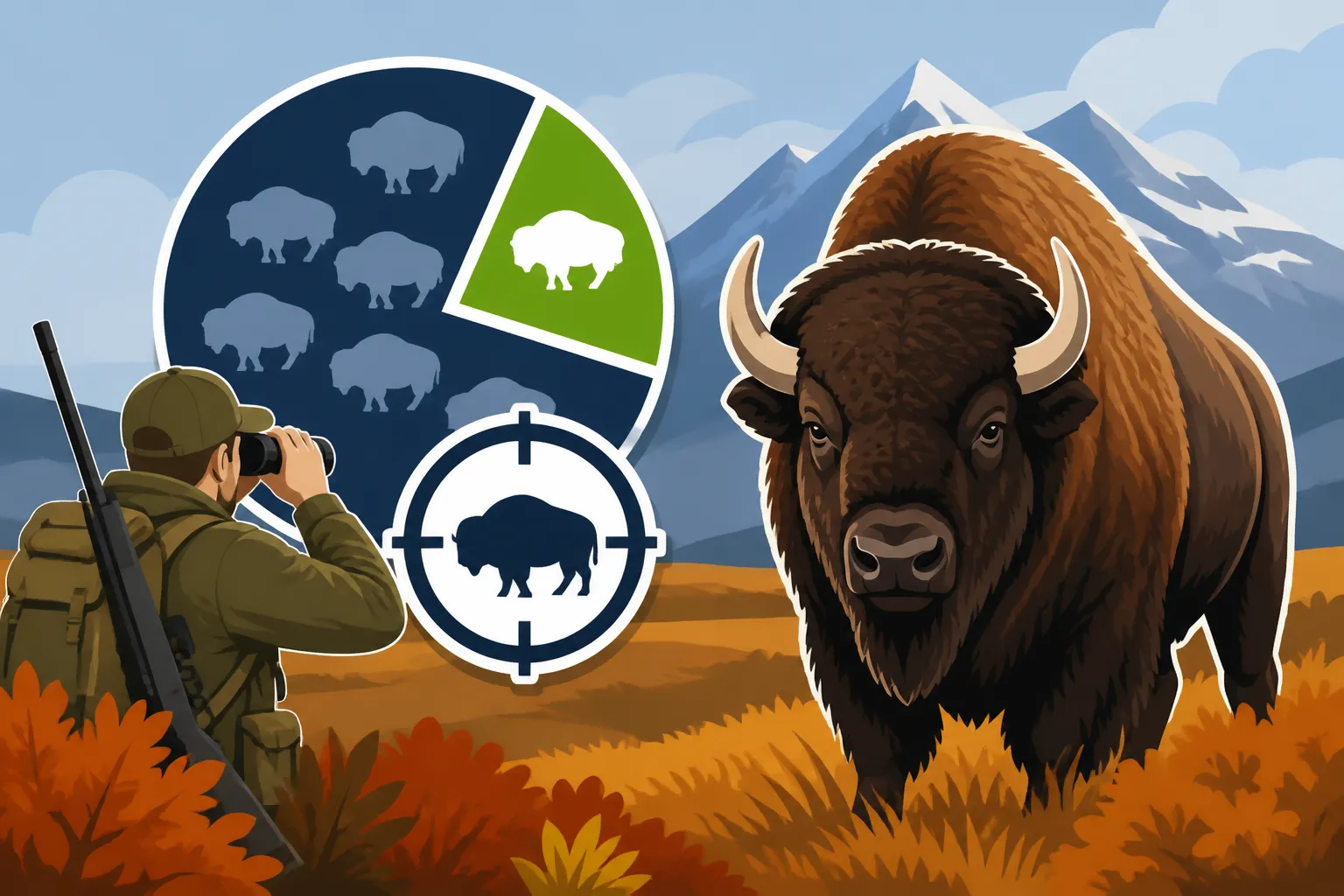
The truth is, the odds are low. Very low. We’re talking about thousands of applicants for a handful of permits. While the exact number of permits issued can fluctuate slightly based on herd management objectives, it’s consistently a highly subscribed hunt. For instance, in recent years, the number of permits issued for the Delta Bison hunt has often been in the range of 50 to 100, while the application pool can easily swell to over 10,000 applicants for resident and nonresident hunters combined. This immediately paints a picture of just how competitive this draw is, reinforcing why it feels so challenging to draw this tag.
Looking at ADF&G's historical draw results often reveals single-digit percentage success rates, sometimes even less than 1%. For nonresidents, these odds are even steeper, as a portion of the permits are typically allocated to resident hunters first. For example, if 70 permits are issued, often around 90% go to residents and 10% to nonresidents. This creates a challenging but not impossible scenario for nonresidents. It's crucial to check the latest ADF&G results, which are usually released around the "Alaska Draw Results Release in February", and the official ADF&G statistics each year to get the most accurate picture of the previous year's odds, which can give you a baseline expectation for your own application strategy.
Here's a simplified look at what the Delta Bison draw odds might resemble based on common scenarios and historical trends (actual numbers vary year to year; always check current ADF&G reports for precise, up-to-date data):
| Applicant Type | Total Applicants (Example) | Permits Issued (Example) | Approximate Draw Odds |
|---|---|---|---|
| Alaska Resident | 9,000 | 63 | ~0.7% |
| Nonresident | 1,200 | 7 | ~0.6% |
| Total Applicants | 10,200 | 70 | ~0.69% |
Factors Affecting Your Odds Each Year
Several variables can subtly shift your chances, though the overall picture remains one of steep competition. First and foremost is the number of permits ADF&G decides to issue. This number is directly tied to herd health, population objectives, and management goals. If the herd is doing exceptionally well and managers want to increase harvest, more permits might be offered, slightly bumping up your odds. Conversely, if there are concerns about herd numbers or winter mortality, permit numbers could drop, making the draw even tougher. These decisions are made annually and are based on the latest scientific data and observations of the herd.
Another significant factor is applicant volume. The popularity of the Delta Bison hunt continues to grow, attracting more and more hopeful hunters each year. This increased interest naturally drives down the statistical odds for everyone. Economic conditions, widespread hunting media coverage, and even social media buzz can all influence how many people decide to throw their hat in the ring. While you can't control these external factors, understanding them helps manage expectations. Remember, every application season is a new lottery, so while historical data is useful, current year specifics always matter most in determining your statistical chance.
Strategizing Your Alaska Bison Permit Application
Given the challenging odds, many hunters wonder if there's anything they can do to improve their chances or at least make their application count. While there's no secret trick to guarantee a draw, understanding the system and making informed choices can help you navigate the process. The application window for these drawing permits, including the Delta Bison, typically runs from "Alaska's November 1 to December 15 Draw Application Window". It's a critical period to ensure your application is submitted correctly and strategically, avoiding any mistakes that could disqualify you.
Navigating the Alaska Draw System for Bison
The application process for Alaska drawing permits is straightforward, but attention to detail is paramount. You'll apply online through the ADF&G website. Each hunt number for the Delta Bison will have specific details regarding the hunt area, season dates, and any special conditions. You can usually apply for up to three different hunt numbers across various species, but for bison, you'll be focused on the specific Delta Bison hunt numbers (e.g., DB101, DB102). While you can apply for multiple species, ensure you don't max out your choices on less desired hunts just to fill the quota; prioritize the Delta Bison if it's your top goal.
A crucial aspect to remember is that Alaska does not use a preference or bonus point system, unlike many other states. This means that every applicant, whether it's their first time applying or their twentieth, starts with essentially the same chance each year. This can be frustrating for those who have put in for years without success, but it also means a brand-new applicant has as good a shot as anyone else. Ensure all your personal information is correct, pay the application fee, and double-check your chosen hunt numbers before submitting. Missing deadlines or making errors can disqualify your application entirely, a painful oversight when the odds are already so slim.
Considering Party Applications for Improved Chances
One strategy that some hunters consider is applying as a party. The Alaska draw system allows up to two individuals to apply together for certain drawing permits. If a party application is drawn, both individuals receive a permit. This can be a compelling option, especially for hunting partners who want to share the experience and ensure they can hunt together if successful. However, there's a caveat: the party application is treated as a single entry in the draw. So, if you and a friend apply as a party, your combined chance of getting drawn isn't doubled; rather, you both either get drawn together or neither does. It's essentially an "all or nothing" proposition for the pair.
The benefit here isn't necessarily an increase in statistical odds per se, but rather an assurance that if one of you is successful, both are. This eliminates the awkward scenario where one partner draws a tag and the other doesn't, allowing for shared planning and experience. For nonresidents, applying as a party with an Alaska resident might sometimes offer slightly better odds if there's a specific resident-only permit category, though for Delta Bison, the permits are usually open to all, with a proportional allocation. Always review the specific regulations for the current year to understand how party applications are handled for the Delta Bison hunt, as rules can occasionally be adjusted by ADF&G.
Using Scouting Tools to Plan Ahead
Even before you draw a permit, being prepared can give you a significant advantage. Tools like GoHunt can be invaluable resources for pre-scouting the Delta Bison hunt area. While GoHunt is well-known for Western U.S. draws, their detailed mapping layers, historical data summaries, and strategy articles can often provide excellent foundational knowledge for Alaska hunts, especially when looking at public land access, terrain features, and even potential forage areas. Utilizing satellite imagery and topographic maps to identify potential glassing points, escape routes, and movement patterns of the bison can save you critical time if you do draw a tag, meaning you hit the ground running.
Platforms like GoHunt allow you to pore over the landscape from the comfort of your home, marking waypoints and developing a rudimentary plan. This kind of virtual scouting helps you understand the challenging terrain and the mosaic of land ownership long before you ever set foot on Alaskan soil. You can analyze vegetation types, water sources, and common corridors where bison might travel. Furthermore, online forums and state hunt reports, often found through resources like GoHunt, can offer insights from past hunters, including their experiences with bison behavior and preferred habitat during different times of the season. This preparation ensures that if your number is called, you're not starting from square one, but rather with a well-researched understanding of the landscape and the animals.
What to Do If You Draw That Coveted Delta Bison Permit
Congratulations! You've beaten the odds, and that Delta Bison permit is now in your hands. This is where the real work—and the excitement—begins. Drawing the permit is just the first step; turning that permit into a successful hunt requires intensive preparation, understanding the unique challenges of bison hunting in Alaska, and respecting the animal and the environment. This is a hunt that demands physical and mental readiness, and it's not one to take lightly.
Essential Preparations for a Successful Bison Hunt
Once you have that permit, your focus shifts immediately to logistics and physical conditioning. Delta Bison are incredibly large, powerful animals, and harvesting one is a serious undertaking. First, you’ll need a rifle capable of dispatching such an animal ethically and efficiently. Popular choices often include magnum calibers like .300 Win Mag, .338 Win Mag, or larger, paired with heavy-for-caliber, tough bullets. Practice extensively with your chosen setup, ensuring you can shoot accurately from various field positions, as shots can be long in the open country. You might want to consider Rifle Choice for Alaska Brown Bear Country as a reference, as some of those calibers overlap for bison.
Next, consider the sheer size and weight of a bison. A mature bull can weigh upwards of 1,500 to 2,000 pounds. This means you’ll need a robust plan for field dressing, quartering, and packing out hundreds of pounds of meat. Many hunters bring game carts, ATVs (where legal, check ATV Access Tactics on Alaska's Denali Highway), or even plan for multiple trips with a vehicle if hunting accessible areas. Having extra hands is almost a necessity, so if you applied as a party, you're already ahead of the game. Prepare for long days in potentially cold and snowy conditions, and ensure you have high-quality gear for meat care, including plenty of durable game bags and a way to cool the meat quickly, especially if the weather is mild, referencing tips in Hanging Meat in Warm September Weather. Think about a bear fence setup at a meat cache to protect your harvest.
Understanding Bison Behavior and Habitat
Delta Bison are wary animals, constantly on alert due to hunting pressure and their open habitat. They spend much of their time grazing in open fields and grasslands, often in large herds. This makes approaching them a significant challenge, requiring long stalks, careful use of topography, and a keen eye for wind direction. They are also known to frequent private agricultural lands, which can complicate hunting access and require prior permission from landowners. Understanding the nuances of their seasonal movements—where they feed, where they bed, and how they react to human presence—is vital for success.
During the fall and winter seasons, when many bison hunts occur, their behavior changes. They may be less active during the coldest parts of the day and more focused on foraging to maintain body condition. Observing herd dynamics can also reveal patterns; typically, mature bulls might be on the periphery, or bachelor groups could be separate. Knowledge of the habitat—identifying key feeding areas, water sources, and dense cover they might use for shelter—will significantly increase your chances. Downloading offline maps before a fly-in and using a GPS with marked glassing knobs before you leave town can be invaluable. Tools and knowledge gained from sources like GoHunt can help you pinpoint these areas on a map, giving you a serious edge in the field and maximizing your limited time once on the ground.
Final Thoughts on the Delta Bison Permit Odds
The journey to an Alaska Delta Bison permit is one defined by patience and persistence. The odds are undeniably slim, a testament to the high demand for this unique hunting opportunity. But for those who dedicate themselves to the application process year after year, the dream of a Delta Bison hunt remains a powerful motivator. It's a reminder that sometimes, the greatest rewards come with the greatest challenges, and simply applying is a declaration of that enduring spirit of the Alaskan hunter. Whether you draw or not, the preparation and the hope are an integral part of the adventure, solidifying your connection to the wild.
Disclaimer
Please remember that hunting regulations in Alaska are dynamic and can change frequently. The information provided in this article is for general guidance only and should not replace consulting the most current Alaska Department of Fish and Game (ADF&G) regulations. Always verify seasons, bag limits, permit requirements, and legal access with official ADF&G sources before planning or engaging in any hunting activities. Additionally, ensure you are aware of all safety protocols and have the necessary training and equipment for ethical and safe hunting.