Alaska Sheep Season Dates in the General Hunt
Planning an Alaska Dall sheep hunt can feel like deciphering an ancient riddle, especially when it comes to pinpointing the exact dates for the general hunting season. It's frustrating to wade through dense regulations, hoping you haven't overlooked some obscure detail that could invalidate your entire trip. This guide cuts through the confusion, offering clear insights into Alaska's general Dall sheep season dates, critical regulations, and practical advice to help you confidently plan your dream hunt.
Understanding Alaska's Dall Sheep Seasons
The majestic Dall sheep, with their gleaming white coats and impressive curling horns, are a coveted trophy for many hunters. While the idea of a sheep hunt evokes images of rugged mountains and immense solitude, actually figuring out when you can legally pursue them is often the first, and sometimes most challenging, hurdle. Alaska's hunting seasons aren't a one-size-fits-all affair, especially for such prized big game.
General Hunt Season Dates
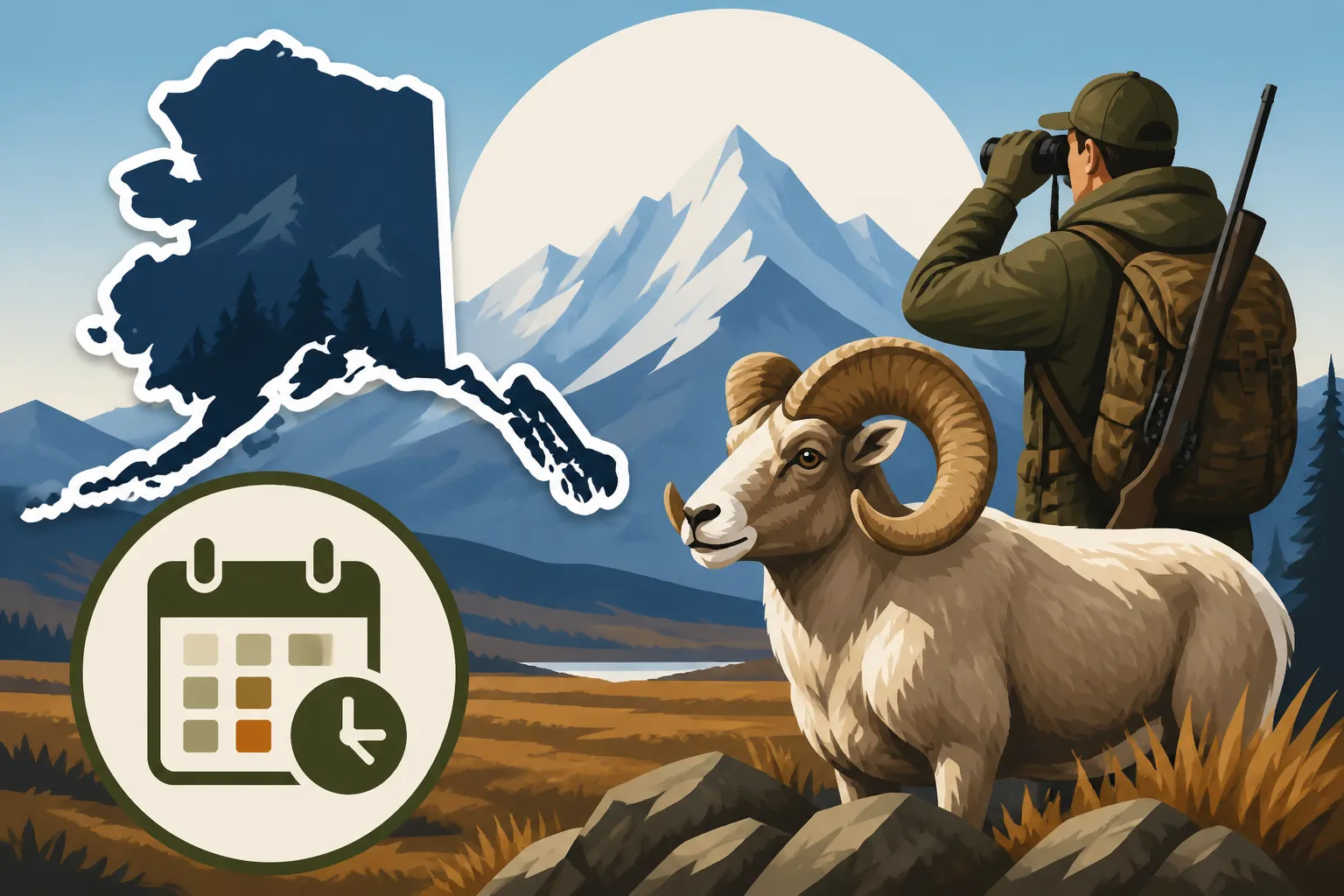
For many areas of Alaska, the general season for Dall sheep typically opens on August 10th and can run through September 20th. However, this is a broad stroke, and it's absolutely crucial to understand that these dates are subject to the specific Game Management Unit (GMU) and even subunit you intend to hunt. For instance, while August 10th might be the common opener across much of the Alaska Range and Brooks Range, some units might have slightly different start or end dates, or even shorter seasons to manage harvest pressure. This variability is a testament to the Alaska Department of Fish and Game's (ADF&G) commitment to managing sheep populations sustainably across diverse habitats. Always, always double-check the current year's regulations booklet for the exact unit you are targeting.
It's also worth noting that some areas might have earlier closures if specific harvest quotas are met, though this is more common in registration or drawing permit hunts than the general season. The key takeaway here is that while August 10th is a good mental anchor for the season opening, it's just the beginning of your research, not the end. The sheer vastness of Alaska means that local conditions, population dynamics, and management goals dictate these nuances, making a detailed check of the regulations an absolute necessity every single year.
Why Seasons Vary by Game Management Unit
Alaska is an enormous state, spanning multiple distinct ecosystems from coastal rainforests to arctic tundra and towering mountain ranges. It's no surprise, then, that game management units are diverse, and so are the Dall sheep populations within them. The variation in season dates across GMUs isn't arbitrary; it's a carefully considered strategy by ADF&G. Factors like lamb survival rates, overall population health, predator pressure, and previous harvest success all play a role in setting these dates. A unit with a robust, growing sheep population might sustain a longer general season, while another experiencing declines might see a shortened season or even be moved to a permit-only system to limit hunter numbers.
Habitat conditions are another major influence. Sheep in the western Alaska Range might experience different weather patterns and forage availability compared to those in the eastern Brooks Range, which affects when ewes lamb, when rams are in prime condition, and when they are most vulnerable. These ecological differences necessitate tailored management approaches, which manifest as varied season dates. This localized management ensures that hunting opportunities remain viable for future generations, while also providing unique experiences depending on which GMU you choose.
The Importance of Regulatory Research
Navigating Alaska's hunting regulations can feel like a full-time job, but for Dall sheep, it's non-negotiable. The annual Alaska Hunting Regulations booklet, available online and at ADF&G offices, is your bible. It contains the precise season dates, legal weapon types, bag limits, and any special restrictions for every GMU. Don't rely on information from last year's hunt or what a buddy told you about a different unit. The rules can and do change.
Beyond just dates, you need to understand the nuances of things like the "full-curl rule," which dictates what constitutes a legal ram, and hunter orientation requirements specific to sheep. Websites like GoHunt and ADF&G's own online resources are invaluable tools for drilling down into specific unit regulations. These platforms often provide maps, emergency order updates, and past hunt success statistics that can help you make informed decisions. Seriously, carve out dedicated time to read and re-read the regulations for your chosen unit until you could recite them in your sleep. It’s the single most important step to ensure a legal and successful hunt.
Navigating Permit vs. General Hunts
When you dream of hunting Dall sheep in Alaska, you might envision a true wilderness experience, pitting your wits and endurance against the elements. What you might not immediately realize is that there are distinct pathways to achieving this dream, primarily through either a general hunt or a drawing permit hunt. Understanding the differences is crucial for planning and managing your expectations.
Differences in Access and Opportunity
General hunts are often referred to as "over-the-counter" hunts, meaning if you have a valid Alaska hunting license and the appropriate locking tag for Dall sheep, you can participate within the specified season dates for an open GMU. These hunts provide broader access for both residents and non-residents, though non-residents are still required to be accompanied by an Alaska-licensed guide or an Alaskan relative within the second degree of kindred for sheep. General hunts typically cover vast, remote areas, offering plenty of room to roam, but they can also be challenging due to the sheer size of the landscape and the density of sheep in some regions.
Drawing permit hunts, on the other hand, are lottery-based. These permits are allocated for specific, often smaller or more sensitive, areas with strict quotas. The goal is to manage hunter numbers and maintain high-quality hunting experiences, sometimes in units with very high sheep densities or unique habitat concerns. Getting a drawing permit is often like winning the lottery itself, with odds that can be incredibly low depending on the popularity of the unit. While a general season hunt requires meticulous planning and physical endurance, a drawing permit hunt demands patience and a good deal of luck in the application process.
Applying for Draw Permits (and Why Many Prefer General)
For those pursuing a drawing permit, the application window typically runs from November 1st to December 15th each year for the following hunting season. Hunters select their desired hunts by number and pay a small application fee per hunt choice. Unlike some other states, Alaska has no preference points system, meaning everyone starts on equal footing each year, which can be both a blessing and a curse. You can apply for up to six choices for sheep, often strategizing by picking highly coveted hunts alongside less popular options. Organizations like GoHunt provide valuable resources for analyzing draw odds and strategizing your applications.
Despite the allure of a "guaranteed" permit, many hunters, particularly non-residents, often prefer to focus on general season hunts. The primary reason is accessibility. With a general season tag, you don't have to rely on luck in a draw; you simply need to meet the license and tag requirements and physically get to your chosen hunting area. This offers more certainty in planning a hunt, especially for those who need to coordinate complex logistics like travel, time off work, and potentially booking a guide or air transporter. The general season provides a more direct path to the mountains, even if it means you'll be putting in more foot miles to find those elusive rams.
Over-the-Counter Tags for General Seasons
One of the great advantages of Alaska's general Dall sheep season is the availability of over-the-counter locking tags. Once you've secured your Alaska hunting license, you can purchase the appropriate Dall sheep locking tag from any ADF&G office, license vendor, or online. For non-residents, this tag can be a significant investment, often around $800, but it grants you the legal right to hunt a ram in a general season unit. This direct purchase eliminates the nail-biting wait for draw results and allows for greater flexibility in your hunt planning.
While these tags are readily available, remember that they are specific to the species. You can't just buy a "big game" tag and go sheep hunting. It must be the dedicated Dall sheep locking tag. The beauty of this system is that it empowers hunters to make their own plans, choose their preferred unit from the general season options, and embark on their adventure without the uncertainty of a lottery. This accessibility is a huge draw for many, enabling them to focus their energy on physical preparation and detailed scouting, rather than just hoping their name gets pulled.
Key Regulations Beyond Just Dates
Simply knowing the season dates for your Dall sheep hunt is like knowing the kickoff time for a football game but none of the rules. To have a legal and ethical hunt, you must dive deeper into the specific regulations that govern the pursuit of these mountain monarchs. Missing these critical details can lead to severe penalties, from citations to the loss of your trophy and future hunting privileges.
Full-Curl Rule: Identifying a Legal Ram
Perhaps the most iconic and often debated regulation in Dall sheep hunting is the "full-curl rule." This rule is designed to ensure that younger rams have a chance to breed and contribute to the herd before being harvested, and it's absolutely paramount to understand it before you ever pull the trigger. In Alaska, a legal ram is typically defined as one that meets one of three criteria:
- Full Curl: The tip of the horn has grown at least one full 360-degree circle past the animal's eye and intersects a flat plane extending across the forehead.
- Broomed: Both horns are "broomed" (broken off) to the point where the length of the horn is shorter than the circumference of the base of the horn. This indicates an older ram that has seen many battles.
- Eight Years Old: The ram has at least eight annuli (growth rings) on one horn, signifying its age.
The challenge here, and where many hunters get into trouble, is judging this accurately in the field, often at long distances or in poor light. What looks like a full curl from one angle might not be from another. It requires patience, good optics, and a deep understanding of what you're looking for. Many seasoned sheep hunters will spend hours glassing, waiting for a ram to turn its head just right or to stand in a position that allows for precise judgment. Learning How to Judge a Full-Curl Ram in the Field is an art form, and mistakes are costly. Remember, the burden of proof is on you, the hunter, to ensure the ram is legal before you shoot. This rule is fundamental to sustainable sheep management and respecting the animal itself.
Hunter Orientation Requirements
For many Dall sheep hunts in Alaska, particularly those in popular or high-demand units, there's an additional requirement: hunter orientation. This isn't just a suggestion; it's a mandatory step that must be completed before you go into the field. The Alaska Department of Fish and Game offers these orientations online, providing crucial information about Dall sheep biology, identification (especially the full-curl rule), hunting ethics, trophy care, and safety in sheep country.
These orientations are designed to increase hunter success rates while simultaneously reducing inadvertent violations and promoting responsible hunting practices. Think of it as a vital refresher course that ensures every sheep hunter is equipped with the knowledge needed to make sound decisions in the field. Even if you're an experienced hunter, the specifics of Dall sheep regulations and management practices in Alaska can differ from other species or regions, so taking the time to complete the orientation is a non-negotiable step. Check the regulations for your specific GMU to see if an orientation is required.
Salvage and Trophy Care Rules
Successfully harvesting a Dall sheep is only part of the journey; the legal and ethical requirements for salvage and trophy care are just as important. Alaska has strict laws regarding the salvage of edible meat, requiring hunters to salvage all edible meat from a big game animal. For sheep, this means quarters (forequarters and hindquarters), the meat of the backstrap, and the neck meat. Leaving any significant portion of edible meat in the field is considered wanton waste and carries severe penalties.
Beyond meat, proper trophy care is essential, especially given the effort and cost associated with a Dall sheep hunt. This includes careful caping of the hide for a shoulder or full-life mount, as well as preserving the skull plate and horns. You'll also need to be aware of the sealing requirements for your sheep trophy. After harvesting, specific parts of the trophy (usually the skull plate with horns attached) must be presented to an ADF&G representative for sealing within a designated timeframe, which is usually 30 days. This sealing process helps ADF&G gather biological data and ensures the legality of your harvest. Understanding Horn Plugging and Alaska's Sealing Deadline is critical, as failing to meet these deadlines can jeopardize your trophy. Proper field care from the moment of the kill will ensure your meat is good and your trophy is preserved for a lifetime.
Planning Your General Season Sheep Hunt
Embarking on a general season Dall sheep hunt in Alaska is a significant undertaking, requiring meticulous planning, rigorous physical preparation, and a clear understanding of logistics. It's not a spur-of-the-moment trip; it's an expedition that demands respect for the wilderness and the quarry.
Scouting and Unit Selection
Choosing the right Game Management Unit for your general season Dall sheep hunt is perhaps the most critical early decision. This choice will dictate everything from travel logistics to the type of terrain you'll encounter and the potential for success. Start by deeply researching units known for general season opportunities, looking for areas with stable or growing sheep populations. Websites like GoHunt offer detailed insights into specific units, including harvest statistics, historical weather data, and even topographical maps. Beyond that, tools like Google Earth and other satellite imagery programs are indispensable for Scouting a Unit From Satellite Imagery Before You Fly. You can identify potential sheep habitat—high alpine ridges, rocky outcroppings, and escape terrain—as well as potential glassing knobs and access points.
It’s not enough to simply look at a map; you need to understand the characteristics of each unit. Are there existing trails, or will it be a pure bushwhack? What are the typical weather patterns during the season? How far from roads or landing strips will you be? Talk to other hunters, contact local ADF&G biologists, and pore over past hunt reports. Your goal is to narrow down your options to a few units that match your physical capabilities, budget, and hunting style. This initial scouting, even from afar, is paramount to setting realistic expectations and crafting a robust hunt plan.
Physical Demands and Preparation
Let's be blunt: Dall sheep hunting is arguably the most physically demanding big game hunt in North America. These animals live in some of the most unforgiving terrain imaginable, often at high elevations with steep, loose rock, and unpredictable weather. Your physical fitness will be tested to its limits, not just in climbing the mountains, but in carrying heavy loads of meat and capes back down. Many sheep hunts involve ascending thousands of vertical feet daily, navigating treacherous slopes, and enduring long days of hiking and glassing, all while carrying a loaded backpack.
Seriously, if you're not already in excellent shape, start a rigorous training regimen months in advance. Focus on cardiovascular endurance, leg strength, and core stability. Incorporate weighted hikes on steep inclines, stair climbing, and exercises that mimic the movements you’ll make in the mountains. This isn't just about bagging a ram; it's about personal safety. Being physically prepared can mean the difference between a successful, enjoyable hunt and a dangerous, miserable experience. It's truly a test of will and body, and the mountains don't care about excuses. Preparing for Backpack Hunting in Alaska: Gear Weight and Meat Loads is essential, as every ounce counts when you're gaining elevation.
Working with Transporters or Going Solo
For many general season Dall sheep hunts, especially in remote areas, you'll need a way to get into the backcountry. This often means working with an air taxi or "transporter." These licensed pilots fly you and your gear into designated landing strips, gravel bars, or remote lakes, dropping you off to begin your hunt. They operate under strict regulations and are not allowed to provide guiding services (like advising on where to hunt or accompanying you). Their role is purely logistical: get you in, and get you out. Choosing a reliable Fly-In Hunting: Working With an Alaska Transporter Pilot is crucial, as they are your lifeline to and from the wilderness.
Going solo, or with a self-guided partner, means you are entirely responsible for all aspects of the hunt, from navigation (especially Alpine Navigation Without Cell Service) and camp setup to meat care and emergency preparedness. This option is generally more cost-effective but requires a high level of experience, self-reliance, and meticulous planning. For non-residents, remember the legal requirement to be accompanied by a guide or qualified Alaskan resident relative. Whether you choose a transporter or a completely self-supported solo expedition, ensure your communication plan, emergency gear, and contingency plans are robust, as help can be days away in sheep country.
Common Challenges and How to Overcome Them
A Dall sheep hunt, even a general season one, is not for the faint of heart. The mountains of Alaska throw countless challenges at hunters, from unpredictable weather to the sheer difficulty of identifying a legal ram. Understanding these hurdles beforehand is the first step to overcoming them and ensuring a safe and successful trip.
Weather Window Worries
Alaska's weather is famously fickle, especially in the mountains. A clear, sunny morning can quickly give way to blinding fog, driving rain, or even snow, even in August. These sudden changes aren't just uncomfortable; they can halt your hunt, make navigation treacherous, and even create dangerous situations. Imagine spending days hiking into a prime sheep basin, only for a week-long whiteout to roll in, forcing you to hunker down or make a risky descent. This is a very real scenario.
The best way to overcome weather window worries is to build flexibility into your schedule and pack appropriate gear. Add extra "weather days" to your trip planning to account for delays in flying in or out, or for being stuck in a high-country camp. Bring the best waterproof-breathable rain gear you can afford, and layer your clothing system for extreme variability. Always carry a reliable satellite communication device like an InReach or Garmin GPSMAP with satellite capabilities. These devices allow you to get updated weather forecasts and communicate with your contacts or transporter if conditions change drastically. And remember, sometimes the smartest decision is to sit tight or turn back if the weather turns truly dangerous.
Identifying Legal Rams Under Pressure
We've talked about the full-curl rule, but applying it in the field, when your heart is pounding and you've finally located a group of rams, is immensely difficult. Fatigue, excitement, poor light, long distances, and the sheep's constant movement can all conspire to make accurate judgment challenging. The pressure to make a shot after days of arduous effort can sometimes lead to rushed decisions, resulting in a sublegal harvest – a costly mistake both legally and ethically.
The key to overcoming this challenge is patience and practice. Spend as much time as possible honing your glassing skills. Practice judging curl against various backdrops and light conditions, even on photos or videos before your hunt. When you spot a ram, take your time. Use a quality spotting scope and tripod to observe the animal for as long as it takes to be absolutely certain it meets the legal requirements. Don't be afraid to pass on a ram if you're not 100% sure. There's no shame in exercising restraint; in fact, it's a mark of a responsible hunter. Remember, it's far better to come home empty-handed than with a citation and a tainted memory. Learning Glassing at First Light Versus Midday can also significantly impact your ability to spot and judge sheep effectively.
Dealing with Crowds in Accessible Areas
While many general season sheep units are remote, some more accessible areas, especially those near road systems or popular bush plane drop-off points, can experience significant hunter pressure. There's nothing quite as deflating as spending days hiking only to find another hunting party already in your planned basin, or worse, hearing shots in the distance that signal your target animals have been spooked. This can feel like a direct contradiction to the solitude you expect from an Alaska hunt.
To mitigate this, thorough scouting and strategic timing are crucial. If you're targeting a more accessible unit, consider hunting during the weekdays rather than weekends, or plan your trip for later in the season (though weather risks increase). Research less-traveled drainages or areas that require more strenuous hikes to reach. Sometimes, simply going "one mountain further" than most hunters are willing to go can make all the difference. While tools like GoHunt can show general hunter density, deep dive into topographical maps and satellite imagery to identify less obvious access points or routes that might deter others. Flexibility in your hunt plan, with backup areas identified, also helps. Remember, Alaska is vast, and with a bit more effort, you can usually find the solitude you seek. Establishing a Setting Up a Spike Camp Above a Sheep Basin away from obvious access points can also increase your chances of finding undisturbed game.
Here's a quick look at typical Dall Sheep General Season dates across various regions:
| Region/GMU (Example) | Season Opening Date | Season Closing Date | Special Notes / Regulations |
|---|---|---|---|
| Alaska Range (e.g., portions of Units 13, 20) | August 10 | September 20 | Full-curl rule, often mandatory orientation. Check specific subunit. |
| Brooks Range (e.g., portions of Units 24, 25, 26) | August 10 | September 20 | Full-curl rule. Very remote access, often fly-in. |
| Chugach Mountains (e.g., portions of Units 13, 14) | August 10 | September 20 | Full-curl rule, can have higher hunter density near road systems. |
| Wrangell Mountains (e.g., portions of Unit 11) | August 10 | September 20 | Full-curl rule, often remote access. |
| Delta Junction Area (e.g., portions of Unit 20A) | August 10 | September 20 | Full-curl rule, check for specific antler restrictions in some areas. |
Note: This table provides general examples. Always consult the current year's Alaska Hunting Regulations booklet for the precise and most up-to-date dates and regulations for your chosen Game Management Unit.
Disclaimer
Hunting in Alaska involves inherent risks, including but not limited to severe weather, dangerous terrain, and wildlife encounters. The information provided in this guide is for informational purposes only and is not a substitute for thoroughly reading and understanding the current Alaska hunting regulations, obtaining proper licensing and tags, and exercising sound judgment and safety practices in the field. Always prioritize safety and consult with experienced professionals and the Alaska Department of Fish and Game for the most accurate and up-to-date information.