Alaska Muskox Season Structure
Trying to navigate the complexities of Alaska's muskox hunting seasons can feel like deciphering an ancient riddle, especially with the permit-only nature and the highly localized rules. It’s a hunt steeped in tradition and immense challenge, making proper understanding of the season structure absolutely critical for anyone hoping to pursue this magnificent arctic big game. This guide aims to demystify the Alaska Department of Fish and Game (ADF&G) regulations, helping you understand the different hunt areas, permit types, and crucial timing that defines muskox hunting opportunities in the Last Frontier.
The Unique Nature of Alaska Muskox Hunting
Muskox hunting in Alaska stands apart from nearly every other big game pursuit, largely due to the species' specialized habitat and relatively limited distribution. Unlike widespread species like moose or caribou, muskox populations are concentrated in specific, often remote, regions of the state. This geographical constraint, combined with conservation goals, dictates a highly regulated hunting structure, primarily reliant on drawing permits.
Limited Opportunities and High Demand
The reality for anyone dreaming of a muskox hunt is that opportunities are scarce. Alaska's muskox populations, while healthy in their designated ranges, simply don't support the widespread hunting that other species do. This scarcity directly translates into intense competition for the few available permits each year. It's not uncommon for thousands of hopeful hunters to apply for a mere handful of permits, especially in the most desirable units. This high demand means that securing a tag is often a multi-year endeavor, requiring patience, persistence, and a solid understanding of the draw system.
Many seasoned hunters find themselves meticulously researching odds and applying year after year, sometimes for a decade or more, before finally drawing that coveted permit. The limited nature of these hunts is a testament to the unique conservation management required for a species that adapted to the last ice age. It means every hunter who eventually draws a tag understands the immense privilege and responsibility that comes with it, adding to the mystique and value of the experience itself.
The Role of Drawing Permits
At the heart of Alaska's muskox season structure are the drawing permits. For non-residents, and even for most residents, a draw permit is the only legal avenue to hunt muskox. Unlike over-the-counter tags available for some species, muskox permits are allocated through a lottery system administered by the ADF&G. Each permit is specific to a particular Game Management Unit (GMU) or subunit, and critically, it dictates the season dates and sometimes even the weapon type allowed.
Understanding how Alaska's Big Game Drawing Permits Work is foundational here. You'll submit your application during a specific window, typically from November 1 to December 15, for hunts taking place the following year. Your application will specify your desired hunt number, which corresponds to a particular species, GMU, and season. Each hunt number has unique draw odds, and these odds are often meticulously analyzed by services like GoHunt, which can help applicants make informed decisions about where to apply. The permit itself is much more than just a piece of paper; it’s your golden ticket to a hunt that very few people ever get to experience, and it comes with strict requirements regarding reporting and adherence to the specific conditions outlined for that hunt number.
Exploring Alaska's Primary Muskox Hunting Areas
Muskox are found in distinct regions of Alaska, each offering a unique hunting experience shaped by terrain, weather, and logistics. While their range is not as expansive as, say, caribou, the areas where they do thrive provide some of the most remote and challenging hunting opportunities in the state. Knowing these key areas is crucial for understanding the various season structures and application strategies.
Nunivak Island: The Most Sought-After Hunt
Without a doubt, Nunivak Island is the crown jewel of Alaska muskox hunting. Located in the Bering Sea, this remote island is home to the largest and most robust muskox population in Alaska, leading to it offering the highest number of permits each year. However, don't let "highest number" mislead you; the demand far outstrips the supply, making Nunivak Island Muskox Permit Odds notoriously low. Hunters dream of this destination for its stable herd, the chance at a trophy bull, and the incredibly unique cultural experience of hunting in a traditional Yup'ik community like Mekoryuk, the island's only village.
Hunts on Nunivak are typically conducted in both fall and winter periods. Fall hunts, usually in September, offer milder weather, but often require navigating wet, boggy tundra and can coincide with migratory bird hunting. Winter hunts, primarily from February to March, present an entirely different challenge, with extreme cold, high winds, and deep snow. Access to Nunivak is exclusively by air, typically via charter from Bethel, adding another layer of logistical planning and cost. Due to the federal land status, hunters often work with local guides or outfitters who possess permits and expertise in the area. This ensures not only compliance with regulations but also a safer and more successful hunt in such a challenging environment.
Nelson Island and the Seward Peninsula Options
Beyond Nunivak, Nelson Island, another remote island off the Yukon-Kuskokwim Delta, offers a very limited number of permits. Similar to Nunivak, access is via air charter, and hunts are typically conducted in the dead of winter, demanding serious preparation for severe weather. The muskox on Nelson Island are part of a smaller, but important, herd, providing a very exclusive opportunity.
The Seward Peninsula, located in northwestern Alaska, presents perhaps the most accessible road-system muskox hunting opportunities, though still challenging. The Muskox on the Seward Peninsula can be found in several units, with hunts often centered around communities like Nome. While "road system" might sound easy, these are gravel roads that can be impassable depending on snow and ice conditions, and the muskox are often far from any maintained track. Both fall and winter seasons exist here, with hunters utilizing snowmachines, ATVs, or even dog teams to access hunting grounds. The terrain is generally rolling tundra, but weather can change dramatically in minutes, bringing blizzards or dense fog. The Seward Peninsula hunts are still highly competitive draw hunts, but they tend to be slightly less logistically complex than island hunts, as hunters can often drive their gear part of the way.
North Slope and Other Less Common Areas
For the truly adventurous, the North Slope offers muskox hunting opportunities, though these are even more sporadic and demanding. The North Slope Muskox Numbers are generally lower and more scattered than the island herds, and the terrain is vast, remote, and unforgiving Arctic tundra. Hunts here are almost exclusively fly-in affairs, often requiring specialized bush planes to access remote airstrips or gravel bars. The season structure is usually limited to late fall or winter, coinciding with periods of stable snow cover for snowmachine travel.
These hunts often target specific zones within the vast Game Management Unit 26, such as 26A or 26B, which often have their own unique drawing permit numbers. Logistics involve significant planning, including working with an air taxi for Fly-In Hunting: Working With an Alaska Transporter Pilot and preparing for self-sufficient wilderness survival. Beyond these primary areas, very occasional and highly localized hunts might be offered if small, isolated populations grow to a manageable size, but these are exceptions rather than the norm and come with extremely limited permits. Hunters truly looking to maximize their chances will focus on Nunivak, Nelson, and the Seward Peninsula for their application strategies.
Decoding the Muskox Season Structure
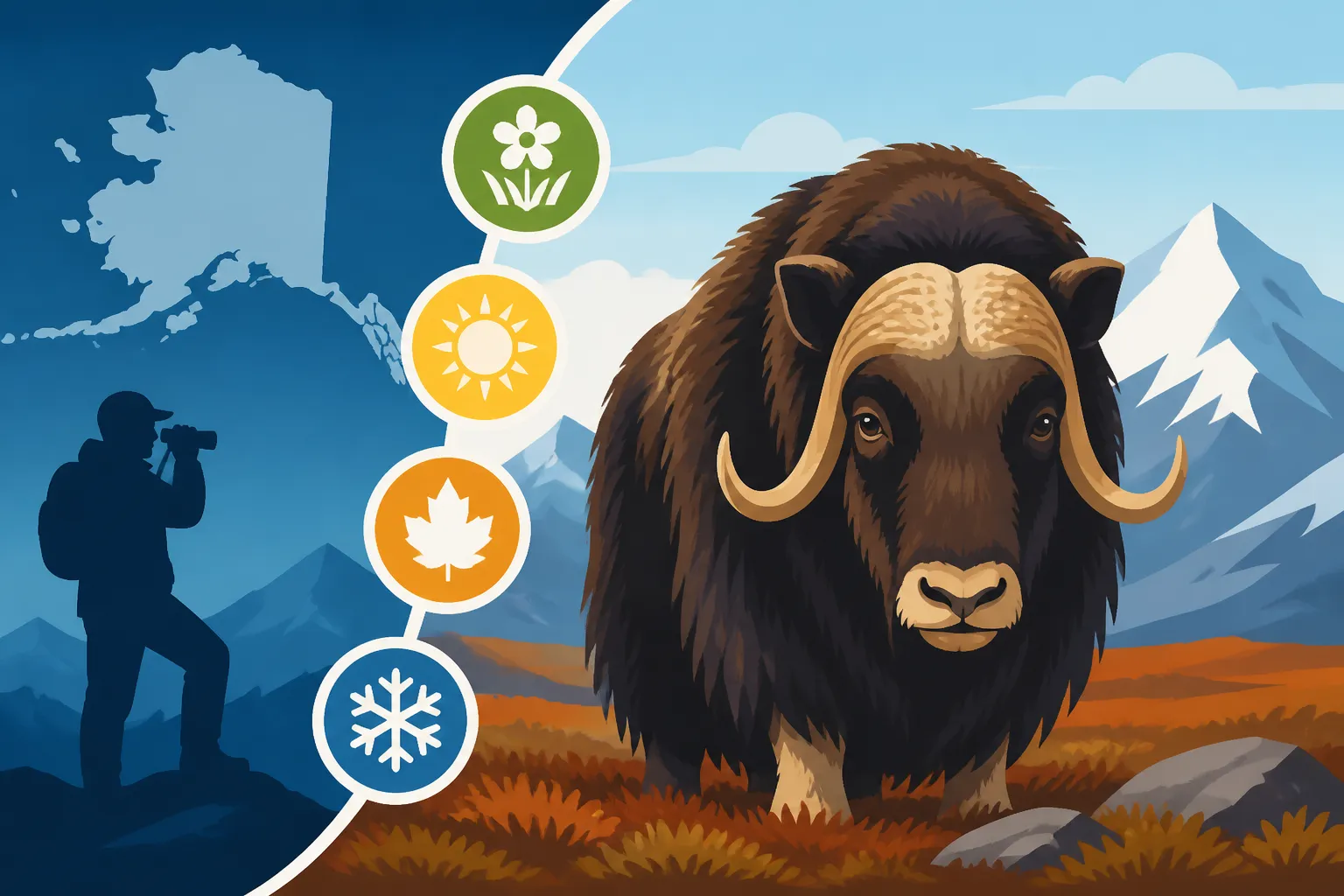
Alaska's muskox season structure is far from uniform; it's a mosaic of unit-specific dates and conditions designed to manage different herds. Understanding these variations is key to a successful application and ultimately, a successful hunt. The general framework involves distinct fall and winter periods, each with its own advantages and challenges.
Fall Hunts: Timing and Conditions
Fall muskox hunts typically occur in September, sometimes stretching into early October. These seasons are often favored by hunters who prefer milder temperatures and longer daylight hours. On Nunivak Island, for instance, a fall permit might run for a few weeks in September. The landscape during this time, especially on the tundra, can be a vibrant tapestry of reds and yellows as the arctic plants change color. However, "milder" in Alaska is relative. Fall can bring relentless rain, fog, and persistent wind, making spotting difficult and travel arduous over wet, tussock-filled terrain.
Foot travel is common during fall hunts, sometimes involving wading through bogs and streams. Bug pressure can still be an issue, especially in early September. A key advantage of fall is that the muskox often haven't developed their full, dense winter coat (qiviut) yet, which can be a consideration for trophy quality for some. Also, in certain areas, the bulls might be in or approaching the rut, making them more active and potentially easier to locate, although their behavior can be unpredictable. When considering a fall hunt, it’s vital to plan for variable weather and be prepared for both wet and cold conditions, and to pack appropriate gear, including high-quality rain gear.
Winter Hunts: Advantages and Disadvantages
Winter muskox hunts are far more common and often span from late January through March, sometimes even into April depending on the unit. These hunts are defined by extreme cold, short daylight hours, and often significant snow accumulation. On Nunivak, the late winter hunts are particularly popular for their potential to offer better travel conditions over frozen ground or deep, stable snow.
The primary advantage of winter is often easier travel. Snowmachines become the primary mode of transportation, allowing hunters to cover vast distances that would be impossible on foot in the fall. The crisp, clear air can also offer excellent visibility for glassing, though visibility can vanish just as quickly in a blizzard. Muskox in winter are also typically in their prime, sporting their full, luxurious qiviut — the incredibly fine underwool that makes them so resilient to cold. This makes for an impressive trophy.
However, the disadvantages are severe. Temperatures can plummet to -40°F or colder, with wind chill making it feel even more extreme. Equipment can fail, batteries die rapidly (think about GPS Battery Life in Cold Camps), and exposed skin can suffer frostbite in minutes. Survival skills and robust cold-weather gear are paramount. Hunters must be prepared for whiteout conditions, mechanical failures with snowmachines, and the sheer physical toll of operating in such a harsh environment. While travel can be easier, if a blizzard hits, you can be pinned down for days.
Specific Unit Season Dates and Quotas
Each GMU and subunit where muskox hunting is permitted will have its own specific season dates and, critically, a quota for how many animals can be harvested. These details are outlined in the annual Alaska Hunting Regulations, which are available online and from ADF&G offices. For example, a Nunivak Island (GMU 18) hunt might have a fall season for DM401 from September 1-30, and a winter season for DM402 from February 15 to March 15. The quotas for these hunts can be as low as one or two animals for certain specific units on the mainland, or a few dozen for the more robust Nunivak herds.
It's absolutely vital to check the current year's regulations because these dates and quotas can change based on population surveys, management goals, and harvest success from previous years. The application period for these draw permits is usually fixed in the fall, so you'll be applying for a hunt that is nearly a year away. Utilizing resources like GoHunt can provide up-to-date information on application deadlines and help you compare various hunt numbers to see which ones align with your preferred hunting style and season. This detailed research is a non-negotiable step for any serious muskox applicant.
The Application Process: From Draw to Harvest
Successfully hunting muskox in Alaska is a multi-stage journey that begins long before you set foot in the field. The core of this process is navigating the drawing permit system, which can be daunting for newcomers. However, with careful planning and adherence to deadlines, it's a system that can be successfully mastered.
Key Deadlines and Application Strategies
The most critical deadline for any muskox hunt is the draw application period, which runs from November 1 to December 15 each year. Missing this window means you're out of luck for the entire following season. During this period, you’ll apply online through the ADF&G website. When applying, you'll need to choose specific hunt numbers, each corresponding to a species, GMU, and season. For muskox, these numbers are usually in the "DM" series. For example, you might apply for "DM401: Nunivak Island Muskox, September."
Strategically, many hunters use the comprehensive data provided by platforms like GoHunt to analyze drawing odds. This data can show you how many applicants typically apply for a certain hunt number, the number of permits issued, and historical success rates. Some hunters choose to apply for the hunts with the lowest odds, hoping to hit the jackpot on a premier hunt like Nunivak, while others might focus on less popular units on the Seward Peninsula where odds, while still tough, might be slightly better. Remember, you typically pay an Alaska Draw Application Fee Per Hunt Number, so applying for many different hunts can add up. It’s also important to understand that Alaska has no preference points system, meaning your odds reset to zero every year, making every application a fresh start.
Understanding Permit Types and Eligibility
The vast majority of muskox hunts in Alaska are drawing permits. There are no general season or over-the-counter tags for muskox for non-residents, and very few for residents. These drawing permits are highly specific: they dictate the exact dates you can hunt, the precise area (GMU and subunit), and sometimes even restrictions on weapon type (e.g., archery-only areas, though these are rare for muskox).
Eligibility is also a crucial factor. For non-residents, a hunting license is required, and for muskox, as with sheep and brown bear, a guide is mandated by state law. This means that if you draw a permit as a non-resident, you must have a licensed Alaska Registered Guide-Outfitter accompanying you in the field. The only exception to this guide requirement is if you are hunting with an Alaska resident who is a second-degree relative (parent, child, sibling, grandparent, grandchild, aunt, uncle, niece, nephew, or first cousin), which falls under Alaska's Second-Degree-Kindred Alternative to a Guide. For residents, depending on the hunt area and permit type, you may be able to hunt unguided. Nonresident Aliens and Alaska's Guide Requirement is another important point to be aware of; foreign nationals always require a guide for big game.
Post-Draw Requirements and Reporting
If the stars align and you successfully draw a muskox permit, your journey isn't over. There are critical steps you must take. First, you'll need to purchase your actual Alaska Big Game Locking Tags and What Each Costs for muskox, which can be significant, especially for non-residents. You'll also likely receive a permit packet with detailed instructions specific to your hunt area. This might include information on mandatory hunter orientations, which are sometimes required for certain species or units, similar to the Alaska Sheep Hunter Orientation Deadline.
Upon a successful harvest, reporting is paramount. You must complete your Alaska Harvest Report Deadline After the Hunt, usually within a specific timeframe (e.g., 5-15 days) of the harvest or the close of the season. For muskox, you'll also have a sealing requirement. This involves presenting the hide and skull (and sometimes specific bones or teeth) to an ADF&G representative or designated sealing agent for inspection and official documentation, usually within 30 days of the harvest. This sealing process is critical for biological data collection and ensuring compliance with regulations. Failure to report or seal your animal can result in penalties and future hunting restrictions.
Planning Your Muskox Expedition
Drawing a muskox permit is a monumental achievement, but it's just the beginning of the true challenge. Planning a muskox expedition requires meticulous attention to detail, especially when dealing with the extreme environments and remote locations where these animals thrive.
Logistical Considerations for Remote Hunts
Muskox hunting often takes you to some of Alaska's most wild and isolated corners, making logistics a primary concern. For island hunts on Nunivak or Nelson, air charter from a hub like Bethel is the only way in. This means coordinating with an air taxi operator well in advance, understanding their weight limits, and carefully managing your gear to fit into the plane. For mainland hunts on the Seward Peninsula or North Slope, you might fly into a small village and then travel further by snowmachine, ATV, or even dog team, depending on the season and local conditions. Always ask your air taxi about their Weight Limits on a Super Cub Drop and factor in extra trips for meat if you're flying.
Consider transportation within the hunt area. If you're going guided as a nonresident, your guide will arrange this. If you're a resident on a self-guided hunt, you'll need to secure reliable snowmachines, fuel, and perhaps even a shelter like a portable tent or a rented cabin. Communication is also vital in these remote areas. Cell service is virtually nonexistent, so you'll need a satellite phone, an InReach device (to manage InReach Check-In Schedules for Solo Hunts), or a satellite messenger for emergencies and check-ins. Always leave a detailed trip plan with a trusted contact back home.
Essential Gear for Extreme Conditions
Hunting muskox in Alaska means preparing for some of the planet's harshest weather conditions. Your gear list will be radically different from a deer hunt in the Lower 48. Layering is key, with high-quality base layers, insulating mid-layers (down or synthetic), and an impermeable outer shell that can withstand brutal wind, driving snow, or persistent rain. For winter hunts, a heavy parka, insulated bibs, and extreme-cold-weather boots (like those rated to -60°F or colder) are non-negotiable.
Beyond clothing, you’ll need a robust sleep system—a zero-degree or even -20°F sleeping bag, and an insulated sleeping pad. Navigation tools, like a reliable GPS with offline maps downloaded, a compass, and paper maps, are crucial, especially if a whiteout hits. For a guide, a .375 H&H Magnum is often considered the minimum caliber for dangerous game defense. For hunters, a flat-shooting rifle in a caliber like .30-06, .300 Win Mag, or .338 Win Mag with quality bullets is typical. Don't forget high-quality optics (binoculars and a spotting scope) for locating muskox on the vast tundra. Preparing for Alpine Navigation Without Cell Service is not just about finding your way, but also about survival.
Working with Transporters and Local Resources
Even if you're not hiring a full-service guide (as a resident on an unguided hunt, or if you're a nonresident with a qualified relative), you'll almost certainly need to work with an Alaska Transporter. These are air taxi operators or boat operators who can drop you off and pick you up from your hunting area. It's important to understand the difference between Alaska Transporter Services Versus Guide Services; transporters can only provide transportation, not assistance with hunting activities. They cannot provide advice on where to hunt, spot game, or assist with packing out your kill.
Working with local resources in villages like Mekoryuk on Nunivak or communities on the Seward Peninsula can be invaluable. Locals often have a deep understanding of the terrain, weather patterns, and the animals. They can offer insights into local conditions, potentially provide snowmachine rentals, or even help with logistics like getting your meat frozen and shipped out. Building positive relationships with local communities is not only respectful but can also make your hunt safer and more enjoyable. These communities are your lifeline in such remote regions.
Maximizing Your Odds: Research and Preparation
Given the extreme difficulty in drawing a muskox permit and the formidable challenges of the hunt itself, maximizing your odds through thorough research and diligent preparation is absolutely essential. This isn't a hunt you just "show up" for; it's an expedition that demands years of planning for many.
Leveraging Application Data and Odds
The first step to maximizing your odds happens long before any boots hit the tundra. It involves deep diving into the ADF&G draw statistics. Every year, after the draw results are released, ADF&G publishes tables showing the number of applicants, permits issued, and drawing odds for each hunt number. Resources like GoHunt compile this data and present it in user-friendly formats, often with additional analysis. You can look at the Alaska Nunivak Muskox Permit Odds for specific years and specific hunts.
By studying this data, you can identify trends: which hunts are consistently the most difficult to draw, which have seen an increase or decrease in applicants, and which might offer a slightly better chance. While there are no bonus points in Alaska (as Alaska Bonus Points Compared to Other States will tell you), understanding the sheer volume of competition for specific permits can help you tailor your application. Some hunters might focus on a single, dream hunt and apply for it every year, hoping for that one lucky break. Others might spread their applications across multiple muskox hunts, or even apply for a muskox hunt as their first choice and a high-demand caribou or moose hunt as a lower choice. The key is to make an informed decision based on data, not just hope.
Physical and Mental Conditioning
A muskox hunt, especially a winter expedition, is incredibly physically demanding. You'll be operating in extreme cold, often contending with deep snow, high winds, and long days. For fall hunts, navigating tussocks and boggy ground can be a relentless grind. Even if you're using a snowmachine, the physical exertion of riding, getting unstuck, and handling the animal after a kill is substantial.
Mental fortitude is just as crucial. The isolation, the harsh weather, the potential for equipment failures, and the constant vigilance required for bear safety (even in winter, though less common) can take a toll. Training should involve not just cardiovascular fitness but also strength training, especially for your core and legs, to handle heavy packs and difficult terrain. Preparing for the discomfort and staying positive in adverse conditions will be vital for a successful and safe experience. This is a hunt where Training for a Backpack Sheep Hunt principles, while different species, still apply in terms of the mental and physical grit required.
Contingency Planning and Safety Protocols
Alaska's wilderness is unforgiving, and a muskox hunt carries inherent risks. Comprehensive contingency planning is not just wise; it's essential for survival. This includes having backup communication devices (sat phone, InReach), a well-stocked first-aid kit, and knowledge of how to use it. Prepare for mechanical breakdowns: carry spare parts for snowmachines, tools, and know how to make basic repairs in the field. What happens if Weather Days and Who Pays for Them becomes a multi-day ordeal, stranding you in camp? Always pack extra food, fuel, and emergency shelter sufficient for several unexpected days.
Beyond personal preparation, ensure you have a detailed emergency evacuation plan. Discuss this with your transporter, guide, or hunting partners. Understand that in remote Alaska, medical assistance can be days away, and weather can prevent any rescue attempts. Medical insurance for remote Alaska, and potentially dedicated rescue insurance, is a wise investment. Being realistic about the dangers and meticulously planning for them won't diminish the adventure; it will ensure you're prepared to safely return from it.
| Hunt Area | Typical Season Type | Primary Month(s) | Access Method(s) | Guide Requirement (Non-Res) | Average Draw Odds (Approximate) | Terrain Highlights |
|---|---|---|---|---|---|---|
| Nunivak Island | Draw Permit (DM401/402) | Sep, Feb-Mar | Air Charter | Yes | < 1% | Tundra, Coastal |
| Nelson Island | Draw Permit | Feb-Mar | Air Charter | Yes | < 1% | Tundra, Coastal |
| Seward Peninsula | Draw Permit (DM780) | Sep-Oct, Feb-Apr | Road/Snowmachine/ATV | Yes | 1-3% | Rolling Tundra, Mountains |
| North Slope (GMU 26) | Draw Permit | Sep-Oct, Feb-Mar | Fly-in/Snowmachine | Yes | < 1% | Arctic Tundra, Flat |
Note: Draw odds are highly variable year to year and depend on specific hunt numbers. Consult current ADF&G regulations and draw statistics for precise information.
Disclaimer
This guide provides general information on Alaska muskox season structure. Hunting regulations in Alaska are subject to change annually and can vary significantly by Game Management Unit (GMU) and permit type. It is the hunter's sole responsibility to consult the most current Alaska Department of Fish and Game (ADF&G) hunting regulations and any emergency orders before planning or undertaking any hunting activity. Failure to do so can result in citations or prosecution.