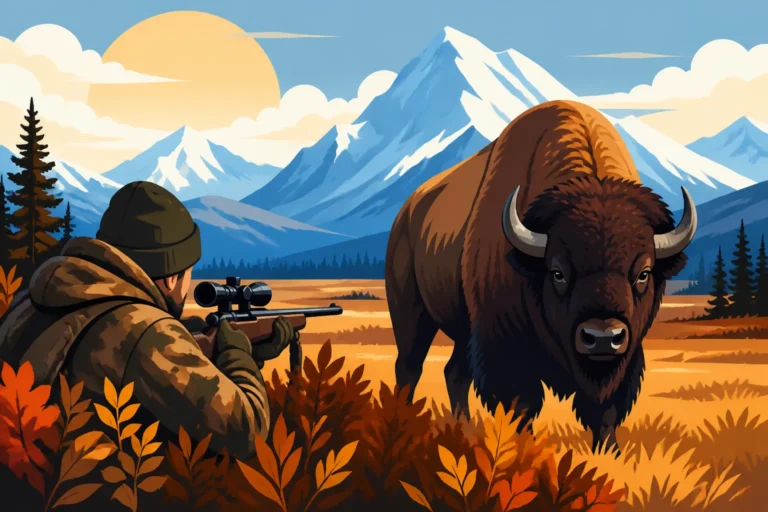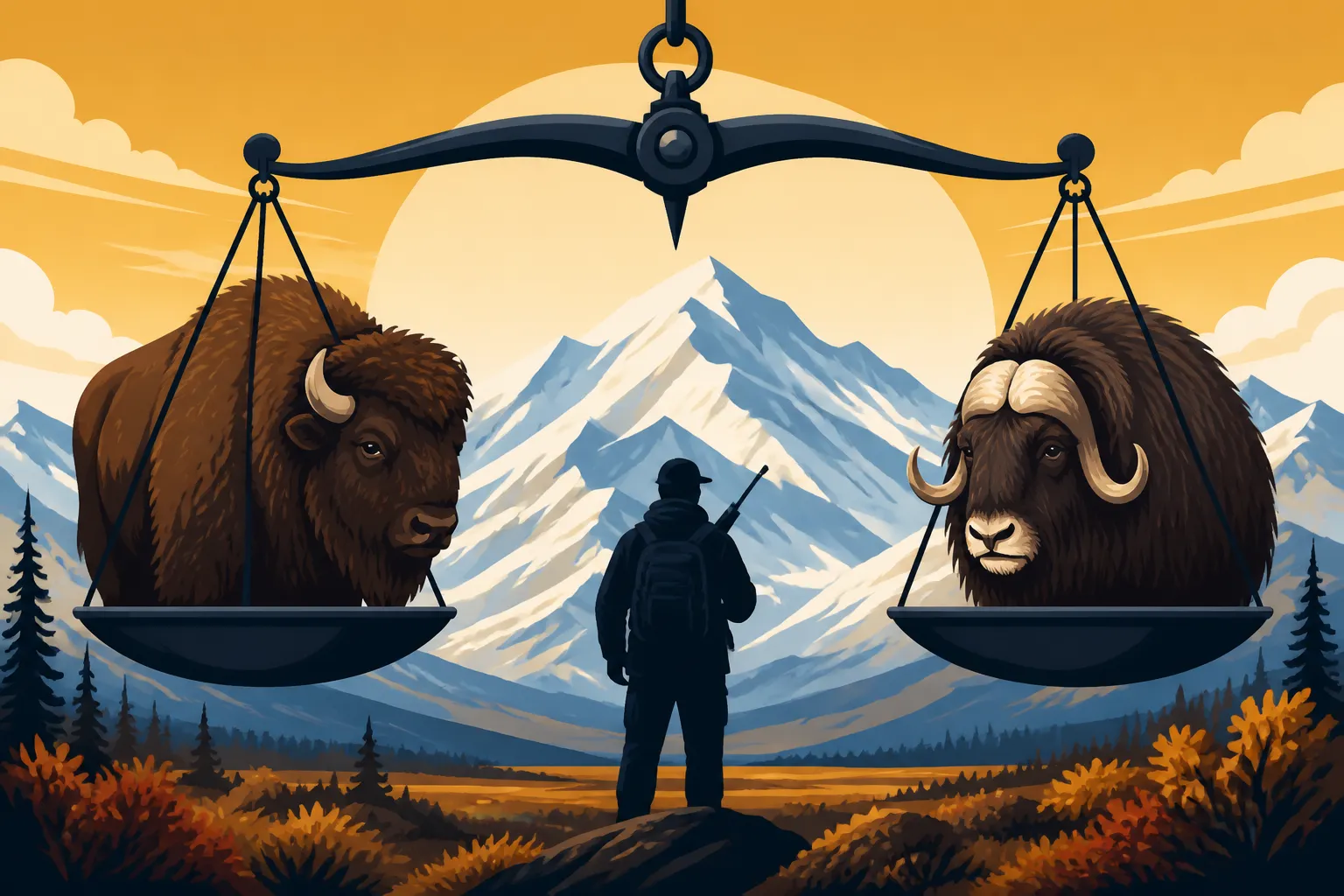
Alaska Bison and Muskox Tags at the Top of the Scale
Getting an Alaska big game tag is a dream for many, but for species like bison and muskox, that dream feels incredibly distant due to the extreme difficulty of drawing a permit and the sheer cost involved. These aren't hunts you stumble into; they demand years of meticulous planning, significant financial investment, and a thorough understanding of Alaska's unique draw system. This guide will walk you through everything you need to know about pursuing these truly once-in-a-lifetime experiences.
Understanding Alaska's Pinnacle Permits
Hunting in Alaska offers unparalleled experiences, but there's a tier of species that sits at the very top, both in terms of allure and the challenge of drawing a tag. Bison and muskox fall squarely into this category, representing some of the most sought-after and expensive hunts in the state. The sheer remoteness, the incredible animal, and the limited permits combine to create an almost mythical status around these opportunities.
Why Bison and Muskox Permits Are So Coveted
Imagine standing face-to-face with a creature that roamed alongside woolly mammoths, a shaggy, primeval beast perfectly adapted to the most extreme Arctic conditions. That's the allure of a muskox. Or picture yourself tracking a majestic bison across the vast interior plains, a true symbol of American wilderness. These aren't just animals; they are living legends, and harvesting one is an accomplishment many hunters chase for a lifetime. The limited number of available permits for these species each year, coupled with overwhelming demand from resident and non-resident hunters alike, elevates them to an almost mythical status. It’s not just about the trophy; it’s about the journey, the challenge, and the connection to a primal landscape. This rarity is precisely what drives their high value and intense competition in the draw.
Draw Odds and Application Realities
Let's be blunt: the odds of drawing a bison or muskox permit in Alaska are astronomically low for most hunt numbers. We're often talking about single-digit percentages, or even fractions of a percent, especially for non-residents. This isn't a state that operates on a preference point system, meaning every applicant, regardless of how many years they've applied, starts fresh each year. This can be incredibly frustrating for dedicated hunters who feel like they're continually rolling the dice. However, it also means that every applicant has an equal chance, theoretically, to draw that coveted tag right out of the gate. For those who are serious about their draw applications, resources like GoHunt can provide invaluable data analytics on draw odds, success rates, and permit strategies, helping you refine your choices. Understanding these realities is crucial, as it shapes your long-term application strategy and expectations. Many successful applicants swear by the detailed information and tools offered by platforms like GoHunt, which can help decipher historical draw data and identify trends.
The Elusive Alaska Bison Hunt
Alaska is one of the few places in North America where you can hunt wild bison, a relic of the Pleistocene that still roams free. While not as numerous or widely distributed as some other big game species, the hunt for these magnificent animals offers a truly unique challenge.
Delta Junction and Farewell Bison Herds
Alaska's bison populations are primarily managed as two distinct herds: the Delta Junction Herd and the Farewell Herd. The Delta Junction Herd is perhaps the most famous, offering a draw hunt relatively close to the road system, although "close" in Alaska is always a relative term. This herd occupies the vast interior plains and agricultural areas near Delta Junction. The terrain here can vary from open fields to dense timber, providing diverse hunting conditions. Hunters often use snowmachines in late season or ATVs in earlier seasons to access the plains. Access is generally more straightforward than truly remote hunts, but requires specific landowner permissions in some areas. Bison Herd Size at Delta Junction is something many hunters want to know before applying.
The Farewell Herd is a much more remote and rugged hunt, deep in the interior wilderness, generally accessed by aircraft. This hunt is often considered even more challenging, requiring a significant backcountry expedition. The Farewell area is characterized by vast, remote landscapes, rolling hills, and expansive river systems. Hunting here means embracing true wilderness, with all the logistical challenges that entails, from flying in all your gear to being prepared for rapidly changing weather. Both herds are highly sought after, but the accessibility and nature of the hunt differ considerably.
Permit Types and Season Dates
Bison hunts in Alaska are almost exclusively managed through a draw permit system. This means you must apply during the specified application period (November 1 to December 15) and be lucky enough to be selected. The specific hunt numbers (e.g., DB400 for Delta Bison) dictate the unit, season dates, and any specific regulations. Seasons typically occur in late summer or fall, often coinciding with cooler weather which is ideal for meat care, or sometimes extending into winter, allowing for snowmachine access. It's imperative to consult the current Alaska Department of Fish and Game (ADF&G) regulations booklet for the exact dates and rules each year, as they can change based on herd health and management objectives. Some hunts may be bull-only, while others might allow for either sex. A thorough understanding, often supplemented by dedicated platforms like GoHunt, is your best bet to navigating this complex system.
Preparing for a Bison Hunt
A bison hunt is no walk in the park. These are massive animals, and while the terrain in some Delta hunts might seem relatively flat, moving a several-thousand-pound animal from the field can be a monumental task. Physical conditioning is critical, especially for the more remote Farewell hunts where you might be packing out meat over challenging terrain for miles. Beyond physical fitness, proper gear is paramount. This includes robust meat care equipment, reliable firearms (given the size and tenacity of bison), and appropriate clothing for unpredictable interior Alaska weather. Logistics are also a huge factor. If flying into the Farewell area, you'll need to coordinate meticulously with an air taxi. For Delta, understanding land access, potential ATV restrictions, and recovery plans for such a large animal are key. Thinking through how you will quarter a bull moose alone in the field, for instance, offers a comparable scale of planning for recovery and meat handling.
Muskox Hunting: A True Arctic Challenge
If bison hunting is a unique experience, then muskox hunting takes you to the very edge of the Arctic wilderness, offering a hunt that is truly in a class by itself. These shaggy, prehistoric beasts inhabit some of the most remote and challenging environments on Earth.
Nunivak Island and North Slope Hunts
The primary hunt for muskox in Alaska is on Nunivak Island, a vast, treeless island in the Bering Sea. This is perhaps the most iconic muskox hunting destination, renowned for its healthy herd and impressive bulls. Nunivak Island is a federal wildlife refuge, and all hunting here requires a guide for non-residents, adding another layer of complexity and cost. The landscape is rolling tundra, often wet and boggy, with unpredictable weather that can shift from calm to whiteout blizzard in hours. Access is typically via scheduled flights to Mekoryuk, the island's only village, and then by snowmachine or ATV out into the refuge with your guide. Nunivak Island Muskox Transplant History is a fascinating read about how this herd came to be.
Beyond Nunivak, limited muskox hunting opportunities exist on the North Slope of Alaska, primarily through registration permits. These hunts are often even more remote, requiring extensive logistics and travel into truly wild, unforgiving country. Access to the Arctic Slope Hunting in Unit 26A often involves bush flights to remote villages or camps, and hunters must be prepared for extreme cold, wind, and the challenges of hunting in a treeless expanse. While these North Slope hunts are less common for draw applicants, they represent the epitome of Arctic hunting.
Muskox Behavior and Hunting Strategies
Muskox are known for their incredibly thick coat, called qiviut, which allows them to withstand brutal Arctic winters. They typically live in herds and, when threatened, will often form a defensive circle, facing outward to protect calves and vulnerable members. This unique behavior means that hunting strategies often involve a slow, careful stalk to get within shooting range, followed by a deliberate shot. Unlike some other big game, they aren't prone to bolting wildly if you approach carefully, though they can charge if cornered or if a dominant bull feels particularly aggressive.
The treeless tundra environment offers little cover, making successful stalks a true test of patience and fieldcraft. Hunters must utilize every small depression, ridge, or snowdrift to remain undetected. The challenges aren't just in finding the animals, but in navigating the vast, featureless terrain, often without any recognizable landmarks. Good optics and a keen eye for terrain features are essential.
Logistics of an Arctic Expedition
Hunting muskox, especially on Nunivak Island, is truly an expedition. For non-residents, hiring an Alaska Registered Guide-Outfitter is mandatory, and these hunts are typically booked years in advance. The guide will handle much of the intricate logistics, including transportation from Mekoryuk into the field, camp setup, and meat/trophy recovery. You'll need specialized gear designed for extreme cold and wet conditions, including high-quality parkas, insulated boots, and a robust tent system. Travel to Nunivak involves commercial flights to Bethel, then a regional flight to Mekoryuk. From there, it's often snowmachine or ATV travel across the tundra. Expect severe weather delays; building extra days into a fly-in schedule is not just a recommendation, it's a necessity. Being truly prepared for anything, from a sudden blizzard to equipment failure, is paramount for a safe and successful Arctic hunt.
Application Strategies for Drawing These Permits
Given the incredibly low odds for bison and muskox, merely applying isn't enough; you need a strategic approach to maximize your chances over the long term. Patience, persistence, and meticulous research are your best allies.
Alaska's Draw System Basics
Alaska's big game draw system is unique in that it's a true lottery; there are no preference points or bonus points for unsuccessful applicants. Every year, everyone starts from zero. This can be frustrating for those hoping to build seniority, but it also means that a first-time applicant has the same theoretical chance as someone who has applied for twenty years. The application window is crucial: it opens on November 1 and closes promptly on December 15. Missing this window means missing out for the entire year. Alaska's November 1 to December 15 Draw Application Window is a critical period for thousands of hunters. You'll apply for specific hunt numbers that correspond to particular species, units, and seasons. It's vital to read the regulations carefully to understand the nuances of each hunt number, as permits can have very specific antler or horn restrictions, season dates, or access rules.
Maximizing Your Chances
While there are no preference points, smart application strategies can subtly influence your long-term success. First and foremost, research is king. Utilize resources like the ADF&G's draw hunt statistics, which detail past application numbers and success rates. This can help you identify hunt numbers that, while still difficult, might have slightly better odds. Furthermore, platforms like GoHunt compile and analyze this data, offering tools to understand historical trends and simulate odds, giving you an edge in making informed decisions.
Consider applying with a party. Alaska allows for party applications, meaning if one person in the group draws, everyone in the party draws. While this doesn't improve the individual odds, it allows friends or family to hunt together if successful. However, if any member of the party has already drawn a certain species, they may not be eligible to apply in a party for the same species. Understanding these rules is critical. Another tactic is to diversify your applications; instead of putting all your eggs in one hunt number, apply for multiple species or different hunt numbers for the same species, spreading your chances. However, remember there are limits to how many hunt numbers you can apply for, generally six choices for moose and three for other species. The Three-Hunt-Number Limit on Alaska Draw Applications outlines these specifics.
Navigating Hunt Numbers and Choices
The Alaska draw application system allows you to select multiple hunt choices for each species you apply for. For bison and muskox, you typically get three choices. This means you can list your top three preferred hunt numbers in order of preference. The system processes your first choice, and if unsuccessful, moves to your second, and then your third. This is why meticulous research into each hunt number is so important. You might find a less popular, but still desirable, hunt number to list as your second or third choice, slightly increasing your overall odds of drawing any permit for that species.
Be wary of hunt numbers with extremely low harvest quotas or very specific access requirements unless you're fully prepared for those unique challenges. Sometimes a hunt number will allow specific weapon types (e.g., muzzleloader hunts in Alaska draw areas) or have unique timeframes. Make sure your choices align with your capabilities, resources, and hunting style. The Alaska Draw Results Release in February is always a tense time, but the work you put in beforehand will make those results, whatever they may be, easier to accept.
The Financial Investment: Breaking Down the Costs
Let's be very clear: hunting bison and muskox in Alaska is an expensive endeavor. These are not budget hunts. The costs span everything from licenses and tags to guides, air travel, specialized gear, and meat/trophy processing, easily reaching into the tens of thousands of dollars.
License and Tag Fees
The first significant cost you'll encounter, especially as a non-resident, are the Alaska hunting license and locking tag fees. While an annual hunting license for a non-resident currently runs around $160, the species-specific locking tags are where the price truly escalates. An Alaska bison tag for a non-resident is typically $900, and a muskox tag is a staggering $2,200. These are among the most expensive tags in the state, reflecting the rarity and desirability of these animals. Why the Alaska Bison Tag Is the Most Expensive is a common question. These fees are mandatory and must be purchased before you apply for the draw, as proof of eligibility. You will only be refunded if you are unsuccessful in the draw and explicitly request it (and sometimes there are limitations). So, even if you don't draw, you've already invested a substantial amount. Alaska Hunting License Validity Period is also important to note, as licenses are valid for a calendar year.
Guide, Transporter, and Logistics Costs
For non-residents, a guided hunt is mandatory for muskox. This means you'll be hiring an Alaska Registered Guide-Outfitter, a significant investment. A guided muskox hunt, depending on its duration, location, and the outfitter, can range from $15,000 to over $30,000. These costs typically include the guide's fee, lodging (often tent camps), food, and in-field transportation (snowmachine, ATV). What an Alaska Registered Guide-Outfitter May Contract For provides more details on what to expect.
For bison, guided hunts are optional for non-residents (unless specified by the hunt number, which is rare for bison) but highly recommended due to the logistics involved. Unguided bison hunts often rely on Alaska Transporter services, which fly you into a remote area and pick you up later. Air taxi fees can easily run into the thousands, depending on flight time and distance. Remember, a transporter cannot legally provide "guide services" or assist in the actual hunt. Alaska Transporter Services Versus Guide Services explains the crucial distinctions. Beyond guides and transporters, you'll need to budget for charter flights to regional hubs (like Bethel for Nunivak), hotels before and after your hunt, and ground transportation.
Hidden Costs and Budgeting for the Unexpected
Beyond the obvious expenses, there are numerous hidden costs that can quickly inflate your budget.
- Gear: You’ll need top-tier clothing, boots, optics, sleeping systems, and firearms capable of performing in extreme conditions. This can easily run several thousands of dollars if you're starting from scratch.
- Meat Processing & Shipping: A bison can yield a huge amount of meat. Processing it in Alaska and then shipping it back home (if you're flying) can be a major expense. Meat Shipping Cost From Bush Alaska can give you an idea. The same goes for a muskox, though smaller.
- Trophy Care: Field care for the hide and skull, and then shipping them to a taxidermist, adds more to the bill. Shipping an Alaska Bear Hide to a Taxidermist applies to other big game.
- Weather Delays: Alaska weather is notoriously unpredictable. Bush flights can be grounded for days, leaving you stranded in camp or in a village, incurring extra costs for food, lodging, or additional flight time. Always budget for several extra days.
- Emergency Planning: Carrying a satellite communication device (like a Garmin inReach), having a robust emergency evacuation plan, and even considering separate medical evacuation insurance, are all smart investments. Downloading Offline Maps Before a Fly-In and InReach Check-In Schedules for Solo Hunts are great resources for this.
- Gratuities: Don't forget to budget for tips for your guide, packer, or air taxi pilot, which are customary in the industry.
| Expense Category | Bison Hunt (Unguided/Transporter) | Muskox Hunt (Guided) | Notes |
|---|---|---|---|
| Non-Resident License | $160 | $160 | Annual, required for any hunting. |
| Bison/Muskox Tag | $900 (Bison) | $2,200 (Muskox) | Required for application, high cost. |
| Guide Fees | Not typically required, but optional | $15,000 – $30,000+ | Mandatory for non-resident muskox hunters on Nunivak. |
| Air Taxi/Transporter | $2,000 – $8,000+ (round trip) | Often included in guide package | Varies wildly by distance, plane type, number of loads. |
| Commercial Airfare | $800 – $2,000+ (to Alaska) | $1,500 – $3,000+ (to rural hub) | To Anchorage, then regional to Bethel/Kotzebue. |
| Pre/Post-Hunt Lodging | $300 – $1,000 (several nights) | $500 – $1,500 (more remote nights) | Hotels in Anchorage, Bethel, Mekoryuk. |
| Food & Supplies | $300 – $800 (for 7-10 days) | Often included in guide package | For unguided, bring your own or buy locally (expensive). |
| Specialized Gear | $2,000 – $10,000+ (initial investment) | $2,000 – $10,000+ | Cold weather clothing, pack frame, sleep system, optics, rifle. |
| Meat/Trophy Processing | $500 – $2,000+ | $300 – $1,000+ | Butchering, freezing, taxidermy prep, shipping. |
| Contingency Fund | $1,000 – $3,000+ (weather, delays) | $2,000 – $5,000+ | Essential for remote Alaska; don't skimp here. |
| Total Estimated Range | $7,000 – $25,000+ (unguided) | $23,000 – $50,000+ (guided) | These are conservative estimates and can easily be exceeded. |
Note: These figures are general estimates and can fluctuate significantly based on current prices, specific hunt chosen, outfitter rates, and individual spending habits. Always get detailed quotes and create a comprehensive budget.
Post-Harvest Requirements and Trophy Care
Successfully harvesting a bison or muskox is just the beginning of another critical phase: ensuring proper care of the meat and trophy, and fulfilling all regulatory obligations. Mistakes here can lead to legal issues, spoiled meat, or a damaged trophy.
Sealing and Reporting
Alaska has stringent requirements for reporting harvests and, for certain species, sealing the hide or skull. Muskox, like brown bears and wolves, fall under the mandatory sealing regulations. This means that after a successful hunt, you must present the hide and skull (with horns attached) to an authorized ADF&G representative or a designated sealing agent within a specified timeframe (often 30 days after the kill, but check current regulations). This process ensures proper biological data collection and confirms the legality of your harvest. Horn Plugging and Alaska's Sealing Deadline provides more context on this type of requirement.
For bison, while physical sealing might not always be required (depending on the hunt number and location), submitting a harvest report is always mandatory. All hunters must file a harvest report, usually online, by a specific deadline after the season closes, even if unsuccessful. Failure to report can result in fines and make you ineligible for future draws. These reports are crucial for wildlife managers to assess harvest rates and manage populations effectively.
Meat and Trophy Care in the Field
Given the size of a bison and the remoteness of many muskox hunts, field care is paramount. For a bison, you're dealing with an enormous amount of meat. Prompt quartering, cooling, and protecting the meat from scavengers and flies are critical. Alaska Moose Meat Salvage Requirements outlines similar mandates for proper meat salvage. You'll need durable game bags that breathe, and the ability to hang meat out of bear reach is essential, especially in the remote backcountry. Meat Care in 50-Degree September Weather is a great resource if you're hunting in warmer fall conditions.
For muskox, which are smaller than bison but still substantial, the same principles apply. The extreme cold of the Arctic can be a blessing for meat preservation, but getting the hide properly handled for taxidermy is a specialized skill. For both species, caping out the head and shoulders for a mount requires careful work. Many guides are skilled at this, but if you're unguided, ensure you know how to perform a proper field cape, turning ears and lips correctly to prevent slippage.
Shipping and Taxidermy
Once you've fulfilled your reporting and sealing obligations, the next hurdle is getting your meat and trophy home. If you flew into a remote camp, you'll likely need your air taxi to make a second trip to haul out the meat and capes, adding to your flight costs. For muskox from Nunivak, meat is often processed in Mekoryuk, then flown to Bethel and then to Anchorage for freighting out. Bison meat from Delta Junction can be processed locally.
Shipping frozen meat can be complex and expensive. Airlines have specific regulations for transporting game meat, often requiring it to be frozen solid and packed in wax-lined boxes or coolers. You'll need to coordinate with freight companies or airline cargo services. For your hide and skull, you'll typically ship them to a taxidermist. Many hunters choose an Alaskan taxidermist to handle the initial preservation and mounting, or they may opt to ship the raw, salted hide to a taxidermist closer to home. Proper salting of the hide in wet weather is critical to prevent hair slippage during transit, which can ruin a trophy. Getting horns and antlers home on a plane may require special crating due to their size, incurring further costs.
Disclaimer
Please be aware that hunting regulations, fees, and season dates in Alaska are subject to change. Always consult the most current Alaska Department of Fish and Game (ADF&G) regulations booklet or their official website before making any plans or applying for permits. This guide provides general information and should not be used as the sole source for legal or regulatory guidance.