Alaska Bison Hunt at Delta Junction
Hunting an Alaska bison isn't just a hunt; it's often a lifelong dream, a challenge steeped in history and sheer, raw Alaskan scale. For many, the Delta Junction bison hunt represents the pinnacle of that dream, yet securing one of these coveted permits is a significant hurdle. This guide will walk you through everything you need to know about the Delta bison, from its unique history and the rigorous application process to the on-the-ground realities of hunting one of North America's most impressive big game animals in the vast interior of Alaska.
The Return and Management of Alaska's Delta Bison Herd
The Delta Junction area holds a special place in Alaska's wildlife conservation story, primarily due to the successful reintroduction and careful management of its bison herd. These aren't just any bison; they're a testament to what dedicated conservation efforts can achieve.
A Tale of Reintroduction and Growth
Imagine Alaska without its iconic bison. It wasn't always this way. While wild bison were once common across parts of North America, they were largely extirpated from Alaska by the early 20th century. The Delta herd, specifically, traces its origins back to a pivotal reintroduction effort in the late 1920s. The Alaska Department of Fish and Game (ADF&G) brought 23 bison from Montana to an area near Big Delta, and against all odds, they thrived. This herd now represents one of Alaska's most robust and accessible wild bison populations, managed through strict harvest quotas to maintain herd health and balance with available habitat. It’s a remarkable success story that allows hunters the rare chance to pursue this magnificent animal.
Population Health and Sustainable Harvest
Maintaining a healthy bison population in the Delta Junction area is a constant balancing act. ADF&G actively monitors the herd's size, health, and range through aerial surveys, tracking studies, and hunter harvest data. The goal is to keep the population within a sustainable range, preventing overgrazing while ensuring there are enough animals to support both the ecosystem and a limited hunting season. Because the herd lives near agricultural lands and the Fort Greely military reservation, their movements can sometimes bring them into conflict with human activity, making careful management even more critical. Each year, the number of permits issued for the Delta bison hunt is determined by these scientific assessments, reflecting a commitment to long-term herd viability. This meticulous approach means that when you get a permit, you're participating in a well-managed, sustainable hunt.
Navigating the Delta Bison Draw Permit System
Drawing a Delta bison permit feels like winning the lottery, and for good reason. It’s one of the most competitive hunts in Alaska, but understanding the system is your first step toward beating the odds.
Eligibility, Education, and Application Basics
First things first, you need to be eligible. Like all big game hunts in Alaska, you'll need a current Alaska hunting license. For residents, this is often straightforward. Non-residents face the same licensing requirements, though the costs for licenses and tags can be significantly higher. Crucially, anyone applying for an Alaska draw permit must meet the general hunter education requirements. If you haven't taken a hunter education course, or if your course isn't recognized by Alaska, you'll need to complete one before you can even think about applying. The application period for most of Alaska's big game drawing permits, including the Delta bison hunt, typically opens around November 1st and closes on December 15th each year. Missing that deadline means waiting another year, so mark your calendar! You can apply online through the ADF&G website, and it's always a good idea to double-check all your information before submitting. For those aiming for unique opportunities like this, resources like GoHunt can be invaluable for staying on top of application deadlines and regulations.
Application Strategy and Odds: A Hard Truth
Let's be real: drawing a Delta bison tag is tough. The demand far outstrips the supply, leading to some of the lowest draw odds in the state. While specific numbers vary year to year, it's not uncommon to see thousands of applicants vying for just a handful of permits. This is where strategy comes in, though sometimes, it just comes down to luck. Alaska doesn't have a preference point system, meaning your odds essentially reset every year. This means whether it's your first time applying or your twentieth, everyone starts on equal footing in the draw.
When applying, you'll typically select a specific hunt number for the Delta bison. Pay close attention to the various hunt conditions listed in the regulations, as some may specify archery-only seasons, specific units, or other restrictions. While it's tempting to apply for every possible hunt, focus your efforts on the one or two that truly fit your goals and capabilities. For an in-depth look at this, you might check out our guide on how Alaska's Big Game Drawing Permits Work. Don't be discouraged by the odds, but be realistic. Many successful hunters apply for years before finally drawing that coveted tag.
Here's a simplified look at the number of applicants vs. permits in recent years (actual numbers vary annually, this is illustrative):
| Hunt Year | Total Applicants (Approx.) | Permits Issued (Approx.) | Success Rate (Approx.) |
|---|---|---|---|
| 2021 | 15,000 | 75 | 0.5% |
| 2022 | 16,500 | 80 | 0.48% |
| 2023 | 17,000 | 85 | 0.5% |
These numbers highlight just how competitive this draw is. Results for the draw are typically released in February, usually via email notification, though you can also check online.
Preparing for Your Delta Bison Adventure
So, you beat the odds. Congratulations! Now the real work begins. A Delta bison hunt is a demanding endeavor, requiring meticulous preparation, physical fortitude, and a solid plan.
Physical Conditioning: The Ultimate Test
Bison are massive animals, and the terrain around Delta Junction, while not mountainous like sheep country, can still be challenging. You’ll likely be covering significant distances on foot, potentially through deep snow or tussock-filled tundra, depending on the season. Moreover, once you've downed a bison, the real physical test begins: quartering and packing out hundreds of pounds of meat in potentially brutal conditions. This is not a hunt for the faint of heart or the out of shape. Start a rigorous training regimen months in advance, focusing on cardiovascular endurance, strength training (especially your back and legs for packing heavy loads), and mental toughness. Simulating heavy pack loads on uneven terrain is critical. Think about how you would approach training for a demanding sheep hunt; the physical demands, while different in type, are equally intense.
Essential Gear and Logistics: Beyond the Basics
Your gear list for a Delta bison hunt will be extensive and needs to be robust enough to handle interior Alaska's volatile weather.
- Rifle and Ammunition: Bison are incredibly tough, demanding a powerful rifle and accurate shot placement. Many hunters opt for cartridges suitable for large dangerous game, such as .300 Win Mag, .338 Win Mag, .375 H&H, or even larger. Ensure your rifle is sighted in after a bush flight, if applicable, or well before your hunt, and carry ample premium-grade ammunition. Consider a rifle choice for Alaska brown bear country as a benchmark for what you'll need.
- Optics: High-quality binoculars and a spotting scope are essential for locating bison across vast distances and confirming legal animals.
- Clothing System: Layering is key. You'll need warm, moisture-wicking base layers, insulating mid-layers, and a bombproof outer shell system that can withstand wind, snow, and rain. Brands like Sitka, Kuiu, and Stone Glacier offer excellent technical hunting apparel. Don't forget insulated boots designed for extreme cold.
- Navigation: GPS, satellite communicator (Garmin inReach or Zoleo), and paper maps are non-negotiable. Cell service will be nonexistent in most hunting areas.
- Meat Care and Packing: This is perhaps the most critical gear consideration. You'll need sturdy game bags, at least one reliable heavy-duty pack frame capable of handling massive loads, knives, a sharpening system, and potentially a small saw. Consider bringing a tarp or ground cloth to keep meat clean. For tips on dealing with such a large animal, review our guide on Quartering a Bull Moose Alone in the Field, which presents similar challenges. You will also need to comply with Alaska Moose Meat Salvage Requirements, which apply to bison as well.
- Shelter and Camp Gear: Depending on your approach, you might need a durable tent, sleeping bag rated for extreme cold, cooking system, and enough food for the duration of your hunt plus contingency days.
Logistically, consider how you'll access your hunting area. While parts of the Delta area are road-accessible, many prime spots require ATV access, snowmachine, or even air charter. Plan your transportation well in advance, and always have a contingency plan for weather delays or breakdowns.
Scouting and Research: Knowledge is Power
Even with a drawn tag, the work isn't over. Effective scouting and research are paramount to success.
- Map Study: Spend countless hours poring over topographic maps and satellite imagery (like those available through GoHunt's mapping tools or Google Earth). Identify potential bison travel corridors, feeding areas, winter range, and escape routes. Look for open plains, river bottoms, and areas with available forage. You can learn a lot by Scouting a Unit From Satellite Imagery Before You Fly.
- ADF&G Resources: The Alaska Department of Fish and Game provides invaluable resources, including hunt reports, management plans, and contact information for local biologists. Don't hesitate to reach out to them for current conditions or specific herd movements.
- Local Knowledge: If possible, speak with local hunters, air taxi operators, or residents who have experience in the Delta area. Their insights into weather patterns, animal behavior, and terrain can be priceless.
- Pre-season Scouting: If you live in Alaska or can afford to travel, a pre-season trip to scout the unit can significantly increase your chances. Familiarize yourself with access points, potential glassing knobs, and recovery routes.
Hunting Tactics and On-the-Ground Realities
Once you're in the field with a valid Delta bison tag, executing your plan becomes the focus. This hunt demands patience, endurance, and an understanding of bison behavior.
Locating and Approaching Bison
Bison are often found in open country, making them visible from a distance, but also making a stealthy approach challenging. They prefer grasslands, river bottoms, and areas with adequate forage, often congregating in large herds.
- Glassing: Long hours of glassing are crucial. Set up on high points or elevated areas overlooking large expanses of suitable habitat. Use your high-power binoculars and spotting scope to systematically scan for herds. Bison are large, dark animals, but they can blend surprisingly well into the vastness of the Alaskan interior, especially in sparse brush or shadowed areas. They might be bedded down and look like large rocks from afar.
- Movement Patterns: Observe their behavior. Bison often have predictable routines, moving from feeding grounds to bedding areas, especially during harsh weather. Understanding these patterns can help you anticipate their movements and position yourself for an encounter. In the fall, they often graze openly, while winter hunts might find them concentrated in areas with less snow or more accessible browse.
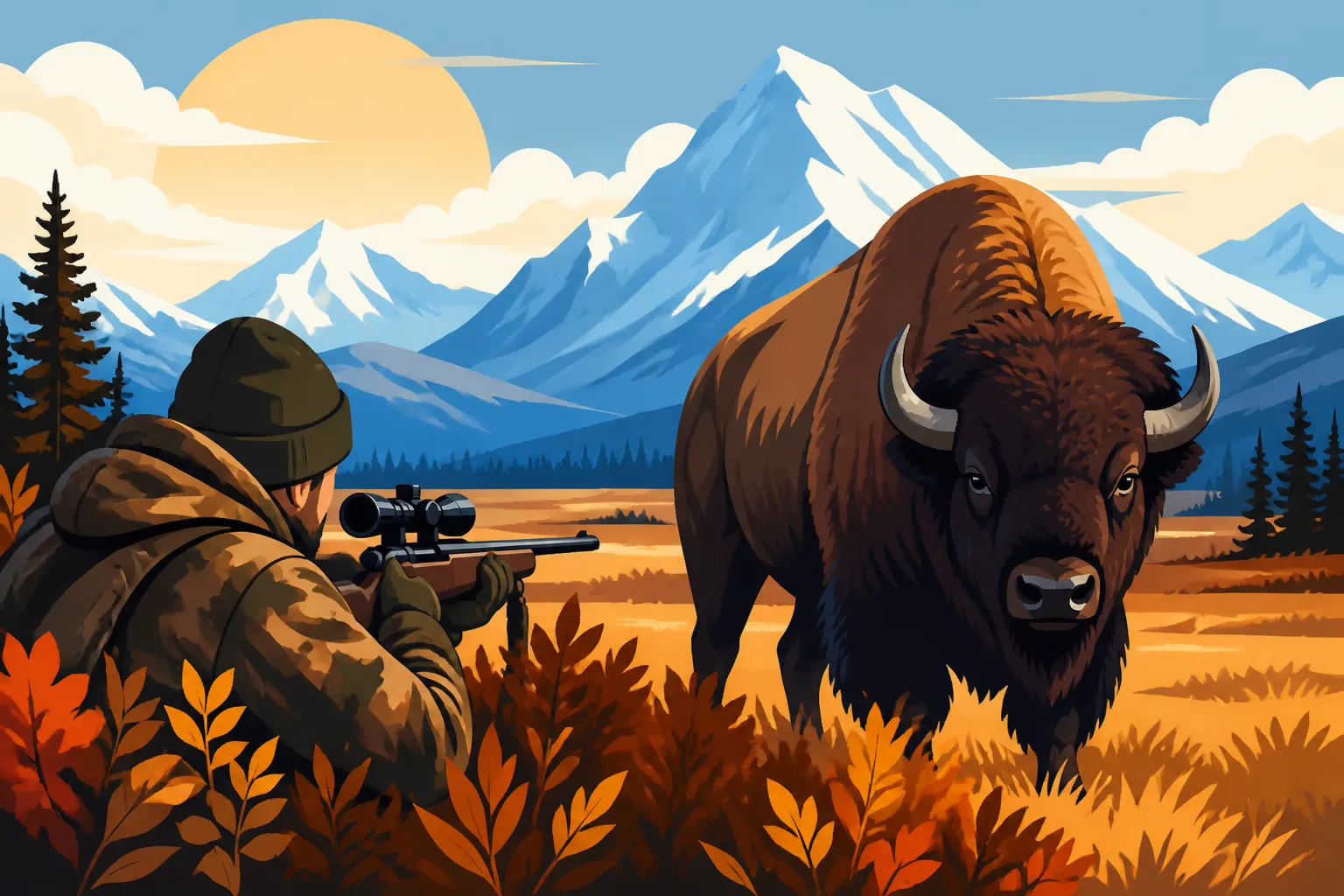
- Stalking Challenges: Once a herd is spotted, planning your stalk requires extreme care. Bison have excellent senses, particularly their sense of smell. Always approach into the wind. Use terrain features, draws, and sparse vegetation to stay out of sight. Remember, these are wild animals, and they are powerful. A mature bull can weigh over 2,000 pounds and is incredibly fast. Getting within ethical shooting range without being detected is often the hardest part of the hunt.
Ethical Shot Placement and Animal Recovery
When the moment of truth arrives, precise shot placement is critical. Bison are incredibly resilient and can cover significant distance even with a lethal hit.
- Shot Placement: Aim for the vitals: the heart and lungs, located slightly forward of the shoulder. A broadside shot is ideal, targeting the area behind the front leg, about one-third of the way up the body. Avoid shoulder shots unless you are confident in your rifle's power and bullet construction to penetrate heavy bone. A frontal chest shot can also be effective but is riskier due to the amount of bone and muscle. Always wait for a calm, ethical shot opportunity.
- Follow-Up: Be prepared for a follow-up shot. Do not assume a single shot will drop such a large animal immediately. Reload quickly and be ready to put another bullet into the animal if it doesn't go down.
- Tracking and Recovery: After the shot, give the animal time, but not too much time in freezing temperatures. Even with a good hit, they may run. Track carefully, looking for blood, broken branches, or disturbed ground. Having a partner is incredibly valuable for tracking and for providing safety in the field. When you find your animal, be cautious. Even a downed bison can be dangerous, especially if it's still alive. This is also where you might encounter other large predators; bear safety while butchering a kill in Alaska is always a consideration.
The Reality of Meat Care and Salvage
This is where the true physical toll of a bison hunt comes into play. You’ve got a massive animal on the ground, and now you have to convert it into edible meat and get it out of the field, often in difficult conditions.
- Quartering: A large Delta bison can yield anywhere from 400 to 700 pounds of boned-out meat, sometimes more. You will need multiple sharp knives, a game processing kit, and probably a small hatchet or saw. The process of quartering a bull moose alone in the field gives you a sense of the scale, but a bison is even larger. Be methodical, keep the meat clean, and get it cooled as quickly as possible. This is not a quick job; expect to spend hours.
- Game Bags: Immediately get the meat into breathable game bags to protect it from dirt, flies, and scavengers, and to allow it to cool properly.
- Cooling and Transport: In cold Alaska temperatures, cooling is less of an issue than in warmer climates, but still critical. Hang meat if possible, or spread it out on tarps to allow air circulation. If you're on a multi-day pack out, you'll need to protect the meat from freezing solid if temperatures drop too low, as rock-hard frozen meat is difficult to pack. The ability to hang meat in warm September weather might not be your primary concern for bison, but proper cooling is always essential.
- Packing Out: This is the ultimate test. You will need multiple trips, likely with heavy pack frames, to get all the edible meat out. Each quarter of a mature bison can weigh 150-200 pounds or more, plus the hide and skull if you're keeping them. Plan your pack-out route meticulously and be prepared for incredibly strenuous work. This is why the physical conditioning mentioned earlier is non-negotiable.
The Delta Junction bison hunt is an incredible, once-in-a-lifetime experience for those fortunate enough to draw a tag. It tests your patience, your physical limits, and your hunting skills, but the reward — a freezer full of lean, delicious bison meat and the memory of pursuing one of North America's grandest animals in wild Alaska — is truly unmatched.
Disclaimer
The information provided in this guide is for general informational purposes only and is not intended as legal advice. Hunting regulations, seasons, and permit requirements in Alaska can change frequently. Always consult the most current Alaska Department of Fish and Game (ADF&G) regulations booklet, available online and at local vendors, before planning or engaging in any hunting activities. It is the hunter's sole responsibility to understand and adhere to all applicable laws and regulations.