State Land Versus Federal Land in Alaska
One of the biggest head-scratchers for any hunter planning an Alaska adventure, especially those new to the state, is figuring out who actually owns the land they're hunting on. It's not just a matter of "public land is public land" up here; the patchwork of state, federal, and even private Native corporation lands can be incredibly complex and lead to serious headaches if you're not prepared. This guide will walk you through the crucial differences between state and federal lands in Alaska, explaining the implications for hunters and arming you with the knowledge to confidently navigate this vast and diverse landscape.
Understanding Alaska's Land Status Jigsaw Puzzle
Alaska is truly massive, a land of unparalleled wildness and opportunity for hunters. But beneath that sweeping expanse of tundra, mountains, and forests lies a complex mosaic of land ownership. Unlike many Lower 48 states where public land might be predominantly federal or state, Alaska's unique history has resulted in a fascinating and sometimes bewildering mix of jurisdictions. Knowing whose land you're on isn't just a recommendation; it's a legal and ethical imperative that can make or break your hunting trip.
The Sheer Scale of Public Land in Alaska
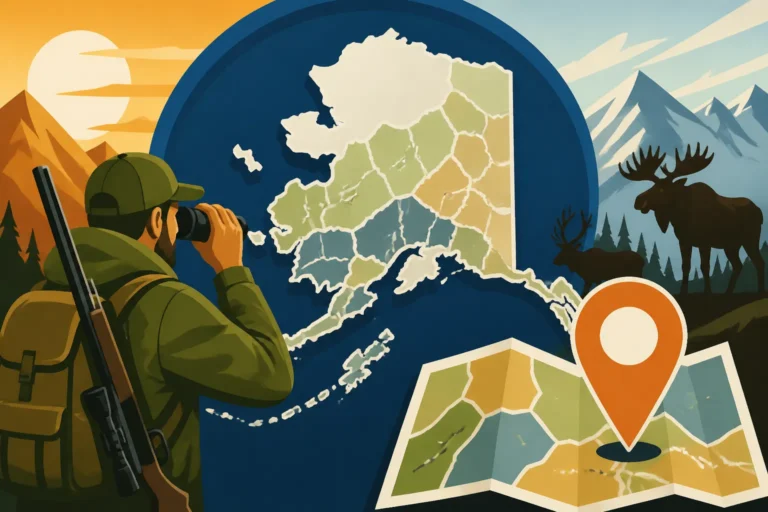
When you look at a map of Alaska, you'll immediately notice the incredible amount of public land. It's a hunter's paradise, seemingly endless wilderness stretching to the horizon. However, this "public" land is divided into vast federal holdings (like national parks, preserves, forests, and wildlife refuges) and significant state lands (including state parks, game refuges, and general state-owned parcels). Both categories offer incredible hunting opportunities, but the rules governing them can differ substantially.
This complex landscape is largely a result of historical land transfers, most notably the Alaska Statehood Act and the Alaska Native Claims Settlement Act (ANSCA). These acts carved out millions of acres for the State of Alaska and for various Alaska Native Corporations, respectively, from what was previously almost entirely federal territory. This means that an area that looks uniformly wild on a satellite image might actually be a patchwork of different owners, each with their own set of rules and access policies, making detailed research absolutely essential.
Why Differentiating Matters for Hunters
The primary reason distinguishing between state and federal land is critical for hunters revolves around regulations. While your general Alaska hunting license and locking tags are valid statewide for open seasons, the specific rules of engagement—things like season dates, legal weapons, bag limits, and perhaps most importantly, motorized access—can change drastically depending on whether you're on state or federal ground. What's perfectly legal on state land might be a serious violation just across an invisible boundary onto federal property.
Beyond general regulations, different land managers might have distinct permitting requirements, especially in special areas like state game refuges or federal preserves. Your ability to utilize a guide service might also be affected; for non-residents pursuing certain species like brown bear, sheep, or goat, a registered Alaska guide is mandatory, and these guides must often possess specific concessions to operate on particular federal lands. Hiring an Alaska Registered Guide-Outfitter is a good first step. Ignorance of these boundaries and associated rules is not a defense, and can lead to fines, confiscation of game, and even loss of hunting privileges, which is a headache no one wants on their Alaskan adventure.
The Scope of Federal Lands in Alaska
Federal lands in Alaska comprise the largest portion of the state's land area, including some of its most iconic wilderness. These lands are managed by various agencies, each with its own mission and regulatory framework. For hunters, understanding these distinctions is paramount, as the opportunities and restrictions can vary dramatically from one federal designation to another.
National Parks, Preserves, and Refuges
When people think of federal land, national parks often come to mind. In Alaska, this means places like Denali National Park, which, as a general rule, prohibits hunting within its national park boundaries. However, Alaska also has National Preserves (often adjacent to or surrounding National Parks), such as Denali National Preserve Hunting Access, Katmai and Lake Clark Preserve Hunting, and Noatak Preserve Hunting Restrictions. These preserves are specifically designated to allow regulated hunting, often under a blend of state and federal regulations, and sometimes with special provisions for federal subsistence users.
Then there are the National Wildlife Refuges, managed by the U.S. Fish and Wildlife Service. Alaska is home to many of these, including vast areas like the Arctic National Wildlife Refuge and the Kenai National Wildlife Refuge Hunting Rules. Hunting is generally permitted on refuges, but regulations are highly specific, often with tighter restrictions on seasons, harvest quotas, weapon types, and access methods to protect wildlife populations and habitats. It's never safe to assume that just because a refuge allows hunting in general, your specific hunt plan will be compliant without detailed research.
BLM Lands and National Forests
Other significant federal holdings include Bureau of Land Management (BLM) lands and National Forests. BLM lands are often vast and less developed, frequently offering excellent opportunities for general public access and hunting. These areas are commonly used for Road-System Hunting in Alaska Off the Glenn and Richardson or backcountry expeditions, though they can still have specific closures or travel management plans that limit vehicle use. They represent some of the most accessible federal lands for hunters seeking a more unguided experience, but checking local field office regulations is always smart.
National Forests, specifically the Tongass and Chugach National Forests, are predominantly found in Southeast Alaska and along the south-central coast. These areas are popular for species like Sitka blacktail deer on the islands of the Tongass National Forest Deer Country or mountain goats and bears in the rugged terrain of the Chugach National Forest Goat and Bear Areas. While typically allowing hunting, they are managed with multiple uses in mind, and hunters should be aware of potential restrictions related to timber operations, recreational use, or specific wildlife management zones.
Specific Federal Regulations to Know
Beyond the general land-use categories, there are specific federal regulations that can profoundly impact your hunting plans in Alaska. One of the most significant is the concept of Federal Subsistence. In designated rural areas of Alaska, qualified rural residents may be granted priority to harvest wildlife on federal lands under specific federal regulations, which can sometimes differ from general state regulations in terms of season dates, bag limits, or methods. This creates a complex overlap, and understanding Federal Subsistence Hunting on Alaska Public Lands is essential for those living in or hunting near these areas.
Another crucial rule is the "Same-Day-Airborne" restriction, which prohibits hunting on the same day you have flown in an aircraft. While Alaska has its own statewide version, federal lands also fall under these rules, preventing hunters from flying into a remote area and immediately pursuing game. This is a critical safety and fair chase regulation that Alaska's Same-Day-Airborne Rule and What It Bans covers in detail. Additionally, many federal lands include "Controlled Use Areas" which restrict the use of aircraft or motorized vehicles during hunting seasons, to provide a more traditional hunting experience and protect resources. You'll need to know Alaska Controlled Use Areas and What They Restrict before planning any airborne or ATV-assisted hunt.
Exploring Alaska's State Land Holdings
While federal lands capture much of the imagination, the State of Alaska also manages immense tracts of land, providing equally vital hunting opportunities. These state-managed areas range from vast, generally open lands to highly specialized refuges and critical habitat zones, each with its own set of rules designed to balance public access with conservation goals.
State Game Refuges, Parks, and Critical Habitat Areas
The State of Alaska maintains its own system of game refuges, state parks, and critical habitat areas. These are distinct from their federal counterparts and come with their own management plans. For instance, a State Game Refuge like the Palmer Hay Flats near Anchorage or the Susitna Flats will typically allow hunting, but often with specific weapon restrictions, limited access points, or specialized seasons designed to protect nesting birds, migratory corridors, or specific big game populations. These areas are managed by the Alaska Department of Fish and Game (ADF&G) and the Department of Natural Resources (DNR).
Similarly, Alaska State Parks can have varying regulations. Some remote state park units are open to hunting, while others, particularly those with high recreational use or near urban centers, may have significant restrictions or outright closures. Critical Habitat Areas are another designation where hunting is usually allowed, but with a heightened focus on protecting specific species or essential habitats. Always check the specific regulations for any state-designated area you plan to hunt; assuming it's "just like other state land" could lead to unwelcome surprises.
General State Land and Easements
Beyond these special designations, vast portions of Alaska are simply "general state land." These areas are typically open to public hunting with just your valid hunting license and appropriate species tags. They often offer the most straightforward access for hunters, whether you're backpacking, using an ATV where permitted, or floating a river. These lands are managed primarily by the Department of Natural Resources and are excellent for pursuing a wide variety of game.
Accessing these large blocks of state land, especially those not directly on a road system, often relies on legal easements. These are designated pathways or corridors, often created during land conveyances, that guarantee public access across private or otherwise restricted parcels. Recognizing Access Easements Across Alaska Private Land or understanding Public Access Points on Alaska Rivers can be crucial for reaching prime hunting grounds that might otherwise appear inaccessible. Always consult detailed maps to ensure you're using a legal easement and not trespassing.
How State Regulations Can Differ
The regulatory differences between state and federal lands, and even within state land classifications, can be subtle but significant. For instance, while federal subsistence rules apply on federal lands, the state has its own Tier I and Tier II subsistence programs for qualifying rural residents on state lands. These systems define priorities for harvesting game. Season dates and bag limits can also diverge between state and federal management for certain species in overlapping units, requiring hunters to confirm which set of regulations applies to their specific location.
Furthermore, state land may have distinct rules regarding motorized access, which vary by specific Game Management Unit (GMU) or management area. What's allowed for ATV use in one state land area might be completely prohibited in another, or limited to specific trails. Hunters must also be aware that some highly sought-after hunts on state land are managed through special drawing permits, like those outlined in Alaska's Big Game Drawing Permits Work, which you must apply for and win a chance to hunt. Finally, state antler restrictions, such as Alaska Moose Antler Restriction Areas or the definition of a Spike-Fork Legal Definition in Alaska, are specific state rules that hunters must know before pulling the trigger.
The Overlapping Reality: Native Corporation Lands and Allotments
No discussion of Alaska's land ownership mosaic would be complete without addressing the significant presence of Native Corporation lands and individual Native allotments. These are fundamentally different from state or federal public lands; they are private, and treating them otherwise is a serious mistake.
Navigating Private Native Corporation Holdings
Under the Alaska Native Claims Settlement Act (ANSCA) of 1971, nearly 44 million acres of land were conveyed to Alaska Native Corporations (ANCs), which are private, for-profit entities owned by Native shareholders. These lands are private property, and hunting on them requires explicit permission from the owning corporation. This often means purchasing a specific permit, which can vary greatly in price and availability depending on the corporation and the species.
For example, large regional corporations like Doyon Lands and Hunter Access in Interior Alaska or Ahtna Lands in the Copper Basin manage vast tracts of land that contain excellent hunting habitat. They often have formal permitting systems for non-shareholders, and it's essential to research these requirements well in advance. Without a permit, you are trespassing, and the consequences can be severe, including fines, confiscation of game, and potential legal action. Understanding What an Alaska Native Corporation Permit Costs is a crucial part of your hunt planning if you intend to traverse or hunt on these lands. It's a fundamental aspect of respecting sovereignty and private property in Alaska.
Small, Scattered Native Allotments
Even more challenging to navigate than large Native Corporation holdings are individual Native allotments. These are smaller parcels, typically 160 acres, granted to Native individuals for homesites or subsistence use, often scattered like confetti within larger blocks of state or federal public land. They are private property, just like the larger corporation lands, and require permission from the individual owner to access or hunt.
The difficulty lies in their size and often remote, isolated locations. Without highly detailed mapping tools, these allotments can be incredibly difficult to identify on the ground. You might be walking across what you assume is federal or state land, only to unknowingly trespass on a private allotment. This is why tools that clearly delineate Native Allotment Boundaries on a Map are not just helpful, but absolutely critical for ethical and legal hunting in Alaska. Always assume private property until confirmed otherwise, and if in doubt, avoid the area or seek explicit permission.
Practical Strategies for Identifying Land Ownership in the Field
Given the complex land ownership patterns in Alaska, merely having a general idea of where you are isn't enough. Hunters need practical, reliable strategies to identify land ownership accurately, both in the planning stages and when actively in the field. This isn't just about legality; it's about being an informed and responsible outdoorsperson.
Leveraging Digital Mapping Tools
This is where technology truly shines, and tools like onX Hunt become absolutely indispensable for any serious Alaska hunter. These robust mapping applications allow you to download offline maps to your smartphone or GPS device, clearly showing land ownership boundaries color-coded for state, federal, private (including Native Corporation lands), and even individual Native allotments. With your device's GPS, you can see your exact location relative to these boundaries in real-time.
Imagine navigating a remote valley, and with a quick glance at your phone, you can instantly tell if the patch of willows you're about to glass for moose is on BLM land (where you're good to go) or an adjacent Native allotment (where you need a permit or should detour). Features like property lines, public access easements, and even land management agency contact information are often included. Another strong option is checking the mapping features provided by GoHunt, which also offers detailed land ownership layers that can be a lifesaver in unfamiliar terrain. These digital maps have revolutionized how hunters can confidently explore Alaska's vast and varied landscapes without inadvertently trespassing.
The Importance of Pre-Trip Research
While digital mapping tools are powerful, they are best used in conjunction with thorough pre-trip research. Before you ever leave home, dive deep into the specific Game Management Unit (GMU) you plan to hunt. Start with the Alaska Department of Fish and Game (ADF&G) website; they offer regulations booklets, maps, and often specific details for each GMU, including local access rules and any special hunt conditions.
Don't stop there. If you're targeting federal land, visit the websites for the managing agency—be it the U.S. Fish and Wildlife Service for refuges, the BLM, or the Forest Service. They often publish their own regulations, maps, and contact information for local field offices. Calling these offices directly with specific questions can save you a lot of trouble. For Native Corporation lands, make sure to identify the specific corporation that owns the land and inquire about their permitting process well in advance. A good starting point for gathering all this information and understanding the bigger picture is to study How to Check Alaska Land Status Before a Hunt, which can guide your initial research steps. Combining this research with your digital maps will give you the most comprehensive understanding of the landscape you're about to enter.
Navigating Access and Permitting Across Jurisdictions
Once you understand the different land types, the next critical step is understanding how to legally access and hunt them. Each jurisdiction has its own set of rules regarding permits, special considerations, and consequences for violating those rules. It's not just about having a license; it's about having the right permissions for the right place.
Permits and Special Considerations for Federal Land
Hunting on federal lands often involves additional layers of permitting or considerations beyond your standard state license and tags. For example, some National Wildlife Refuges require specific refuge permits, which might be free or involve an application process. In areas where federal and state subsistence programs overlap, Federal Subsistence Permits on Alaska Refuges might be required for qualifying rural residents, and these hunts often have season dates or bag limits that differ from general state seasons.
For non-residents requiring a guide for species like brown bear, Dall sheep, or mountain goat, it's crucial to ensure your guide has the necessary permits or concessions to operate on the specific federal land you plan to hunt. Not all guides have permits for all federal lands, and operating without one is a serious violation for both the guide and the client. Always verify your guide's credentials and operating areas when booking an Alaskan adventure.
State Land Permitting and General Access
For the vast majority of general state lands, your standard Alaska hunting license and appropriate species-specific tags are all you need. These lands offer the most accessible hunting opportunities with fewer bureaucratic hurdles. However, it's not entirely without nuance. Some state parks or specialized state game management areas may still have unique permit requirements or restrictions on certain activities, so it’s important to read the specific regulations for those units.
Access to state lands can also be a key consideration. While much of it is open, reaching it can depend on public rights-of-way, dedicated Public Access Points on Alaska Rivers, or easements across private property. Understanding how you plan to enter and exit these areas is as important as knowing what's legal once you're there. Many hunters utilize float planes, riverboats, or ATVs (where permitted) to access more remote state land parcels.
Respecting Boundaries and Avoiding Trespass
Ultimately, navigating Alaska's land ownership mosaic boils down to a fundamental principle: respecting boundaries and avoiding trespass. It's not just about avoiding a ticket; it's about being a respectful and responsible hunter in a state where public and private land ownership can feel like a game of 'Where's Waldo?'. The consequences of trespassing on private land—especially Native Corporation lands or individual allotments—can range from fines and confiscation of equipment and game to legal action and a permanent loss of hunting privileges.
Always cross-reference your digital maps with any official paper maps or public notices you can find. If you're ever in doubt about a boundary, err on the side of caution. Detour, ask for permission, or choose a different hunting spot. A little extra effort in research and caution in the field ensures that your Alaska hunting adventure remains legal, ethical, and, most importantly, enjoyable for everyone involved.
| Feature | General State Land | Federal Preserve/Refuge (Varies) | Native Corporation Land |
|---|---|---|---|
| Hunting Access | Generally open with state license & tags | Often allowed with federal/state regulations | Requires explicit permission/permit |
| Motorized Access | Varies by area, check local regulations | Often restricted, specific trails/permits only | Requires permission, often restricted |
| Guiding Requirement | Only for specific species (e.g., Brown Bear) | Varies, often requires guide concessions | Requires permission, potentially guide |
| Subsistence Priority | State Tier I/II for residents | Federal subsistence for qualified rural residents | Private rules apply |
| Mapping Tools | Essential for boundaries (onX Hunt, GoHunt) | Essential for boundaries (onX Hunt, GoHunt) | Absolutely critical for all boundaries |
Disclaimer
This article is for general informational purposes only and does not constitute professional advice. Laws, prices and regulations vary by location and change over time. Consult a qualified professional for guidance on your specific situation.