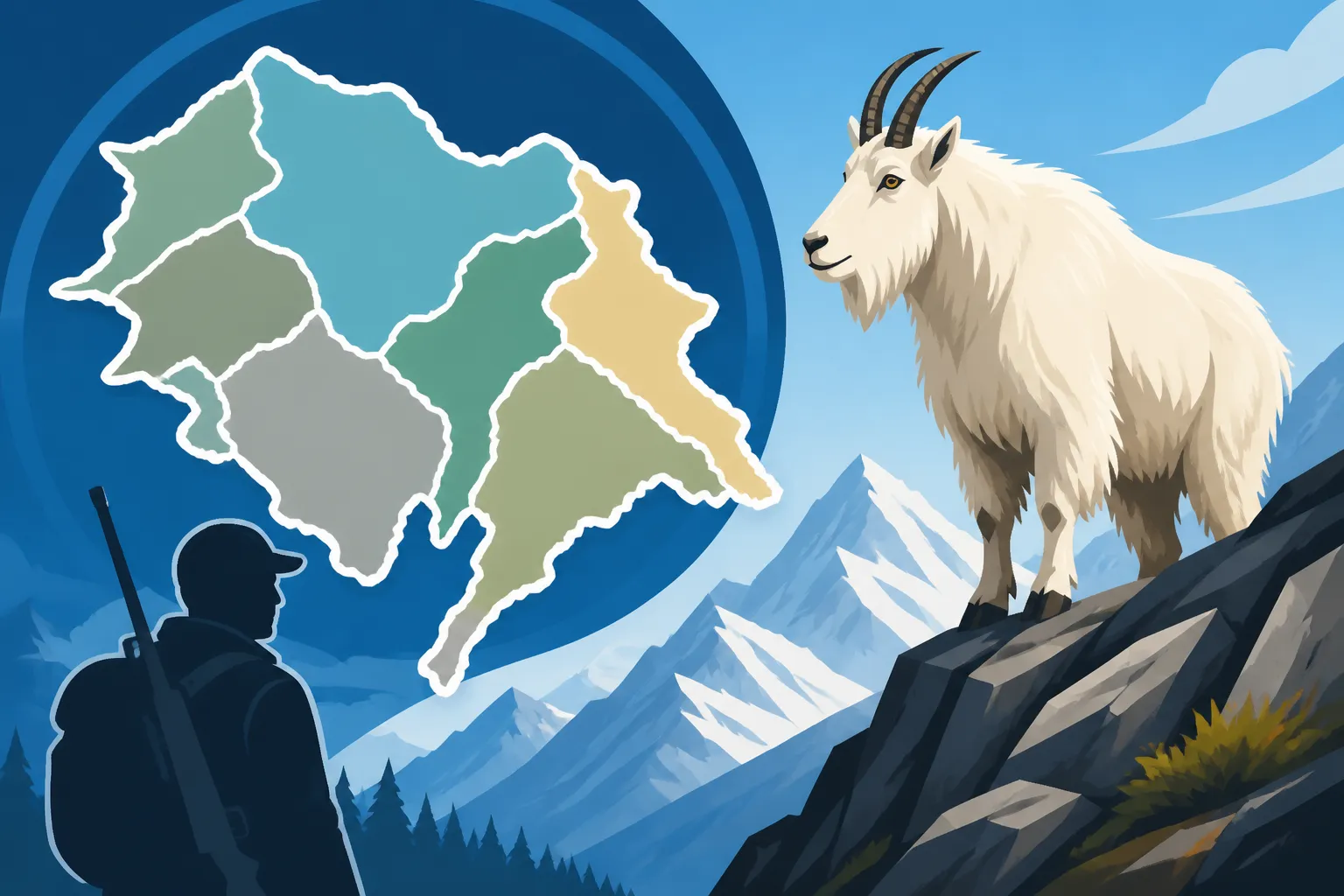
Goat Permit Areas in the Chugach
Hunting mountain goats in Alaska's Chugach Mountains is a dream for many, but it's a brutal reality check for the unprepared. This isn't your average backcountry hike; this is vertical, unforgiving terrain where one wrong step can ruin more than just your hunt. If you're looking to earn a Chugach billy, you need to understand the permit system, the unique challenges of the mountains themselves, and how to safely navigate this truly wild country. This guide will walk you through securing a goat permit, preparing for the hunt, and tackling the logistics of pursuing these incredible animals in one of Alaska's most iconic mountain ranges.
Understanding Chugach Mountain Goat Terrain and Behavior
The Chugach Mountains are a sprawling, majestic range, stretching from the Kenai Peninsula eastward towards the Wrangell Mountains. They're characterized by steep, jagged peaks, immense glaciers, and deep, U-shaped valleys carved by ancient ice. For mountain goats, this is home, and it demands respect from any hunter venturing into their domain.
The Rugged Realities of Chugach Goat Habitat
When we talk about Chugach goat habitat, we're really talking about extreme vertical terrain. These animals thrive in places most other big game species wouldn't dare to tread, preferring cliffs, rockslides, and sparse alpine meadows above timberline. You'll find them navigating impossibly steep slopes, often with a sheer drop-off just feet away. The footing can be treacherous—loose scree, slick moss-covered rocks, and unpredictable snowfields, even in late summer. Weather here is a constant factor; sunny mornings can quickly give way to dense fog, rain, or even snow, severely limiting visibility and making travel incredibly dangerous. This isn't just a physical challenge; it's a mental game, demanding focus, resilience, and an unwavering commitment to safety.
Imagine yourself on a narrow sheep trail, one boot on a crumbling shale slide, the other gripping a patch of stubborn tundra, with a thousand-foot drop yawning below. This isn't hyperbole; it's the daily reality of Chugach goat hunting. The air is thin, the climbs are relentless, and the only sounds are your labored breathing and the wind whipping past your ears. Every step is an intentional act, a testament to the effort required to even reach these animals, let alone pursue them.
Seasonal Movements and Where Goats Live
Mountain goats, both nannies and billies, generally prefer the highest, most inaccessible alpine areas during the summer and early fall. They'll use cliff bands extensively for bedding, escape, and shelter from predators or severe weather. You'll often find them grazing on sparse alpine grasses and forbs in small pockets of meadows nestled amongst the rock. As the season progresses into late fall and early winter, they may move to slightly lower elevations but will always remain close to steep, broken terrain that offers immediate refuge.
Billies tend to be more solitary or found in smaller bachelor groups, often holding court on the most prominent peaks or ridgelines. Nannies, on the other hand, typically form larger bands with their kids and yearlings, though they'll still gravitate towards the steepest, most secure areas to protect their young. Spotting these white ghosts against a backdrop of granite and snow can be incredibly challenging, requiring patience and exceptional optics. Understanding these movements is key; you won't find them browsing willows in a valley bottom, but rather perched in seemingly impossible locations, surveying their rugged kingdom.
Navigating the Chugach Goat Permit System
Hunting mountain goats in Alaska, especially in the Chugach, isn't a walk-up affair. It requires navigating a specific permit system, usually through the state's drawing process. Understanding how to apply and what's required is your first crucial step.
The Draw Permit System for Chugach Goats
Most mountain goat hunts in the Chugach Mountains are managed through a draw permit system. This means you can't just buy a tag over the counter; you have to apply for specific hunt numbers during a designated application period, usually in November and December. If your name is drawn, you win the privilege of buying that permit. The odds can be incredibly long for some units, reflecting the high demand for these limited and highly sought-after permits. Each hunt number corresponds to a specific Game Management Unit (GMU) or subunit, defining the legal hunting area and season dates.
The application process is entirely online via the Alaska Department of Fish and Game (ADF&G) website. You'll select your desired hunt numbers, and there's a small application fee per hunt choice. It's vital to apply within the Alaska's November 1 to December 15 Draw Application Window to even be considered. The results are typically released in February, giving successful applicants time to plan their expedition. This system helps manage goat populations sustainably, ensuring that too many hunters aren't in one area, and that harvest levels remain within biological limits.
Key Game Management Units (GMUs) with Goat Opportunities
The Chugach Mountains span several GMUs, each offering unique challenges and opportunities for mountain goat hunting. While regulations can change, areas like parts of Unit 6 (especially around Cordova and Valdez), Unit 7 (portions of the Kenai Peninsula and Prince William Sound), and Unit 14 (the Western Chugach near Anchorage and Palmer) often host draw permit hunts for goats. Unit 7, for instance, has areas like the mountains above the Seward Highway that are quintessential goat country, demanding extreme physical fitness. It's absolutely critical to consult the most current Alaska hunting regulations booklet for precise unit boundaries, hunt numbers, and any special provisions.
Each unit will have its own specific draw hunts, often with different season dates, bag limits, and legal descriptions of what constitutes a legal goat (e.g., specific horn length or sex). Some areas might be accessible from the road system, while others require more remote access via boat or air taxi. Remember, a permit for one unit doesn't grant you access to another, so choose your application wisely based on your research and access capabilities. Understanding these differences is paramount to avoiding costly mistakes in planning and on the ground. You might find a successful hunt in Unit 7, while another hunter might pull a permit for Unit 6, both presenting vastly different logistical challenges.
Hunter Orientation and Nanny Identification Requirements
Alaska takes mountain goat conservation very seriously, and a critical part of that is avoiding the accidental harvest of nannies, especially those with kids. To that end, if you're lucky enough to draw a mountain goat permit, you'll almost certainly be required to complete a mandatory hunter orientation program. This program emphasizes Alaska Goat Seasons and Nanny Identification, teaching hunters how to distinguish between nannies and billies in the field. It covers key visual cues like horn shape (billies typically have thicker, more sharply curving horns at the base), body size (billies are generally larger and more robust), and the presence of kids.
Mistaken identity can have severe consequences, including citations and potentially losing your hunting privileges. It's not just about avoiding legal trouble, though; it's about ethical hunting and preserving the future of the goat population. Nannies are the reproductive engine of the herd, and their loss disproportionately impacts population recovery. Even an experienced hunter can struggle with identification in low light, poor weather, or at extreme distances, which is why patience and careful observation are paramount. Take the orientation seriously, study the materials, and when in doubt, don't pull the trigger.
Strategies for a Successful Chugach Goat Hunt
Drawing a permit is just the beginning. The real work starts with planning and preparing for the arduous task of hunting mountain goats in their vertical domain. This isn't a hunt you can wing; it requires meticulous planning, physical conditioning, and smart in-field tactics.
Pre-Season Scouting and Digital Mapping
Effective pre-season scouting is absolutely non-negotiable for a Chugach goat hunt. Before you ever set foot on the mountain, you should be intimately familiar with your hunt unit. This means poring over detailed topographic maps and satellite imagery. Tools like onX Hunt and GoHunt are invaluable here. You can use them to identify potential goat habitat—those steep, rocky areas above timberline with interspersed meadows. Look for natural travel corridors, escape routes, potential bedding areas, and safe approaches. Pay close attention to terrain features like cliff bands, snowfields, and areas where goats might cross saddles or high passes.
With onX Hunt, you can overlay public and private land boundaries, ensuring your planned access and hunting areas are legal. GoHunt can provide draw odds and harvest statistics, giving you an idea of success rates and areas that might hold more goats. Mark waypoints for potential camp locations, water sources, and key glassing knobs. This digital scouting allows you to visualize the terrain, identify potential access points, and develop a rough game plan long before your boots hit the dirt. It's an investment of time that pays dividends when you're facing miles of unforgiving terrain. Don't forget to Scouting a Unit From Satellite Imagery Before You Fly to get the most out of your pre-hunt preparation.
Physical Preparation and Gear for Vertical Terrain
Let's be blunt: a Chugach goat hunt is one of the most physically demanding hunts Alaska offers. It's not uncommon to gain and lose thousands of feet of elevation in a single day, often with a heavy pack on your back. Your physical preparation needs to reflect this. Focus on strength training for your legs and core, cardiovascular endurance, and hiking with a weighted pack up steep inclines. This isn't just about getting to the goats; it's about being strong enough to pack out hundreds of pounds of meat and hide from extreme terrain, potentially over multiple trips.
Your gear selection is equally critical. Start with sturdy, waterproof, ankle-supporting boots that are already broken in. Trekking poles are an absolute must for stability on steep, uneven ground. Layered clothing that can handle rapid temperature changes and wet conditions is essential. A lightweight, durable pack that can comfortably carry heavy loads is non-negotiable. Don't skimp on high-quality optics—a good spotting scope and binoculars are your lifelines for finding and identifying goats from a distance. Consider a satellite communication device like a Garmin inReach or a satellite phone, as cell service is virtually nonexistent. Every ounce counts, so prioritize functionality and durability. Review our guide on Backpack Hunting in Alaska: Gear Weight and Meat Loads to fine-tune your packing list.
In-Field Tactics: Glassing, Stalking, and Safety
Once you're in goat country, patience is your greatest ally. Mountain goats blend incredibly well with their surroundings, appearing as mere specks of snow against rock. Set up on a high vantage point, preferably with a wide, unobstructed view of potential goat habitat. Begin patient glassing, systematically picking apart the mountainsides with your binoculars and spotting scope. Use a tripod for stability, and spend hours meticulously scanning every rock outcrop, every snow patch, and every bit of green. Our article on Glassing Grids That Cover a Whole Basin offers excellent techniques for thorough coverage. Once you spot goats, take your time to evaluate them, identifying nannies from billies and assessing their legal status and accessibility.
Stalking in goat country is incredibly challenging. The terrain is often wide open, offering minimal cover, and the goats have incredible eyesight. Use the terrain to your advantage, moving slowly and deliberately, taking advantage of ridgelines, draws, and rock formations to stay out of sight. Pay constant attention to wind direction, as goats have an excellent sense of smell. As you get closer, assess the escape routes of the goats and your own safe retreat paths. Safety is paramount here. Be constantly aware of loose rock, potential avalanche chutes (even in summer, permanent snowfields can be unstable), and sudden weather changes. Always have a plan for safe travel, and be mindful of your footing. For navigation challenges, especially when fog or clouds roll in, remember the importance of Alpine Navigation Without Cell Service and carry a GPS with pre-loaded maps.
Accessing Chugach Goat Country
Getting into Chugach goat country can range from relatively straightforward roadside access to complex bush plane or boat drop-offs. Your chosen access method will heavily influence your budget, gear choices, and overall hunt plan.
Road System and Trailhead Access Points
Some portions of the Chugach Mountains are surprisingly accessible from Alaska's road system, particularly around the Glenn Highway, Richardson Highway, and Seward Highway. For instance, areas above the Seward Highway south of Anchorage, heading towards Portage or Seward, offer trailheads that climb directly into prime goat habitat. The mountains visible from these highways, especially near places like Sheep Mountain Lodge on the Glenn Highway, contain viable hunting opportunities. However, "accessible" in Alaska often means miles of grueling uphill hiking from the road, not a casual stroll. These road-accessible areas can also see more hunter pressure, so be prepared to work harder and hike further to find unpressured animals.
Even with road access, proper planning is essential. Research specific trailheads, parking areas, and any local restrictions. Be sure your vehicle is capable of handling Alaska's sometimes rugged roads, and always leave a detailed itinerary with someone reliable, especially if you're venturing into remote areas. For hunters specifically looking at these areas, our piece on Goat Country Above the Seward Highway might offer useful insights into available access points and challenges. These options are often the most budget-friendly, but they demand maximum physical effort.
Bush Plane and Boat Access to Remote Areas
For truly remote Chugach goat hunting experiences, many hunters opt for bush plane or boat access. Air taxis can drop you off on high alpine lakes or gravel strips, giving you a significant head start into the mountains, often bypassing miles of thick timber and alder patches. This can be a game-changer for reaching untouched basins. However, this comes with a higher cost and depends heavily on weather conditions for both drop-off and pickup. Bad weather can ground planes for days, extending your trip and adding unexpected expenses. Working with a reputable air taxi operator is crucial; they can provide invaluable advice on landing spots and typical conditions.
Similarly, in coastal regions of the Chugach (like around Prince William Sound), boat access can get you to remote fjords and bays, allowing you to launch your hunt directly from sea level into steep coastal mountains. This is a common tactic for areas in Unit 6, for example. You might charter a boat, or if you're experienced with Alaska waters, use your own vessel. Both bush plane and boat access require meticulous planning, including clear communication with your transporter about drop-off/pickup dates, gear weight limits, and emergency protocols. Our guide on Fly-In Hunting: Working With an Alaska Transporter Pilot details what you need to know about these logistics.
Land Status Considerations
Alaska is a mosaic of different land ownerships, including state, federal, and Native Corporation lands. Before you plan your hunt, it's absolutely critical to understand the land status of your chosen area. Hunting regulations and access rules can vary significantly between these different jurisdictions. What's legal on state land might be restricted or require additional permits on federal lands (like National Forests or National Preserves) or, especially, on Native Corporation lands.
Using tools like onX Hunt or even the ADF&G interactive mapping tools can help you visualize these boundaries. Always verify that your planned access routes, hunting areas, and camp locations are on public land or that you have explicit permission to cross or hunt on private or Native Corporation property. Trespassing, even unintentionally, can lead to fines, confiscation of game, and loss of hunting privileges. It's an easily avoidable mistake with proper pre-hunt research. Our article on Land Status in Alaska: State, Federal and Native Corporation provides a comprehensive overview of how to navigate these complexities.
Here's a quick look at some general Chugach GMUs and their typical access options for goat hunting:
| Game Management Unit (GMU) | Primary Access Method(s) | Key Characteristics / Challenges | Notes |
|---|---|---|---|
| Unit 6 (Southcentral Coast) | Boat, Air Taxi | Extremely rugged, high rainfall, coastal weather, glaciers | Access points around Valdez, Cordova, Whittier. Requires robust rain gear and marine awareness. High density of brown bears in some areas. |
| Unit 7 (Kenai Peninsula) | Road System (Seward Hwy), Hike | Steep climbs from road, sometimes less remote feel | Popular due to road access, but requires significant vertical gain. Mandatory hunter orientation for Nanny ID. Check for specific subunits as not all of Unit 7 is Chugach. |
| Unit 14C (Western Chugach) | Road System (Glenn Hwy), Hike | Accessible from Anchorage/Palmer, rugged peaks near urban fringe | Closer to population centers, but still demanding hunts. Can be crowded. Pay close attention to road corridors and restricted areas near cities. |
| Unit 13 (Nelchina Basin) | Air Taxi, ATV (limited) | More interior, potentially drier conditions | While primarily known for moose and caribou, the eastern Chugach portion of Unit 13 can offer goat opportunities. Access is usually via air or specific ATV trails into the mountains. |
Note: Always consult the most current Alaska Department of Fish and Game regulations for specific hunt numbers, boundaries, and season dates, as these can change annually.
Conclusion
Hunting mountain goats in the Chugach Mountains is an experience unlike any other, offering immense challenges and unparalleled rewards. It's a journey that demands peak physical fitness, meticulous planning, a deep understanding of the terrain, and a respectful approach to the permit system and conservation ethics. From poring over digital maps with onX Hunt and GoHunt, to enduring the vertical grind and navigating treacherous alpine conditions, every step of a Chugach goat hunt is earned. Success isn't guaranteed, but the memories forged in these majestic mountains, whether you bring home a billy or not, will last a lifetime.
Disclaimer
This article is for general informational purposes only and does not constitute professional advice. Laws, prices and regulations vary by location and change over time. Consult a qualified professional for guidance on your specific situation.