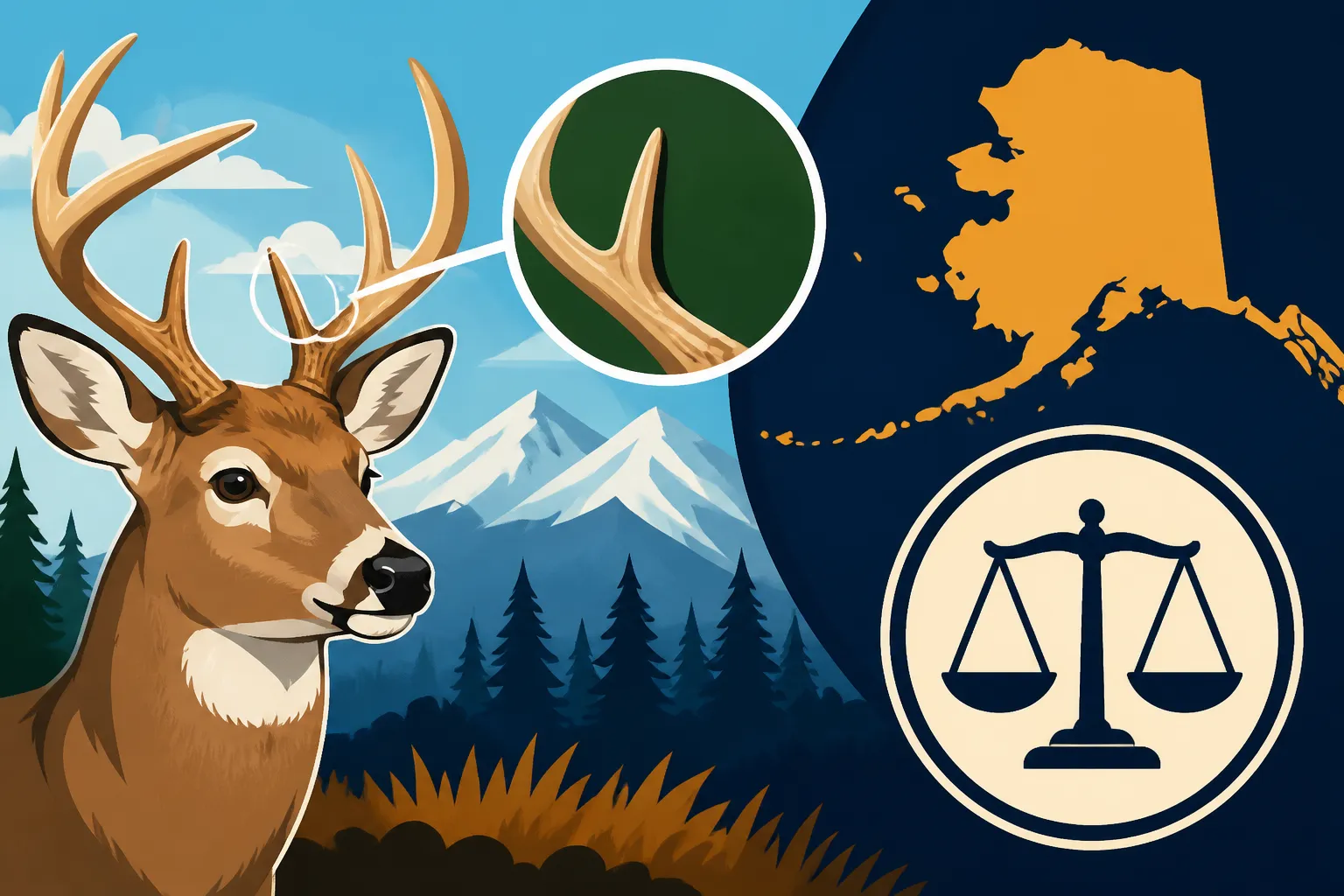
Spike-Fork Legal Definition in Alaska
That moment of pure excitement, when a magnificent bull moose steps out of the willows or crosses an open tundra, can quickly turn into heart-pounding anxiety if you're hunting in an antler-restricted area. The pressure to make a split-second, accurate identification of a "spike-fork" bull often leads to immense stress and, unfortunately, costly citations. This guide is dedicated to demystifying Alaska's spike-fork legal definition, offering practical advice and insight to help you confidently identify your target and avoid common pitfalls in the field.
Decoding the Spike-Fork Legal Definition in Alaska Moose Hunting
Alaska's moose hunting regulations, particularly those concerning antler restrictions, are designed to manage herd health and provide diverse hunting opportunities. However, for many hunters, especially those new to certain game management units, understanding these specific legal definitions can feel like trying to solve a riddle in a thick fog. The spike-fork rule is one of the most frequently misunderstood, leading to honest mistakes that can have serious repercussions.
The Core of Antler Restrictions
At its heart, the spike-fork antler restriction aims to protect younger, genetically valuable bulls and allow them to mature, contributing to the future health of the moose population. Instead of allowing hunters to take any bull, these regulations often mandate that only bulls meeting specific criteria, like having at least a 50-inch antler spread or a minimum number of brow tines, are legal. The spike-fork classification, however, carves out an exception for the youngest, typically first-year or second-year bulls.
A "spike-fork" bull, according to the Alaska Department of Fish and Game (ADF&G), is generally defined as a bull moose with at least one antler that is either:
- A spike: An unbranched antler, essentially a single point or beam with no tines or forks. It's just a straight, pointy projection.
- A fork: An antler that has two points only, with no other tines, brow tines, or palmation. These two points typically branch off the main beam.
The critical takeaway here is "at least one antler." If a bull has one antler that is a perfect spike and the other is heavily palmated with multiple points, it's generally still considered a legal "spike-fork" bull under this rule, unless other antler restrictions (like a minimum brow tine count) also apply to that unit. Always remember to check the specific regulations for the Game Management Unit (GMU) you are hunting in, as these rules can vary. Resources like the ADF&G website or tools from platforms like GoHunt can be invaluable for cross-referencing these specifics. Understanding these fundamental rules is the first step toward a successful and legal hunt.
Distinguishing a True Spike from a Fork
While the core definition sounds straightforward, the reality of distinguishing a true spike from a fork, and both from a more mature bull with small or broken antlers, is a significant challenge. Hunters often grapple with what truly constitutes a "point" and how small a branch must be to still be considered a spike or a fork.
A true spike is relatively easy to recognize if you get a clear view. It’s a single beam emerging from the skull, unbranched and devoid of any tines or palmation. Think of it like a sharp spear. The length doesn't necessarily matter as much as the lack of branching. However, sometimes a young bull might have a tiny knob or burr that could technically be considered a "point" if you're not careful. This is where the ambiguity starts.
A forked antler is where things get even trickier. It means the antler has exactly two points. No more, no less. These two points usually come off the main beam. The problem arises when a bull has a very small third point, a minor deformity, or a chewed-off brow tine that makes it look like a fork. Even a tiny projection, no matter how insignificant it might appear to the human eye, can legally count as a point. If one antler has two points and the other has three, that bull is not a legal spike-fork. You must confirm each antler meets the definition. Many hunters find it helpful to review examples of legal and illegal bulls in the regulations booklet or online to train their eyes before heading into the field. This attention to detail is paramount to avoid potential issues such as those outlined in "Why Antler Restriction Hunts End in Citations".
Navigating the Nuances: Field Challenges and Common Mistakes
Out in the vastness of Alaska, identifying a legal spike-fork bull isn't just about knowing the definition; it's about applying that knowledge under less-than-ideal conditions. The environment itself often conspires to make accurate field judging a monumental task. The challenges are real, and recognizing them is the first step toward mitigating risk.
The Illusion of Distance and Angle
Imagine you're glassing a distant willow patch, and you catch movement. A moose steps out. Through your spotting scope, you see what appears to be a spike on one side. But is it truly a spike? Or is it a small fork with one point obscured by the angle of the animal's head? Is that a brow tine hiding behind a branch?
Distance is a hunter's worst enemy when it comes to antler identification. What looks like a single spike at 400 yards can easily be a fork, or even a small, palmated antler, when the bull shifts its head or moves to a different angle. Light conditions also play a huge role. Early morning or late evening light, shadows, or even bright glare can distort your perception of antler shape and points. The same bull can look entirely different at noon than at dusk. It's not uncommon for hunters to mistake a legal bull for a sublegal one, or vice-versa, simply due to poor visibility or an unfavorable viewing angle. This is why patience and careful observation, often from multiple angles, are absolutely non-negotiable. Don't let the adrenaline rush push you into a hasty decision; take your time.
Beyond the Eyeguard: Other Antler Characteristics
Many hunters, when field judging, tend to focus heavily on the main beam and the upper tines, often overlooking crucial details closer to the bull's head. The definition of a "point" can sometimes include projections that are not typical tines or forks as most people imagine them. This includes small nubs, burrs, or even broken-off sections that still count as a legal "point" if they meet the minimum length (usually one inch) and are longer than their width.
One common mistake is to ignore potential brow tines. While the spike-fork definition specifically says "no other points," some hunters might confuse small brow tines or even broken remnants of brow tines with the main beam, making an illegal bull appear legal. Conversely, some small, misshapen antlers can look like a legal spike-fork but might actually have a third, albeit tiny, point. It's not just about the large, obvious features; it's about every small projection. Always scrutinize the entire antler structure, from the base to the tip. This is particularly important when considering "How to Count Brow Tines on a Live Bull" or when a bull's rack is atypical.
The rule states "at least one antler" fits the description. This means you must carefully examine both antlers to ensure that if one is a spike or a fork, the other doesn't disqualify the bull by having too many points. If one side is a definite spike, but the other side is a palmated monster, the bull is still legal under the spike-fork rule unless there's a specific "brow tine" or "50-inch spread" rule also in effect for your GMU. This nuance is often missed and can lead to serious errors in judgment.
| Antler Type | Description | Legal in Spike-Fork Hunt? (Primary Rule) | Common Field Judging Challenge |
|---|---|---|---|
| Spike | Single, unbranched antler, no points or tines. | Yes (if at least one antler is a spike) | Distinguishing from a "nub" or tiny, obscured fork. |
| Fork | Antler with exactly two points, no other tines or palmation. | Yes (if at least one antler is a fork) | Identifying a hidden third point or a broken-off tine. |
| Brow Tine | Any point projecting from the main beam near the base of the antler, often forward. | No (disqualifies as spike-fork) | Small, deformed, or broken brow tines can be hard to spot. |
| 50-inch Spread | Antlers with a minimum 50-inch width between the widest points. | Varies by GMU (often a separate rule) | Estimating spread accurately without a reference object. |
| 3 Brow Tines | Antlers with at least 3 distinct brow tines on one side. | Varies by GMU (often a separate rule) | Counting tines on complex racks, especially at distance. |
Mastering Field Identification and Avoiding Violations
Successfully identifying a legal spike-fork bull in Alaska demands more than just knowing the regulations; it requires a disciplined approach, the right tools, and an unwavering commitment to making a positive identification before pulling the trigger. The cost of a mistake—a citation, confiscation, and the profound ethical weight of taking an illegal animal—is far too high to rush this critical process.
Essential Tools and Techniques for Accurate Judging
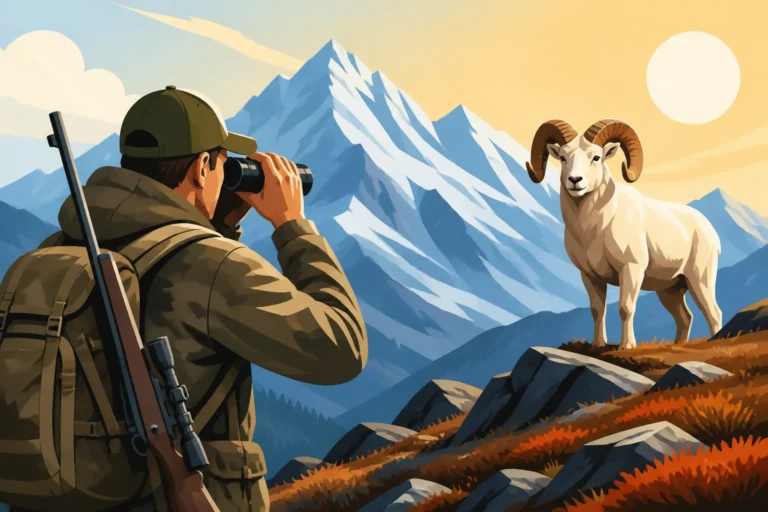
Your optics are your best friends in the Alaskan backcountry. A high-quality spotting scope is almost indispensable for detailed antler examination, especially at the distances you'll often encounter moose. Binoculars are great for initial spotting and closer encounters, but for fine details like counting points or determining if a small projection is truly a legal point, a powerful spotting scope is essential. Make sure your optics are clean, fog-free, and stable on a sturdy tripod. Trying to hold binoculars steady for extended periods will lead to eye strain and missed details.
When you spot a potential spike-fork bull, here's a technique to employ:
- Initial Scan: Use your binoculars for a quick assessment. Is it a bull? Does it appear to have small antlers?
- Set Up the Spotting Scope: Once you've identified a bull, get your spotting scope dialed in.
- The Full Circle Approach: Observe the bull from as many angles as possible. If the bull is moving, great! If not, be patient. Sometimes, waiting an hour for a bull to shift its position or feed into a clearer spot is the best strategy. Look for other moose in the area; sometimes, comparing antler development to a known legal or illegal bull can help, a skill useful for "Telling a Spike-Fork Bull From a Yearling".
- Count Every Point: Start at the base of each antler and slowly work your way out. Look for any bumps, knobs, or small projections that could legally count as a point. If you see anything beyond one point (for a spike) or two points (for a fork) on either antler, that bull is not a spike-fork. Pay particular attention to the brow tines, as even small ones disqualify the bull from the spike-fork category.
- Utilize Reference Points: If you know the spread required for a 50-inch rule, use your rifle or pack as a visual reference to estimate size. For spike-forks, it's more about point count, but understanding relative antler size can also help differentiate older, larger bulls with broken antlers from genuine spike-forks. Remember, when you're "Field Judging a Legal Bull Under Alaska Antler Rules", every detail counts.
Understanding Unit-Specific Regulations
It’s absolutely vital to remember that "spike-fork" rules are not universal across all of Alaska. Different Game Management Units (GMUs) have different regulations, and some units might have additional antler restrictions that supersede or complement the spike-fork rule. For example, some units might allow spike-forks or bulls with a 50-inch spread, while others might restrict hunting to only spike-forks or bulls with at least three brow tines. There might even be specific "Alaska Moose Antler Restriction Areas" where rules are particularly stringent.
Before you ever leave home, thoroughly review the ADF&G hunting regulations for the specific unit and specific hunt number you will be participating in. These regulations are updated annually, so never rely on old booklets. Many hunters find digital tools from platforms like GoHunt incredibly useful for drilling down into unit-specific regulations, overlaying them on maps, and even seeing historical harvest data. Knowing exactly what constitutes a legal bull in your precise hunting area is your ultimate responsibility. If there’s any doubt in the field, err on the side of caution. A missed opportunity is far better than a potential citation and the loss of your harvest due to "Mistaking a Legal Bull for a Sublegal One."
Ultimately, the goal is to have a safe, successful, and legal hunt. By understanding the intricacies of the spike-fork definition and employing rigorous field judging techniques, you can enjoy the thrill of pursuing moose in Alaska with confidence and integrity.
Disclaimer
The information provided in this guide is for general informational purposes only and is not a substitute for the official Alaska Department of Fish and Game regulations. Hunting regulations can change frequently. Always consult the most current ADF&G regulations for your specific Game Management Unit and hunt details before heading into the field.