Where the Western Arctic Herd Migrates
Trying to understand where a massive caribou herd like the Western Arctic Herd will be from one week to the next can feel like trying to nail jello to a wall – it's constantly shifting, frustratingly unpredictable, and critical to know if you're planning a hunt or simply trying to appreciate this incredible natural phenomenon. This guide will help demystify the complex migratory patterns of the Western Arctic Herd, offering insights into their seasonal movements, the factors that drive them, and how hunters adapt to their ever-changing routes.
The Unpredictable Nature of Caribou Migration
When you think of caribou, you often picture vast herds moving across the tundra, a seemingly endless river of animals. But what drives this constant movement, and why is it so hard to predict exactly where they'll be at any given time? The truth is, these migrations aren't just random walks; they're deeply ingrained survival strategies shaped by millennia of evolution, and they are incredibly dynamic.
Why Caribou Move So Much
Caribou are built for movement. Their wide, splayed hooves act like snowshoes in winter and provide excellent traction on soft tundra in summer, allowing them to cover immense distances with relative ease. This nomadic lifestyle is primarily driven by their need to find adequate forage and escape intense insect harassment during the warmer months. As they move, they deplete local food sources, so constant relocation ensures they don't overgraze an area and can find fresh, nutrient-rich plants. Imagine having to literally eat your way across a landscape – that's the caribou's reality. This migratory instinct is also a key defense mechanism, scattering the herd to make it harder for predators to focus on one area, though a large moving herd can also attract predators. This incredible drive to move makes understanding their broader patterns essential for anyone interested in these magnificent animals, whether for conservation or for hunting.
Historical Migration Routes Versus Current Realities
For generations, hunters and scientists have studied the routes of the Western Arctic Herd, building up a picture of "traditional" migratory corridors. However, caribou are not static creatures, and these routes are more like general tendencies than fixed highways. What might have been a strong migration corridor a decade ago could be barely used now, or vice versa. Factors like changes in climate, shifting weather patterns, and even human development can subtly or dramatically alter these movements. For instance, an unusually early snowmelt in one area or a late freeze-up in another can push the herd onto completely different terrain. This constant adaptation means that relying solely on historical maps can be a gamble. Smart hunters know that while past patterns offer clues, current conditions and real-time information are paramount. Websites like GoHunt offer tools to help analyze historical data and current satellite imagery, but nothing beats recent boots-on-the-ground or aerial reconnaissance.
Seasonal Movements of the Western Arctic Herd
The Western Arctic Herd (WAH) covers a vast range, predominantly within Alaska's Game Management Unit 23, stretching from the Seward Peninsula north into the Brooks Range and east toward the Kobuk and Noatak River drainages. Their annual journey is a cycle of renewal, survival, and adaptation, timed perfectly with the seasons.
Spring Calving and Post-Calving Aggregations
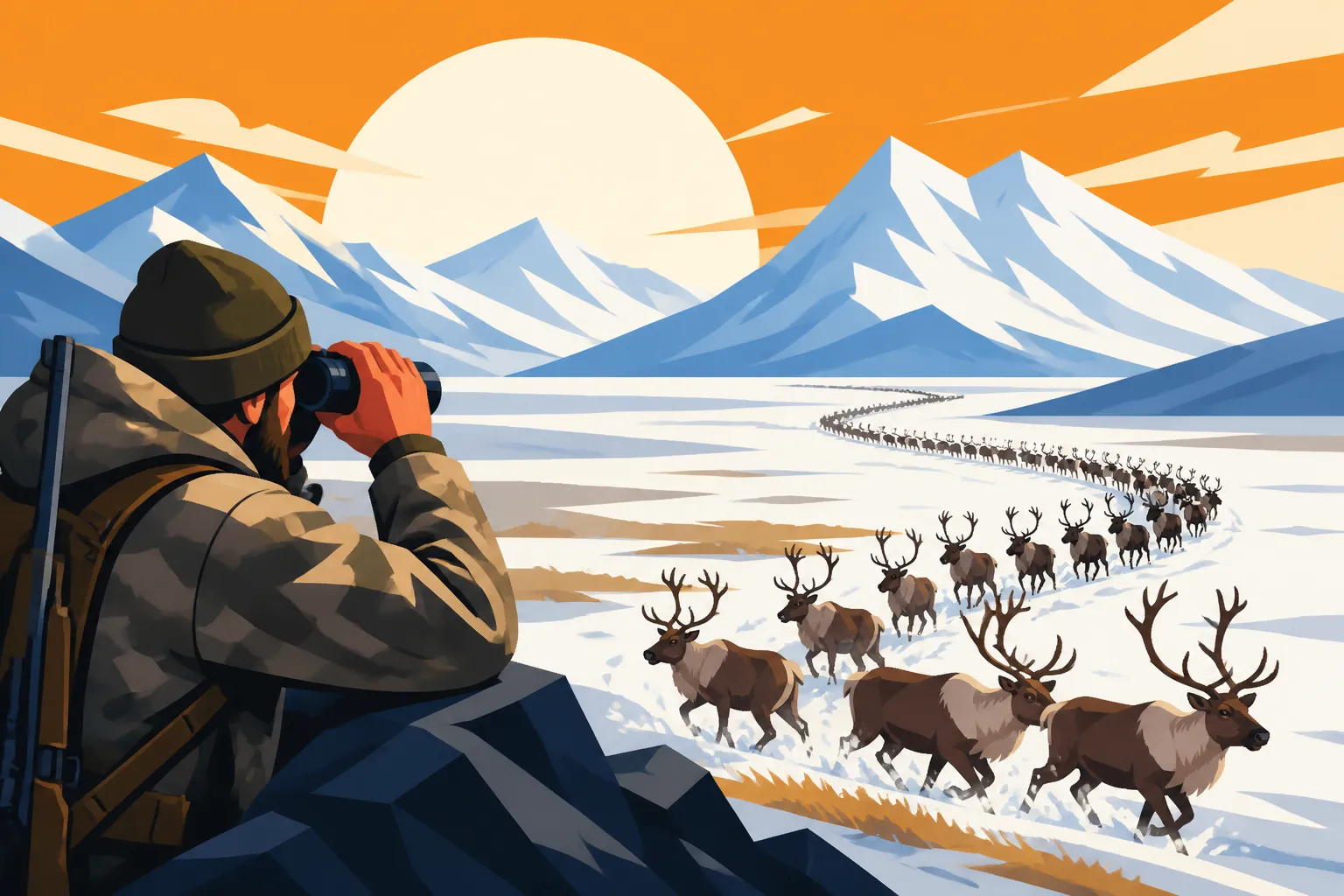
As winter slowly releases its grip, usually in late May or early June, the cows of the Western Arctic Herd begin their most critical migration segment: the journey to calving grounds. These grounds are typically found in the northern parts of their range, often on the open tundra of the North Slope or in the rolling hills north of the Noatak and Utukok Rivers. Here, the landscape offers a slight elevation, good visibility to spot predators, and relatively early green-up of vegetation for the mothers. The calving period is incredibly synchronized, with thousands of calves being born within a few short weeks. After calving, these small groups of mothers and newborns begin to coalesce into larger "post-calving aggregations," sometimes numbering in the tens of thousands. These massive herds move together, providing a degree of safety in numbers against predators like wolves and bears. At this time, when the calves are still vulnerable, the herd's movement can be swift and directional, pushing towards better forage.
Summer Wanderings and Fall Staging
Once past the immediate danger of calving, the herd often disperses somewhat, spreading out across the vast summer pastures of the Arctic and Western Alaska. They browse on succulent sedges, willows, and forbs, rapidly putting on weight. This is also the time when insect harassment can be at its worst – clouds of mosquitoes, gnats, and warble flies can drive caribou nearly mad. To escape this torment, caribou will seek higher, windier ridges, linger on snowfields, or even stand in shallow water. These constant efforts to escape insects can lead to highly erratic movements during the summer months. As late August and September roll around, cooler temperatures arrive, and the caribou begin to "stage" for the rut. Bulls, whose antlers are now fully developed and hardening, will often gather separately, building their strength. Cows and calves form larger groups, and the entire herd starts to show more defined movements towards areas rich in fall forage, heading generally southward and eastward. This is a crucial time for hunters to understand the general trend of the herd's movement, as outlined in guides like Caribou Herds of Alaska and How They Move.
Winter Range and Overwintering Challenges
By late fall and early winter, after the rut, the Western Arctic Herd shifts into its expansive winter range. This can be a huge area, stretching across the Seward Peninsula, the Kobuk and Noatak drainages, and even into the Koyukuk drainage far to the east. The herd seeks out areas with accessible lichen, their primary winter food source, often in open spruce and birch forests where snow is not too deep or is wind-scoured, making digging easier. Sometimes, large portions of the herd will settle into particular basins or valleys for weeks or months, while other segments continue to roam. Winter can be a brutal time, and the herd's survival depends on finding sufficient forage and minimizing energy expenditure. Understanding these winter patterns is essential not just for hunting, but for assessing the overall health of the herd. The population dynamics, including factors discussed in The Western Arctic Herd's Population Swings, are directly tied to the success of their wintering strategy.
Factors Influencing Western Arctic Herd Movements
While caribou migration seems driven by instinct, it’s not a rigid schedule. There are several environmental variables that act as powerful orchestrators, dictating the tempo and direction of the herd’s vast journeys. Missing these subtle cues can mean missing the herd entirely.
Weather, Snow, and Forage Availability
Perhaps the most dominant force shaping caribou migration is the weather, specifically snow cover and its impact on forage. Early or heavy snowfalls can push caribou out of an area much faster than anticipated, forcing them to seek lower elevations or wind-swept ridges where lichen is more accessible. Conversely, a mild winter with light snow might allow the herd to linger longer in traditional fall feeding areas. Ice crusts, formed by rain freezing on top of snow, are particularly devastating because they lock away food, making it impossible for caribou to crater through and reach the forage.
Temperature also plays a role. During summer, unusually warm temperatures can amplify insect harassment, driving caribou to higher ground or barren coastal areas to find relief from the biting pests. Hunters constantly monitor these conditions; a quick check of weather forecasts and local snow reports can often provide more insight than a historical migration map. You might even find yourself looking at the same satellite imagery on platforms like GoHunt that biologists use to track real-time conditions, assisting in your hunt planning, especially for remote areas accessed by bush planes, a topic covered well in Fly-In Hunting: Working With an Alaska Transporter Pilot.
Predation Pressure and Human Disturbance
While less dominant than food and weather, predation pressure and human disturbance can also influence localized caribou movements. Large wolf packs or increasing bear activity in a particular region might cause a segment of the herd to skirt that area, seeking safer passage. While caribou generally tolerate human presence at a distance, significant or repeated disturbance from aircraft, ATVs, or large groups of hunters can cause them to alter their routes temporarily or even avoid certain areas altogether. It's a balance of resilience and sensitivity. A concentrated hunting effort in one part of their range might push animals into an adjacent area, especially if the pressure is sustained. Hunters should always be mindful of their impact and strive to minimize disturbance, not just for ethical reasons but also to ensure the long-term health and predictability of the herd's movements.
Hunting Implications of Caribou Migration
Hunting the Western Arctic Herd is an incredible experience, but it’s also one that demands adaptability, patience, and a deep understanding of these nomadic animals. It’s not like deer hunting where you might pattern a buck to a specific woodlot. With caribou, you’re hunting a moving target on a grand scale.
Planning Hunts Around Expected Movements
Successful caribou hunting, particularly for the Western Arctic Herd, involves a lot of detective work and a willingness to be flexible. You simply cannot expect the caribou to wait for you. Instead, you plan your hunt based on historical patterns, current year data, and an educated guess about where the herd might be at a given time. Many hunters meticulously study migration charts and biologist reports, using tools like GoHunt to pore over satellite imagery and terrain maps, much like preparing for Scouting a Unit From Satellite Imagery Before You Fly.
For example, if you're targeting the early fall hunt, you might focus on areas where the herd is known to stage before the full southward push, or along the major river crossings in Unit 23 and the Western Arctic. Knowing that they might travel dozens of miles in a day means positioning yourself in a strategic location – perhaps a bottleneck, a favored crossing, or a high point offering expansive glassing opportunities. This strategic thinking also extends to understanding specific regulations, as many caribou hunts operate under "registration permit" systems that can close on short notice if quotas are met, a common feature of Alaska Registration Hunts That Close on Quota.
Adapting to Unforeseen Migration Shifts
Despite all the planning, the most crucial skill for a Western Arctic caribou hunter is adaptation. The herd rarely does exactly what you expect. A sudden cold snap, an unexpected early snow, or even just a change in wind direction can send hundreds of thousands of animals on a detour. I've seen groups of hunters arrive at their planned drop-off spot only to find no caribou, even though the week before, the animals were pouring through the area.
This is where having a backup plan, or at least the mental fortitude to adjust, becomes paramount. Perhaps it means packing up spike camps and relocating, or spending extra days glassing distant horizons to catch a glimpse of a new movement pattern. For hunters considering the WAH, it's vital to remember that a herd this large, often pushing past the Western Arctic Herd and the 200,000 Threshold, will inherently be harder to pinpoint than smaller, more resident herds. Knowing when bulls When Bull Caribou Shed Their Antlers or how to evaluate their condition for Caribou Meat Quality After the Rut is important, but if you can't find the herd, those details are secondary. Flexibility, resilience, and a deep respect for the dynamic nature of this incredible migration will serve you best.
Overview of Western Arctic Herd Seasonal Migration Patterns
Here’s a simplified look at the general migratory flow of the Western Arctic Herd throughout the year. Remember, these are broad tendencies, not rigid rules!
| Season | General Location Tendency | Driving Factors | Hunter Considerations |
|---|---|---|---|
| Late Spring | Northern calving grounds (North Slope, Noatak/Utukok drainages) | Calving, early green-up, predator avoidance | Closed to hunting; focus on conservation. |
| Early Summer | Post-calving aggregations moving south-southeast | Forage availability, insect relief, calf protection | Scouting via satellite possible; no hunting. |
| Mid-Summer | Dispersed movements across vast summer range (Brooks Foothills, Kobuk/Noatak) | Forage, insect avoidance (windy ridges, snowfields) | Highly unpredictable; difficult to locate concentrated animals. |
| Early Fall | Staging areas, generally moving southward and eastward | Rut preparation, cooler temps, excellent forage | Prime time for hunting; concentrate on migration corridors, river crossings. |
| Late Fall/Early Winter | Moving into widespread winter range (Seward Peninsula, Kobuk, Noatak, Koyukuk) | Access to lichen, snow depth, continued forage seeking | Hunting opportunities in winter range; animals may be more dispersed. |
| Deep Winter | Relatively settled in winter range, digging for lichen | Energy conservation, deep snow avoidance, available forage | Hunting in specific wintering grounds; often harder travel conditions. |
Remember that these are generalizations, and specific movements can vary dramatically from year to year. Successful hunters stay agile and responsive to real-time information. Also, knowing how to differentiate animals is critical; check out resources like Caribou Antler Shedding and Bull Identification for more details.
Disclaimer
This article is for general informational purposes only and does not constitute professional advice. Laws, prices and regulations vary by location and change over time. Consult a qualified professional for guidance on your specific situation.