Deer Hunting on Shuyak Island State Park
For many hunters, the dream of chasing Sitka blacktail deer in Alaska conjures images of remote islands and lush coastal rainforests, but the reality of access and the sheer wildness can feel overwhelming. If you’re yearning for an accessible yet challenging hunt for these prized deer, Shuyak Island State Park presents a unique opportunity, blending remote wilderness with the structure of a state park. This guide will walk you through everything you need to know to plan a successful and rewarding deer hunt on Shuyak, from getting there to navigating its diverse terrain and understanding the specific regulations.
Navigating Access and Logistics to Shuyak Island
Shuyak Island, part of the Kodiak Archipelago, offers a truly wild hunting experience, but its very nature as a remote island means getting there requires careful planning and a realistic budget. Unlike road-system hunts, Shuyak demands an air or water taxi, and you'll need to think through every detail of transportation, gear, and shelter long before you ever set foot on its shores.
Getting to the Island: Air and Water Options
Reaching Shuyak Island is your first major logistical hurdle, and you essentially have two primary choices: flying in or boating in. Each has its own set of advantages and challenges, and your decision will likely hinge on your budget, group size, and tolerance for adventure. The island itself has no roads or permanent infrastructure, so whichever method you choose, you'll be dropped off in a wild landscape.
Float planes are a popular choice for many hunters heading to the Kodiak region. They can land on the numerous lakes and sheltered coves that dot Shuyak's coastline. Flying in from Kodiak City provides a breathtaking aerial view of the island, and it's generally the fastest way to get to your chosen hunting area. However, air taxis operate with strict weight limits, and this can be a real headache when you're trying to pack in ten days worth of food, gear, and enough empty space for deer meat. Expect to pay by the hour or by the load, and remember that weather can ground planes for days, potentially impacting your hunt schedule. It’s crucial to communicate clearly with your pilot about your gear, intended landing spot, and preferred pickup date. You can learn a lot by reading up on Fly-In Hunting: Working With an Alaska Transporter Pilot.
Alternatively, chartering a boat is another excellent option, especially for larger groups or those with more gear. Boats offer greater cargo capacity, meaning you can bring more creature comforts, larger camp setups, or even an ATV (if allowed in your specific hunting zone and unit, which is usually quite restricted in a State Park). Charter boats typically operate out of Kodiak City or smaller communities like Old Harbor. While slower and more susceptible to rough seas, a boat can often double as a floating base camp, providing shelter, cooking facilities, and a means to move between different coastal hunting areas if weather or deer movement dictates a change. The cost might seem higher upfront, but split among several hunters, it can sometimes be more economical than multiple air taxi flights. Plus, the ability to haul out a full load of deer meat without worrying about weight surcharges is a huge bonus.
| Feature | Air Taxi (Float Plane) | Charter Boat |
|---|---|---|
| Cost | Often higher per person, dependent on weight and flight hours | Can be more economical for larger groups, fixed daily rate or trip fee |
| Speed | Fastest way to reach remote drop-off points; direct to specific lakes/coves | Slower, weather-dependent travel; more time spent transiting |
| Gear Limit | Strict weight/volume limits per passenger, often requiring multiple loads or extra fees | More generous cargo capacity, especially for bulky items and supplies |
| Flexibility | Can access more interior lakes/ponds; quicker repositioning if needed | Limited to coastal access, but can move camps along the shoreline easily |
| Shelter | Typically requires personal tent setup or cabin reservation | Boat often provides base camp, shelter, cooking facilities, reducing need for extensive camp gear |
| Weather | Grounded in severe weather, short windows can delay drop-off or pickup | Can often travel in rougher seas than float planes, but slower and less comfortable |
| Experience | Raw, remote, requires full self-sufficiency; direct immersion into the wild | More comfortable, less primitive base camp; easier logistics for meat/gear |
Permits, Cabins, and Staying on Shuyak
Once you've decided how to reach Shuyak, you need to figure out where you'll be sleeping. Shuyak Island State Park, while wild, isn't entirely without facilities. The park maintains several public use cabins that can be reserved, offering a significant advantage over tent camping in Alaska's notoriously wet coastal environment. These cabins provide solid shelter from the elements, a dry place to store gear, and often a wood stove for heat and drying clothes. They are incredibly popular, so you'll need to book them well in advance, often as soon as the reservation window opens. The competition can be stiff, so have your dates and backup plans ready.
If you can't secure a cabin, or if you prefer a more flexible approach, tent camping is your alternative. A high-quality, four-season tent is absolutely essential here. Expect rain, wind, and sometimes even snow, even during prime hunting season. Make sure your tent is robust, waterproof, and has a good vestibule for wet gear. Pitching your tent in a sheltered spot, away from potential bear travel corridors, is critical. Keep all food and scented items secured away from your sleeping area, preferably in bear-resistant containers or hung from a bear pole if available. Remember, the goal is to leave no trace, so pack out everything you pack in, including all food scraps and trash. Shuyak is a pristine environment, and we all have a responsibility to keep it that way.
Hunting Sitka Blacktail Deer on Shuyak's Diverse Terrain
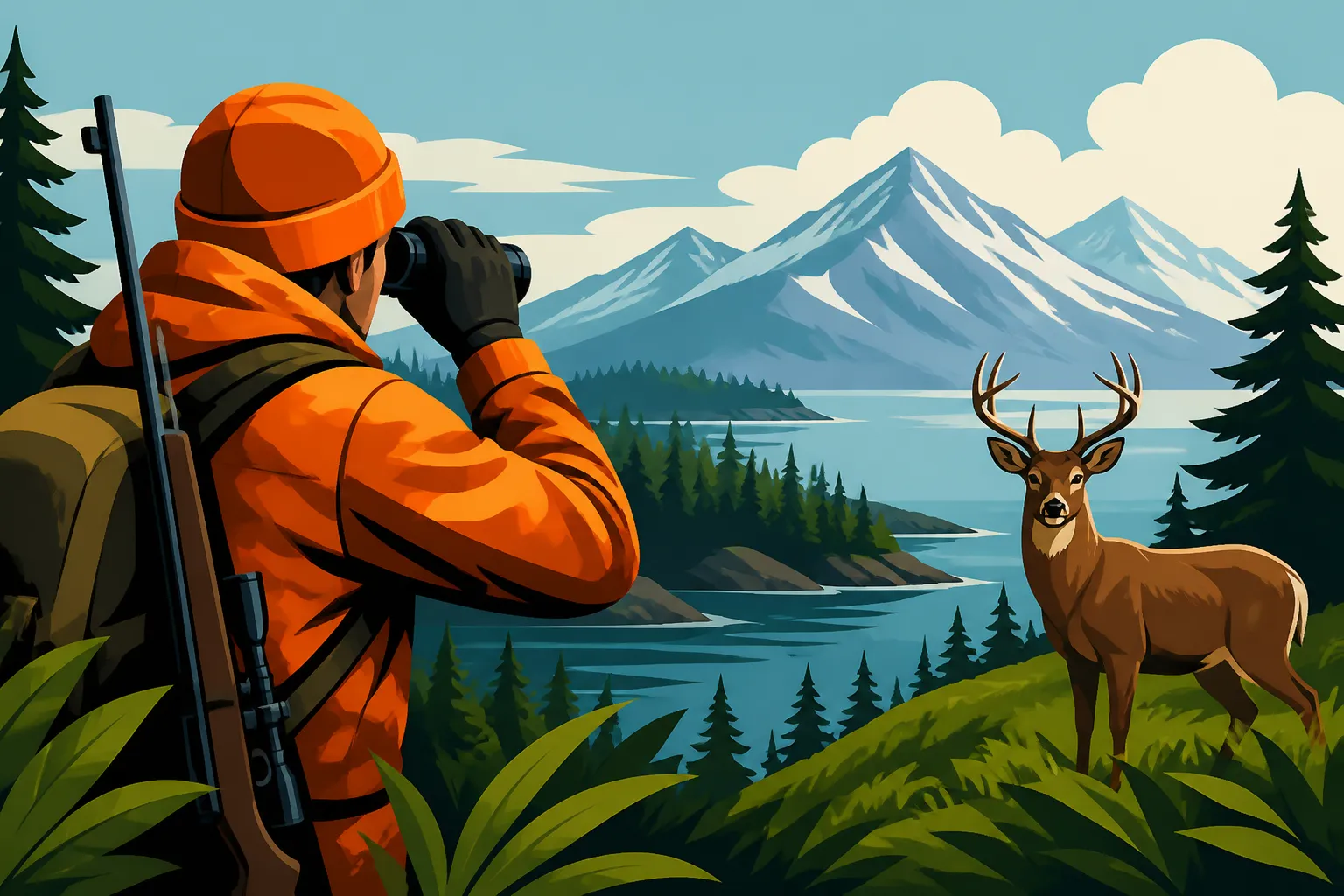
Hunting Sitka blacktail deer on Shuyak Island is an experience that truly tests a hunter's adaptability. The island's diverse landscape—a mosaic of dense Sitka spruce and western hemlock forests, boggy muskegs, and steep alpine zones—requires varied tactics and a keen understanding of deer behavior. It's not a place where one strategy fits all; you'll need to be ready to change your approach as the terrain and conditions demand.
Understanding Shuyak's Ecosystem
The coastal rainforest environment of Shuyak Island plays a huge role in how deer live and move. The lower elevations are characterized by incredibly dense timber, often with a thick understory of salmonberry, huckleberry, and devil's club. Moving through this can be a slow, arduous process, demanding extreme patience and quiet footwork. Deer use this dense cover for security, especially during inclement weather or when they feel pressured. They're often feeding on browse within these thickets, moving quietly and deliberately.
As you gain elevation, the timber can thin out, giving way to open muskegs – boggy, treeless areas covered in mosses, stunted shrubs, and wildflowers. These areas can be excellent for glassing, especially at dawn and dusk, or after a rain when deer might be out foraging. Further up, you'll encounter steep, rocky alpine zones. In good weather, especially during the early season, blacktails will often migrate to these higher elevations to feed on succulent forbs and grasses that aren't available lower down. Understanding these vertical movements based on feed, weather, and hunting pressure is key to locating deer on Shuyak. When deep snow hits later in the season, it can push deer down from the alpine, concentrating them in lower, more sheltered areas, a phenomenon explored in Deep Snow Winters and Alaska Deer Die-Offs.
Effective Hunting Tactics for Blacktail
Given the varied terrain, employing a mix of hunting tactics will serve you best on Shuyak. Still hunting through the dense timber is often the most productive method in the lower elevations. This involves moving incredibly slowly, pausing frequently, and using your binoculars to pick apart the shadows and foliage for any sign of a deer. Think of it like a slow, deliberate stalk, always scanning ahead and listening for the faint rustle of a deer moving through the brush. Sometimes, working with a partner for a quiet, subtle "deer drive" can also be effective in certain timber blocks, as detailed in Deer Drives Versus Still Hunting in Southeast Alaska Timber.
When you reach more open terrain, such as muskegs, beach fringes, or avalanche chutes, glassing becomes your primary tool. Find a vantage point and systematically scan the area with good binoculars or a spotting scope. Pay close attention to transition zones where timber meets muskeg, or where feed is abundant. Deer will often emerge from cover to feed, offering a fleeting opportunity for a shot. The beaches, especially at low tide, can be travel corridors and feeding areas, making Skiff Hunting Deer Along Saltwater Beaches a tactic for those with boat access, allowing you to cover more coastline and spot deer browsing seaweed or grass right at the tideline.
If your hunt aligns with the late fall rut, incorporating calling can be surprisingly effective. Short, soft bleats and grunts can sometimes entice a curious buck to reveal itself, particularly if it believes another deer is in its territory. While not as dramatic as a moose rut, it’s worth trying, especially as outlined in Deer Calling During the November Rut. Remember, the key to success on Shuyak is patience, stealth, and adapting your strategy to the specific micro-terrain you're in.
Overcoming Shuyak's Challenges
Shuyak Island is beautiful, but it's also relentlessly challenging. The weather is perhaps your biggest adversary. Rain, often heavy and persistent, can be a daily reality. This means waterproof gear isn't just a suggestion; it's a necessity. High winds can make travel difficult and dampen spirits, while fog can roll in quickly, reducing visibility to mere yards and making navigation treacherous. You need to be mentally prepared for these conditions and have the right gear to endure them.
The terrain itself can be physically demanding. Steep slopes covered in slick moss, loose rock, or dense, tangled blowdowns will test your stamina and balance. Investing in high-quality, waterproof hiking boots with excellent ankle support and traction is non-negotiable. Physical conditioning before your hunt will pay dividends in comfort and safety.
Finally, Shuyak is brown bear country. These powerful animals share the island with the deer, and encounters are a real possibility, especially around kill sites or dense berry patches. Carrying bear spray and/or a firearm for self-defense is essential. Always make noise when moving through thick brush, and be extra vigilant when butchering a deer. Reviewing information on Bear Safety While Butchering a Kill in Alaska before you go is a wise move.
Regulations, Tags, and Ethical Considerations
Before you even start packing your rain gear, understanding the specific hunting regulations for Shuyak Island is paramount. Alaska's hunting laws can be complex, and state park rules add another layer. A successful and legal hunt requires due diligence on your part to ensure you're in compliance with everything from licensing to bag limits and ethical practices.
Essential Licenses and Tags for Sitka Blacktail
To hunt deer on Shuyak Island, you'll first need a valid Alaska hunting license. Nonresidents will also need to purchase a specific Sitka blacktail deer locking tag for Unit 8, where Shuyak is located. It's crucial to understand the costs and how to obtain these, and resources like Deer Tags on Kodiak and What They Cost can provide a breakdown. You can generally purchase these online through the Alaska Department of Fish and Game website or from authorized vendors once you arrive in Alaska. Make sure your license and tags are physically in your possession while hunting.
Beyond the general requirements, always check for any specific regulations pertaining to Shuyak Island State Park itself. While the park is open to hunting, there might be unique rules regarding firearm discharge near cabins or specific zones. Generally, for Unit 8 on Kodiak and its surrounding islands like Shuyak, the deer bag limits are quite generous, often allowing for "any deer," meaning antler restrictions found in other parts of the state typically don't apply. However, never assume; always verify the current regulations in the official hunt regulations booklet for the year you plan to hunt. Keep in mind that for deer, nonresidents typically do not need to hire a guide, which makes it a much more accessible unguided hunt compared to species like brown bear or Dall sheep.
Season Dates and Timing Your Hunt
The general deer season on Shuyak Island, like much of Unit 8, usually opens in early August and extends through December. Alaska Deer Season Opening Date on Kodiak can give you an idea of when to plan. However, the best time to hunt often depends on your preferred style and the conditions you're willing to endure.
- Early Season (August-September): This period often means milder weather, though rain is still common. Deer are typically in their summer patterns, often higher up in the alpine feeding on lush vegetation. This can be a great time for backpack hunting, as you can access high country before the snow pushes deer down. The downside is thicker foliage and no rut activity.
- Mid-Season (October): Weather becomes more volatile, with increasing chances of cold rain and wind. Deer might start to move lower, utilizing muskeg edges and timber for cover. This can be a good transition period.
- Late Season (November-December): This is when the Sitka blacktail rut typically peaks. Bucks are more active, less cautious, and can be responsive to calling. However, this is also when the weather is at its harshest, with significant snow, freezing rain, and bitter winds being very real possibilities. Access can also become more challenging due to severe weather.
Regardless of when you plan to go, always check for emergency orders issued by the Alaska Department of Fish and Game. These orders can close seasons early due to low populations or extreme weather conditions, or change bag limits. Resources like GoHunt often compile and analyze this data, which can be invaluable for predicting trends and understanding the current state of the herd. Having onX Hunt on your device with offline maps will also help you visualize specific unit boundaries and terrain features, aiding in your planning.
Meat Care and Leave No Trace
Ethical hunting extends beyond simply following the law; it encompasses respectful treatment of the animal and the environment. Once you've successfully harvested a deer, proper meat care is paramount, especially in Shuyak's often warm and wet conditions. Quickly field dress the animal, quarter it, and get the meat into breathable game bags. Game Bags That Breathe in Coastal Rain are a must-have, as they protect the meat from flies and debris while allowing it to cool. Hanging the meat in a cool, shaded spot, elevated to allow air circulation and deter predators, is critical to prevent spoilage. If you plan to be out for several days, consider bringing a small, portable game cooler to help maintain temperature.
Packing out your meat from Shuyak's steep, slick terrain can be incredibly challenging. A sturdy pack frame is essential. You're legally required to salvage all edible meat, as outlined in Packing Out Meat in Alaska: The Salvage Law Hunters Must Follow, so plan for heavy loads and potentially multiple trips.
Finally, always adhere to Leave No Trace principles. Pack out all your trash, including spent shell casings, food wrappers, and any non-biodegradable items. Minimize your impact on the vegetation and terrain. If you're using a cabin, leave it cleaner than you found it. We are guests in this wild place, and our actions reflect on all hunters. Using onX Hunt to verify land status helps ensure you're always operating within appropriate boundaries, whether it's State Park, State Land, or other designations.
Essential Gear and Safety for Your Shuyak Deer Hunt
Preparing for a Shuyak Island deer hunt isn't just about bringing a rifle; it's about equipping yourself for an unforgiving coastal environment where the weather can change in an instant. Your gear choices will directly impact your comfort, safety, and ultimately, your success. Skimping on quality here can turn an adventure into a miserable ordeal.
Weather-Appropriate Clothing and Shelter
When it comes to clothing for Shuyak, think "waterproof" and "layers." You absolutely cannot overstate the importance of high-quality, reliable rain gear. This means a full rain jacket and pants that are truly waterproof and breathable – not just water-resistant. Forget cotton; it absorbs moisture, holds it against your skin, and will make you cold, miserable, and prone to hypothermia. Opt for synthetic or wool base layers, fleece or puffy insulation for mid-layers, and your bomb-proof rain gear as an outer shell. A waterproof hat and gloves are equally critical.
Even if you've booked a public use cabin, a lightweight emergency shelter or bivy bag is a smart addition to your pack. Weather delays can happen, or you might find yourself farther from camp than expected at last light. For primary shelter if not in a cabin, a robust, three- or four-season tent designed to withstand heavy wind and rain is non-negotiable. Ensure it has a strong pole structure and excellent waterproofing, including a durable floor. Your sleeping bag should be rated for temperatures colder than you expect to encounter, and be made of synthetic or water-resistant down to retain warmth even if damp.
Navigation and Communication
In the dense forests and fog-shrouded peaks of Shuyak, traditional navigation skills are just as vital as modern technology. You'll need a reliable GPS unit with pre-loaded maps, a physical compass, and detailed topographical maps of your hunting area. Learn how to use them together, because batteries can die, and electronics can fail. Being able to navigate by map and compass, even in limited visibility, is a lifesaving skill. Alpine Navigation Without Cell Service is a great resource to brush up on these skills.
Cell service is virtually nonexistent on Shuyak Island, so a satellite communication device is a mandatory safety item. Devices like a Garmin InReach or Zoleo allow you to send and receive text messages, share your location, and, most importantly, send an SOS in an emergency. Establish a check-in schedule with a reliable contact back home, detailing your expected route and when they should expect to hear from you. This is crucial for solo hunters, as highlighted in Signal Devices and Check-In Plans for Solo Alaska Hunts. Carry spare batteries or a portable power bank for all your electronics.
Hunting Tools and Field Processing
Your choice of rifle or bow for Sitka blacktail deer should be appropriate for the animal and the conditions. While blacktails aren't enormous, they are tough, and shot placement in dense cover can be challenging. A flat-shooting rifle in a common deer caliber is suitable, but consider a stainless steel and synthetic stock to resist the corrosive effects of the coastal moisture. For optics, bring quality binoculars that perform well in low light and fog, along with a spotting scope if you plan to do extensive glassing in open areas.
For field processing, a sharp knife or two, a small sharpening stone, and a bone saw are essential. Don't forget those breathable game bags to protect your meat immediately after the kill. A sturdy pack frame is absolutely necessary for packing out deer meat, especially if you harvest a larger buck or need to cover significant distance over rough ground. Having a first-aid kit, fire-starting materials, a headlamp with extra batteries, and a water filter or purification tablets will round out your essential gear, ensuring you're prepared for whatever Shuyak Island throws your way.
Disclaimer
This article is for general informational purposes only and does not constitute professional advice. Laws, prices and regulations vary by location and change over time. Consult a qualified professional for guidance on your specific situation.