Yukon Delta Hunting Out of Bethel
Hunting the vast and remote Yukon-Kuskokwim Delta, particularly when staging out of a hub like Bethel, presents an entirely unique set of challenges and opportunities that can overwhelm even seasoned Alaska hunters. This region is a world unto itself, a sprawling tapestry of wetlands, tundra, and countless waterways, far removed from any road system. This guide will walk you through the realities of planning and executing a hunt in this challenging, yet incredibly rewarding, corner of Alaska, helping you understand the landscape, access methods, target species, and crucial logistical considerations.
Understanding the Yukon Delta's Unique Landscape and Challenges
The Yukon-Kuskokwim Delta is unlike almost any other hunting ground in Alaska, and understanding its distinct character is the first step to a successful hunt. This isn't your typical mountain hunting for sheep or high-country moose. This is a low-lying, water-dominated environment that demands a different mindset and different gear. It's easy to underestimate the sheer scale and the particular difficulties this terrain presents until you're right there, knee-deep in muskeg, with a horizon that looks exactly the same in every direction.
The Vastness of the Yukon-Kuskokwim Delta
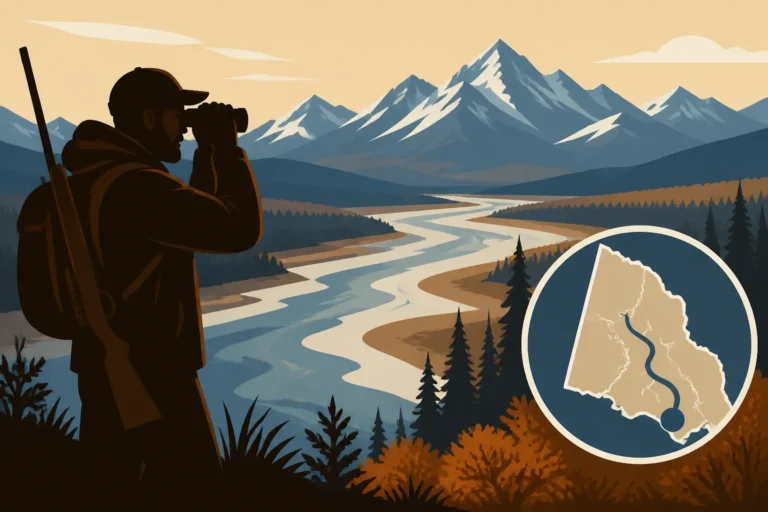
Imagine an area roughly the size of the state of Indiana, but with hardly any roads and dominated by braided rivers, sloughs, and a seemingly endless expanse of wet tundra. That's the Yukon-Kuskokwim Delta. It's a land shaped by two of Alaska's mightiest rivers, constantly shifting and reforming the landscape. This vastness means game animals often have immense home ranges, making patterns of movement harder to predict, especially for species like caribou. For hunters, it translates into a need for robust navigation skills, a keen understanding of the terrain, and a profound respect for the environment's ability to swallow you whole if you're not prepared. You simply cannot walk across it like you might open country elsewhere; you travel on it.
The remoteness also means that help is days, not hours, away if things go wrong. Every piece of gear, every decision about camp placement, every gallon of fuel for your boat, takes on magnified importance. There are few landmarks to guide you, especially once you push away from the main river channels, making reliance on GPS and satellite imagery paramount. It's a place where meticulous pre-hunt planning, including downloading offline maps for devices like onX Hunt, isn't just a good idea—it's absolutely critical for safety and success.
Weather and Terrain Considerations
The weather in the Yukon Delta is notoriously fickle and can change dramatically in a matter of hours. Rain, fog, and wind are constant companions, even during what might be considered prime hunting seasons. This isn't just a discomfort; it deeply impacts visibility for spotting game, the safety of air and boat travel, and your ability to stay warm and dry. Hypothermia is a very real threat if your gear isn't up to the task of constant dampness and chilling winds.
The terrain itself, while largely flat, is anything but easy walking. It's a patchwork of spongy muskeg, tussocks that trip you up, shallow ponds, and dense willow thickets along waterways. Imagine trying to walk through a giant, waterlogged sponge, sometimes sinking to your knees with every step. Retrieving game in this environment can be an epic undertaking, often involving long drags through saturated ground or even floating animals across water bodies. Understanding how to navigate these challenges, from choosing appropriate footwear to planning for game retrieval, will define your experience here.
Accessing Hunting Opportunities from Bethel
Given the Delta's immense size and lack of infrastructure, getting to your hunting grounds from Bethel is a significant logistical puzzle. Bethel itself is a hub, a relatively large community for rural Alaska, but beyond its perimeter, the roads quickly disappear into the wilderness. Your primary modes of transport will involve either aircraft or boat, each with its own costs, considerations, and limitations.
Air Travel as the Primary Lifeline
For many hunters, especially those targeting remote pockets of game or specific caribou migration routes, bush planes are the only realistic way to access the deeper reaches of the Delta. From Bethel, a number of air taxi services can fly you to remote lakes, rivers, or gravel strips. These flights are often conducted in smaller aircraft like Cessnas or Super Cubs, designed to operate from rough, unimproved landing sites. The cost can be substantial, as you're not just paying for your flight, but often for "deadhead" time—the time the plane spends flying to and from your drop-off point empty. It's an expense that needs to be factored heavily into your budget.
When arranging air transport, it's crucial to have a clear understanding of Weight Limits on a Super Cub Drop and other aircraft types. Overweight gear is a common issue and can lead to expensive extra flights or gear being left behind. You'll also need to communicate your pick-up schedule and have backup plans for weather delays, as fog and high winds can ground planes for days. Many successful fly-in hunts include building extra "weather days" into the schedule, knowing that patience is a virtue when you're reliant on a bush pilot and clear skies.
Boat Access and River Navigation
For hunters looking to stay closer to the larger river systems that snake through the Delta, boat access can be a viable and often more economical option than air charters, especially for parties of two or more. The Kuskokwim River, in particular, offers extensive access, and smaller boats can navigate countless sloughs and tributaries. You can often rent jon boats or skiffs in Bethel, or arrange for a local to transport you and your gear upstream. However, operating a boat in this environment requires skill and experience.
The rivers are constantly changing, with shifting sandbars, submerged logs (known as "sweepers"), and rapid current variations. Running aground in a remote slough can quickly turn a hunting trip into a survival situation. Understanding river currents, reading water, and carrying essential repair tools and emergency supplies are non-negotiable. It's also vital to respect private land and Native Allotments along the riverbanks; always verify land status, perhaps using a tool like onX Hunt, before setting foot off your boat. For hunters interested in these methods, studying up on River Landings on the Innoko can offer some transferable insights into navigating similar large Alaska rivers.
Key Species and Seasons Around Bethel
The Yukon Delta, despite its challenging environment, supports a surprising diversity of game, making it a desirable destination for various hunting pursuits. The primary big game targets are caribou and moose, but the region is also renowned for its waterfowl.
Caribou Hunting in the Delta
The Yukon Delta is part of the range for several major caribou herds, though their movements are famously unpredictable. The Western Arctic Herd, one of the largest in North America, often utilizes parts of the broader region, and its migrations can sometimes bring animals into accessible areas from Bethel. However, "accessible" is a relative term here, meaning you'll still likely need to fly or boat a significant distance. When caribou are present, they offer an exciting hunt, often moving across the open tundra, making them visible from a distance.
Hunters need to pay close attention to harvest tickets and specific unit regulations, as caribou seasons and bag limits can change based on herd health and migration patterns. Information from sources like GoHunt can be invaluable for tracking these updates. Understanding Caribou Herds of Alaska and How They Move is crucial, as their nomadic nature means a hotspot one year might be barren the next. Patience and flexibility are key; sometimes, you might spend days glassing and moving to locate a migrating band.
Moose Hunting in Riverine Habitats
While not known for the sheer density of moose found in interior burn areas, the Yukon Delta does hold moose, particularly along the larger river systems and in areas with denser willow growth. These moose often feed in the thick riparian zones, making them elusive targets. Hunting moose here typically involves navigating sloughs by boat, calling, and then stalking through dense cover. It's an intimate, often physically demanding style of hunting.
Finding a legal bull can be challenging, as dense cover makes judging antler size difficult. Hunters need to be intimately familiar with regulations like Spike-Fork Legal Definition in Alaska or the specific antler restrictions for the Game Management Unit they are hunting in. Quartering and packing out a moose in this wet, boggy environment is an enormous task, often requiring multiple trips by boat or even improvised sleds across saturated ground. Be prepared for deep mud and heavy loads. For an idea of where some of Alaska's best moose hunting can be found, see Alaska Moose: Where the Biggest Bulls Live, though the Delta offers its own distinct challenges.
Waterfowl and Small Game Opportunities
Beyond big game, the Yukon Delta is world-renowned as a breeding and staging ground for millions of migratory birds. Waterfowl hunting for ducks and geese is a major draw, with incredible opportunities to harvest a variety of species. The sheer number of birds can be staggering, and the vast network of ponds, lakes, and sloughs provides endless spots for setting up blinds and decoys. This kind of hunt often pairs well with big game efforts, providing welcome camp meat.
In addition to waterfowl, ptarmigan and grouse can sometimes be found in the scattered uplands or willow patches, offering a chance to fill the pot during a slow big game hunt. Small game hunting here means carrying a shotgun or a .22 rifle alongside your big game firearm. For more on utilizing small game, check out Waterfowl and Ptarmigan as Camp Meat. These smaller animals provide both excellent food and a fun break from the intense focus of big game hunting.
Planning Your Hunt: Logistics and Regulations
Successfully hunting the Yukon Delta isn't just about finding game; it's about meticulous planning, adhering to regulations, and being prepared for anything Alaska can throw at you. From essential gear to navigating the bureaucratic maze of permits, every detail matters.
Essential Gear for Delta Hunts
The Delta's wet, remote, and often cold environment demands a specialized gear list. Your primary concern should be staying dry and warm. This means high-quality rain gear (top-to-bottom, not just a jacket), waterproof boots (often knee-high or chest waders), and multiple layers of synthetic or wool clothing. Cotton is truly rotten here. A reliable tent that can withstand strong winds and driving rain is non-negotiable, as is a warm sleeping bag with a high waterproof rating.
Navigation is paramount in a landscape with few distinguishing features. A robust GPS unit with pre-loaded maps, along with a compass and physical map as backup, is essential. Many hunters find digital mapping applications like onX Hunt invaluable for scouting, marking waypoints, and ensuring they know land ownership boundaries. Communication devices, such as a satellite phone or an InReach device, are also crucial for safety, allowing you to check in with contacts or call for emergency assistance. For solo hunters, developing Signal Devices and Check-In Plans for Solo Alaska Hunts is not just smart, it's potentially life-saving. Don't forget a first-aid kit tailored for remote wilderness, including any personal medications.
| Item Category | Essential Gear Examples | Why it's Critical in the Yukon Delta |
|---|---|---|
| Shelter | Expedition-grade tent, robust rain fly, ground tarp | Withstands fierce winds and constant rain; keeps gear and sleeping dry. |
| Clothing | Full waterproof rain gear (jacket & pants), knee-high rubber boots/waders, wool/synthetic layers | Prevents hypothermia in consistently wet, cold conditions; cotton is ineffective when wet. |
| Navigation | GPS unit with spare batteries, compass, paper maps, satellite imagery (onX Hunt), InReach/sat phone | Prevents getting lost in featureless, vast terrain; essential for safety and emergency communication. |
| Fire/Cook | Reliable stove, plenty of fuel, waterproof matches/lighters, fire starter | Cooking, warmth, and drying gear are critical; wood can be scarce or wet. |
| Game Care | Game bags (breathable), sharpening kit, good knives, rope, tarp | Crucial for meat salvage in warm, wet conditions; protects against flies and keeps meat clean. |
| Safety | First-aid kit, bear spray/firearm, signalling mirror, headlamp, emergency bivy | Self-sufficiency in a remote area with limited immediate assistance; bear encounters are possible. |
| Boat Gear | Life jackets, anchor, repair kit, extra fuel, paddle, bilge pump (if applicable) | Essential for safe river travel; prevents stranding due to shallow water, debris, or mechanical issues. |
Navigating Regulations and Permits
Hunting in Alaska involves a clear understanding of various regulations, and the Yukon Delta is no exception. Beyond your basic hunting license, you'll likely need species-specific tags or permits. Many species in the Delta, particularly moose and caribou, are managed through harvest tickets, registration permits, or even drawing permits. It is vital to consult the Alaska Department of Fish and Game (ADF&G) regulations booklet for the specific Game Management Unit you plan to hunt. Online resources and forums can be helpful, but the official regulations are your ultimate guide. Alaska Harvest Tickets, Registration Permits and Draw Permits outlines the general structure of these requirements.
The Delta also encompasses areas with unique subsistence regulations, especially for residents of rural communities. Non-residents and even non-rural residents need to be acutely aware of Federal Subsistence Hunting on Alaska Public Lands rules, as different jurisdictions (state vs. federal) can have distinct seasons, bag limits, and eligibility requirements in overlapping areas. Before you even set foot on a plane or boat, you should thoroughly research the current year's regulations for your chosen unit and species. Using a service like GoHunt can help organize this research, providing a consolidated view of draw odds, permit types, and regulatory changes, helping you apply for the correct permits well in advance. Remember, ignorance of the law is no excuse, and wardens patrol even the most remote areas.
Disclaimer
This article is for general informational purposes only and does not constitute professional advice. Laws, prices and regulations vary by location and change over time. Consult a qualified professional for guidance on your specific situation.