Deer Calling During the November Rut
For many hunters, the thought of deer hunting conjures images of crisp autumn mornings, but in Alaska, particularly for Sitka blacktail deer, November offers a uniquely challenging and rewarding experience during the peak of the rut. Trying to pinpoint exactly when and how to call these island-dwelling deer can feel like a shot in the dark, leading to missed opportunities and frustrating silences. This comprehensive guide will walk you through the nuances of deer calling during Alaska's late-season rut, equipping you with the strategies and insights to coax those elusive bucks into range.
Understanding the November Rut in Alaska
The November rut for Sitka blacktail deer is a wild card, often characterized by rapidly changing weather, shorter days, and bucks that can be either incredibly responsive or utterly locked down. Unlike deer in more temperate climates that might have a broader, more predictable rut window, Alaska's environment often compresses the peak breeding activity, making precise timing and understanding deer behavior even more critical. It’s not just about the calendar; it’s about the conditions.
Seasonal Behaviors and Peak Activity
By November, Sitka blacktail bucks are fully in the throes of the breeding season. Their necks are swollen, they're often alone or in small groups chasing does, and their primary focus shifts from feeding to perpetuating the species. This intense drive makes them more vulnerable to calling, but also more erratic. You'll often find them working rubs and scrapes, marking their territory, and constantly scent-checking for receptive does. The peak of the rut for blacktails in Southeast Alaska generally falls in mid-November, but it can fluctuate a week or two depending on local conditions and the individual deer's physiological state. For example, on islands like Kodiak or Prince of Wales, the timing can be influenced by the deer population density and forage availability.
During this time, the bucks are expending an incredible amount of energy. They're not getting much rest and are constantly on the move. This is a crucial factor to consider because a buck that's been relentlessly chasing does for days might not respond as aggressively to a call as one that's just entered the rut cycle. You might observe younger bucks actively participating, but the mature, dominant bucks are the ones truly driving the breeding. Understanding the Blacktail Rut Timing in Southeast Alaska can really fine-tune your approach, as early or late snows can push the deer lower or hold them in sheltered timber, directly impacting how they react to calls. For valuable insights into deer densities and migration patterns that influence rutting behavior, online mapping tools provided by platforms like GoHunt can offer crucial pre-hunt intelligence, helping you locate high-probability areas on Deer Populations on Prince of Wales Island or other prime locations.
Weather's Impact on Rutting Deer
Alaska's November weather is notoriously unpredictable and can dramatically influence deer behavior and calling success. You could start the day with a light snow, only to have it turn into a torrential downpour, or a biting wind can whip up out of nowhere. Sitka blacktails are hardy, but extreme conditions will still affect their movement patterns. Heavy snow can push deer down from higher elevations into denser timber or closer to the beaches, while clear, cold days might see increased daylight activity as bucks cruise for does. Many deer will have moved down from their summer alpine ranges, making for a very different hunt compared to chasing Deer Above Timberline in Early August.
Wind, in particular, is a game-changer. A swirling wind makes scent control incredibly difficult and can carry your calls in unpredictable directions, or worse, carry your human scent right to a buck you’re trying to lure. Deer will naturally use the wind to their advantage, often circling downwind to catch scent before committing to a call. Being able to read the subtle shifts in wind and plan your approach accordingly is paramount. Rain can muffle calls but also wash away human scent, offering a double-edged sword. Cold temperatures often stimulate more movement, but extreme cold might keep deer bedded down, conserving energy. Keep an eye on local forecasts and be prepared to adapt your strategy on the fly. Don't forget, managing your gear in these conditions is vital; having Game Bags That Breathe in Coastal Rain ensures your harvest is well-preserved if you're successful.
Types of Calls and When to Use Them for Alaska Blacktails
Choosing the right call and knowing when to deploy it is more art than science, especially with the wary Sitka blacktail. These deer aren't as vocal as some whitetail subspecies, but they do communicate, and understanding their language is key. You'll want a versatile arsenal to cover various scenarios the Alaska wilderness throws at you.
Grunt Calls
Grunt calls mimic the short, guttural vocalizations bucks make, often while trailing does, asserting dominance, or when frustrated. There are two primary types of grunts you'll want to master: the tending grunt and the basic grunt. The tending grunt is typically a softer, longer series of grunts a buck makes when he's closely tending a doe, letting other bucks know he's got a hot doe locked down. This can be an incredibly effective call to challenge a dominant buck or pique the interest of a curious satellite buck.
The basic grunt is a more common, shorter, and sharper sound. It's often used by bucks cruising for does, or in response to another deer. This can be your go-to call for blind calling when you suspect a buck is in the area but haven't spotted one. It's also great for stopping a moving buck to assess if he's legal or to get a shot. For a subtle approach, especially in thick timber found in many parts of Southeast Alaska, a soft grunt can make a wary buck pause. Don't overdo it; a few well-placed grunts every 15-20 minutes, or in response to a visual, can be far more effective than a constant serenade.
Fawn Bleats and Doe Estrus Calls
While grunt calls target bucks directly, fawn bleats and doe estrus calls play on a buck's paternal and reproductive instincts. A fawn bleat mimics the distress call of a lost or injured fawn. This call can attract curious does and, more importantly, protective bucks that might be in the vicinity of those does. It's a fantastic call for drawing in does, which often brings bucks right along with them, especially if they are tending.
Doe estrus calls, on the other hand, directly mimic the sound of a doe in heat. This is arguably one of the most powerful calls during the peak of the rut, as it directly appeals to a buck's strongest drive. These calls, often a series of soft, drawn-out bleats, are designed to signal a receptive doe. Use them sparingly and strategically. A few bleats followed by silence can often be more effective than continuous calling, giving a buck time to pinpoint the source and approach. Remember, in November, bucks are actively seeking out estrus does, making this a high-percentage call. However, be prepared for an immediate response; a hot buck might come charging in quickly, so always be ready for a shot.
Rattling Antlers
Rattling simulates the sound of two bucks fighting or sparring, tapping into the competitive nature of rutting bucks. This can be incredibly effective, especially for dominant bucks looking to assert their territory or check out a potential rival. You'll want to use real antlers or a high-quality rattling bag that can accurately replicate the sound of clashing bone. Start with some light sparring sounds, escalating to more aggressive crashes, grunts, and even thrashing nearby brush to make it sound like a real fight.
The best time to rattle is during the peak rut when bucks are most competitive, typically in mid-November for Sitka blacktails. It can also work during the pre-rut when bucks are still establishing dominance. However, rattling can be a double-edged sword. If there are no bucks in the immediate area, or if the bucks are already locked down with does, aggressive rattling might scare them off or simply be ignored. Always consider your location and the current deer activity. In open country where sound carries, rattling might pull in deer from a greater distance. In thick timber, you'll need to be more subtle and perhaps combine it with grunts. Always have your rifle or bow ready; bucks can come in fast and silently. For comprehensive hunting information, a subscription to a platform like GoHunt can provide detailed maps and data that help in identifying ideal rattling locations and understanding deer movement patterns in specific units.
Here's a quick comparison of calling strategies:
| Call Type | Primary Purpose | Optimal Rut Phase | Best Conditions | Potential Risks |
|---|---|---|---|---|
| Basic Grunt | Attract cruising bucks, stop moving deer | Pre-rut to Peak | Moderate wind, blind calling | Over-calling can make deer wary |
| Tending Grunt | Challenge dominant bucks, mimic locked-down pair | Peak Rut | Calm to light wind | Can be ignored if no competition |
| Fawn Bleat | Attract curious does & their tending bucks | Peak Rut | Light wind, dense cover | Might only attract does, not a buck |
| Doe Estrus Call | Mimic a receptive doe, attract breeding bucks | Peak Rut | Calm, low wind | Can be ignored by bucks already with does |
| Rattling | Simulate buck fight, challenge rivals | Pre-rut to Peak | Open areas, calm to light wind | Can scare off wary bucks, requires bucks in area |
Strategic Calling for Alaska's November Rut
Calling isn't just about making sounds; it's about setting the stage, understanding the environment, and anticipating a deer's approach. In Alaska's rugged terrain and often dense cover, your strategic setup is just as important as the call itself.
Choosing Your Calling Location
Selecting the right spot to call from is paramount. You need a location that offers good visibility, allows for a clear shooting lane, and ideally provides some cover to conceal your movement. Think about natural funnels, saddlebacks, creek bottoms, or the edges of dense timber where deer are likely to travel. Consider areas that show recent sign like fresh rubs or scrapes, indicating buck activity. On Kodiak, this might mean calling from a vantage point overlooking an alder-choked ravine, or on Prince of Wales, positioned along a game trail through the rainforest. These coastal areas often feature complex terrain where deer stick close to cover.
Always position yourself so that an approaching buck is forced to present a good shot before he can fully scent-check your position. Deer will almost always try to circle downwind to get a sniff. If you can anticipate this and set up to intercept them before they complete that circle, your chances of success skyrocket. Elevated positions can give you a visibility advantage but also make scent control more challenging. Conversely, being on the ground in thick cover can make it harder to see an approaching deer but provides excellent concealment. Consider areas where you've seen bucks during the rut on previous outings or scouted online using resources like GoHunt for historical game activity maps. This type of detailed planning is as important for deer as it is for Hunting Sitka Blacktail Deer in the Alpine Before Snow or Tide Tables and Beach Deer Hunting.
Reading Wind and Terrain
The wind is your most critical ally and your biggest enemy in deer calling. Always hunt into the wind, or with a crosswind that allows you to cover a specific area. Never let the wind blow your scent into the area you expect deer to approach from. In Alaska's coastal and mountainous regions, wind can be incredibly shifty and unpredictable, especially in valleys or near large bodies of water. Use a wind checker constantly to monitor subtle changes. If the wind shifts unfavorably, be prepared to reposition quickly and silently, or abandon the spot if necessary.
Terrain also dictates how deer move and where they'll likely respond from. Steep hillsides or thick brush will slow a deer's approach, giving you more time to react. Open areas, however, can lead to quick, silent approaches. Use natural features to your advantage. A ridge line might funnel deer into a specific draw, or a dense stand of timber might serve as a bedding area that bucks will emerge from. Integrating knowledge of the local landscape and how deer use it, similar to how you would approach Reading Contour Lines for Sheep Benches for Dall sheep, will dramatically improve your calling efficacy. Remember that Sitka blacktails are masters of using cover, even sparse cover, to move undetected.
Call Sequences and Patience
When to call, how often, and for how long is crucial. A common mistake is over-calling or calling too loudly, especially when blind calling. Start with soft, subtle calls, like a couple of doe bleats or a quiet grunt, and then listen intently for a response. Give it 10-15 minutes of silence before calling again. If you get a response, decrease the intensity and frequency of your calls, forcing the deer to come find you. You want to sound like a deer in the area, not a blaring trumpet.
Vary your sequences. Sometimes a soft grunt followed by a fawn bleat can sound like a buck trailing a doe with a fawn, triggering a response from a dominant buck. Other times, a more aggressive rattling sequence might be what’s needed to draw out a territorial buck. Patience is a virtue in deer calling. Many hunters give up too soon. A curious buck might take 20 minutes or more to cautiously circle downwind and investigate a call. During this time, remain absolutely still, scan your surroundings meticulously, and be ready to shoot at a moment's notice. The goal is to make the deer believe the sounds are real and within their comfort zone, enticing them to commit to your location. For a safe hunt, especially when hunting solo, it's always wise to have Signal Devices and Check-In Plans for Solo Alaska Hunts in place.
Common Mistakes and Troubleshooting in Alaska's November Rut
Even experienced callers can make mistakes, and in the unforgiving Alaskan environment, these errors can be amplified. Recognizing common pitfalls and knowing how to troubleshoot them can turn a frustrating outing into a successful one.
Over-Calling and Under-Calling
One of the most frequent mistakes is using calls too often or with too much volume. When you over-call, you risk making the sounds seem unnatural or alarming to a wary deer. Imagine a deer in the woods hearing constant, loud vocalizations; it would likely associate that with danger or an unnatural situation. Instead, think like the deer. Real deer communication isn't a constant chatter. They make sounds, then listen, then move. Mimic this natural rhythm. Start soft, then listen. If nothing, wait. If you hear a distant grunt, respond with a softer, questioning grunt. The goal is to draw them in, not push them away.
On the flip side, under-calling can also be an issue. If you're only calling once every half hour, you might miss a buck that's just passed through your listening range. It's about finding that sweet spot of frequency and volume that sounds natural and keeps interest. The conditions will also dictate this. On a very windy day, you might need to call slightly louder or more frequently for your sound to carry. In calm, still conditions, extreme subtlety is key. Always adjust based on the ambient noise and how far you need your calls to reach. A good rule of thumb is to call, wait 5-10 minutes, and then repeat your sequence for about 30-45 minutes before moving to a new setup.
Ignoring Non-Verbal Cues
Deer communicate through more than just vocalizations. Their body language, tracks, rubs, and scrapes all tell a story. Ignoring these non-verbal cues is a major oversight. Before you even think about calling, scout the area for fresh sign. Are there fresh rubs on saplings, indicating a buck has been working them? Are there active scrapes with pawed earth and urine, signaling a buck scent-checking for does? These are prime locations to set up and call, as you know bucks are already using them. You can use platforms like GoHunt for specific unit data and mapping features to identify potential high-traffic areas even before you step foot in the field.
Once you start calling, pay attention to how deer react. If a buck stops and stares in your direction but doesn't commit, it might be hesitant or trying to scent-check. If he flags his tail and bolts, you've likely spooked him with scent or an unnatural call. If he walks away casually, he's probably not interested in your specific call sequence or is already tending a doe. Adapt your strategy based on these observations. Sometimes, a subtle shift from a grunt to a doe estrus call, or even complete silence, can make the difference. Also, remember that the actual Deer Drives Versus Still Hunting in Southeast Alaska Timber are often influenced by these same non-verbal cues and local deer movement patterns.
Not Being Prepared for a Close Encounter
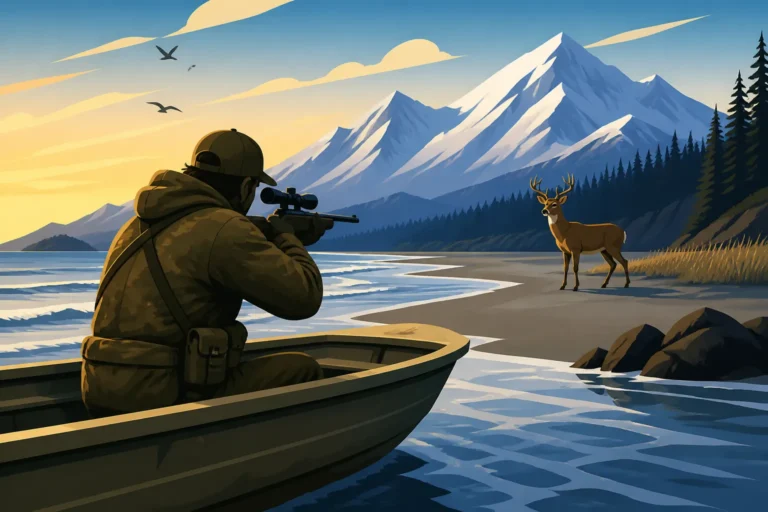
Alaska's Sitka blacktails, especially during the rut, can respond surprisingly quickly and silently. One minute you're calling into the dense timber, the next, a buck might materialize 20 yards away, staring intently in your direction. A common mistake is not being physically and mentally ready for such an encounter. This means your rifle or bow should be in a ready position, not slung over your shoulder or resting on the ground. Your shooting lanes should be clear, and you should have practiced quick, silent movements to get into shooting position.
If you are calling, it's crucial to conceal yourself effectively. Wear appropriate camouflage, break up your silhouette, and remain absolutely motionless when you're not calling. Any sudden movement will immediately catch a deer's keen eye. Have your rangefinder handy if you use one, and be aware of potential shot opportunities at various distances. The moment a buck commits, your calling efforts are over; your focus should immediately shift to making a clean, ethical shot. Remember that hunters also need to know Kodiak Nonresident Deer Bag Limit and other regulations specific to their hunting unit before heading out, ensuring a legal and successful hunt.
Disclaimer
Always consult the most current Alaska Department of Fish and Game regulations before planning any hunt. Hunting regulations, season dates, and bag limits can change annually and vary by game management unit. This guide provides general information and should not replace official state resources or hunter education courses. Safety in the field is paramount.