Black Bear Color Phases in Alaska
One of the most common head-scratchers for hunters heading into Alaska's vast wilderness, especially when it comes to black bears, is realizing that "black" isn't always, well, black. You might be picturing a sleek, obsidian shadow in the timber, only to find yourself staring through your binoculars at a bear that looks distinctly brown, cinnamon, or even blonde. This guide is all about helping you understand the incredible array of black bear color phases you might encounter in Alaska and, more importantly, how to confidently identify your target, ensuring a safe and successful hunt.
The Astonishing Spectrum of Alaska Black Bears
It's easy to fall into the trap of thinking a black bear is always black. After all, it's right there in the name! But Alaska, with its immense and varied landscapes, hosts populations of black bears that put on a truly dazzling display of nature's palette. Forget monochrome; these animals can be a vibrant, sometimes confusing, spectrum of colors.
Beyond Just "Black": A Color Palette of the Wild
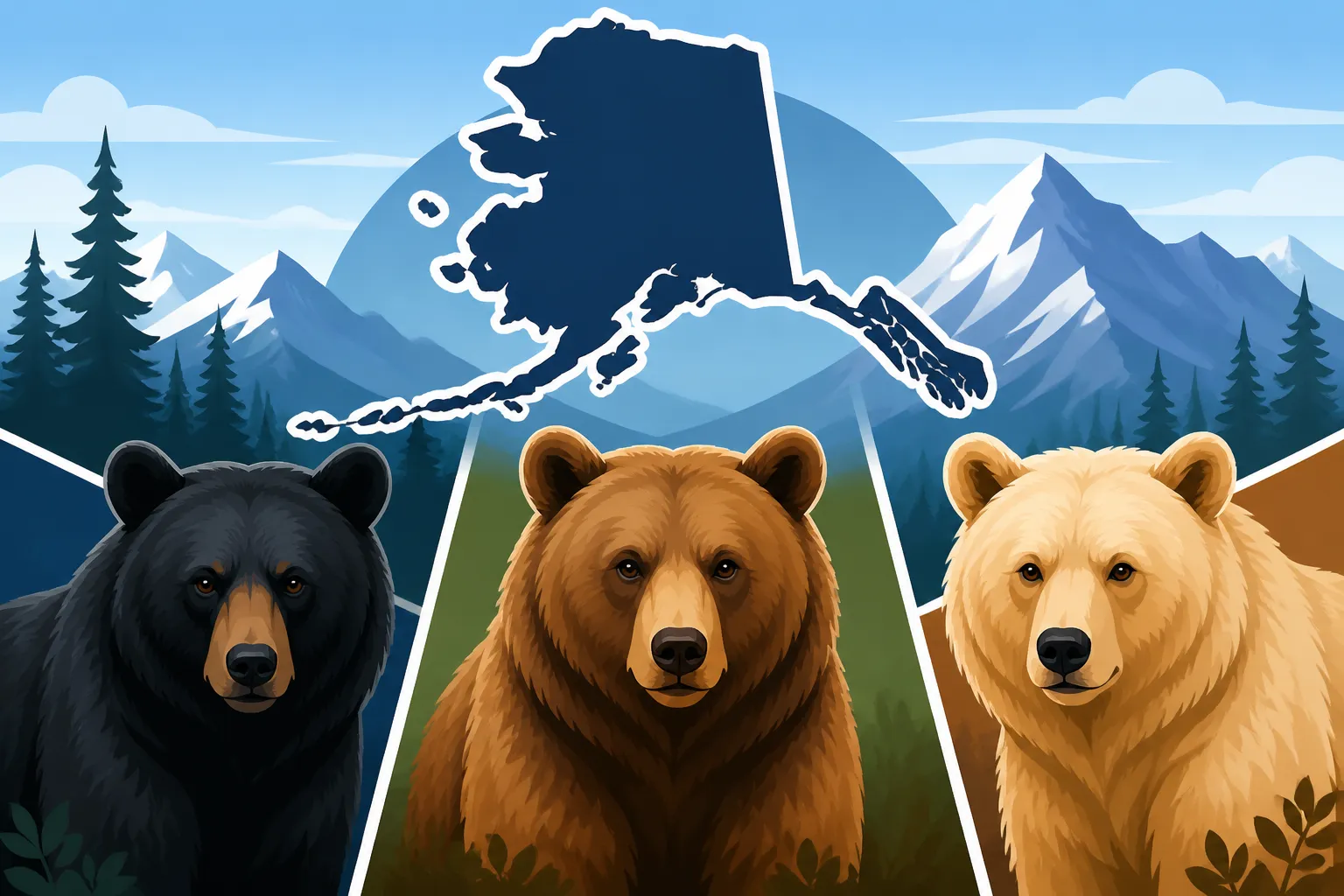
When you imagine a black bear, that glossy, dark coat is probably what comes to mind. And it's true, many black bears in Alaska are indeed a deep, rich black, especially in the more heavily timbered regions or along the coastlines. However, this is just one expression of their genetic potential. What might surprise you is the sheer diversity of colors you can find within the Ursus americanus species here. We're talking about bears that can appear various shades of brown, from a dark chocolate that might initially fool you into thinking "grizzly," to lighter milk-chocolate tones, and even striking cinnamon red. Then there are the truly rare ones: blonde, silvery-blue, or even grizzled gray.
These variations aren't due to different subspecies; they're simply color phases, driven by genetics, much like how human hair color varies. A sow can give birth to cubs of different color phases within the same litter, proving it's all part of the same genetic lottery. This incredible range means that relying solely on color to identify your bear in the field is a surefire way to invite confusion, or worse, make a critical mistake. The lighting conditions, the distance, even the bear's wetness can dramatically alter how its coat appears, transforming a dark brown bear into something that looks almost black under certain skies, or making a black bear appear brownish when the sun hits it just right.
Why Color Phases Matter to Alaska Hunters
For anyone heading into the Alaskan bush with a hunting license in hand, understanding these color phases isn't just an interesting biological fact; it's a critical component of responsible and ethical hunting. First and foremost, positive identification is paramount for species differentiation. While Alaska has both black bears and brown bears (which include grizzlies), the regulations, seasons, and tag requirements are entirely distinct for each. Harvesting a brown bear on a black bear tag, or vice versa, is a serious violation that can carry hefty fines, confiscation, and even jail time. When you see a bear that isn't jet black, that's your first red flag to slow down and meticulously identify the animal before even thinking about raising your rifle.
Beyond legal compliance, recognizing color phases can also influence your hunting strategy and expectations. Some hunters specifically seek out unique color phases for a "once-in-a-lifetime" trophy. Knowing where certain phases are more prevalent, or simply being prepared to see something other than black, can enhance your overall hunting experience. It also deepens your appreciation for the wildlife you're pursuing. Furthermore, from a safety perspective, accurately identifying a bear allows you to better anticipate its behavior and react appropriately. While all bears demand respect, knowing if you're dealing with a black bear or a large brown bear can influence your approach to a stalk or how you secure a kill site.
Common Black Bear Color Phases You'll Encounter
While the spectrum can feel endless, there are several common color phases of black bears that hunters in Alaska are most likely to encounter. Knowing these prevalent variations can better prepare you for what you might see through your optics.
Jet Black: The Classic Alaskan Silhouette
This is the quintessential black bear, and for good reason – it's the most common color phase across North America, including much of Alaska. These bears boast a deep, glossy black coat that often shines in the sunlight, creating that iconic silhouette against the greens and browns of the Alaskan landscape. Their muzzle, however, often remains a lighter brown or tan, providing a subtle contrast. You'll find these jet black bears throughout forested regions, particularly in Southeast Alaska's dense rainforests, along the coastal areas, and in many parts of the Interior where timber provides ample cover.
When you're glassing for these bears, remember that even a "jet black" coat can play tricks on your eyes. Under overcast skies or in the deep shade of a spruce forest, they can appear almost indistinguishable from the shadows, making them incredibly difficult to spot. Conversely, under a bright, high sun, their fur might reflect light in such a way that it seems to have brownish highlights, especially on the shoulders or flank. Don't let these optical illusions deter you from recognizing the underlying classic black phase. A good rule of thumb is to look for that consistent, dark coloration across their body, often without the distinct lighter belly or leg coloration you might see in some brown phases.
Cinnamon and Brown: The Interior's Warm Hues
Step into Interior Alaska, and you'll quickly discover that black bears are far from exclusively black. The cinnamon and various shades of brown are particularly prevalent in these drier, more open forest environments. These bears can range from a light, reddish-brown — the true "cinnamon" phase — to a darker, richer chocolate brown that can be incredibly challenging to differentiate from a smaller brown bear or grizzly bear at a distance. This is why understanding the nuances of How Often Alaska Black Bears Are Brown is so important.
These warmer-hued bears are often found in areas with more open country, like the river valleys and mountain foothills that characterize much of Interior Alaska. Their coats can be strikingly beautiful, often with lighter points on their ears or shoulders, adding to their distinct appearance. The challenge for hunters, however, is the very real potential for misidentification. A dark brown black bear might look eerily similar to a small grizzly, especially if the angle and lighting obscure crucial identifying features like the shoulder hump. It's in these situations that patience and a keen eye for anatomical differences become paramount. Many seasoned hunters will tell you they've spent agonizing minutes studying a brown-colored bear, questioning whether it's a black bear in a cinnamon phase or a juvenile grizzly.
Blonde and Light Tan: Rare But Present
While less common than the jet black or cinnamon/brown phases, Alaska is also home to black bears sporting blonde or light tan coats. These bears are truly a sight to behold and are often considered a rare trophy by those lucky enough to encounter them. Their fur can range from a pale, almost creamy blonde to a light sandy tan, making them stand out dramatically against the darker vegetation.
These lighter phases, like their brown counterparts, are more often seen in the Interior or mountainous regions rather than the dense coastal forests. Spotting one of these unique bears is a rare privilege, and for a hunter, it can be an exciting, once-in-a-lifetime opportunity. However, with their lighter coloration, the risk of mistaking them for a brown bear increases significantly. Imagine seeing a blonde bear on an open, rocky hillside – your first thought might jump to "grizzly" due to the color alone. This underscores why identification must always move beyond color and delve into the more reliable physical characteristics of the animal. GoHunt's extensive species profiles often highlight these rare occurrences, helping hunters understand what unique animals they might encounter and where.
The Enigmatic Glacier Bear: A True Alaska Rarity
Among all the black bear color phases, none quite capture the imagination and sense of rarity like the Glacier Bear. This elusive and stunning variation is almost exclusively found in a specific, rugged corner of Alaska, making it a truly special encounter for any hunter or wildlife enthusiast.
Understanding the Glacier Bear Phenotype
A Glacier Bear isn't a separate species or subspecies of bear; it's simply a rare color phase of the American black bear (Ursus americanus). What sets them apart is their incredibly unique coat, which ranges from a silvery-blue to a charcoal gray, sometimes appearing almost platinum. This striking coloration is often attributed to a recessive gene, making its expression quite uncommon. The fur can also have a grizzled appearance, with individual hairs being banded with different shades, contributing to its luminous, almost iridescent quality.
The scientific community has studied this unique genetic anomaly, and while the exact mechanisms are still being explored, it's clear that it's a naturally occurring variation within the black bear population. Unlike other color phases that might simply be a lighter or darker shade of brown, the Glacier Bear stands in a league of its own with its distinctive cool tones. They're typically found in specific geographic pockets, and encountering one is considered a significant event, even for seasoned Alaskan residents. You can learn more about these fascinating animals and their prevalence by researching Glacier Bear Sightings and Rarity.
Geographic Hotspots for Glacier Bears
The distribution of Glacier Bears is remarkably restricted, primarily confined to the coastal areas and mountains of Southeast Alaska and parts of extreme Northwestern British Columbia and the Yukon Territory. Within Alaska, the St. Elias Mountains, the areas surrounding Juneau, Yakutat, and the vast wilderness of the Tongass National Forest are considered the most likely places to encounter them. These regions are characterized by dense, old-growth temperate rainforests, rugged coastal terrain, and glacial valleys—environments that seem to perfectly suit their elusive nature.
For hunters, targeting a Glacier Bear specifically is often a monumental task, akin to finding a needle in a very large, very wild haystack. Their rarity and the challenging terrain they inhabit make them exceptionally difficult to spot, let alone hunt. Those who do harvest a Glacier Bear typically do so by chance, during a general black bear hunt in one of these known hotspots. The thrill of seeing such a unique animal, with its coat shimmering silver against the dark green backdrop of the rainforest, is an experience few forget. Understanding their preferred habitat can help hunters in these areas keep an extra keen eye out for any unusual coloration in the black bear populations they encounter.
Avoiding Costly Misidentification in the Field
The variations in black bear color, particularly the browns and blondes, present a significant challenge for hunters in Alaska: the potential to mistake a black bear for a brown bear (grizzly), or vice versa. This isn't just a simple mistake; it's a legal and ethical blunder that can have severe consequences. Learning to distinguish between these species reliably, regardless of color, is one of the most vital skills an Alaskan hunter can develop.
Key Distinctions Beyond Just Color
When you're trying to identify a bear in Alaska, you absolutely cannot rely on color as your primary indicator. It's a common misconception that all brown bears are brown and all black bears are black. As we've seen, that's simply not the case. Instead, focus on a combination of physical characteristics and anatomical differences that are far more reliable:
- Shoulder Hump: This is arguably the most definitive feature. Brown bears (grizzlies) typically have a prominent muscular hump above their shoulders, which is especially noticeable when they're standing or walking. Black bears, on the other hand, lack this hump; their backline is usually straight or slightly sloped downward from head to tail. This difference is stark once you train your eye to see it.
- Head Shape and Snout: Brown bears generally have a broader, more "dished" or concave facial profile, with a relatively shorter, more rounded snout. Their forehead rises more abruptly. Black bears tend to have a straighter, longer, and more pointed snout, with a less pronounced forehead.
- Ear Size and Placement: Black bears usually have larger, more pointed ears that are set higher on their head, often appearing quite prominent. Brown bear ears are typically smaller and more rounded in proportion to their larger head, often appearing more on the sides of their head. Learning the subtle differences, like those explored in Judging Bear Size by Ear Spread, can be very helpful.
- Claw Length and Curvature: While difficult to discern at a distance, if you ever get a clear view of tracks or the bear's paws, brown bears have much longer, straighter claws—perfect for digging—compared to the shorter, more curved claws of a black bear, which are better for climbing trees.
- Overall Body Shape: Brown bears tend to have a stockier, more robust build with heavier bone structure. Black bears often appear more agile, with a leaner body profile, especially around the hindquarters.
Remember, even an animal that looks like Brown Bear Versus Grizzly: The Same Animal in its general build could be a black bear if these other features don't align. It's about looking at the whole package, not just one characteristic.
Behavioral Clues and Habitat Differences
Beyond physical markers, a bear's behavior and the habitat it occupies can offer valuable clues to its identity. While not foolproof, these observations can contribute to a more confident identification:
- Habitat Preference: Generally, black bears in Alaska are more commonly found in timbered areas, dense forests, and thick brush, often close to water sources. They are excellent tree climbers, and often seek refuge there. Brown bears, especially grizzlies in the Interior, tend to frequent more open country, alpine tundra, river bottoms, and vast expanses where they can forage widely. Of course, there's overlap, and a black bear can certainly be seen in open areas, or a brown bear in timber. But knowing the typical preferences helps.
- Reaction to Humans: While all bears are wild and unpredictable, black bears are often more wary of humans and might attempt to flee or climb a tree when startled. Brown bears, especially sows with cubs or boars defending a food source, can be more territorial and assertive. It's crucial to understand bear safety protocols, particularly when you're at a kill site, as detailed in Bear Safety While Butchering a Kill in Alaska.
- Dietary Habits: Black bears are omnivores with a diverse diet. In spring, they might be found on green-up slopes, foraging on new vegetation. Understanding their diet, like Black Bear Diet Before Salmon Arrive, can give you clues to where they might be. Brown bears, particularly coastal brown bears, are heavily reliant on salmon runs when available, but also graze extensively and are powerful predators. In spring, both species might be seen on south-facing slopes, a prime location for Spring Bear Hunting on South-Facing Snow Slides.
By combining these behavioral and habitat clues with a thorough assessment of physical characteristics, you'll significantly reduce your risk of misidentification. Always err on the side of caution; if you have any doubt, do not take the shot.
Factors Influencing Black Bear Color and What It Means for Hunters
The incredible palette of black bear coats in Alaska isn't just random; it's a fascinating interplay of genetics, environment, and even the bear's life stage. Understanding these underlying factors can further enhance a hunter's ability to appreciate and accurately identify these animals.
Genetics, Age, and Diet
At the heart of every black bear's coat color lies its genetic makeup. Just like human hair color, bear fur coloration is determined by specific genes, and variations (alleles) within these genes lead to the diverse range of colors we see. A bear might carry genes for a black coat, but also recessive genes for brown or cinnamon, which might express themselves in its offspring. This is why a black sow can have a litter containing cubs of different colors – some black, some brown, some cinnamon. The scientific study of bear genetics continually reveals more about these patterns, confirming that color phases are indeed a natural part of the species' variation.
While genetics is the primary driver, other factors can have subtle influences. Age, for instance, can sometimes play a role. Older bears might develop a slightly grizzled appearance, or their fur might show more wear and tear, appearing duller or sun-bleached than a younger bear with a fresh, vibrant coat. Diet, while not directly changing the genetic color, can indirectly affect the health and sheen of a bear's fur. A healthy bear with a rich diet will typically have a more lustrous, well-conditioned coat compared to a bear that is struggling nutritionally. However, it's crucial to emphasize that these are minor influences compared to the fundamental genetic blueprint determining the bear's base color.
Regional Prevalence of Certain Color Phases
One of the most intriguing aspects of black bear coloration in Alaska is how certain color phases tend to be more prevalent in specific regions. It's not a hard-and-fast rule, as black bears are adaptable and can range widely, but there are noticeable patterns that can inform a hunter's expectations.
For example, in the dense, wet coastal rainforests of Southeast Alaska, particularly on islands like Prince of Wales or Kodiak's adjacent mainland, the vast majority of black bears you'll encounter will be jet black. This dark coloration might offer some camouflage in the deep shadows of the old-growth timber. However, as you move further north and inland, into areas like Interior Alaska, the prevalence of brown, cinnamon, and even blonde phases increases significantly. This is explored further in pieces like Cinnamon Phase Black Bears in the Interior. It's thought that these lighter colors might offer better camouflage in the more open, drier, and lighter-colored brush and forest environments of the Interior.
And then there are the incredibly rare Glacier Bears, almost exclusively found in a very narrow band of Southeast Alaska, around the St. Elias Mountains and adjacent coastal areas. These regional differences are likely due to a combination of genetic isolation, environmental pressures, and the historical expansion of bear populations. For hunters planning a trip, researching the specific Game Management Unit (GMU) you intend to hunt, perhaps with resources like GoHunt, can give you a better idea of the typical color phases encountered there. This also ties into understanding things like Black Bear Weight in Coastal Alaska versus interior bears, as habitat influences both size and color prevalence. Always consult the Black Bear Bag Limit by Unit for your specific hunting area, as regulations can vary.
Hunting Strategies for Alaska Black Bears
Successfully hunting black bears in Alaska, especially given their varied color phases, requires a blend of keen observation, strategic planning, and ethical considerations. It's not just about finding a bear; it's about finding the right bear and making a clean, confident harvest.
Scouting and Observation for Color Variations
Before you even step foot in the field, good scouting is essential. This starts with pouring over maps, studying satellite imagery, and researching historical harvest data for your chosen Game Management Unit (GMU). Pay attention to habitat types – dense timber, willow thickets, avalanche chutes, and berry patches are all prime black bear country. When you're physically in the field, patience with your optics is your greatest asset. High-quality binoculars and a spotting scope are indispensable for long hours of glassing.
When glassing, don't just look for "black blobs." Train your eye to pick out any anomalies in the landscape that could be a bear. Look for movement, a change in texture, or any color that doesn't quite fit the natural surroundings. Because black bears come in so many color phases, you might be looking for a dark brown, a cinnamon, or even a blonde shape moving through the alders. Employ effective glassing techniques, such as using Glassing Grids That Cover a Whole Basin to ensure you meticulously scan every inch of potential habitat. Use your spotting scope, especially one with good Spotting Scope Power for Ram Judging, to scrutinize any potential bear. This detailed observation is critical for discerning not only the presence of a bear but also its color phase, size, and most importantly, its species. Take your time. A bear might be bedded down, or only partially visible, revealing its true color or distinguishing features only after extended observation.
Ethical Shooting and Bear Identification Time
Once you've spotted a bear and determined it's a black bear, the ethical considerations don't end. Your next crucial step is to ensure you have a clear, ethical shot opportunity. This means the bear must be standing still, offering a broadside or quartering-away shot, and you must have a stable rest. Never rush a shot, especially on a bear whose color might still be giving you pause. Take all the time you need to confirm all the identifying characteristics we discussed earlier – no hump, long snout, prominent ears – to leave absolutely no doubt about its species.
It's also essential to be aware of your surroundings and your backdrop. Ensure your shot won't endanger any other animals or people, and that you have a safe firing lane. Always prioritize a clean kill to minimize suffering and facilitate recovery. For any hunter, regardless of experience level, adhering to principles learned through your Alaska Hunter Education Requirement by Age is fundamental. This includes understanding shot placement, animal anatomy, and the responsibility that comes with hunting. If you have any doubt about the shot, the identification, or your ability to make a clean kill, do not pull the trigger. There will always be another bear, another opportunity. The ethical hunter knows when to pass.
Bear Identification Comparison
To help solidify the critical distinctions, here's a quick comparison of key features between black bears and brown bears (grizzlies). Remember, consider all these features together, not just one in isolation.
| Feature | Black Bear | Brown Bear (Grizzly) |
|---|---|---|
| Shoulder Hump | Absent; straight or slightly sloped back | Present; distinct muscle mass above shoulders |
| Facial Profile | Straighter, more pointed, longer snout | "Dished" or concave; broader, shorter, rounded snout |
| Ear Size/Placement | Proportionately larger, more pointed, set higher | Proportionately smaller, more rounded, set lower/wider |
| Claw Length | Shorter, more curved | Longer, straighter |
| Color | Black, brown, cinnamon, blonde, blue-gray | Shades of brown, blonde, grizzled, sometimes nearly black |
| Size | Generally smaller | Generally larger and stockier |
| Habitat Preference | Timbered, dense cover, often climbs trees | Open country, alpine, river bottoms, less prone to climbing |
Disclaimer
The information provided in this guide is for informational purposes only and is not a substitute for official hunting regulations. Always consult the most current Alaska Department of Fish and Game (ADF&G) regulations, emergency orders, and specific Game Management Unit (GMU) rules before planning or embarking on any hunt. Laws and regulations are subject to change. It is every hunter's responsibility to know and follow all applicable hunting laws.