Alaska Closed Areas and Buffer Zones
One of the trickiest parts about hunting in Alaska, beyond the rugged terrain and unpredictable weather, is simply knowing where you can and cannot legally hunt. With a patchwork of state, federal, and private lands, not to mention a labyrinth of specific regulations, it's incredibly easy to find yourself inadvertently stepping into a closed area or buffer zone, which can turn an otherwise successful hunt into a frustrating legal tangle. This comprehensive guide will walk you through the various types of restricted areas and buffer zones you'll encounter in Alaska, helping you understand their purpose, how to identify them, and what precautions you need to take to ensure your hunt remains entirely above board.
Understanding Closed Areas in Alaska Hunting
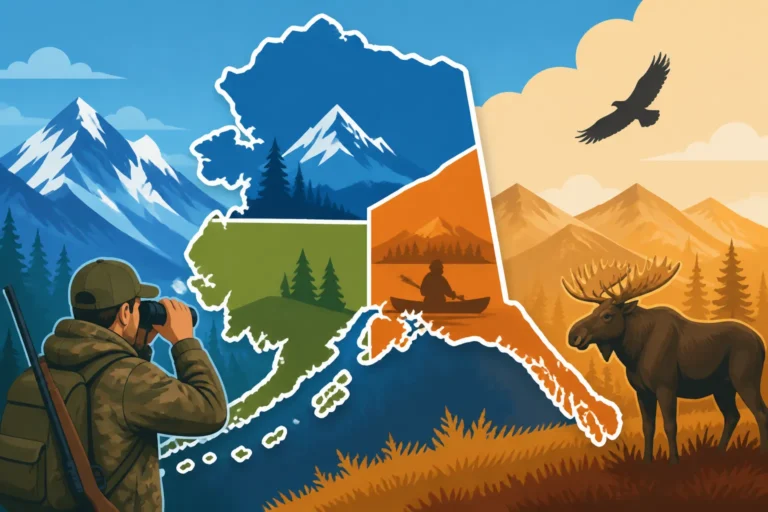
Alaska's vastness might suggest limitless hunting opportunities, but in reality, a significant portion of its land is designated as off-limits to hunting, or subject to highly specific restrictions. These closed areas exist for a variety of reasons, from wildlife conservation to public safety, and understanding their different classifications is the first step in responsible hunting. Ignoring these boundaries, whether intentionally or not, can lead to serious consequences.
Permanent Closed Areas: Refuges, Parks, and State Game Sanctuaries
Across Alaska, you'll find numerous large tracts of land permanently closed to hunting or where hunting is severely restricted. These are often established to protect specific wildlife populations, preserve unique ecosystems, or offer non-consumptive recreational opportunities. National Parks, for instance, are generally closed to hunting, though some adjacent National Preserves do allow it under federal regulations. This distinction is incredibly important to grasp: the difference between a "Park" and a "Preserve" can be the difference between a legal hunt and a costly citation. A hunter might be glassing a beautiful Dall sheep ram on a mountain ridge, only to realize too late that half of the ridge falls within a National Park boundary, where discharging a firearm is strictly forbidden.
Similarly, Alaska has State Game Refuges and Critical Habitat Areas, established by the state to protect vital wildlife habitat or species during critical periods. While some activities might be permitted in these areas, hunting specific species or using certain methods might be prohibited. For example, a refuge might be a vital calving ground for moose, leading to a complete closure during certain times of the year, or even indefinitely for moose hunting. Checking the specific regulations for each area, down to the exact unit and subunit, is paramount before you even consider packing your rifle. You might think you're on general use state land, only to find you've crossed into a protected zone without realizing it.
Temporary Closures and Emergency Orders
Beyond the permanent closures, Alaska also implements temporary closures that can come into effect with little notice. These are often driven by immediate conservation concerns, such as rapidly declining game populations, severe weather conditions impacting wildlife, or public safety issues. The Alaska Department of Fish and Game (ADF&G) uses "Emergency Orders" to enact these closures or modify season dates, bag limits, or legal methods. These orders can be issued at any time, even mid-season, and it's every hunter's responsibility to stay updated. Imagine planning an entire caribou hunt for months, flying into a remote area, only to find out via an emergency order that the season was closed a week before you arrived due to low herd counts or unexpected migration patterns. It happens, and hunters who fail to check Where Alaska Posts Season Changes risk a wasted trip and potential legal trouble if they hunt anyway.
These temporary measures are frequently used for caribou herds, where migration patterns can be unpredictable, or for species impacted by harsh winters. A unit might have an open season for moose, but if a particularly deep snow year leads to high winter mortality, ADF&G might issue an emergency order to close or severely restrict the season to protect the remaining breeding population. This dynamic nature means that even if you've hunted an area for years, you can never assume the regulations remain the same from one season to the next. Always, always check the current regulations immediately before your hunt.
Federal vs. State Jurisdictions
Adding another layer of complexity is the distinction between federal and state land management. Alaska has a vast amount of both, each with its own set of rules, often overlapping or having different interpretations of hunting regulations. Federal lands include National Parks, Preserves, National Wildlife Refuges, National Forests, and Bureau of Land Management (BLM) lands. State lands include State Parks, Game Refuges, and general public domain. The same species might have different season dates, bag limits, or even legal weapon restrictions depending on whether it's taken on state or federal ground, even if those lands are adjacent. This is especially true for subsistence hunting, where federal rules on federal land often grant priority to rural residents, distinct from state regulations.
For instance, hunting a brown bear on a National Wildlife Refuge (federal) might have different tag requirements or sealing deadlines than hunting the same species on adjacent state land. While the state issues your general hunting license and locking tags for big game, federal agencies manage specific rules within their boundaries. Hunters must be keenly aware of Land Status in Alaska: State, Federal and Native Corporation before planning a hunt, as crossing an invisible boundary could change everything. Tools like onX Hunt are incredibly valuable here, as they clearly delineate federal and state land boundaries, often down to the individual parcel, allowing hunters to navigate this complex jurisdictional maze with more confidence.
Navigating Buffer Zones Around Roads and Settlements
Beyond the large, designated closed areas, hunters in Alaska also need to contend with various "buffer zones" that restrict hunting activities near roads, airports, and populated areas. These zones are primarily implemented for public safety and to minimize conflicts between hunters and other land users. The rules can be surprisingly strict, and violating them often carries significant penalties, not to mention the potential danger to others.
Highway Corridors and Shooting Restrictions
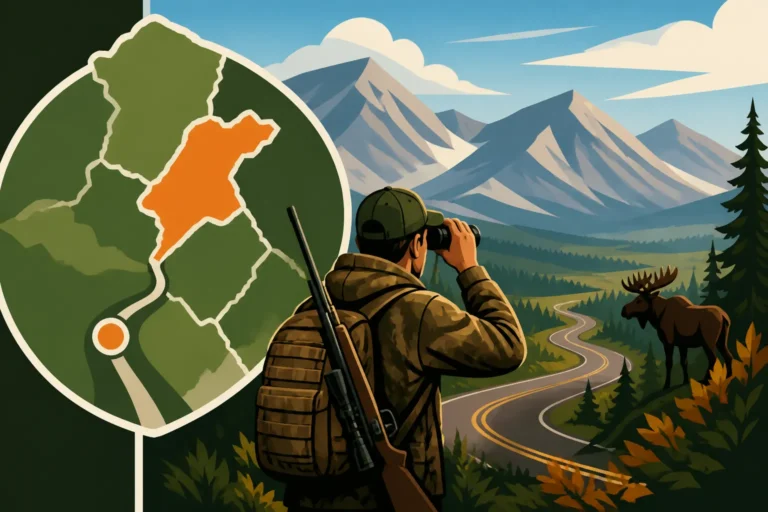
Many of Alaska's major highways, like the Parks Highway, Glenn Highway, and Richardson Highway, have designated "corridors" or buffer zones where discharging a firearm is prohibited or heavily restricted. These aren't just suggestions; they are legal boundaries designed to protect motorists, residents, and infrastructure. The width of these corridors can vary, typically ranging from a quarter-mile to half a mile or more on either side of the centerline of the road. It's not uncommon for a hunter to spot a moose just off the shoulder of the highway, only to realize it's standing squarely within a no-shooting zone. Even if the animal is clearly visible and seemingly a safe shot, the legal restriction overrides any perceived safety.
For example, the Alaska's Dalton Highway Corridor Hunting Rules clearly outline a five-mile corridor where specific firearm restrictions apply, especially for big game. This means you can't just pull over and shoot the first caribou you see. You need to be far enough off the road to comply with the regulations, which often means a significant hike. These rules are particularly important in areas where road access is common, and enforcement is vigilant. Hunters should always consult detailed maps, like those available on GoHunt or the ADF&G website, to understand the precise boundaries of these highway buffer zones for their chosen hunting unit.
Airport and Airstrip Buffer Zones
In a state where bush planes are an integral part of hunting access, it's perhaps not surprising that airports and airstrips also come with their own set of buffer zone rules. These areas are closed to hunting for obvious safety reasons, ensuring that hunters aren't accidentally shooting towards active runways, aircraft, or facilities. These restrictions apply not just to major commercial airports but also to many small, rural airstrips and gravel bars used by air taxis. A hunter dropped off by a float plane on a remote lake needs to be aware that the immediate vicinity of that landing site, and any nearby established gravel strips, might be considered a no-hunting zone.
The exact dimensions of these buffer zones can vary, but the general principle is to ensure the safety of air traffic and personnel. Imagine setting up a spike camp near a remote lake that also serves as a float plane landing, and then having a hunter from another party unwittingly discharge a rifle near the strip. It's a recipe for disaster. Before flying into a remote location, always ask your air taxi service if there are any known airstrip or landing-zone specific restrictions in that immediate vicinity, and mark them clearly on your GPS or physical maps. This prevents any misunderstandings once you're on the ground and focused on the hunt.
Municipal and Private Land Restrictions
As Alaska's population centers grow, so does the complexity of hunting near them. Many cities and boroughs have their own ordinances prohibiting or severely restricting the discharge of firearms within city limits or designated urban areas. Even if the state regulations allow hunting for a species in a particular GMU, local rules can override or add further restrictions. This means you can't simply assume that because you're outside a town's "main street" area, you're free to hunt. Suburban developments, even those with large lots, often fall under these restrictions.
Additionally, private land, especially around homes, cabins, or mining claims, is strictly off-limits unless you have explicit permission from the landowner. While much of Alaska is public land, there are countless private parcels, native allotments, and corporate lands interspersed within it. Trespassing is a serious offense, and discharging a firearm on private land without permission is even more so. It's the hunter's responsibility to know How to Check Alaska Land Status Before a Hunt and respect all private property boundaries. Again, mapping applications like onX Hunt are invaluable, providing parcel data that clearly shows property lines and ownership information, helping you avoid costly mistakes.
Specific Examples of Alaska's Hunting Restrictions
Alaska's hunting regulations are a thick booklet for a reason; they contain numerous specific restrictions designed to manage wildlife, ensure fair chase, and promote safety. These aren't just general guidelines, but detailed rules that dictate how, when, and where certain hunting activities can occur. Understanding these specific examples helps paint a clearer picture of the regulatory landscape.
Controlled Use Areas (CUAs) and Motorized Access
One of the most significant categories of restricted areas in Alaska for hunters are Controlled Use Areas (CUAs). These are designated zones where the use of specific types of motorized vehicles, or any aircraft, for hunting purposes is either completely prohibited or restricted to certain times of the year. The primary goal of CUAs is to provide a semi-wilderness experience, reduce hunting pressure in easily accessible areas, and ensure a more fair chase opportunity by limiting the advantages of modern transportation. For example, some CUAs might ban the use of ATVs during hunting season, forcing hunters to rely on foot travel, horses, or pack rafts once they are beyond a certain point.
Other CUAs might specifically ban aircraft for hunting big game, meaning you can't fly in, spot game, land, and immediately hunt. This directly relates to Alaska's Same-Day-Airborne Rule and What It Bans, which applies statewide but can be further enforced or modified within a CUA. For instance, the Minto Flats CUA near Fairbanks has very specific rules about motorized access for moose hunting, often requiring airboats or traditional watercraft only, with ATVs restricted. These rules are usually well-defined in the annual regulations booklet and are critical to understand if your hunt plan involves any form of motorized travel beyond a main road. Ignoring CUA regulations can result in severe penalties, including equipment confiscation. Alaska Controlled Use Areas and What They Restrict provides more details on this often-misunderstood aspect of Alaska hunting.
Hunting Near Designated Buildings or Structures
Beyond residential areas, Alaska regulations also specify distances that must be maintained when hunting near any occupied dwelling, camp, or structure. This isn't just about private cabins; it can apply to public use cabins, commercial lodges, or even active work camps in remote areas. The rule is generally designed to prevent stray bullets from endangering people or property. While the exact distance can vary slightly depending on local ordinances, a common minimum is usually around a quarter-mile, or 400 yards, from an occupied building or structure without permission.
This restriction highlights the importance of scouting and awareness, even in seemingly vast wilderness. A hunter pursuing caribou across the tundra might unknowingly approach a remote communication tower with a small maintenance cabin, or stumble upon a prospector's remote camp. Discharging a firearm too close to such structures, even if you don't see anyone, is a violation. It's another reason why knowing your precise location and what might be around the next bend or over the next ridge is so important. When planning your route or choosing a vantage point, always consider the possibility of unseen structures or camps.
Other Specific Wildlife-Focused Closures
Alaska's game managers also implement specific closures or restrictions for particular species or in unique habitat areas. For example, critical wintering grounds for moose or caribou might be closed during late winter and early spring to prevent stress to animals when their energy reserves are low. Similarly, specific areas might be designated as refuges for migratory birds, prohibiting waterfowl hunting even if it's open in adjacent zones. These restrictions are often highly localized and species-specific, demanding a thorough review of the regulations for your chosen Game Management Unit (GMU) and species.
An example of this might be a small island that acts as a vital nesting ground for seabirds, leading to a year-round closure to all hunting on that particular landmass. Or, certain river drainages might be closed to bear hunting during salmon spawning runs to protect the bears that rely on these fish. These finer details are what make hunting in Alaska so complex, and why simply knowing your GMU is not enough. You must dive deep into the specific rules for the species you intend to pursue within that particular GMU and its subunits, paying close attention to any highlighted exceptions or special provisions.
Tools and Resources for Identifying Restricted Areas
Navigating Alaska's complex web of hunting regulations and land designations can feel like a full-time job. Thankfully, there are several invaluable tools and resources available to help hunters identify and avoid restricted areas. Relying on good information is just as important as having good gear in your pack.
Official State and Federal Regulations Booklets
The primary source of truth for all hunting regulations in Alaska is the annual Alaska Hunting Regulations booklet, published by the Alaska Department of Fish and Game (ADF&G). This comprehensive guide outlines season dates, bag limits, legal methods, and all permanent and temporary closures for every Game Management Unit across the state. It's often updated with emergency orders throughout the season, so keeping abreast of the latest version is crucial. Federal agencies, such as the U.S. Fish and Wildlife Service (USFWS) for National Wildlife Refuges and the National Park Service for Preserves, also publish specific regulations that apply to their lands.
These booklets are dense with information, but they are indispensable. They typically include maps that highlight general boundaries of closed areas or CUAs. While these maps aren't always detailed enough for pinpoint accuracy in the field, they provide the overarching framework. Many hunters make the mistake of only skimming these documents, but sitting down and thoroughly reading the sections pertaining to your specific GMU and species is non-negotiable. Pay particular attention to small print, footnotes, and any sections detailing exceptions or special conditions. For any questions, calling ADF&G directly is always a good idea. You can also find Where to Get the Alaska Hunting Regulations Booklet online or at most license vendors.
Digital Mapping Applications and GPS Units
In the modern hunting world, digital mapping applications and GPS units have become essential tools for navigating complex land ownership and regulatory boundaries. Programs like onX Hunt and GoHunt provide detailed, interactive maps that layer property ownership, land status (state, federal, private, native corporation), Game Management Unit boundaries, and often, specific regulatory overlays like highway corridors or Controlled Use Areas. This visual representation is incredibly powerful, allowing hunters to see exactly where they are in relation to any restricted zone in real-time.
Before heading into the field, spend considerable time on these platforms. Download offline maps to your smartphone or dedicated GPS device, as cell service is non-existent in much of Alaska's backcountry. Mark potential restricted areas, create waypoints for known boundaries, and trace out safe hunting zones. This proactive approach can prevent accidental trespass or hunting in closed areas. Imagine being on the edge of a vast national forest, but with onX Hunt on your phone, you can see a small sliver of private land jutting into the public domain where you plan to set up camp. This kind of detail is invaluable. Remember to regularly update your maps, as boundaries and regulations can change.
Local Knowledge and Warden Consultations
While digital tools and official booklets are fantastic, nothing beats local knowledge, especially in Alaska. Talking to experienced local hunters, bush pilots, air taxi operators, or residents of small villages can provide invaluable insights into localized restrictions, unmapped trails, or common areas where regulations are easily misunderstood. They might know about a specific gravel bar that's always used as an emergency landing strip and therefore considered an informal buffer zone, or a local's private mining claim that isn't clearly marked on general maps.
Furthermore, don't hesitate to contact Alaska Wildlife Troopers or ADF&G biologists and enforcement officers. They are the ultimate authorities on regulations and can provide clarification on ambiguous rules or specific area questions. It's far better to ask a question beforehand than to face a citation in the field. They can often provide guidance on nuanced situations, such as understanding the precise boundaries of Federal Subsistence Permits on Alaska Refuges or how specific local conditions might affect a hunt plan. Building these relationships and seeking expert advice demonstrates responsibility and can save you a lot of headache in the long run.
Consequences of Hunting in Prohibited Zones
Hunting in a closed area or buffer zone in Alaska is not just a minor infraction; it carries significant legal and ethical ramifications. Enforcement is taken seriously, and ignorance of the law is rarely accepted as an excuse. Hunters who disregard these rules, whether intentionally or accidentally, can face a range of penalties that extend far beyond a simple fine.
Penalties and Fines for Violations
The immediate consequence of being caught hunting in a prohibited zone is often a substantial fine. These fines can vary widely depending on the severity of the violation, the species involved, and whether it's a first offense. For example, hunting big game in a closed area, or discharging a firearm within a highway corridor, could result in fines that run into the hundreds or even thousands of dollars. These aren't minor traffic tickets; they're serious penalties reflecting the importance of wildlife management and public safety.
Beyond direct fines, hunters might also face additional costs, such as court fees or restitution for any illegally taken game. Imagine taking a bull moose in an area that was closed due to an emergency order; you might not only be fined but also ordered to pay the market value of that animal to the state. These financial burdens can quickly escalate, turning a dream hunt into a very expensive nightmare. It's a stark reminder that understanding and adhering to all regulations is a non-negotiable part of hunting in Alaska.
Loss of Hunting Privileges and Confiscation
Perhaps more impactful than financial penalties, especially for dedicated hunters, is the potential loss of hunting privileges. Depending on the gravity of the offense, a hunter might have their hunting license suspended or revoked for a period of several years, or even permanently in extreme cases. This isn't just an Alaska-specific penalty; many states participate in reciprocity agreements (like the Wildlife Violator Compact), meaning a suspension in Alaska could lead to a suspension of hunting privileges in your home state and other participating jurisdictions. For many, the inability to hunt for an extended period is a far greater punishment than any fine.
In addition to license revocation, hunting equipment used in a violation can also be confiscated. This includes firearms, ATVs, snowmachines, boats, or even aircraft if they were integral to the illegal act. Imagine losing your prized rifle or the ATV you rely on for access because you failed to check the boundary of a CUA. These are serious deterrents designed to emphasize the state's commitment to responsible hunting and resource protection. This applies not just to hunting in closed areas, but also to violations like exceeding bag limits or failing to comply with Alaska Moose Meat Salvage Requirements.
Ethical Considerations and Hunter Responsibility
Beyond the legal ramifications, hunting in prohibited zones raises significant ethical concerns. Responsible hunting hinges on respect for wildlife, the law, and other land users. When a hunter knowingly or negligently violates these boundaries, it undermines the integrity of hunting as a whole. Such actions can erode public trust, lead to stricter regulations, and tarnish the reputation of all ethical hunters. Every hunter has a responsibility to be a steward of the land and its wildlife, and that includes understanding and adhering to all regulations.
Accidental violations, while perhaps carrying less intent, still reflect a lack of due diligence. It's the hunter's job to be thoroughly prepared, which includes meticulous research into land status and regulations. Failing to do so can lead to an illegally harvested animal, which not only removes that animal from the population unlawfully but also robs a legal hunter of a potential opportunity. Ultimately, hunting in Alaska is a privilege, not a right, and maintaining that privilege requires a commitment to ethical conduct and full compliance with the law.
| Restricted Area Type | Purpose | General Rules (often vary by specific location) | Common Enforcement |
|---|---|---|---|
| National Park | Ecosystem preservation, non-consumptive recreation | No hunting, trapping, or discharge of firearms. | Federal Park Rangers, potentially State Wildlife Troopers |
| National Preserve | Resource protection, traditional activities | Hunting often allowed under federal and state rules, but specific restrictions may apply (e.g., weapon type, access). | Federal Park Rangers, State Wildlife Troopers |
| National Wildlife Refuge | Wildlife conservation, migratory bird habitat | Hunting often allowed for specific species during specific seasons, but can have unique federal regulations overriding state rules for some aspects. | Federal Wildlife Officers, State Wildlife Troopers |
| State Game Refuge | Wildlife conservation, critical habitat | Varies greatly; some allow limited hunting, others may have complete prohibitions for certain species or methods. | State Wildlife Troopers |
| Controlled Use Area (CUA) | Manage hunting pressure, provide wilderness experience | Restrictions on motorized vehicle use (ATVs, snowmachines, aircraft) for hunting purposes. Often require walk-in or non-motorized access. | State Wildlife Troopers |
| Highway Corridor | Public safety, roadside protection | Prohibits or restricts discharge of firearms within a specified distance (e.g., 1/4 mile, 1/2 mile) from the road centerline. | State Wildlife Troopers, local law enforcement |
| Airport/Airstrip Buffer | Aviation safety | Prohibits or restricts discharge of firearms near active runways or landing areas. Specific distances vary. | Airport authorities, State Wildlife Troopers |
| Municipal/Private Land | Public safety, property rights | Prohibits discharge of firearms within city limits; requires permission to hunt on private land. | Local police, State Wildlife Troopers (for state hunting law violations), private landowners |
Disclaimer
This article is for general informational purposes only and does not constitute professional advice. Laws, prices and regulations vary by location and change over time. Consult a qualified professional for guidance on your specific situation.