Alaska’s Transplanted Elk on Afognak and Raspberry
Hunting Alaska's transplanted Roosevelt elk on Afognak and Raspberry Islands can feel like trying to crack a secret code. Information is often scattered, and the sheer logistics of planning such a remote, draw-only hunt can be daunting. This comprehensive guide aims to demystify the process, walking you through the unique history, habitat, regulations, and tactics needed to pursue these magnificent animals in one of Alaska's most rugged and beautiful settings.
The Unique Story of Alaska's Elk Herds
The very presence of elk in Alaska is a testament to ambitious wildlife management and the resilience of a species introduced to a new, wild frontier. Unlike moose or caribou, elk are not native to Alaska, making their story on Afognak and Raspberry Islands particularly fascinating for hunters and wildlife enthusiasts alike.
The Afognak Island Transplant History
The tale of Alaska's elk begins in 1929 when a small herd of Roosevelt elk, specifically sourced from the Olympic Peninsula in Washington state and initially introduced to Oregon, were relocated to Afognak Island. The initial transplant involved just eight calves and twenty-three yearlings, a modest beginning for what would become a thriving population. The motivation behind this bold move was primarily to diversify game opportunities in Alaska, adding another valuable big game species to the territory's rich wildlife tapestry. Early years were crucial, with the herd adapting to an entirely new environment – a mosaic of dense spruce forests, muskeg, and rugged coastlines often blanketed in rain. The Alaska Department of Fish and Game (ADF&G), along with federal partners, carefully monitored their progress, observing how these animals, accustomed to the Pacific Northwest, would fare in Alaska's challenging climate. Over decades, the population slowly but steadily grew, proving the initial gamble a success, eventually leading to hunting opportunities that are now among the most sought-after in the state.
Raspberry Island's Elk Population Development
As the Afognak Island elk population flourished, the success paved the way for further expansion. Raspberry Island, located just northwest of Afognak, became the next logical step. In 1980, a second transplant effort moved a smaller group of elk from Afognak to Raspberry Island. This strategic decision aimed to expand the species' range, create an additional hunting opportunity, and provide a buffer against potential disease or catastrophic events that might affect a single, concentrated herd. The Raspberry Island herd has since established itself, benefiting from similar coastal rainforest habitats. While smaller in scale than Afognak, the Raspberry population offers a distinct hunting experience, often characterized by even denser vegetation and different access challenges. Both islands now boast healthy elk populations, managed carefully through a highly regulated draw permit system.
Why Elk Thrive in This Coastal Environment
It might seem counterintuitive for elk, often associated with vast open forests and mountainous terrain, to thrive in an Alaskan island rainforest. However, the specific conditions on Afognak and Raspberry Islands provide an ideal niche for Roosevelt elk. The coastal climate, though often wet, is relatively mild compared to interior Alaska, with less severe winters and deep snow. This means better forage availability year-round and reduced winter mortality, a common challenge for ungulates in colder regions. The habitat itself is a rich buffet. Dense Sitka spruce forests offer cover and shelter, while pockets of muskeg and grassy clearings provide succulent sedges, grasses, and forbs. The shoreline areas are particularly important, with elk often seen grazing on nutrient-rich beach vegetation during low tide. Critically, the absence of major predators like wolves, which are abundant in mainland Alaska, gives these island elk a significant advantage. While brown bears are present and do exert some predation pressure, especially on calves, they don't impact the population dynamics to the same extent as a full suite of predators would. This combination of abundant food, mild climate, and limited predation has allowed the Afognak and Raspberry elk to reach impressive numbers and trophy quality.
Understanding Afognak and Raspberry Island Elk
To truly appreciate the hunting experience on these unique islands, it's vital to understand the characteristics of the Roosevelt elk found there and the dynamics of their populations. They are, in many ways, distinct from their mainland cousins.
Physical Characteristics and Genetics
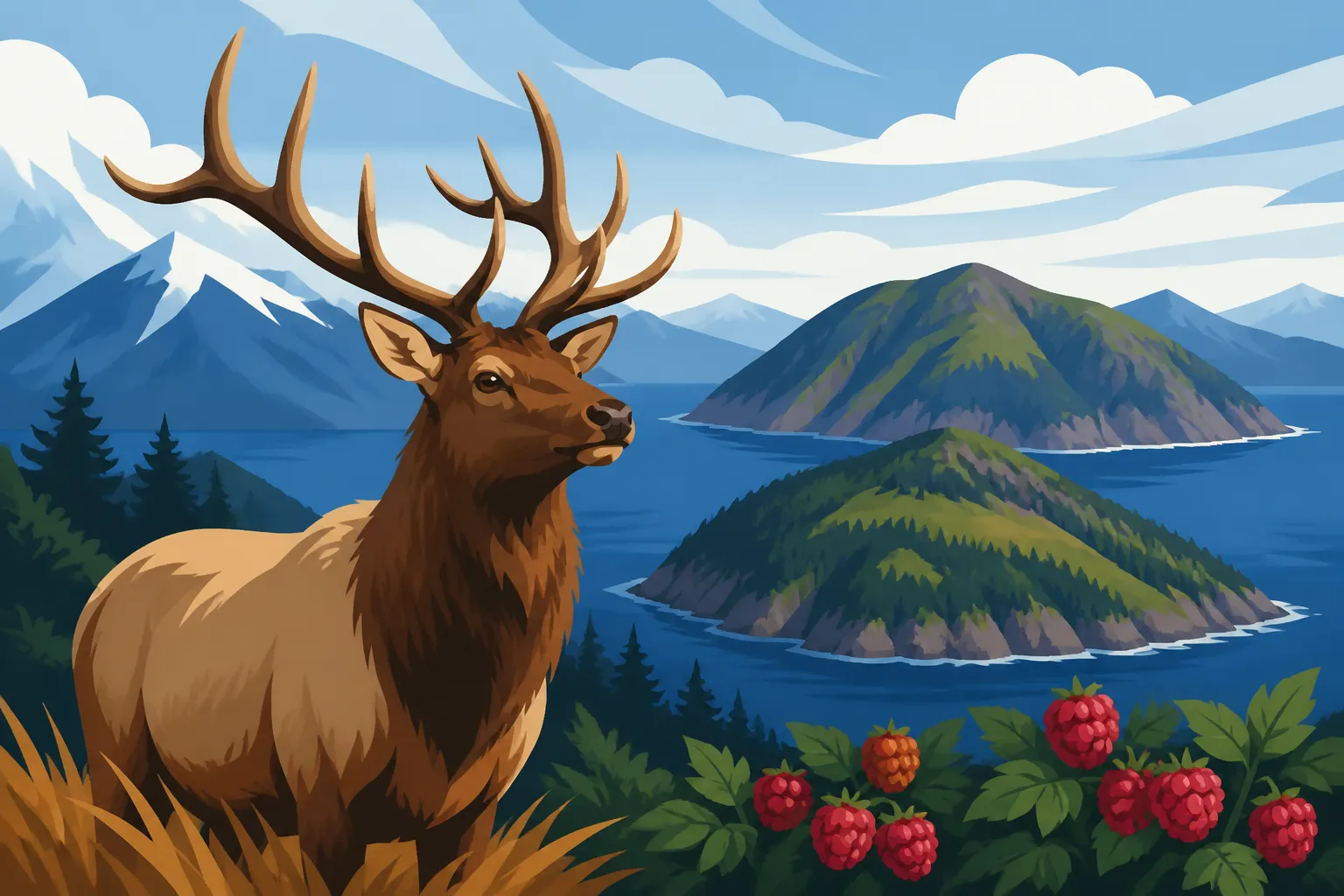
The elk on Afognak and Raspberry Islands are Roosevelt elk (Cervus canadensis roosevelti), the largest of the North American elk subspecies. This lineage is evident in their impressive body size, often exceeding that of Rocky Mountain elk. Mature bulls can weigh over 1,000 pounds, making them formidable animals to pursue and, if successful, to pack out. Their antlers tend to be wide and heavy, though perhaps not as long in individual tines as some Rocky Mountain bulls. They possess the typical dark brown coat, with lighter rumps, but their coastal environment sometimes leads to a slightly shaggier appearance to shed the persistent rain. Genetically, they trace back to their Olympic Peninsula ancestors, and the isolated nature of the island populations has preserved a distinct genetic line. Their adaptations to the rainforest environment include a robust physical build and a dietary flexibility that allows them to utilize the diverse vegetation of their island home, from forest understory to beach grasses.
Population Dynamics and Herd Health
The Afognak Island elk herd is the larger and more established of the two, with estimates often placing its numbers in the low thousands. The Raspberry Island herd is considerably smaller, generally in the hundreds. Both populations are carefully monitored by ADF&G. Herd health on both islands is generally robust, marked by good calf recruitment rates and healthy bull-to-cow ratios, which are critical for maintaining a genetically diverse and thriving population. Factors that can influence their numbers include hunting pressure – managed strictly through the draw system – and, less frequently, severe winter weather events, though these are rare in the relatively mild coastal climate. Habitat quality remains consistently high, providing ample forage. Disease outbreaks are generally low given the islands' isolation. ADF&G sets specific harvest quotas annually, carefully balancing hunter opportunity with long-term population sustainability, ensuring that these unique elk herds continue to prosper for future generations.
Comparing Afognak and Raspberry Herds
While both islands host Roosevelt elk, there are distinct differences that influence the hunting experience. Afognak, being the larger island with a longer-established herd, generally offers more elk and potentially higher odds in the drawing (though "higher" is still relative given the scarcity of permits). The terrain on Afognak is varied, with extensive logging roads in some areas (though these often have motorized access restrictions during hunting season), making some areas more accessible for scouting or meat retrieval. Raspberry Island, on the other hand, is smaller, wilder, and often considered even more challenging. Its terrain can be incredibly rugged, and the vegetation even denser, presenting a truly primitive hunting experience. Due to its smaller population, the draw odds for Raspberry are typically even lower than Afognak, making it an extremely coveted permit. For hunters seeking the ultimate wilderness challenge and willing to accept lower success rates in exchange for solitude and a truly raw experience, Raspberry holds a special allure. However, both islands offer trophy-class bulls and an unforgettable adventure.
Hunting Seasons and Permit System Explained
Hunting Alaska's Afognak and Raspberry elk is not a casual endeavor you can decide on a whim. It requires meticulous planning, an understanding of a complex permit system, and a good dose of luck.
Drawing Permits: Your Golden Ticket
The primary hurdle for any hunter wishing to pursue elk on Afognak or Raspberry is the Alaska Drawing Permit system. These hunts are not over-the-counter opportunities; they are highly controlled and issued through a lottery. This means you must apply for specific hunt numbers during the annual application period, which runs from November 1 to December 15 each year. The odds of drawing a permit are notoriously low, often in the single digits or even fractions of a percent, making it one of Alaska's most coveted and challenging draws. Each permit specifies the island (Afognak or Raspberry), the specific hunt unit, the season dates, and whether it's for a bull or any elk. Hunters often apply for these permits for years, sometimes decades, before finally drawing one. It’s a true testament to patience and persistence. If you're serious about this hunt, you'll need to research the historical draw odds, analyze success rates, and apply consistently. Understanding the ins and outs of How Alaska's Big Game Drawing Permits Work and marking your calendar for Alaska's November 1 to December 15 Draw Application Window are crucial first steps. Many successful hunters utilize resources like GoHunt to analyze drawing odds and historical harvest data, helping them make informed choices about which hunt numbers to apply for.
Understanding Hunt Units and Season Dates
Both Afognak and Raspberry Islands fall within Game Management Unit (GMU) 8. Within GMU 8, there are various specific hunt numbers for elk, each with its own designated area and season dates. For instance, you might find hunt numbers for an early-season bull hunt in a particular subunit of Afognak, or a late-season "any elk" hunt on Raspberry. Season dates typically span from late September through October or even into November, often coinciding with the rut, offering exciting bugling opportunities. It's imperative to consult the current Alaska Hunting Regulations booklet for GMU 8, as regulations can change annually. Pay close attention to the specific legal descriptions of hunt areas, as they can sometimes be quite detailed, restricting hunting to certain drainages or geographical features. Knowing whether you can harvest a bull only, or if "any elk" (including cows) is allowed, is another critical detail. Missing a small but important detail in the regulations can turn a successful hunt into a costly citation, so always read the specific permit conditions carefully.
Nonresident Requirements and Costs
For nonresident hunters, pursuing Alaska elk comes with additional requirements and costs. First and foremost, you'll need a nonresident hunting license, which is a significant upfront expense. Following that, an Alaska elk tag is required, adding another substantial cost. You can find current pricing details by checking Nonresident Hunting License Costs in Alaska. Beyond the license and tag, nonresidents are required by Alaska law to either hunt with a registered Alaska big game guide for species like brown bear, Dall sheep, and mountain goat, or with a resident relative within the second degree of kindred. While elk don't fall under the mandatory guide requirement unless you're also pursuing brown bear, many nonresidents choose to hire a guide or transporter for such a remote and challenging hunt. The logistics of flying into these islands, setting up a remote camp, and packing out a thousand-pound animal often necessitate professional assistance. Budgeting for a guided hunt means factoring in guide fees, air transportation, and potential trophy fees. Exploring What an Alaska Guided Hunt Price Costs will give you a realistic expectation, and if you have a relative who meets the criteria, you might investigate Alaska's Second-Degree-Kindred Alternative to a Guide. Remember to factor in travel, gear, and potential meat processing and shipping costs when developing your overall hunt budget.
Planning Your Afognak or Raspberry Elk Adventure
Successfully hunting elk on these Alaskan islands is as much about meticulous planning and logistics as it is about hunting skill. The remote nature of these locations demands thorough preparation.
Accessing the Islands: Logistics and Challenges
Getting to Afognak and Raspberry Islands is a significant undertaking, primarily relying on either float planes or boats. Kodiak, Alaska, serves as the main jump-off point for both islands. From Kodiak, you'll charter a float plane to fly directly into one of the numerous lakes or sheltered coves on the islands. These flights are highly weather-dependent, meaning delays are common, and you must build buffer days into your travel schedule. Alternatively, some hunters opt for boat charters, which offer more cargo capacity and potentially more flexibility for moving between bays once on the island. However, boat travel can be slower and is also subject to coastal weather conditions, which can turn nasty quickly. Understanding Getting to Afognak by Floatplane or Boat is crucial for planning this phase. There is virtually no road infrastructure on either island, so once you land, you are truly in the wilderness. Every piece of gear, every drop of fuel, and every morsel of food must be brought in with you. This necessitates careful weight management, especially with float planes that have strict payload limits. Hunting from a boat that allows you to move along the coastline, similar to Boat-Based Deer Hunting on Alaska's Island Coastlines, can also be an effective strategy for accessing different areas.
Essential Gear for a Rainforest Hunt
The coastal rainforest environment of Afognak and Raspberry Islands presents unique gear challenges. Rain is a near-constant companion, making proper wet-weather gear paramount. You'll need high-quality, durable rain gear that offers both waterproofing and breathability, not just a cheap poncho. Brands like Sitka, KUIU, or Grundens are popular for their robust performance in these conditions. Layering is key, with moisture-wicking base layers, insulating mid-layers (fleece or synthetic down), and a bomb-proof outer shell. Your footwear must be equally up to the task; knee-high rubber boots like XtraTufs or specialized hunting boots with excellent waterproofing and traction are non-negotiable for traversing muskeg and marshy terrain. Researching Rain Gear Guides Actually Recommend and selecting appropriate Boot Requirements for Coastal Alaska Hunts will make or break your comfort. Optics are crucial for spotting elk in dense cover, so a good set of binoculars (10×42 or 10×50) and potentially a spotting scope for judging animals at distance are vital. For navigation, a reliable GPS unit with pre-loaded maps and a satellite communication device (like an InReach or Garmin Messenger) are essential, as cell service is non-existent. A robust camp setup, including a sturdy tent, a reliable cooking stove, and a comfortable sleeping system, will provide much-needed respite from the elements. Don't forget durable game bags, a heavy-duty pack frame for packing out meat, and bear spray, as brown bears are present. When planning your gear, considering specialized resources like GoHunt can help you fine-tune your pack list for the specific demands of a coastal elk hunt.
The Role of Guides and Transporters
For many hunters, especially nonresidents, navigating an Afognak or Raspberry elk hunt without assistance is an overwhelming prospect. This is where guides and transporters come into play. A registered Alaska big game guide provides a fully outfitted hunt, including food, lodging, and direct guidance in the field. For nonresidents, a guide is mandatory if you plan to hunt brown bear in conjunction with elk, or for sheep and goats, but not strictly for elk alone. However, the benefits of a guided hunt for elk are immense, as guides possess invaluable local knowledge, manage all logistics, and provide expert assistance with tracking, calling, and field processing. Understanding Hiring an Alaska Registered Guide-Outfitter is a good starting point. Transporters, typically air taxi operators, offer a different service: they fly you into a designated drop camp location and pick you up at an agreed-upon date. They provide transportation but no in-field guiding or camp services beyond what you arrange. This is a popular option for experienced self-reliant hunters. Learning about Alaska Transporters and What They Legally Provide will help clarify their role. For those considering a drop camp, reading about Alaska Drop Camp Hunts Through an Air Taxi will offer insights into the realities of this approach. While hiring either can be costly, the investment often pays dividends in safety, success, and a more enjoyable experience in such a challenging environment. Many hunters find GoHunt a useful resource for vetting guides and transporters by researching their reputations and services.
Elk Hunting Tactics Specific to the Islands
Hunting Roosevelt elk in the dense, wet coastal rainforest of Afognak and Raspberry Islands requires a different approach than the open country or lodgepole pines of the Lower 48. Forget long-range glassing across vast meadows; here, it's about close-quarters engagement and an intimate understanding of the terrain.
Calling Strategies in Dense Timber
The bugle of a Roosevelt bull echoing through the misty, spruce-laden valleys of Afognak can be one of the most thrilling sounds in hunting. Unlike open country where calls carry for miles, in dense timber, calling needs to be strategic and often subtle. Locator bugles are effective in the early morning or late evening to pinpoint a bull's general location. Once you have an answer, a more aggressive approach with cow calls and smaller bugles can draw him in. When a bull is responsive, move slowly and deliberately towards him, using the thick cover to your advantage. Setting up quickly once you sense the bull is close is crucial. The key is to be patient and let the elk come to you, as moving too quickly through the dense undergrowth will make too much noise and reveal your position. During Elk Bugling Season on Afognak, typically late September to early October, bulls are most vocal and susceptible to calling. Sometimes, a soft series of cow or calf mews can be more effective than an aggressive bugle, especially on pressured animals or those that are "hang-up" bulls, reluctant to commit fully. Remember that sound can be deceiving in thick woods, so trust your ears but also rely heavily on wind direction and visual cues.
Still Hunting and Tracking Through Rainforest
When calling isn't producing results, or when targeting more cautious animals, still hunting becomes a primary tactic. This involves moving incredibly slowly and quietly through the forest, pausing frequently to listen and scan. The dense vegetation limits visibility to mere yards, forcing you to focus on subtle movements, flashes of brown, or the glint of an antler. Pay close attention to wind direction, as elk have an incredible sense of smell. Move into the wind, or cross-wind, but never with the wind at your back. Tracking is also a highly effective method. Look for fresh tracks in the soft ground, droppings, rubs on trees, and disturbed vegetation. The moist environment on the islands means tracks often remain clear for longer periods. Following fresh sign, especially during the rut, can lead you directly to feeding or bedding areas. This approach demands immense patience and attention to detail. Expect to cover relatively little ground in a day, but to do so with purpose. The goal is to detect the elk before it detects you, requiring extreme stealth and a keen eye for movement in the shadows.
Utilizing Beach and Tidal Flats
One of the most unique aspects of hunting Afognak and Raspberry elk is their use of the coastline. Elk frequently come down to the beaches and tidal flats to feed on nutrient-rich sedges, grasses, and kelp, especially during low tide. These areas often provide the most open visibility on the islands, presenting a prime opportunity for spotting elk. Hunters can cruise the coastline by boat, glassing the beaches and estuaries for feeding animals. Once elk are spotted, anchor offshore and stalk in on foot, using any available cover. Alternatively, hunters on foot can walk the beaches at first light or last light, looking for fresh tracks or feeding animals. It’s a completely different dynamic than typical forest hunting. Be mindful of the tides; getting cut off by an incoming tide on a narrow beach can be dangerous. The timing of your hunt in relation to the tides can significantly impact access and success, making tide charts an essential piece of equipment. Elk are often seen just at the tree line adjacent to the beach, offering a chance to catch them moving between feeding and bedding areas.
Dealing with Unique Environmental Challenges
Hunting in the Afognak and Raspberry rainforest comes with a host of environmental challenges that demand respect and preparedness. Persistent rain and fog can severely limit visibility, dampen spirits, and soak gear. Your waterproof layers must be top-notch, and you need a strategy to keep optics clear and gear dry. Dense vegetation makes travel slow and arduous, often involving pushing through thick alders and tangled undergrowth. This impacts travel time, visibility, and the ability to retrieve game. Brown bears are a significant presence on both islands. You are hunting in prime brown bear country, and encounters are common, especially around fresh kills. Carrying a large-caliber rifle and bear spray, and knowing how to use both, is non-negotiable. Always be alert, make noise while traveling, and take extreme precautions when approaching a kill site. Read up on Bear Safety While Butchering a Kill in Alaska and ensure your Rifle Choice for Alaska Brown Bear Country is adequate. Scent control is also important, as wet air can carry scent further, but the constant dampness also makes it harder for scent to linger on the ground. Hunters must be mentally and physically prepared for these conditions, as they are not just inconveniences but inherent parts of the hunt.
Post-Harvest Considerations and Meat Care
Successfully harvesting a Roosevelt elk on Afognak or Raspberry is a monumental achievement, but the work is far from over. The real challenge often begins after the shot, especially when dealing with such a large animal in a remote, wet environment.
Field Dressing and Quartering an Elk
Roosevelt elk are massive animals, and field dressing one in a remote, wet environment requires efficiency and strength. The goal is to cool the carcass as quickly as possible to prevent spoilage, especially if temperatures are mild. This typically involves skinning and quartering the elk on the spot. You'll need sharp knives, a game saw or robust bone saw, and plenty of quality game bags. Start by gutting the animal, then skinning it, and finally breaking it down into manageable quarters. The front quarters, hindquarters, backstraps, and tenderloins are the primary cuts. Don't forget the neck meat and ribs, which are also considered edible meat under Alaska salvage laws. Work methodically to keep meat clean, off the ground, and free from hair and debris. In a wet environment, this is particularly challenging, so a ground tarp or clean game bags laid out can be very helpful. Remember that Meat Care in 50-Degree September Weather is a critical skill, and using Game Bags That Breathe in Coastal Rain will help keep your meat cool and protected from flies and dirt.
Transporting Meat and Trophy Out
Packing out a large elk is physically demanding work, often requiring multiple trips or the assistance of your guide or transporter. A mature bull elk can yield hundreds of pounds of bone-in meat, in addition to the hide and antlers. Strong, comfortable pack frames are essential. You'll likely be traversing dense timber, muskeg, and potentially steep, slippery terrain. This is where a good transporter or guide earns their keep, helping coordinate the retrieval of the meat and trophy, often utilizing the float plane to shuttle loads from a nearby lake or beach. Clear communication with your air taxi pilot or guide is paramount to ensure they understand your meat retrieval plan and are prepared for the weight and bulk. After the meat is packed out of the field, it needs to be protected, ideally in coolers with ice, to be flown back to Kodiak for processing. Be prepared for potential extra charges for additional flight loads if you have a particularly large bull or if weather causes delays. When planning your hunt, consider how resources like GoHunt can assist in budgeting for meat processing and freight, as these can add significantly to the overall cost.
Trophy Care in Remote Camps
Proper trophy care is vital to preserve your hard-earned elk. For a cape for a shoulder mount, you'll need to expertly skin the head and neck, ensuring enough hide is taken for the taxidermist. The hide should then be thoroughly salted to prevent hair slippage, even in wet conditions. You'll want to turn the ears and lips carefully. For a full-skull mount or European mount, the skull needs to be cleaned of most flesh. Antlers need to be protected during transport to prevent damage. In a remote camp, keeping a hide dry for salting can be a challenge. You might need to hang it in a sheltered area, away from direct rain, and ensure good airflow. Once salted, the hide should be rolled up and placed in a durable bag for transport. Be aware of any specific CITES (Convention on International Trade in Endangered Species of Wild Fauna and Flora) requirements if you are an international hunter, although for Roosevelt elk, this is generally not a concern unless there are specific import/export restrictions from your home country. Work closely with your guide or transporter to ensure your trophy is handled correctly and safely transported to Kodiak, where you can arrange for it to be shipped to a taxidermist.
Conservation and the Future of Alaska Elk
The successful establishment and management of Alaska's Roosevelt elk herds on Afognak and Raspberry Islands represent a significant conservation achievement. Their continued prosperity relies on ongoing commitment from wildlife managers and hunters alike.
Management Goals and Objectives
The Alaska Department of Fish and Game (ADF&G) plays a crucial role in overseeing the health and sustainability of these unique elk populations. Their management goals are multi-faceted, aiming to maintain a robust, healthy herd that provides sustainable hunting opportunities while also ensuring the ecological integrity of the islands. This involves regular population surveys to estimate numbers, monitor bull-to-cow ratios, and assess calf recruitment. ADF&G uses this data to set annual harvest quotas and determine the number of drawing permits issued, carefully balancing harvest levels with the long-term carrying capacity of the habitat. They also conduct habitat assessments, considering factors like forage availability and the impact of forestry practices. By adapting regulations based on scientific data, ADF&G strives to prevent overharvest, protect critical habitat, and respond to any emerging threats, ensuring the Afognak and Raspberry elk continue to thrive for generations to come.
Hunter's Role in Sustainable Elk Hunting
As hunters, we are critical stakeholders in the ongoing conservation of Alaska's elk. Our responsible participation directly contributes to the sustainability of these herds. This begins with ethical hunting practices, including making clean, humane kills and adhering strictly to all regulations. Accurate and timely harvest reporting is paramount. Every hunter who draws a permit is required to report their success (or lack thereof), providing ADF&G with essential data for population models. Failure to report can skew data and negatively impact future management decisions. Respecting land access rules, leaving no trace in the wilderness, and minimizing environmental impact are also fundamental responsibilities. By upholding these standards, hunters demonstrate their commitment to conservation and help ensure continued public and political support for hunting as a vital wildlife management tool. Through hunting license and tag fees, we also directly fund wildlife research and management efforts, making us direct contributors to the conservation of these magnificent animals.
The Long-Term Outlook for Afognak and Raspberry Elk
The long-term outlook for Alaska's transplanted elk appears positive, largely due to the dedicated management efforts and the inherent resilience of the Roosevelt elk in their adopted island home. However, like all wildlife populations, they face potential future challenges. Climate change could bring shifts in weather patterns, impacting forage availability or increasing disease risk, though the mild coastal climate may offer some buffer. Habitat alteration, particularly through commercial timber operations on Afognak, is another factor that requires ongoing monitoring and careful management to ensure elk habitat is preserved. Despite these potential hurdles, the isolation of these island populations offers a degree of protection from mainland diseases and genetic contamination. The unique and highly sought-after nature of these hunts also ensures that there is significant public interest and support for their continued conservation. The Afognak and Raspberry elk remain a testament to successful wildlife introduction and a cherished hunting opportunity, a true jewel in Alaska's rich biodiversity. For those interested in deeper research into population trends and long-term forecasts, GoHunt provides an excellent platform for accessing and understanding wildlife data.
Afognak vs. Raspberry Island Elk Hunting Comparison
| Feature | Afognak Island Elk Hunt | Raspberry Island Elk Hunt |
|---|---|---|
| Herd Size | Larger (low thousands) | Smaller (hundreds) |
| Draw Odds | Extremely low, but comparatively "better" than Raspberry | Even lower (among Alaska's toughest draws) |
| Terrain/Vegetation | Dense spruce, muskeg, some logging roads (restricted) | Extremely dense spruce, muskeg, rugged cliffs |
| Accessibility | More options for float plane landings, some boat access | Fewer landing sites, more remote, challenging access |
| Hunting Style | Still hunting, calling, beach hunting | Primarily still hunting, dense cover calling, beach |
| Wilderness Feel | Very wild, but some areas show human activity (logging) | Extremely wild, primitive, high solitude |
| Physical Demands | High, navigating thick cover, packing heavy loads | Very high, even more arduous terrain and dense cover |
| Trophy Potential | Excellent for Roosevelt elk | Excellent, potentially less pressured bulls |
| Brown Bear Presence | High | High |
Disclaimer
The information provided in this guide is for general informational purposes only and does not constitute legal or professional advice. Hunting regulations, costs, and availability can change rapidly. Always consult the most current Alaska Department of Fish and Game regulations, hunt supplements, and official sources before planning any hunt. Ensure you understand and comply with all federal, state, and local laws. Hunting in Alaska is inherently risky; proper preparation, safety gear, and experienced guidance are strongly recommended.