Packraft Weight Versus Load Capacity
Navigating Alaska's wild rivers with a packraft can unlock some of the most remote and rewarding hunting grounds, but nothing can ruin an expedition faster than an overloaded boat. Trying to squeeze too much gear, too many hunters, or worse, an entire quartered moose, into a packraft that can't handle the weight is a recipe for disaster, risking gear loss, capsizing, and even hypothermia. This guide will walk you through the crucial considerations of packraft weight versus load capacity, ensuring you make informed decisions for a safe and successful Alaska hunt.
Understanding Packraft Specifications: Weight and Capacity
When you start looking at packrafts, you'll immediately notice two numbers that seem to define them: the actual weight of the raft itself and its stated load capacity. It's easy to look at that maximum load capacity and think, "Great, I can just load it up to that number!" But in the rugged, unforgiving environment of Alaska, that approach can lead to serious trouble.
The Manufacturer's Stated Load Capacity
Every packraft manufacturer, from Alpacka Raft to Kokopelli Packraft, provides a maximum load capacity for their boats. This figure represents the absolute maximum weight the raft can theoretically support while still maintaining a reasonable amount of freeboard – the distance between the waterline and the top edge of the boat. This number typically includes everything: the paddler, all their gear, and any game meat they might be packing out.
However, it's vital to understand that this is often a laboratory-tested, ideal-condition number. It assumes perfectly still water, ideal weight distribution, and often, an experienced paddler. Exceeding this limit, even slightly, can drastically reduce the raft's stability, make it incredibly difficult to paddle and steer, and significantly increase the risk of taking on water or capsizing, especially in moving current or rapids. Imagine trying to navigate a braided river with a sluggish, unresponsive boat – it's not just inefficient, it's dangerous. The raft sits lower in the water, making it more susceptible to submerged rocks, sweepers, and other river hazards.
Real-World Usable Capacity for Alaska Hunters
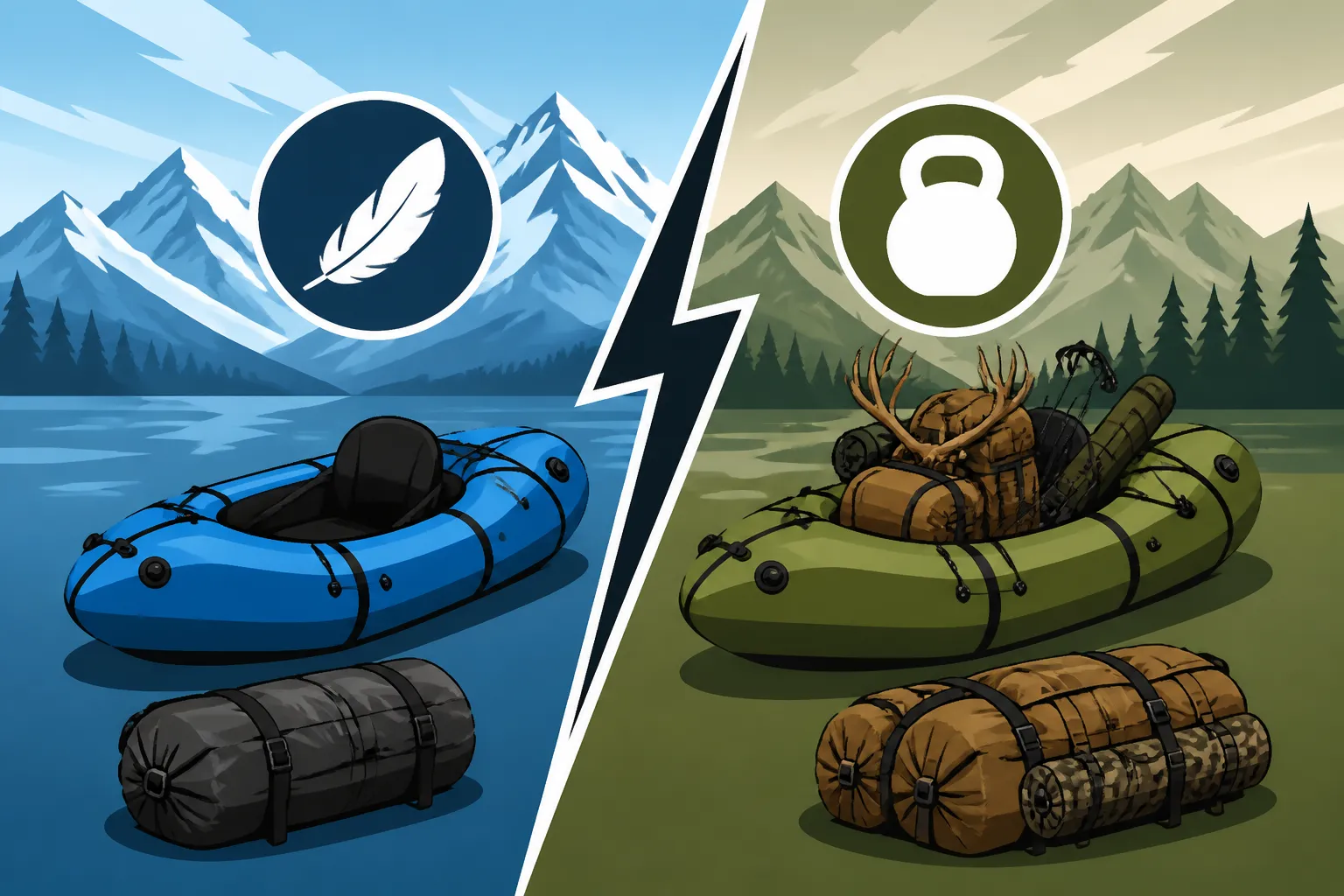
While the manufacturer's maximum capacity is a hard limit, the usable capacity for an Alaska hunter is almost always a significantly lower number. This is where practical experience and a healthy dose of realism come into play. For instance, if a packraft is rated for 400 pounds, trying to put a 200-pound hunter and 200 pounds of gear and meat in it might technically fit the spec, but it will handle like a waterlogged log.
Several factors reduce this real-world usable capacity:
- River Conditions: Alaska's rivers are rarely calm. Swift currents, rapids, eddies, and even strong winds on open stretches demand a boat that is nimble and rides high in the water. An overloaded raft becomes a wallowing beast, prone to swamping in waves or eddies, and nearly impossible to control in a powerful current. Even a gentle ripple can feel like a significant obstacle. If you're considering a float hunt on a river with potential sweepers and log jams, an overloaded boat significantly increases your risk.
- Weight Distribution: Achieving perfect weight distribution with hunting gear and an irregularly shaped animal carcass is incredibly challenging. A packraft, unlike a larger raft, offers limited space for shifting heavy loads. An uneven load can make the raft unstable, causing it to tip easily or track poorly.
- Portaging: One of the greatest advantages of packrafts is their portability. However, if your chosen route involves significant portages between drainages or around unnavigable sections, an overloaded boat means more trips, more effort, and more time spent off the water, increasing your exposure to the elements and potential wildlife encounters. This is where the concept of Packrafting Into a Roadless Alaska Drainage really highlights the need for a light setup.
- Handling and Maneuverability: An ideal packraft allows you to react quickly to changing river conditions. An overloaded raft has increased drag, making it slow to respond to paddle strokes. This can be the difference between safely navigating a tricky section and ending up in the water.
- The "Bonus Weight" of Meat: This is perhaps the most significant factor for Alaska hunters. You might launch with a perfectly balanced load, but a successful hunt means adding substantial, often awkward, weight. A quartered moose, for example, is not just heavy; it's bulky and will drastically alter the raft's center of gravity. This is why planning for the harvest is just as critical as planning for your initial gear.
Think of the stated capacity as the redline on your truck's tachometer – you can hit it, but you really shouldn't run there constantly, especially not when you're relying on that vehicle to get you out of remote country. For hunting, aim to be well below the maximum capacity to give yourself a safety margin and maintain good boat handling.
The Critical Balance: Your Gear, Your Body, and Your Harvest
Successfully utilizing a packraft for an Alaska hunt is all about finding the optimal balance between what you bring, your own physical weight, and the substantial weight of the game you hope to harvest. This isn't just about fitting everything, but about making sure your entire system is efficient and safe.
Calculating Your Personal Packraft Load
Before you even dream of adding game meat, you need a meticulous accounting of your personal load. Every ounce counts. Start by weighing yourself in your full hunting clothes, including boots. This is your foundation. Then, systematically weigh every single item you plan to bring, including the weight of the packraft itself if it's not factored into your carrying capacity calculation.
Here’s a breakdown of what needs to be considered:
- Your Body Weight: This is non-negotiable and the first number you plug in.
- Essential Gear: This category is paramount for survival and effectiveness in Alaska.
- Shelter: A lightweight tent or tarp setup is crucial. Every pound saved here translates to more capacity for other necessities or meat.
- Sleep System: Down sleeping bags and inflatable pads are standard for warmth-to-weight ratios.
- Cook Kit & Food: Compact stoves, fuel, and dehydrated meals are preferred. Factor in enough food for your planned trip duration, plus a few extra days for weather delays.
- Water Filtration: Reliable water filters or purification tablets are a must.
- Clothing System: Layers suitable for unpredictable Alaska weather – waterproof outer shells, insulating mid-layers, and moisture-wicking base layers. Don't forget spare socks!
- Hunting Gear: Your rifle or bow, ammunition, optics (binoculars, spotting scope, rangefinder), knife, game bags, and perhaps a small saw. If you're carrying a rifle, remember to account for its weight and the weight of your ammunition.
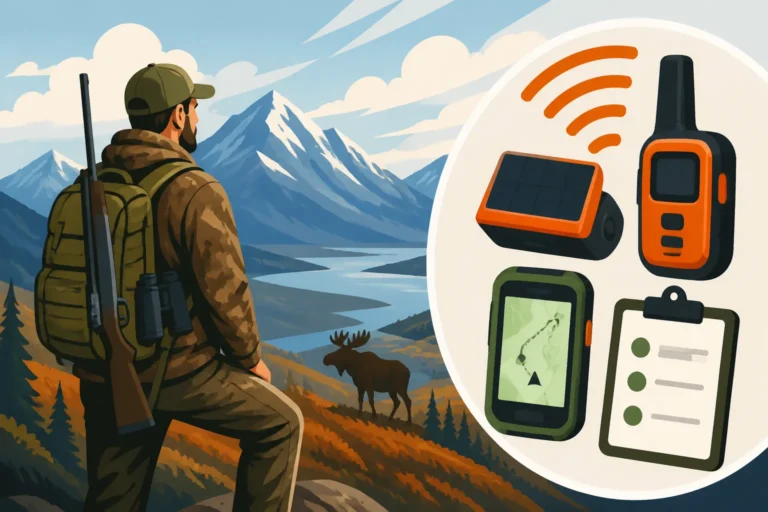
- Navigation & Safety: GPS device (with downloaded offline maps), satellite messenger like an InReach, headlamp, first-aid kit, bear spray, fire-starting materials. Ensure your Signal Devices and Check-In Plans for Solo Alaska Hunts are accounted for in terms of weight and accessibility.
- Repair Kit: Patch kits for the packraft, duct tape, cordage.
- Personal Items: Toiletries, camera, etc.
The key here is ruthless honesty and a minimalist mindset. Every "just in case" item adds weight. Consider multi-use items (e.g., a tarp that doubles as a ground cloth, a cook pot that serves as a mug). Resources like GoHunt often feature gear lists and reviews from experienced hunters, which can be invaluable for identifying truly essential items and lightweight alternatives. For general gear strategy, our guide on Backpack Hunting in Alaska: Gear Weight and Meat Loads offers excellent insights that apply directly to packrafting.
Planning for the "Bonus Weight": Game Meat
This is where Alaska hunting with a packraft becomes a unique logistical puzzle. Unlike a hiking trip where you only carry what you start with, a successful hunt means adding a significant, often unpredictable, amount of weight. Failing to plan for this "bonus weight" is a common and critical mistake.
First, you need to have a realistic understanding of the meat yield from various game animals:
| Species | Average Live Weight (lbs) | Estimated Edible Meat Yield (lbs) | Notes |
|---|---|---|---|
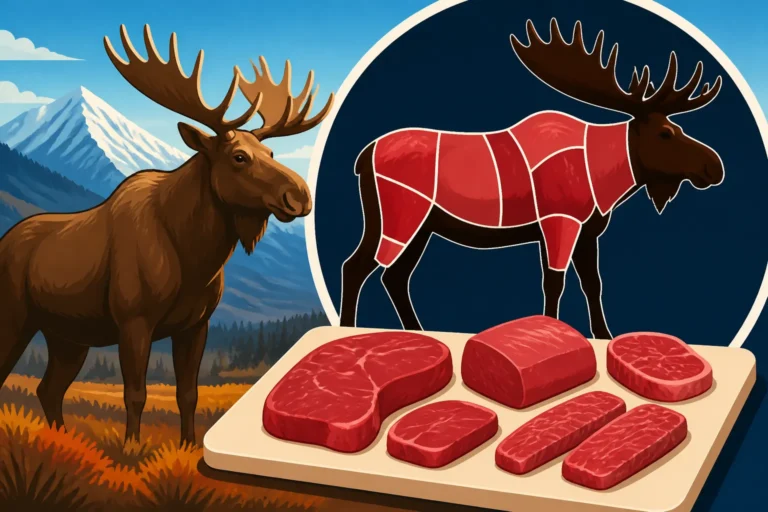
| Alaska-Yukon Moose | 1,200 – 1,600+ | 400 – 600+ | A large bull can yield considerably more. |
| Caribou | 250 – 400 | 100 – 150 | Varies by sex and time of year. |
| Dall Sheep | 150 – 250 | 50 – 80 | Often field dressed completely and packed whole. |
| Sitka Blacktail Deer | 100 – 200 | 40 – 70 | Smaller but can add up if you're targeting multiple animals. |
| Black Bear | 150 – 400+ | 50 – 150+ | Meat yield can vary greatly with fat content. |
Note: These are estimates. Actual yields depend on the size of the animal, how cleanly it's butchered, and what cuts are salvaged per Alaska regulations (e.g., Alaska Moose Meat Salvage Requirements).
Imagine you're solo hunting moose and successfully harvest a bull that yields 500 pounds of meat. Suddenly, your 400-pound capacity packraft (which already holds 200 pounds of you and your gear) is facing a monumental challenge. You're looking at a 700-pound load for a 400-pound boat. This clearly necessitates multiple trips, either by raft or on foot, or a much larger packraft setup. Our guide on How Much Meat an Alaska Bull Moose Yields provides more detailed figures, as does Caribou Meat Yield From an Alaska Caribou.
When choosing your packraft, always consider the maximum potential meat weight you might encounter. For larger game like moose or even multiple caribou, a two-person packraft or even two individual packrafts might be the only viable option for a single trip out. You also need to think about how you will manage Meat Care in 50-Degree September Weather to ensure it stays fresh during multiple packraft trips or delays.
Strategies for Managing Packraft Weight and Capacity in the Field
Effective weight management isn't just about calculating numbers; it's about smart strategies both before you leave home and once you're out in the Alaskan backcountry. The goal is to maximize your efficiency, minimize risk, and ensure you can successfully pack out any game you harvest.
Optimizing Gear for a Successful Packraft Hunt
The journey to an optimized packraft load starts long before you inflate your boat on the riverbank. It begins with meticulous gear selection and a commitment to carrying only what is absolutely necessary and truly functional.
- Multi-Use Items: Every item in your pack should ideally serve more than one purpose. For example, a heavy-duty dry bag can store gear, act as a flotation device if needed, or even serve as a makeshift camp shower bag. A tarp can be a shelter, a ground cloth, or a sail in a pinch.
- Minimalist Approach: Embrace the "less is more" philosophy. This means foregoing luxuries and focusing on essentials. Do you really need a camp chair, or can you sit on your dry bag? Is that extra pair of pants truly necessary if you have good quick-drying layers? Every gram saved in your personal kit is a gram available for potential meat or a lighter, more nimble boat. GoHunt often features articles on ultralight gear for backcountry hunting, which is directly applicable here.
- Sharing Gear: If hunting with a partner or a group, share common items. One stove and cook kit, one satellite messenger, one first-aid kit, and shared repair supplies can drastically reduce individual loads. Just make sure everyone knows where these critical items are stored.
- Waterproof Packing: While not directly related to weight, effective waterproofing is crucial for packrafting. Everything must be in durable dry bags or dry sacks, secured within the raft. A swamped raft with wet gear is not only heavier but also dangerous due to the risk of hypothermia. Think about layering your waterproof protection – dry bags inside your backpack, then the whole backpack inside a larger dry bag or strapped securely to the raft.
Remember, the goal isn't just to fit everything, but to ensure your packraft remains stable, maneuverable, and responsive, especially in dynamic river environments.
On-the-Water Load Distribution and Handling
Once you've carefully selected your gear and perhaps even harvested an animal, how you arrange and secure that load in your packraft is paramount for safety and efficiency. This is particularly true when you’ve added the weight and bulk of game meat.
- Heavy Items Low and Centered: The basic principle of boat stability is to keep heavy objects as low and as close to the center line of the boat as possible. This lowers the center of gravity, making the raft less prone to capsizing. Think of your heavy dry bags, rifle case, and especially any meat, as ballast.
- Even Distribution Fore and Aft: While keeping things centered, also strive for an even weight distribution from bow to stern. Too much weight in the front or back will make the boat difficult to paddle and cause it to plow through the water or sit too high, making it susceptible to wind. When dealing with a large animal like a moose, you might need to break it down further than just quarters. Referencing our guide on Quartering a Bull Moose Alone in the Field will provide insights into breaking down a carcass for manageable loads.
- Securing Everything: All gear must be securely lashed to the packraft. Tethers, straps, and cargo nets are your best friends. A capsized packraft in a swift Alaskan river means lost gear if it's not secured. Consider how easily something could float away if the boat flips. Use multiple attachment points and redundancy.
- The Challenge of Game Meat: This is often the trickiest part. Animal quarters are bulky, wet, and can be oddly shaped. They're also often heavy. When Loading a Bull Moose Into a Raft, for instance, you're not just adding weight but also changing the boat's hydrodynamics significantly. You'll need to use sturdy game bags to contain the meat, then further secure these to the raft. Be prepared for the raft to handle completely differently once loaded with a harvest. It will be slower, less agile, and require more effort to paddle. Practice paddling with a full, heavy load (if safely possible) before your hunt.
- Managing Multiple Trips: For very large animals, especially a full-sized moose, it's often impossible to transport all the meat and gear in a single packraft trip. You might need to make multiple trips, cache some meat securely (out of bear reach, perhaps with an electric bear fence, if you're in bear country), or coordinate with a partner who also has a packraft. This is a critical safety consideration and part of your overall hunt plan.
Choosing the Right Packraft for Your Alaska Adventure
Selecting the correct packraft is one of the most impactful decisions you'll make for a hunting trip, directly influencing your success, safety, and comfort. It's not just about what floats; it's about what performs optimally for your specific hunting goals and the unique demands of Alaska's environment.
Single vs. Two-Person Packrafts and Their Capacity
The fundamental choice often boils down to a single-person or a two-person packraft. Each has distinct advantages and disadvantages when it comes to load capacity and hunting in Alaska.
- Single-Person Packrafts:
- Pros: Lighter to carry during portages, more nimble on the water, easier to inflate and deflate quickly, generally less expensive. Ideal for solo hunters targeting smaller game like Sitka blacktail deer or single caribou if you plan for multiple trips or very light gear.
- Cons: Severely limited capacity for gear and especially for game meat. Even a single caribou can push the limits, requiring careful planning or multiple trips. Carrying a large brown bear hide and skull, along with your gear, could be a stretch for many models.
- Best Use: Solo trips for smaller game, scouting, or accessing specific areas where minimal weight is critical and you're not expecting to pack out huge amounts of meat. You need to be extremely disciplined with your gear weight.
- Two-Person Packrafts (Tandems):
- Pros: Significantly higher load capacity, making them far more practical for packing out larger game like moose or multiple caribou. They allow for two hunters and shared gear, which can be more efficient. The extra surface area often makes them more stable in rougher water. Our guide on Raft Size for a Two-Hunter Moose Float delves deeper into these benefits.
- Cons: Heavier and bulkier to pack, making portages more arduous. Less agile in tight spots or rapids. Requires two paddlers for efficient propulsion. More expensive upfront.
- Best Use: Hunting larger game, partner hunts, or situations where you anticipate packing out a substantial amount of meat. They offer a much greater margin of safety and capacity for the "bonus weight" of a successful harvest.
The decision hinges directly on your target species and whether you're hunting solo or with a partner. If you're heading out for moose, a tandem is almost a necessity unless you're prepared for several grueling trips with quarters.
Key Features to Look for: Material, Durability, and Inflation Systems
Beyond size, several critical features dictate a packraft's suitability for Alaska hunting.
- Material and Durability: This is non-negotiable in Alaska. You'll be dragging your raft over gravel bars, bumping into submerged logs, and potentially encountering sharp rocks. Look for packrafts made from durable, puncture-resistant materials like proprietary coated nylon or urethane blends. The thicker the material (often measured in denier), the more resistant it will be, but also the heavier. Manufacturers like Alpacka Raft are known for their robust construction, which is vital when you're miles from anywhere. A tear can quickly turn your hunt into a survival situation.
- Inflation Systems: Most packrafts use an inflation bag system, where you scoop air into a bag and then squeeze it into the raft. Some also offer foot or hand pumps.
- Internal Dry Bag Systems (e.g., Cargo Fly, Internal Storage System): Many modern packrafts feature internal dry storage systems. These are essentially waterproof zippers that allow you to pack gear inside the raft's tubes. This keeps gear dry, lowers the center of gravity for increased stability, and frees up space on the deck. It also significantly increases the usable internal volume without increasing the raft's footprint. This is a game-changer for hunters as it protects meat and gear from splashes and cold water, and ensures critical items are secured.
- Valve Type: Look for Boston valves or similar high-volume valves that allow for quick inflation and deflation in the field.
- Attachment Points (D-rings, Grab Loops): The more robust attachment points your packraft has, the better you can secure your dry bags, rifle case, and especially meat. Look for reinforced D-rings or grab loops that are strategically placed for balanced lashing.
- Thwart and Seat System: A comfortable and adjustable seat, often inflatable, makes a huge difference on long days of paddling. A removable thwart (cross-brace) can add rigidity and support, but also potentially take up space when dealing with large, bulky loads.
- Self-Bailing vs. Closed Deck:
- Self-Bailing: These rafts have small holes in the floor that allow water to drain out, ideal for whitewater. However, they are colder in cold water and you'll get wet.
- Closed Deck: These keep you drier and warmer but can accumulate water if you take on a large splash, requiring bailing. Many hunting packrafts lean towards closed or removable decks for comfort in cold Alaska.
When researching your options, consider consulting resources like GoHunt. They often provide detailed reviews and comparisons of packraft models, focusing on features that matter to hunters. Looking at user experiences and long-term durability reports can help you make an informed decision for your specific Alaskan hunting adventure.
Disclaimer
This guide provides general information for educational purposes only and is not a substitute for professional advice, local regulations, or extensive personal experience. Alaska's wilderness is vast and unpredictable. Hunting and packrafting involve inherent risks, including injury or death. Always consult the most current Alaska Department of Fish and Game regulations, secure all necessary licenses and permits, and prioritize safety. Conditions on Alaska rivers and in the backcountry can change rapidly. Ensure you have the necessary skills, gear, and emergency preparedness for any expedition.