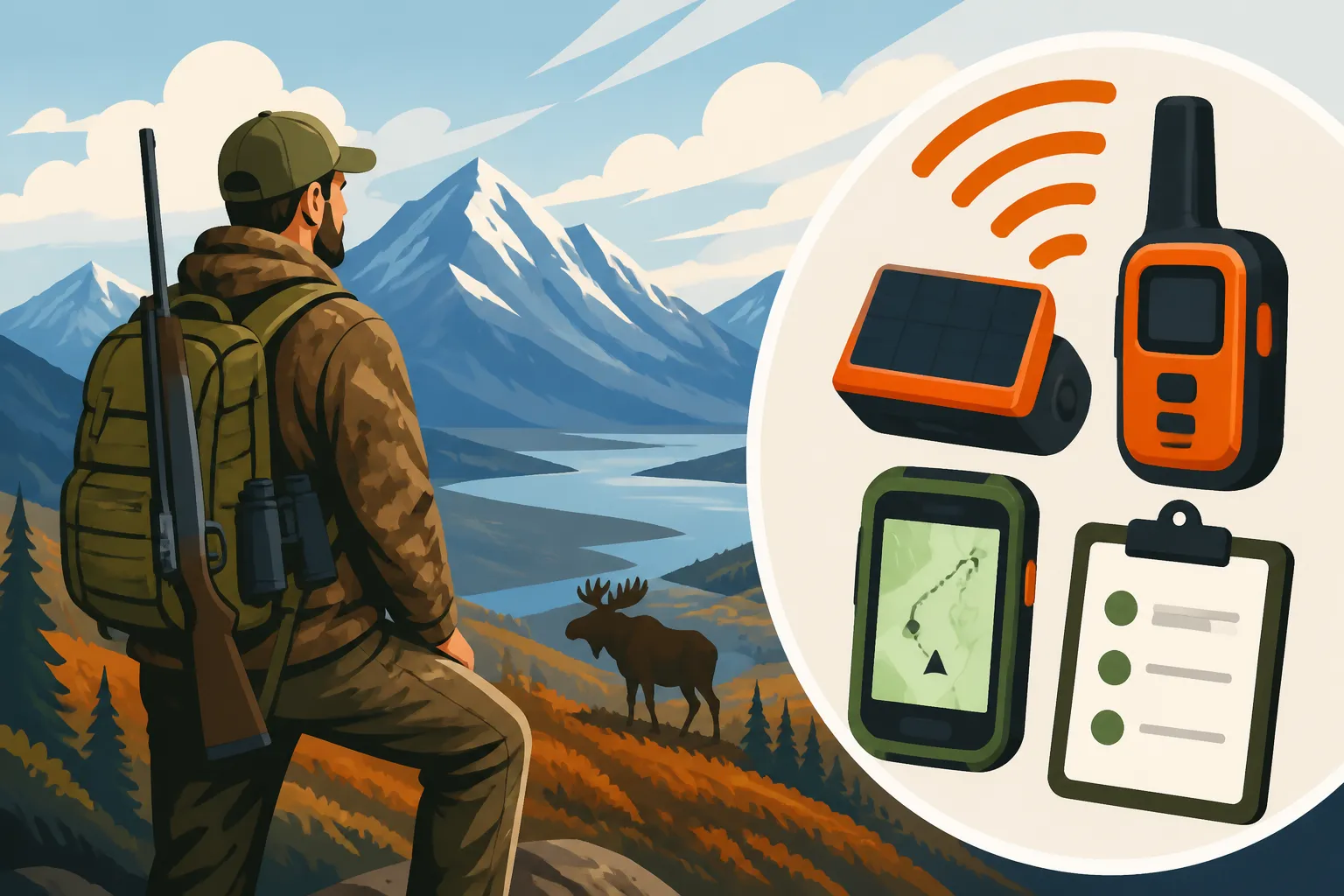
Signal Devices and Check-In Plans for Solo Alaska Hunts
Heading out alone into Alaska's vast wilderness for a hunt is an experience unlike any other, offering unparalleled solitude and challenge. However, this profound independence comes with significant risk: if an emergency strikes, you're truly on your own unless you have reliable ways to call for help and a solid plan in place. This guide will walk you through the essential signal devices and robust check-in strategies crucial for mitigating the inherent dangers of solo hunting in the Alaskan backcountry.
The Harsh Reality of Solo Alaska Hunting
The allure of a solo hunt in Alaska is powerful – the quiet focus, the unadulterated connection with the land, the ultimate test of self-reliance. But it's also a place where a sprained ankle can quickly turn into a life-threatening situation, and a sudden storm can cut off communication and escape routes in moments. Understanding this reality isn't about fear-mongering; it's about respectful, proactive preparation.
Isolation and Vastness
Alaska is enormous. To put it in perspective, Alaska is more than twice the size of Texas. Much of this land is roadless wilderness, where towns are hundreds of miles apart, and even the nearest village might be a floatplane ride away. When you step out of that bush plane or off that riverboat, you're often entering a landscape where no one else might pass for weeks, or even months. Cell service, as you might already know, is virtually nonexistent once you leave the major road systems and population centers. This means your personal cellphone is, for all intents and purposes, a paperweight for emergency communication. Relying on it is a critical mistake. If you're injured, lost, or encounter an unexpected situation, there's no popping out a phone and dialing 911. Help, if it can come, will likely be days away, even with proper notification. This is why having a plan for Alpine Navigation Without Cell Service is so vital.
Common Emergencies in the Backcountry
The types of emergencies you might face are varied and often interconnected. Beyond the obvious dangers of wildlife encounters, an unexpected injury like a fall, a twisted knee, or even a deep cut can become severe without immediate attention. Hypothermia is a constant threat, even in what seems like mild weather, especially if you get wet or stranded. Unpredictable weather shifts can bring whiteouts, torrential rain, or sudden high winds, grounding aircraft and making travel impossible. Then there are equipment failures: a stove that quits, a tent pole that breaks, or a misplaced map can rapidly escalate into a serious problem in remote conditions. Even recovering a downed animal can become an emergency, especially when you're alone. Consider the risks involved in Bear Safety While Butchering a Kill in Alaska or how quickly things can go sideways if you're Recovering a Moose Downed in a Beaver Slough. Each of these scenarios can leave you in a dire situation without a way to signal for help.
Essential Signal Devices for Solo Hunters
When you're alone in the Alaskan bush, your signal device isn't just a convenience; it's your lifeline. Choosing the right one, and understanding its capabilities and limitations, is paramount.
Satellite Messengers
These have become incredibly popular with backcountry users, and for good reason. Devices like the Garmin inReach (a very common choice in Alaska) and Zoleo offer two-way text messaging capabilities from virtually anywhere on the globe, thanks to their connection to satellite networks like Iridium.
- Features and Functionality:
- Two-Way Texting: This is the game-changer. You can send and receive short text messages, allowing you to communicate non-emergency updates to your contact person, change plans, or even get simple information. This vastly reduces anxiety for both you and your loved ones.
- SOS Button: This is the critical safety feature. Pressing the SOS button sends a distress signal to a 24/7 global monitoring center (like GEOS for Garmin inReach). They will communicate with you (via text message on the device) to understand the nature of your emergency and coordinate with local search and rescue teams, like the Alaska State Troopers. This direct communication helps streamline the rescue effort, providing vital information from the field.
- GPS Tracking: Many satellite messengers allow you to send "breadcrumb" tracks or specific waypoints, so your contact person can see your progress and exact location on a map. This is invaluable if you're overdue.
- Weather Forecasts: Some models offer subscription-based weather forecasts directly to your device, which can be critical for planning your movements or hunkering down when conditions turn.
- Mapping: While not as robust as a dedicated GPS unit, some devices offer basic mapping features.
- Battery Life and Considerations: Battery life varies significantly by model and usage. Sending frequent messages or tracking points will drain the battery faster. Always carry a portable power bank or solar charger. Cold weather also dramatically impacts battery performance, so keeping the device warm (e.g., inside your jacket) is essential.
- Subscription Required: Remember, these devices require a monthly or annual subscription plan to operate. You'll need to choose a plan that fits your anticipated usage. You can often pause subscriptions during off-season months.
- Brand Mentions: GoHunt, a popular resource for hunting information and planning, often recommends these types of devices for their users embarking on self-guided Alaskan hunts, highlighting their utility for detailed trip planning and safety.
Personal Locator Beacons (PLBs)
PLBs are purpose-built for one thing: emergency signaling. When activated, they send a distress signal to the international COSPAS-SARSAT satellite system. This signal is then relayed to a Rescue Coordination Center (RCC), which coordinates search and rescue efforts.
- How They Work: Unlike satellite messengers, PLBs are generally one-way communication devices. Once activated, they transmit a unique identification code that is registered to you. This registration provides search and rescue with your contact information and emergency contacts. Many modern PLBs also include a GPS receiver, which pinpoints your exact location and transmits it along with the distress signal, significantly speeding up rescue efforts.
- Pros:
- Reliability: PLBs are incredibly robust and designed for extreme conditions. They don't rely on cell towers or specific satellite constellations for two-way messaging, just the global COSPAS-SARSAT network for distress.
- No Ongoing Fees (Typically): After the initial purchase, there are typically no subscription fees. The device is registered for free with NOAA (in the U.S.).
- Long Battery Life: Designed for emergencies, their batteries often last for years in standby mode and can transmit for at least 24-48 hours once activated.
- Cons:
- One-Way Communication: You cannot send or receive non-emergency messages. Once activated, SAR knows you need help, but you can't tell them what kind of help, or if the situation has changed.
- Emergency Only: They are for life-threatening emergencies. Activating one for a non-emergency situation is a serious offense and can result in fines.
- Registration is Key: You must register your PLB with the NOAA SARSAT beacon registration database. Without proper registration, search and rescue will have no information about you or your emergency contacts, which severely hampers their ability to help.
Satellite Phones
Before satellite messengers became widespread, sat phones were the primary way to communicate from remote Alaska. They still offer a distinct advantage: actual voice communication.
- Pros:
- Voice Communication: You can talk directly to your contact, explain the situation in detail, and receive verbal instructions or advice. This can be incredibly reassuring and efficient in complex emergencies.
- Coverage: Depending on the network (Iridium offers true global coverage), you can often get a signal in many remote areas of Alaska, though dense tree cover or deep canyons can still present challenges.
- Cons:
- Cost: Satellite phones and their service plans are significantly more expensive than satellite messengers. Airtime can be costly per minute.
- Bulk and Weight: They are generally larger and heavier than satellite messengers.
- Line of Sight: While global, they still require a clear line of sight to the satellite, which means you might need to move to an open area for a signal.
- Battery Life: Their battery life, especially when actively talking, is usually shorter than a PLB or even some satellite messengers.
- Practical Use: For solo hunters, a satellite phone might be overkill unless you anticipate needing frequent, detailed conversations or are a commercial operator. Most solo hunters find a satellite messenger sufficient for their communication needs.
VHF Radios and FRS/GMRS
While excellent for certain scenarios, these devices have very limited utility for solo hunters needing long-range emergency communication in Alaska.
- VHF Radios: These are common in marine environments or for communicating with small aircraft. In mountainous terrain, their range is severely limited (line-of-sight). They are useful if you are trying to communicate with a specific air taxi that is flying in your area, or if you have a partner spread out over a couple of miles. Fly-In Hunting: Working With an Alaska Transporter Pilot often involves VHF radio communication once on the ground.
- FRS/GMRS Radios: These consumer-grade walkie-talkies are good for short-range communication with a partner who is within a mile or two in relatively open terrain. They are utterly useless for emergency signaling to the outside world in the vastness of Alaska's backcountry. Do not rely on them as your primary or even secondary emergency communication device.
| Device Type | Primary Function | Two-Way Comms? | Subscription Required? | Typical Range | Best Use Case |
|---|---|---|---|---|---|
| Satellite Messenger | Emergency SOS & Text Messaging | Yes | Yes (monthly/annual) | Global | Solo hunters, frequent non-emergency updates, tracking |
| PLB | Emergency SOS only | No | No (after purchase) | Global | Core emergency backup, minimal communication needs |
| Satellite Phone | Emergency SOS & Voice Calls | Yes | Yes (monthly/annual) | Global | Detailed voice communication, higher budget |
| VHF/FRS/GMRS Radio | Short-range Voice (local only) | Yes | No | Line of Sight (few miles) | Partner communication in camp or close proximity |
Crafting a Robust Check-In Plan
Having a signal device is only half the battle. The other, equally critical half is having a clear, actionable check-in plan that someone back home understands and can execute if things go wrong. This is your insurance policy.
Who to Notify and How
Your "contact person" or "flight follower" isn't just a casual friend; they need to be someone extremely reliable, responsible, and capable of acting decisively under stress.
- Choosing Your Contact: Select at least two, preferably three, trusted individuals who are not on the hunt with you. They should be calm under pressure, understand the seriousness of your trip, and be available during your hunting window. Give them each other's contact information so they can coordinate.
- Providing Comprehensive Information: Before you leave, your contact person(s) need a detailed trip plan. This isn't just a courtesy; it's vital for search and rescue. Include:
- Your exact itinerary: Departure date, expected return date, flight details (if applicable, including transporter name and tail number).
- Your hunting area: Specific Game Management Unit (GMU), map coordinates of your intended camp, primary and secondary hunting zones, potential travel routes. This information is critical, especially when Downloading Offline Maps Before a Fly-In.
- Your gear list: What kind of tent, sleeping bag, primary firearm (e.g., Rifle Choice for Alaska Brown Bear Country), and crucial survival gear you have.
- Your signal device details: Make and model of your satellite messenger or PLB, its unique ID, and instructions on how to track you if applicable.
- Your medical history: Any allergies, existing conditions, or medications. This should be a sealed envelope only opened in an emergency, but your contact should know it exists.
- Emergency contacts: Family members, doctors, and your air taxi operator.
- Key Alaska contacts: Alaska State Troopers (for SAR), local Fish & Game office.
- Clear Communication Method: Establish a primary and secondary method for communication. For satellite messengers, this will be text messages. For a sat phone, it will be a specific number. Ensure your contact knows what to expect and what to look for.
Scheduled Check-Ins
Consistency is key to a reliable check-in plan. This is where you establish a rhythm for communicating your status.
- Frequency: Agree on a consistent check-in schedule. For solo Alaska hunts, a daily check-in is usually the minimum. If you're in a particularly challenging or remote area, or if weather is unstable, consider two check-ins per day (e.g., morning and evening).
- Content of Check-In: Keep it simple but informative. A quick "All good, camp at X coords, weather clear" is often enough. If plans change, immediately communicate them. "Moving to Y basin tomorrow, expecting rain." Even a brief "still alive" message is far better than silence.
- Missed Check-In Protocol: This is the most crucial part of your plan. Clearly define what constitutes a "missed check-in" and what actions your contact person should take.
- Grace Period: Allow a reasonable grace period (e.g., 4-6 hours) after a scheduled check-in time for minor delays, signal issues, or simply being too busy with the hunt. After this grace period, your contact should attempt to reach you.
- Escalation: If you haven't checked in by the end of the grace period, and your contact cannot reach you, they should begin the emergency protocol. This doesn't mean immediately calling search and rescue, but rather initiating the next steps you've outlined.
Emergency Protocols
What happens when a check-in is truly missed, and all attempts to contact you have failed? This is where your contact person becomes your most vital asset.
- When to Call for Help: Your check-in plan should specify the exact time or conditions under which your contact should definitively call for help. This might be after a 12-hour missed check-in and no response to repeated messages, or after 24 hours. The decision should be pre-determined and clearly understood. The goal is to avoid false alarms but also to prevent critical delays.
- Information to Provide SAR: When your contact calls the Alaska State Troopers (or other designated SAR agency), they need to provide all the detailed information you gave them in your trip plan.
- Your exact last known location.
- Your full name, age, physical description.
- Your signal device ID.
- The nature of your trip (hunting).
- Any known medical conditions.
- Your intended route and primary hunting area.
- Your air taxi information.
- The last successful communication.
- Any Emergency Evacuation Plans in Remote Alaska you may have discussed.
- Staying Calm and Organized: Your contact should be instructed to remain calm, follow the plan you've laid out, and keep a log of all communications and actions taken. This will prevent panic and ensure critical information isn't overlooked. Remember that Medical Insurance for Remote Alaska is a smart pre-hunt investment and your contact should know the policy details.
Power Management and Device Maintenance in the Field
Even the best signal device is useless if its battery dies or it malfunctions. Proactive power management and proper maintenance are non-negotiable for solo hunters.
Battery Conservation Strategies
Alaska's cold temperatures are notoriously hard on batteries, reducing their effective life. Every solo hunter needs a strategy to maximize power.
- Minimize Usage: Use your satellite messenger judiciously. Send only essential check-in messages. Turn off tracking features if not strictly necessary for a period, or reduce the frequency of tracking pings. The more frequently your device communicates, the faster its battery drains.
- Keep Batteries Warm: This is critical. Store spare batteries and your primary device inside your jacket, in a sleeping bag, or in a dry bag near your body to keep them above freezing. When using the device in cold weather, take it out, send your message, and put it back inside your warm layers immediately.
- Optimize Settings: Review your device's settings before your trip. Turn off unnecessary features like Bluetooth, backlight brightness, or continuous GPS polling if you're primarily relying on a separate dedicated GPS for navigation.
- Power Down: If you won't need the device for an extended period (e.g., overnight in your tent, or during a long hike where you know you won't check in), power it completely off rather than just letting it idle. Boot-up time is minimal and worth the power savings.
Charging Solutions
Reliance on a single power source is a gamble in the bush. Always have multiple ways to recharge your devices.
- Portable Power Banks: Carry at least one, preferably two, high-capacity portable power banks (e.g., 20,000 mAh or more). Make sure they are fully charged before you leave and kept warm in your pack. Test them with your devices at home.
- Solar Panels: Small, portable solar chargers can be effective, but understand their limitations. They require direct sunlight and can be slow, especially on cloudy days or when conditions are less than ideal. They are best for topping off devices over a day, not for rapid full charges. Consider larger, more efficient models if you plan for extended trips and regular recharging needs.
- Spare Batteries: For devices that use removable batteries (like some headlamps or dedicated GPS units), carry plenty of spares. Again, keep them warm.
- Vehicle Charging (if applicable): If your hunt involves any vehicle access (e.g., ATVing along the ATV Access Tactics on Alaska's Denali Highway), use that opportunity to charge devices fully.
Pre-Trip Testing and Familiarization
The last thing you want is to be fumbling with a new device or discovering a dead battery when you're in a crisis.
- Thorough Testing: Before your trip, activate your device, subscribe to a plan, and send test messages to your contact person from a remote location (even if it's just your local wilderness park). Confirm they receive the messages and can reply. Test the tracking features. For PLBs, perform the self-test function.
- Know Your Device: Read the manual. Understand every button, menu, and function. Practice sending messages, accessing emergency features, and managing settings. You should be able to operate it instinctively, even under duress, in the dark, or with cold, stiff fingers.
- Update Firmware: Ensure your device's firmware is up to date. Manufacturers frequently release updates that improve performance, add features, or fix bugs.
- Charge All Devices: Before flying out or heading into the field, ensure every battery-powered device – satellite messenger, PLB, GPS, headlamp, and power bank – is fully charged. This might seem obvious, but it's an easy step to overlook in the flurry of pre-hunt preparations. Many gear lists from outfitters will emphasize this detail, much like any Gear Lists Alaska Guides Send Before a Hunt would.
Integrating Signal Devices into Your Overall Hunt Strategy
A signal device is part of a larger safety ecosystem. It’s not just about pushing a button, but about how it fits into your entire approach to a solo hunt.
Packing Smart
How you pack and carry your signal devices can make all the difference in an emergency.
- Accessibility: Your primary signal device (satellite messenger or PLB) must be immediately accessible. Do not bury it deep in your pack. Keep it in an easily reachable pocket on your pack's hip belt, on a shoulder strap, or in the top lid. You might be injured, wet, or disoriented and unable to dig through your main compartment.
- Protection: Ensure your device is waterproof or stored in a waterproof bag. The Alaskan environment is notoriously wet, especially in coastal areas. Impact resistance is also important; drops happen.
- Dedicated Location: Always return the device to the same spot. Muscle memory is key in an emergency. If you take it out to send a message, put it right back where it belongs.
Supplemental Gear
While signal devices are crucial, they are not your only means of attracting attention. Redundancy is a core principle of Alaskan hunting safety.
- Visual Signals:
- Signal Mirror: An inexpensive, lightweight, and highly effective tool for attracting attention from aircraft or distant search parties. Practice using it!
- Brightly Colored Clothing: While many hunters prefer camo, having at least one piece of highly visible orange or bright red clothing (a vest, hat, or pack cover) can make you much easier to spot from the air.
- Headlamp/Flashlight: A powerful headlamp can be used to signal at night. Know how to use Morse code for SOS (three short, three long, three short flashes).
- Auditory Signals:
- Whistle: A loud, shrill whistle (often integrated into a backpack strap) carries far and requires less energy than yelling. Again, learn the SOS pattern.
- Firearms: Three shots in rapid succession is an international distress signal. Only use this in a genuine emergency.
- Fire Starters: The ability to make a signal fire, especially with wet wood, is a vital skill. Carry multiple fire starters (e.g., waterproof matches, lighter, ferro rod). Green boughs added to a fire create smoke, a powerful daytime signal.
Mental Preparedness
The physical gear is important, but your mindset is equally critical, especially when facing a challenging solo hunt.
- Scenario Planning: Before you leave, mentally walk through potential emergencies. What if you twist an ankle? What if your raft flips? What if a bear gets into your meat cache? How would you react? What steps would you take? This isn't about dwelling on negativity but building resilience and problem-solving skills.
- Self-Reliance: Embrace the self-reliance aspect of solo hunting, but understand its limits. Knowing when to call for help, even if it feels like a failure, is a mark of true maturity and wisdom. Your life is more valuable than your pride.
- Stay Calm: In an emergency, panic is your worst enemy. Focus on small, actionable steps. "Stop, Think, Observe, Plan" (STOP) is a well-known wilderness survival mantra. Assess your situation, activate your signal device, and then focus on shelter, fire, and water.
- Anticipate and Adapt: Alaska will throw curveballs. Weather changes, game moves, equipment breaks. Being mentally prepared to anticipate these challenges and adapt your plans accordingly will keep you safer. This might mean deciding to stay in camp for an extra day, even if it means missing a check-in with your air taxi (which you should have a plan for during Setting a Take-Out Date With Your Pilot). Or perhaps it means reconsidering your Backpack Hunting in Alaska: Gear Weight and Meat Loads if conditions are tougher than expected.
Successfully navigating a solo hunt in Alaska is a profound accomplishment, but it's never a gamble. With the right signal devices, a meticulous check-in plan, and a resilient mindset, you stack the odds heavily in your favor, allowing you to focus on the hunt itself and the unparalleled experience of the Last Frontier.
Disclaimer
The information provided in this guide is for general informational purposes only and does not constitute professional advice. Hunting in Alaska carries inherent risks, and conditions can change rapidly. Always consult official Alaska Department of Fish and Game regulations, secure all necessary licenses and permits, and consider professional instruction in wilderness first aid and survival before embarking on any backcountry hunt. Personal safety is your responsibility.