Packrafting Into a Roadless Alaska Drainage
One of the biggest challenges for hunters in Alaska is getting away from the road system and into country that sees less pressure. While fly-in drop camps are a common solution, they often mean being tied to a single spot. Packrafting opens up an entirely new dimension, allowing you to access remote drainages, float out with your harvest, and explore areas few others ever reach. This guide will walk you through the intricacies of planning and executing a successful packraft hunt in Alaska’s vast roadless wilderness.
Why Choose Packrafting for Roadless Alaska?
Venturing into Alaska's backcountry with a packraft isn't just about floating down a river; it's about unlocking a level of access and flexibility that other methods simply can't provide. You become your own transporter, able to navigate terrain that is otherwise impassable, carrying your boat and gear on your back when needed, and then floating it all out. This self-reliance is both the greatest reward and the most significant challenge of a packraft hunt.
The Unmatched Access Advantage
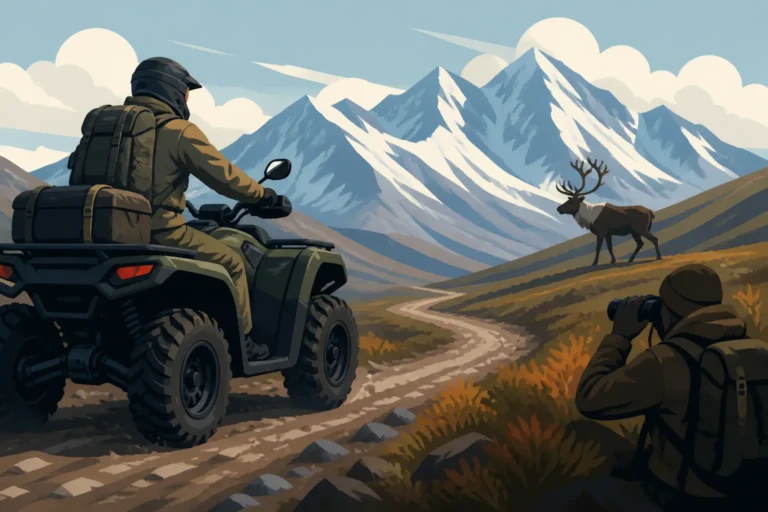
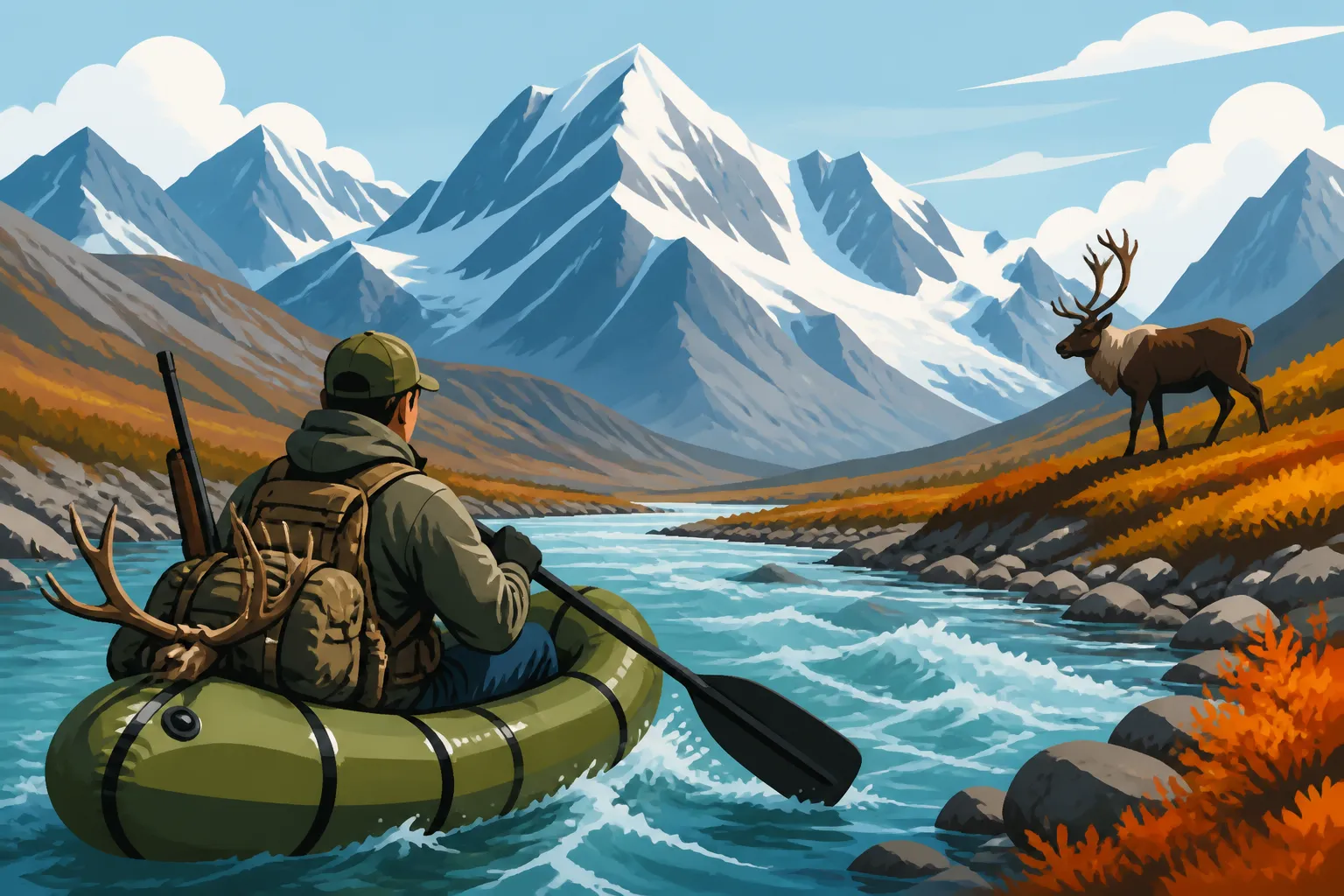
Imagine staring at a topo map or satellite imagery on your GoHunt app, tracing a winding river through miles of untouched wilderness, far from any established trails or landing strips. That's the allure of packrafting. It allows you to delve deep into drainages that are simply too brushy, boggy, or rugged for traditional backpacking alone, and too small or shallow for a larger raft or jet boat. You can be dropped off by a bush plane on an alpine lake or a small gravel bar, hike a few miles over a divide, inflate your raft, and float for days through prime habitat. This method drastically reduces competition and increases your chances of encountering unpressured game, particularly moose, caribou, and bears that rarely see human activity. The ability to cover significant distance quickly and quietly on water, only to pull ashore and hunt, means vast swaths of public land become accessible to the dedicated adventurer.
The Physical and Mental Demands
Let's be realistic: packraft hunting is not for the faint of heart or the out of shape. You're essentially combining an arduous backpacking trip with a multi-day paddling expedition, often through challenging whitewater or brush-choked sections where portaging is necessary. You'll be carrying your packraft, paddle, PFD, and all your hunting and camping gear on your back for miles, navigating uneven tundra, thick alders, and steep terrain. Once on the water, you'll need the stamina to paddle for hours, often against headwinds, and the mental fortitude to stay sharp while reading complex river features. Add in the inherent challenges of hunting in Alaska—severe weather, unpredictable wildlife encounters, and the immense task of field processing and hauling a large animal—and it's clear that this style of hunting demands peak physical condition and a resilient mindset. If you're looking for a comfortable hunt, packrafting might not be your first choice, but if you're seeking a profound wilderness experience earned through grit and determination, it might be exactly what you need.
Balancing Risk and Reward
Every Alaskan hunt involves risk, but packrafting introduces a unique set of variables. The remote nature of these trips means self-reliance is paramount; help is often days away. Cold water immersion, swiftwater hazards, and encounters with large predators are serious concerns. Gear failure can turn a minor inconvenience into a life-threatening situation. However, the rewards are equally profound. The sense of accomplishment that comes from successfully navigating a wild river, harvesting an animal in truly pristine country, and packing it out entirely under your own power is unparalleled. It's an opportunity for deep immersion in the Alaskan wilderness, offering solitude, spectacular scenery, and a truly authentic hunting experience. The chance to pursue game in areas where animals behave naturally, unmolested by constant human presence, often leads to more intimate and rewarding encounters, making the calculated risks worth the effort for many intrepid hunters.
Essential Packrafting Gear for Alaska Hunts
Preparing for a packraft hunt requires meticulous attention to gear. Every item must serve multiple purposes, be durable enough to withstand the Alaskan backcountry, and light enough to be carried. Your gear choices directly impact your safety, comfort, and success.
Your Packraft and Propulsion System
The heart of your packrafting setup is, of course, the packraft itself. Companies like Alpacka Raft, Kokopelli, and MRS are popular choices, offering a range of models from ultralight single-person boats to larger, cargo-capable two-person vessels. For hunting, especially if you anticipate hauling out a significant amount of meat, prioritize durability and cargo capacity over sheer minimalism. Look for features like internal tie-downs, cargo flies (internal storage systems), and robust fabric. Along with the raft, you'll need a reliable four-piece paddle that can be broken down for easy packing, a sturdy inflation bag or pump, and a comprehensive repair kit—patches, glue, and a valve wrench are non-negotiable.
Crucially, you'll need a dry bag system to keep all your essential gear, food, and clothing absolutely dry. Large, roll-top dry bags (100L+) for your main pack and smaller ones for electronics, sleeping bags, and extra layers are vital. Remember, even a small leak can quickly lead to hypothermia in Alaska's cold climate. Consider a dry suit or dry pants and top for challenging river sections or cold weather, as a submerged exit can happen to anyone. The goal is to be prepared for total immersion, even if you never intend for it to happen.
Personal Safety and Survival Gear
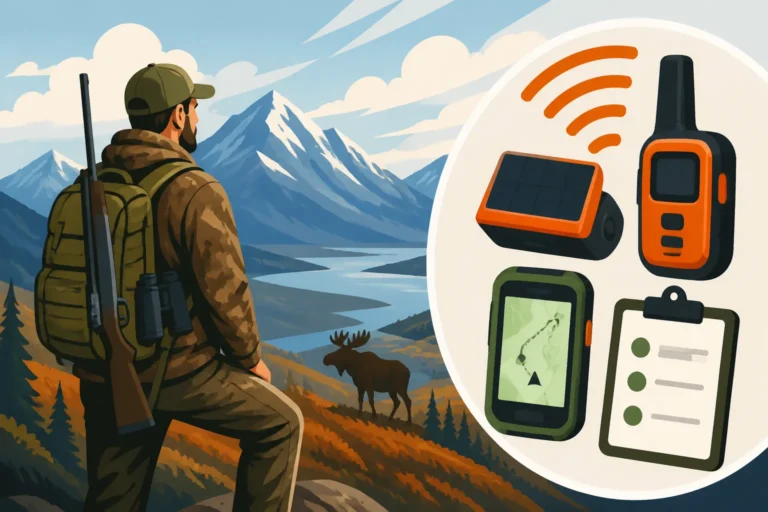
Beyond the raft, your personal safety gear is paramount. A properly fitting personal flotation device (PFD) is non-negotiable and should be worn at all times on the water. Invest in a high-quality one that allows for full range of motion while paddling and hiking. Communication devices are also critical for remote Alaska. A satellite messenger like an InReach or Zoleo allows you to send check-in messages, share your location, and trigger an SOS in an emergency. Remember to plan your Signal Devices and Check-In Plans for Solo Alaska Hunts well in advance. A robust first-aid kit, tailored for wilderness emergencies, is also essential, including any personal medications. Navigation tools, such as a GPS unit (with downloaded offline maps) and a traditional map and compass, provide redundancy if electronics fail. A headlamp with spare batteries, a fire starter, emergency shelter, and a water filter round out the basic survival kit. Consider a bear spray holster readily accessible at all times, both on land and in the boat, especially when Working a Kill Site in Grizzly Country.
Hunting and Camp Equipment Considerations
Your hunting gear needs to be just as streamlined and durable. A rifle or bow suited for the game you're pursuing, along with sufficient ammunition, packed securely in a waterproof case, is standard. Remember to protect optics from moisture and impacts. For camp, lightweight and packable options are key. A tent or tarp that can withstand strong winds and heavy rain is crucial for comfort and morale. A compact, efficient cooking system, freeze-dried meals supplemented by foraged berries or Waterfowl and Ptarmigan as Camp Meat, and a reliable water filter or purification tablets will keep you fed and hydrated. Don't forget game bags for meat, a bone saw, and a sharp knife for field dressing. For bear country, a portable electric Bear Fence Setup at a Meat Cache can provide peace of mind and protect your hard-earned harvest, especially when storing meat overnight near your camp. Every item should be carefully chosen for its weight, durability, and necessity, keeping in mind the need to pack it all in and, hopefully, pack out an animal.
Planning Your Packraft Hunt: Route Selection and Logistics
The success of any packraft hunt hinges on meticulous planning, especially when venturing into remote Alaskan drainages. This isn't a trip you just "wing"; it requires deep research, understanding of local regulations, and a solid logistical framework.
Researching Drainages and River Conditions
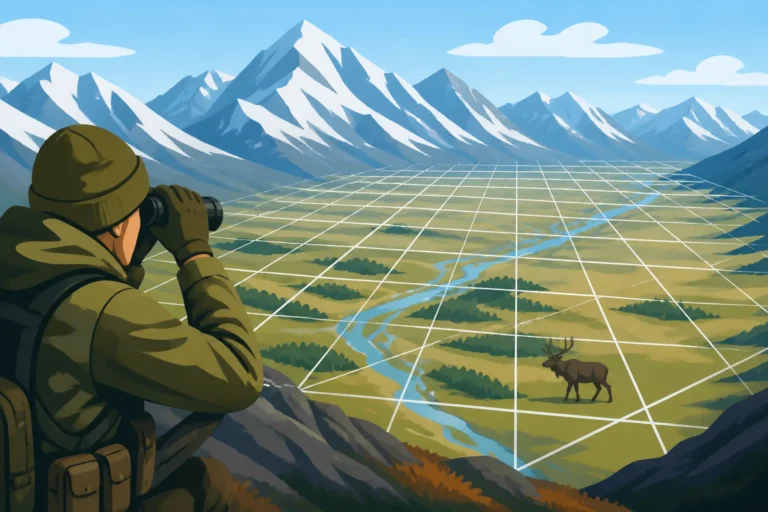
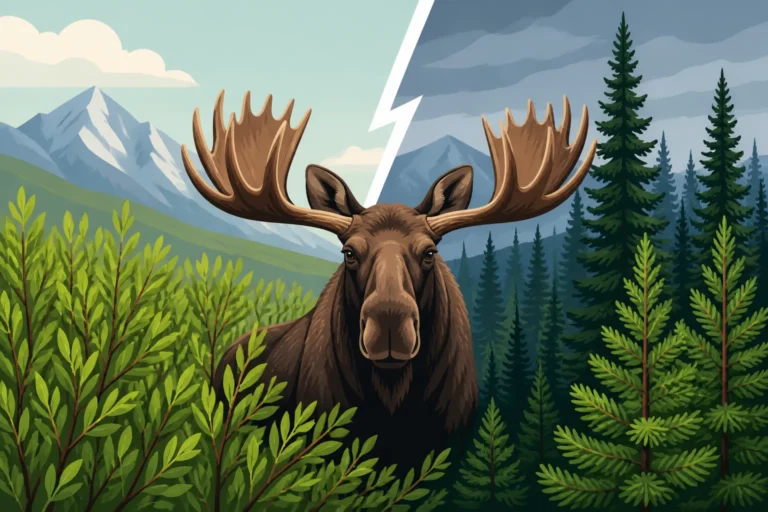
Choosing the right drainage is arguably the most critical step. Start by pouring over topographic maps and high-resolution satellite imagery on platforms like Google Earth or the GoHunt mapping system. Look for features that indicate good game habitat, such as willow flats for moose, open tundra for caribou, or salmon streams for bears. Pay close attention to the gradient of the river; too steep and you'll have dangerous whitewater, too flat and you'll be paddling endless miles of slack water. Identify potential put-in and take-out points—these could be gravel bars suitable for a bush plane landing, or accessible lakes.
Next, research historical water levels and seasonal flow rates. Rivers in Alaska can change dramatically based on rainfall, glacier melt, and snowpack. A river that’s a gentle float in late August might be a raging torrent in June or a barely moving trickle in September. Talk to air taxi operators, local residents, or Alaska Department of Fish and Game (ADF&G) biologists for their insights on specific rivers. Look for reports of Sweepers and Log Jams on a Hunting Float, which can be incredibly dangerous. Understanding these conditions is part of Scouting a Unit From Satellite Imagery Before You Fly, allowing you to identify potential portage routes or sections to avoid entirely. Always have a contingency plan for varying water levels, as they can significantly impact your float time and safety.
Permitting and Land Status Checks
Alaska's complex land ownership can be a minefield for the unprepared hunter. Before you even consider setting foot or paddle in a drainage, you must verify the land status. Alaska is a mosaic of state land, federal land (national parks, preserves, refuges), and Native Corporation lands. Each type has different regulations regarding access, hunting, and even camping. Some areas are entirely closed to hunting, others require specific permits, and Native Corporation lands almost always require a paid access permit.
Use online tools from the Bureau of Land Management (BLM), ADF&G, and various Native Corporations to pinpoint property lines. Don't assume that just because it's "wilderness" that it's open for public hunting. Failure to secure the correct permits or trespassing on private lands can lead to hefty fines, confiscation of game, and a ruined hunt. It's often beneficial to choose routes that primarily traverse state or federal preserve lands, as these typically have simpler access rules for hunting, though special refuge permits may still apply. Always carry copies of your licenses, tags, and any required land-use permits with you.
Developing a Comprehensive Float Plan
A detailed float plan is non-negotiable. This document should include your exact route, anticipated daily mileage, planned camping spots, a list of all group members, and estimated dates for put-in and take-out. Share this plan with a trusted contact who is not on the trip, and establish clear check-in times using your satellite communication device. If you're utilizing an air taxi for drop-off or pick-up, confirm all details with them, including weight limits, exact coordinates, and contingency plans for bad weather. For example, explicitly Setting a Take-Out Date With Your Pilot is crucial, but also discussing a "weather window" of a few extra days is wise, as bush flights are entirely weather-dependent.
Consider every "what if" scenario: What if someone gets injured? What if the river is unfloatable due to low water or too many log jams? What if you harvest an animal much larger than anticipated? Plan for emergency rations, an extra day or two of fuel, and the means to initiate a rescue. Even if you're hunting with a partner, having clear roles and responsibilities for emergencies is vital. Remember, the goal isn't just to complete the hunt, but to do so safely and responsibly, ensuring you and your partners return home with your memories (and hopefully meat!).
On the Water: Navigating Alaska's Rivers and Safety
Once you're on the river, the landscape shifts from theoretical planning to dynamic reality. Alaska's waterways present a unique set of challenges that demand constant vigilance and specific safety protocols.
Reading the River: Hazards and Techniques
Learning to read the river is an art that comes with experience, but some fundamental principles can keep you safe. Always scout unknown sections from shore if possible, especially before committing to any rapids. Look for "V" shapes in the water; those pointing downstream usually indicate a clear path, while "V"s pointing upstream often signal submerged rocks or obstacles. Pay extreme attention to hazards like Sweepers and Log Jams on a Hunting Float. These are trees that have fallen into the river and can trap your raft, leading to disastrous consequences. Avoid them at all costs, even if it means a difficult portage. Strainers, similar to log jams but often submerged, are equally dangerous as water can pass through, but your raft and body cannot.
Navigating also involves understanding eddies and currents. Use eddies to pull over and scout, rest, or wait for your partners. Master ferry angles to cross currents efficiently without losing too much downstream momentum. When paddling, stay focused and proactive, anticipating the river's movements rather than reacting to them. Always wear your PFD, and have an accessible knife to cut yourself free if you get tangled. The key is to be conservative; if a section looks questionable, it’s always safer to portage around it than to risk a capsize in cold, swift water.
Cold Water Immersion and Swiftwater Safety
Alaska's rivers are almost universally cold, even in summer. Cold water immersion is a deadly serious threat. Hypothermia can set in rapidly, impairing your judgment and physical abilities within minutes. Wearing a dry suit or at least dry pants and a dry top, especially in colder months or on more challenging rivers, can be a literal lifesaver. These garments prevent water from reaching your skin, buying you precious time if you capsize.
If you do find yourself in the water, the primary goals are to get out quickly, protect your airway, and control your breathing. If you can't immediately get back into your raft, try to swim to shore or a shallow spot. If you're being swept downstream and can't swim to safety, assume the "swimmer's position": feet downstream, on your back, eyes on the hazard, using your arms to steer. Never try to stand up in swift water, as your foot can get entrapped, leading to a deadly "foot entrapment" scenario. Practice self-rescue techniques before your trip, and ensure everyone in your party knows how to assist a capsized paddler and how to perform basic swiftwater rescue.
Wildlife Encounters and Bear Safety
Alaska is bear country, and rivers are natural travel corridors for all sorts of wildlife. Encountering bears—both black and brown—is a very real possibility while floating or camping along the banks. Always secure your food and anything with a scent in bear-resistant containers or hung from a tree well away from your camp. When you’re on the water, loud noises or singing can often alert animals to your presence and prevent a surprise encounter.
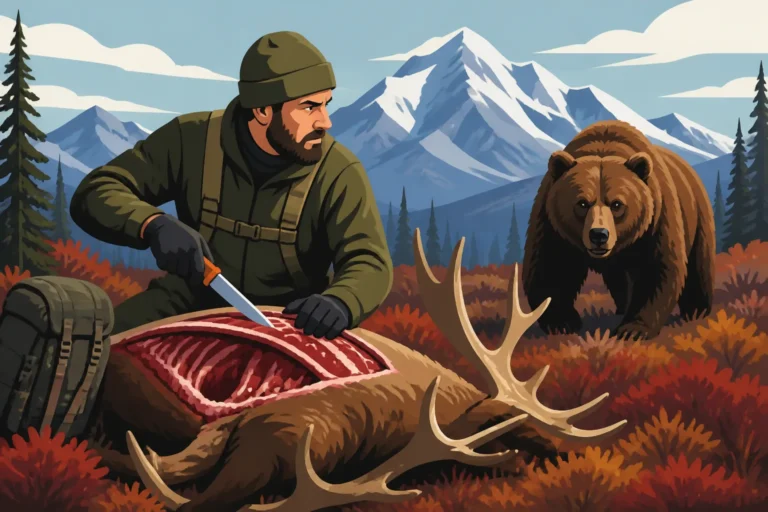
However, once you have an animal down, especially a moose or caribou, the risk significantly increases. The smell of fresh blood and gut piles can attract bears from miles away. This is why Working a Kill Site in Grizzly Country requires extreme vigilance. Have your rifle or bear spray immediately accessible, and never work alone. Consider setting up a perimeter with a portable electric Bear Fence Setup at a Meat Cache around your kill site or camp, even if it adds a bit of weight. Making noise, talking loudly, and frequently scanning your surroundings can help deter curious bears. Being prepared for a confrontation is not about being aggressive, but about having the tools and the mindset to protect yourself and your hard-earned meat.
Integrating the Hunt: Tactics for Packraft-Accessed Country
Packrafting isn't just a mode of transport; it's an integral part of your hunting strategy. How you move, where you camp, and how you manage your harvest are all influenced by the unique capabilities and limitations of your boat.
River-Edge Hunting and Upland Forays
The beauty of packrafting is the ability to hunt from the water's edge. Many animals, especially moose, frequent river bottoms, feeding on willows and aquatic vegetation. Floating silently downriver, you can often spot game before they spot you, giving you an advantage. Look for fresh tracks on gravel bars, browse lines in willows, or rub signs on trees. When you spot promising terrain, pull over, stash your raft, and make a stalk on foot. This allows for stealthy movement through dense riverine habitat that would be incredibly difficult to penetrate otherwise.
However, don't limit yourself to the riverbanks. The packraft provides access to drainages, but often the best hunting is found in the uplands, on benches, or in old burn scars further from the immediate river corridor. Plan for day hunts or even multi-day spike camps where you leave your raft secured and venture deep into the backcountry with a lighter pack. This approach maximizes your hunting opportunity while retaining the packraft as your primary extraction method. Remember to choose camp locations carefully; elevated, well-drained spots away from game trails are ideal for safety and comfort.
Managing Meat Loads and Packraft Capacity
This is where the rubber meets the road—or rather, the meat meets the raft. If you're successful, you'll need to transport a significant amount of meat and potentially a hide and antlers. A bull moose, for example, can yield 500-800 pounds of boned-out meat, plus a heavy rack. Understanding your Packraft Weight Versus Load Capacity is paramount. Most packrafts can handle a substantial load, but it's crucial not to overload them beyond their safe operating limits. This is especially true in moving water, where an overloaded boat becomes unstable and difficult to control.
Once you’ve successfully harvested an animal and completed field dressing, you'll need a systematic approach to Loading a Bull Moose Into a Raft or other game. Distribute the weight evenly, keeping the heaviest items low and centered. Secure everything tightly with internal tie-downs and external straps to prevent shifting during rapids or a capsize. You might need to make multiple trips on the river, or cache meat and return for it, if your harvest exceeds your boat's capacity or the river conditions dictate lighter loads. Always use high-quality game bags that allow the meat to cool and breathe, especially when practicing Meat Care in 50-Degree September Weather. The logistical challenge of meat retrieval is often greater than the hunt itself, and packrafts provide a vital solution to this remote conundrum.
Multi-Species Potential
One of the great advantages of packrafting is the ability to pursue multiple species on a single trip. While moose might be the primary target for many packrafters, the river corridors often provide excellent opportunities for others. Caribou frequently migrate across river systems, and finding them can turn an ordinary moose float into a combo hunt. Black bears and even brown bears are common along riverbanks, attracted to berries, fish, and new growth. Having a valid tag and being prepared for these opportunities can add an exciting dimension to your trip.
Furthermore, don't overlook small game. Waterfowl and Ptarmigan as Camp Meat can supplement your provisions, adding fresh protein and variety to your freeze-dried meals. A shotgun (if regulations allow) or even a .22 pistol can turn an otherwise slow day into a productive foraging expedition. Remember to check regulations for bag limits and seasons for all species you intend to hunt, as they can vary widely by Game Management Unit and by specific river drainage. The more flexible and prepared you are, the more diverse and successful your packraft hunting experience can be.
Post-Hunt: Recovery and Meat Care After the Float
Bringing an animal out of the Alaskan wilderness is often the hardest part of the hunt. With a packraft, you've solved the initial access and in-field movement, but the final extraction and care of your trophy and meat still require careful planning.
Coordinating Your Take-Out
The take-out is just as critical as the put-in. If you're using an air taxi, you've likely established a pickup point and a window of days. Ensure your chosen Gravel Bars That Work as Landing Strips are clear of debris and large enough for the specific aircraft your transporter uses. Communicate with your pilot as your ETA approaches, especially if river conditions or hunting success have altered your schedule. Remember, bush pilots operate on weather windows and often have multiple clients to pick up. Be prepared for delays.
Have all your gear and meat organized and ready to load as soon as the plane arrives. The faster you can load, the more efficient the process, and the less time the pilot has to spend idling, which can be expensive. If you have an exceptionally large amount of gear or meat, discuss beforehand with your air taxi operator the possibility of Splitting Gear Across Two Air Taxi Loads. This might incur additional costs but is often necessary to avoid overloading the aircraft and ensures safe transport of all your hard-earned goods. Confirming all details about your pick-up, including potential second loads, when Setting a Take-Out Date With Your Pilot is a sign of good planning and respect for your transporter's time.
Efficient Meat Handling in Remote Camps
The moment you down an animal, the clock starts ticking, especially in warmer weather. Quick and efficient field dressing is paramount to preserve the quality of the meat. In the field, practice boning out the meat to reduce weight for transport. Techniques like Quartering a Bull Moose Alone in the Field are essential skills to master before your trip, allowing you to handle large animals effectively. Remove all hide, bone, and foreign material, and place the meat in breathable game bags.
Cooling the meat rapidly is the next critical step. Hang meat in shaded, breezy areas, off the ground, and away from direct sunlight. If temperatures are above 40-50°F, consider building a meat cache in a cold stream if one is available and accessible. Ensure the meat doesn't get wet in game bags if it's raining continuously, as this can promote bacterial growth. Meat Care in 50-Degree September Weather is a serious concern, and proper air circulation and protection from insects (using bug-proof game bags) are vital. Continuously monitor the meat for spoilage, and if any section appears compromised, it's better to cut it out than risk contaminating the entire harvest.
Packing It All Out
Once your meat and gear are loaded onto the plane, the next logistical hurdle is often getting it from the air taxi base to your final destination. Have coolers ready at the air taxi office to transfer your meat immediately. Many air taxi operators have agreements with local meat processors who can cut, wrap, and freeze your game for shipping. Alternatively, if you're driving, have enough cooler space and ice to keep the meat chilled for the journey home.
For larger trophies like moose antlers, special arrangements might be needed. Some airlines have size restrictions, and you might need to coordinate with a taxidermist or freight company directly from Alaska. Ensure all hides are properly fleshed, salted, and dried for transport to prevent hair slippage. If you've hunted species requiring sealing (like bears or wolves), ensure you meet all Alaska Department of Fish and Game requirements before leaving the state. The final leg of the journey, from remote Alaska to your freezer and trophy room, is just as important as every paddle stroke and stalk, ensuring the ultimate success of your hard-earned packraft hunt.
Disclaimer
Hunting in Alaska is an inherently dangerous activity. The information provided in this guide is for informational purposes only and is not a substitute for extensive training, experience, proper gear, or professional guidance. Always prioritize safety, adhere to all local, state, and federal regulations, and be prepared for unforeseen circumstances.