Bear Safety Protocols in Alaska Guided Camps
Venturing into Alaska's vast wilderness for a hunt often brings with it an undeniable thrill, but for many, it also stirs a deep-seated anxiety: the omnipresent threat of bears. You've heard the stories, seen the videos, and maybe even had a close call elsewhere. The thought of being deep in the Alaskan bush, miles from civilization, sharing the landscape with powerful predators, is a serious concern. This guide will walk you through the essential bear safety protocols you can expect, and contribute to, within a professionally guided camp, offering peace of mind and practical advice for navigating Alaska's bear country.
The Realities of Bears in Alaska's Backcountry Camps
Alaska is truly bear country, home to all three North American bear species: black bears, brown bears (which include grizzlies), and polar bears. While polar bears are generally restricted to the far northern coastlines and ice packs, black bears and brown bears are found throughout the rest of the state, often in significant numbers. Understanding the distinctions between these magnificent animals, and their typical behaviors, is the first step toward effective bear safety.
Understanding Alaska's Bear Species and Their Habits
Brown bears, often called grizzlies in interior Alaska, are formidable creatures. Coastal brown bears, like those found on the Alaska Peninsula or Kodiak Island, can be massive, growing to incredible sizes due to abundant salmon resources. Interior grizzlies, while typically smaller, are no less dangerous and are incredibly intelligent. They are often less tolerant of human presence than their coastal cousins, who might be more habituated to seeing people from a distance, particularly near salmon streams. Both are highly opportunistic and possess an incredible sense of smell, making food storage and camp hygiene paramount. You'll find them active from spring emergence to late fall denning, their behavior largely dictated by food availability and mating seasons. For more on these incredible animals, consider reading Interior Grizzly Behavior Versus Coastal Brown Bears.
Black bears, while generally smaller and less aggressive than brown bears, are still wild animals and demand respect. They are incredibly curious and can quickly become a nuisance if they associate humans with food. They are excellent climbers and can be found almost anywhere there's cover and food, from dense coastal rainforests to interior spruce forests. Don't let their smaller stature fool you; a defensive black bear can inflict serious injury. Their diets are incredibly varied, ranging from berries and roots to small mammals and carrion.
Common Misconceptions About Bear Encounters
It's easy to get caught up in Hollywood depictions of enraged bears, but the reality is often different. Most bear encounters are not predatory attacks, but rather defensive reactions or curiosity-driven investigations. Bears are generally trying to avoid you as much as you are trying to avoid them. Problems arise when bears are surprised, feel threatened (especially a sow with cubs), or become habituated to human food sources. The key is to prevent these scenarios from escalating. A common misconception is that a bear making noise or standing on its hind legs is an attack imminent; often, it's a sign of curiosity or an attempt to get a better look, not aggression. Your guide will be invaluable in interpreting these nuanced behaviors.
Another misconception is that all bears are food-conditioned. While some bears in high-traffic areas might have learned to associate humans with food, the vast majority of bears in remote Alaskan wilderness are wild and wary. Our goal in a guided camp is to keep them that way, reinforcing their natural fear of humans through strict protocols.
Proactive Camp Design and Management for Bear Safety
In a guided Alaska hunting camp, bear safety isn't just an afterthought; it's woven into the very fabric of camp setup and daily routines. Your guide, with years of experience in the bush, understands that prevention is always the best defense. These protocols are designed to minimize attractants and deter curious bears before they become a problem.
Strategic Camp Layout and Site Selection
When your guide selects a camp location, bear safety is a primary consideration. Camps are rarely set up directly on game trails or dense brush where a bear might be surprised. Instead, they'll look for sites with good visibility, allowing for early detection of approaching animals. Often, the cook tent or eating area will be strategically placed downwind and a good distance from sleeping quarters. This creates a "triangle" of safety, ensuring that cooking smells are carried away from where you sleep.
Furthermore, elevation and natural barriers can play a role. A camp on a slight rise offers a better vantage point, and sometimes, a natural creek or open area can provide a buffer. In some areas, guides might even utilize temporary electric fences, particularly around meat caches or where bear activity is known to be high. These aren't meant to be impenetrable fortresses but rather a deterrent, delivering a memorable jolt that encourages bears to seek easier meals elsewhere. Bear Fence Setup at a Meat Cache discusses some of these considerations in more detail.
Meticulous Food Storage and Waste Management
This is arguably the most critical aspect of bear safety in any camp. Your guide will enforce stringent rules regarding food storage. All food, no matter how small or seemingly innocuous, will be stored in designated bear-resistant containers, hung from trees, or placed in sturdy, hard-sided containers far from sleeping areas. This includes not just your rations but also personal items with strong scents like toothpaste, deodorant, and even chapstick.
Here's a breakdown of typical food and waste management protocols:
| Item Type | Storage Protocol | Location |
|---|---|---|
| All Food | Bear-resistant containers (hard-sided, hung bags) | At least 100 yards from sleeping areas, downwind |
| Cooking Gear | Cleaned thoroughly, stored with food | With food containers |
| Scented Personal Items | Ziploc bags, then bear-resistant container or hung bag | With food containers (or separate, secure scent-proof bag) |
| All Waste/Trash | Packed out completely, or burned if allowed and safe | Stored with food, often in separate, sealed container |
| Fish/Game Scraps | Packed out, deeply buried away from camp, or deposited in strong currents | Well away from camp and travel routes |
Think of every crumb, every food wrapper, every drop of coffee as a potential attractant. A guide's camp is a "leave no trace" environment taken to the extreme when it comes to scents. Even burning trash is approached with caution; while it eliminates some odor, the lingering smell of burnt food can sometimes be an attractant itself, and it's often not allowed in federal wilderness areas. The best practice is almost always to pack out everything.
Guide's Role in Continuous Vigilance and Education
Your guide is the primary bear safety officer in camp. They are constantly scanning the surroundings, checking for fresh tracks, scat, or other signs of bear activity. Before you even set foot in the field, they'll provide a thorough orientation on bear safety, reiterating camp rules, showing you how to deploy bear spray, and discussing what to do in various encounter scenarios. They'll also ensure you understand Alaska's Same-Day-Airborne Rule and What It Bans, which can impact how and where you hunt, thereby influencing how you interact with game and potentially bears.
Throughout the hunt, your guide will serve as your eyes and ears for bear activity, especially when glassing. They'll point out likely bear travel corridors and teach you how to read the landscape for signs. Their experience in interpreting bear behavior is invaluable. For example, a bear that casually ambles away might just be moving on, while one that keeps its head down, occasionally looking back, might be more curious or possessive of something in the area. This constant vigilance is why booking with a reputable guide, sometimes found through platforms like BookYourHunt which allow you to see past client reviews, is so important.
Personal Readiness: Your Role in Bear Safety
While your guide is the expert, bear safety is a team effort. As a hunter, you have a crucial role to play in staying safe. This means being prepared, understanding your equipment, and consistently adhering to established protocols. Your personal actions can make all the difference in preventing an incident.
Carrying and Knowing How to Use Bear Deterrents
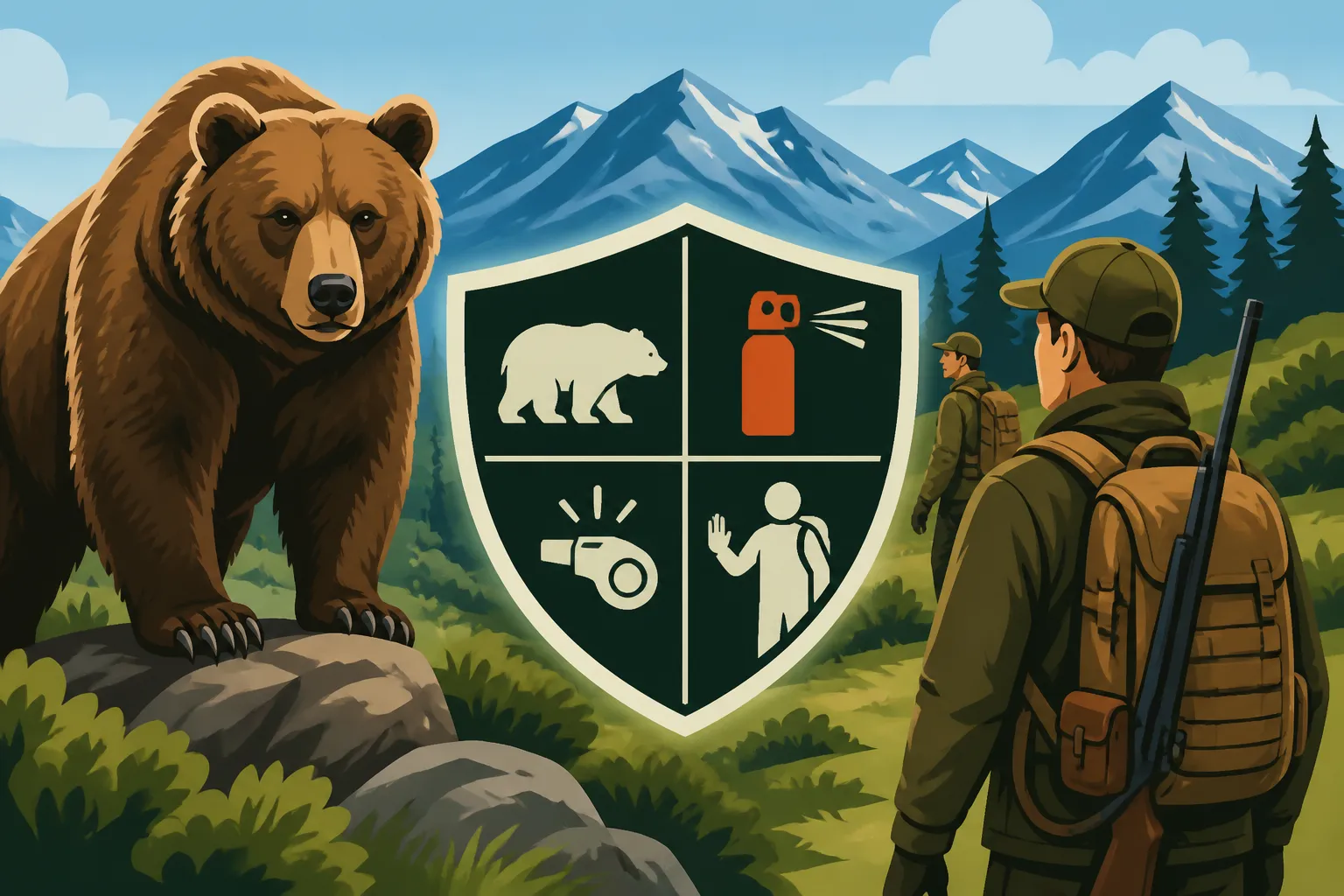
Every hunter in bear country should carry an effective bear deterrent, and for most, this means bear spray. Your guide will ensure you have it readily accessible – typically in a chest holster – and that you know how to deploy it quickly and effectively. Bear spray is a highly effective deterrent when used correctly, creating a cloud of capsaicin that irritates a bear's eyes and respiratory system, giving you time to retreat. Remember, it's a defensive tool, not a weapon, and its effectiveness relies on proper deployment at close range.
It's also essential to understand the limitations of bear spray, particularly in strong winds or rain. Many hunters also carry a firearm, and while a rifle can be a last resort, the primary goal is always to deter, not to kill. If you're considering a firearm for defense, discuss this with your guide beforehand. They can advise on appropriate calibers and ensure you're proficient with your weapon. You can learn more about this in Bear Spray Versus Rifle at Close Range.
Situational Awareness in the Field
Being aware of your surroundings is paramount. This means more than just looking for game; it means actively looking for signs of bears, listening for unusual sounds, and paying attention to wind direction. When moving through dense brush or areas with limited visibility, make noise. Call out "Hey bear!" or talk loudly to your hunting partner. This gives bears a chance to hear you and avoid you, preventing surprise encounters.
When traveling, avoid obvious bear sign like fresh tracks, scat, or recent kills. If you stumble upon a carcass, back away immediately and give the area a wide berth. These are often defended aggressively by bears. Your guide will always be leading the way, interpreting the landscape and ensuring you move safely through potential bear hotspots. Tools like GoHunt might help you plan your general hunting area, but once in the field, your guide's knowledge of local bear activity is critical.
The Importance of a Clean Personal Space
Just as camp areas need to be spotless, your personal tent and gear must be free of attractants. Never bring food into your tent, not even a candy bar wrapper. Store all scented items (chapstick, toothpaste, lotion, medications) with the main camp food cache or in a designated, scent-proof bag outside your tent. Change out of your hunting clothes before sleeping, especially if you've been handling game or are covered in animal scents. Hang these clothes away from your tent if possible. Bears have an incredible sense of smell, and even a faint whiff of something interesting can draw them in. Imagine a grizzly sniffing out a half-eaten power bar you forgot in your sleeping bag – it’s not a situation anyone wants.
Responding to Bear Encounters: Protocols in Action
Despite the best preventative measures, encounters can happen in Alaska. The crucial element is knowing how to react. Your guide's experience will be key, but understanding general protocols can help you remain calm and act decisively.
Encountering a Bear at a Distance
If you spot a bear at a distance and it hasn't noticed you, the best strategy is often to simply avoid it. Change your travel route, give it a wide berth, and move slowly and quietly away. If the bear does notice you but shows no interest, continue to observe its behavior while slowly backing away. Do not run, as this can trigger a chase response.
If the bear seems interested or begins to approach, make your presence known. Speak in a calm, firm voice, wave your arms, and make yourself look as large as possible. Slowly back away, keeping an eye on the bear. Your guide will be communicating with the bear, trying to assess its intent and encourage it to move off. This is where the guide's deep understanding of Brown Bear Versus Grizzly: The Same Animal and their specific behaviors becomes critical.
Close-Range Encounters and Defensive Behavior
A close-range encounter is where things can get intense, especially if a bear feels threatened. Your guide will quickly assess the situation. If a bear approaches closely, vocalizes, or makes bluff charges, it's likely a defensive posture. This is often a sow protecting cubs or a bear defending a food source, like a recent kill. In these scenarios, the goal is to convince the bear that you are not a threat and to give it space.
Your guide will instruct you to stand your ground, continue to talk calmly, and prepare your bear spray. If the bear makes contact, or an actual charge, you may be instructed to deploy bear spray or, in an absolute last resort, defend yourself with a firearm. This is a moment of critical decision-making, and your guide's leadership is paramount. They might even shout instructions like "Don't run!" or "Spray now!" The goal is always to deter the bear and survive the encounter.
What to Do After a Bear Encounter
Even if an encounter ends without incident, it's a serious event. Your guide will likely move the camp or adjust hunting plans to avoid the area where the bear was encountered. It's important to report any significant bear encounters to the Alaska Department of Fish and Game, as this information helps biologists manage bear populations and inform public safety.
Afterward, it's completely normal to feel shaken. Take some time to process what happened. Talk with your guide and hunting partners. Understanding that you followed protocols, and that the bear acted naturally, can help in regaining your composure. This experience, while stressful, is a stark reminder of the wild nature of Alaska and the importance of preparedness. And if, heaven forbid, you have just completed Bear Safety While Butchering a Kill in Alaska when an encounter happens, the adrenaline will be even higher.
Bear safety in Alaska is a holistic approach, blending preventative measures, situational awareness, and clear protocols for encounters. By understanding the bears, respecting their domain, and trusting your guide's expertise, you can navigate the wilds of Alaska more confidently, allowing you to fully appreciate the incredible hunting experience that awaits.
Disclaimer
This article is for general informational purposes only and does not constitute professional advice. Laws, prices and regulations vary by location and change over time. Consult a qualified professional for guidance on your specific situation.