Upper Tanana Hunting in Unit 12
Hunting in Alaska's vast interior is often a dream for many, but the reality of understanding specific Game Management Units (GMUs) can be daunting, like trying to navigate a braided river in the dark. You might be looking at a map of Unit 12, the Upper Tanana region, and feeling overwhelmed by its sheer size and apparent remoteness. This guide aims to demystify hunting in Unit 12, providing you with a clear picture of its unique challenges, diverse opportunities, and the practical steps you need to take for a successful and respectful expedition.
Understanding Alaska Game Management Unit 12
Alaska's Unit 12, often referred to as the Upper Tanana, is a sprawling and wild expanse in the interior of the state, bordering the Yukon Territory of Canada. It's a land of immense beauty and equally immense challenges for hunters. This isn't a place you casually decide to hunt on a whim; it demands meticulous planning, robust gear, and a deep understanding of its unique environment. Many hunters are drawn to Unit 12 for its reputation as a big game haven, but its remoteness means fewer boots on the ground compared to some road-accessible areas, offering a truly wild experience for those prepared.
Geographical Breakdown and Key Features
Unit 12 is defined by a network of major rivers and several prominent mountain ranges. The mighty Tanana River courses through its northern reaches, while the Nabesna, Chisana, and White Rivers cut through its southern and eastern portions. These rivers are not just geographical features; they are the lifelines of the unit, serving as crucial corridors for wildlife and, in many cases, the primary means of access for hunters. Imagine floating silently down the Chisana, listening for the splash of a moose in the willows—that's the essence of hunting here.
To the south, the unit abuts the formidable Wrangell-St. Elias National Park and Preserve, with the Nutzotin Mountains and Mentasta Mountains forming rugged, high-elevation landscapes perfect for mountain species. While much of the Wrangell-St. Elias is national park where hunting is typically restricted, the Preserve lands often allow for it, creating diverse habitat and access considerations. Understanding the nuances of land ownership, which can be easily visualized using digital mapping tools like onX Hunt, is absolutely critical. The towns of Tok, Slana, and Mentasta Lake dot the perimeter, serving as crucial staging points for hunts, offering last-minute supplies, fuel, and air taxi services before you disappear into the wild. For more on navigating these complex areas, consider Wrangell-St. Elias Preserve Versus Park Lands.
General Habitat and Species Distribution
The habitat diversity within Unit 12 is astounding, ranging from dense boreal forests of spruce and birch in the lowlands to vast, open willow thickets along river systems, and finally, ascending to the windswept alpine tundra of the mountain peaks. Each of these zones supports a different array of game animals. The river bottoms and low-lying areas, rich with browse, are prime moose country, particularly in the vast willow flats. As you move into higher elevations, the timber thins, giving way to open ridges and alpine bowls that are home to Dall sheep and often serve as migration routes for caribou.
Black bears are common throughout the forested areas, especially where berries are abundant, while their larger cousins, the brown bears (often called grizzlies in the interior), roam both the timbered river valleys and the higher elevations. Wolves and wolverines also inhabit this wild landscape, often following the movements of their prey. Hunters here have the potential to pursue several big game species, often requiring different tactics for each, sometimes even within the same hunt if conditions allow.
Species-Specific Hunting Opportunities in Unit 12
Unit 12 offers a truly Alaskan grand slam potential, with opportunities for moose, caribou, Dall sheep, and both black and brown bears. However, pursuing each species effectively requires specific knowledge and strategies tailored to their behavior and preferred habitats within this vast unit.
Moose Hunting in the Upper Tanana
Moose are a prominent feature of Unit 12, especially in the fertile river drainages and low-lying areas. Look for them in the dense willow and alder thickets that line the Tanana, Nabesna, and Chisana Rivers. These riparian zones provide both abundant forage and cover. Burn areas from past wildfires are also excellent places to find moose, as new growth provides highly nutritious browse. The success of a moose hunt in Unit 12 often hinges on accessing these remote, roadless areas.
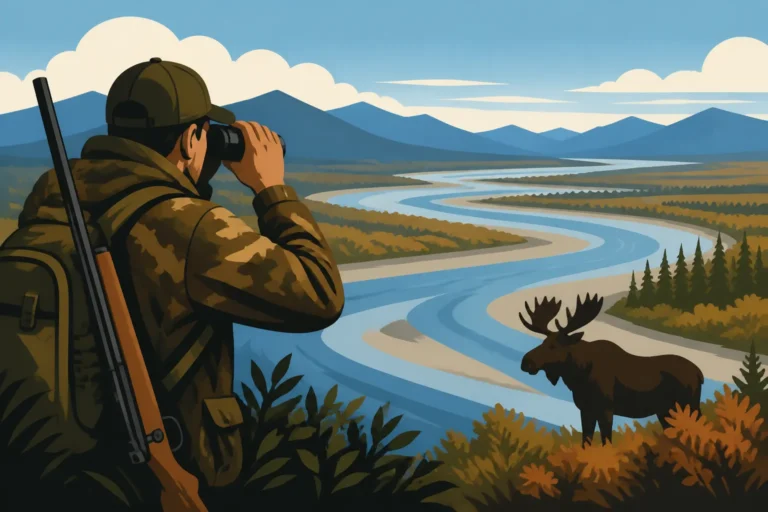
Many hunters opt for Float Hunting Alaska Rivers for Moose and Caribou, using rafts or small boats to navigate rivers like the Chisana or the upper Tanana. This method allows you to cover significant ground, access prime habitat that would be impossible to reach on foot, and most importantly, provides a means to get a several-hundred-pound moose carcass back to a pickup point. Calling moose can be highly effective here, especially during the rut. Imagine the thrill of hearing a bull respond to your calls, its grunts echoing across the vast wilderness. Tactics like those described in Calling Bull Moose During the Alaska Rut can significantly increase your odds. Always double-check current regulations for antler restrictions, which can vary by specific area within the unit and from year to year; these rules dictate legal bull criteria, often based on spread or brow tine count.
Caribou Hunting Strategies
Unit 12 is within the general range of the famous Fortymile Caribou Herd, and occasionally other smaller, more localized herds like the Mentasta Caribou might be present. Caribou hunting here is largely dictated by the herd's migratory movements, which can be unpredictable. These animals are constantly on the move, searching for forage and escaping predators. Scouting before your hunt, often using satellite imagery and historical migration data, is paramount. Tools like GoHunt can provide valuable insights into past herd movements, helping you predict potential routes.
Accessing caribou often involves fly-in camps or long treks into the alpine tundra where they prefer to graze. Unlike moose, which are tied to specific habitats, caribou can be anywhere across their vast range. You might find them on high, open ridges one day and in scattered timber the next. Understanding Caribou Herds of Alaska and How They Move and specifically Fortymile Caribou Herd Range and Migration will give you a significant advantage. The challenge lies not just in finding them, but also in being in the right place at the right time. Prepare for rugged terrain and potentially rapidly changing weather conditions if you are pursuing caribou, as their movements will take you wherever their instincts lead.
Dall Sheep and Bear Hunting
For many, Dall sheep represent the pinnacle of an Alaskan mountain hunt, and Unit 12 offers opportunities in its high, rugged mountains, particularly in the Nutzotin and Mentasta ranges. These hunts are physically demanding, requiring exceptional stamina, surefootedness, and comfort in steep, unforgiving terrain. Glassing is your most important tool, spending hours scanning distant slopes for the tell-tale white specks of sheep against the rock. Learning how to effectively Glassing the Alaska Range: Finding Game Before You Move is critical. Sheep hunts often involve spike camps high in the mountains, meaning every ounce of gear counts, a topic well-covered in Backpack Hunting in Alaska: Gear Weight and Meat Loads. For an overview of where these magnificent animals live, see Dall Sheep in Alaska's Brooks and Alaska Ranges.
Bear hunting is another major draw. Black bears are widespread in the timbered areas, especially in spring when they emerge from dens, often feeding on new growth on south-facing slopes, or in fall when they feast on berries. Brown bears (grizzlies), while less numerous than black bears, are also found throughout the unit, from river valleys to high country. These are powerful animals, and encountering them, especially at a kill site, requires extreme caution and preparedness. Understanding the differences and behaviors outlined in Alaska Brown Bears on the Coast Versus Interior Grizzlies is vital. Always be bear aware, carry appropriate deterrents like bear spray or a powerful firearm, and understand Bear Safety While Butchering a Kill in Alaska.
Accessing and Navigating Unit 12
Getting into and moving around Unit 12 is often the biggest hurdle for hunters. This isn't a road-system hunt for the most part; it's true Alaska wilderness, requiring a blend of bush planes, river navigation, and good old-fashioned foot power.
Road System and Airstrip Access
While limited, there are a few key roads that provide a launching point for Unit 12 adventures. The Alaska Highway runs along the northern edge of the unit, connecting to Tok. From Tok, the Tok Cutoff heads south, providing access points along its length, and the Nabesna Road extends into the western part of the unit, though it offers only very limited access to hunting grounds directly. Beyond these main arteries, direct road system access into prime hunting areas is scarce.
This scarcity means that most serious Unit 12 hunts rely heavily on bush planes. Both wheel planes, which can land on gravel bars and short, unimproved strips, and float planes, which land on the many lakes and wide rivers, are essential. Working with an experienced air taxi operator is paramount. They know the safe landing zones, local weather patterns, and often have invaluable insight into game movements. For more on this crucial aspect, check out Fly-In Hunting: Working With an Alaska Transporter Pilot. Identifying suitable landing spots for wheel planes on rivers often means scanning for Gravel Bar Landings for Wheel Planes in Alaska. This is where digital mapping tools like onX Hunt or GoHunt become indispensable. You can overlay aerial imagery to scout potential landing strips, identify historical cabin sites, and mark out your planned hunting zones long before you ever set foot in Alaska. These tools also feature public and private land ownership layers, crucial for avoiding trespassing.
River and Trail Systems
For moose and often for caribou, floating one of Unit 12's many rivers is a fantastic way to access remote country. Rivers like the Nabesna, Chisana, and parts of the Tanana itself are candidates for float hunting. However, these are wild rivers, often braided, shallow in spots, and prone to swift currents and log jams (known as sweepers). A thorough understanding of river navigation and selecting the right craft, whether it's a sturdy raft or a packraft, is essential. Guidance on Choosing a Float Hunt River by Water Level and Length is invaluable for planning.
Beyond river access, a network of historic trails, often remnants of old mining or trapping routes, can provide access for ATV use (where permitted) or foot travel. However, these trails are frequently overgrown, muddy, and sometimes disappear altogether. Always verify ATV regulations for specific areas, as restrictions are common, especially on federal lands. Many hunters will pack in on foot for days, establishing spike camps. Using detailed topographical maps, combined with GPS and tools like GoHunt, is vital for route finding, particularly when you're far from any discernible trail.
Permitting, Seasons, and Regulations
Hunting in Unit 12, like all of Alaska, requires a firm grasp of the state's hunting regulations. Many of the coveted species in this unit, such as Dall sheep and certain moose and caribou hunts, are managed through draw permits or registration permits. Draw permits are highly competitive and must be applied for months in advance, typically during the November 1 to December 15 application window. Registration permits are often first-come, first-served and may close on quota without much notice, so vigilance is key once the season starts. For more detailed information, see Alaska Harvest Tickets, Registration Permits and Draw Permits.
Even general season hunts require you to understand bag limits, legal animal definitions (like antler restrictions for moose or full-curl rules for sheep), and reporting requirements. Every hunter needs a valid hunting license and the appropriate locking tags for species like moose, caribou, sheep, and bear. Don't underestimate the complexity; always consult the current Alaska Hunting Regulations booklet well before your hunt. This guide is just a starting point; the official regulations are your bible. A broader overview can be found in Alaska Hunting Seasons and Tag Rules Explained.
Planning Your Unit 12 Expedition
A successful Unit 12 hunt isn't just about finding game; it's about meticulous preparation, physical readiness, and a deep respect for the Alaskan wilderness and its regulations. This is big country, and it will test your limits.
Essential Gear and Logistics
Your gear is your lifeline in Unit 12. For remote, fly-in or backpack hunts, every item must be chosen for its durability, functionality, and weight. Consider the severe weather swings that can occur, from warm, sunny days to freezing rain or snow, even in August or September. High-quality raingear, reliable layered clothing, and robust footwear are non-negotiable. For a deeper dive into managing your pack, refer to Backpack Hunting in Alaska: Gear Weight and Meat Loads.
Beyond personal gear, you need to think about camp logistics. If you're flying in, what type of tent, stove, and sleeping system will stand up to the elements? How will you keep your meat cool and protected from bears? Hanging Meat in Warm September Weather and using game bags that breathe are critical. For communication, a satellite messenger (like an inReach or Zoleo) is essential for daily check-ins and emergency contact, as cell service is non-existent. A robust first-aid kit, bear spray, and a powerful rifle with ample ammunition are also vital components of your loadout.
Physical Preparation and Safety
The terrain in Unit 12, especially in the sheep and mountain caribou country, is relentless. Steep climbs, uneven tundra, river crossings, and dense brush demand peak physical condition. Don't underestimate the physical toll of packing out a moose or a Dall ram across miles of trackless wilderness. Start a rigorous training regimen months before your hunt. This includes not just cardio, but also strength training, especially for your core and legs, mimicking the loads you'll carry.
Safety in bear country is paramount. Unit 12 is home to both black and brown bears, and encounters are a real possibility, particularly around kill sites or dense berry patches. Always hunt with a partner if possible, make noise while traveling, and have a clear plan for bear defense. Navigation skills are non-negotiable. Without cell service, you'll rely on a GPS unit, a compass, and a detailed map (both paper and digital on a device with offline capabilities, like your onX Hunt app). Learning Alpine Navigation Without Cell Service is a skill that could save your life. Before leaving, leave a detailed trip plan with a trusted contact and establish Signal Devices and Check-In Plans for Solo Alaska Hunts.
Land Status and Respectful Hunting
Alaska's land ownership is a complex patchwork of state, federal, and Native Corporation lands. It is absolutely critical to know precisely what land you are on at all times. Federal lands, such as those managed by the Bureau of Land Management (BLM) or within National Preserves, generally allow hunting, but specific regulations can vary. State lands are largely open, but Native Corporation lands almost always require specific access permits, which can be costly and must be arranged well in advance. Understanding Land Status in Alaska: State, Federal and Native Corporation is a must-do before your boots hit the ground. Digital mapping applications, particularly onX Hunt, offer detailed land ownership layers that can prevent costly mistakes.
Always practice Leave No Trace principles. Pack out everything you pack in, including all garbage. Treat the land with respect, harvest your animals ethically, and follow all regulations to the letter. This ensures the wild character of Unit 12 remains intact for future generations of hunters and wildlife alike.
| Species | Typical Habitat | Primary Access Method | Key Hunting Challenge |
|---|---|---|---|
| Moose | River bottoms, willow flats, burn areas | Float hunting, air taxi | Packing out meat, dense cover, unpredictable weather |
| Caribou | Alpine tundra, open ridges, migratory routes | Air taxi, long treks | Unpredictable migration, covering vast distances |
| Dall Sheep | High, rugged mountains, rocky slopes | Air taxi, extreme backpack | Physical demands, steep terrain, spotting game |
| Brown Bear | River valleys, alpine, berry patches | Air taxi | Bear safety, tracking, dense cover, size judging |
| Black Bear | Forested areas, berry patches | Road system (limited), air taxi | Dense cover, stalking, judging size |
Disclaimer
This article is for general informational purposes only and does not constitute professional advice. Laws, prices and regulations vary by location and change over time. Consult a qualified professional for guidance on your specific situation.