ATV Access to Unit 13 Caribou
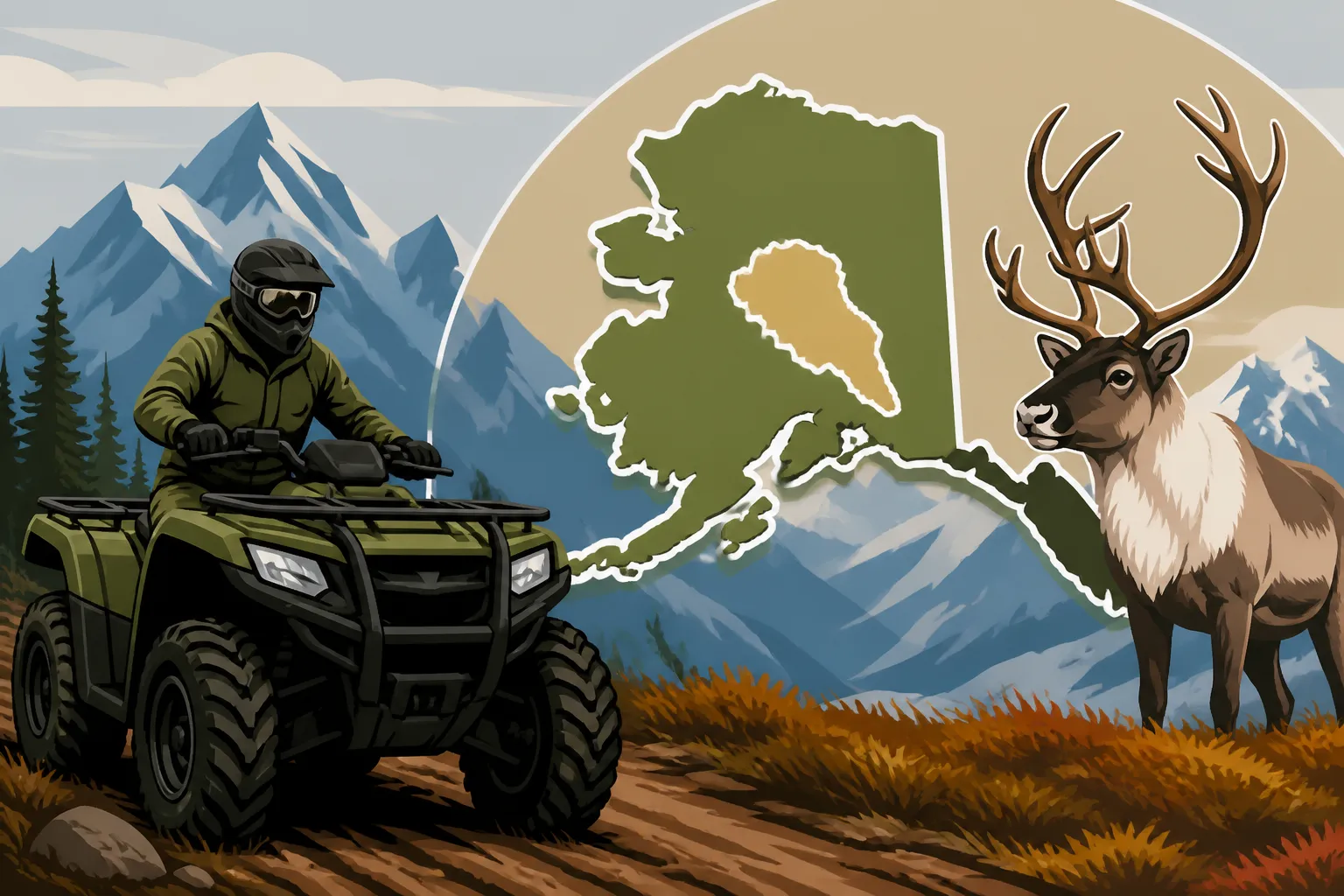
Finding and accessing caribou in Alaska's vast Unit 13 can feel like searching for a needle in a haystack, especially when you're dreaming of fresh caribou meat but dread the thought of endless miles on foot or packing a heavy load. Many hunters face the daunting challenge of covering immense distances and then the back-breaking work of packing out an entire animal from remote tundra. This guide will walk you through leveraging ATV access to effectively hunt caribou in Unit 13, helping you plan your trip, understand the regulations, and tackle the logistical hurdles that often come with these rewarding hunts.
Navigating Unit 13: A Caribou Hunter's Landscape
Unit 13, often referred to as the Nelchina Basin, is a sprawling landscape in interior Alaska, and it's a prime destination for caribou hunters. However, its sheer size and varied terrain can be overwhelming for those unfamiliar with it. Understanding the lay of the land and how the caribou use it is paramount to a successful ATV-supported hunt.
The Diverse Terrain of Unit 13
Unit 13 truly offers a little bit of everything. You'll encounter vast stretches of open tundra, gently rolling hills covered in low-lying brush, and dense patches of spruce and birch forest, especially closer to the major river systems. Interspersed throughout are countless lakes, ponds, and sloughs, along with meandering rivers and streams that can present significant obstacles. The topography varies from relatively flat plains in the basin's center to more mountainous fringes where the Talkeetna and Wrangell mountains loom. This diverse habitat supports a variety of wildlife, but for caribou, it's the open country and sparse brush that often provide ideal forage and escape routes.
The challenge for hunters isn't just navigating this varied landscape but also understanding how quickly it can change. What might be a relatively dry, passable trail in late summer can become a boggy, impassable quagmire after a few days of rain. Dense willows can hide deep water crossings, and seemingly minor stream beds can swell into raging torrents. This dynamic environment means that proper scouting, both from afar and on the ground, is crucial, especially when relying on ATVs. Being aware of these conditions will directly impact your ability to legally and safely reach your hunting grounds and, more importantly, retrieve your game.
Caribou Migration Patterns and ATV Advantage
The main draw for caribou hunters in Unit 13 is the Nelchina Caribou Herd, one of Alaska's most accessible and well-managed herds. These animals are renowned for their migratory behavior, moving across vast distances between their summer calving grounds and wintering areas. While their exact movements can be unpredictable year to year, they generally follow established migration corridors, often utilizing open ridges, river valleys, and broad expanses of tundra. Knowing these general patterns is key to positioning yourself for success. If you're really delving into the specifics of herd movements, you'll want to read up on Caribou Herds of Alaska and How They Move and Nelchina Caribou Movement Along the Denali Highway.
This is where ATVs truly shine. Unlike hunting on foot, which severely limits your range and the amount of gear you can carry, an ATV allows you to cover significantly more ground. You can access areas that might be too far for a day pack-in, scout multiple drainages in a single day, and most critically, efficiently transport a quartered caribou back to camp or your vehicle. Imagine spotting a bull miles from the road system; on foot, it might be a multi-day ordeal to pack it out. With an ATV, assuming legal access, that same scenario becomes a manageable single-day effort. The ability to quickly move your camp, pursue a moving herd, or simply explore further afield is a game-changer for many hunters tackling Unit 13's immense size.
Rules of the Trail: Legal ATV Use in Alaska's Backcountry
While ATVs offer incredible utility, it's critical to remember that Alaska has strict regulations governing their use, especially on public lands. Unit 13, like many other areas, has specific rules designed to protect the environment, prevent conflicts with other users, and ensure sustainable hunting practices. Ignorance of these laws is no excuse, and violations can lead to hefty fines and even loss of hunting privileges.
Designated Trails and Restricted Access Points
The most important rule for ATV users in Unit 13, and indeed much of Alaska, revolves around where you can actually ride. It's not a free-for-all. Many areas, particularly those managed by state or federal agencies, have designated trail systems, and venturing off these trails can result in serious penalties. For example, within the Alaska Controlled Use Areas and What They Restrict boundaries, there might be further limitations on motorized vehicle use during specific seasons or entirely. The state aims to balance access for hunters and recreationists with the need to protect sensitive ecosystems and minimize resource damage.
You'll often find that access is limited to historical trails, old mining roads, or specific designated routes. The Denali Highway, for instance, provides excellent road-system access to the southern part of Unit 13, but even there, side trails will have specific regulations. Some areas may permit ATVs only for game retrieval after a kill, while others might allow them for general travel on marked trails. It's not uncommon for certain sensitive wetlands or wildlife concentration areas to be completely closed to motorized vehicles. Always check the current Alaska Department of Fish and Game regulations specific to the Game Management Unit (GMU) you intend to hunt, as well as the land management agency (e.g., Bureau of Land Management, State of Alaska Department of Natural Resources) that oversees the specific parcels you're targeting. These rules can change, so getting the most up-to-date information right before your hunt is non-negotiable.
ATV Registration, Stickers, and Ethical Conduct
Beyond simply knowing where you can ride, there are often requirements for the ATVs themselves. In Alaska, all off-highway vehicles (OHVs), which include ATVs, must be registered with the Division of Motor Vehicles (DMV) and display a valid registration sticker. This isn't just a formality; it helps fund trail maintenance and enforcement. You might think it's just a small detail, but getting stopped by a Fish and Game Trooper or BLM Ranger without proper registration can quickly ruin your hunt before it even begins.
Moreover, ethical conduct is paramount. This means riding respectfully, slowing down when passing other hunters or campers, and being mindful of noise pollution. Leaving no trace isnver just about packing out your trash; it also means minimizing your impact on the trail and surrounding environment. Avoid creating new trails, stick to existing ones, and be extra cautious when crossing streams to prevent erosion and water contamination. The perception of ATV users directly impacts future access, so every rider has a responsibility to be a good steward of the land. Consider how your actions might affect others, whether they are on foot, horseback, or simply enjoying the solitude.
Planning Your ATV-Supported Caribou Hunt in Unit 13
A successful caribou hunt in Unit 13, especially with ATV support, requires meticulous planning. You can't just show up with your quad and expect to find caribou and accessible trails. From pre-trip scouting to packing the right gear, every detail matters.
Mapping Your Adventure: Scouting from Afar and Close Up
One of the biggest advantages modern hunters have is the ability to scout extensively from home. Tools like onX Hunt have revolutionized this process. With satellite imagery, topographic maps, and land ownership overlays, you can literally "walk" the terrain from your living room. You can identify potential access points off the Denali Highway Mile Markers and Access or other roads, trace historical ATV trails, pinpoint likely caribou crossings, and even mark potential camping spots. Look for open ridges, saddlebacks, and willow flats that caribou tend to frequent. Pay close attention to changes in elevation, which can provide glassing opportunities, and consider water sources.
Beyond general scouting, these mapping apps allow you to mark boundaries of state, federal, or Native Corporation lands, which is crucial for understanding where ATV use might be restricted or require special permits. Programs like GoHunt also offer detailed insights into hunt success rates and herd movements, giving you an edge in choosing your timing and location within Unit 13. Scouting a Unit From Satellite Imagery Before You Fly is an invaluable skill, even if you're driving in rather than flying. Once on the ground, however, ground-truthing your digital scouting is essential. Trails marked on a map might be overgrown, washed out, or simply no longer exist. Be prepared to adapt and use your GPS to confirm your location, especially in areas with limited visibility or when the weather turns foul. Downloading Offline Maps Before a Fly-In is just as critical for a drive-in ATV hunt, as cell service will quickly disappear once you leave the main highways.
Essential Gear for ATV Caribou Hunting
Your gear list for an ATV caribou hunt in Unit 13 will be more extensive than a typical backpack hunt, simply because you have the capacity to carry more. However, this doesn't mean you should pack everything but the kitchen sink. Focus on durability, functionality, and redundancy for critical items.
Here’s a breakdown of essential gear:
- Reliable ATV & Trailer: Your ATV is your workhorse. Ensure it's in top mechanical condition. Carry spare fuel, tools for basic repairs (tire repair kit, wrench set), and a robust winch. A utility trailer designed for off-road use is almost a necessity for hauling gear in and meat out.
- Navigation & Communication: Beyond your onX Hunt app, always carry a dedicated GPS unit and a physical map and compass as backup. A satellite messenger device (like an inReach) is vital for emergencies and check-ins, as cell service is non-existent in much of Unit 13.
- Hunting Specifics: Your rifle and ammunition, good optics for glassing the vast landscape, sharp knives, a bone saw, and plenty of game bags. Consider specialized game bags that breathe well, especially if you're dealing with Meat Care in 50-Degree September Weather.
- Camp & Survival: A durable tent, sleeping system appropriate for fall Alaska temperatures, cooking gear, enough food and water for your planned duration plus emergency reserves. A bear fence or electric perimeter is a smart addition, especially when you'll have meat in camp.
- Safety & First Aid: A comprehensive first-aid kit, bear spray, and possibly a large caliber sidearm. Remember that Bear Safety While Butchering a Kill in Alaska is not something to take lightly. A shovel, axe, and a tow strap are also crucial for self-extraction.
- Protective Clothing: Layered clothing for varying conditions, durable waterproof outer shell, robust boots that can handle mud and water, gloves, and headwear. Riding an ATV means you'll be exposed to the elements more than if you were tucked in the timber.
| Item Category | Essential Items for ATV Hunt | Considerations |
|---|---|---|
| ATV & Transport | ATV in prime condition, utility trailer, spare fuel, tire repair kit, basic tools, winch, tow strap | Check Trailer Loads Versus Pack Frames on ATV Trails for loading tips. |
| Navigation | GPS unit, satellite messenger (inReach), paper maps, compass, onX Hunt/GoHunt subscriptions | Download offline maps. Ensure long battery life for electronics; carry backups. |
| Hunting Gear | Rifle/ammo, optics, knife kit, bone saw, quality game bags | Breathable game bags for proper meat cooling. |
| Camp/Shelter | Durable tent, sleeping bag/pad, stove, cooking kit, food, water, bear fence | Pack extra food/water for unforeseen delays due to weather or mechanical issues. |
| Safety | Comprehensive first aid kit, bear spray, sidearm, fire starter, headlamp, signaling device | Inform someone of your route and check-in schedule. |
| Clothing | Layered system, waterproof outerwear, robust boots, gloves, hat | Dress for cold, wet conditions and exposure while riding. |
Logistics of Meat Retrieval and Camp Setup
The primary advantage of an ATV in caribou country is not just getting to the game, but getting the game out. Quartering a caribou in the field is standard practice. Once quartered, you'll place the meat in breathable game bags. If you're fortunate enough to make a kill near a legal trail, your ATV and trailer will be invaluable for transporting the heavy quarters. This significantly reduces the physical toll compared to Packing Out Meat in Alaska: The Salvage Law Hunters Must Follow entirely on your back, which is a major concern when hunting such a large animal like a caribou or even a moose.
Setting up your camp strategically is another key consideration. With an ATV, you can bring more creature comforts – a larger tent, a more robust stove, and more substantial food. However, always choose a campsite that is legal, minimizes impact, and offers some protection from the elements. Ideally, it should be within a reasonable distance of your hunting grounds but also accessible by your ATV for those crucial meat runs. Consider a location that provides good visibility for glassing and is away from obvious game trails to avoid disturbing animals or potential bear encounters near your kill. Remember, even with an ATV, you're still in remote Alaska, so planning for the unexpected is always the best approach.
Potential Challenges and Staying Safe in Unit 13
While ATV hunting in Unit 13 offers fantastic opportunities, it's not without its challenges and inherent risks. Alaska's wilderness demands respect and preparedness, especially when adding motorized travel into the mix.
Navigating Unpredictable Terrain and Weather
Alaska's terrain is notoriously unforgiving, and Unit 13 is no exception. Trails can quickly turn from firm gravel to deep, sucking mud bogs that can swallow an ATV whole. Water crossings, especially after heavy rains, can become treacherous. Hidden rocks, submerged logs, and unstable ground are constant threats to both your machine and your personal safety. A single wrong move can leave you stranded miles from your vehicle or camp, without cell service, and facing rapidly deteriorating weather.
Speaking of weather, it's perhaps the most unpredictable element of any Alaska hunt. A beautiful, clear morning can give way to a white-out snowstorm, heavy rain, or dense fog within hours. These conditions drastically reduce visibility, make navigation difficult, and increase the risk of hypothermia. Being prepared for sudden temperature drops, high winds, and precipitation is critical. This means carrying emergency shelter, extra warm clothing, and knowing how to Alpine Navigation Without Cell Service even if you are on a designated ATV trail system. Always err on the side of caution; if a water crossing looks too deep or a trail too risky, turn back and find an alternative. No caribou is worth risking your life.
Bear Awareness and Hunter Etiquette in Unit 13
Unit 13 is home to both black bears and grizzly bears (interior brown bears), and encountering one, especially at a kill site, is always a possibility. When you're using an ATV, you're covering more ground, potentially entering more bear habitat, and the presence of fresh caribou meat creates an irresistible attractant. It is absolutely vital to practice diligent Bear Safety While Butchering a Kill in Alaska and when caching meat. This includes carrying bear spray, knowing how to use it, and potentially a firearm for defense. Always be aware of your surroundings, make noise as you travel, and scan the area before approaching a kill site.
Furthermore, with increased access comes increased hunter pressure. While Unit 13 is vast, popular ATV access points can see concentrated activity, especially during the peak caribou season. Practicing good hunter etiquette is crucial to ensuring everyone has a positive experience. This means respecting other hunters' space, not driving your ATV through another hunter's setup, and minimizing noise when possible. If you encounter another hunting party, a friendly wave and respectful distance go a long way. Sharing information about general caribou movements can be helpful, but avoid giving away specific locations of downed game or active stalks. We're all out there to enjoy the wild, and a little courtesy ensures we all can.
Disclaimer
This article is for general informational purposes only and does not constitute professional advice. Laws, prices and regulations vary by location and change over time. Consult a qualified professional for guidance on your specific situation.