Alaska Moose Hunting Tactics for the September Rut
The September rut in Alaska is legendary for moose hunters, offering that electrifying chance to call a colossal bull out of the thick willows. But let's be honest, it's also incredibly frustrating when you've hiked for miles, set up a perfect calling sequence, and hear absolutely nothing, or worse, have a bull hang up just out of sight. This comprehensive guide is here to unravel the mysteries of moose behavior during this critical time, providing you with battle-tested tactics to increase your odds and transform those silent frustrations into the thundering excitement of a close encounter.
Understanding the Alaska Moose Rut Cycle
Hunting the moose rut effectively means understanding the different phases a bull goes through in September. It’s not a static event; their behavior changes dramatically from the early weeks to the peak and then the decline. Ignoring these shifts is a common mistake that can leave you wondering why your calls aren't working. Knowing when to be aggressive and when to be subtle is key to success in the vast Alaskan wilderness.
Early September: The Pre-Rut and Scouting
As September dawns, many of us are itching to hit the field, but it’s crucial to remember that bulls aren't in full rutting mode yet. This "pre-rut" phase, typically the first week to ten days of the month, sees bulls still primarily focused on feeding and regaining energy lost during antler growth. They’re often in smaller bachelor groups, or alone, and generally less responsive to aggressive calling. However, this is a prime time for scouting. You might not be calling them in, but you can certainly locate them. Look for fresh rubs on small trees and bushes – a sign they’re beginning to strip velvet and strengthen their necks. Pay attention to well-used trails leading to water sources or feeding areas, as these will become vital travel corridors once the rut kicks in. This is also an excellent time to use tools like GoHunt, which can help you identify historical migration patterns and prime habitat features even before you set foot on the ground, allowing you to prioritize your scouting efforts.
During this period, bulls are building up their fat reserves, which will be essential for the energy-intensive weeks ahead. They’re not actively seeking cows yet, but their hormones are definitely on the rise. You might see some sparring, gentle at first, as they test their strength and establish a loose dominance hierarchy. Focusing on visual scouting, spotting and stalking, or simply locating fresh sign, will be far more productive than trying to coerce a bull with aggressive calls. Think of yourself as a detective, gathering clues about where the big boys are staging before the main event.
This early September period can feel a bit like waiting for the dam to break. The anticipation is high, but patience is your greatest ally. Your objective should be to confirm the presence of legal bulls, understand their daily movements, and identify potential calling setups for when the action heats up. Don't be discouraged by a lack of response to calls; it's simply not their primary focus right now. Instead, embrace the opportunity to learn the landscape and the specific habits of the moose in your hunting unit.
Mid-September: Peak Rut Activity
This is it – the golden window, typically from about September 10th to the 25th, when bull moose are actively seeking cows, highly vocal, and most responsive to calling. Hormones are raging, and their singular focus is breeding. Bulls will be on the move, covering significant ground in search of receptive cows, and they'll be ready to challenge any perceived rival. This is the time for aggressive, confident calling. You’ll hear more bull grunts, some frustrated groans from cows, and the distinct sound of antlers thrashing through brush as bulls rake trees.
During the peak rut, bulls are less cautious. They’ve got one thing on their mind, and that single-mindedness can make them drop their guard. They’ll respond not just to cow calls, but equally to aggressive bull grunts and the sound of antlers being scraped against brush, mimicking a rival. This is when patience combined with strategic calling truly shines. You might have a bull respond from a mile away, and the wait for him to close the distance can be agonizing, but it's part of the game. Always be prepared for a quick shot, because a bull that has committed will often appear suddenly, pushing through dense cover right into your shooting lane.
Many hunters find success by combining calling with strategic movement. A bull might circle downwind, trying to catch your scent before committing. Understanding this behavior and setting up in areas with good visibility and escape routes is crucial. This is also the time when bulls will often be seen pushing cows, sometimes quite aggressively. If you locate a bull with cows, an aggressive challenging call might just be enough to draw him away, as he's already in a territorial mindset and won't tolerate another bull in his "harem." This mid-September window is what every moose hunter dreams of, full of potential for unforgettable encounters.
Late September: Post-Rut Behavior Changes
As September draws to a close, usually after the 25th, you'll start to notice a shift in moose behavior. The intensity of the peak rut begins to wane. Many cows have been bred, and the most dominant bulls might be exhausted from weeks of constant activity and fighting. While some secondary rut activity can occur with unbred cows, the overall enthusiasm of the bulls drops significantly. They become more wary, less vocal, and much harder to call in.
During this late-rut or post-rut period, bulls might still respond to calls, but they're often more hesitant. They might circle even wider, hang up further away, and are more likely to ignore a call if they don’t immediately spot a cow. Aggressive bull grunts might even spook them, as they're no longer as eager to fight after their energy reserves have been depleted. Your tactics need to adapt; less aggressive cow calls, combined with long periods of silence and more focus on still-hunting or spot-and-stalk techniques, become more productive. Sometimes, a subtle, plaintive cow call is all it takes to pique the interest of a tired bull that might still be looking for a late-season opportunity.
This phase demands even greater patience and refined woodcraft. The window for easy calling is closing, but opportunities still exist for persistent hunters. Focus on areas with good cover and prime browse, as bulls will once again prioritize feeding to recover from the rut. Knowing when to switch from a full-on calling assault to a more nuanced, quiet approach can make all the difference in these final days of the season. It’s about reading the subtle cues the moose are giving you and adjusting your strategy accordingly.
Effective Calling Strategies for Rutting Bulls
Calling a bull moose is an art form, not just a series of sounds. It requires timing, authenticity, and a deep understanding of what different calls communicate to a bull. Simply making noise isn't enough; you need to speak their language. The goal is to pique their interest, challenge their dominance, or convince them that a receptive cow is nearby.
Mastering the Cow Call and Calf Bawl
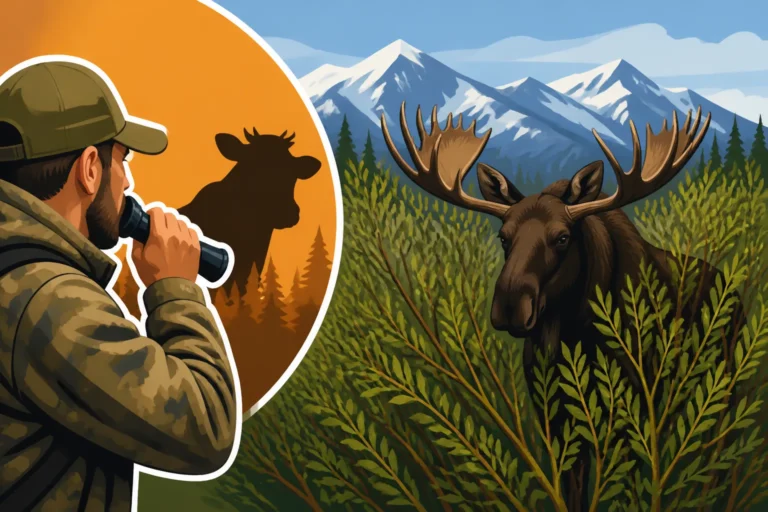
The cow call is arguably your most important tool during the rut, especially during the peak period. A long, drawn-out moan, often ending with a slight waver, mimics a cow in estrus looking for a bull. The key is to make it sound authentic and seductive, not like a distressed animal. Practice until it sounds natural. The volume and duration can vary depending on the conditions and how far you think bulls might be. In thick cover, a softer, more frequent call might be better, while across an open burn, you'll need more volume. Sometimes, adding a short, sharp "oof" at the end, as if she's pushing through brush, can add realism. Many experienced hunters believe that the best calls are slightly nasal and full of longing.
A less common but highly effective call is the calf bawl. This distress call can often draw in protective cows, and where there are cows, there are almost always bulls. The calf bawl is a higher-pitched, more urgent sound than a cow call. It speaks to a bull's paternal instincts, or at least his understanding that a cow in distress with her calf might be separated from her mate, presenting an opportunity. This call can be particularly effective when bulls are less responsive to direct cow calls, especially later in the rut or in pressured areas. Imagine a young calf separated from its mother, crying out – that's the emotion you're trying to convey. Experiment with different levels of urgency; a softer bawl might just sound like a lost calf, while a more frantic one could indicate something is truly amiss.
When combining these, consider a sequence: a series of cow moans, followed by a calf bawl, mimicking a cow calling for her calf while also advertising her presence. This multi-layered approach can be incredibly enticing. Remember, silence is also part of the calling sequence. After a series of calls, wait patiently. Listen intently for a response – a grunt, a broken branch, or even the subtle sound of hooves in the muskeg. Sometimes, a bull will come in completely silent, so always be ready. If you want to dive deeper into this, you might find specific techniques in a guide on Cow Calls That Pull Bulls Out of Willows.
Raking and Grunting to Challenge Bulls
While cow calls attract, raking and bull grunts challenge. These are your aggressive tools, best deployed during the peak rut when bulls are actively territorial. Raking involves using a moose scapula or a sturdy stick to thrash against willows, small trees, or even the ground, mimicking a bull sharpening his antlers or showing dominance. The sound of a large animal pushing through brush and breaking branches is a powerful signal. Follow this with deep, guttural bull grunts, short and authoritative. These aren't just sounds; they're a direct challenge to any bull within earshot.
The key to effective raking is making it sound authentic. Don’t just tap; really get into it, breaking small branches, pushing over saplings if you can. The louder and more realistic, the better. Vary the intensity – sometimes a slow, deliberate rake, other times an explosive burst of thrashing. Follow this with a series of grunts, letting them echo through the forest. Imagine yourself as a bull daring another to step into his territory. This combination creates a powerful illusion of a rival bull, drawing in curious or aggressive males eager to assert their dominance. Many hunters specifically learn How to Use a Moose Scapula for Raking to get the most authentic sound.
Be mindful of the context. If you know there's a smaller bull in the area, or if you're hunting late in the rut when bulls are tired, overly aggressive grunting and raking might make them shy away. However, for those prime, dominant bulls in the peak of the rut, a well-executed raking and grunting sequence can be irresistible. Always position yourself where you have a clear shot and good visibility, as a bull responding to a challenge will often come in fast and direct, looking for a fight. These aggressive tactics are often covered in detail when discussing Calling Bull Moose During the Alaska Rut.
Setting Up Calling Stations and Wind Awareness
Your calling location is almost as important as your calling technique. A good calling station maximizes your visibility, provides cover for yourself, and, crucially, accounts for the wind. Moose have an incredible sense of smell, and if they catch your scent, the hunt is over. Always try to set up with the wind in your face, or at least quartering to you, so your scent blows away from where you expect the moose to approach. This often means moving downwind of potential moose hotspots before you start calling.
Beyond wind, look for natural funnels, elevated positions with good sightlines, and areas with dense cover for the moose to approach through. Moose often like to approach through thick brush, circling downwind to get a sniff. Anticipate this behavior by positioning yourself to intercept them before they get your scent. A calling station on the edge of a willow flat, overlooking a small opening, or on a slight rise with a clear shooting lane, can be ideal. Think about where a bull would naturally travel and where he might pause before committing.
Once you start calling, be prepared to stay put for a while. Moose can take a long time to respond and approach. A typical sequence might involve calling for 5-10 minutes, then remaining silent and listening intently for 15-30 minutes, or even longer. This patience is critical. Don't call constantly; allow the sounds to dissipate and let the moose process them. The quiet periods are when you’ll often hear their subtle movements as they cautiously close the distance. Always have your rifle ready, as a bull can appear silently and unexpectedly.
Float Hunting Rivers During the Rut
Float hunting is a quintessential Alaskan experience, combining the adventure of river travel with prime hunting opportunities. During the September rut, it becomes an incredibly effective way to cover vast amounts of territory and access remote moose habitat that might otherwise be unreachable. The river acts as your highway, allowing you to drift quietly through prime moose country, often catching bulls off guard.
Choosing the Right River and Craft
Selecting the appropriate river for your float hunt is paramount. Rivers like the Yukon, Koyukuk, or even smaller, less traveled tributaries in areas like the Innoko National Wildlife Refuge, can offer excellent rutting moose habitat. Look for rivers that meander through large willow flats, recent burn areas, or areas with numerous oxbow lakes and sloughs – these are classic moose hotspots. Research historical water levels, potential log jams, and gravel bars for landing or emergency egress. Maps and satellite imagery, again, with tools like GoHunt, are indispensable for this pre-trip planning. You'll want to ensure the river is navigable for your chosen craft, whether it's a sturdy raft, a durable packraft, or a jet boat for larger rivers.
The choice of craft depends on the river's characteristics and your hunting style. For smaller, more intimate rivers with obstacles, a robust raft or packraft offers maneuverability and portability. If you're tackling larger, braided rivers with open stretches, a jet boat can cover ground quickly and access shallow areas. Each has its advantages and disadvantages in terms of load capacity, speed, and noise. Always consider the potential for having to load a bull moose into a raft and the implications for weight and stability. A good resource for this crucial decision is Choosing a Float Hunt River by Water Level and Length.
Beyond the river itself, consider the logistics of your put-in and take-out points. Many float hunts require bush plane support for drop-offs and pickups, so coordinate closely with your air taxi service. Ensure your gear is waterproofed, as river travel inevitably means exposure to moisture. A well-chosen river combined with the right craft provides a stealthy and efficient platform for hunting rutting moose, allowing you to cover ground that land-based hunters simply can't reach, and often find moose that are less pressured.
Combining Calling with River Travel
One of the greatest advantages of float hunting during the rut is the ability to combine quiet river travel with strategic calling. As you drift silently downstream, the river current carrying you, you can periodically stop, pull over to a gravel bar or an island, and initiate a calling sequence. The element of surprise is a huge factor here; moose along the riverbanks are often less accustomed to human scent or noise approaching from the water.
When you identify promising habitat from the river – a dense willow flat, a recent burn scar, or a series of moose tracks along the bank – pull your craft silently to shore. Scout a good calling position, considering wind direction, and then begin your calls. A series of cow moans, followed by some raking if the cover allows, can be incredibly effective. Listen intently for a response across the water or from the dense brush along the bank. The river itself can sometimes act as a sound funnel, carrying your calls further.
Be prepared for a bull to appear quickly from the bank, sometimes right out of the water if he’s crossing. This means having your rifle ready and your senses on high alert. If a bull responds but stays on the opposite bank, you might need to use a canoe or packraft to cross, or try to lure him closer with persistent calling. Remember to always keep safety in mind, especially with river currents and the potential for crossing fast-moving water after a kill. The ability to move, call, and then quickly reposition gives float hunters a dynamic edge in pursuing rutting bulls.
Beaching and Establishing Temporary Camps
Float hunting often involves a rhythm of drifting, calling, scouting, and establishing temporary camps. You’ll spend nights along the river, setting up a new camp each evening or staying put for a day or two in particularly promising areas. Beaching your craft correctly is important for safety and efficiency. Look for wide, stable gravel bars or small eddies where you can easily pull your boat out of the current and secure it. Always be aware of changing water levels; a rising river can float your craft away, and a dropping river can leave it high and dry.
Once beached, establish a camp quickly and efficiently. This might be a simple spike camp with a tarp and sleeping bag if you’re moving every day, or a more substantial tent camp if you plan to hunt an area more thoroughly. From these temporary camps, you can launch foot-based hunting excursions, hiking inland to explore willow thickets, old burns, or higher ground where you might spot moose. Remember that a camp in prime moose country is also prime bear country, so proper food storage and bear safety protocols are non-negotiable.
These temporary camps are your base of operations. They allow you to be immersed in the environment, listening to the sounds of the wilderness and observing moose activity at different times of day. They also provide a much-needed rest and recovery point from the physical demands of a float hunt. The beauty of it is the flexibility – if an area isn't producing, you simply pack up camp, get back in your boat, and drift to the next promising spot. This mobile approach can significantly increase your chances of encountering a rutting bull.
Backpack Hunting for Interior Rutting Moose
For the truly adventurous, backpack hunting for rutting moose in Alaska's vast interior offers unparalleled solitude and the chance to hunt truly unpressured animals. This isn't a hunt for the faint of heart, demanding significant physical conditioning and self-sufficiency, but the rewards—a bull taken deep in the wilderness—are immense.
Targeting Remote Burn Areas and Willow Flats
Interior Alaska's landscape is a patchwork of spruce forests, expansive tundra, and, critically, vast burn areas and willow flats. These habitats are moose magnets, especially during the rut. Recent burns (5-20 years old) provide an explosion of new growth, particularly willow and birch, which are favored moose forage. Bulls will gravitate to these areas for both food and cover, and the open nature of some burns can make glassing more effective. Willow flats, often found along rivers, streams, and in low-lying basins, are also prime moose real estate, offering dense cover and abundant browse.
When planning a backpack hunt, use topographical maps and satellite imagery (GoHunt is excellent for this) to identify these prime habitats that are far from roads or human activity. Look for the confluence of different habitat types: where a burn meets a spruce forest edge, or where a willow flat transitions into tundra. These ecotones are often travel corridors for moose and can be excellent places to set up calling stations or glass for activity. Consider how a bull will navigate these areas – they often stick to the edges of dense cover, using it for concealment as they move.
Accessing these remote areas typically involves a bush plane drop-off, making careful planning and adherence to weight limits crucial. Once on the ground, your backpack becomes your lifeline. The goal is to hike into these unpressured zones, establish a spike camp, and then radiate out from there, systematically hunting the most promising terrain. These areas are vast, so be prepared to cover serious ground, often off-trail, through challenging terrain. The less human disturbance, the more natural the moose behavior, and often, the more responsive they are to calls. This kind of remote hunting often entails understanding things like Fly-In Hunting: Working With an Alaska Transporter Pilot.
Gear Considerations for Extended Backpack Hunts
An extended backpack hunt for moose demands an extremely well-thought-out gear list. Every ounce counts, as you’ll be carrying everything you need for 7-10+ days, plus the potential for hundreds of pounds of meat on the pack out. Your pack itself must be robust and comfortable, capable of handling heavy loads. Key items include a lightweight but durable tent (like those from MSR or Hilleberg), a warm sleeping bag rated for sub-freezing temperatures (even in September), and an efficient backcountry cooking system.
Footwear is critical: choose waterproof, sturdy boots with excellent ankle support for navigating uneven tundra, muskeg, and rocky terrain. Layers of clothing are essential to adapt to Alaska's notoriously fickle weather, which can range from warm sunshine to driving rain and snow in a single day. Quality rain gear (think Sitka or Kuiu) is non-negotiable. Beyond the basics, remember navigation tools like a GPS and satellite messenger (e.g., Garmin InReach), a reliable headlamp, first-aid kit, and bear protection (bear spray and/or a powerful handgun). A compact spotting scope and high-quality binoculars are crucial for glassing vast landscapes.
The biggest gear consideration, however, is the pack out. If you’re successful, you’ll be making multiple trips with heavy loads of meat. Your pack must be able to convert into a sturdy meat hauler, or you'll need a separate pack frame. This is often the most physically demanding part of the hunt. Planning for Backpack Hunting in Alaska: Gear Weight and Meat Loads is not just about getting in; it's about getting out with your hard-won meat and trophy. Every piece of gear should serve multiple purposes and be proven reliable in harsh conditions.
Navigating Tundra and Dense Brush
Navigating the Alaskan interior on foot is a unique challenge. Tundra, while appearing open, can be a deceptive maze of tussocks, hidden potholes, and spongy muskeg that saps your energy with every step. Dense willow and spruce thickets can be nearly impenetrable, slowing progress to a crawl and making stealth difficult. Planning your travel routes to minimize energy expenditure is crucial. Often, it's easier to walk along creek beds, game trails, or higher, drier ground.
When in dense brush, move slowly and deliberately. Stop frequently to listen and scan. Your calls will carry less distance here, so you’ll need to be closer to moose to elicit a response. In open tundra, use the terrain to your advantage: low rises, creek drainages, or rock outcrops can provide cover for approaches. Always be aware of your surroundings, using landmarks, a GPS, and even a compass. Downloading offline maps to your device before leaving town is a must, as cell service is non-existent. You might even want to brush up on Alpine Navigation Without Cell Service.
The physical demands of navigating this terrain cannot be overstated. Expect to move slower than you anticipate and budget extra time for travel. The reward, however, is accessing areas where moose have seen few, if any, other hunters. These unpressured animals are often more receptive to calls and exhibit more natural rutting behavior, making the struggle of the terrain well worth the effort when a giant bull steps into view.
Dealing with Challenging Rut Scenarios
Not every rut hunt goes perfectly. Sometimes, bulls act strangely, the weather conspires against you, or the pressure from other hunters becomes a factor. Learning to adapt to these challenging scenarios is a hallmark of a seasoned Alaska hunter.
When Bulls Go Silent or Hang Up
There are few things more frustrating than calling to a bull that responds initially, then goes completely silent, or worse, hangs up just out of sight, refusing to come closer. When a bull goes silent, it could mean he’s lost interest, he’s caught your scent, or he’s simply moving in silently, trying to circle downwind. Don't panic. Give it time. Extend your listening periods, often for 30 minutes or more. Sometimes, a very soft, subtle cow moan after a long silence is enough to bring him in, or to elicit another grunt. Resist the urge to call constantly; sometimes, less is more.
A bull that "hangs up" is a common scenario. He’s heard your calls, he’s interested, but something is making him hesitant. He might be trying to get your wind, or he could be sizing up the situation. In this case, resist the urge to move towards him immediately. Instead, try a different calling strategy. If you’ve been using cow calls, switch to some light raking and a soft bull grunt. This can sometimes tip him over the edge, making him think a rival is with the cow. Alternatively, a slow, deliberate movement away from him, followed by a soft call, might make him think the "cow" is leaving, spurring him to commit. Patience and a willingness to try different tactics are key.
It's also important to consider the landscape. If a bull hangs up, it might be due to a terrain feature – a creek, a dense patch of timber, or a visibility issue. Try to envision his approach and what might be making him hesitate. Adjust your calls accordingly, perhaps making them sound like they're coming from just beyond that obstacle. If you suspect he's trying to get your wind, hold tight, let him circle, and be ready for him to appear. The moment he loses confidence is the moment your hunt is often over, so managing that hesitation is critical.
Hunting Pressured Moose and Avoiding Over-Calling
In areas with road access or popular float sections, moose can become incredibly pressured. These bulls learn quickly to associate human sounds and smells with danger. They might still respond to calls, but they'll be far more wary, circling extensively, and often refusing to commit. In such situations, aggressive calling can be detrimental. Over-calling can quickly educate a bull, making him shy away or go silent entirely.
When hunting pressured moose, subtlety is your friend. Opt for soft, infrequent cow moans, almost whispers, combined with long periods of silence. Instead of trying to challenge them, try to pique their curiosity. A very light raking sound, mimicking a cow rubbing an itch, might be less alarming than a full-on battle simulation. Focus more on still-hunting or spot-and-stalk techniques, using calls only to confirm presence or to draw a slightly wary bull into a shooting lane. Remember that in some of these areas, a bull might have heard dozens of hunters attempting the same calls, so you need to be different.
Furthermore, consider hunting at off-peak times or in less accessible parts of a pressured unit. Many hunters focus on dawn and dusk; try midday calls when others are resting. Or, if legal and safe, hike deeper into areas that require more effort to reach. Avoiding the common access points and popular spots can put you on less pressured animals. Your hunting strategy needs to evolve from an aggressive "challenge and conquer" to a more nuanced "lure and surprise" approach.
Adapting to Weather and Environmental Factors
Alaska's weather is famously unpredictable and can dramatically impact moose behavior during the rut. Warm temperatures, especially early in September, can make moose less active during the day. They'll often feed and rut more intensely during the cooler hours of dawn, dusk, and even overnight, bedding down in dense shade during the heat of the day. If it's warm, adjust your hunting times and focus on cooler, shadier areas. Heavy rain can also suppress calling activity; while moose don't mind getting wet, their own movements and your calls will be muffled.
Conversely, cooler temperatures and light snow can invigorate rutting activity. Bulls become more active, their calls carry further, and their tracks are easier to follow. Wind, however, is always a major factor. A strong, consistent wind can make calling nearly impossible, as your sounds are carried away or masked, and your scent is broadcast widely. In windy conditions, focus on hunting areas with natural windbreaks – deep drainages, dense timber, or leeward slopes. Adapt your approach to be more stealthy, relying on close-range still-hunting rather than long-distance calling.
Table: Moose Rut Behavior and Calling Strategy Adjustments
| Rut Phase | Typical Bull Behavior | Preferred Calling Strategy | Environmental Adaptations |
|---|---|---|---|
| Early September | Feeding focus, velvet shedding, bachelor groups. Hormones rising. | Subtle cow moans, focus on scouting/spotting. Limited raking. | Warmer daytime temps mean focus on early morning/late evening, shaded areas. |
| Mid-September | Highly active, seeking cows, aggressive, territorial. Peak breeding. | Aggressive cow moans, calf bawls, loud raking, challenging grunts. | Peak activity in cooler temps. High winds may require shorter range, quieter calls or still-hunting. |
| Late September | Exhausted, less vocal, wary. Secondary rut with unbred cows. | Infrequent, soft cow moans. Limited, subtle raking/grunts. Still-hunting. | Cold snaps may briefly reactivate bulls. Adapt to increased wariness in all conditions. |
Environmental factors like thick fog can also create challenges, making navigation difficult and limiting visibility. However, fog can also work to your advantage, muffling sounds and allowing for closer approaches. In such conditions, relying on your ears and a GPS becomes even more critical. Ultimately, adapting your tactics to the prevailing weather and environmental conditions is a skill that comes with experience and a willingness to remain flexible.
Field Judging and Ethical Shot Placement
Taking an ethical shot and properly judging a bull in the field are two of the most critical skills a moose hunter must possess. Alaska's antler restrictions vary by unit, and a mistake can lead to a citation and the loss of your animal. Beyond legality, ensuring a quick, clean kill is a fundamental responsibility.
Understanding Alaska Antler Restrictions
Alaska has various antler restrictions (AR) designed to manage moose populations and encourage older, larger bulls. The most common restrictions include "spike-fork," "50-inch spread," or "3 brow tines." A spike-fork bull means the bull must have at least one antler with no more than two points (a spike) or a fork. The 50-inch rule requires the widest part of the antlers to be at least 50 inches across. The 3 brow tines rule means the bull must have at least three tines on one brow palm. It's absolutely crucial to know the specific regulations for your Game Management Unit (GMU) before you even head into the field. These rules are detailed in the Alaska Hunting Regulations booklet, available online and at ADF&G offices.
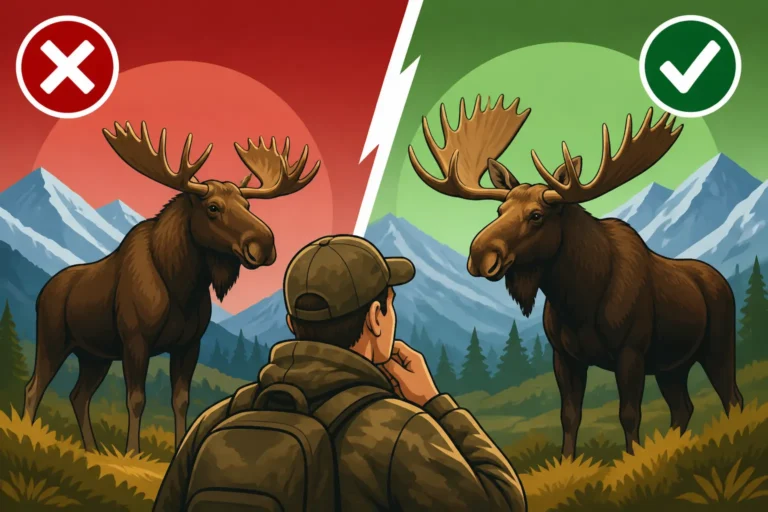
The challenge comes with accurately judging these criteria on a live, often moving, animal in varying light and cover. Many hunters make the mistake of underestimating size or miscounting points in the excitement of the moment. Always err on the side of caution. If there's any doubt about legality, do not shoot. No moose is worth the risk of a violation. Taking the time to properly identify a legal bull is part of the ethical hunt. For some of the intricacies of judging, it's worth reviewing specific guides like Field Judging a Legal Bull Under Alaska Antler Rules or Brow Tine Counts on Alaska Antler-Restricted Bulls.
Practice field judging before your hunt. Look at photos of legal and sublegal bulls. If you can, spend time watching moose with binoculars or a spotting scope, practicing your estimation skills. Tools like a rifle scope can be used to estimate antler spread against its known measurements, but practice is key. Remember that a moose's body size can make antlers appear smaller than they are, especially from a distance. Get comfortable with various angles and lighting conditions, as these can significantly impact your perception of antler size and points.
Confirming Legal Bulls in Varying Light
Confirming a legal bull under less-than-ideal conditions, such as dim light, fog, or dense brush, is one of the toughest aspects of moose hunting. The antlers can appear different at various angles, and shadows can obscure points or make a small spread seem larger. It's imperative to use high-quality optics, such as binoculars and a spotting scope, and to be patient. Never rush a shot if you are unsure of the legality.
When a bull responds to calls, try to get him into an open area where you can clearly see his antlers. If he’s in dense timber, be prepared to wait for him to step out. Use your optics to scrutinize every angle of his antlers. For the 50-inch rule, try to compare his antler width to the distance between his ears or his body width; a bull's ears are typically about 20-24 inches apart. For brow tines, count them carefully on each side, understanding that what looks like a tine might just be a knob. Many hunters have specific techniques like Measuring a 50-Inch Spread Against Your Rifle.
If the light is fading, or conditions are poor, do not shoot. It’s better to let a bull walk than to harvest an illegal animal or make a poor shot. Be familiar with the ethical implications of a poor shot. Wait for daylight, or for the animal to move into a better position. A legal moose will often present itself given enough patience. Your reputation as a hunter and the health of the resource depend on these critical decisions.
Shot Placement for Quick, Clean Kills
Once you’ve confirmed a legal bull, the focus shifts to ethical shot placement. A moose is a large, incredibly tough animal, and improper shot placement can lead to a long, difficult, or even unsuccessful recovery. The most effective shot for a quick, clean kill is typically the "boiler room" shot, targeting the heart and lungs. This area is located just behind the front shoulder, about one-third of the way up the body. A bullet placed here will incapacitate the animal rapidly.
Aim for a broadside or slightly quartering-away shot. Avoid quartering-to shots, as the heavy shoulder bone can deflect a bullet, and it becomes much harder to reach the vitals. Never take a frontal shot, as the chest cavity is small and heavily protected by bone. When the bull is broadside, visualize a line running from the opposite elbow through the chest – that’s where you want your bullet to go. For a quartering-away shot, aim slightly further back, imagining the bullet exiting the opposite front shoulder.
Always wait for a calm, stationary shot. If the moose is moving, or you’re out of breath, wait for him to stop and settle. Practice shooting from various field positions – kneeling, sitting, or prone – to ensure you can make an accurate shot under pressure. Know your rifle and its capabilities, especially at different ranges. After the shot, be prepared for a follow-up if necessary. Do not assume the moose is down until you see it collapse or hear it expire. A quick, clean kill is the ultimate respect you can pay to the animal and is the goal of every responsible hunter.
Post-Kill Logistics: Salvage and Meat Care
Congratulations, you've taken an Alaskan bull moose! Now the real work begins. Moose are enormous animals, and managing the meat and trophy in the field, often miles from any road or civilization, is a monumental task. Proper care is not just about preserving your harvest; it’s a legal requirement in Alaska.
Quartering a Bull Moose Alone in the Field
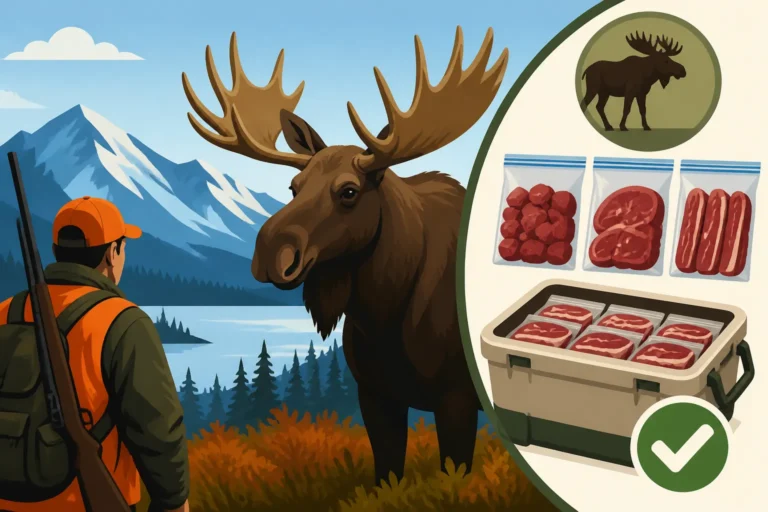
Field dressing a bull moose is physically demanding, especially if you're alone. The first step is to quickly bleed the animal by severing the major arteries in the neck or brisket. Then, the goal is to get the hide off and the meat cooling as quickly as possible. Many hunters opt for the "gutless method" for moose, especially in remote areas. This technique involves skinning and quartering the animal without opening the body cavity, which can save a lot of time and effort in the field, and reduce the chance of contaminating the meat with gut contents.
To quarter using the gutless method, start by making an incision along the spine from the neck to the pelvis. Then, skin one side of the animal, peeling the hide back. Once exposed, you can systematically remove the large muscle groups: the front shoulders, hindquarters, backstraps, and tenderloins. The ribs and neck meat must also be salvaged, as per Alaska's wanton waste regulations. You can learn more about this by looking up Alaska Moose Meat Salvage Requirements. This process requires sharp knives, a game saw, and plenty of patience. Once the meat is off the bone, it can be placed into game bags for cooling.
Working alone, this process can take many hours. Take breaks, stay hydrated, and be methodical. It's often helpful to have a tarp or plastic sheet to lay the meat on to keep it clean. Remember, the clock is ticking, especially in warmer temperatures. Your primary goal is to get that meat cooled down and protected from flies as fast as you possibly can. The sheer size of the animal, with a mature bull often weighing over a thousand pounds, means you'll be working hard. Detailed steps are often outlined in guides like Quartering a Bull Moose Alone in the Field.
Hanging Meat in Warm September Weather
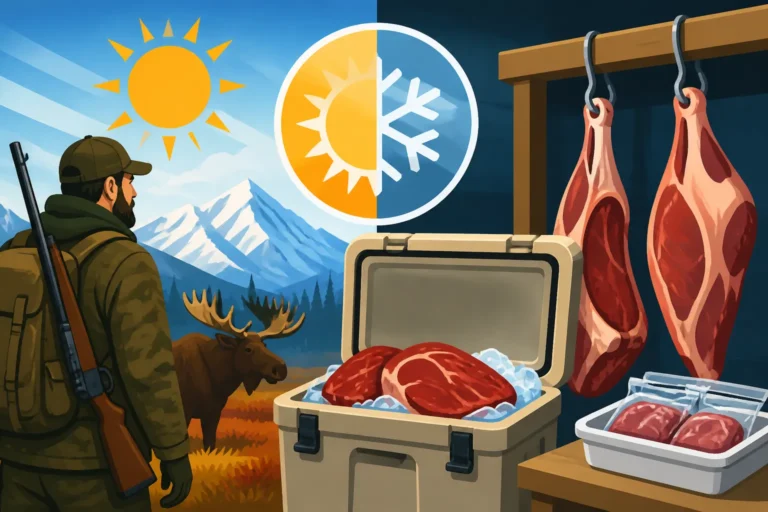
September in Alaska can still bring surprisingly warm days, and these temperatures are the enemy of freshly harvested meat. After quartering, the meat needs to be cooled rapidly and effectively to prevent spoilage. This means getting it off the ground, out of direct sunlight, and into game bags that allow for airflow while protecting from insects. High-quality synthetic game bags are superior to cheesecloth, as they are more durable and allow for better air circulation.
Find a shady spot, preferably near a cool stream or in a spruce thicket. Hang each quarter and all other edible meat in separate game bags from trees, ensuring there's plenty of space between them for air to circulate. The goal is to get air moving around every piece of meat. If possible, elevate the meat several feet off the ground, not only for cooling but also to keep it away from small scavengers and some bears. If daytime temperatures are consistently warm (above 40-50°F), you may need to move the meat into the shade multiple times throughout the day, or even cover it with a breathable tarp to create a cooler microclimate.
During the night, temperatures usually drop significantly, which helps immensely. However, constant vigilance is required. Check the meat regularly for signs of spoilage (bad smell, green discoloration) and flies. If you can’t get the meat cool enough, especially in warm weather, consider packing it out as quickly as possible to a processor or a location where it can be properly chilled. Proper meat care is a legal and ethical obligation, ensuring your hard work culminates in delicious, usable wild game. Specific advice can be found in a resource such as Hanging Meat in Warm September Weather.
Bear Safety While Butchering a Kill in Alaska
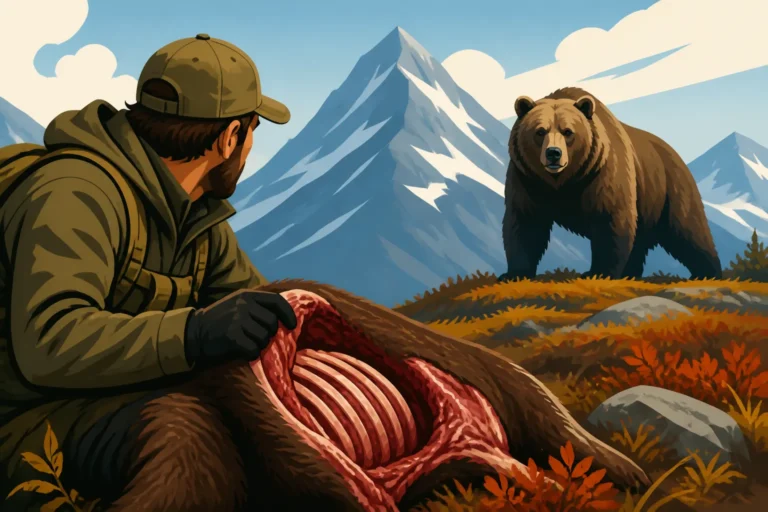
Butchering a large game animal in the Alaskan wilderness is essentially ringing the dinner bell for bears, both black bears and especially brown bears. This is a high-risk activity, and stringent bear safety protocols are non-negotiable. Always hunt with a partner, if possible, as an extra set of eyes and hands is invaluable for both the work and safety. If solo, extra precautions are even more vital.
Before you even start butchering, take a few minutes to survey the area. Look for fresh bear sign, and establish a perimeter. Have your bear spray readily accessible and know how to use it. Many hunters also carry a large-caliber handgun or rifle for backup in bear country, but bear spray is often your first and most effective defense in a close encounter. As you work, one person should always be on "bear watch," scanning the surroundings while the other butchers. Keep the hide and gut pile separate from your meat bags and your camp, if possible, to draw attention away from your primary food source. For more specific instructions, consider reading Bear Safety While Butchering a Kill in Alaska.
After the meat is removed, strategically move the gut pile and hide away from your meat cache and camp. Don't leave your kill site a messy free-for-all. A clean kill site makes it less attractive to bears in the immediate vicinity. If you plan to pack out in multiple trips, establish a well-secured meat cache, ideally hanging high in sturdy trees, and potentially reinforced with a portable electric bear fence if you have one. Bears are incredibly persistent, and proactive measures are your best defense against losing your hard-won harvest and, more importantly, ensuring your personal safety.
Disclaimer
Please be aware that hunting regulations, seasons, and access rules in Alaska can change frequently. It is the individual hunter's responsibility to consult the most current Alaska Department of Fish and Game regulations and any applicable federal or local land management rules before planning and undertaking any hunting activity. This guide provides general information and tactics for informational purposes only and should not be considered a substitute for official regulatory documents or professional guidance. Safety in the Alaskan wilderness is paramount; always hunt responsibly, carry appropriate gear, and inform others of your travel plans.