Velvet Timing on Alaska Caribou Bulls
Planning an Alaska caribou hunt often brings up a curious but important question: what's the deal with velvet antlers? Many hunters fret over whether the bull they harvest will be hard-horned or still in velvet, and for good reason. Understanding the timing of velvet shedding in Alaska caribou bulls isn't just about trophy aesthetics; it can influence your hunt planning, field judging decisions, and even how you care for your trophy. This guide will walk you through everything you need to know about velvet timing, why it happens, and how it impacts your pursuit of Alaska's magnificent caribou.
The Biology of Antler Velvet and Why Hunters Care
Before we dive into the "when," let's clarify the "what." Antler velvet is much more than just a fuzzy covering; it's a vital part of the annual antler growth cycle and plays a significant role in a hunter's decision-making process.
What is Antler Velvet, Really?
Imagine a rapidly growing bone, completely covered in soft, fuzzy skin – that's antler velvet. This fascinating tissue is rich in blood vessels, nerves, and cartilage, all working in overdrive to fuel the incredible growth of a bull's antlers throughout the spring and summer. It's essentially a living incubator for bone, supplying all the nutrients and oxygen needed for those impressive racks to form. During this growth phase, the antlers are soft and susceptible to damage. Any injury to the velvet can result in deformed or stunted antlers, which is why bulls are usually quite careful with their racks during this period.
As the summer progresses and the antlers reach their full size, a crucial change occurs. The bone beneath the velvet begins to calcify and harden. Hormonal shifts within the bull, primarily a surge in testosterone as the rut approaches, signal the end of the velvet's purpose. The blood supply to the velvet diminishes, causing the tissue to dry out and eventually die. This entire process is a testament to nature's efficiency, preparing the bull for the challenges of the upcoming breeding season where hard, bony antlers are essential for dominance displays and sparring.
Beyond Aesthetics: Why Velvet Matters to Hunters
For many hunters, the state of a caribou's antlers – whether in velvet or hard-horned – carries significant weight. While the condition of the velvet doesn't directly affect the quality of the meat, it certainly impacts the trophy.
Firstly, there's the aesthetic preference. Some hunters actively seek hard-horned bulls, preferring the clean, polished look of bone. They might feel that velvet detracts from the true structure and grandeur of the antlers. Others, however, are drawn to the unique beauty of velvet-covered antlers, seeing them as a snapshot of a bull at a particular stage of its annual cycle. If you harvest a bull in velvet and wish to preserve it, the process is far more involved than with hard antlers, often requiring specialized taxidermy techniques to prevent decay and hair slip. This can add complexity and cost to your post-hunt trophy care.
Secondly, velvet can make field judging a bull surprisingly difficult. The fuzzy covering often exaggerates the appearance of antler mass and can obscure smaller points, making it challenging to accurately assess spread, tine length, or the number of points. What looks like a massive bull in velvet might, once shed, reveal a rack that's not quite as impressive as anticipated. This is especially critical in areas with antler restrictions, where misjudging a bull's legal status due to velvet can lead to a citation. Hunters hoping to avoid any "ground shrinkage" surprises often prefer to wait until bulls have shed their velvet, providing a much clearer picture of the actual antler size and configuration.
Typical Velvet Shedding Timing for Alaska Caribou
When exactly do those majestic caribou bulls transform their fuzzy crowns into hard bone? It’s a question that can make or break a hunting plan, and while there's a general window, individual variation and regional differences definitely play a role.
The General Window: Late August to Early September
The vast majority of Alaska caribou bulls will begin to shed their velvet in the latter part of August, with the process often extending into the first week or two of September. Think of it as a rolling wave rather than a single, simultaneous event. Some bulls, particularly older, more dominant ones, might start shedding a bit earlier, while younger bulls or those in slightly poorer condition could hold onto their velvet for a few extra days.
During this period, hunters might encounter bulls in all stages: fully velvet-clad, actively shedding with ragged strips hanging off, or already sporting freshly cleaned, hard antlers. It's a visually striking time to be in the field, witnessing these animals literally tearing off their old skin. The act of shedding itself usually involves the bull rubbing its antlers vigorously against trees, shrubs, or even its own body, which helps loosen and remove the dried velvet. This often leaves the antlers looking bloody and stained for a short time before they dry and take on their characteristic ivory or brownish hue.
Herd-Specific and Regional Variations
While the late August to early September window is a good rule of thumb, it's important to remember that Alaska is a massive state with many distinct caribou herds, and slight variations can occur. Herds like the Western Arctic Caribou Herd, the Fortymile Caribou Herd, or those found in the Nelchina Basin might experience the velvet shedding process with minor differences due to their specific geographic locations, forage availability, and herd health. For instance, a herd in a more northern region experiencing an earlier cold snap or resource decline might see bulls shed a touch earlier, purely as a physiological response to the coming winter and rut.
However, these are often subtle shifts, usually only a matter of days. The physiological triggers for velvet shedding – the decreasing daylight hours and corresponding hormonal changes – are largely consistent across the species in Alaska. Knowing the general patterns of the different Caribou Herds of Alaska and How They Move can help you refine your expectations for a specific hunting unit. For instance, if you're targeting animals in the Hunting Unit 13 and the Nelchina Basin, checking local reports or past years' observations for that specific herd, which often Nelchina Caribou Movement Along the Denali Highway, can provide useful insights. Similarly, hunters pursuing caribou in the eastern Interior will want to research the Fortymile Caribou Herd Range and Migration, and those far to the north will be focused on the Western Arctic Herd's Population Swings.
The Appearance of Shedding Caribou
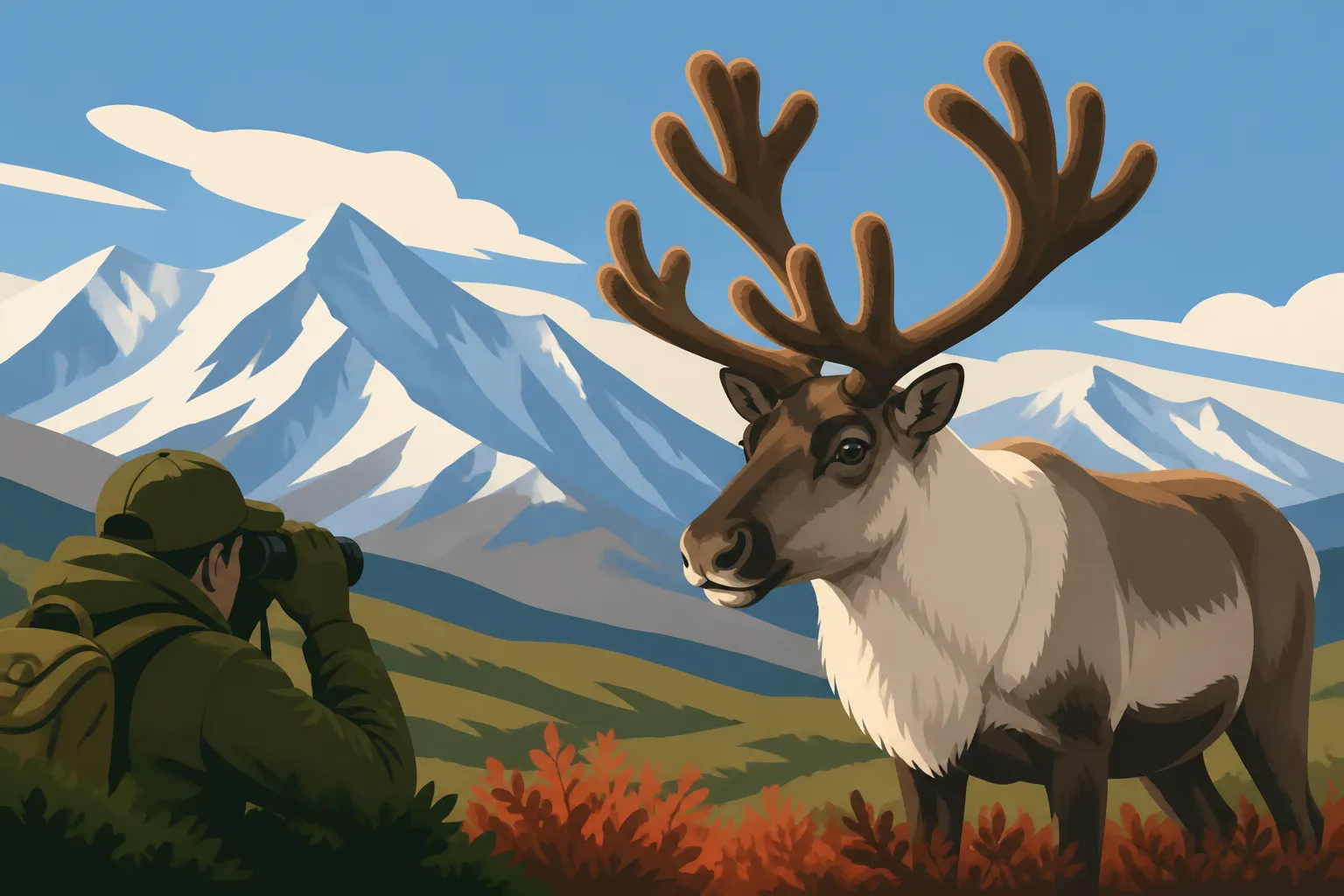
When caribou bulls are actively shedding, they present a unique sight. You might first notice a bull with small, dried strips of velvet hanging from its antlers, like tattered ribbons. As the shedding progresses, larger patches of velvet will peel away, often leaving behind a dark, bloody surface underneath. It’s not uncommon to see blood stains on the bull's face, neck, and shoulders from where it has rubbed vigorously to remove the velvet. This "ragged" stage can last anywhere from a few hours to a couple of days, depending on the individual bull and how intensely it works to clean its rack.
Once the velvet is completely removed, the antlers will appear dark, almost black, and wet with blood. Over a few days, this will dry, and the antlers will gradually lighten in color. This fresh, hard-horned look signals their readiness for the rut. For hunters, recognizing these stages is key. A bull in the ragged velvet stage is clearly no longer growing his antlers, but if your goal is a clean, hard-horned trophy, you might still want to give him a few more days to fully clean up before making a decision.
Factors Influencing When Bulls Drop Velvet
The precise day a caribou bull sheds its velvet isn't a fixed date on the calendar. Several factors contribute to the individual variation you'll observe in the field. Understanding these influences can help you better predict what to expect during your hunt.
Age and Health of the Bull
One of the most significant predictors of velvet shedding timing is the age and overall health of the bull. Generally, older, more mature, and healthier bulls tend to shed their velvet earlier than younger or less robust animals. This isn't just an observation; it's rooted in physiology. Older bulls often have a more developed endocrine system, leading to an earlier and more pronounced surge in testosterone as the summer wanes. This hormonal shift is the primary trigger for the velvet to dry up and slough off.
A bull in peak physical condition, having had access to ample, nutritious forage throughout the spring and summer, will have supported robust antler growth. This optimal nutritional state allows its body to reach the necessary hormonal balance for velvet shedding sooner. Conversely, a younger bull, still dedicating much of its energy to body growth, or any bull that has experienced a challenging year (perhaps due to a harsh winter or poor forage), might have a delayed hormonal cycle, resulting in later velvet shedding. When you're trying to identify Caribou Antler Shedding and Bull Identification characteristics, keep these age and health considerations in mind.
Nutrition and Environmental Conditions
The availability and quality of forage throughout the antler growth cycle directly influence a bull's ability to develop its antlers and, consequently, the timing of velvet shedding. Caribou, like all cervids, require a wealth of nutrients, particularly calcium and phosphorus, to grow their impressive racks.
If a spring and summer provide lush, abundant vegetation, bulls can lay down a significant amount of bone quickly. This rich nutritional intake contributes to overall body condition and supports the hormonal processes that culminate in velvet shedding. Conversely, periods of drought, late snowmelt, or widespread wildfires that reduce prime foraging habitat can lead to poorer nutrition. Bulls in such conditions may experience slower antler growth and a delayed physiological readiness to shed their velvet. The environment also plays a role in signaling the hormonal changes; decreasing daylight hours are a consistent trigger, but extreme weather shifts can slightly influence individual responses.
How to Track and Predict Velvet Shedding
So, how can a hunter in Anchorage or across the country get a handle on what might be happening hundreds of miles away? While you can't control the weather or a bull's hormones, you can certainly improve your predictive power.
One crucial step is to pay attention to information from the Alaska Department of Fish and Game (ADF&G). They often publish reports and updates on herd conditions and general observations which can hint at the overall health and readiness of various caribou populations. Consulting with reputable air taxi operators, guides, or local residents who spend time in the bush can also provide invaluable real-time observations, as they are often flying or traversing the very areas you plan to hunt.
Moreover, modern technology offers fantastic tools for pre-hunt scouting and prediction. Platforms like GoHunt provide robust mapping features and data layers that can help you analyze habitat, historical caribou movements, and even environmental trends. By studying satellite imagery from GoHunt, you can identify prime feeding areas and potential migration corridors, which indirectly inform you about the likely health and readiness of the caribou you'll be pursuing. While GoHunt won't tell you the exact moment a specific bull sheds, it empowers you to understand the conditions that contribute to earlier or later shedding, helping you strategically plan your hunt. This kind of advanced preparation, including Scouting a Unit From Satellite Imagery Before You Fly, can be a game-changer for independent hunters.
Hunting Strategies Informed by Velvet Timing
Understanding velvet timing isn't just academic; it has practical implications for your hunting strategy, especially when it comes to trophy expectations and legal compliance.
Planning Your Hunt for Hard-Horned Versus Velvet Bulls
Your preference for a velvet or hard-horned trophy should be a primary consideration when planning your caribou hunt dates. If you are dead set on a clean, hard-antlered bull, your best bet is to plan your hunt for mid-September or later. By this time, the vast majority of bulls will have shed and cleaned their antlers, minimizing the chance of encountering a bull still in the ragged stage. This timing often coincides with the pre-rut or early rut, when bulls are becoming more active and responsive to calls.
However, if you're open to or even prefer a velvet bull, targeting the early season, typically mid to late August, offers the best opportunity. Hunters often find that earlier season bulls are focused on feeding, making them potentially less wary before the pressures of the rut and hunting season fully set in. Keep in mind that harvesting a velvet bull requires specific post-kill care to preserve the velvet, often involving freezing the skull plate and velvet, or having it professionally injected with a preservative by a taxidermist immediately. This is not a "strap it to the pack and hike for two days" kind of situation if you want to keep the velvet pristine.
It's also crucial to consider local hunting regulations. Some specific hunts or units might open when bulls are predominantly in velvet. If antler restrictions apply, like "spike-fork" or specific brow-tine counts, assessing these can be exceedingly difficult on a velvet rack, increasing your risk of an Why Antler Restriction Hunts End in Citations if you make a mistake.
Field Judging Challenges with Velvet
As mentioned earlier, velvet can be a real trickster when it comes to field judging. The soft, thick covering can dramatically alter the appearance of a bull's antlers, making them seem larger, wider, and more massive than they truly are. This optical illusion is a common cause of "ground shrinkage," where a hunter shoots a bull they perceived as massive, only to find its hard antlers are significantly less impressive once the velvet is removed.
Trying to count brow tines or assess a specific spread requirement, like the "50-inch moose spread rule" (though for caribou, you might be looking for number of points or general mass), becomes a guesswork challenge when obscured by velvet. What appears to be a solid main beam might actually have a hidden fork or drop tines that are difficult to discern. To combat this, if you encounter a bull in velvet, try to observe it for as long as possible from multiple angles. Look for any areas where the velvet might be thinner or already peeling, offering a clearer glimpse of the underlying bone. If possible, wait for the bull to turn its head to reveal the full profile or watch if it engages in any rubbing behavior that might strip some velvet. If your hunt dates allow, simply waiting a few more days for bulls to clean up can remove a significant amount of uncertainty. By combining this knowledge with tools like GoHunt, you can mark potential areas and monitor herd movements, increasing your chances of finding the bull you're looking for once it's cleaned up.
Post-Harvest Care for Velvet Antlers
If you do successfully harvest a caribou bull in velvet and wish to preserve that unique trophy, be prepared for immediate and meticulous care. Velvet is living tissue, and once the bull is down, that tissue begins to die and decay rapidly.
The absolute most critical step is to cool the velvet as quickly and thoroughly as possible. If ambient temperatures are warm, this means getting the skull plate and antlers out of the sun and into the coldest possible conditions immediately. Many hunters will skin the skull plate, remove as much flesh as possible, and then pack the entire skull and antlers in snow or ice. For serious preservation, the antlers need to be frozen solid or injected with a preserving solution by a taxidermist within hours. If you're deep in the backcountry, freezing is often not an option, making chemical preservation the only way to save the velvet. This often requires carrying specialized supplies or having arrangements with a bush plane that can get your trophy out quickly to a taxidermist. Without proper care, velvet will begin to slip and smell within a day or two, making preservation impossible. If preserving the velvet isn't your goal, you can simply skin it off, revealing the underlying hard antler. Just remember that it will be bloody and need to be cleaned. Many hunters find that focusing on Caribou Meat Quality After the Rut is their primary goal, and velvet is a secondary consideration.
Caribou Velvet Shedding: Key Factors & Timing
| Factor | Typical Effect on Shedding Timing | Notes |
|---|---|---|
| Age of Bull | Older bulls shed earlier | More mature hormonal cycles drive earlier calcification and velvet sloughing. |
| Overall Health | Healthier bulls shed earlier | Optimal nutrition and physical condition support robust antler growth and prompt shedding. |
| Herd/Region | Minor variations by few days | Different herds (e.g., Western Arctic, Fortymile) may vary slightly due to local conditions. |
| Environmental | Favorable conditions = earlier | Ample spring/summer forage, steady weather patterns lead to earlier readiness. |
| Hormonal Cycle | Primary physiological trigger | Decreasing daylight hours and increasing testosterone initiate the shedding process. |
| Shedding Start | Late August | Bulls begin actively rubbing and stripping velvet; ragged appearance common. |
| Shedding Peak | Early September | Most bulls will have shed or be in the process of shedding; some clean racks appear. |
| Hard-Horned | Mid-September onwards | Majority of bulls will be hard-horned, ideal for hunters preferring clean antlers. |
Ultimately, the choice of hunting a velvet or hard-horned bull is a personal one, but being informed about the process and its implications will allow you to plan more effectively and approach your Alaska caribou hunt with greater confidence.
Disclaimer
This article is for general informational purposes only and does not constitute professional advice. Laws, prices and regulations vary by location and change over time. Consult a qualified professional for guidance on your specific situation.