Why Unit 20A Holds So Many Moose
Unit 20A moose populations thrive due to large wildfires, regenerating willow thickets, and diverse foraging habitats across the Tanana Flats.
Know what you’re after.
Big game, small game, upland birds, and waterfowl — identification, behavior, rut and migration timing, and how each species moves through the season.
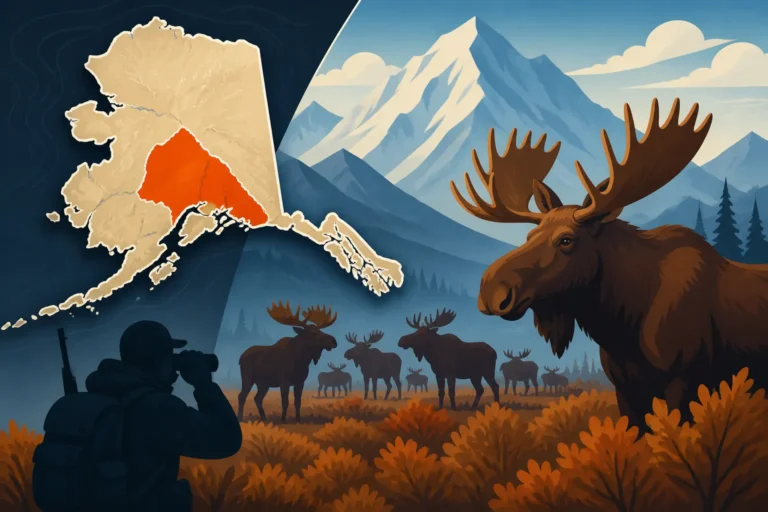
Unit 20A moose populations thrive due to large wildfires, regenerating willow thickets, and diverse foraging habitats across the Tanana Flats.
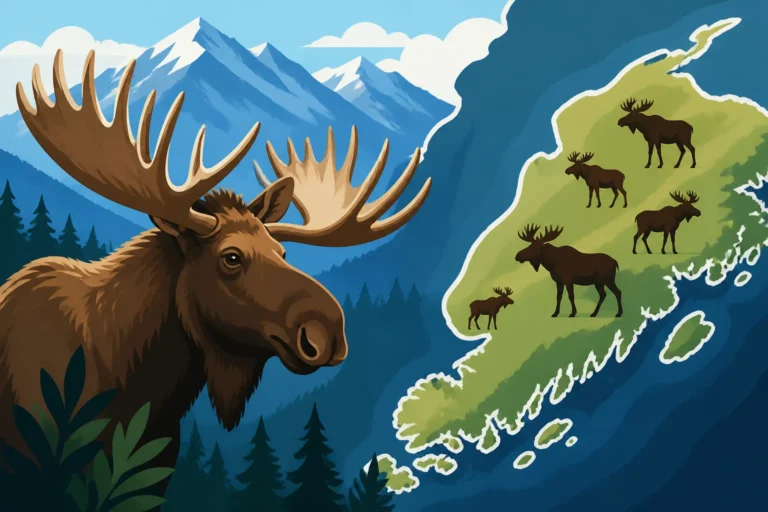
Moose density on the Kenai Peninsula explains how habitat, predation, and management objectives determine animal numbers for hunters.
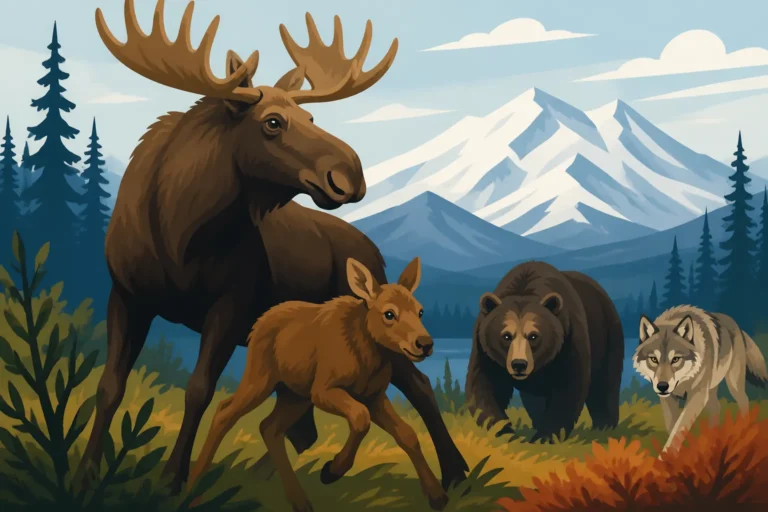
Predation pressure on Alaska moose calves from bears and wolves, plus environmental factors, determines their survival rates.
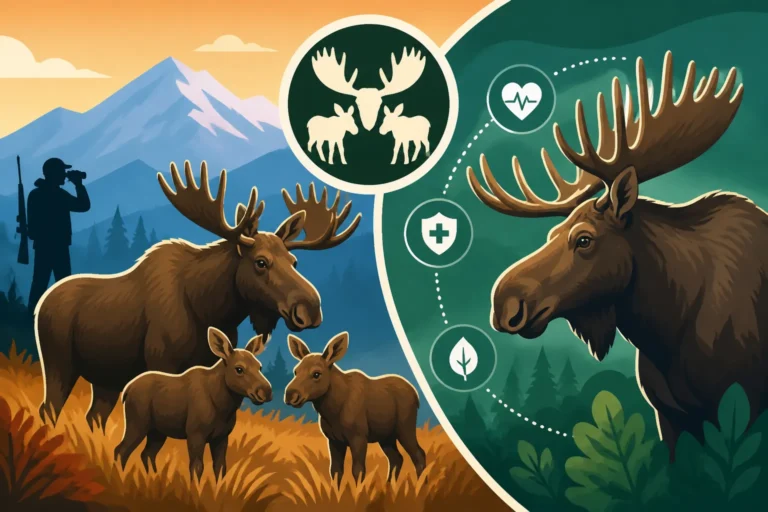
Moose twinning rates reveal herd health and reproductive potential in Alaska, helping biologists set sustainable hunting quotas and manage habitats.
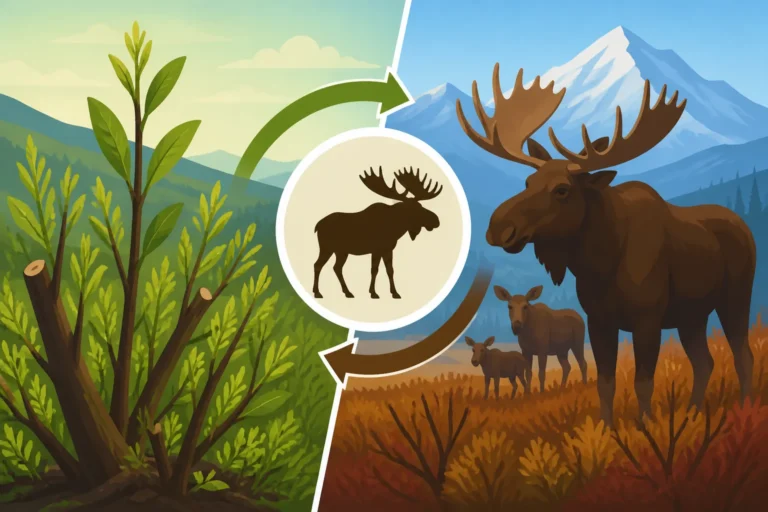
Willow regrowth and its nutritional stages dictate Alaska moose numbers, explaining population booms and declines across areas.
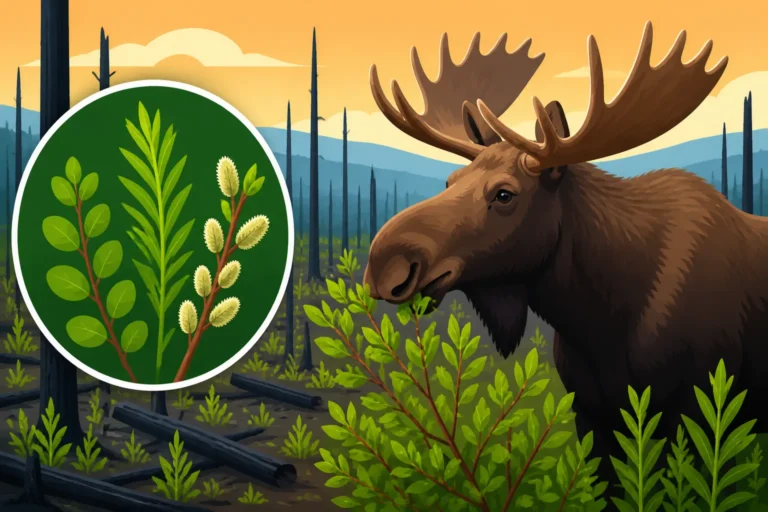
Ten-year-old Alaskan burns feature willows, birch, and aspen that supply nutritious food and protective cover for moose.
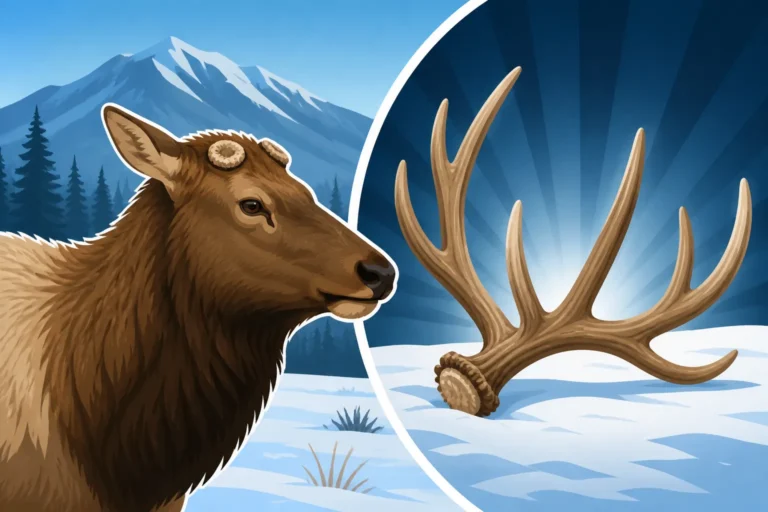
Alaska moose drop their antlers in midwinter because declining testosterone levels trigger a biological shedding process.
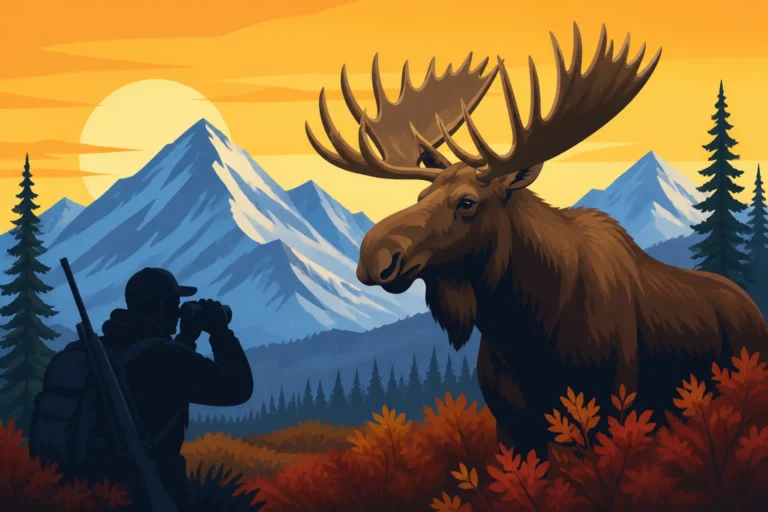
The Alaska moose rut peak timing, driven by photoperiods and geographic variations, explains when bull moose are most active.
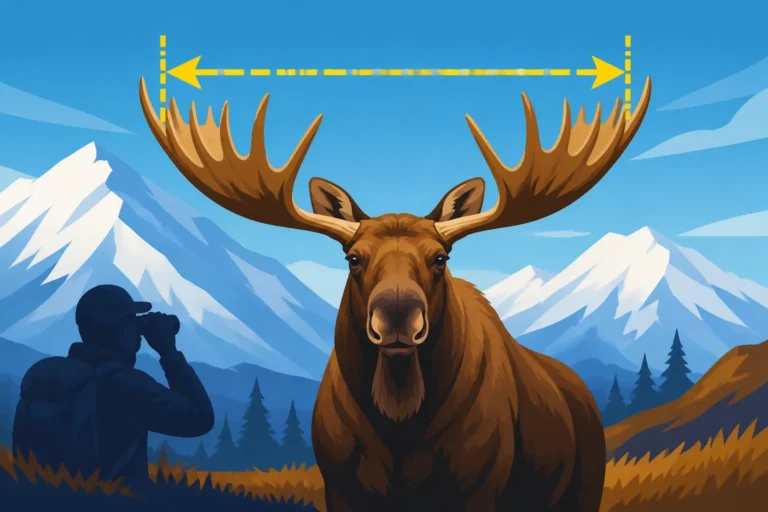
Average antler spread dimensions for mature Alaska bulls, plus age classes, body size indicators, and field judgment tips.
Alaska-Yukon bull moose body size and antler spread depend on genetics, rich willow browse habitats, and reaching seven to ten years of age.