Brown Bear Versus Grizzly: The Same Animal
Brown bears and grizzly bears in Alaska are the same species, Ursus arctos, but differ in size due to coastal salmon diets.
Know what you’re after.
Big game, small game, upland birds, and waterfowl — identification, behavior, rut and migration timing, and how each species moves through the season.
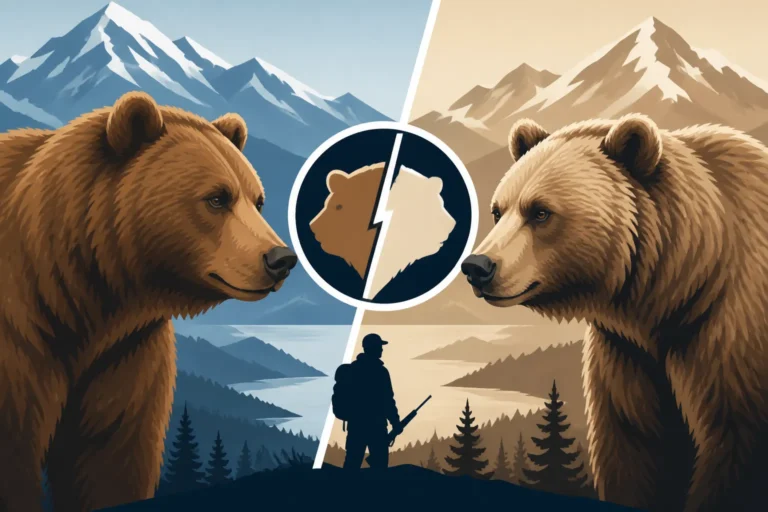
Brown bears and grizzly bears in Alaska are the same species, Ursus arctos, but differ in size due to coastal salmon diets.

Dall sheep and their white coats survive alpine environments in Alaska and Canada, providing camouflage against predators and snow.
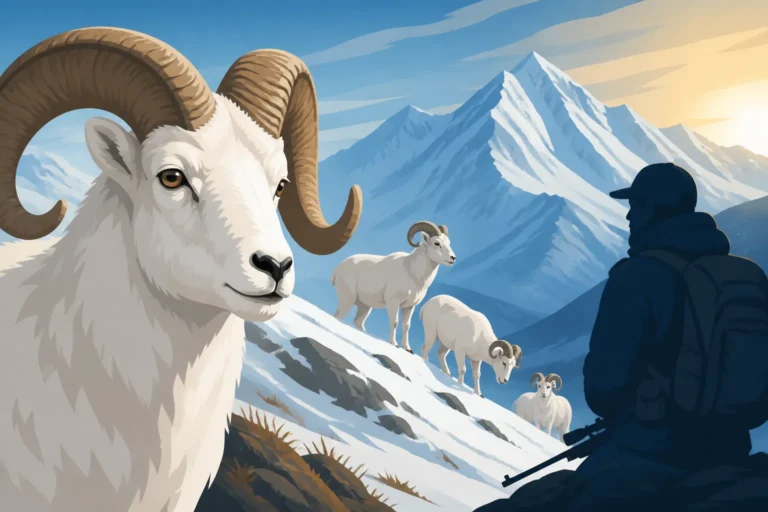
Dall sheep numbers in Alaska, survival rates of lambs, and the effects of deep snowpack and bitter cold temperatures during severe winters.
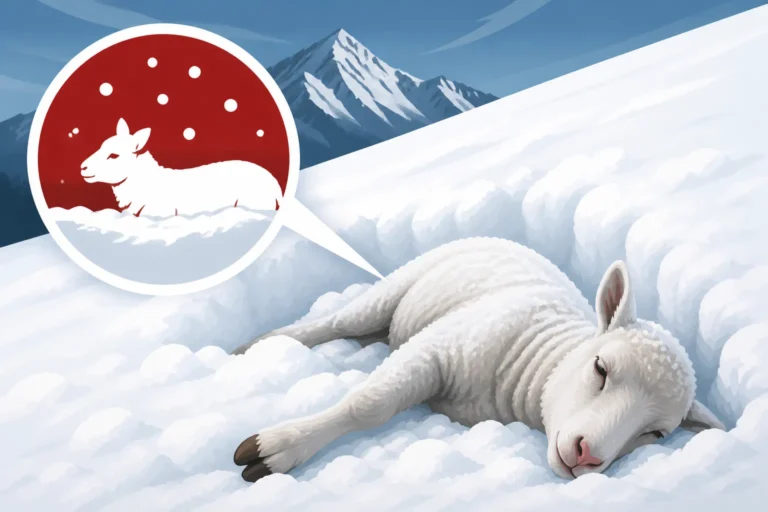
Winter snow depths of a foot or more trap forty to fifty pound Dall sheep lambs, causing physical exhaustion, hypothermia, and starvation.
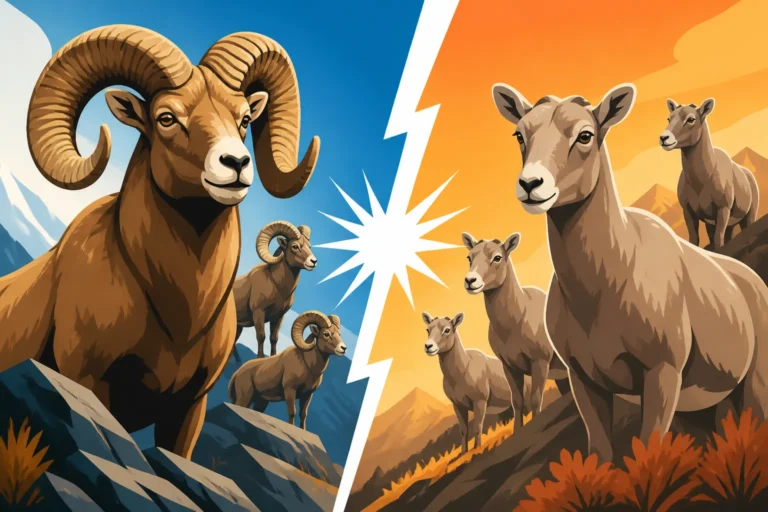
Dall sheep social segregation helps hunters distinguish ram bachelor groups from ewe bands across Alaska mountain ranges during hunting seasons.
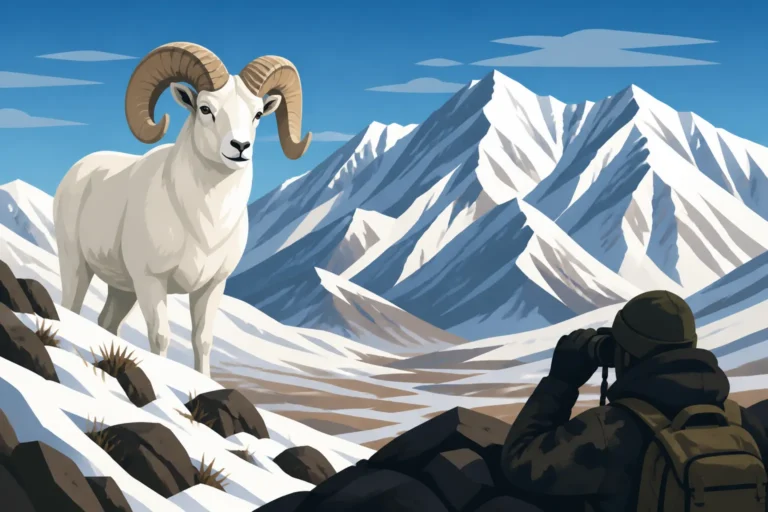
Dall sheep winter habitat selection in the Brooks Range relies on wind-scoured ridges providing limited forage and protection.
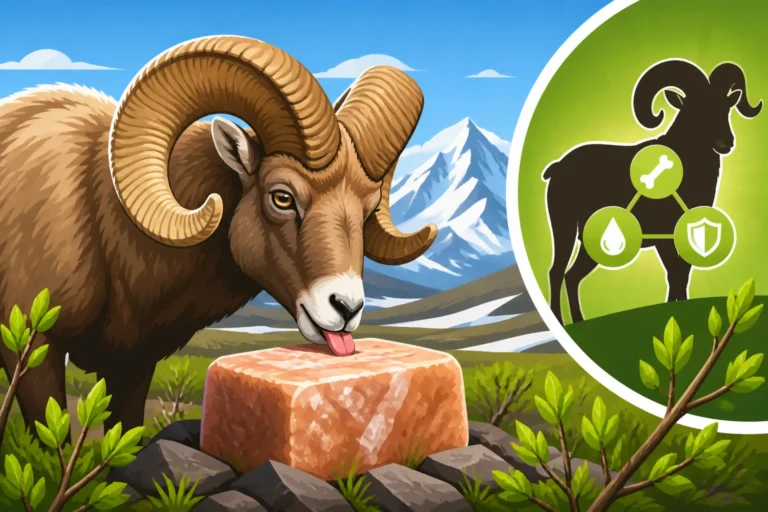
Spring mineral licks help Dall rams replenish winter nutrient deficits and support intense horn growth after harsh Alaskan winters.
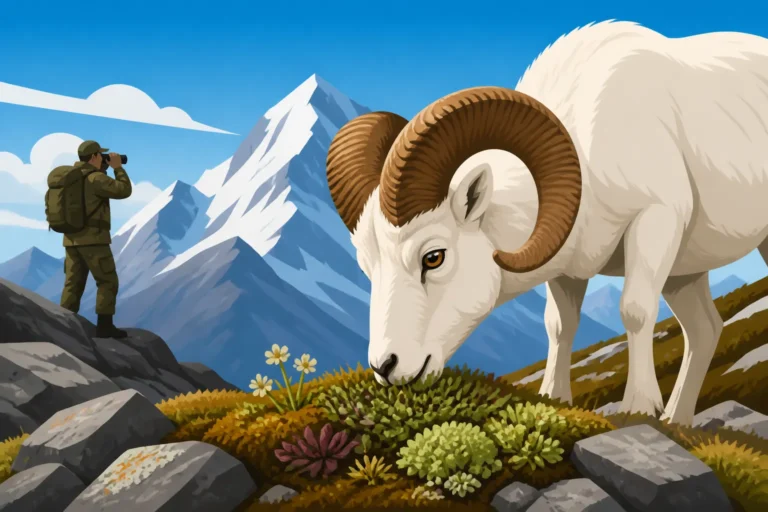
Dall sheep diet details explain how alpine plant adaptations, grazing habits, and key forage species drive high altitude survival.
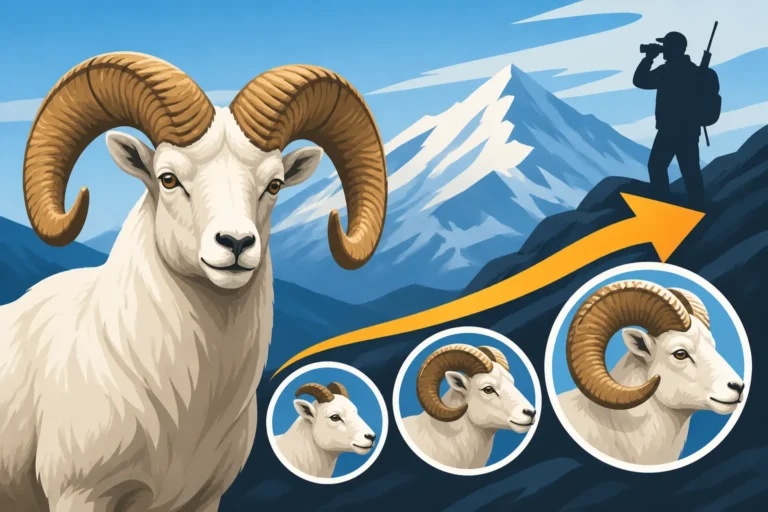
Dall ram horn development and growth rates depend on seasonal keratin production, nutrition, habitat quality, and annuli rings.
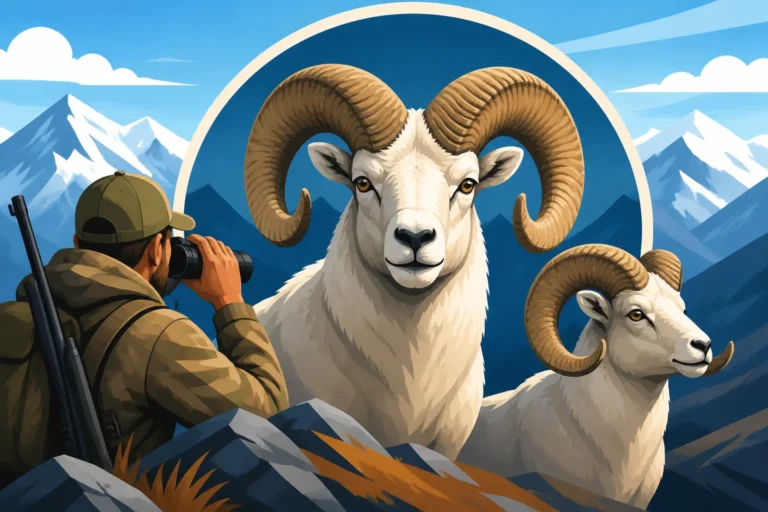
The Alaska full curl rule for Dall sheep requires horn tips past the facial plane or broomed horns at eight years old.