Alaska Baiting Season Versus the General Season
The world of Alaska hunting regulations can feel like a labyrinth, especially when you're trying to wrap your head around different season types for the same animal. Many hunters scratch their heads trying to figure out the real difference between Alaska's black bear baiting season and the general hunting season. It's not just about when you can hunt, but how you can hunt, and getting it wrong can lead to a forfeited harvest or worse, a citation. This guide will meticulously break down these distinctions, helping you navigate the rules for black bear hunting in the Last Frontier.
Understanding the Foundational Differences in Black Bear Hunting Methods
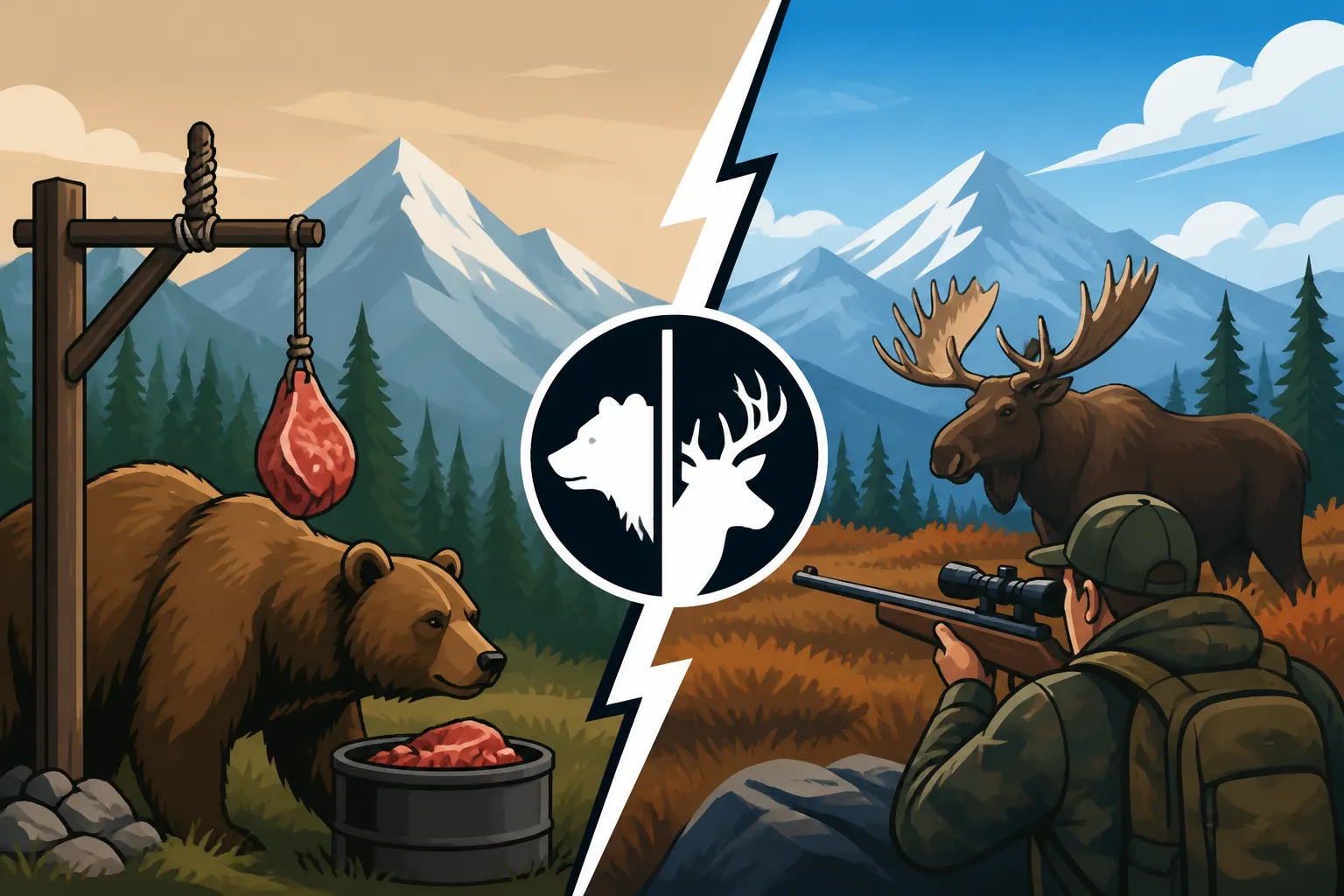
When you talk about black bear hunting in Alaska, you're primarily discussing two distinct approaches: baiting and the general season. While both aim to harvest black bears, the philosophy, preparation, and legal framework behind each are significantly different. It's not just a matter of timing on a calendar; it's a difference in strategy and interaction with the environment.
The Strategic Mindset of Baiting for Black Bears
Baiting, at its core, is a waiting game that relies on enticing an animal to a specific, pre-determined location. For black bears in Alaska, this method involves establishing a bait station, often with scent attractants and edible materials, and then waiting in a blind or stand for a bear to approach. The strategic advantage here is predictability. You're trying to bring the bear to you, often allowing for more controlled shot opportunities, better observation for judging the animal, and a generally less physically demanding hunt than traditional spot-and-stalk. This approach requires significant time and effort before the hunt even begins, from scouting potential sites to hauling in bait and setting up your blind. It’s a commitment to a specific location, requiring regular checks and replenishment of the bait. Many hunters use resources like GoHunt to research the nuances of baiting seasons in various units, understanding the specific legalities and success rates that can vary widely.
The Dynamic Nature of General Season Black Bear Hunts
The general season, by contrast, covers all other legal hunting methods that don't involve bait. This typically includes spot-and-stalk, still hunting, or calling. It's a much more active and dynamic form of hunting, where you're seeking out the animal in its natural habitat, covering ground, and reacting to its movements. General season hunts often take place across vast landscapes, from coastal rainforests to interior burn scars, demanding a different level of physical fitness and fieldcraft. You might be glassing expansive hillsides in search of a dark shape against the green, or slowly still-hunting through thick timber. The element of surprise and the challenge of finding the animal on its terms are hallmarks of general season hunting. This method is all about covering ground, reading sign, and being prepared for opportunities that could arise anywhere at any time.
Navigating the Regulatory Landscape for Alaska Black Bears
Alaska's hunting regulations are renowned for their complexity, and the rules governing black bear baiting versus general season hunts are a prime example. These aren't just suggestions; they are legally binding requirements that dictate when, where, and how you can pursue black bears. Misunderstanding these nuances can easily turn a planned hunt into a legal quagmire.
Distinct Season Dates and Permit Requirements
Perhaps the most apparent difference lies in the specific season dates. While general black bear seasons often span much longer periods – sometimes from April through November, or even into winter in some units – the baiting seasons are typically much more concise. For instance, in many Interior Alaska Game Management Units (GMUs) like parts of Unit 20, the black bear general season might open in spring (April or May) and run all the way through fall. However, the baiting season for black bears in those same units could be limited to mid-May through late June.
It's absolutely critical to consult the most current Alaska Department of Fish and Game (ADF&G) regulations booklet for the specific GMU you plan to hunt. These dates can change annually based on management objectives, and what's legal in one unit might be strictly prohibited in another.
Beyond dates, baiting itself often comes with an additional layer of administrative requirements. Hunters planning to use bait must typically register their bait station with ADF&G. This registration process is not just a formality; it helps biologists track effort and distribution, and it ensures proper spacing between bait sites to prevent overcrowding and reduce potential for conflicts. This is a key distinction from general season hunting, where no such site registration is required. You can learn more about this specific process in guides like Alaska Black Bear Bait Station Registration.
Legal Methods and Restrictions Unique to Each Season
The very definition of "baiting" brings with it a specific set of rules that do not apply to general season hunting. For baiting, you must adhere to strict guidelines regarding Legal Bait Materials for Alaska Black Bear, how far your bait site must be from a public trail or road, and even how long an active bait site can remain unattended. For instance, regulations usually stipulate that bait cannot be placed within a certain distance of an established trail or a dwelling, and the hunter must be within a specific distance of the bait site themselves while hunting over it.
A critical point of distinction is the species restriction: Why Alaska Bans Baiting for Brown Bears. Baiting is only legal for black bears in Alaska. Attempting to bait a brown bear is a serious violation. This makes proper bear identification absolutely paramount when hunting over bait, as a brown bear could easily show up at a black bear bait station.
Another aspect of method control relates to technology. While trail cameras are often used by hunters in both general and baiting scenarios to scout, there are specific Trail Camera Rules at an Alaska Bait Site that hunters must follow to ensure fair chase and ethical conduct.
In contrast, general season hunting offers more flexibility in movement and location, as long as you're not utilizing bait. You might be actively calling black bears, a tactic covered in articles like Predator Calling for Alaska Wolves and Wolverine (though specific to bears, the principles of calling apply), or simply covering ground in areas known for high black bear density.
Here's a quick comparison of the two season types for black bears in Alaska:
| Feature | Black Bear Baiting Season | General Black Bear Season |
|---|---|---|
| Primary Method | Enticing bears to a fixed, pre-established site with bait. | Spot-and-stalk, still hunting, calling, incidental harvest. |
| Season Duration | Generally shorter, specific windows (e.g., May-June). | Often longer, spanning spring, summer, and fall. |
| Permit/Registration | Requires registration of bait site with ADF&G. | No special site registration required. |
| Bait Material | Strict rules on what can be used as bait. | Not applicable. |
| Location Rules | Specific distances from roads, trails, dwellings. | Generally open, follow land access rules. |
| Species | Only black bears. Baiting brown bears is illegal. | Black bears (and brown bears where allowed, unbaited). |
| Physical Demand | Can be less physically demanding during the hunt itself. | Often requires significant hiking, glassing, and stalking. |
| Preparation | Intensive pre-season scouting, bait hauling, blind setup. | Scouting for bear sign and habitat, gear prep for mobile hunting. |
Strategic Considerations for Your Alaska Black Bear Hunt
Choosing between hunting the baiting season or the general season for black bears isn't a simple coin toss. It boils down to your personal hunting style, available time, physical capabilities, and what you hope to gain from the experience. Both have their merits and their challenges, and understanding these can help you plan a more successful and enjoyable hunt.
Advantages and Challenges of Baiting
One of the biggest advantages of the baiting season is the potential for a more controlled hunting experience. Once a bait site is established and bears are visiting regularly, you can often observe the bears for longer periods, allowing for better trophy judging and more precise shot placement. This can be particularly appealing for new hunters or those seeking a higher likelihood of success. The fixed location also means you can often hunt from a more comfortable blind, which can be a relief from the grueling physical demands of some Alaska hunts, although setting up the site is still a lot of work. Being able to thoroughly check for sows with cubs – which are illegal to harvest in many areas – is also much easier when the bear is stationary at a bait.
However, baiting comes with its own set of challenges. The upfront work is substantial, requiring multiple trips to the bait site to establish and maintain it. This means time, fuel, and effort before you even sit in a blind. Additionally, baiting can be a waiting game, testing your patience. You might sit for hours, days, or even a week without a legal bear showing up, or a smaller, undesirable bear might monopolize the bait. There's also the constant vigilance required to ensure that a brown bear doesn't become a regular visitor, which would necessitate shutting down the bait site immediately to avoid conflicts or legal issues. Consider articles like Bear Safety While Butchering a Kill in Alaska as proper precautions are necessary at any bear kill site, especially those visited by multiple bears.
Pursuing Black Bears During the General Season
General season hunting offers a much broader scope for adventure and exploration. You're not tied to one spot, allowing you to adapt to bear movements, weather patterns, and changing terrain. This is the hunt for those who love to cover ground, Glassing the Alaska Range: Finding Game Before You Move, and immerse themselves in the Alaskan wilderness. You might target specific habitats, like the south-facing snow slides where bears emerge in spring, as discussed in Spring Bear Hunting on South-Facing Snow Slides, or focus on areas where berries are ripe in the fall.
The challenges, however, are also significant. General season hunting can be physically taxing, requiring long days of hiking, climbing, and sometimes bushwhacking through dense vegetation. Success rates can be lower than baiting, as finding a bear in vast wilderness is inherently more challenging. Shot opportunities might be fleeting, requiring quick decisions and good marksmanship. Furthermore, identifying a legal animal can be more difficult when bears are on the move, especially if you're trying to judge size or confirm the absence of cubs. You might need to carry more gear for extended trips, as detailed in Backpack Hunting in Alaska: Gear Weight and Meat Loads, to be self-sufficient away from any established camp. When planning these hunts, using tools from platforms like GoHunt can be invaluable for cross-referencing GMU regulations, historical harvest data, and even topographical maps to identify prime hunting areas and species distribution for Black Bear Color Phases in Alaska.
Regardless of the method you choose, remember that both require thorough preparation, a deep understanding of the regulations, and respect for Alaska's incredible wildlife. Always ensure your rifle is properly zeroed and you're familiar with its performance, especially if flying into a remote camp, as highlighted in Sighting In Before You Fly to a Remote Alaska Camp.
Planning for Success in Either Season
Regardless of whether you choose the focused approach of a bait hunt or the expansive challenge of a general season hunt, your preparation will dictate much of your success. Alaska is an unforgiving landscape, and assuming one type of hunt is "easier" than the other is a mistake. Both demand dedication, knowledge, and a strong commitment to ethical hunting practices.
Gear and Logistics for Your Chosen Method
For a baiting hunt, your gear list will naturally gravitate towards items that facilitate long waits and static observation. This means a comfortable, weather-proof blind, perhaps a portable chair, and binoculars or a spotting scope for judging bears. You'll also need specialized equipment for setting up and maintaining the bait site: durable containers for bait, scent attractants, tools for clearing brush, and perhaps a small game camera for monitoring activity. Logistics will revolve around repeated trips to your bait site, often requiring ATV access or frequent hikes to replenish bait and check for visitors. It's a game of consistency and stealth, making sure your presence doesn't spook the bears. Understanding Alaska Black Bear Seasons and Bag Limits for your chosen GMU is paramount to ensure you're hunting legally.
For a general season hunt, your gear will emphasize mobility, self-sufficiency, and resilience against the elements. A high-quality backpack, lightweight shelter, cooking system, and durable hiking boots become paramount. You'll likely need excellent optics for glassing vast areas and a rifle that you can comfortably carry and shoot accurately under field conditions. Logistics will involve detailed map reading, navigation skills, and the physical stamina to cover many miles each day. Considerations for meat care, especially if you're a long way from a road or pick-up point, become critical. Think about how you'll get the meat out, as discussed in Packing Out Meat in Alaska: The Salvage Law Hunters Must Follow, and how you'll protect it from scavengers. Tools like GoHunt's mapping features can be incredibly useful for scouting potential routes, identifying terrain features that bears might favor, and understanding access points in a unit.
Safety and Ethical Considerations
In both scenarios, bear safety is non-negotiable. Whether you're at a bait site that attracts multiple bears or stalking through thick brush during the general season, carrying bear spray and knowing how to use it is essential. A firearm suitable for bear defense is also a wise precaution. Always hunt with a partner if possible, and leave a detailed trip plan with someone responsible.
Ethical considerations also play a huge role. For baiting, this means maintaining your bait site responsibly, removing all non-natural materials at the end of the season, and ensuring no litter is left behind. It also means committing to proper identification of legal bears before you shoot. For general season hunting, ethical considerations include taking clean shots, tracking thoroughly, and adhering to all salvage laws to ensure no meat is wasted. Always remember to retrieve all edible meat from your kill, a legal and moral obligation in Alaska.
Ultimately, the choice between baiting and general season hunting for black bears in Alaska is a personal one, but it should be an informed one. Both offer incredible experiences and the chance to harvest one of Alaska's iconic big game animals. By understanding the distinct rules, strategic demands, and preparation required for each, you can set yourself up for a truly memorable and successful hunt.
Disclaimer
Please be aware that hunting regulations in Alaska are subject to change. Always consult the current year's Alaska Department of Fish and Game (ADF&G) regulations booklet or their official website before planning or engaging in any hunting activities. This guide provides general information and should not be considered a substitute for official regulatory documents.