What Counts as a Legal Muzzleloader in Alaska
The sheer complexity of Alaska's hunting regulations can be a real headache, especially when you're trying to figure out the specifics for specialized gear like muzzleloaders. It's not always as simple as "if it loads from the front, it's good to go." This guide is here to untangle the legal definition of a muzzleloader in Alaska, helping you understand the nuances, avoid common pitfalls, and confidently head into the field knowing your gear meets all the requirements.
Understanding the Alaskan Muzzleloader Definition
Navigating the dense thicket of hunting regulations can feel like trying to find a specific willow patch in a vast moose swamp. When it comes to muzzleloaders in Alaska, it's not enough for a firearm to simply load from the muzzle. The Alaska Department of Fish and Game (ADF&G) has a very specific definition that distinguishes a legal muzzleloader from something that might look similar but doesn't comply with the rules. This definition is in place to maintain the spirit of muzzleloader hunting as a more traditional, often single-shot, endeavor, preventing modern adaptations that could circumvent the intent of special muzzleloader seasons.
Defining "Muzzleloading Firearm" in Alaska
At its heart, a "muzzleloading firearm" in Alaska is defined as a rifle, shotgun, or handgun that is designed to be loaded exclusively from the muzzle. This isn't just a suggestion; it's a fundamental requirement. What does "exclusively from the muzzle" truly mean in practice? It means that every component of the projectile and propellant charge must be introduced through the barrel's front end. This might seem obvious, but it immediately excludes certain modern "in-line" designs that can be quickly adapted for breech-loading or use pre-packaged cartridges, even if they superficially resemble a muzzleloader. The law wants to ensure you're truly engaging with the traditional loading process.
The regulations also emphasize that the firearm must use a projectile that is not pre-cased or a factory-loaded cartridge. You're expected to load components like powder, a sabot or patch, and the bullet separately. This manual, deliberate loading process is central to the definition and is what distinguishes it from a modern cartridge firearm, even if that modern firearm could theoretically be loaded one component at a time. It’s about the inherent design and the intended method of operation.
The Critical Role of Permanent Ignition Systems
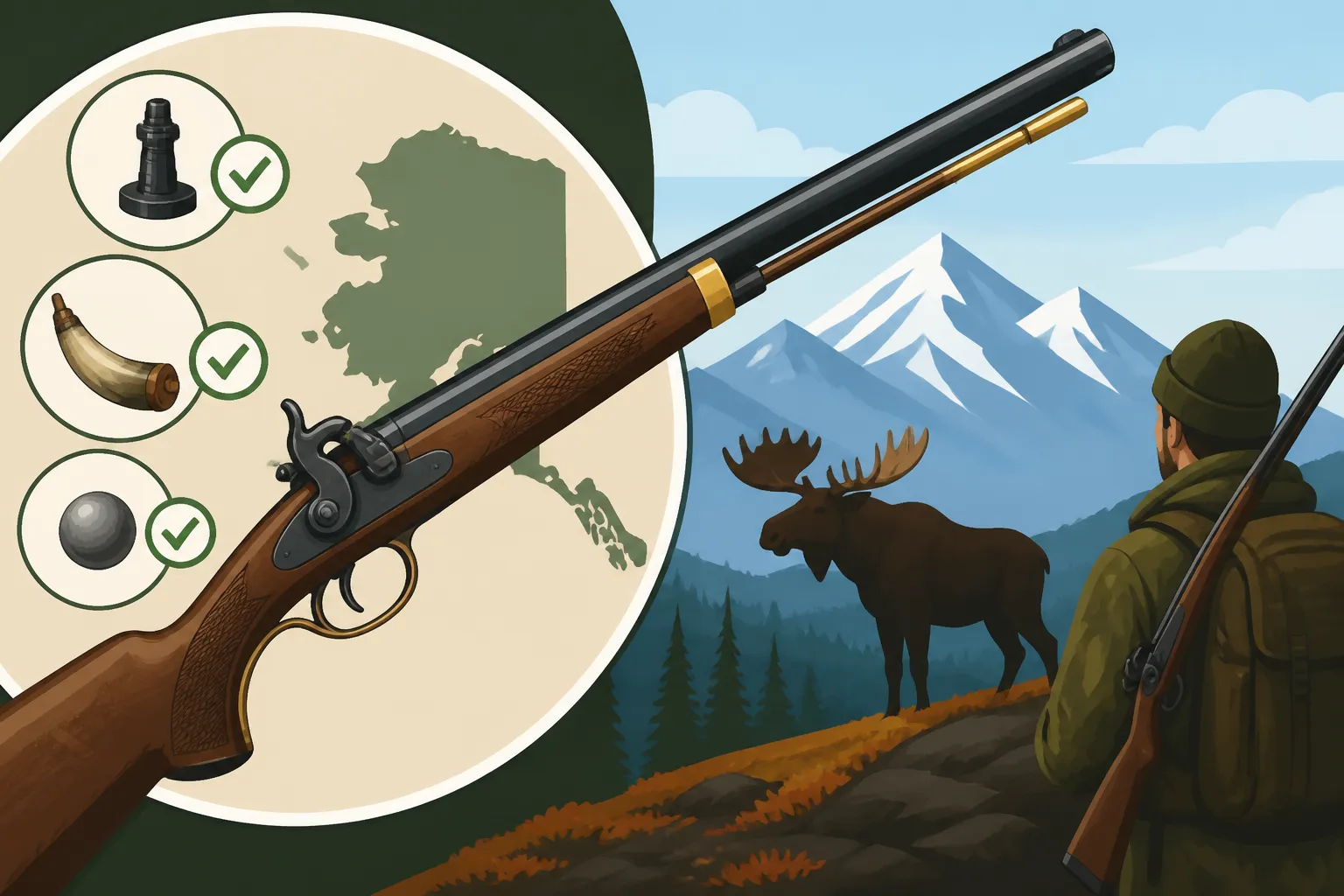
One of the most crucial aspects of Alaska's muzzleloader definition revolves around the ignition system. To be legal, a muzzleloader must have an integrated and permanent ignition system. This specific phrasing is designed to prevent modifications that would allow for quick changes between loading methods or ignition types. A true Alaskan legal muzzleloader utilizes a percussion cap, flintlock, or matchlock system that is permanently affixed to the firearm.
This means that detachable or easily replaceable breech plugs designed to hold modern primer types, common in many contemporary in-line muzzleloaders, often fall outside Alaska's legal definition unless they are part of a system that cannot be quickly converted to accept a cartridge. The intent here is to maintain a level playing field and uphold the challenge associated with traditional muzzleloading. If your "muzzleloader" has a breech plug that you could unscrew and replace with one that takes a shotgun primer, for instance, you're likely in a gray area, or outright illegal, during a muzzleloader-only season. It’s about more than just loading from the muzzle; it’s about the irreversible commitment to that loading style through the firearm's fundamental design.
Why Barrel Loading is Non-Negotiable
Beyond the ignition system, the strict requirement for all components—projectile and propellant—to be loaded from the muzzle is absolutely non-negotiable. This isn't just a guideline; it's the defining characteristic. This means no pre-charged cases slipped in from a breech, no hybrid systems that allow for a quick cartridge swap. The entire process, from pouring in the powder to seating the bullet, must occur down the barrel.
This distinction is especially important because many manufacturers today produce rifles marketed as "muzzleloaders" that feature break-action designs, removable breech plugs, or even mechanisms that could technically accept a modified cartridge. While these might be legal in other states, they very likely are not legal in Alaska for designated muzzleloader hunts. The Alaskan regulations specifically seek to maintain a more traditional form of muzzleloading. For instance, any firearm that has a bolt action or break-action design, even if you feed it components from the muzzle, will be scrutinized very carefully. The core design must inherently restrict loading to the muzzle only, reinforcing the more challenging and historically accurate hunting experience that these special seasons aim to preserve.
Specific Muzzleloader Types and Restrictions
When you're sorting through the different types of muzzleloaders out there, it can be easy to get confused about what's actually permissible in Alaska. The regulations aren't just about how you load it, but also the specific mechanisms and accessories that are allowed or prohibited. This is where many hunters, especially those coming from other states with looser muzzleloader laws, can run into trouble if they don't do their homework.
Percussion and Flintlock Systems
Traditional percussion and flintlock systems are generally the most straightforward when it comes to meeting Alaska's legal definition. These firearms, by their very design, are inherently muzzleloaders. A flintlock uses a piece of flint to strike a frizzen, creating a spark that ignites powder in a pan, which then flashes through a touchhole to the main charge. Percussion caps, on the other hand, are placed on a nipple and struck by a hammer, sending a flame down the flash channel to ignite the powder.
Because these systems are not easily adaptable to modern cartridge use and strictly require loading from the muzzle, they fit neatly within the ADF&G's guidelines. Hunters using these traditional firearms can generally feel confident they are in compliance, assuming they are also using legal projectiles and powder. The beauty of these systems lies in their simplicity and historical accuracy, making them a popular choice for those truly embracing the spirit of muzzleloader hunting in Alaska. However, even with these traditional designs, ensuring the bore diameter meets minimum requirements for certain game, and that your chosen projectile is solid, remains important.
In-Line Muzzleloaders: A Modern Twist
This is where things get tricky, and where most of the confusion arises. Many modern "in-line" muzzleloaders, while loading from the muzzle, feature designs that often do not meet Alaska's strict legal definition. The key issue frequently revolves around the ignition system and the possibility of conversion. While an in-line muzzleloader's primer is "in-line" with the powder charge for more efficient ignition, many models utilize easily removable breech plugs that accept shotgun primers or even proprietary primer designs. The problem for Alaska is if this system could be readily converted to accept a cartridge or if the primer system itself isn't considered "permanent" and "integrated" in the traditional sense.
For example, a CVA Accura or a Traditions Pursuit, popular models known for their accuracy and modern features, might be perfectly legal in a state like Oregon or Colorado. However, in Alaska, if their breech plug system is deemed too easily interchangeable with a cartridge system, or if they lack the "permanent and integrated" ignition the state specifies, they would not be considered a legal muzzleloader for special muzzleloader hunts. It’s not about the brand, but the design specifications. Always check the very latest regulations, as interpretations and specific wording can evolve, and consider reaching out to ADF&G directly if you have an unconventional model. For detailed information on specific hunt areas and the regulations that might apply, many experienced hunters rely on tools and resources from companies like GoHunt, which often compile state-specific details.
Sighting Systems: Open Sights, Scopes, and Electronics
Another area of regulation that impacts muzzleloaders is the type of sighting system allowed. Generally, Alaska permits both open sights and optical sights (scopes) on muzzleloading firearms for big game. Unlike some other states that restrict muzzleloader hunts to open sights only, Alaska often allows the use of modern scopes, which can be a significant advantage, especially for older hunters or those hunting in challenging light conditions.
However, there's a critical caveat: electronic sights, night vision, thermal imaging, or any device that projects a beam (like a laser) onto the target are almost universally prohibited for hunting big game in Alaska, regardless of the firearm type. So, while a variable power scope is typically fine, a red dot sight that relies on a battery or any illuminated reticle might fall into a grey area or be explicitly disallowed depending on the exact wording and interpretation of "electronic components." Always err on the side of caution. For instance, a traditional scope with a non-illuminated reticle, even if it's high magnification, is usually acceptable. Before heading afield, double-check the current hunting regulations for the specific game management unit (GMU) and permit hunt you're participating in, as rules can sometimes vary by location or species.
Ammunition and Propellant Requirements
Beyond the firearm itself, what you put into your muzzleloader is just as important for legality in Alaska. The regulations are quite clear about the types of projectiles and propellants that are permissible, and straying from these can land you in serious trouble. This isn't the time for experimentation or assuming that what works elsewhere will fly in the Last Frontier.
Legal Projectile Types and Minimums
When it comes to projectiles for muzzleloaders in Alaska, the focus is on traditional, solid-form bullets. The regulations typically require that projectiles be a single, non-fragmenting, conical or round ball bullet. This means shot (like birdshot or buckshot) is generally not allowed for big game, and neither are hollow-point bullets that are designed to fragment extensively upon impact. The intent is to ensure a clean, ethical kill with a solid, penetrating projectile.
Minimum caliber requirements also apply, much like they do for modern rifles. For moose, caribou, and bears, for example, you're looking at minimums like .45 caliber for conical bullets or .50 caliber for round balls. It's crucial to consult the specific game regulations for the species you intend to hunt, as these minimums can vary. Furthermore, sabots, which allow a smaller caliber projectile to be fired through a larger bore, are generally legal, provided the actual projectile within the sabot meets the minimum weight and construction requirements. You can find more comprehensive information on these requirements in resources like the annual ADF&G hunting regulations booklet.
Approved Powders and Loading Practices
In Alaska, legal muzzleloaders must use black powder or approved black powder substitutes. This includes traditional black powder (like Goex or Swiss), Pyrodex, and Triple Seven. Smokeless powder, while used in some very specialized "muzzleloader" rifles in other states, is never permitted in Alaska for muzzleloading firearms, even if your firearm claims to be designed for it. The reason is safety: modern smokeless powders generate much higher pressures than black powder or its substitutes, and using them in a firearm not specifically designed and tested for those pressures can lead to catastrophic failure.
Proper loading practices are also implied within the regulations. You must load one projectile and one charge of powder per barrel. Double-loading, while potentially accidental, is both unsafe and illegal. The expectation is that you are following safe and traditional muzzleloading procedures. For hunters new to Alaska or those looking for detailed hunt information, platforms like GoHunt can be excellent tools for researching specific unit regulations or connecting with other experienced Alaskan hunters to discuss loading practices.
Understanding the "Loaded" Definition
The concept of a "loaded" muzzleloader in Alaska also needs careful attention, especially when traveling. A muzzleloader is considered loaded if it has a powder charge and a projectile in the barrel, regardless of whether a primer or percussion cap is in place. This is a critical distinction for transport rules. Many hunters mistakenly believe that without a cap or primer, their muzzleloader is "unloaded," which is not the case under Alaska law.
This definition directly impacts how you transport your muzzleloader in vehicles, boats, or aircraft. For instance, when transporting a muzzleloader in a vehicle or boat on certain public lands or within specific areas, it must be completely unloaded. This means removing both the powder and the projectile. You can't just remove the percussion cap and call it good. Understanding this detail is crucial for avoiding violations, particularly when crossing boundaries between different land jurisdictions or when preparing for a bush plane flight where strict safety regulations apply. When dealing with transporters, they will often require your firearm to be completely unloaded and secured, as detailed in topics like Strapping Gear Loads for a Bush Flight.
Navigating Alaska's Muzzleloader-Specific Hunts
Alaska offers a unique blend of general hunting opportunities and special permit hunts, and muzzleloaders fit into both categories, though with distinct rules. It’s crucial to understand these distinctions to ensure you’re not only compliant but also maximizing your hunting potential. The state manages its game populations carefully, and special seasons or weapon restrictions are often a tool to achieve specific harvest objectives or offer diverse hunting experiences.
Draw Hunts and Registration Hunts
Many of Alaska's most sought-after hunting opportunities, particularly for species like moose, sheep, or certain bear populations, are allocated through a drawing permit system. Within this system, you'll sometimes find specific permits designated for "muzzleloader only" hunts. These are gold mines for muzzleloader enthusiasts, as they often have different success rates, hunting dates, or even access rules compared to general rifle seasons. Applying for these hunts requires careful planning, often months in advance, and you'll need to confirm that your specific muzzleloader meets the strict legal definition discussed earlier. Ignoring these definitions could mean drawing a tag you can't legally fulfill.
Similarly, Alaska also has registration hunts, which are often open to a broader range of hunters but might close on quota once a certain number of animals are harvested. While less common, a registration hunt could have muzzleloader-specific restrictions or allowances. To navigate these, you'll want to stay up-to-date on the ADF&G website and potentially use scouting tools, much like you would if researching Alaska Moose Hunting Tactics for the September Rut. For more on how these systems work, exploring resources like How Alaska's Big Game Drawing Permits Work or Alaska Registration Hunts That Close on Quota can provide invaluable context.
General Season Muzzleloader Use
Even if there isn't a dedicated "muzzleloader only" hunt, you can often use a legal muzzleloader during general rifle seasons. In many areas, if the general season allows for rifles, it will also allow for legal muzzleloaders. This provides a lot of flexibility and means you aren't always limited to special draw permits. For example, if you're planning a trip for Hunting Sitka Blacktail Deer in the Alpine Before Snow during a general season, your legal muzzleloader would typically be a permissible weapon choice, provided you meet all other species-specific and area-specific regulations.
However, the critical distinction remains: your muzzleloader must still meet Alaska's strict definition of a muzzleloading firearm, even if you're using it in a general rifle season. It's not a free pass to use a hybrid firearm just because modern rifles are allowed. The legal definition is constant; it's the application of that definition to specific hunt types that varies. Always cross-reference the game regulations booklet for the specific game management unit and species you intend to hunt to confirm general season weapon allowances. This vigilance prevents any misunderstanding that could lead to a violation.
Checking Emergency Orders
Alaska's hunting seasons and regulations are dynamic, much like the wilderness itself. Because wildlife populations, weather patterns, and access can change rapidly, the ADF&G frequently issues "Emergency Orders" that can alter season dates, bag limits, weapon restrictions, or even close areas entirely. This is particularly relevant for hunters participating in drawing or registration hunts, where quotas can be met quickly, or for species that might be affected by unusually severe winters or early thaws.
It's not enough to just read the regulations booklet once at the beginning of the season. You absolutely must check the ADF&G website regularly for emergency orders, especially as your hunt date approaches. A muzzleloader-only hunt could be extended, shortened, or even canceled via an emergency order. Failing to check these updates is a common mistake and can lead to being out of compliance, or worse, making an illegal harvest. Think of it as part of your essential pre-hunt preparation, just like planning your route or figuring out your gear list for a Backpack Hunting in Alaska: Gear Weight and Meat Loads. Being proactive about monitoring these orders ensures you have the most current information for a successful and legal hunt.
| Feature | Legal for Muzzleloaders in Alaska | Generally Not Legal for Muzzleloaders in Alaska |
|---|---|---|
| Loading Method | Exclusively from the muzzle | From the breech, or readily convertible to breech loading |
| Ignition System | Integrated & permanent (percussion, flintlock) | Easily removable/interchangeable breech plugs accepting modern primers, or systems convertible to cartridge use |
| Projectile Type | Single, non-fragmenting conical or round ball bullet | Shot (birdshot, buckshot) for big game; fragmenting hollow points |
| Propellant | Black powder or approved black powder substitutes | Smokeless powder (NEVER) |
| Sighting System | Open sights, optical scopes (non-electronic) | Electronic sights, night vision, thermal imaging, laser designators |
| Ammunition Form | Separate powder, sabot/patch, bullet | Pre-cased, factory-loaded cartridges |
| Transport | Must be completely unloaded (no powder or projectile) for certain scenarios | "Unloaded" by just removing cap/primer (incorrect for legal transport) |
Disclaimer
The information provided in this guide is for general informational purposes only and does not constitute legal advice. Hunting regulations in Alaska are complex and subject to change. It is the individual hunter's responsibility to review the current Alaska Hunting Regulations, Emergency Orders, and any specific permit conditions published by the Alaska Department of Fish and Game (ADF&G) before participating in any hunt. Always verify information directly with ADF&G or a qualified legal professional to ensure compliance.