Deer Populations on Prince of Wales Island
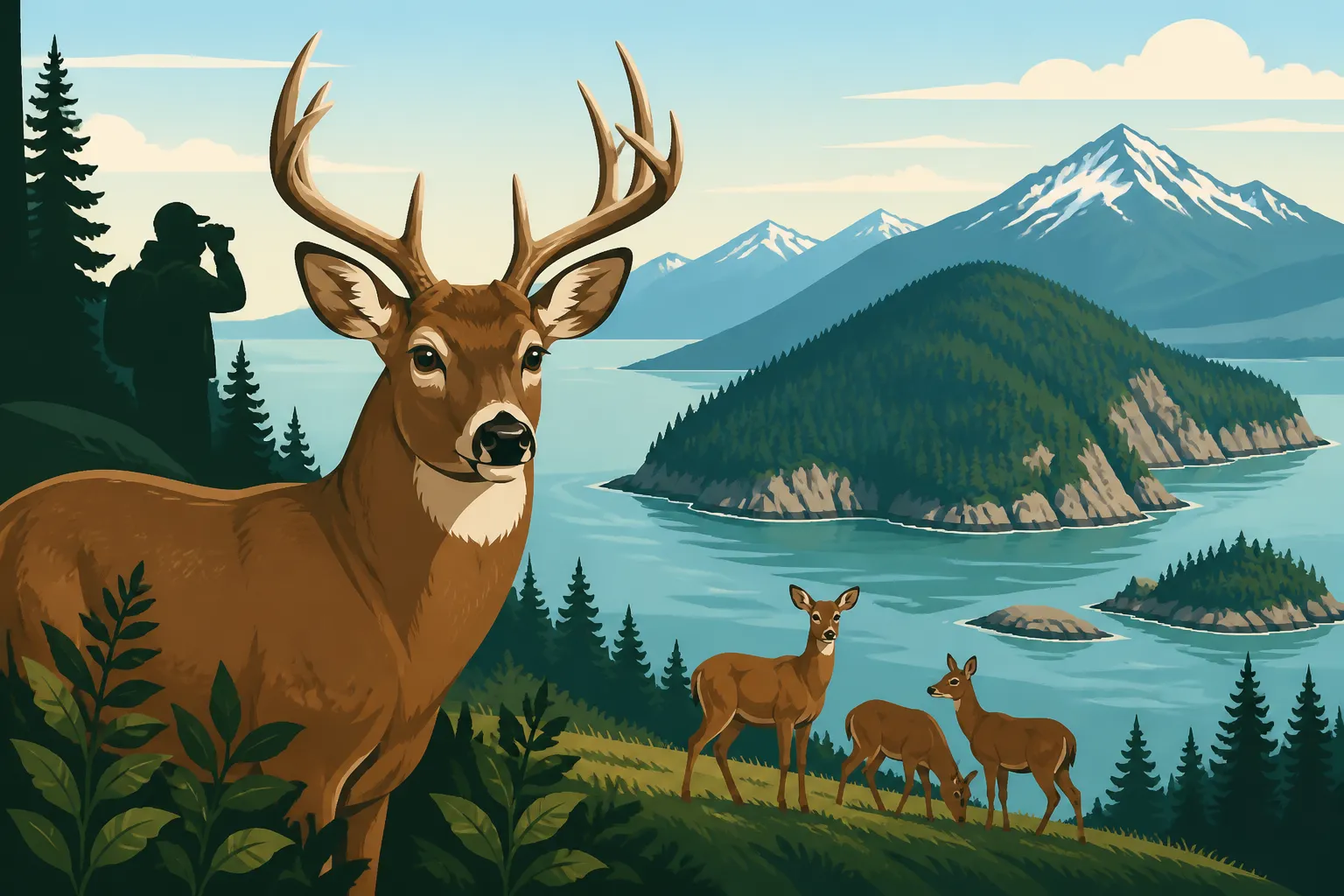
Prince of Wales Island, nestled within the vast Tongass National Forest of Southeast Alaska, is a name that conjures images of rugged beauty and dense, verdant rainforest. For many hunters, it's also synonymous with Sitka blacktail deer, offering some of the most accessible and often productive deer hunting in the state. However, if you've been around the Alaska hunting scene for a while, you know that deer populations on POW, like much of Southeast, are far from static. They can swing wildly, creating incredible opportunities in some years and real head-scratchers in others. Understanding these dynamic shifts is key to a successful hunt and to appreciating the intricate ecology of this unique island.
The Dynamic World of Sitka Blacktail on Prince of Wales
Prince of Wales Island is a world unto itself, characterized by temperate rainforest, a maze of logging roads, and a climate shaped by the Pacific Ocean. This environment is both a blessing and a challenge for the Sitka blacktail deer that call it home. These deer are incredibly adapted to their island existence, but their numbers are a delicate balance, easily tipped by a few crucial factors.
A Perfect Storm of Habitat and Challenges
Imagine a landscape draped in a thick canopy of Sitka spruce and western hemlock, where the forest floor is a tangle of salal, blueberry, and devil's club. This is the prime real estate for Sitka blacktail deer. They thrive on the abundant forage found in the understory, particularly in younger forests and along the edges of old-growth. During the lush summer months, food is generally plentiful, allowing does to raise fawns and bucks to grow impressive antlers for their body size. Compared to their larger mainland cousins, Sitka Blacktail Deer Weight Compared to Mule Deer is significantly less, but what they lack in bulk, they make up for in resilience.
However, this very habitat that supports them so well can turn against them. The dense forest, while offering cover, can become a death trap when deep snow blankets the island. Their small stature and relatively short legs make navigating deep snow incredibly energy-intensive, pushing them to seek out areas where the snow is shallower or where tree canopies can intercept snowfall, creating crucial thermal refugia. This constant push and pull between abundant food and the harsh realities of winter defines the Sitka blacktail's existence on Prince of Wales.
Boom and Bust Cycles: A Historical Perspective
Hunters who have spent years chasing blacktails on POW will tell you stories of both epic hunts and incredibly lean years. These aren't just anecdotes; they reflect genuine, well-documented boom and bust cycles in the deer population. For decades, the deer numbers have fluctuated dramatically, driven by forces larger than any single hunting season. One year, you might see deer practically everywhere, browse lines visible high on the alders, and fresh tracks crisscrossing every logging road. The next, those same areas might feel eerily quiet, with only a sparse track here and there.
These cycles are a natural, albeit sometimes frustrating, characteristic of island ecosystems, especially when dealing with a relatively short-lived prey species like deer. Hunters often scratch their heads, wondering why the deer vanished. The reality is often a culmination of factors over several years, not just one bad winter or a heavy hunting season. Understanding this historical context helps temper expectations and encourages a more informed approach to hunting these magnificent animals.
The Major Drivers Behind Population Swings
To truly grasp the dynamics of deer on Prince of Wales, we need to look at the primary forces that act upon them. These aren't isolated events but rather interconnected pressures that, when combined, dictate the health and size of the island's deer herds.
The Winter Gauntlet: Snow Depth and Duration
Without a doubt, the most significant factor influencing Sitka blacktail deer populations on Prince of Wales Island is winter severity. It's not just how much snow falls, but how long it stays on the ground, and critically, how deep it gets. For deer, a winter becomes truly deadly when snow depths consistently exceed about 18-24 inches for an extended period. At these depths, deer struggle to move, expending precious energy just to walk. Access to vital forage plants beneath the snow becomes impossible, leading to starvation and increased vulnerability to predators.
Imagine a deer trying to navigate through chest-deep snow for weeks on end. Every step is an effort, every calorie burned. The impact of these harsh conditions isn't just felt immediately. A particularly severe winter can decimate adult deer populations and severely impact fawn survival rates, leading to a noticeable drop in deer numbers for several years afterward. This is why Blacktail Deer Numbers After Deep Snow can plummet, and why Deep Snow Winters and Alaska Deer Die-Offs are a grim reality for these island populations. Hunters planning a trip to POW often consult historical snow data or local reports, sometimes found on platforms like GoHunt, to get a feel for how the deer might have fared in recent winters, which can be a huge indicator of current population health.
Predation in the Rainforest Ecosystem
While winter is the undisputed king of deer mortality, predation plays a significant, often compounding, role. Prince of Wales Island is home to both wolves and black bears, both of which prey on deer. Wolves, being highly efficient pack hunters, can take a heavy toll, especially on weakened deer during harsh winters or on fawns during the spring. Black bears, too, are opportunistic predators, with fawns being a relatively easy target during their vulnerable early weeks.
The dynamics between predator and prey are complex. When deer numbers are high, predator populations can also thrive. However, when deer populations drop due to severe winters, the predators may also experience a decline or shift their diets, which can further impact deer recovery. It's a natural cycle, but one that can feel particularly acute to hunters when deer are already scarce. Understanding the presence and activity of these predators, perhaps by noting recent sightings or tracks, adds another layer to assessing a hunting area. While the specific dynamics of wolf packs on POW differ from the interior, insights on Wolf Pack Sizes in Interior Alaska can still help understand predator pressure.
Habitat Changes: Logging's Double-Edged Sword
Prince of Wales Island has a long history of timber harvest, and logging has undeniably reshaped the landscape. For deer, this impact is a double-edged sword. On one hand, clear-cutting practices, particularly in the 1970s and 80s, created vast areas of early successional habitat. As these clear-cuts regenerated with young alders, conifers, and shrubs, they provided a tremendous boom in available forage for deer. This led to a period of very high deer populations.
However, as these clear-cuts matured, they became dense, young forests with closed canopies, shading out the understory plants that deer rely on. More critically, the loss of vast tracts of old-growth forest removed the crucial thermal cover that deer need to survive severe winters. Old-growth stands, with their multi-layered canopy, can intercept significant amounts of snow, creating shallower snow depths on the forest floor, and offering crucial shelter from biting winds and cold. When these areas are removed and replaced with uniform young stands, deer become far more vulnerable to heavy snow years. It's a classic trade-off: short-term forage gains versus long-term habitat resilience. This constant evolution of habitat means that hunters always need to be thinking about how recent or older logging activities might have shaped the deer's current living conditions.
Adapting to Fluctuations: Hunter Strategies and Management
Given the inherent variability of deer populations on Prince of Wales Island, successful hunting often comes down to adaptability, good information, and understanding the regulatory landscape.
Navigating the Regulations and Understanding the Signs
Alaska's hunting regulations are not static, especially in areas with dynamic wildlife populations. What was legal or practical last year might be different this year. Hunters absolutely must check the most current Alaska Department of Fish and Game (ADF&G) regulations for Prince of Wales Island (typically Unit 2) before planning a hunt. This includes season dates, bag limits, and any specific restrictions or emergency orders that might be in place due to population status. These rules are designed to manage the resource sustainably, reflecting the current health of the deer population.
Beyond the regulations, understanding the subtle signs in the field is crucial. Look for browsing pressure on vegetation – are young shrubs and saplings heavily nibbled? This indicates a high deer density. Observe track density; are there many fresh tracks along game trails and logging roads, or are they few and far between? During winter, notice snow depth and crusting. Are deer concentrating in specific areas, perhaps seeking out Deer Above Timberline in Early August before the snow really piles up, or later moving to protected timber? These observations, combined with current data you might find on platforms like GoHunt, can paint a clearer picture of where deer might be holding.
Strategic Hunting in Variable Conditions
When deer populations are down, a hunter's strategy needs to shift. Instead of focusing on sheer numbers, it becomes about finding the pockets of deer that remain. This often means targeting those critical winter range areas, such as old-growth stands or steep south-facing slopes, even in the early fall. Scouting becomes paramount, both physically on the ground and digitally using satellite imagery to identify promising habitat. Understanding the Blacktail Rut Timing in Southeast Alaska can still be effective, even in lower-density areas, as bucks will still be on the move seeking does.
You might also consider Pushing Deer Out of Southeast Alaska Timber in smaller groups, or focusing on slower, more deliberate still hunting. If hunting earlier in the season, before the deep snow arrives, consider methods like Tide Tables and Beach Deer Hunting along the expansive coastlines where deer might be feeding on kelp or other beach vegetation. Regardless of the strategy, patience and persistence are key. And remember, planning your logistics, including potential stays in a Forest Service Cabin Reservations for Alaska Hunts, well in advance can make all the difference on a remote island like POW.
The Role of Science and Community
ADF&G plays a vital role in monitoring the deer populations on Prince of Wales Island. They conduct aerial surveys, analyze harvest reports submitted by hunters, and rely on local observations to gather data. Every hunter who fills out their harvest report contributes to this scientific understanding, helping biologists make informed decisions about future regulations. The relationship between the state, local communities, and hunters is crucial for the long-term health of the deer resource.
Looking Towards the Horizon for POW Deer
The future of Sitka blacktail deer on Prince of Wales Island is a continuous narrative of adaptation, management, and the interplay between natural forces and human activity.
Balancing Act: Forestry, Wildlife, and Recreation
Prince of Wales Island, as part of the Tongass National Forest, is managed for multiple uses. This means balancing the needs of the timber industry, the ecological requirements of wildlife like Sitka blacktail deer, and the recreational desires of hunters, anglers, and other outdoor enthusiasts. It's a complex task, often involving trade-offs and compromises. Initiatives focused on sustainable forestry practices, identifying and protecting critical winter range, and promoting habitat diversity are all part of the long-term vision for the island. The goal is to ensure that future generations can continue to experience the thrill of Prince of Wales Island Road System Deer Hunting and witness healthy deer populations. Understanding the nuances of habitat changes, even What Moose Eat in a Ten-Year-Old Burn can teach us about regeneration, helps inform these broad management decisions.
Resources for the Modern Hunter
In this ever-changing landscape, being an informed hunter is more important than ever. The good news is that there are more resources available today than ever before. Beyond the official ADF&G channels, online communities, forums, and specialized hunting platforms provide a wealth of information. GoHunt, for example, offers tools and data analysis that can help hunters research specific areas, understand habitat features, and even get an idea of historical success rates. This kind of data-driven approach empowers hunters to make better decisions, increasing their chances of success and contributing to a more sustainable hunting culture.
Whether you're exploring the road system or venturing into more remote areas, remember that deer populations on Prince of Wales Island are a testament to nature's resilience and its challenges. By staying informed, adapting your strategies, and appreciating the island's unique ecology, you can continue to enjoy the incredible hunting opportunities it offers. And don't forget to look beyond just POW; other areas like the Deer Islands Around Petersburg and Wrangell face similar challenges and offer their own unique experiences.
| Factor | Impact on Deer Populations (General) | Specific Considerations for Prince of Wales Island | Hunter Takeaway |
|---|---|---|---|
| Winter Severity | Direct mortality, reduced fawn survival | Deep snow, prolonged cold, limited thermal cover | Prioritize areas with good thermal cover in hard winters; check snow depth reports. |
| Predation | Fawn and adult mortality | Wolves and black bears present, impact varies | Be aware of predator sign; understanding local predator numbers can inform strategy. |
| Habitat Changes | Forage increases, cover decreases | Logging creates new growth, but removes old-growth | Look for younger clear-cuts for browse, but assess older forest for winter shelter. |
| Disease/Parasites | Can cause localized die-offs | Less common broad-scale impact, but always a risk | Healthy deer populations are more resilient; report unusual observations to ADF&G. |
Disclaimer
This article is for general informational purposes only and does not constitute professional advice. Laws, prices and regulations vary by location and change over time. Consult a qualified professional for guidance on your specific situation.