Sitka Blacktail Deer Population Cycles in Alaska
Few things are as frustrating for an Alaska deer hunter as planning a long-anticipated trip, only to arrive and find the deer numbers drastically lower than expected. The Sitka blacktail deer populations across Alaska, particularly in the coastal rainforests, are notoriously cyclical, leaving many hunters scratching their heads trying to figure out where the deer went. This comprehensive guide will dive deep into the fascinating, yet sometimes maddening, world of Sitka blacktail deer population dynamics, helping you understand why these swings occur and how to navigate them for more successful hunts.
Understanding Sitka Blacktail Deer in Alaska
The Sitka blacktail deer (Odocoileus hemionus sitkensis) is a subspecies of mule deer, uniquely adapted to the rugged coastal temperate rainforests and islands of Southeast Alaska and extending up into some parts of Prince William Sound and the Kenai Peninsula. They're not as large as the mule deer you might find in the Lower 48, but what they lack in sheer size, they make up for in resilience and their ability to thrive in some of the most unforgiving landscapes.
Distinctive Characteristics and Habitat
These deer are truly a marvel of adaptation. They're generally smaller than their interior cousins, with a compact body that helps them navigate dense underbrush and steep, rocky terrain. An average mature buck might weigh between 120-180 pounds, though some can tip the scales closer to 200 pounds in prime habitat. Their coat is typically a dark reddish-brown in summer, transitioning to a grayer, thicker coat in winter for insulation. The "blacktail" part of their name comes from their short, wide tail that is black or dark brown on top, distinguishing them from the white-rumped mule deer.
Their preferred habitat is often steep, old-growth forests that offer a vital canopy during heavy snowfalls, providing both cover and access to arboreal lichens and other browse. In summer, they disperse into alpine meadows and regenerating clearcuts, feasting on succulent forbs and shrubs. This mix of dense forest, open clearings, and alpine zones is crucial for their survival, providing food and shelter through the seasons.
Range and Distribution in Alaska
While you might associate deer hunting with big, open country, Sitka blacktails redefine that image. Their primary stronghold in Alaska is the Southeast Panhandle, where they inhabit the hundreds of islands and mainland strips of the Tongass National Forest. Islands like Prince of Wales, Kodiak, and the outer coastal areas of the Kenai Peninsula are prime blacktail country. In fact, many hunters specifically target these islands, often relying on Skiff Hunting Deer Along Saltwater Beaches to access remote areas.
Populations can be found as far north as Prince William Sound, and there are even transplanted populations on islands like Kodiak and Afognak, where they've flourished. Hunters often travel to these areas, which offer some of the highest deer densities in the state when populations are booming. Understanding the specific characteristics of these regional populations is key to successful hunting, as deer on Kodiak, for instance, might behave differently than those on Prince of Wales due to variations in terrain, vegetation, and predator presence.
The Boom and Bust: Understanding Population Dynamics
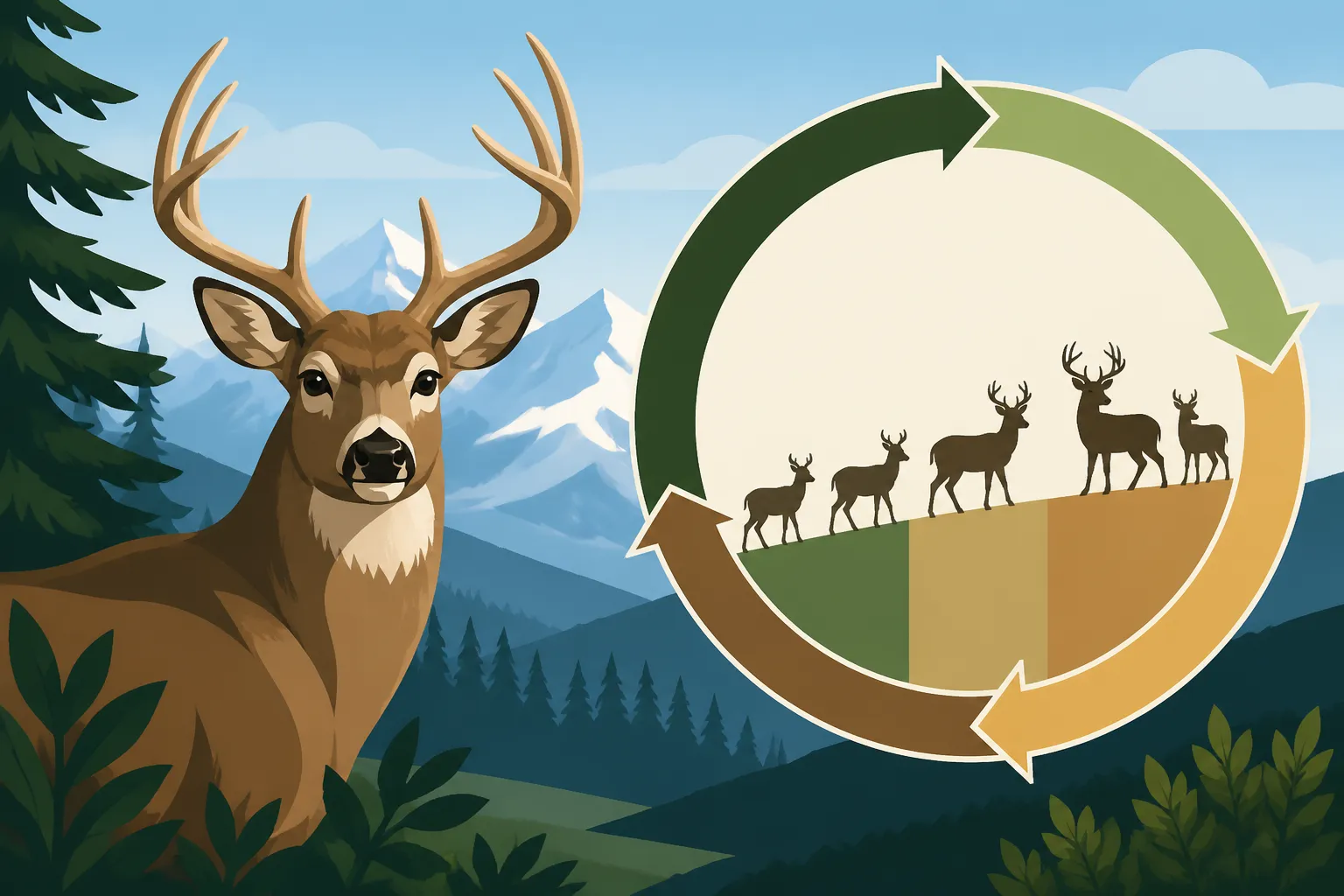
If you've hunted Sitka blacktails for any length of time, you've witnessed it: one year deer are everywhere, and the next, they've seemingly vanished. This isn't your imagination; it's the classic boom-and-bust cycle that defines these coastal deer populations. It's a natural, albeit sometimes heartbreaking, phenomenon driven by a complex interplay of environmental factors.
The Role of Winter Severity
This is, without a doubt, the single biggest factor dictating Sitka blacktail deer numbers. Unlike interior deer that might face extreme cold, blacktails are primarily threatened by deep, persistent snow. When the snow piles up, especially when it reaches depths of 30 inches or more, it becomes incredibly difficult for deer to move around and access forage. Their short legs are simply not built for it.
A mild winter means deer have easy access to food, expend less energy, and mortality is low, especially among fawns. This sets the stage for a population boom. But a harsh winter? That's when the "bust" comes. Heavy snow, especially if it persists for weeks or months, leads to widespread starvation, making deer vulnerable to predation and disease. It's a tough reality, and it's why hunters often talk about how Deep Snow Winters and Alaska Deer Die-Offs can decimate a local herd, sometimes taking several years for the population to rebound.
Predator Influence on Deer Numbers
While winter is the primary driver, predators play a significant, often secondary, role, especially during and after harsh winters. The main predators of Sitka blacktails in Alaska are wolves and black bears, and on some islands, even brown bears. When deer are weakened by a severe winter, they become easy targets. Wolves, ever the opportunists, will take advantage of deer struggling in deep snow. Black bears, especially after emerging from hibernation, will prey on fawns and adult deer that are in poor condition.
It’s a natural culling process, ensuring that only the fittest survive, but it certainly contributes to the decline in deer numbers during a population bust. When a deer population is already stressed by lack of food and harsh conditions, even a modest increase in predation can have a disproportionately large impact, slowing the recovery.
Habitat Health and Carrying Capacity
The quality and availability of habitat directly influence how many deer an area can support—its carrying capacity. Old-growth forests with dense canopies are critical winter refugia, intercepting snow and allowing deer to access more forage. However, as forests mature, the understory can become less productive, offering less browse.
Logging practices, particularly clearcutting, create temporary spikes in deer forage as new growth emerges. Deer numbers often surge in response to these younger, productive habitats. But as these clearcuts mature, they eventually lose their value as prime browse, and the deer population in that specific area might decline again. This highlights the importance of a mosaic landscape with a mix of old growth, regenerating clearcuts, and alpine zones to support a stable deer population. Poor habitat health, often exacerbated by overbrowsing during peak deer years, can also leave deer more vulnerable when winter hits, creating a feedback loop that intensifies the bust.
Key Factors Influencing Deer Populations
Let's dig a little deeper into the specific elements that dictate these dramatic swings in Sitka blacktail numbers. It's more than just "lots of snow"; it's a combination of timing, duration, and the specific landscape features.
Snow Depth and Duration: The Primary Culprit
When we talk about snow, it's not just the amount, but how long it stays, and where it falls. A foot of snow for a week in January is one thing; three feet that lingers from December through April is a death sentence for many deer. This prolonged snow cover restricts their movement, forcing them to expend precious energy just to move a few yards. It also buries crucial food sources like blueberries, huckleberries, and certain lichens found in the understory.
Deer, particularly fawns and older animals, simply can't find enough to eat. They burn through their fat reserves, becoming weaker and more susceptible to disease, parasites, and predators. On Kodiak Island, for instance, a couple of severe winters in the late 2010s led to significant declines in deer numbers that are still in recovery in some areas. The long-term impacts of such events can be felt for several years, affecting hunting opportunities well into the future. It's a stark reminder that in Alaska, winter is king, and its severity can make or break a deer population.
Black Bear and Wolf Predation
While secondary to winter, predation still plays a critical role, especially when deer are already vulnerable. Black bears are significant fawn predators in the spring and early summer. A sow bear emerging from the den with hungry cubs will readily seek out newborn fawns, which are relatively easy targets. This predation pressure can reduce fawn recruitment, meaning fewer young deer survive to bolster the population.
Wolves, found throughout many Sitka blacktail habitats, exert pressure on deer year-round. They are intelligent and efficient hunters, and deer struggling in deep snow, or weakened by lack of food, are prime targets. On mainland areas or larger islands like Prince of Wales, where wolf packs are more common, their impact can be substantial. For example, some studies suggest that wolf predation can become a limiting factor, even in moderate winters, if deer populations are already on a downward trend due to other stressors. Hunters in areas with high wolf activity understand this dynamic well, and it's a factor they constantly monitor when assessing deer populations.
Logging Practices and Forest Succession
The dynamic landscape created by forestry operations has a dual impact on Sitka blacktail deer. In the short term, clearcutting can be a boon. When an area is logged, sunlight hits the forest floor, stimulating the growth of forbs, grasses, and shrubs that deer love to eat. This surge in high-quality forage can lead to a localized increase in deer density, often drawing deer from surrounding, less productive areas.
However, this benefit is temporary. As the regenerated forest grows taller and denser, typically within 15-30 years, the canopy closes, shading out the understory plants that deer depend on. This process, known as forest succession, effectively transforms prime feeding grounds back into less productive areas. Without new logging or natural disturbances like wildfires (which are rare in coastal rainforests), these areas become less hospitable to deer. Wildlife managers and hunters often look for a mosaic of different-aged stands, with ongoing regeneration and mature old-growth, to provide consistent habitat for blacktails. The balance between timber harvest and long-term deer habitat is a constant management challenge.
| Factor | Impact on Deer Population (Short-term) | Impact on Deer Population (Long-term) | Severity of Impact |
|---|---|---|---|
| Severe Winter Snow | High mortality, especially fawns | Slow recovery, reduced carrying capacity | Critical |
| Mild Winter | High fawn survival, population growth | Sustained population growth (until next harsh winter) | Highly Beneficial |
| Wolf Predation | Direct mortality, stress on herd | Can limit recovery, maintain lower numbers | Moderate to High |
| Black Bear Predation | Direct fawn mortality | Impacts recruitment, slow growth | Moderate |
| Clearcut Logging | Temporary forage boost, localized increase | Habitat loss as forest matures | Variable |
| Old-Growth Forest | Winter cover, arboreal lichens | Declining understory forage over time | Critical (winter) |
How Hunters Can Adapt to Population Swings
The cyclical nature of Sitka blacktail deer populations means that successful hunters need to be adaptable. You can't just hunt the same spot the same way year after year and expect consistent results. Being informed and flexible in your approach is key to finding deer, even when populations are in a downturn.
Scouting and Pre-Season Research
Gone are the days when you could just show up and expect to find deer in your favorite clearcut. Now, more than ever, rigorous scouting and research are essential. This starts with pouring over maps, looking for areas with diverse habitat: a mix of mature timber for cover, younger regenerating clearcuts for browse, and access to alpine zones if you're hunting later in the season. Tools like GoHunt's Insider platform, with its detailed unit breakdowns and historical harvest data, can be invaluable for understanding past trends and potential future outlooks, offering insights you won't easily find elsewhere. They often compile information about winter severity in specific units, giving you a crucial head start.
Talking to local biologists, other experienced hunters, and even bush pilots can provide real-time intelligence on deer numbers in specific drainages or islands. Pay close attention to recent winter severity reports for your target area. If the previous winter was brutal, temper your expectations and plan to cover more ground. Similarly, knowing about previous logging activity and how old the clearcuts are can guide you to areas with optimal forage. This kind of diligent homework, supported by resources like GoHunt, is what separates successful hunters from those who are continually frustrated by the "missing" deer.
Flexible Hunting Strategies
When deer numbers are down, you simply cannot rely on the same old tactics. You need to be more strategic, more patient, and often, more aggressive in your hunting style. Instead of expecting to see deer everywhere, focus on prime habitat areas that offer the best chance of survival during tough winters. This often means hunting closer to heavy cover, especially in old-growth stands, where deer find refuge from snow and predators.
Consider shifting your approach from traditional still hunting to Deer Drives Versus Still Hunting in Southeast Alaska Timber, particularly if you're hunting with a group in dense vegetation. Drives can be highly effective in pushing deer out of thickets they might otherwise remain hidden in. If you're on a remote island, focusing on areas accessible by Boat-Based Deer Hunting on Alaska's Island Coastlines might open up new opportunities in less-pressured zones. Also, don't shy away from hunting the alpine if conditions allow. Often, the deer that survive tough winters are the ones that migrated to higher elevations in late summer, and they might still be there if snow hasn't pushed them down, making Hunting Sitka Blacktail Deer in the Alpine Before Snow a viable strategy.
Responsible Harvest Practices
As hunters, we have a vital role in the conservation of these animals. During periods of low deer populations, practicing responsible harvest is more important than ever. This means making smart choices in the field, sometimes even passing on smaller bucks or taking only one animal if the regulations allow for more. The aim is to ensure enough animals, especially does and fawns, survive to rebuild the herd.
Being selective also involves making clean, ethical shots to avoid wounding animals. After a kill, ensure you adhere to all Alaska Moose Meat Salvage Requirements for deer, salvaging all edible meat. This respects the animal and the resource. Hunters should also be diligent in reporting their harvest, even if it's a zero-harvest report. This data is crucial for the Alaska Department of Fish and Game (ADF&G) to accurately assess population trends and make informed management decisions. Every harvest ticket submitted, every piece of information shared, contributes to the overall health and future of the Sitka blacktail deer resource. Remember, sustainable hunting ensures there will be deer for future generations to pursue.
Conservation Efforts and Management
Managing a species with such volatile population dynamics requires ongoing effort from wildlife agencies and hunters alike. The Alaska Department of Fish and Game (ADF&G) employs various strategies to monitor, manage, and conserve Sitka blacktail deer, and hunter participation is a cornerstone of these efforts.
Alaska Department of Fish and Game Surveys
ADF&G biologists are constantly in the field, using a variety of methods to estimate deer populations and health. Aerial surveys, especially after periods of snow, help them count deer and assess their distribution. They also conduct ground surveys, often in conjunction with hunters or volunteers, to gather data on fawn survival, age structure, and body condition. These surveys are vital for understanding the impacts of recent winters and predation pressure.
Furthermore, biologists rely heavily on harvest data submitted by hunters. Every hunter who obtains a Alaska Deer Harvest Ticket Requirement is asked to report their hunt, whether they harvested a deer or not. This information, including the location, date, sex, and age of harvested deer, provides invaluable insight into local population trends. These data points allow ADF&G to adjust hunting seasons, bag limits, and specific regulations, such as the Kodiak Nonresident Deer Bag Limit, to ensure sustainable harvest and help populations recover from downturns. It’s a collaborative effort, and the accuracy of these reports directly impacts future management decisions.
Habitat Improvement Projects
Recognizing the critical link between habitat quality and deer survival, various organizations and government agencies often collaborate on habitat improvement projects. In Southeast Alaska, where the Tongass National Forest is a dominant landscape feature, efforts might include commercial thinning of dense young forests to allow more light to reach the forest floor, stimulating the growth of deer forage. This essentially mimics the conditions of earlier successional stages after a clearcut, but in a more controlled and dispersed manner.
Projects can also involve planting preferred browse species in areas where they are lacking or enhancing old-growth winter ranges by ensuring these vital areas remain undisturbed. Sometimes, partnerships between ADF&G, the U.S. Forest Service, and local conservation groups work to identify and protect critical wintering grounds, ensuring deer have adequate cover and food during the most challenging months. These efforts are often long-term investments, but they are essential for supporting robust deer populations over time, especially when coupled with careful consideration of natural disturbance regimes.
Hunter Involvement in Management
Hunters are not just participants in the harvest; they are critical stakeholders and active partners in wildlife management. Beyond simply reporting harvest data accurately and on time, there are many ways hunters contribute. Many volunteer for habitat improvement projects, assisting in thinning operations or planting efforts. Others participate in citizen science initiatives, helping to track deer sightings, assess winter conditions, or monitor predator activity.
Organizations like the Alaska Professional Hunters Association or local hunting clubs often work closely with ADF&G to provide input on proposed regulations, advocate for specific conservation measures, and educate fellow hunters on best practices. Engaging with the Alaska Board of Game Meeting Cycle by submitting proposals or testifying at meetings is another powerful way for hunters to influence policy. By staying informed, actively participating, and adhering to ethical hunting principles, we ensure that Sitka blacktail deer populations remain healthy and resilient for generations to come. It’s a commitment to the land, the animals, and the hunting heritage we all cherish.
Disclaimer
Please note that hunting regulations, seasons, and bag limits are subject to change by the Alaska Department of Fish and Game. Always consult the most current Alaska Hunting Regulations manual and any relevant emergency orders before planning or undertaking a hunt. This guide is for informational purposes only and does not supersede official regulations.