Alaska Brown Bears on the Coast Versus Interior Grizzlies
Many hunters and nature enthusiasts find themselves asking if there's truly a difference between an Alaska brown bear and a grizzly. It's a common point of confusion, often fueled by varying names and regional characteristics. This comprehensive guide will strip away the mystery, delving deep into the ecological, behavioral, and physical distinctions that set coastal brown bears apart from their interior grizzly cousins, helping you understand these magnificent apex predators better.
Understanding the Terminology: Brown Bear vs. Grizzly
The debate over "brown bear" versus "grizzly" is a classic one, stirring up discussions among seasoned Alaskans and newcomers alike. While the terms are often used interchangeably, and sometimes confusingly, in popular culture, the reality from a scientific perspective is far simpler, yet the ecological differences they represent are profound.
The Scientific Viewpoint: One Species, Many Names
Scientifically, there is no distinction between a brown bear and a grizzly bear; they are all members of the same species: Ursus arctos. This single species encompasses a vast range of bears across North America, Europe, and Asia. In North America, specifically, Ursus arctos horribilis is the subspecies often referred to as the grizzly, while larger coastal populations are more frequently called brown bears. However, these are largely common names rather than rigid biological classifications. The key takeaway is that an Alaska brown bear and an Alaska grizzly are, genetically speaking, the same animal. Their differences stem primarily from their environment and the resources available to them, leading to distinct physical and behavioral traits. So, when someone asks, "Brown Bear Versus Grizzly: The Same Animal?" the answer is a resounding yes, from a scientific perspective.
How Habitat Shapes Identity
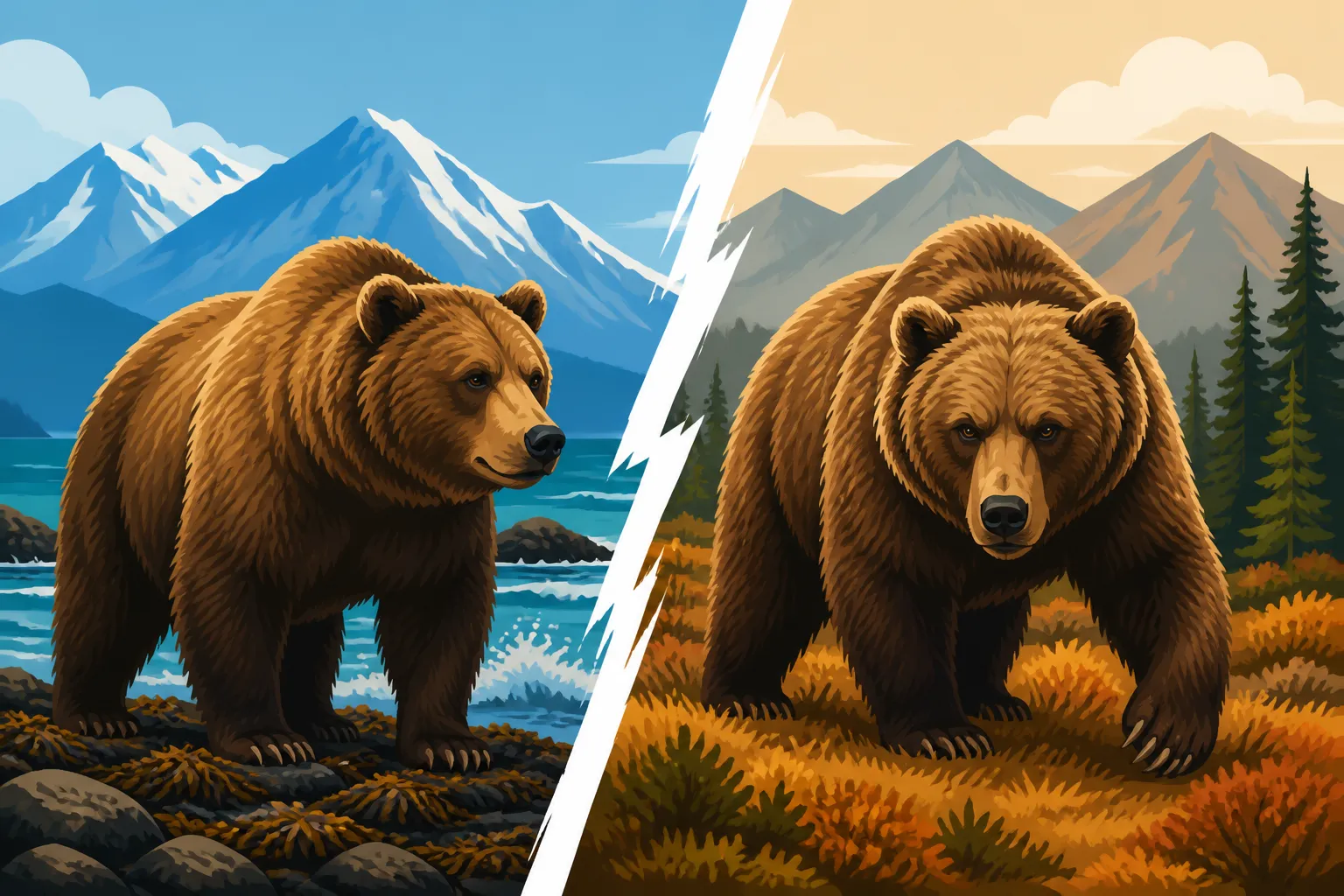
The primary driver behind the perceived differences between brown bears and grizzlies is their habitat. Imagine two populations of the same animal: one living next to an all-you-can-eat buffet, and the other constantly having to work for every meal. That's essentially the coastal brown bear versus interior grizzly dynamic. Coastal bears, found along Alaska's resource-rich coastlines and islands, have access to a consistent, high-calorie diet, most notably abundant salmon runs. This plentiful food source allows them to grow to immense sizes and build substantial fat reserves. In contrast, interior grizzlies inhabit more challenging environments like the vast tundras, alpine regions, and boreal forests of Alaska's interior. Their diet is far more varied, consisting of berries, roots, small mammals, and occasionally larger ungulates, but it is rarely as concentrated or consistently available as coastal salmon. This ecological divergence is crucial for understanding not just their physical appearance but also their behaviors and life strategies.
Historical Naming Conventions and Hunter Lore
The common names we use today, "brown bear" and "grizzly," have deep roots in the history of exploration and hunting in North America. Early European settlers and hunters encountered different populations of Ursus arctos and named them based on their observations. Bears found in the Rocky Mountains and interior regions, often smaller and with a distinctive silver-tipped, "grizzled" fur, were dubbed "grizzly bears." This grizzled appearance became a hallmark. Meanwhile, the larger, often darker-coated bears encountered along the Pacific coast and on islands like Kodiak, with their sheer size and power, were simply referred to as "brown bears." Over time, these descriptive labels stuck, creating a popular distinction that persists even though scientific consensus views them as one species. These terms are still very much alive in local parlance, guide conversations, and even regulatory language within specific Game Management Units, adding to the delightful confusion.
Coastal Giants: Life Along Alaska's Salmon-Rich Shores
Life on Alaska's coast offers brown bears a bountiful existence, shaping them into some of the largest land predators on Earth. This abundance allows them to thrive in numbers and reach incredible sizes, making them a truly iconic symbol of Alaskan wilderness.
The Abundance of Coastal Resources
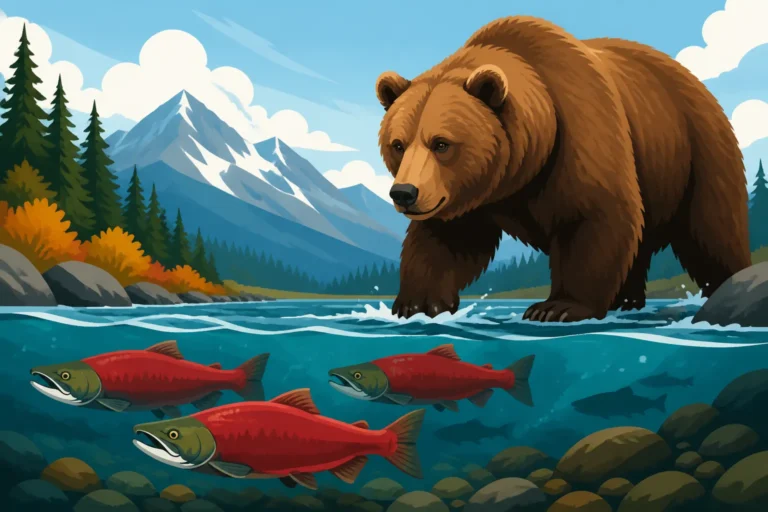
For coastal brown bears, the ocean is an endless pantry. Their existence is intrinsically linked to the incredible biomass of marine resources, with salmon standing out as the ultimate caloric jackpot. From late spring through fall, millions of salmon return to spawn in Alaska's rivers and streams, providing an unparalleled food source. This seasonal feast allows bears to rapidly put on weight, preparing them for the long winter hibernation. But salmon aren't the only draw. Coastal bears also forage extensively in intertidal zones, digging for clams and mussels, and consuming nutrient-rich sedges and grasses in estuaries. They'll also scavenge carcasses of marine mammals that wash ashore, adding another layer of protein and fat to their diet. This sheer volume of accessible, high-calorie food is precisely Salmon Streams and Bear Body Weight come to be so impressive. Regions like the Alaska Peninsula, Kodiak Island, and the Southeast Alaska panhandle are prime examples of areas where this marine-rich diet supports robust bear populations.
Unparalleled Size and Weight
The abundant diet of coastal Alaska translates directly into monumental bear size. These are the bears that inspire awe and sometimes trepidation, pushing the limits of what a land mammal can weigh. While interior grizzlies are formidable, coastal brown bears, particularly those on Kodiak Island and the Alaska Peninsula, are legendary. It's not uncommon for adult coastal males to weigh between 800 to 1,500 pounds, with exceptional individuals pushing well beyond that. Females are typically smaller but still significantly larger than their interior counterparts. Their sheer bulk and massive bone structure are a direct result of gorging on salmon, which allows them to accumulate thick layers of fat. This fat isn't just for insulation; it's a critical energy reserve that fuels them through hibernation and sustains sows nursing cubs. If you've ever wondered How Heavy Alaska Peninsula Brown Bears Get, it's all about access to that rich protein and fat source. When hunters measure a bear's size, they often refer to "squaring" the hide, which is literally measuring the hide from nose to tail and paw to paw when laid flat, providing a tangible metric for these giants.
Social Dynamics and Territories
The high concentration of food in coastal areas means that brown bears often live in closer proximity than interior grizzlies. While they are generally solitary animals, the lure of a prime fishing spot, such as a salmon-choked stream, can bring dozens of bears together in relatively small areas. This necessitates a more complex social dynamic, with established hierarchies often dictating who gets the best fishing holes. Dominant bears, usually large males, will claim the most productive spots, while smaller bears and sows with cubs will utilize less contested areas or wait for opportunities. This can make for fascinating wildlife viewing and also means that coastal bears can become accustomed to the presence of other bears, and sometimes even humans, during peak fishing season. While conflicts over food can still arise, the sheer abundance often diffuses widespread aggression, leading to a degree of social tolerance rarely seen in more spread-out populations. Observing these interactions reveals a nuanced side to these powerful creatures, demonstrating how their behavior adapts to resource availability.
Interior Monarchs: Surviving the Tundra and Taiga
Moving away from the salmon-rich coasts, the interior regions of Alaska present a starkly different challenge for brown bears, forcing them to adapt to a more demanding and varied environment. Here, they truly earn the moniker "grizzly," known for their formidable adaptability and resilience.
A More Diverse and Scarce Diet
Unlike their coastal cousins who often specialize in salmon, interior grizzlies are true generalists, constantly adapting their diet to whatever seasonal bounty the land offers. Their foraging strategies are incredibly diverse, reflecting the dispersed nature of their food sources. In spring, they might target emerging grasses and sedges in alpine meadows, or dig aggressively for protein-rich roots like Hedysarum (commonly known as 'grizzly bear root') or wild potato. As summer progresses, berries become a critical component of their diet; blueberries, cranberries, and crowberries provide essential sugars and fats. However, these are often spread out across vast landscapes, requiring grizzlies to cover significant ground. A significant part of their diet also comes from predation on ungulates. They are expert hunters, preying on moose calves, caribou, and even adult Dall sheep, especially during vulnerability periods. This constant search for sustenance highlights Interior Grizzly Behavior Versus Coastal Brown Bears, showcasing a more nomadic lifestyle driven by the sparse distribution of food.
Adaptations for a Harsher Environment
The leaner diet and harsher climate of interior Alaska have shaped the grizzly into a supremely efficient and rugged survivor. While typically smaller than coastal brown bears, they are incredibly powerful for their size, built for endurance and agility over vast distances. Their physical adaptations are subtle but crucial. They often possess longer, straighter claws compared to their coastal relatives, which are perfectly suited for digging up roots, small rodents, and excavating winter dens. The prominent shoulder hump, a characteristic feature of all Ursus arctos in North America, often appears more pronounced proportionally on the leaner frame of an interior grizzly. This hump is a mass of muscle that powers their formidable digging abilities and the force behind a swipe. Unlike coastal bears who can pack on hundreds of pounds of fat, interior grizzlies maintain leaner body compositions, focusing on converting whatever sparse calories they find into energy for constant movement and survival in extreme cold.
Solitary Existence and Expansive Home Ranges
The scarcity and dispersion of food in interior Alaska directly impact the social structure of grizzlies, leading to a largely solitary existence and requiring expansive home ranges. A single adult grizzly might roam hundreds, sometimes thousands, of square miles in search of food. This is a stark contrast to the occasional congregations seen along coastal salmon streams. Encounters between grizzlies are less frequent and often more cautious, primarily occurring during the brief mating season or if food sources are unusually concentrated (e.g., a winter kill site). This need to cover vast territories makes interior grizzlies incredibly elusive, offering a unique challenge for those hoping to observe or hunt them. Whether they're traversing the rugged terrain of the Brooks Range, navigating the dense boreal forests, or crossing the open tundra, their ability to survive and thrive in such immense and often unforgiving landscapes is a testament to their resilience. Hunters often rely on meticulous scouting, sometimes with tools from GoHunt, and glassing techniques to locate these wide-ranging animals.
Behavioral Differences: Diet, Denning, and Dominance
While both coastal brown bears and interior grizzlies are undeniably powerful and intelligent, their daily lives and seasonal rhythms are dictated by their respective environments. These differences manifest in their foraging strategies, denning habits, and even their social interactions.
Foraging Strategies and Opportunism
The tale of two diets paints a clear picture of divergent foraging strategies. Coastal brown bears, during the salmon runs, can afford to be specialists. They'll stand in the river, skillfully snagging fish, or patrol the banks for spawned-out carcasses. This concentrated food source allows for efficient caloric intake with less energy expenditure. In these times, they might even become somewhat selective, discarding less desirable parts of the fish if more salmon are readily available. Interior grizzlies, on the other hand, embody the ultimate generalist. Their survival depends on an encyclopedic knowledge of their vast home range and a precise understanding of seasonal availability. They will diligently dig for roots, meticulously graze on specific grasses, tirelessly flip rocks for insects, or patiently stalk caribou or moose calves. This constant, varied search means they are incredibly opportunistic, rarely passing up any potential food source, from a ground squirrel to a fresh ungulate kill. Both bears are undeniably opportunistic, but the nature of those opportunities differs drastically, shaping their daily movements and overall energy budgets.
Denning Habits and Seasonality
The timing and duration of denning are critical life-history events for all bears, heavily influenced by local climate and food availability. For coastal brown bears, the extended availability of salmon, sometimes running well into late fall, can delay their entry into dens. They'll continue to feed and put on weight for as long as possible, sometimes until November or even December in milder coastal areas. This is precisely when Brown Bear Denning Timing in Alaska will occur. Their dens might be excavated into hillsides, under rootwads, or within dense brush. Come spring, their emergence can also be tied to the earliest signs of green-up or, in some areas, the very first salmon returning. We often see Spring Emergence Timing for Coastal Bears coinciding with these vital food sources. Interior grizzlies, facing colder temperatures and an earlier cessation of food availability, tend to enter their dens earlier, often by late October or early November. They also emerge earlier in spring, sometimes in March or April, to take advantage of new growth or to hunt vulnerable ungulates. These subtle differences in denning patterns are a direct reflection of their environmental calendars. When planning your hunt, understanding these behavioral patterns, especially denning, is key. Resources like GoHunt can help you research specific unit regulations that align with these natural cycles.
Interactions and Social Structure
The social lives of coastal brown bears and interior grizzlies also reflect their environmental realities. In coastal areas, particularly during the salmon runs, the sheer abundance of food can lead to temporary, seasonal congregations. While a hierarchy exists, allowing dominant bears priority access to prime fishing spots, there's a degree of social tolerance that develops due to the ample resources. Bears learn to navigate close quarters, often communicating through body language to avoid direct conflict. Conversely, the dispersed food sources in the interior encourage a more solitary existence for grizzlies. Encounters between individual bears are less common and can be more intense if they occur, as competition for scarcer resources is higher. Sows with cubs, in both habitats, are fiercely protective. The timing of Sow and Cub Family Breakup Timing is crucial, as mothers must teach their offspring the unique survival skills relevant to their specific environment – whether it's efficient salmon fishing techniques on the coast or effective hunting and foraging strategies in the vast interior. These learned behaviors are passed down, reinforcing the distinct ecological identities of each bear type.
Identifying Bears in the Field: Size, Color, and Distinguishing Features
Distinguishing between a coastal brown bear and an interior grizzly in the field can be challenging, as individual variation is vast. However, by understanding some general visual cues, you can often make an educated assessment, particularly when size and habitat are considered.
Visual Cues: Size and Body Proportions
The most obvious, though not always definitive, distinguishing factor is sheer size. Coastal brown bears, especially mature males, exhibit a massive, blocky build. They have broader heads, thicker necks, and a generally more robust skeletal structure, often appearing disproportionately large. Their legs, particularly their forelegs, are thick and muscular, supporting their immense weight. Interior grizzlies, while still powerful, generally appear more athletic, often with a leaner, more agile build. They tend to have smaller heads in proportion to their bodies, and their overall frame is less massive. It's important to remember that size estimation can be tricky without a known reference point. A large interior grizzly could easily be mistaken for a smaller coastal brown bear by an inexperienced observer. However, the impression of bulk versus leanness is often a good indicator. When you're out glassing those distant slopes, whether it's for Spot-and-Stalk Dall Sheep Hunting Above Alaska Timberline or a bear, subtle cues like claw length or nose profile become critical for proper identification.
Coloration and Coat Characteristics
Bear coloration is notoriously variable across all populations, making it an unreliable sole indicator. Both coastal brown bears and interior grizzlies can range from light blonde to dark chocolate brown, and even near black. However, interior grizzlies are more frequently associated with the "grizzled" appearance that gave them their name. This refers to the silver-tipped guard hairs on their back and shoulders, which give their fur a frosted or "salt and pepper" look. Coastal brown bears can also have some grizzling, but they often appear more uniformly dark brown, especially when wet from a salmon stream. It's a spectrum, not a binary choice. Environmental factors like diet and sun exposure can also affect coat color and condition. A bear that has been rubbing its back on trees, for instance, might have a lighter patch that is not related to its genetic coloration. Therefore, relying solely on color to differentiate between the two can be highly misleading and lead to misidentification.
Head Shape, Claws, and Shoulder Hump
Beyond size and color, other physical characteristics can offer clues, though again, individual variation is key. The head shape is often cited: grizzlies are sometimes described as having a "dished" or concave facial profile, while some coastal brown bears may have a straighter or "roman nose" profile. However, this is far from a consistent rule and can be hard to judge from a distance. More reliably, the claws of interior grizzlies tend to be longer and straighter, designed for extensive digging to unearth roots and small prey. Coastal bears, while they do dig for clams, often have shorter, more curved claws, better suited for tearing apart salmon and maneuvering in rocky terrain. The prominent shoulder hump is a defining feature of all North American Ursus arctos. This muscle mass aids in powerful digging and provides incredible strength. While present in both, the hump might appear more pronounced or angular on the typically leaner frame of an interior grizzly compared to the overall bulk of a coastal brown bear.
Here's a quick comparison of general characteristics:
| Feature | Coastal Brown Bear (General) | Interior Grizzly (General) |
|---|---|---|
| Average Weight | 600-1500+ lbs (males) | 300-800 lbs (males) |
| Primary Diet | Salmon, marine resources, sedges | Roots, berries, ungulates, carrion |
| Build | Massive, blocky, very muscular | Leaner, more athletic, compact |
| Claws | Shorter, more curved | Longer, straighter (for digging) |
| Coat Color | Often uniformly dark brown, varied | Often grizzled (silver-tipped), varied |
| Social Behavior | Higher tolerance at food sources | More solitary, larger ranges |
| Habitat | Coastal estuaries, dense forests | Tundra, alpine, boreal forest |
| Denning | Later entry/emergence (salmon-driven) | Earlier entry/emergence (climate-driven) |
Habitat and Range: Where to Find Each Type
Alaska's vast and diverse landscapes are a patchwork of habitats, each supporting specific populations of wildlife, including its magnificent bears. Understanding these geographic distinctions is key to appreciating the subtle differences between coastal brown bears and interior grizzlies.
Coastal Regions: Rainforests, Estuaries, and Islands
The coastal regions of Alaska are a lush tapestry of temperate rainforests, nutrient-rich estuaries, and countless islands. These environments are the strongholds of the coastal brown bear. Iconic areas include Southeast Alaska, particularly within the Tongass National Forest, where dense Sitka spruce and western hemlock forests meet the salmon-choked rivers. Prince William Sound, the Kenai Peninsula, and especially the Kodiak Archipelago, are renowned for their massive brown bears, drawing visitors and hunters from around the world. The Alaska Peninsula, home to Katmai and Lake Clark National Parks and Preserves, is arguably the most famous brown bear country, boasting some of the highest densities and largest individuals on the planet. These areas are characterized by high annual rainfall, mild temperatures compared to the interior, and an incredibly productive marine ecosystem. The dense alder thickets and riparian zones along salmon streams provide perfect cover and foraging grounds for these massive animals, allowing them to thrive and attain their impressive size.
Interior Alaska: Mountains, Tundra, and Boreal Forests
Moving inland, Alaska's interior transforms into a landscape of towering mountain ranges, expansive treeless tundra, and vast boreal forests (taiga). This is the realm of the interior grizzly. Major mountain systems like the Brooks Range in the far north and the Alaska Range, which includes Denali, provide challenging alpine habitats. The vast Fortymile Country, known for its caribou, also hosts a healthy population of grizzlies. River systems such as the Yukon and Kuskokwim carve through immense areas of black spruce and birch forests, creating varied terrain for grizzlies to exploit. These interior regions experience much greater seasonal temperature swings, with brutally cold, long winters and short, intense summers. The grizzlies here must navigate these extremes, adapting their movements and foraging to the availability of berries, roots, and ungulates. Scouting a unit from satellite imagery before you fly or even drive in can give you a crucial edge in finding these widely dispersed animals. Hunting in these areas often involves expansive treks and a deep understanding of Alpine Navigation Without Cell Service as you traverse the vast and untamed wilderness.
Transition Zones and Overlap
While we draw clear lines to distinguish coastal and interior bear habitats, nature is rarely so neat. There are significant transition zones where the characteristics of both environments blend, leading to fascinating overlaps in bear populations. Areas like the Copper River Delta, at the northern extent of the coastal rainforest, and parts of the western Kenai Peninsula, where coastal and interior influences meet, can exhibit bears with mixed characteristics. In these zones, a bear might have access to a salmon run for part of the year but also rely heavily on berries and ungulates from more interior-like terrain. This fluidity underscores the scientific understanding that these are all the same species, adapting to local conditions. Bears in these transition areas are often harder to definitively categorize by appearance alone, as their size and diet can vary more widely than in purely coastal or purely interior populations. This complexity highlights the incredible adaptability of Ursus arctos and makes every bear encounter in Alaska a unique learning experience.
Hunting Considerations: Regulations and Safety for Each Bear Type
For hunters, understanding the nuanced differences between coastal brown bears and interior grizzlies isn't just academic; it directly impacts hunting strategies, regulatory compliance, and most critically, safety in bear country.
Regulatory Frameworks and Tagging
Alaska's hunting regulations, while acknowledging the single species, often differentiate between "brown bear" and "grizzly bear" for management purposes, largely based on Game Management Unit (GMU) boundaries. Generally, areas designated as "brown bear" units are those along the coast and on islands where bears grow larger due to salmon. These hunts are often more expensive and have specific requirements. For nonresidents, hunting brown bear, Dall sheep, and mountain goat absolutely requires the accompaniment of an Alaska-licensed guide. This is a critical legal distinction. The cost of Alaska Big Game Locking Tags and What Each Costs can also vary significantly; a nonresident brown bear tag can be substantially more expensive than a grizzly bear tag. It's imperative to consult the current Alaska Hunting Regulations booklet for the specific GMU you plan to hunt. Understanding these unit-specific rules, which you can often research through platforms like GoHunt, is paramount to ensure a legal and ethical hunt. Remember, failure to adhere to these rules can result in severe penalties, including fines and loss of hunting privileges.
Safety Protocols in Bear Country
Regardless of whether you're in coastal rainforest or interior tundra, you are in bear country, and both types of bears are powerful apex predators demanding respect and vigilance. Safety protocols are universal and non-negotiable. Always carry appropriate firearms (e.g., Rifle Choice for Alaska Brown Bear Country suggests calibers typically .300 magnum and up for brown bear) and know how to use them proficiently under stress. Bear spray should also be carried, accessible, and practiced with. Situational awareness is key: make noise when hiking to avoid surprising a bear, especially in dense brush. Proper food storage is crucial to prevent attracting bears to your camp; using electric Bear Fence Setup at a Meat Cache or hanging food out of reach are essential. Special vigilance is required when processing a kill. The scent of fresh meat is an irresistible attractant, making Bear Safety While Butchering a Kill in Alaska a critical consideration. Have a partner watch your back, carry a sidearm, and be prepared for an encounter.
Meat and Trophy Care
After a successful hunt, proper care of meat and trophy is not only ethical but often legally mandated. Alaska has strict salvage laws, especially for bears. While general regulations often require salvaging edible meat, some brown bear hunts, particularly in coastal areas, may have specific directives. Regardless, meticulous meat care, especially in warm September weather, is essential to prevent spoilage and ensure the meat is fit for consumption. Field quartering, proper cooling, and using breathable game bags are crucial steps. For the trophy, immediate and careful hide preparation is vital. This includes skinning, turning the lips, ears, and eyelids, and thorough Cape Care for a Life-Size Bear Mount. Turning Bear Lips and Ears in Camp is a crucial skill to learn beforehand. The hide must then be adequately salted to prevent slippage, especially in wet conditions like those found in coastal areas, making Salting a Hide in Wet Weather an important technique. Finally, all harvested brown and grizzly bears require mandatory sealing at an Alaska Department of Fish and Game office within a specified timeframe. This ensures biological samples are collected and allows for proper management. Hunters must be aware of Alaska Sealing Requirements for Bear and Wolf Hides and Where to Get a Hide Sealed in Alaska before embarking on their hunt.
Disclaimer
The information provided in this guide is for informational purposes only and is not a substitute for official Alaska Department of Fish and Game regulations. Hunting regulations and seasons can change annually, and it is the hunter's sole responsibility to consult the most current Alaska Hunting Regulations booklet and any emergency orders before engaging in any hunting activity. Always prioritize safety and ethical hunting practices.