Raft Size for a Two-Hunter Moose Float
There’s a common misconception among hunters dreaming of an Alaska float trip: that a raft’s passenger capacity is the primary concern. The truth is, when two hunters are eyeing a moose hunt in the Last Frontier, the biggest challenge isn't just fitting two people, but accommodating the sheer volume of gear required for a multi-day, self-supported expedition, and more importantly, the potential for hundreds, if not thousands, of pounds of precious moose meat. This guide will walk you through the critical considerations for choosing the right raft size, ensuring your dream hunt doesn't turn into a logistical nightmare.
Understanding the Unique Challenges of an Alaska Float Hunt with Two Hunters
Planning an Alaska float hunt is an exercise in meticulous detail, and adding a second hunter significantly amplifies the complexity. It’s not simply a matter of doubling your food supply; you’re dealing with more gear, more potential for harvest, and therefore, a much larger footprint and weight requirement for your vessel. The reality of Alaska's wild rivers, unpredictable weather, and substantial game animals means you need to be over-prepared, not just adequately prepared.
The Double-Edged Sword of Companionship and Gear
Having a hunting partner is fantastic for safety, sharing the workload, and enjoying the experience, but it undeniably increases your logistical burden. Each hunter brings their own personal gear: rifle, optics, sleeping system, clothing layers for every conceivable weather condition, personal food rations, and satellite communication devices. Then there's the shared camp gear: a larger tent, cooking system, stove fuel, water filters, bear-proof containers, comprehensive first-aid kits, and essential tools for raft repair. It's easy to underestimate the sheer bulk of these items.
Consider a typical gear list for two hunters: two rifles with ammunition, two optics kits, two sleeping bags, pads, and lightweight tents (or one larger expedition tent), a robust cooking system, a week or more of food for two, satellite communication devices like an InReach or satellite phone, emergency signal kits, bear spray, a bear fence, and repair supplies for the raft itself. You're easily looking at 500-800 pounds of gear before you even think about harvesting an animal. This weight needs to be distributed strategically, kept dry, and easily accessible, all within the confines of your floating platform.
Navigating Logistics Beyond Just the River
An Alaska float hunt isn't just about putting a raft in the water and floating downstream. It involves significant upfront planning for transportation to and from your put-in and take-out points, often involving bush planes or river charters. Every pound you add to your raft is a pound that needs to be factored into these flights, which typically have strict weight limits and associated costs. Websites like GoHunt are invaluable for researching game units and potential rivers, helping you visualize the terrain and access points from a logistical standpoint.
Furthermore, you need to think about the duration of your hunt and the potential for extended stays due to weather or mechanical issues. A two-person team means more food, fuel, and supplies if you get weathered in or encounter unexpected delays. This isn't just about comfort; it's about survival and maintaining the physical and mental stamina needed to successfully execute the hunt and pack out your harvest. The raft isn't just a vessel; it's your mobile base camp, your larder, and your escape route, all rolled into one. You can't just throw things in the back of a truck when you're 100 miles from the nearest road.
Determining the Ideal Raft Size: Beyond Just Passenger Capacity
When planning a two-hunter moose float, the "ideal" raft size is a moving target, heavily influenced by the weight of your potential harvest. Forget the manufacturers' "passenger capacity" ratings for a moment; those are for day trips on calm water. You need a boat designed to carry a substantial payload safely and stably through potentially challenging river conditions.
Prioritizing Gear and Meat Load Capacity
This is the absolute cornerstone of your decision. An Alaska-Yukon bull moose is an enormous animal. While live weight can range from 1,200 to 1,600 pounds or more, boned-out meat typically yields between 500 to 800 pounds. Add the cape (often 100-200 pounds wet) and the antlers (which can weigh 50-70 pounds or more and are incredibly bulky), and you're quickly looking at a harvest load of 700 to 1,000 pounds per moose. If both hunters are successful, that doubles.
Let's do the math:
- Two Hunters' Gear: 500-800 lbs (personal gear, camp, food, emergency)
- One Bull Moose: 700-1000 lbs (meat, cape, antlers)
- Total for One Moose: 1200-1800 lbs
Now, imagine the successful (and challenging) scenario where both hunters tag out:
- Two Hunters' Gear: 500-800 lbs
- Two Bull Moose: 1400-2000 lbs (minimum)
- Total for Two Moose: 1900-2800 lbs, potentially exceeding 3000 lbs
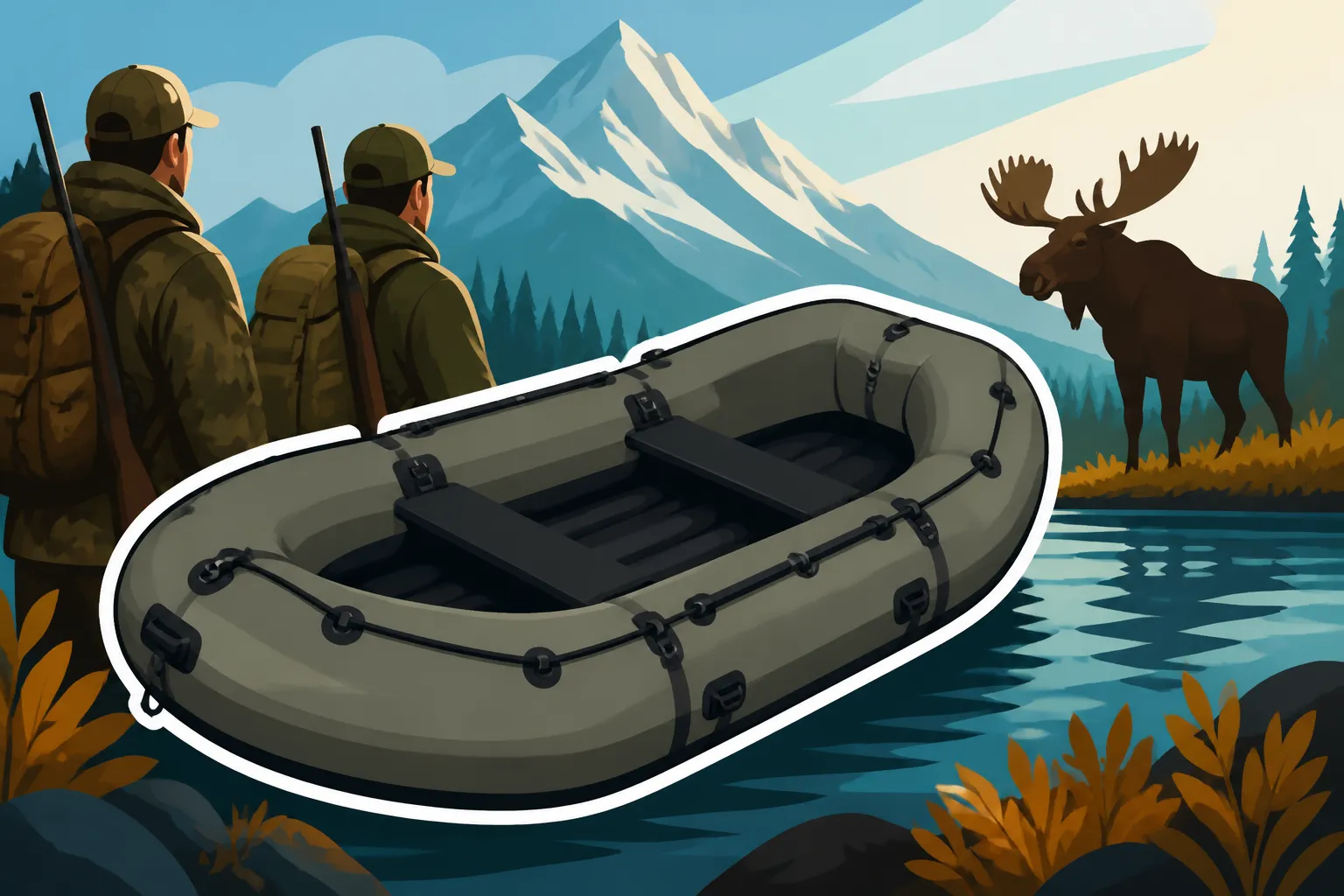
This is where many hunters make a critical error. A 12-foot raft might seem adequate for two people, but it will be dangerously overloaded with this kind of payload. For two hunters hoping to harvest a single moose, a raft in the 14- to 16-foot range is generally the bare minimum. This provides enough tube volume and deck space to safely handle the gear and a full moose. If your ambition includes the real possibility of two moose, or if you're on a particularly long trip (10-14 days) requiring more supplies, you should seriously consider a 16- to 18-foot raft or even a cataraft system. These larger vessels offer significantly more payload capacity and stability.
| Raft Size (Feet) | Typical Passengers | Max Payload (lbs) | Notes for Moose Hunts (2 Hunters) |
|---|---|---|---|
| 10-12 | 1-2 | 600-1000 | Too small for moose meat + gear |
| 13 | 2-3 | 800-1400 | Possible for small moose, minimal gear. Risky. |
| 14-15 | 2-4 | 1200-2000 | Recommended Minimum for 1 moose + gear |
| 16-17 | 3-5 | 1500-2500 | Ideal for 1 large moose + ample gear, or tight for 2 smaller moose |
| 18+ | 4-6 | 2000-3500+ | Excellent for 2 moose + gear, long trips, or complex loads |
| Cataraft (Pairs) | 2-4 | 2000-4000+ | Excellent for heavy, bulky loads; superior tracking |
Note: Payload capacity is a general guideline and varies by manufacturer and model. Always check specific raft specifications.
Stability, Maneuverability, and River Conditions
Beyond just capacity, the raft's size and design directly impact its performance on the river. Larger rafts offer superior stability, which is crucial when floating through rapids, navigating sweepers, or simply standing up to glass for game. They also handle wind better when loaded down. However, they can be less maneuverable in tight channels or shallow water. Smaller, nimble rafts might be easier to steer, but they become tippy and harder to control when heavily loaded, especially in currents or wind.
You need to factor in the characteristics of your chosen river. Is it a wide, braided river like the Mulchatna or a narrower, swifter tributary? Rivers with frequent log jams and sweepers, like those described in Sweepers and Log Jams on a Hunting Float, demand good maneuverability, but also the stability to avoid capsizing if you brush an obstacle. Deeper, wider rivers can accommodate larger rafts more easily, while shallow, rocky rivers might favor a boat with a shallower draft, even if it sacrifices some capacity. Often, the trade-off leans towards more capacity and stability for the safety of your crew and your precious cargo.
Essential Raft Features and Setup for a Two-Hunter Moose Float
Choosing the right base raft is just the beginning. How you rig and equip that raft is equally critical for a successful two-hunter moose float. An Alaska float hunt demands robust construction, smart storage solutions, and a comprehensive understanding of emergency preparedness.
Frame Considerations and Cargo Management
A high-quality, sturdy frame is non-negotiable. For the kind of weight you'll be carrying, an aluminum frame designed for multi-day expeditions is essential. These frames often feature integrated dry boxes, coolers, and secure attachment points for cargo nets and straps. The frame not only provides structural integrity but also allows you to configure your raft for optimal weight distribution and accessibility. You'll want a frame with a strong rowing platform, comfortable seat, and effective anchor system, which is crucial for holding your position while scouting, fishing, or recovering game.
When it comes to cargo, organization is paramount. Invest in high-quality dry bags of various sizes for all your critical gear and clothing. Consider a large dry box for communal items, food, and electronics. Antlers will likely need to be strapped to the top of the load, perhaps even extending over the bow or stern, while the meat, ideally in breathable game bags, needs to be spread out evenly and kept as cool as possible. Speaking of meat, remember to consider the requirements for Meat Care in 50-Degree September Weather and utilize Game Bags That Breathe in Coastal Rain to prevent spoilage. Think about where the meat will ride to avoid sitting in water in the bottom of the raft. You'll also want to read up on Loading a Bull Moose Into a Raft for practical tips on getting your harvest secured.
Durability and Repairability in Remote Alaska
Your raft is your lifeline. Its construction material and your ability to repair it in the field are paramount. The two primary materials for inflatable rafts are Hypalon and PVC.
- Hypalon is renowned for its durability, abrasion resistance, and longevity. It's more expensive but can withstand extreme UV exposure and temperature fluctuations better than PVC. Repairs typically involve glue and patches.
- PVC is a more affordable option, often found in entry-level to mid-range rafts. Modern PVC rafts are quite tough, but generally less resistant to UV damage and extreme cold than Hypalon. Repairs often involve welding or specific adhesives.
Regardless of the material, a comprehensive repair kit is mandatory. This should include multiple patches of varying sizes, specialized adhesive for your raft's material, sandpaper for surface preparation, replacement valves, a valve wrench, and a reliable hand pump or foot pump. You're a long way from a repair shop, and a small puncture or slow leak can quickly become a major problem. Learning basic field repairs before your trip is highly recommended. Many experienced Alaska hunters review raft designs and materials on forums and resources like GoHunt, seeking out brands known for their ruggedness and reliability in the harsh Alaskan environment.
Planning for the "What Ifs" and Contingencies
Even with the perfect raft, an Alaska float hunt can throw curveballs. The best hunters are those who plan not just for success, but for every conceivable challenge, especially when it comes to managing a heavy, perishable harvest.
Dealing with Overloads and Unexpected Meat Hauls
What if you or your partner gets a second moose, or perhaps an unexpectedly large one? This is a great problem to have, but it can quickly turn into a logistical nightmare if you haven't planned for it. Your meticulously calculated raft capacity might be exceeded. In such cases, you might have to consider:
- Shuttling Meat: If the river allows, you might have to make multiple trips with your raft, dropping meat off at a safe cache further downstream, and then returning for the rest of the load. This is time-consuming and arduous but can be necessary.
- Waiting for Pickup: If you're using an air taxi for your pick-up, you might need to coordinate an extra flight or a larger plane, which will come with additional costs and potential delays depending on weather and aircraft availability. Be sure to confirm policies for extra load capacity and charges with your transporter well in advance.
- Caching Meat: If absolutely necessary, you might have to cache some meat in a bear-safe location and arrange for a later pickup, though this is always a last resort due to spoilage risk and increased effort. Ensure you understand and follow all Alaska Moose Meat Salvage Requirements to avoid wanton waste. Remember that Quartering a Bull Moose Alone in the Field becomes significantly harder when you're managing multiple animals.
This also highlights the importance of precise butchering and boning out your meat in the field. Every pound of bone and non-edible material you leave behind is less weight you have to carry.
Safety Gear and Communication for Remote Journeys
Beyond the raft itself, your safety relies on your gear and communication plan. Two hunters allow for redundant safety equipment, which is a significant advantage. Each person should carry their own personal survival kit, including fire starters, knife, navigation tools (GPS with downloaded offline maps, compass), and emergency shelter.
For communication, robust devices are non-negotiable. A satellite phone provides direct voice communication, while a satellite messenger like a Garmin inReach or Zoleo allows for text messages, tracking, and emergency SOS functions. Establish a clear check-in schedule with a contact back home. Remember, cell service is virtually non-existent in most of Alaska's prime hunting areas. Having Signal Devices and Check-In Plans for Solo Alaska Hunts (which can be adapted for a two-person team) is not just a good idea, it's absolutely essential.
Finally, bear safety must be a constant thought. With two hunters, you can have someone on bear watch while butchering. Carry bear spray accessible to both hunters, and know how to use it. Consider a portable electric bear fence to protect your camp and meat cache overnight. Check out Bear Safety While Butchering a Kill in Alaska for more in-depth advice on working a kill site in grizzly country. Being prepared for animal encounters, unexpected weather, or medical emergencies is part and parcel of hunting in Alaska, and your raft system is integral to getting you through it all.
Disclaimer
Hunting in Alaska carries inherent risks, including but not limited to severe weather, dangerous wildlife, and remote conditions. The information provided in this guide is for informational purposes only and should not replace professional guidance, thorough personal research, and adherence to all Alaska Department of Fish and Game regulations. Always prioritize safety and be prepared for self-sufficiency in the field.