Rifle Choice for Alaska Brown Bear Country
Choosing the right rifle for an Alaska brown bear hunt can feel like a daunting task, fraught with endless debates and strong opinions, leaving many hunters anxious about making the "wrong" choice when facing one of North America's most formidable animals. This guide is here to cut through the noise, offering realistic insights and practical advice to help you confidently select a rifle and ammunition combination that will perform when it matters most in brown bear country.
Understanding the Threat: Why Brown Bears Demand Serious Firepower
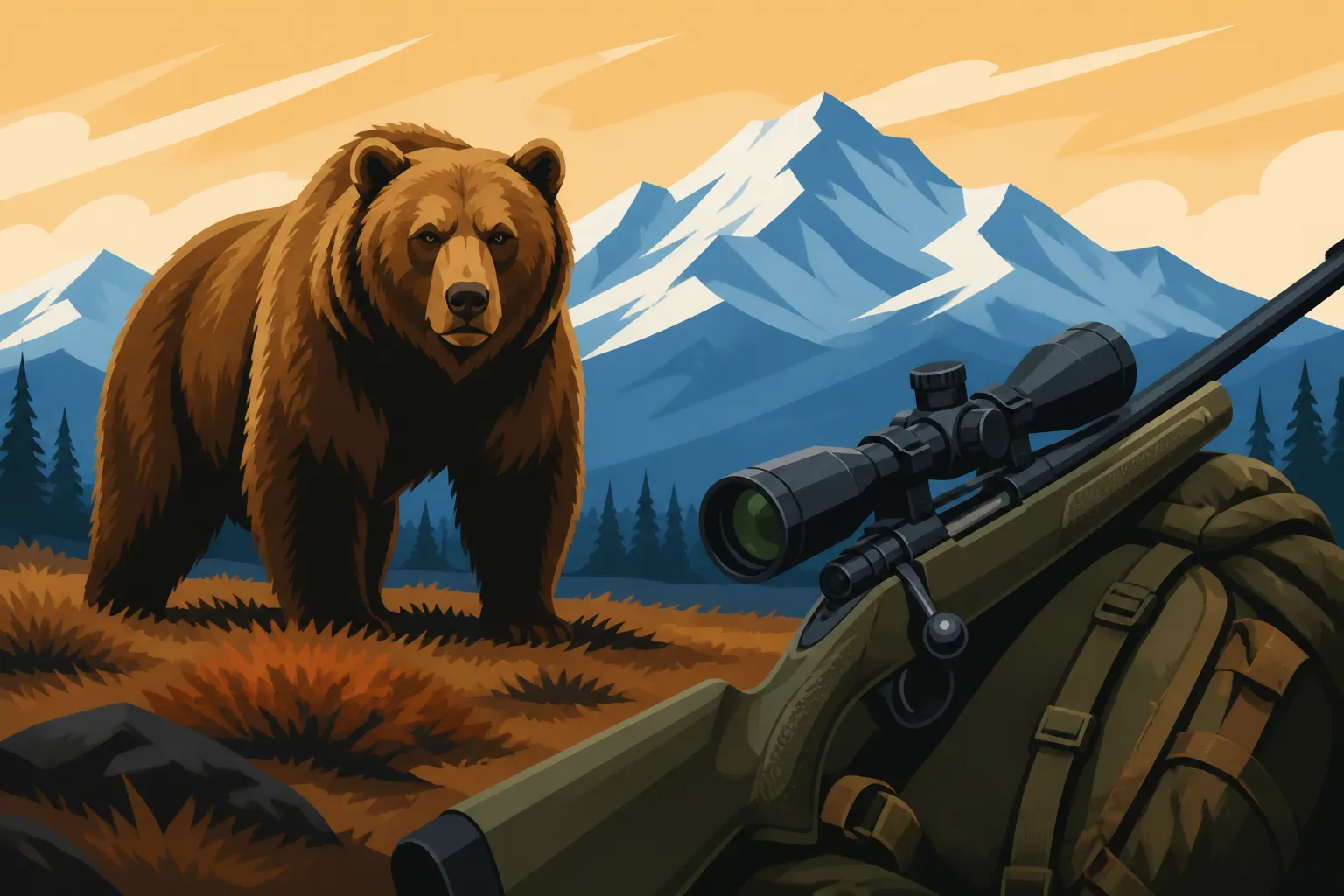
Let's be real: brown bears are not just large animals; they are incredibly powerful, resilient, and, when provoked or surprised, can be lethally dangerous. Ignoring this reality is a recipe for disaster in the field. Your rifle isn't just for harvesting an animal; it's a critical safety tool.
The Sheer Size and Power of Coastal Bears
When we talk about Alaska brown bears, especially those found along the coastlines of places like Kodiak Island or the Alaska Peninsula, we're talking about animals that can easily weigh over 1,000 pounds, with some boars pushing towards 1,500. These aren't your interior grizzly bears, which, while still formidable, typically don't reach the same colossal proportions. Their bone structure is incredibly dense, their musculature is immense, and they carry a thick layer of fat and hide. This means that a bullet needs to penetrate deeply through layers of tissue, muscle, and bone to reach vital organs or break down structural integrity, especially if you're trying to stop a charge. It's not just about energy transfer; it's about getting a bullet where it needs to go. Understanding what makes Alaska Peninsula bears so large helps frame the necessary stopping power.
Charge Dynamics and Reaction Time
A brown bear charge is not a slow, lumbering affair. These animals can cover ground at incredible speeds, often reaching 30-35 miles per hour in short bursts. That's a lot faster than you can sprint in hip waders or heavy pack, and it means that a bear closing a 50-yard gap can be on you in under three seconds. In such a high-stress, rapidly unfolding situation, you need a rifle that you can quickly shoulder, aim, and cycle for rapid follow-up shots. The psychological aspect of a bear encounter cannot be overstated; your heart will be pounding, adrenaline will be coursing, and fine motor skills can diminish. This underscores the importance of a rifle that feels natural to you, one you've practiced with extensively, and one that inspires confidence.
Psychological Aspect of a Bear Encounter
Beyond the physical threat, the sheer presence of a large brown bear can be overwhelming. Many hunters describe the experience as primal, an encounter with something truly wild and powerful. This psychological pressure can impact your shooting performance significantly. Fumbling with a safety, struggling with a sticky bolt, or even just being unsure of your rifle's capabilities can lead to hesitation at a moment when decisiveness is paramount. The goal isn't just to have a powerful rifle, but to have one that you trust implicitly, a rifle that becomes an extension of your will in a crisis. This is why thorough preparation, including extensive shooting practice, is just as important as the rifle itself.
Minimum Caliber Requirements and Why They Exist
Alaska's hunting regulations do have minimum requirements for certain game, but these are often based on a broad spectrum of hunting scenarios, not exclusively brown bear defense or ethical taking. While legal, a minimum might not always be the optimal choice for such a robust animal.
Alaska's Legal Minimums and Reality
For brown bear, Alaska regulations generally require a minimum of a .30-06 Springfield or equivalent, shooting a 180-grain bullet or heavier. Now, technically, this is a legal cartridge, and yes, people have successfully harvested brown bears with a .30-06. However, seasoned guides and experienced hunters will often tell you that while it can work, it's rarely the ideal choice, especially if you're not an expert shot, or if the shot presentation is less than perfect. The .30-06 is a fantastic all-around cartridge for moose or caribou, but for the bone-crushing mass of a large brown bear, it begins to push the lower limits of what's considered truly adequate for consistent, decisive kills, particularly at close range or during a charge.
Ethics of a Quick and Clean Kill
As responsible hunters, our primary ethical obligation is to ensure a quick and clean kill. Wounding an animal, especially a large, dangerous one like a brown bear, not only causes unnecessary suffering but also creates an incredibly hazardous situation for the hunter and anyone with them. A larger caliber, pushing a heavy, well-constructed bullet, significantly increases your margin of error. It provides greater assurance of breaking major bone, penetrating vital organs, and delivering enough shock to incapacitate the animal quickly. This isn't about overkill; it's about respecting the animal and ensuring safety. When considering your gear, think about how to minimize the chance of a protracted struggle or a dangerous recovery, especially when you consider Bear Safety While Butchering a Kill in Alaska.
Beyond the Bare Minimum
Many veteran Alaska hunters recommend starting your serious consideration for brown bear rifles at the .338 Winchester Magnum, or even better, the .375 H&H Magnum. These calibers offer a significant step up in bullet weight, sectional density, and kinetic energy, translating to deeper penetration and more effective terminal performance on thick-skinned, heavy-boned animals. While you might carry a lighter rifle for smaller game or for a specific Hunting Sitka Blacktail Deer in the Alpine Before Snow hunt, a brown bear rifle needs that extra punch. Remember, the goal isn't just to make the bear sick; it's to make it stop immediately. When researching potential hunts, you might use resources like GoHunt to see what successful hunters are commonly using for their brown bear expeditions.
Top Caliber Choices for Alaska Brown Bear
When discussing brown bear rifles, certain calibers consistently rise to the top of the list for their proven performance and reliability in real-world scenarios.
The .338 Winchester Magnum: The Alaskan Standard
For many hunters, the .338 Winchester Magnum is the quintessential "Alaska rifle." It's powerful enough to handle any of Alaska's big game, including brown bear, moose, and elk, without being excessively heavy or having recoil that's completely unmanageable for most shooters. With bullet weights typically ranging from 200 to 250 grains, the .338 Win Mag delivers excellent penetration and knockdown power. It's a flat-shooting cartridge for its class, making it versatile for shots from close quarters in dense brush to longer ranges across an open tundra. Its popularity means ammunition is widely available, and many rifle manufacturers chamber for it. However, recoil can still be substantial, so practicing extensively with your chosen load is absolutely crucial.
.375 H&H Magnum: Classic and Capable
The .375 H&H Magnum holds a legendary status, having been a classic choice for dangerous game worldwide for over a century. It's often considered the minimum "heavy" rifle for professional guides and those who spend serious time in brown bear country. With bullet weights commonly from 270 to 300 grains, the .375 H&H offers a significant increase in momentum and energy over the .338, leading to even deeper penetration and greater reliability in stopping power. While its trajectory is a bit more arced than the .338, it's still perfectly adequate for typical hunting ranges. The recoil, while stout, is often described as a "heavy push" rather than a sharp jab, making it manageable for many shooters with proper technique and a well-fitting rifle. When you're considering Rifle Calibers for Coastal Brown Bear specifically, the .375 H&H is often held up as the gold standard.
Larger Calibers: .416, .458, and Beyond
For those who want maximum stopping power, or who spend a significant amount of time guiding or living in bear country, calibers like the .416 Remington Magnum, .416 Rigby, .458 Winchester Magnum, or even the formidable .458 Lott come into play. These cartridges are designed to deliver tremendous energy and massive, heavy bullets (typically 350-500 grains or more) with unparalleled penetration. They are undeniably effective at stopping very large, very dangerous animals. The trade-off, however, is significantly increased recoil, heavier rifles, and generally higher ammunition costs. These are specialized tools, and proficiency with them requires serious dedication to practice. They are not for the faint of heart, but in a dire situation, they can be immensely reassuring. For hunters looking into the most challenging hunts, perhaps using a service like GoHunt to scout areas on the Alaska Peninsula and Its Brown Bear Country, these calibers offer the ultimate in stopping power.
Rifle Action Types and Their Role in Bear Country
The mechanical action of your rifle is as important as the caliber, dictating reliability, speed of follow-up shots, and overall handling in stressful situations.
Bolt-Action: Unmatched Reliability and Accuracy
The vast majority of brown bear hunters, including guides, rely on bolt-action rifles. Why? Because they offer an unparalleled combination of reliability, accuracy, and robust construction. A well-maintained bolt-action is simple in its mechanism, making it less prone to jams or failures in harsh Alaskan conditions, which can include rain, snow, mud, and freezing temperatures. Their rigid design also contributes to excellent accuracy, allowing for precise bullet placement which is critical on such a large animal. The ability to quickly cycle the bolt for a follow-up shot, while not as fast as a semi-auto, is more than sufficient for hunting scenarios and provides ample speed for defense if practiced diligently.
Lever-Action: A Niche, Fast-Cycling Choice
While less common for truly large brown bears, certain heavy-hitting lever-action rifles, chambered in calibers like the .45-70 Government, have a dedicated following, especially among those who prefer a compact, fast-handling brush gun. The appeal lies in their rapid follow-up shot capability and natural pointability. A hunter proficient with a lever-action can put multiple rounds on target very quickly. However, the .45-70, while powerful with modern loads, typically doesn't offer the same long-range trajectory or extreme penetration of magnum bolt-action cartridges. Its effectiveness for brown bear is generally considered best at closer ranges, where its speed and maneuverability shine. It's a specialist's tool, often carried as a backup or by those who truly understand its capabilities and limitations, especially on Working a Kill Site in Grizzly Country where close quarters might be unavoidable.
Other Actions: Why They're Less Common for Big Bears
You might wonder about other action types. Semi-automatic rifles, for instance, offer very rapid firing, but their complexity often makes them less reliable in extreme cold, dirt, or mud compared to a simple bolt-action. They also tend to be heavier and bulkier. Pump-action rifles, while reliable, are generally not chambered in the heavy-hitting calibers suitable for brown bear. Double rifles, while elegant and incredibly fast for two shots, are exceedingly expensive and require specialized ammunition. For the average hunter pursuing brown bear, the bolt-action rifle remains the overwhelming favorite due to its balance of reliability, power, and practicality.
| Caliber | Common Bullet Weight (grains) | Recoil Level (Relative) | Max Effective Range (approx.) | Typical Applications | Pros | Cons |
|---|---|---|---|---|---|---|
| .30-06 Springfield | 180-200 | Moderate | 300 yards | Deer, Moose, Caribou, Black Bear | Versatile, common ammo, manageable recoil | Minimum for Brown Bear, less stopping power |
| .338 Winchester Magnum | 200-250 | Heavy | 350 yards | All Alaska Big Game, Brown Bear | Excellent balance of power and range | Significant recoil, less common ammo |
| .375 H&H Magnum | 270-300 | Heavy | 300 yards | Dangerous Game, Brown Bear | Legendary stopping power, reliable, classic | Heavier recoil, more expensive ammo |
| .416 Remington/Rigby | 350-400 | Very Heavy | 250 yards | Large Dangerous Game, Elephant | Extreme stopping power, deep penetration | Very heavy recoil, specialized, expensive |
| .45-70 Government (Modern) | 300-400 | Moderate-Heavy | 200 yards | Close-Range Dangerous Game, Hogs | Fast cycling, compact in lever-action | Limited range, less penetration than magnums |
Ammunition Selection: The Key to Stopping Power
Your rifle is only as good as the ammunition you feed it. For brown bears, bullet construction is paramount, far more so than velocity.
Bullet Construction: Penetration is Paramount
When facing a brown bear, especially at close range or during a defensive scenario, the single most important factor for your bullet is penetration. You need a bullet that can drive through thick hide, muscle, fat, and heavy bone to reach vital organs or to break down the bear's central nervous system or skeletal structure. This means avoiding rapidly expanding, frangible bullets designed for deer-sized game. Instead, look for bullets designed for deep, controlled expansion and high weight retention. Monolithic copper bullets, bonded core bullets, or partitioned bullets are excellent choices. Brands like Barnes TSX, Nosler Partition, Swift A-Frame, and Federal Trophy Bonded Bear Claw are specifically engineered for this kind of performance. Knowing your bullet will hold together and drive deep is a major confidence booster, especially when thinking about a Bear Safety While Butchering a Kill in Alaska.
Weight and Sectional Density
Heavier bullets for a given caliber generally have higher sectional density, which aids in penetration. A long, slender bullet with more mass behind it will retain its energy better and cut through tissue more effectively than a lighter, wider bullet. For a .338 Win Mag, look for 225-250 grain bullets. For a .375 H&H, 270-300 grains is the sweet spot. While velocity is often emphasized in advertising, for brown bears, it's the combination of bullet weight, construction, and sectional density that truly delivers the terminal performance needed to reliably put down such a powerful animal.
Premium Brands and Their Performance
Don't skimp on ammunition for a brown bear hunt. This is not the place to save a few dollars. Invest in premium factory loads or meticulously handload with high-quality components. Companies like Federal Premium, Hornady, Barnes, and Nosler produce excellent ammunition specifically designed for dangerous game. Take the time to test various premium loads in your rifle to find what shoots most accurately. Accuracy is always king, but with brown bears, accuracy with a bullet designed for deep penetration is a non-negotiable requirement. While researching, you might find articles on GoHunt forums discussing specific bullet performance on large animals, offering valuable real-world data from experienced hunters.
Rifle Features for Alaska's Harsh Environment
Alaska is notorious for its challenging weather and rugged terrain. Your rifle needs to be built to withstand it all.
Stock Materials and Durability
Wooden stocks, while beautiful, are susceptible to warping and swelling with changes in humidity and temperature, which can negatively impact accuracy. Synthetic stocks, typically made from fiberglass, carbon fiber, or polymer composites, are far more stable, durable, and weather-resistant. They won't warp, crack, or swell, maintaining zero even after days of relentless rain or extreme cold. Beyond material, consider the ergonomics of the stock. It should fit you well, allowing for a natural cheek weld and comfortable sight picture, even when wearing heavy hunting clothes. A good recoil pad is also a must for magnum calibers to help manage felt recoil during practice and in the field.
Optics: Scope versus Iron Sights
For most hunting scenarios in Alaska, a high-quality variable power scope (e.g., 1.5-6x, 2-7x, or 2.5-10x) is the preferred choice. Lower magnification settings are crucial for close-range, fast-action shots, while higher magnifications can help with precise shot placement at greater distances. Reliability in extreme weather is critical, so look for scopes with robust construction, excellent light gathering capabilities, and fog-proof, waterproof performance. Fixed power scopes (like a 4x or 6x) are also excellent choices for their simplicity and durability.
However, many experienced brown bear hunters will advocate for robust backup iron sights or a quick-detach scope mount. In the dense alder thickets of coastal Alaska, a brown bear can appear at spitting distance, where a scope can be more of a hindrance than a help. Also, scopes can get damaged in a fall or through hard use. Having reliable iron sights as a primary or secondary aiming system can literally be a lifesaver. When discussing Rifle Requirements on an Alaska Guided Bear Hunt, many guides will emphasize having a robust optic system that can withstand the rigors of the bush.
Weatherproofing and Maintenance
Alaska's environment is relentless. Your rifle will get wet. It will get cold. It will get dirty. Ensure your rifle has a protective finish like Cerakote, nitride, or stainless steel to resist corrosion. Synthetic stocks are a huge plus here. Beyond the rifle itself, consider high-quality scope mounts and rings that can withstand significant abuse without losing zero. Regular maintenance is vital. Even in the field, a quick wipe-down at the end of the day can prevent major problems. Before you even head out, ensure your rifle is sighted in properly, perhaps a Sighting In a Rifle After a Bush Flight after your gear arrives in camp. A rifle that's easy to clean and maintain in adverse conditions will serve you far better than a finicky one.
Practice, Practice, Practice: Becoming Proficient
Having the "best" rifle means nothing if you can't shoot it well under pressure. Proficiency isn't just about accuracy; it's about familiarity, speed, and mental preparedness.
Shooting from Field Positions
You're not going to be shooting off a bench rest when a brown bear appears. You'll be shooting from kneeling, sitting, standing, or even prone, often under adverse conditions like uneven ground, driving rain, or strong winds. Spend significant time at the range practicing Shooting Positions on Alaska Tundra and Sidehills. Practice shooting quickly, bringing the rifle to your shoulder, acquiring the target, and firing. Simulate real-world scenarios as much as possible. Practice with the same clothing and gear you'll wear in the field. The more comfortable and natural your rifle feels in these various positions, the better you'll perform when it truly counts.
Rapid Follow-Up Shots
A single, perfectly placed shot is always the goal, but with dangerous game, you must be prepared for multiple shots. Practice cycling your bolt smoothly and rapidly, getting back on target for a second and third shot. This isn't about emptying your magazine indiscriminately; it's about the ability to deliver controlled, accurate follow-up shots as quickly as the situation demands. Develop a rhythm, and make it muscle memory. This skill can be the difference between a successful hunt and a life-threatening encounter. Don't underestimate how much practice this takes, especially with a heavier-recoiling magnum.
Mental Preparedness and Familiarity
Confidence in your rifle and your abilities is crucial. This comes from extensive practice and complete familiarity with your firearm. You should be able to operate your rifle's safety, cycle the action, and reload without looking or thinking consciously about it. Visualize various scenarios: a bear charging from thick brush, a quartering-away shot at range, a broadside shot in an open clearing. Go through the motions. The more you prepare mentally and physically, the more composed you'll be if and when that moment arrives. Consider all aspects of your hunt, from Estimating Flight Cost From Base to Camp to your Medical Insurance for Remote Alaska, but never neglect the mental game of proficiency with your chosen rifle. This is a journey, and every shot at the range builds the foundation for success in Alaska's challenging brown bear country.
Disclaimer
The information provided in this guide is for informational purposes only and should not be considered a substitute for professional advice or formal hunter education. Always consult the most current Alaska Department of Fish and Game regulations, secure appropriate licenses and tags, and prioritize safety above all else when hunting. Hunting dangerous game carries inherent risks, and individual skill levels, physical conditioning, and situational awareness are paramount.