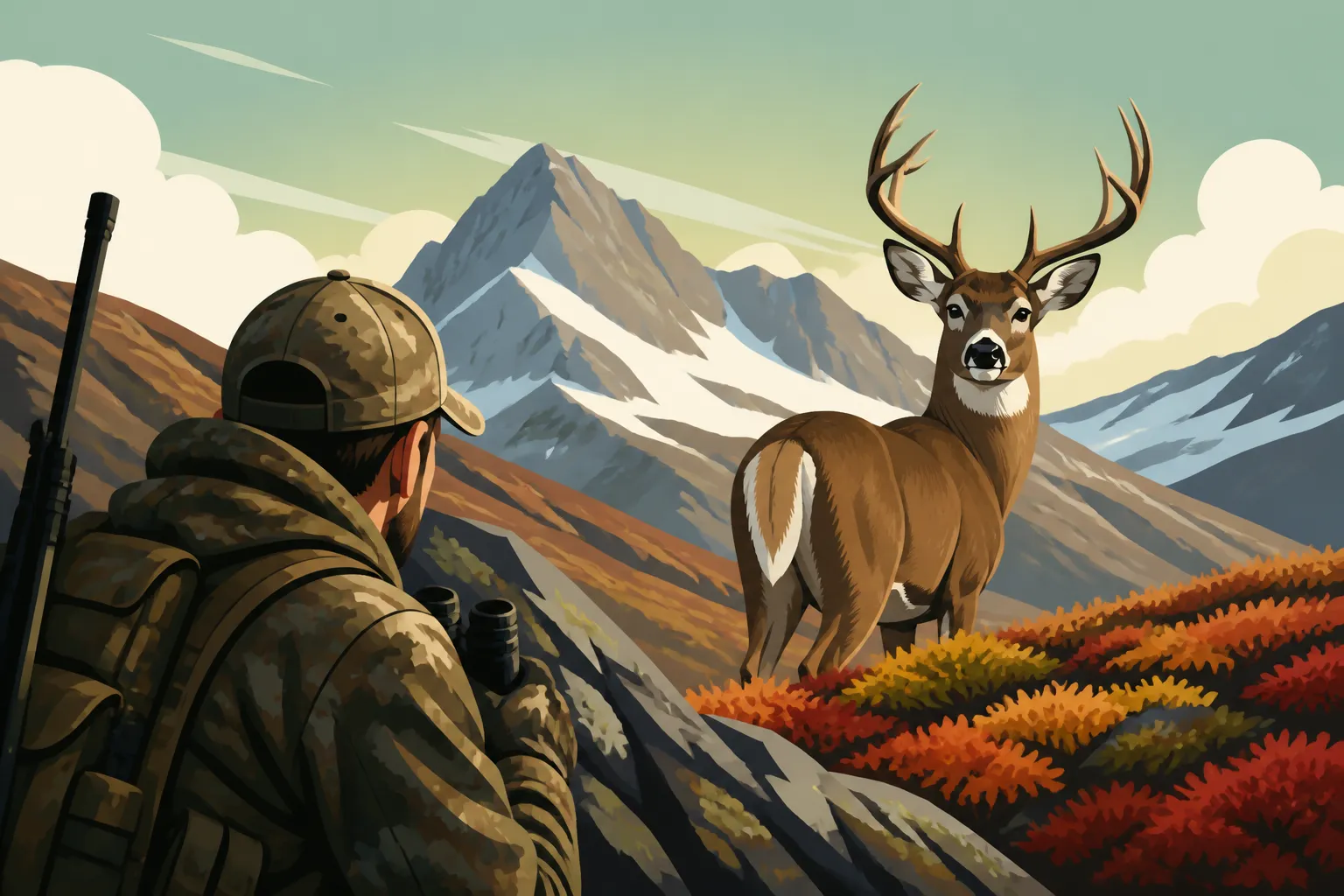
Hunting Sitka Blacktail Deer in the Alpine Before Snow
The crunch of tundra underfoot, the crisp, thin air, and the vast, open bowls of Alaska’s alpine can offer some of the most exhilarating hunting experiences, especially when pursuing Sitka Blacktail deer before the heavy snows hit. But let's be real, chasing these elusive deer in such rugged, unpredictable terrain is a massive challenge. You’re often battling fickle weather, steep climbs, and the sheer difficulty of spotting a camouflaged deer in a sea of rock and scrub. This comprehensive guide is here to walk you through the nuances of alpine deer hunting, helping you understand their behavior, master the right tactics, and ensure you're prepared for whatever the mountains throw at you.
Understanding Alpine Sitka Blacktail Behavior
Before you ever lace up your boots, understanding why Sitka Blacktail deer head for the high country and how they behave there is absolutely paramount. These aren't your typical whitetail deer sticking to woodlots; these are hardy creatures perfectly adapted to coastal Alaska’s wild swings.
Why Deer Go Alpine Before Snow
It's a common misconception that deer only go high when pushed. For Sitka Blacktails, especially in the late summer and early fall before significant snow accumulates, the alpine is often their preferred buffet. They aren't escaping pressure as much as they are seeking out prime forage. The open alpine provides a bounty of wildflowers, tender grasses, and various shrubs that offer high nutritional value, helping them put on critical fat reserves before winter. This is a crucial period for them, and they capitalize on these short-lived alpine pastures.
You'll find them gravitating towards areas where the snow has recently melted, revealing fresh growth, or where specific plants they favor are flourishing. The cooler temperatures at elevation also offer a reprieve from the dense, often bug-ridden timber of lower elevations, particularly as summer transitions into fall. This vertical migration is a natural part of their seasonal cycle, driven by food availability and comfort, not just a response to hunting pressure. Understanding this intrinsic drive is key to anticipating where they might be.
Seasonal Food Sources and Patterns
The alpine buffet changes rapidly through the late summer and early fall. In August and early September, deer might be focused on lush green forbs and new shoots emerging in wet drainages or north-facing slopes where snow lingered longer. As September progresses into October, their diet shifts. They might start favoring berries like blueberries and crowberries, which become abundant and offer a quick energy boost. Look for concentrations of these plants, often in more protected depressions or along the edges of timberlines that creep up into the alpine.
Their feeding patterns are also highly influenced by the time of day and recent weather. After a clear, frosty night, they might stay bedded until the sun hits the slopes, warming them up and drying out the forage. Conversely, on warmer, overcast days, they might feed more consistently throughout the day. It’s a dynamic environment, and deer are constantly adjusting. Areas that were hot spots one week might be devoid of deer the next, so staying flexible and knowing what food sources are peaking is vital. Consider that their patterns can mimic those of Dall sheep, as both utilize similar alpine browse. When you're scouting, keep an eye out for signs like freshly browsed vegetation, droppings, and well-worn trails leading to and from feeding areas.
Impact of Weather on Movement
Oh, the weather in Alaska's alpine. It’s not just fickle; it’s a full-on personality disorder. One minute it's glorious sunshine, the next a pea-soup fog rolls in, or a sideways rain starts pelting you. These rapid changes profoundly impact deer movement. On clear, calm days, deer might feel more secure out in the open, feeding on exposed slopes. However, a sudden shift to high winds or heavy rain will often send them seeking immediate shelter in pockets of stunted timber, deep draws, or beneath rock overhangs. They'll also use these features to escape the sun on particularly bright days.
A common scenario is a foggy morning: deer might be moving and feeding actively, feeling concealed by the low visibility. But as soon as the fog lifts, they'll often bed down quickly, disappearing into the terrain as if by magic. Pay close attention to temperature drops and rising barometric pressure, which can indicate an approaching storm. Deer often feed heavily before a storm, then hunker down for its duration. Being able to adapt your hunting strategy to these microclimates and sudden weather shifts is not just an advantage; it's a necessity for success in this environment.
Key Gear for Early Season Alpine Deer Hunts
Hunting the alpine is physically demanding, and your gear can make or break your trip. You need reliable equipment that can withstand the elements and help you perform effectively in rugged terrain.
Optics for High Country
In the expansive alpine, your eyes are your most valuable tool, and quality optics extend their reach exponentially. Forget trying to "walk up" deer; you'll exhaust yourself and spook more animals than you see. Instead, dedicate significant time to glassing. For general scanning, a good pair of 10×42 or 12×50 binoculars are essential. However, for serious alpine hunting, a spotting scope is non-negotiable. An angled 15-45×60 or 20-60×80 spotting scope, mounted on a sturdy, lightweight tripod, will allow you to pick apart distant hillsides, identify deer, and often judge their antlers without ever having to move.
When choosing optics, prioritize clarity and light gathering capability. In the often dim light of dawn and dusk, or under heavy cloud cover, superior glass makes a huge difference. Don’t skimp here; it’s an investment that pays dividends. You'll spend hours behind your glass, so comfort is also key. A good tripod setup that allows you to comfortably glass from a sitting or kneeling position for extended periods, as discussed in Tripod Height for All-Day Glassing, can prevent fatigue and improve your ability to spot animals. You want to be able to set up and systematically scan sections of terrain using Glassing Grids That Cover a Whole Basin, ensuring you miss nothing.
Layering for Unpredictable Alpine Weather
Alaska's alpine weather is notoriously unpredictable. One minute you're sweating uphill in a T-shirt, the next you're shivering in a gale-force wind. The key to staying comfortable and safe is a robust layering system. Start with a moisture-wicking base layer – synthetic or merino wool, never cotton. This wicks sweat away from your skin, preventing chilling. Next, add a mid-layer for insulation, like a fleece jacket or a lightweight puffy. For your outer layer, you need something that is both waterproof and windproof, but also breathable.
Think about packability: you'll be shedding and adding layers throughout the day. A high-quality rain jacket and pants are absolutely essential. Not just water-resistant, but truly waterproof, designed to withstand hours of steady rain or sitting on wet tundra. Consider brands like Sitka Gear or Kuiu, which specialize in technical hunting apparel designed for these exact conditions. Even on a bluebird day, always have your full rain gear in your pack, because the weather can turn on a dime. This isn't just about comfort; it's about survival. You definitely don't want to get soaked and then have temperatures drop. This is why having Rain Gear Guides Actually Recommend is so important.
Footwear and Traction for Steep Terrain
Your feet are your vehicle in the alpine, and protecting them is paramount. Forget flimsy hiking boots; you need sturdy, supportive, and waterproof mountaineering or heavy-duty hunting boots. Look for boots with stiff soles for good ankle support on uneven ground and aggressive outsoles for traction on loose scree, wet rock, and slippery tundra. A good pair of gaiters is also essential to keep snow, mud, and debris out of your boots, and your lower pant legs dry, especially when traversing wet, brushy areas or crossing small streams.
The terrain in alpine Sitka Blacktail country can be brutal – steep, rocky, and often wet. You’ll encounter everything from spongy tundra to jagged shale and slick moss-covered boulders. Your boots need to provide stability and grip through all of it. Breaking in your boots thoroughly before your hunt is non-negotiable to avoid blisters, which can quickly end a hunt. Pairing them with quality merino wool socks will further enhance comfort and moisture management. If you're hunting in coastal alpine, the considerations are similar to Boot Requirements for Coastal Alaska Hunts, emphasizing waterproofing and durability.
| Gear Item | Purpose | Key Features | Why It's Essential in Alpine |
|---|---|---|---|
| Spotting Scope | Long-range observation, antler judging | 15-45×60 or 20-60×80, angled eyepiece, clear glass | Pick apart vast terrain, identify deer at extreme distances |
| Tripod | Stable platform for optics | Lightweight, sturdy, adjustable height | Essential for all-day glassing, reduces fatigue, improves stability |
| Waterproof Rain Gear | Protection from rain, wind, and snow | Breathable, durable, fully seam-sealed | Unpredictable, rapidly changing alpine weather demands constant protection |
| Layering System | Adaptability to temperature fluctuations | Moisture-wicking base, insulating mid, windproof outer | Prevent hypothermia or overheating during strenuous climbs and static glassing |
| Sturdy Hunting Boots | Ankle support, traction, waterproof | Stiff sole, aggressive tread, Gore-Tex or similar | Navigate uneven, rocky, wet terrain safely, prevent injury |
| Gaiters | Keep debris out of boots, lower legs dry | Durable, waterproof, secure fit | Prevent wet feet and discomfort when traversing wet tundra or snow |
| Backpack | Carry gear, pack out meat | Comfortable frame, sufficient capacity (5000+ cu in) | Essential for multi-day hunts and packing out heavy meat loads |
| Satellite Communicator | Emergency communication, check-ins | GPS, SOS function, two-way messaging | Crucial for safety in remote areas without cell service |
Tactics for Locating and Stalking Alpine Deer
Once you've got the right gear and a solid understanding of deer behavior, it’s time to put those skills to work in the field. Alpine deer hunting is a game of patience, stealth, and smart decision-making.
Glassing Strategies for Open Basins
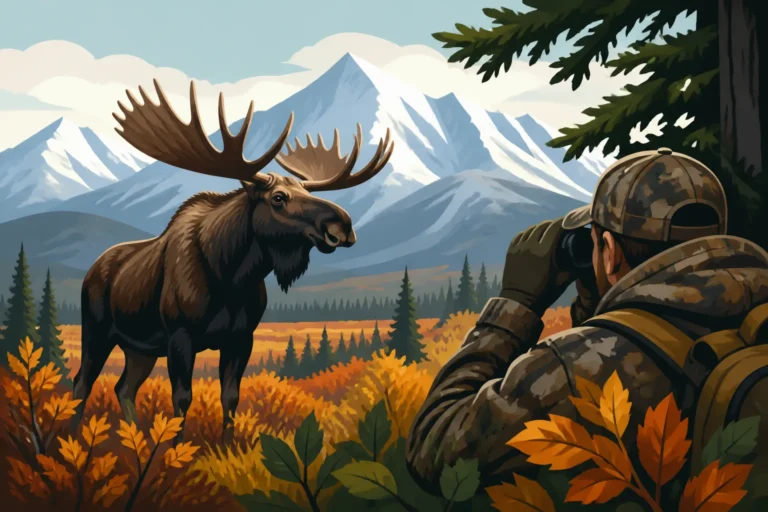
In the wide-open expanse of the alpine, glassing is your primary hunting method. You won't be still-hunting through timber much here. Find a high vantage point, ideally one that allows you to see into multiple basins or across a large drainage, and settle in. Use your binoculars to scan broad areas, looking for anything out of place – a horizontal line, a patch of different color, or the glint of an antler. Once you spot something that looks promising, switch to your spotting scope to confirm if it’s a deer and to evaluate its size.
Work the terrain methodically. Start close to your position and work your way out, then back again. Pay special attention to transition zones: where rock meets tundra, where sparse timber gives way to open slopes, or the edges of snowfields. These are natural travel corridors and bedding areas. Also, don't just look for deer; look for parts of deer. An ear, a rump, or a leg sticking out from behind a rock can be all you get. Many hunters find that resources like GoHunt, with its detailed topographic and satellite overlays, can significantly aid in identifying prime glassing knobs and potential deer habitat long before the hunt, helping you strategize your approach. Remember, it’s not about how fast you glass, but how thoroughly you do it.
Stalking Techniques in Rocky and Sparse Cover
Once you’ve located a deer you want to pursue, the real challenge of the stalk begins. Alpine terrain offers little concealment, making a successful approach incredibly difficult. The first rule is patience. Observe the deer’s behavior and movement patterns. Are they feeding? Bedded? Moving towards a particular area? Plan your route to take advantage of every fold in the terrain, every rock, and every patch of scrub. This might mean making a wide loop, going out of your way to stay out of sight and maintain the wind advantage.
Movement should be slow and deliberate. Take two steps, stop, scan, listen. Pay attention to your foot placement to avoid dislodging rocks or making noise. When crossing open areas, move when the deer's head is down feeding or when they are looking away. If you get pinned down in an exposed spot, be prepared to wait for hours if necessary until the deer moves, or until a cloud or fog bank rolls in to provide cover. This mental toughness is as important as your physical conditioning. Always be ready to adapt; sometimes the best stalk is the one you abandon to wait for a better opportunity.
Understanding Wind and Thermals
In the alpine, wind and thermals are constantly shifting, and understanding them is crucial for success. Wind is simply air moving from high pressure to low pressure, but it gets complicated in mountain valleys. Thermals are localized air currents caused by temperature differences. As the sun warms the ground, air rises (updrafts). As the ground cools, air sinks (downdrafts). This means in the morning, air usually rises up the mountainsides, carrying your scent upwards. In the evening, as the air cools, it reverses, flowing down the slopes and carrying your scent downwards.
However, prevailing winds can override thermals, and topography can create swirling, unpredictable gusts. Always carry a wind checker (a small bottle of fine powder) and use it frequently. Before every move, check the wind. When planning your stalk, always try to approach from downwind. If the wind is fickle, consider an approach that puts you crosswind or slightly quartering into it. Remember, deer rely heavily on their sense of smell, and one whiff of human scent can send them bounding out of the basin. Paying attention to these invisible currents is paramount, especially when navigating terrain like you would when Reading Sheep Trails in Loose Shale where game animals are highly attuned to their surroundings.
Field Care and Packing Out in Mountainous Terrain
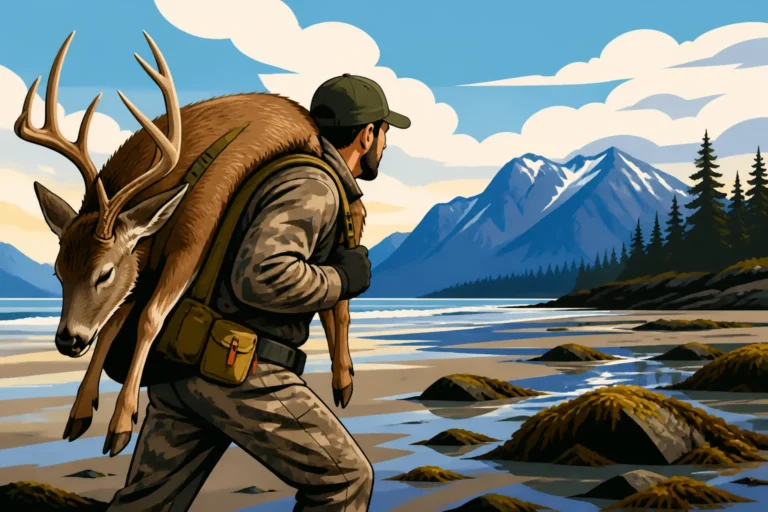
Harvesting a Sitka Blacktail in the alpine is a fantastic achievement, but the work is far from over. Getting the meat and trophy off the mountain safely and efficiently is arguably the most challenging part of the hunt.
Quartering and Cooling Meat on the Mountain
Once your deer is down, the clock starts ticking, especially if temperatures are mild, common during the pre-snow season. You need to process the animal quickly to prevent spoilage. First, get the deer field dressed immediately. If you're on a steep slope, position the deer to prevent it from rolling downhill while you work. For backpack hunting, the gutless method is often preferred: quarter the animal by removing the front shoulders, hindquarters, and backstraps, leaving the gut pile intact. This minimizes contamination and reduces the amount of material you need to handle.
After quartering, get the meat into breathable game bags. This is not the time for plastic bags, which trap heat and moisture. Quality game bags, like those made by breathable synthetic materials, allow air circulation while protecting the meat from flies and dirt. Spreading the quarters out in the shade and on cool rocks, if possible, will help them cool down faster. Elevating the meat off the ground slightly can also aid airflow. If you're in an area with potential for Meat Care in 50-Degree September Weather, prompt and effective cooling is even more critical. Getting the hide off and the meat aired out quickly is your best defense against spoilage.
Special Considerations for Steep Pack Outs
Packing out a deer from the alpine is a brutal endeavor. Even a small Sitka Blacktail can feel incredibly heavy after a successful hunt, especially when traversing steep, uneven terrain. Before you load your pack, take a moment to assess the safest and most efficient route off the mountain. It’s not always the shortest route. Sometimes, a slightly longer path that avoids cliffs, extremely loose scree, or dense brush is the smarter choice.
Distribute the weight in your pack evenly and keep the heaviest items (the meat) close to your back. Use your pack’s compression straps to secure the load and prevent it from shifting, which can throw you off balance. Take frequent, short breaks. Stay hydrated and fuel your body. Walking sticks or trekking poles are invaluable for stability and reducing strain on your knees, especially on descents. If you’re hunting with a partner, share the load and assist each other over difficult sections. Remember that this is when all your conditioning and the careful selection of a robust pack for Backpack Hunting in Alaska: Gear Weight and Meat Loads truly pays off.
Dealing with Potential Bear Encounters
Whenever you're hunting in Alaska, especially around a fresh kill, you're in bear country. Both black bears and brown bears (including grizzlies) inhabit many of the same alpine areas as Sitka Blacktail deer. Having a plan for bear safety is not just a good idea; it's essential. Always carry bear spray, and have it readily accessible – not buried in your pack. A powerful sidearm (like a .44 Magnum or 10mm) can also be a viable option, but ensure you are proficient with it under stress. Understanding the nuances of Bear Spray Versus Rifle at Close Range is a critical part of your preparation.
When processing your deer, make noise and stay aware of your surroundings. Work quickly and efficiently. If you are hunting with a partner, one person can stand guard while the other works. If you encounter a bear, assess the situation. Often, bears are simply curious and can be deterred by making yourself look large, making noise, and waving your arms. Avoid running, as this can trigger a chase response. If a bear is aggressive or approaching too closely, be prepared to use your bear spray or firearm. After quartering, if you need to leave meat overnight, ensure it's cached properly, ideally hung high in a tree or securely covered to minimize scent, and well away from your camp.
Weather Challenges and Safety Considerations
The unpredictable nature of Alaska’s alpine weather creates inherent safety challenges. Being prepared for rapidly changing conditions and having robust emergency plans are non-negotiable for a successful and safe hunt.
Reading the Alpine Forecast and Microclimates
Never, ever underestimate Alaskan weather. Even a seemingly benign forecast can turn into a life-threatening situation in the mountains. Before your trip, study long-range forecasts, but understand that these are only a general guide. Once you're in the field, pay constant attention to local indicators: cloud formations, wind shifts, changes in temperature, and barometric pressure trends. A rapidly dropping barometer almost always signals an approaching storm. Clear skies in the morning can quickly give way to fog, rain, or even snow in a matter of hours.
Alpine environments create their own microclimates. One side of a ridge might be sunny and calm, while the other is shrouded in fog and buffeted by strong winds. Valleys can channel winds and trap cold air. Always be prepared for conditions worse than what's forecast. This means carrying extra warm layers, waterproof gear, and a way to build a fire, even if you don't anticipate needing it. Your survival might depend on your ability to adapt to sudden, severe weather changes, especially if you're stuck waiting out a storm.
Emergency Preparedness for Isolated Hunts
Most alpine Sitka Blacktail hunts take you deep into remote wilderness where cell service is non-existent. Having a reliable means of communication for emergencies is not just advisable; it's mandatory. A satellite messenger device like a Garmin inReach or a Zoleo is a game-changer. These devices allow you to send and receive text messages, share your location, and, most critically, send an SOS signal to emergency services if things go south. Make sure someone at home knows your detailed itinerary and check-in schedule, as outlined in Signal Devices and Check-In Plans for Solo Alaska Hunts.
Beyond communication, carry a well-stocked first-aid kit, including any personal medications. Know how to use everything in it. Carry a fire starter (waterproof matches, lighter, fire steel), a headlamp with extra batteries, an emergency shelter (like a bivy sack or lightweight tarp), and enough extra food and water to last a few unplanned extra days. A quality knife, map, and compass (and knowing how to use them, even if you rely on GPS) are also essential. Because you'll often be without cell service, it's crucial to prepare for Alpine Navigation Without Cell Service by Downloading Offline Maps Before a Fly-In and carrying backup navigational tools. Being truly prepared means anticipating the worst and hoping for the best.
Planning for Unforeseen Delays and Contingencies
Even the best-planned hunt can be derailed by unforeseen circumstances – weather delays, mechanical issues with transportation, an injury, or simply needing more time to find your animal or pack out your meat. Build buffer days into your schedule if possible. Don’t plan to be picked up the day after your hunt ends; allow for at least one or two extra days in the field for contingencies. This reduces stress and prevents you from making rash, potentially unsafe decisions under pressure.
Always have a backup plan for transportation. If your bush plane can’t fly due to weather, what’s your alternative? Can you wait it out? Do you have enough supplies? Discuss these possibilities with your air taxi service or hunting partners beforehand. Consider having emergency funds set aside for unexpected costs, like extra charter flights or extended hotel stays. A realistic, flexible mindset is perhaps the most important tool you can bring on an alpine hunting trip. The mountains of Alaska demand respect and thorough preparation, and those who provide it are often rewarded with unforgettable experiences.
Disclaimer
Please note: Hunting in Alaska carries inherent risks. This guide provides general information and recommendations. Always consult the most current Alaska Department of Fish and Game regulations for specific hunt areas and species. Safety should always be your top priority. Ensure you are properly trained, equipped, and physically prepared for the challenges of hunting in Alaska's wilderness.