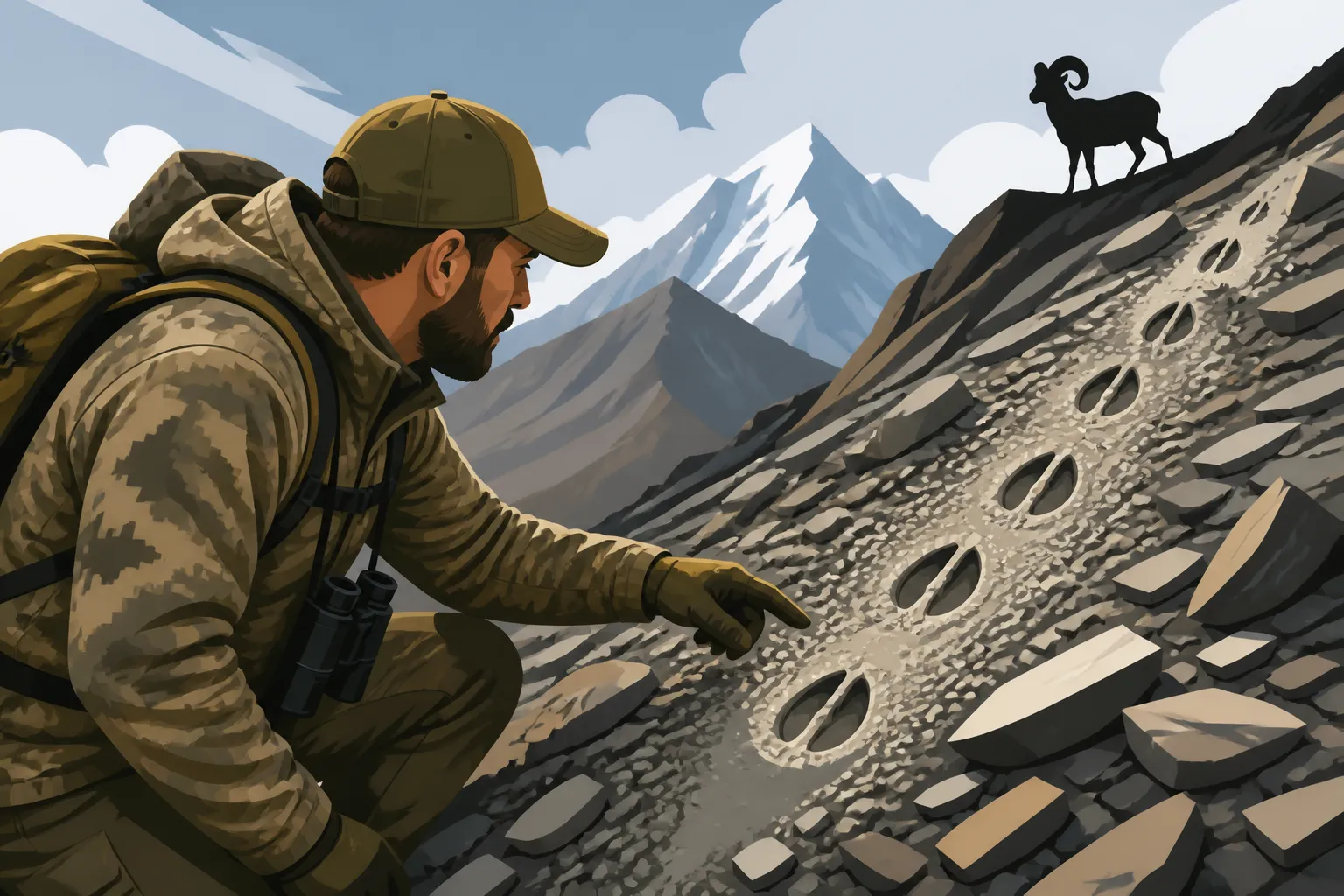
Reading Sheep Trails in Loose Shale
Hunting Dall sheep in Alaska's high country presents a unique set of challenges, and one of the most frustrating is trying to discern subtle game trails across vast, unforgiving expanses of loose shale. It often feels like the mountains themselves are conspiring against you, with every step and every glance revealing nothing but unstable rock and false promises. This guide will meticulously break down how to effectively read sheep trails in these treacherous shale fields, helping you unlock the secrets of sheep movement and improve your odds of a successful hunt.
The Treacherous Nature of Shale Terrain for Dall Sheep
When you're up in the alpine, particularly in ranges like the Chugach or the Brooks Range, you'll encounter a variety of terrain. But it's the loose shale, often found on steep slopes and ridgelines, that truly tests a hunter's patience and observational skills. This isn't your typical forest floor where a deer track stands out. Here, the ground itself is constantly shifting, making traditional "sign reading" a whole different ballgame.
Why Shale is Different from Solid Rock or Tundra
Unlike solid rock outcrops where a scrape or a worn path might persist for seasons, or stable tundra where hooves leave distinct impressions in the moss and dirt, shale is an inherently unstable medium. It's composed of thinly layered, fractured rock that breaks apart easily, often moving under its own weight, especially with the added disturbance of an animal or weather. This constant micro-movement means that even a well-traveled sheep trail can look like nothing more than a random scatter of rocks to the untrained eye. The edges of any impression quickly crumble, wind and rain redistribute smaller fragments, and fresh rock slides can completely erase paths overnight.
Imagine trying to follow a ghost in a landscape that's actively trying to erase all evidence of its passing. That's the feeling many hunters get. The difficulty is compounded by the fact that sheep are incredibly agile and light-footed, distributing their weight remarkably well even on precarious slopes. They don't always "dig in" like a moose in soft mud, leaving deep, obvious prints. Instead, their hooves might just displace the top layer of scree, creating very subtle disturbances that are easily missed if you're not looking for the right patterns.
The Elusive Nature of Dall Sheep Movement
Dall sheep are masters of their environment, and their movement patterns on shale are a testament to their survival instincts. They aren't just traversing the landscape; they're conserving energy, finding the safest routes, and constantly assessing their surroundings for predators. This means their trails aren't always direct lines from point A to point B. Instead, they often follow contours, zig-zag up steep faces, or disappear into rocky draws, only to reappear much higher up. They're acutely aware of fall lines and potential hazards, rarely taking a path that isn't already tested and proven.
Their movements are also influenced by their daily routines: seeking out mineral licks in spring, moving to bedding areas in the morning, and foraging for food like various alpine grasses and lichens. Understanding these patterns, rather than just looking for individual tracks, becomes crucial. You might observe a string of sheep moving across a shale face at dawn, but by midday, that 'trail' might be completely indistinguishable. What you're really trying to detect are the ghosts of repeated travel, the subtle cumulative effects of generations of sheep choosing the same efficient, safe routes through an otherwise chaotic landscape. It’s less about a fresh track and more about identifying the preferred lines of travel.
Identifying Key Signposts for Sheep Trails
To truly read sheep trails in loose shale, you need to shift your mindset from looking for obvious tracks to interpreting subtle changes in the environment that indicate repeated passage. It's like learning a new language where the grammar is composed of dislodged rocks and faint disturbances.
Visual Cues: Rubs, Droppings, and Tracks
While finding clear tracks in shale is a rare treat, other visual cues can be far more reliable. The presence of droppings is often the first definitive sign you're on a sheep highway. These small, dark pellets are highly durable and can persist for a long time, especially in dry, high-altitude conditions. Look for concentrations of droppings, particularly in bedding areas, near prominent rocks, or at bottlenecks in terrain. Fresh droppings will be moist and dark, while older ones will be dry, faded, and potentially brittle. The more droppings you find in a localized area, the more certainty you can have that sheep are frequently using that spot.
Rubs are another excellent indicator. Sheep, especially rams, will rub their horns on rocks, small trees, or even large clumps of tundra. These rubs remove the outer layer of rock or bark, leaving a lighter, smoother, or polished surface. While less common in barren shale fields, keep an eye out for them where a few stunted willows or larger, more stable boulders provide the opportunity. You might also find greasy spots on rocks where sheep have repeatedly rubbed their bodies. These subtle changes in rock texture and color can be vital clues. For a deeper dive into discerning age, check out our article on Ram Horn Growth Rings and Age.
As for tracks, while individual prints are fleeting, what you're really looking for in shale is the cumulative effect of tracks. Instead of distinct hoof prints, you'll see areas where the shale is consistently more disturbed, slightly pushed downhill, or has a different texture due to repeated compression and displacement. Imagine a slight depression, or a "flattened" look to the scree, where sheep feet have repeatedly pressed down. It's less about the shape of a hoof and more about a pattern of disruption.
The "Highway" and "Side Road" Concept of Sheep Trails
Think of sheep country like a human road system. There are main highways, which are the most consistently used routes, and then there are countless side roads and less-traveled paths. Your goal is to find the highways. These "highways" are often characterized by a more pronounced disturbance of the shale, almost a faint trench or a slightly smoothed-out path compared to the surrounding untouched scree. They typically follow logical contours, connecting bedding areas to feeding grounds, or leading up to a prominent saddle or ridge.
These main trails will often be visible from a distance if you're glassing effectively. They might appear as faint lines of slightly darker or lighter rock, or a change in the angle of the scree. Side roads, on the other hand, are short diversions to a specific patch of feed, a quick escape route, or a temporary bedding site. They'll show less sign and often dead-end. The trick is to distinguish between these. If you find a promising trail, follow it with your optics to see if it continues for a significant distance or if it fades out quickly. A real highway will persist and typically lead to another logical sheep destination. This methodical approach is vital, much like the careful observation needed when Reading Sheep Country From a Glassing Knob.
Understanding Sheep Behavior on Steep Slopes
Sheep are built for the steep and treacherous. Their hooves are designed for grip and stability, allowing them to navigate slopes that would be impossible for most other large mammals. When on steep shale, they often utilize small ledges, outcroppings, or patches of more stable ground to minimize energy expenditure and reduce the risk of dislodging rock. Their trails will reflect this. They rarely take a direct line up a sheer, unstable shale slope if there's a more secure, albeit longer, switchback available.
Observe how water drains on these slopes. Sheep trails often mimic natural drainage patterns or contour lines, as these tend to be the paths of least resistance and offer the most stable footing. They'll also frequently use benches or narrow shelves that offer momentary flat ground for resting or assessing their surroundings. These benches are prime locations to find accumulated droppings, rubs, and more visible signs of repeated travel. When approaching such terrain, always think like a sheep: what is the safest, most efficient way to traverse this? Their trails will invariably answer that question.
Strategic Glassing Techniques for Spotting Trails
Finding these elusive trails isn't about luck; it's about systematic, patient glassing with the right tools and mindset. You can't just casually scan and expect to see them. You need to dissect the mountain, piece by painstaking piece.
Optimal Glassing Times and Angles
The angle of the sun can be your best friend or your worst enemy when trying to spot subtle trails. Early morning and late evening, when the sun is low, create long shadows and highlight texture. This low-angle light can make faint depressions, subtle changes in rock orientation, or disturbed patches of scree jump out. A trail that's invisible at midday under harsh overhead light might become clearly defined at sunrise or sunset.
Similarly, consider your own angle to the slope. Looking directly down a steep shale face might obscure trails, as the perspective flattens the terrain. Try to position yourself so you are looking across or slightly up the slope. This provides a better three-dimensional view, allowing you to discern subtle variations in elevation and texture that define a trail. Sometimes, even shifting your position by a few feet can dramatically change what you're able to see, revealing a path that was previously hidden in plain sight.
Using Optics to Your Advantage
High-quality optics are absolutely non-negotiable for sheep hunting, and especially for deciphering shale trails. You'll need a good spotting scope on a sturdy tripod. Don't skimp here; shaky optics will cause eye fatigue and make it impossible to pick out fine details. Brands like Swarovski, Zeiss, and Kowa are popular among serious sheep hunters for a reason. For instance, the latest offerings often feature excellent edge-to-edge clarity and superior low-light performance, which is exactly what you need when scrutinizing distant slopes for hours. If you're looking for recommendations, many outfitters suggest models from GoHunt that balance optical quality with reasonable weight for backpacking.
Start your glassing grid systematically, moving slowly across the entire mountain face, often referred to as a "grid search." Don't just scan for white dots that might be sheep. Instead, consciously look for patterns of disturbance, faint lines, or areas where the shale looks "different." Crank up your spotting scope's power to really magnify suspicious areas. You might be surprised how a seemingly random patch of rock resolves into a distinct trail when viewed at 40x or 60x. For tips on maximizing your glassing time, check out our guide on Glassing at First Light Versus Midday.
| Sign Type | Appearance in Shale | Indication | Optimal Observation Time | Persistence |
|---|---|---|---|---|
| Disturbed Shale | Slight depressions, flattened scree, consistent displacement | Repeated hoof traffic, main thoroughfare | Low light (morning/evening) | Moderate |
| Droppings | Small, dark pellets, often in clusters | Frequent use of a specific area (bedding, feed, travel) | Any time | High |
| Rubs | Polished rocks, scraped bark, greasy spots | Rams marking territory or relieving itch; less common on shale | Any time | Moderate to High |
| Worn Edges | Faintly rounded or smoothed rock edges on ledges | Constant friction from hooves | Low light | High |
| Vegetation Changes | Sparse growth, crushed plants along a path | Repeated foot traffic in vegetated areas within shale | Any time | Low |
Combining Satellite Imagery with Field Observations
In today's hunting world, technology can be a huge asset. Before you even set foot on the mountain, spend hours studying satellite imagery, especially high-resolution maps available through tools like Google Earth or dedicated hunting apps such as those offered by GoHunt. Look for natural breaks in terrain, saddles, prominent ridges, and any areas that appear to offer a less treacherous ascent or traverse. Sheep tend to stick to these logical pathways.
While satellite imagery won't show you individual sheep droppings, it can reveal broader patterns of terrain that sheep would naturally exploit. You might see faint lines or contours that appear more smoothed out, indicating potential long-standing travel corridors. Once in the field, compare what you're seeing through your optics with what you identified on your maps. The goal is to cross-reference your digital scouting with real-world observation. Often, a "promising" line on a topo map might look impossible from the ground, or vice-versa. This iterative process of scouting and verification will sharpen your ability to predict and then confirm sheep movement, which is also critical for something like Scouting a Unit From Satellite Imagery Before You Fly.
What to Do Once You've Found a Trail
Finding a sheep trail in loose shale is a victory in itself, but it's just the first step. Now you need to interpret what that trail is telling you and use it to your advantage for your hunt.
Assessing Trail Freshness and Direction of Travel
Once you've identified a trail, the next critical step is to determine its freshness and the direction of travel. This is where those subtle visual cues become paramount. Freshly disturbed shale will often have sharper edges to the dislodged rocks, and the exposed undersides of the flakes might appear darker or have a different sheen than older, weathered rock. If you see very fresh droppings, still moist and dark, that's a strong indicator of recent use. You can also look for any small, fresh scuffs or nicks on more stable rocks bordering the trail.
Determining the direction of travel can be tricky, but look for subtle patterns. Sheep tend to push scree downhill as they ascend, creating a slightly "scooped out" appearance on the uphill side of small obstacles. Conversely, as they descend, they might create a mini-avalanche effect, dislodging larger quantities of rock that roll downhill. Combining these observations with common sheep behavior – they typically bed high, feed lower, and move between the two – will help you build a mental picture of their recent activity. For instance, if you're finding fresh sign leading up a steep slope in the morning, it's a good bet the sheep are heading to a bedding area or a high lookout.
Planning Your Ascent and Approach
Finding a trail is one thing; using it to approach sheep undetected is another. Don't assume that because sheep use a trail, it's the only way up or that it's always the best way for you to follow. Often, using a known sheep trail can put you at a disadvantage, as these are routes sheep are accustomed to looking out for predators. They know these paths intimately. Your approach should always prioritize concealment, wind direction, and elevation advantage.
Instead of walking directly on the trail, try to parallel it, staying slightly above or below, using terrain features for cover. Pay close attention to the wind – it's your most important hunting companion in the mountains. A good rule of thumb is to always keep the wind in your face or quartering into you. If you're struggling with navigation in the absence of obvious trails or cell service, our guide on Alpine Navigation Without Cell Service can offer crucial tips. Remember, the goal is to get into a shooting position without alerting the animal, and sometimes deviating from the obvious path is the smart move.
Safety Considerations on Loose Shale
Hunting in loose shale is inherently dangerous, and safety must always be your top priority. Even if you've found a solid sheep trail, assess its stability before committing to it. Some sheep trails traverse incredibly exposed and unstable areas. Always test your footing with each step. Use trekking poles for added stability and balance. Be acutely aware of the risk of rockfall, both from above you and from dislodging rocks yourself, which could endanger anyone below you or even spook game a mile away.
Never climb beyond your comfort or skill level, especially when solo. Consider the weight of your pack, especially if you anticipate having to pack out a ram. Packing a Ram Off a Cliff Face isn't just about strength; it's about navigating extreme terrain with a heavy, awkward load. If a trail looks too precarious, or if weather conditions make it unsafe (rain can turn shale into a slippery death trap), find an alternative route or wait for better conditions. No ram is worth risking your life over. Always inform someone of your route and expected return time, and carry an inReach or satellite phone for emergencies, critical for any solo Alaskan hunt.
Disclaimer
Hunting in Alaska is an inherently dangerous activity that carries significant risks, including but not limited to severe weather, dangerous terrain, wildlife encounters, and remote wilderness hazards. The information provided in this guide is for educational and informational purposes only and should not be considered a substitute for professional guiding services, extensive personal experience, or proper safety training. Always prioritize safety, adhere to all Alaska Department of Fish and Game regulations, and obtain appropriate licenses and permits. The author and publisher assume no responsibility for any injuries, accidents, or legal infractions that may occur as a result of using this information.