Insurance and Evacuation Coverage on Alaska Hunts
Hunting in Alaska is an incredible, once-in-a-lifetime adventure for many, a deeply ingrained way of life for others. But let's be realistic for a moment: it's also inherently risky. When you're miles from the nearest road, let alone a medical clinic, even a minor injury can become a serious problem, and a serious one can turn life-threatening in a hurry. This guide will walk you through the essential considerations for insurance and evacuation coverage, ensuring you're prepared for the unexpected when chasing big game in the Last Frontier.
The Harsh Realities of Remote Alaska and Why You Need Coverage
Alaska isn't your backyard deer stand. It's a vast, wild landscape where distances are measured in days of travel, not miles, and help isn't just a phone call away. Understanding the inherent challenges of this environment is the first step in appreciating why robust insurance and evacuation coverage isn't a luxury, but a necessity for any serious hunter.
The Vastness and Isolation of the Alaskan Backcountry
Imagine flying into a remote lake on a floatplane, watching your pilot disappear over the horizon, leaving you and your hunting partner surrounded by nothing but towering peaks, dense willow thickets, and endless tundra. Cell service? Forget about it. The nearest paved road? Possibly hundreds of miles away. Medical facilities? Often a full day's journey, even by air, from where you're standing. This isn't just a romantic notion of wilderness; it's the stark reality of much of Alaska's prime hunting country. A twisted ankle while crossing a rocky stream bed, a severe allergic reaction to an unknown plant, or even a sudden, debilitating illness like appendicitis, immediately becomes an epic survival challenge. You're not just dealing with the injury or illness itself, but the immense logistical hurdle of getting professional medical attention to you, or you to it. Many hunters underestimate how quickly a manageable situation can escalate into a desperate emergency when isolation is the primary factor. Even with the best preparation, the sheer scale of the Alaskan wilderness means that you are, for all intents and purposes, on your own until specialized help can reach you. This is why having a clear plan for emergency communication, often involving satellite devices, is paramount. Signal Devices and Check-In Plans for Solo Alaska Hunts are vital, but even those rely on someone on the other end being able to initiate a response.
Common Risks on an Alaska Hunting Trip
Beyond the general isolation, hunting in Alaska presents a unique set of risks that differ from hunts in the lower 48. Falls are incredibly common, whether you're navigating slippery river rocks during a Float Hunting Alaska Rivers for Moose and Caribou trip, climbing steep shale slopes while Spot-and-Stalk Dall Sheep Hunting Above Alaska Timberline, or simply tripping over tundra tussocks. Cuts and puncture wounds can occur while caping an animal or handling knives, and in a wilderness setting, even a seemingly minor wound can become infected quickly without proper care. Then there are the environmental hazards: hypothermia can set in rapidly with sudden shifts in weather, especially during a late September moose hunt when temperatures can swing wildly, or a coastal brown bear hunt where rain is a constant companion. Wildlife encounters, particularly with bears, are a serious consideration, especially when you're quartering a bull moose alone in the field or establishing a Bear Baiting in Alaska: How the Registered Site System Works. Getting lost, even with modern GPS devices, is always a possibility when weather moves in and visibility drops to zero, especially if you haven't diligently Downloading Offline Maps Before a Fly-In. Every single one of these scenarios, from a broken bone to a severe laceration, requires prompt medical attention that the remote Alaskan backcountry simply cannot provide without significant external resources.
Understanding Different Types of Coverage
Navigating the world of insurance can feel like trying to field judge a legal bull moose from a mile away in thick willows—confusing, with lots of variables. When it comes to Alaska hunting, it's crucial to understand the distinct types of coverage available and what each one actually provides. Don't assume one policy covers everything; often, you need a combination.
Travel Insurance Medical Component
Most standard travel insurance policies include a medical component that covers emergency medical treatment incurred while traveling. This is fantastic for things like a sudden illness that lands you in a hospital in Anchorage or Fairbanks, or if you need to see a doctor in a village clinic for a nasty cut. These policies typically cover doctor's fees, hospital stays, prescription medications, and sometimes even dental emergencies. However, here's the critical distinction for Alaska hunters: these policies often have limitations regarding "extreme sports" or activities in "remote wilderness areas." Hunting, particularly backcountry hunting, can sometimes fall into these exclusion clauses. Imagine you're deep in the Brooks Range chasing Dall sheep and develop a severe kidney stone. A standard travel insurance policy might cover the hospital bills once you get to Fairbanks, but it might not cover the cost of the specialized aircraft needed to get you from your remote spike camp to the hospital. Always scrutinize the fine print and speak directly with an agent about your specific hunting plans. You want to know if it covers you if you're injured while, for example, Backpack Hunting in Alaska: Gear Weight and Meat Loads or on a rigorous sheep hunt.
Medical Evacuation Medevac Coverage
This is arguably the most critical component for any hunter venturing into Alaska's backcountry. Medical evacuation (medevac) coverage specifically pays for the transportation costs if you need to be moved from your incident location to the nearest appropriate medical facility. In Alaska, this often means an air ambulance—a fixed-wing plane or a helicopter—because ground transport simply isn't an option in many hunting areas. These flights are incredibly expensive, easily running into tens of thousands of dollars, or even well over a hundred thousand, depending on the distance and complexity of the retrieval. Your standard health insurance, even if it covers you out-of-state, very rarely covers the full cost of an air ambulance from a remote wilderness location, as they often deem it "non-essential" or "not pre-approved," which is absurd when you're bleeding out in the middle of nowhere. Medevac policies bridge this gap. Some are standalone policies, while others are offered as riders to travel insurance. Many reputable providers offer annual memberships that cover multiple trips. This is the coverage that ensures that if you break a leg miles from nowhere, a helicopter will come get you without leaving your family with a crushing bill. Without it, you might find yourself in an impossible situation.
Trip Cancellation and Interruption
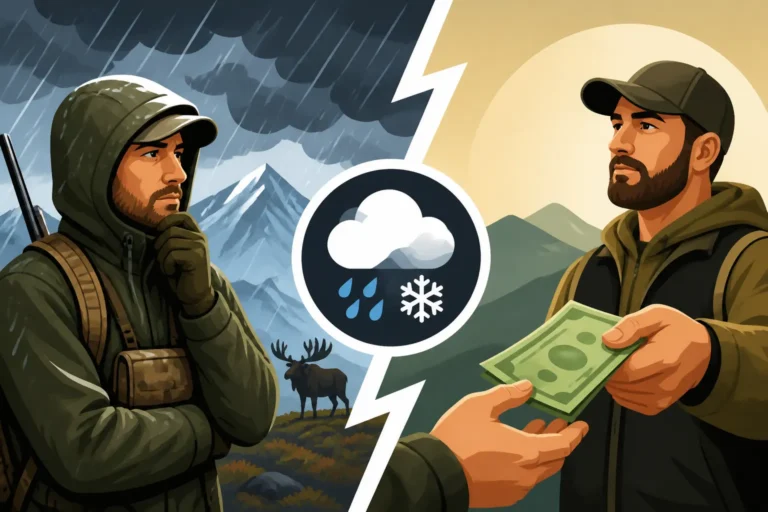
Beyond medical emergencies, the financial investment in an Alaska hunt is substantial, making trip cancellation and interruption insurance a very smart move. This coverage protects your pre-paid, non-refundable expenses if your trip is cancelled or cut short due to covered reasons. Think about all those upfront costs: the guide deposit, the air taxi fees for your Fly-In Hunting: Working With an Alaska Transporter Pilot, non-refundable flights, even your Nonresident Hunting License Costs in Alaska and big game tags. Covered reasons typically include personal illness or injury (or that of a family member), unexpected job loss, severe weather preventing travel (like getting weathered-in at a bush camp), or even a natural disaster at your destination or home. Imagine you've booked a dream moose hunt, and a week before you're supposed to fly out, a sudden family emergency means you can't go. Without trip cancellation insurance, all those thousands of dollars you've already paid are gone. Similarly, if you're already in camp and bad weather grounds all planes for days, forcing you to extend your stay and incur extra costs, trip interruption can cover those additional expenses. It's truly peace of mind for your financial investment.
What to Look for in an Alaska-Specific Policy
When you're sifting through policy documents and comparing providers, it’s not enough to just look for "medical coverage." You need to scrutinize the details to ensure the policy actually addresses the unique challenges and risks of hunting in Alaska. Generic policies often fall short in critical ways, leaving you exposed when you need protection most.
Coverage for Extreme Activities and Remote Travel
This is perhaps the biggest pitfall for hunters. Many standard travel or medical evacuation policies explicitly exclude what they consider "hazardous sports" or activities in "remote, unpopulated areas." Believe it or not, hunting can fall into this category for some insurers, especially if it involves backcountry travel, bush planes, or extended periods away from established infrastructure. When you're calling a company, be upfront and ask direct questions: "Does this policy cover me if I'm injured while hunting big game in the Alaskan wilderness, utilizing air taxi services to reach remote camps?" Don't assume. Get confirmation in writing if possible. Some policies might also have restrictions on certain forms of transportation, like small bush planes, which are integral to most Alaska hunts. You need a policy that embraces, rather than excludes, the very nature of your adventure. Without this specific inclusion, your coverage could be entirely voided if an incident occurs in the field while, for example, engaged in Alaska Moose Hunting Tactics for the September Rut or deep within the Wrangell mountains pursuing goats.
Air Ambulance and Helicopter Evacuation
In Alaska, an air ambulance isn't a luxury; it's often the only way to get you out of a dangerous situation and to appropriate medical care. While some travel insurance policies might cover "emergency transportation," they might only cover ground ambulances or specify fixed-wing aircraft only. If you're injured on a steep mountainside or deep in a dense forest, you'll need a helicopter for extraction. These rotor-wing evacuations are often the most expensive component of an emergency. Confirm that your policy explicitly covers both fixed-wing and rotor-wing air ambulance services, with no hidden clauses about "medically necessary" being defined by a doctor who has never seen the Alaskan backcountry. You want a policy that understands the reality of terrain and distance. Ensure there are no mileage limits or caps that would leave you on the hook for a substantial portion of a long-distance medevac from, say, the Alaska Peninsula. If you're involved in an accident while Float Hunting Alaska Rivers for Moose and Caribou, for instance, a floatplane might be your first lift out, but a medevac helicopter might be needed to reach an even more remote spot for stabilization before flying to a proper hospital.
Repatriation of Remains and Search & Rescue SAR
While it’s an uncomfortable topic, planning for the worst-case scenario is part of responsible hunting preparation, especially in Alaska. Repatriation of remains coverage handles the logistical and financial burden of returning a deceased hunter's body home. This can be a complex and expensive process, and having this coverage spares your family immense stress and financial strain during an already devastating time.
Search and Rescue (SAR) is another often-misunderstood area. In many parts of Alaska, particularly on federal lands, official SAR operations are typically funded by state or federal agencies. However, this isn't always true, and local jurisdictions or private entities might levy fees for their services, especially if you've done something to put yourself needlessly at risk or if the search extends over many days. Furthermore, your guide or air taxi service (if using one, perhaps found through a platform like GoHunt) will have their own emergency communication protocols, but their primary role isn't SAR. Some specialized policies, or riders on broader policies, explicitly offer SAR coverage. It's worth checking, particularly if you plan to explore truly untracked wilderness where even finding you could be an epic undertaking. Even if the official SAR is free, the subsequent medical evacuation will not be, and that's where your medevac policy truly kicks in.
Integrating Coverage with Your Hunt Plan
Having the right insurance is just one piece of the puzzle. The real strength of your preparation comes from integrating that coverage seamlessly into your overall hunt plan, ensuring that everyone involved knows what to do if an emergency strikes. Communication is key, both with your service providers and your hunting partners.
Discussing Emergency Plans with Your Outfitter or Transporter
Never assume your guide or air taxi operator carries all the necessary emergency provisions or medical evacuation coverage for you. While reputable outfitters often have robust first-aid kits, satellite communication devices, and emergency protocols, their responsibility and what they are legally allowed to provide in a medical emergency are often limited. They are not doctors, nor are they typically equipped for sophisticated rescue operations.
When booking your trip, especially if you're using a platform like BookYourHunt to find outfitters, make sure to ask direct questions about their emergency plan:
- What communication devices do they carry (satellite phone, InReach, Spot)?
- What is their protocol if a client is injured or falls ill?
- Do they have any medical personnel in camp, or just standard first aid?
- What is their plan for initial stabilization and transport to a pickup point?
- What specific medical evacuation services do they use, if any, and what is your responsibility for costs?
Their answers will help you understand where your personal insurance needs to fill the gaps. Some outfitters might have affiliations with specific medevac providers, but ultimately, the responsibility for your personal coverage falls on you. Be prepared for contingencies, whether you're working with a guide who specializes in Calling Moose in Alaska With a Scapula and a Cow Call or an air taxi dropping you off for a caribou hunt.
Preparing Your Own Emergency Information
In the event of an emergency, clear, concise information can save critical time. Don't rely on your memory or assume someone else will know. Before you head into the field, create a small, waterproof packet of essential information to carry on your person. This should include:
- Your Policy Details: Company name, policy number, and emergency contact phone numbers for your travel and medical evacuation insurance.
- Emergency Contacts: Names and phone numbers of at least two people not on the trip.
- Medical Information: Any allergies (medications, food, insect stings), current medications you're taking, pre-existing conditions (heart conditions, diabetes, etc.), and your blood type.
- Identification: A copy of your driver's license or passport.
Keep this information readily accessible, perhaps in a pocket of your hunting jacket or within your backpack's lid pocket. It's also wise to share this information with your hunting partners and leave a copy with your designated emergency contact at home. In a chaotic situation, when adrenaline is high and communication is limited, having this data immediately available can make a life-saving difference, especially if you're incapacitated. You should also ensure your family back home has a copy of your full itinerary, including flight numbers, guide contact details, and where you plan to be, to help with Leaving a Trip Plan With a Contact.
Understanding Claim Procedures and Documentation
The last thing you want to be thinking about during an emergency is paperwork, but understanding the claim procedure before you leave can save you headaches later. If an incident occurs:
- Prioritize Safety and Medical Care: Get to safety and ensure the injured party receives immediate attention.
- Contact Your Emergency Provider: As soon as possible, or have your hunting partner or guide contact your insurance provider's emergency assistance line. They can often help coordinate medical transport and advise on next steps.
- Document Everything:
- Photos/Videos: If safe to do so, take pictures of the incident location, injuries, and any relevant conditions (e.g., severe weather, difficult terrain).
- Witness Statements: Get contact information and brief accounts from anyone who witnessed the incident.
- Medical Records: Keep copies of all medical reports, diagnoses, and treatment plans from any medical facility you visit.
- Receipts: Save all receipts for emergency transportation, medical bills, additional accommodation, and any other related expenses.
- Communications: Log dates, times, and content of all calls or messages with your guide, air taxi, or insurance company.
Thorough documentation is your best friend when filing a claim. It provides clear evidence of what happened, demonstrating that the incident falls within your policy's coverage. Without it, you might face delays or even denial of claims. This attention to detail applies to all aspects of your hunt, from preparing your gear for Archery Tackle That Survives Ten Days of Rain to ensuring proper Cape and Skull Care for a Brown Bear Hide.
Common Misconceptions and Important Considerations
Even with the best intentions, many hunters fall prey to common misconceptions about their existing coverage or the true costs of an Alaskan emergency. Dispelling these myths is crucial for truly understanding your needs and making informed decisions.
"My Health Insurance Will Cover It"
This is one of the most dangerous assumptions a hunter can make. While your domestic health insurance (like your employer-provided plan) might cover medical expenses incurred in Alaska, there are usually severe limitations, especially when you venture into the true backcountry. Here’s why relying solely on it is a mistake:
- Out-of-Network and Out-of-State Limits: Your plan might have higher deductibles or co-pays for out-of-state care, and if you end up in a small, rural clinic, it might be entirely out-of-network.
- Emergency Transportation Exclusions: As discussed, this is the big one. Most domestic health insurance plans do not cover the cost of air ambulances from remote wilderness locations. They might cover an ambulance ride from a roadside accident, but not a helicopter extraction from a mountainside or a fixed-wing transfer from a remote fishing lodge. These costs, if not covered by a specialized medevac policy, will come directly out of your pocket and can run into hundreds of thousands of dollars.
- Coordination Challenges: Trying to coordinate with your domestic health insurance provider from a satellite phone in the middle of nowhere is nearly impossible. Dedicated travel and medevac providers have 24/7 assistance lines staffed by people who understand these complex logistics.
Don't let a false sense of security put you at financial risk. A specialized policy is designed precisely for these unique wilderness scenarios that your everyday health insurance simply wasn't built for.
The Cost of Peace of Mind vs. The Cost of an Emergency
Let's talk numbers, or at least the shape of them, because while I can't give you exact figures, the scale is important. An Alaska hunting trip, especially for non-residents, represents a significant financial investment. Guide fees, air taxi services, licenses, tags, specialized gear, travel expenses—it all adds up. A fully guided brown bear hunt, for instance, can cost a small fortune, and even a DIY float hunt for moose involves substantial outlay for logistics and gear. Compared to these expedition-level costs, a comprehensive travel and medical evacuation insurance policy is a relatively minor expense.
Consider this: a top-tier medical evacuation policy might cost you a few hundred dollars for an annual membership or a specialized short-term policy. If you need a helicopter rescue and air ambulance ride from a remote region of the Alaska Range to an Anchorage hospital, you could be looking at a bill of many tens of thousands of dollars, or even well over a hundred thousand, depending on the circumstances and distance. That single bill could bankrupt a family. When you put it into perspective, paying a few hundred dollars for true peace of mind is an incredibly wise investment. It’s not just about protecting your health; it's about protecting your entire financial future and sparing your loved ones an unimaginable burden during a crisis. Think of it as an essential piece of gear, just like your rifle or your rain gear, something you absolutely cannot afford to skimp on, especially when planning your once-in-a-lifetime hunt through resources like GoHunt or other booking agencies.
| Coverage Type | Standard Health Insurance (Typical) | Standard Travel Insurance (Typical) | Specialized Medevac Policy (Dedicated) |
|---|---|---|---|
| Emergency Medical Treatment | Varies, often out-of-network in remote AK | Yes, for covered illnesses/injuries | May cover, but often supplemental |
| Air Ambulance (Fixed-Wing) | Usually No from remote wilderness | Varies, check "extreme activity" clauses | Yes, typically primary focus |
| Helicopter Evacuation (Rotor-Wing) | Almost always No | Varies greatly, often excluded | Yes, typically primary focus |
| Trip Cancellation/Interruption | No | Yes | No (unless bundled) |
| Repatriation of Remains | No | Yes | May be included or an add-on |
| Search & Rescue Fees | No | Rarely, check specifically | Often included or available as add-on |
| Coverage for Hunting Activities | Not specified, assume exclusions | Check "hazardous sports" exclusions | Often explicitly covers adventure/hunting |
| 24/7 Emergency Assistance | Limited, mostly claim processing | Yes, assistance coordination | Yes, specialized medical coordination |
Disclaimer
This article is for general informational purposes only and does not constitute professional advice. Laws, prices and regulations vary by location and change over time. Consult a qualified professional for guidance on your specific situation.