How to Judge a Full-Curl Ram in the Field
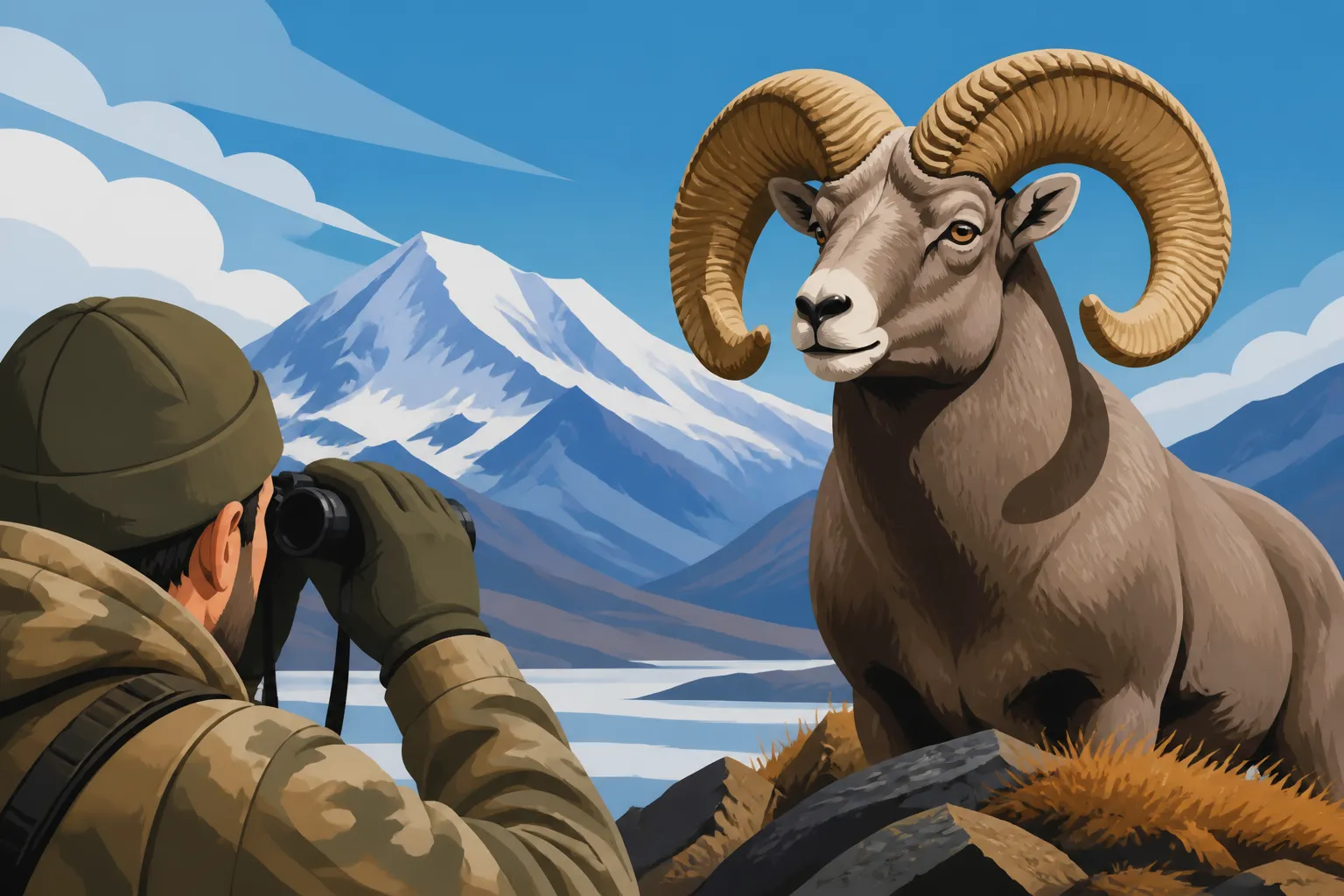
The thrill of spotting a Dall sheep ram high on a rocky ridge in Alaska is an experience few hunters ever forget. However, that initial surge of adrenaline quickly gives way to the intense, often agonizing, challenge of field judging – particularly when the legal definition hinges on a precise "full-curl" antler measurement. Many hunters, even seasoned ones, find themselves wrestling with angles, distance, and the subtle nuances of horn growth, leading to potential misidentifications and the heartbreaking possibility of harvesting a sublegal animal. This guide aims to equip you with the knowledge and practical strategies needed to confidently judge a full-curl ram in the rugged, unforgiving terrain of Alaska, helping you make ethical and legal decisions when it counts most.
Understanding Alaska's Full-Curl Rule: More Than Just a Spiral
Alaska's hunting regulations for Dall sheep are specific, and failing to understand them thoroughly can turn a dream hunt into a costly mistake. The "full-curl" rule is designed to protect younger rams, allowing them to breed and contribute to the population before being harvested. It's not just about a pretty spiral; it's a precise biological and legal definition that demands careful attention.
Defining the Legal Standard: What "Full-Curl" Actually Means
In most areas of Alaska, a legal ram must have horns that complete a full curl, meaning the tip of the horn must break the plane of the horn's base as viewed from the side. Imagine a line drawn from the back of the ram's head, across the base of its horn. For a full-curl ram, the tip of its horn must extend past that imaginary line. This visual benchmark is the absolute cornerstone of legality. It's often misunderstood as simply "a curl," but the critical element is that the tip must indeed break that plane. This rule applies even if the ram has broken or "broomed" horn tips, which can add another layer of complexity to the judging process. You might think a horn that looks like a perfect circle is enough, but if the tip doesn't extend past the base, it's not a full curl.
It's also important to remember that some units have different regulations, such as those that allow "7/8 curl" or rams with specific horn lengths. Always double-check the current Alaska hunting regulations for the specific Game Management Unit (GMU) you are hunting in, as these rules can change. Knowing the exact definition for your area is paramount, and it’s a non-negotiable step before you even pack your bags. A casual assumption could lead to a serious citation.
The Importance of Brow Tines and Brooming in the Definition
While the full-curl is the primary standard, understanding other horn characteristics like brow tines and brooming is also essential. Brow tines are the smaller, forward-pointing projections at the base of the main horn. While not directly part of the "full-curl" definition, they are indicators of age and maturity. Brooming, on the other hand, refers to the wearing down or breaking off of horn tips, usually from rams rubbing their horns on rocks to improve their vision or to mark territory. A ram with significant brooming might still be a full-curl, even if the tip itself is no longer sharp or pointed. The key is where the original horn tip would have been, or where the current horn material intersects that plane of the base.
Sometimes, brooming can make a ram appear less than full-curl if the remaining horn material doesn't reach the plane. Conversely, a heavily broomed horn from an old, mature ram might have completed its curl long ago, and even with a worn tip, it clearly breaks the plane of the skull. This is where experience and careful observation come in. It's a nuanced distinction that requires you to mentally reconstruct the original horn shape, focusing on the curve rather than just the damaged tip. When you're trying to figure out if a ram qualifies, it's less about the current shape of the tip and more about the trajectory of the horn's growth. For more specific details on this, you can look up information on Broomed Horn Tips and the Full-Curl Rule.
Why Misinterpretation Leads to Citations
The Alaska Department of Fish and Game (ADF&G) takes sheep regulations very seriously, and unintentional harvest of a sublegal ram can result in significant fines, loss of hunting privileges, and even confiscation of your trophy. These are not minor penalties. The core problem is often that hunters get caught up in the excitement or the difficulty of the shot and fail to dedicate enough time to thorough, objective field judging. The consequences are severe because protecting young rams is crucial for sustaining healthy populations.
Many hunters confess that in the heat of the moment, the ram simply "looked legal." This subjective assessment is exactly what lands people in trouble. ADF&G wardens are highly skilled at judging rams and will not accept "I thought it was legal" as an excuse. The responsibility lies entirely with the hunter to confirm legality beyond a reasonable doubt before pulling the trigger. This is where patience, the right optics, and a clear understanding of the rules become your most valuable tools. Take your time, get a definitive visual, and when in doubt, let it walk. There will always be another ram, but a citation can haunt you for years. If you're concerned about Why Antler Restriction Hunts End in Citations, this is a prime example of where strict adherence to rules is critical.
Essential Glassing Techniques for Distant Evaluation
Before you even think about stalking a ram, you need to master the art of glassing. Most sheep hunting in Alaska involves hours, if not days, of patiently scanning vast mountainscapes. Effective glassing isn't just about looking; it's about systematically searching and then meticulously evaluating what you find.
Optimizing Your Optics: Spotting Scopes and Binoculars
Your optics are your eyes in the sheep mountains. High-quality binoculars, typically 10x or 12x power, are indispensable for initial scanning and locating sheep. They offer a wider field of view and are easier to hand-hold for long periods. Once you spot potential sheep, immediately transition to your spotting scope for detailed evaluation. A good spotting scope, generally ranging from 20-60x or even 27-80x, is absolutely critical for accurately judging a full-curl ram at distances that can easily exceed a mile. Brands like Swarovski, Zeiss, Leica, and Kowa are top-tier choices favored by serious sheep hunters for their clarity, light transmission, and robust construction in harsh conditions. Don't skimp on glass; it's arguably the most important piece of gear after your rifle.
When using your spotting scope, pay close attention to the focus and exit pupil. A crisp, clear image is paramount. If you're struggling with image quality, check your focus, adjust the diopter on your binoculars, and ensure your objective lens is clean. The conditions in Alaska's mountains—fog, rain, shimmering heat—can constantly challenge your optics, so knowing how to quickly adjust is a valuable skill. Remember, you're not just trying to see a ram; you're trying to see the subtle nuances of its horn curve, which requires the sharpest image possible. Considering Spotting Scope Power for Ram Judging is a great start to understanding the capabilities you'll need.
Stable Platforms: The Crucial Role of Tripods and Field Rests
You can have the most expensive spotting scope in the world, but without a stable platform, it's almost useless for detailed judging. A sturdy, lightweight tripod is non-negotiable for sheep hunting. Carbon fiber tripods are popular for their weight savings and rigidity. Ensure your tripod head allows for smooth, precise adjustments to track moving animals or settle on a specific spot for prolonged observation. Many hunters opt for an Arca-Swiss style quick-release plate for fast transitions between spotting scope and binoculars, or even mounting their rifle.
Beyond tripods, many hunters use small, collapsible shooting sticks or a bipod for their rifle, which can double as a rest for binoculars if you're in a prone position. The goal is to eliminate shake and allow for long, comfortable glassing sessions. Trying to hand-hold a spotting scope at 60x power is futile; the image will constantly jump, making accurate judgment impossible. The ability to lock onto a ram and observe it for minutes, or even an hour, is what allows you to confidently make that full-curl determination. Investing in a quality tripod and practicing with it before your hunt is just as important as sighting in your rifle. For more tips on this essential gear, you can check out Tripod Height for All-Day Glassing.
Patient Observation: Giving the Ram Time to Reveal Itself
Sheep are rarely obliging subjects. They often bed down in shadows, behind rocks, or at awkward angles that make judging nearly impossible. This is where patience truly becomes a virtue. Instead of rushing to a conclusion or attempting a stalk on an unjudged ram, commit to observing it. Watch it for an hour, two hours, or even half a day if necessary. Rams will eventually stand, stretch, feed, or move, often presenting different angles that will allow you to get a clear view of its horn curl.
Move around your glassing knob if possible to change your perspective. A slight shift in your position can drastically alter your viewing angle and suddenly reveal the critical information you need. Many experienced sheep hunters carry a small journal to sketch a ram or note down observations, comparing different rams they've seen. Remember the saying: "You can't shoot a ram you haven't seen, and you can't judge a ram you haven't watched." Rushing this phase is one of the quickest ways to make a mistake. A good resource like GoHunt offers invaluable tools for scouting and planning, including detailed maps that can help you identify optimal glassing points and potential ram hideouts, improving your chances of prolonged observation.
Visual Cues for Judging Curl and Age
Once you have a ram in your scope, the real work begins. It's about breaking down what you see into identifiable characteristics that lead to a confident legal judgment.
The "Imaginary Line": How to Visualize the Full Curl
This is the most critical technique for determining full-curl legality. As mentioned, the rule states the horn tip must break the plane of the horn's base when viewed from the side. To apply this, find a ram that is broadside or slightly quartering away. Now, mentally draw a straight line from the back of the ram's head, running parallel to the ground, and intersecting the very bottom of the horn base. As the horn curls, track its path. For a legal full-curl ram, the horn tip must extend past that imaginary line.
Practice this mental exercise with photos of rams, then apply it rigorously in the field. Sometimes, a ram's head position can be deceiving, so try to see it when its neck is relaxed and its head is relatively level. A ram that's looking uphill or downhill can make its horns appear longer or shorter than they truly are relative to the "plane of the base." This "imaginary line" technique is the most objective and consistent way to apply the legal definition to a live animal. It removes much of the guesswork associated with "eye-balling" it.
Horn Mass and Taper: Clues to a Ram's Maturity
Beyond the curl itself, horn mass and taper are excellent indicators of a ram's age and maturity. Older, more mature rams typically have horns that are heavy and thick at the base, maintaining that thickness for a significant portion of the curl before tapering relatively quickly towards the tip. Younger rams, even those approaching a full curl, will often have thinner horns that taper more gradually and earlier in the curl. They might look "leggy" or less robust.
Compare the horn's circumference at the base to its circumference halfway through the curl. A truly mature ram will show impressive mass that speaks to years of growth. While mass doesn't directly dictate legality based on the full-curl rule, it's a strong secondary indicator that you're looking at an older animal that has likely completed its full curl. It's rare to find a young ram with massive horns, just as it's rare to find an old, full-curl ram with pencil-thin horns. This holistic assessment, combining curl with mass, gives you a more complete picture of the ram you're evaluating. This also helps with How Long to Watch a Ram Before Shooting as you want to be sure it's mature, not just legal.
Counting Annuli Rings: An Advanced Judging Method
Annuli rings (also called growth rings) are distinct constrictions on a ram's horns that mark periods of reduced horn growth, typically during the harsh winter months. Each prominent ring generally represents one year of the ram's life, though the first ring can sometimes be less distinct. Learning to count these rings is an advanced field-judging skill that provides a direct assessment of a ram's age. An experienced hunter can use a high-powered spotting scope to count the rings and determine if a ram is, for example, 7 or 8 years old, which almost guarantees it will also be a full-curl.
However, counting annuli rings can be incredibly challenging in the field. Dirt, horn damage, lighting conditions, and distance can obscure these rings. It requires exceptional optics and steady hands, often in difficult weather. It's not usually the first method for determining full-curl, but it's an excellent confirmatory method for those with the skill and conditions to do so. If you can reliably count 7-8 distinct rings, you can be fairly confident that you're looking at a mature, legal ram. For a deep dive into this, check out Counting Annuli Rings on a Live Ram.
Common Pitfalls and How to Avoid Them
Even with the best optics and knowledge, the mountain environment throws curveballs. Recognizing these common judging pitfalls can save you from a critical error.
The Illusion of Distance: When Rams Appear Bigger or Smaller
Distance is perhaps the biggest deceiver in sheep hunting. A ram at 800 yards through a spotting scope can appear much larger or smaller than it truly is, based on the terrain, atmospheric conditions, and even the size of surrounding objects. A small ram on an open, vast slope might look like a giant, while a true monarch nestled in a tight canyon might seem average. This optical illusion can seriously skew your perception of its horn size and curl.
To combat this, avoid making quick judgments. Use your reticle if your optics have one, or a known object of reference nearby (like a rock or a shrub) to compare the ram's size. Try to get another hunter's opinion if you're hunting with a partner. Most importantly, always err on the side of caution. If you're struggling to definitively confirm the full-curl due to distance, consider a stalk to get closer, or simply wait for the ram to move to a more advantageous position. Never let the desire for a closer shot override the need for a confident legal judgment. This is where patience, once again, is your best friend.
Angle Challenges: Judging From Below or Above
The angle from which you view a ram dramatically impacts how its horns appear. Judging a ram from directly below can make its horns look significantly longer and more curled than they are, as the curve is foreshortened. Conversely, viewing a ram from directly above can make its horns appear much shorter, flattening the visible curve and potentially making a full-curl ram look sublegal. These optical distortions are a major cause of misjudgment.
The ideal scenario is to view the ram broadside or slightly quartering, and as level as possible with the ram. This allows you to accurately apply the "imaginary line" technique. If you're at a steep angle, try to relocate. Sometimes, even crawling a few yards sideways on your glassing ridge can change the angle enough to give you a clearer picture. Failing that, be extra cautious and conservative in your judgment. If the ram is at a steep angle and you can't get a definitive visual, you haven't judged it yet. This is also important when you're looking for Full-Curl Judging From Below the Ram.
Brooming, Breaks, and Wear: Distinguishing Legal Damage from Non-Legal Horns
As mentioned earlier, brooming is common among older rams. The tips of their horns are often worn down or broken off from rubbing against rocks. A ram can still be full-curl even with significant brooming, provided the path of the horn's curl would have broken the plane of the base. However, sometimes horns are severely broken or damaged in a way that truly impacts the integrity of the curl and removes the portion that would have broken the plane.
Distinguishing legal brooming from non-legal damage requires experience. Look for the remnants of the curl. If the horn clearly spirals back towards the ram's jaw and would have crossed the plane, it's likely legal. If a large section of the horn is missing, making it impossible to ascertain the full curl, then it's best to pass. Remember, the burden of proof is on you, the hunter. If you can't confidently say it's legal, then it's not. Don't let wishful thinking influence your decision. GoHunt's mapping features can sometimes help you identify areas where rams are known for heavy brooming due to specific terrain features, which can prepare you for what to expect.
Preparing for the Shot and Post-Harvest Confirmation
Once you've confidently judged a legal ram, the next phase is preparing for the shot and understanding your responsibilities after the harvest.
Getting Into Position for a Clear View and Ethical Shot
After confirming legality, your focus shifts to the stalk and shot. A good stalk aims to get you within your effective shooting range, typically 300-400 yards or closer for most hunters, while minimizing the chances of spooking the animal. This often involves navigating incredibly difficult terrain, using available cover, and understanding wind direction. Prioritize a steady shooting position. In the mountains, this often means prone with a bipod, or using your backpack as a rest. A stable shooting platform is paramount for an ethical kill, especially when shooting at steep angles.
It's also crucial to maintain visual contact with the ram throughout the stalk if possible. Rams can move, and what was a legal ram at 1000 yards might be replaced by a smaller ram as you close the distance. Re-confirm legality if the ram has moved significantly or if you've lost sight of it for a prolonged period. The excitement can be overwhelming, but discipline is key. Never rush the final approach or the shot itself.
Confirming the Full-Curl Rule After the Harvest
Once the ram is down, the moment of truth arrives. It's time for the final, definitive confirmation of legality. Physically pick up the ram's head and visually inspect the horns from the side. Draw that imaginary line from the back of the head, across the base, and visually confirm that the horn tip clearly breaks that plane. Take photos from various angles, especially those that clearly show the full curl according to the regulations. These photos can be helpful for your harvest report or in case of questions from ADF&G personnel.
This is also the time to count annuli rings if you couldn't do so definitively in the field, further confirming the ram's age and maturity. Carefully examine the horns for any anomalies, breaks, or unique characteristics. This post-harvest confirmation is a critical part of the ethical hunting process and allows you to learn and refine your judging skills for future hunts.
What to Do if You Harvest a Sublegal Ram
Despite all precautions, mistakes can happen. If, after harvesting, you discover that the ram you took is sublegal, it's a difficult moment, but it's crucial to act ethically and responsibly. The first and most important step is to immediately contact ADF&G. Do not attempt to hide the animal or move it. Explain the situation honestly and clearly. They will provide instructions on what to do next.
While penalties can be severe, demonstrating honesty and immediate self-reporting can sometimes mitigate the consequences, especially if it was a genuine mistake. Attempting to conceal a violation will almost certainly lead to harsher penalties. It's a humbling experience, but one that underscores the immense responsibility we have as hunters. Learning from such a mistake is the only path forward, reinforcing the importance of meticulous field judging on every hunt. This scenario is why the detailed guidance in posts like Alaska Full-Curl Bag Limit Definition is so crucial, as it helps prevent these painful situations.
The Ethical Hunter's Responsibility
Hunting in Alaska is a privilege, not a right, and with that privilege comes a profound responsibility to the wildlife and the wild places we cherish.
Respecting the Resource: The Role of Conservation in Sheep Hunting
Dall sheep are iconic symbols of Alaska's high country. Their populations, while generally healthy, are sensitive to various factors, including habitat changes, severe winters, and hunting pressure. The full-curl rule isn't just a hurdle for hunters; it's a fundamental conservation tool designed to ensure rams have the opportunity to reach full maturity, contribute to the gene pool, and maintain healthy breeding populations. By diligently adhering to these regulations, you are actively participating in the conservation of this magnificent species.
An ethical hunter understands that passing on a questionable ram, even if it might "just barely" make the legal cut, is often the best decision for the herd and for the integrity of hunting. It ensures that younger, potentially sublegal rams get another year or two of growth. This long-term perspective is what sustains hunting for future generations. Resources from GoHunt often emphasize ethical hunting practices and conservation, aligning with this principle.
Continuous Learning: Refining Your Judging Skills Each Season
Field judging is a skill that is honed over years, not learned in a single reading. Every season brings new challenges, different lighting, and unique ram characteristics. Actively seek opportunities to practice. Spend time glassing sheep even when you don't have a tag. Watch hunting videos critically, pausing to judge rams before the narrator reveals their size. Discuss judging techniques with experienced sheep hunters.
Consider taking a hunter education or field judging clinic if available. The more you immerse yourself in the nuances of horn growth, animal behavior, and optical performance, the more confident and proficient you will become. Each trip into the sheep mountains is a learning experience, an opportunity to refine your understanding of these incredible animals and the regulations that protect them. Ultimately, ethical hunting comes from a deep well of knowledge and respect. For an even broader understanding of the hunt, consider reading up on Spot-and-Stalk Dall Sheep Hunting Above Alaska Timberline.
Disclaimer
Please be aware that hunting regulations, seasons, and requirements can change. Always consult the most current Alaska Department of Fish and Game (ADF&G) regulations for the specific Game Management Unit you plan to hunt before heading into the field. This guide is for informational purposes only and does not supersede official regulations.