Hunting the Feral Caribou Herd on Adak
Hunting the feral caribou on Adak isn't your typical Alaska road-system hunt. This is an adventure into one of the most remote, weather-battered corners of the Aleutian chain, presenting unique challenges from logistics to execution. If you're dreaming of an expedition where the wild elements truly test your mettle and reward you with a distinct trophy, this guide is going to walk you through what it really takes to pursue caribou on Adak Island.
The Allure and Logistics of Adak's Feral Caribou
Adak Island is a place that calls to a very specific kind of hunter—one who thrives on solitude, extreme weather, and the raw, untamed essence of the Alaskan wilderness. This isn't just about bagging a caribou; it's about the journey, the challenge, and the unforgettable experience of hunting in a truly unique environment.
Understanding Adak's Unique Hunting Environment
Adak is an island steeped in history, a former naval air station transformed into a ghost town with a small, resilient civilian population. It’s perched out in the Bering Sea, far removed from mainland Alaska, which means everything about hunting here is different. The terrain is largely treeless, rolling tundra, dotted with numerous lakes and streams, all under the constant scrutiny of fierce winds and unpredictable weather systems. Imagine stalking through thick, spongy moss one moment, then scrambling over sharp volcanic rock the next, all while a gale-force wind tries to rip your hat off and a horizontal rain squall obliterates visibility. It's a truly wild frontier.
The caribou themselves are descendants of a transplanted herd, thriving in an environment with no natural predators other than humans. This makes them less wary than their mainland cousins, but don't let that fool you into thinking it's easy. Their range covers the entire island, and finding them often means covering vast amounts of ground in conditions that would send most hunters packing. The appeal lies not just in the success of the hunt, but in the sheer scale of the landscape and the feeling of being utterly immersed in an environment few ever get to see. It’s a profound shift from a comfortable lodge hunt, demanding self-reliance and grit.
Getting to Adak: Flights, Ferries, and the Reality of Travel
The primary, and almost exclusive, way to get to Adak is by air. There's a commercial air carrier that services the island, typically a couple of times a week from Anchorage. This isn't like hopping a flight to Fairbanks; these flights are often subject to significant delays or cancellations due to the infamous Aleutian weather. You might find yourself stuck in Anchorage for days waiting for a weather window, or equally, stuck on Adak waiting for a flight out. This means building extra buffer days into your travel plans is not just advisable, it's essential. One of the biggest frustrations for hunters planning a trip like this is the feeling that mother nature is always in charge of your schedule.
When considering your budget, be prepared for the cost of airfare, which can be substantial, and the reality of baggage fees. You'll be bringing all your hunting gear, camping equipment, and food, and airlines have strict weight limits. Overages can quickly inflate your travel expenses. There's no ferry service for general passengers to Adak, so air travel is the name of the game. Once on Adak, there are a handful of vehicles for rent from locals, which can be invaluable for accessing different parts of the island's limited road system. However, much of the prime hunting country requires foot travel beyond these roads. This isn't a trip where you can just show up and expect everything to fall into place; meticulous planning is key, and even then, flexibility is your best friend.
Hunting Strategies for Adak's Treeless Tundra
Adak presents a unique challenge for hunters due to its treeless, open terrain and constantly changing weather. Successful hunting here isn't about hiding in thick timber; it's about smart movement, effective glassing, and an unwavering commitment to enduring the elements.
Spot-and-Stalk in Extreme Weather
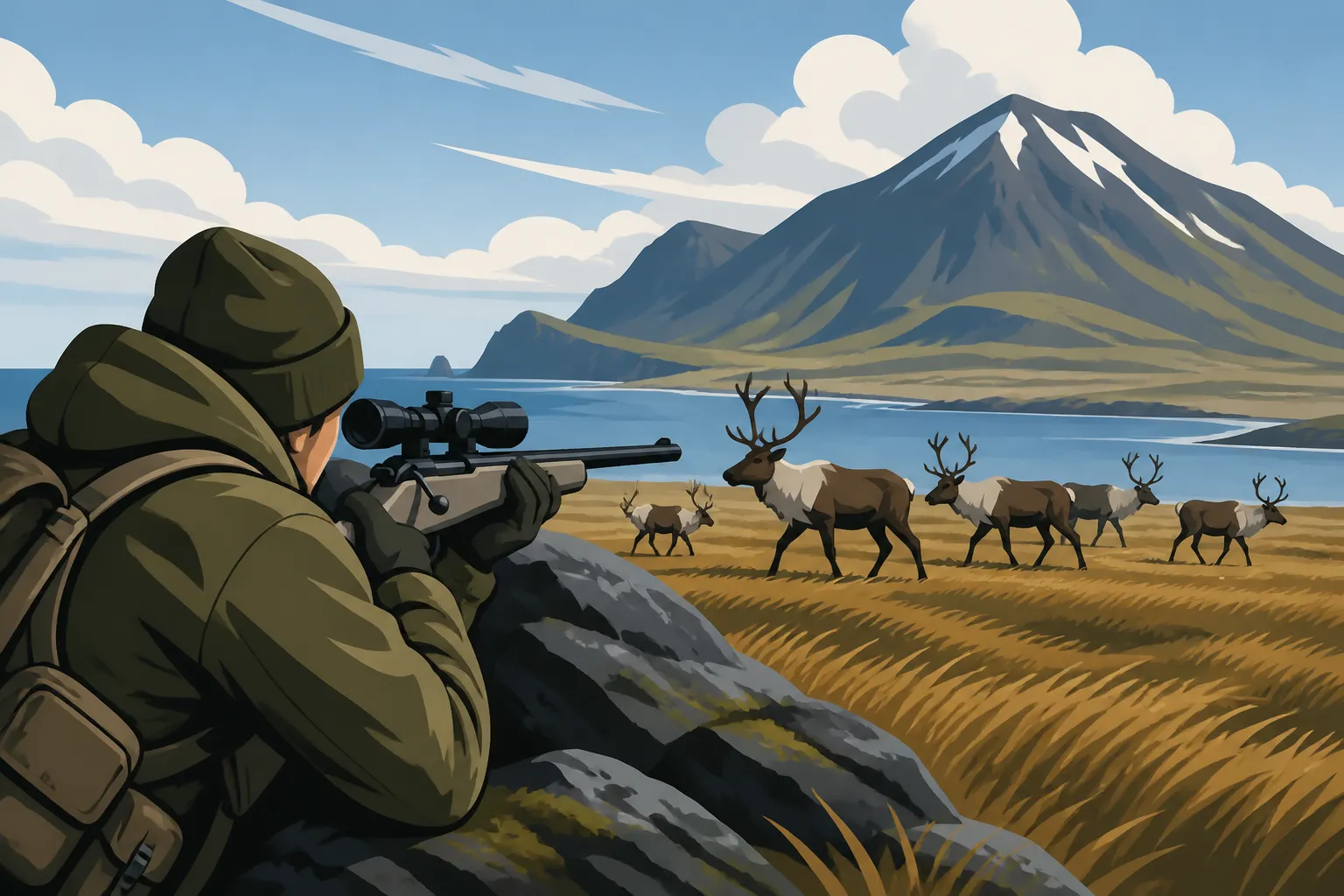
With no trees to conceal you, spot-and-stalk becomes the dominant strategy on Adak. This means spending a significant amount of time behind optics, patiently scanning the vast expanses of tundra for movement. You'll want a quality spotting scope and binoculars mounted on sturdy tripods. The rolling hills and depressions offer natural concealment, but approaching caribou requires careful planning of your route to stay out of sight and downwind. The wind is a constant factor here, not just for carrying your scent but for making you deeply uncomfortable and testing your resolve.
Imagine settling in on a knoll, hunkered down against a 30-knot wind, trying to hold your optics steady enough to pick out a caribou herd miles away. It's challenging, to say the least. When you do spot them, the stalk can be arduous, crossing boggy ground, navigating rocky outcroppings, and sometimes crawling through low-lying brush for hundreds of yards. The omnipresent fog can roll in swiftly, reducing visibility to mere yards and forcing you to halt your progress or rely heavily on GPS. Tools like onX Hunt can be incredibly useful here for mapping out your approach, marking caribou locations, and ensuring you don't get disoriented when the weather turns. This is where your physical conditioning truly pays off. You'll learn to move when the weather gives you a chance and hunker down when it demands respect.
Field Judging and Carcass Care on Adak
Field judging caribou on Adak can be tricky. While the open terrain often allows for long-range viewing, the unique light conditions, especially on overcast days, can play tricks on your eyes. Adak caribou, being a feral herd, might not always exhibit the massive antler growth seen in some mainland herds like the Fortymile, but they are robust and often have unique characteristics. You'll need to be proficient at Caribou Antler Size on Bulls and Cows from a distance, looking for maturity cues.
Once you've made your shot and the animal is down, the clock starts ticking for carcass care. Adak's marine climate, with its dampness and often mild temperatures even in early fall, can accelerate spoilage. You need to be prepared to quarter the animal quickly and efficiently. Cooling the meat is paramount. Getting it off the ground, into breathable game bags, and allowing air circulation is critical. Often, hunters will cache meat in rocky crevices or in the shade of a steep hillside, using the cool, damp air to their advantage. Remember, Packing Out Meat in Alaska: The Salvage Law Hunters Must Follow applies here too – you must salvage all edible meat. Having good Game Bags That Breathe in Coastal Rain is a game-changer; standard canvas bags can get saturated and hold heat. The nearest meat processor is likely thousands of miles away, so you're on your own for initial care, emphasizing the self-reliance required for this hunt.
Essential Gear and Preparation for an Adak Hunt
An Adak caribou hunt isn't just physically demanding; it's a test of your gear. The island's volatile weather and remote nature mean you need to be self-sufficient and equipped for anything Mother Nature throws your way. Cutting corners on gear here can quickly turn a challenging hunt into a miserable, even dangerous, experience.
Clothing and Rain Gear: The Non-Negotiables
Staying dry and warm is arguably the single most critical factor for comfort and safety on Adak. The weather can shift from calm to a full-blown gale with driving rain or snow in a matter of hours, even minutes. This is not the place for "water-resistant" gear. You need absolutely, unequivocally waterproof outer layers—top to bottom. Think high-quality rain jacket and pants that can withstand continuous downpours and strong winds. Many experienced Alaska hunters will tell you that Rain Gear Guides Actually Recommend for coastal hunts often involves heavier duty PVC or specialized coated fabrics, not just lightweight breathable membranes.
Beneath that, a robust layering system is crucial. Synthetic or merino wool base layers that wick moisture are essential, followed by insulating mid-layers like fleece or puffy jackets. Cotton is your enemy on Adak; once wet, it loses all insulating properties and takes forever to dry. For footwear, knee-high rubber boots with excellent traction are often preferred for the boggy, wet tundra, but some hunters opt for waterproof leather or synthetic hiking boots paired with waterproof gaiters. Whatever you choose, ensure they are well broken in and comfortable for miles of walking over uneven terrain. Bringing multiple pairs of socks is non-negotiable.
Navigation and Communication in a Remote Setting
Adak is incredibly remote, and cell service is virtually non-existent outside the small community area. Relying on your phone for navigation or communication is a recipe for disaster. A dedicated GPS unit loaded with detailed topo maps is essential. Back it up with a good old-fashioned compass and paper maps as a failsafe. Understanding Alpine Navigation Without Cell Service is a crucial skill here.
For communication, a satellite communication device such as a Garmin inReach or a satellite phone is a non-negotiable safety item. This allows you to check in with loved ones, receive weather updates, and most importantly, call for emergency assistance if something goes wrong. Always have a detailed trip plan filed with a trusted contact back home, including your expected routes and check-in schedule. This is paramount for any solo or small-group hunt in such an isolated location, as detailed in Signal Devices and Check-In Plans for Solo Alaska Hunts. Planning tools, such as the digital mapping layers offered by GoHunt, can assist in pre-scouting terrain and potential routes before you even leave home.
Food, Water, and Shelter for Self-Guided Hunts
Unless you're planning on staying in one of the few available cabins or abandoned structures, you'll be camping, which means packing in all your own food and water. Dehydrated meals are popular for their light weight, but bring plenty of high-calorie snacks to fuel your body in the harsh conditions. A reliable water filter or purification tablets are essential, as you'll be relying on island streams and lakes for your water supply.
Your shelter needs to be bombproof. Adak winds are legendary. A sturdy, four-season tent designed to withstand high winds and heavy precipitation is not a luxury; it’s a necessity. Make sure you have extra-long, heavy-duty stakes for anchoring it securely. A robust sleeping bag rated for temperatures colder than you expect to encounter, coupled with a good sleeping pad for insulation from the cold, wet ground, will ensure you get some rest. Remember, there are no stores once you leave the tiny Adak community, so every piece of gear, every bite of food, every water purification tablet needs to be accounted for and packed in.
Regulations and Responsible Hunting Practices
Hunting on Adak, like anywhere in Alaska, comes with specific regulations and responsibilities. Understanding these rules and adhering to ethical practices is crucial for both the sustainability of the caribou herd and the preservation of Adak's unique environment.
Understanding Adak's Caribou Regulations
The caribou on Adak are managed under specific state hunting regulations. While the island is a unique setting, many of the general Alaska hunting rules apply. You'll need to acquire a valid Alaska hunting license and, typically, a harvest ticket for caribou. It's always essential to check the current Alaska Hunting Regulations for the specific game management unit (which Adak falls under) before planning your trip, as season dates, bag limits, and any special restrictions can change. These can often be found online, and it’s a good idea to know the Alaska Harvest Tickets, Registration Permits and Draw Permits process.
Bag limits on Adak caribou often reflect the management goals for a contained, feral herd. Historically, these limits have been quite liberal to manage the population effectively, but this can change. Always confirm the most recent regulations. Since Adak is so far off the beaten path, there are often fewer people enforcing regulations on the ground, but this doesn't diminish your responsibility to follow them diligently. Respecting the rules ensures future opportunities for other hunters and helps maintain the health of this unique population.
Ethical Hunting in a Fragile Ecosystem
Hunting on Adak is about more than just the kill; it's about respecting a truly wild and relatively pristine environment. The island has a delicate ecosystem, and practicing Leave No Trace principles is paramount. This means packing out everything you pack in, including all trash and spent casings. Avoid disturbing the unique flora and fauna more than necessary. The historical significance of Adak, with its remnants of military occupation, also means you should be mindful of abandoned structures and artifacts, leaving them undisturbed for future generations.
Furthermore, ethical hunting extends to shot placement and meat salvage. In this challenging environment, ensuring a clean kill and efficiently processing the animal to salvage all edible meat is not just a legal requirement but a moral imperative. Wanton Waste Penalties in Alaska are serious, and for good reason. Given the effort and expense of getting to Adak, it would be a travesty to not make the most of every animal harvested. This kind of hunt demands a high level of preparedness and a deep respect for the animal and the landscape it inhabits.
| Aspect of Hunt | Challenge on Adak | Solution/Consideration |
|---|---|---|
| Travel | Extreme weather delays, limited flights | Build in buffer days, pack light but efficiently, be flexible. |
| Terrain | Treeless tundra, boggy ground, volcanic rock | Spot-and-stalk tactics, high-quality optics, robust footwear. |
| Weather | Constant wind, heavy rain/fog, cold | Absolutely waterproof layers, robust tent, synthetic/merino clothing. |
| Navigation | No cell service, vast, featureless stretches | Dedicated GPS, satellite communicator, paper maps, compass. |
| Meat Care | Remote location, damp marine climate | Rapid quartering, breathable game bags, immediate cooling. |
| Supply Chain | No stores or services beyond village | Pack in all food, water, fuel; self-sufficiency is key. |
| Regulations | Specific island rules, general AK regs | Check current ADF&G regulations for the GMU, understand harvest tickets. |
Disclaimer
This article is for general informational purposes only and does not constitute professional advice. Laws, prices and regulations vary by location and change over time. Consult a qualified professional for guidance on your specific situation.