Prince of Wales Island Road System Deer Hunting
For many hunters, the very thought of hunting Alaska conjures images of remote fly-in camps, arduous backcountry treks, and expenses that can feel out of reach. But there’s a secret gem in Southeast Alaska that defies this stereotype: Prince of Wales Island. Here, an extensive network of logging roads offers surprisingly accessible and incredibly rewarding Sitka blacktail deer hunting. This guide will help you understand how to navigate this unique landscape and pursue deer along its extensive road system, proving that an epic Alaska hunt doesn't always demand a bush plane.
The Unique Appeal of Prince of Wales Island Deer Hunting
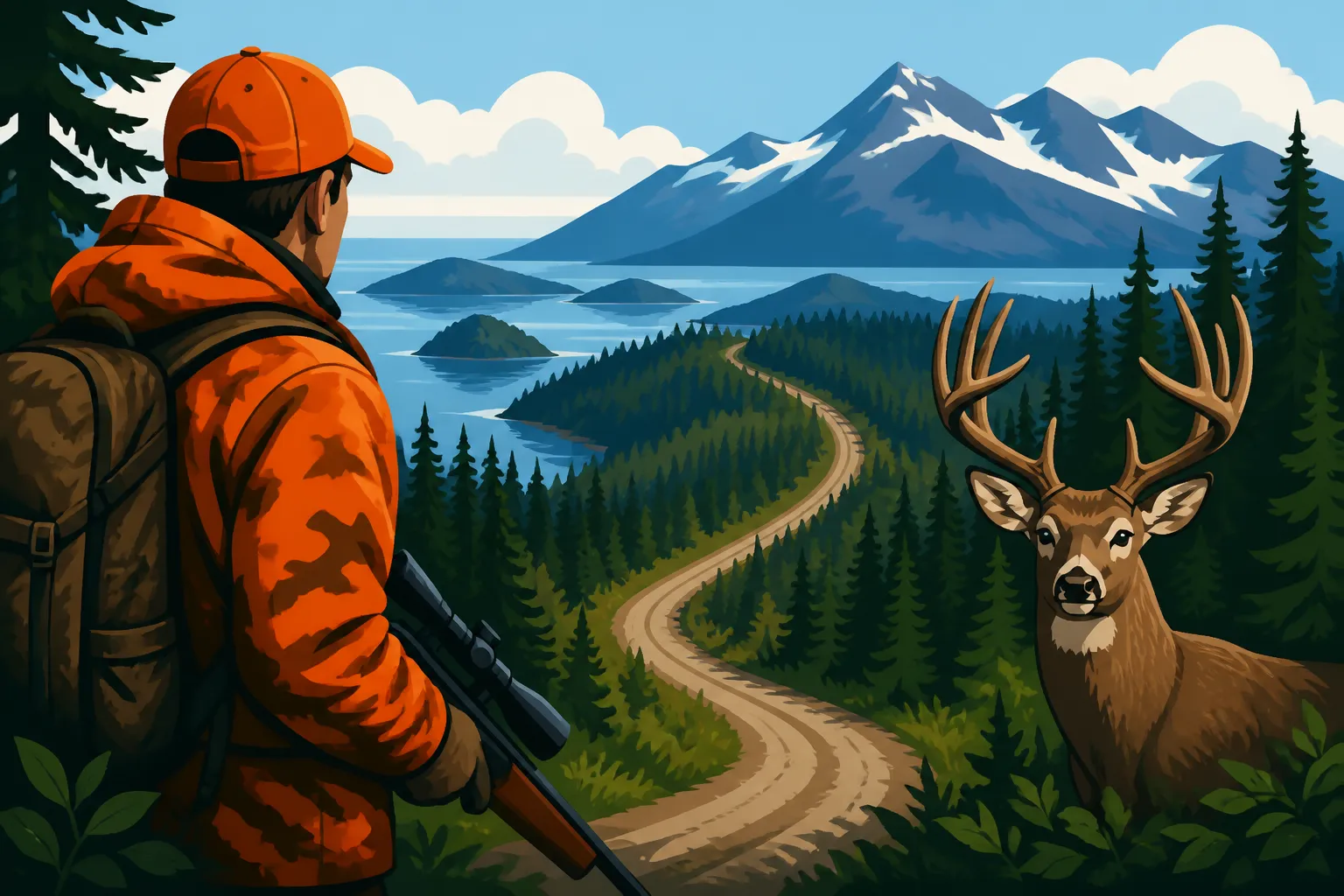
Prince of Wales Island, often affectionately called "POW" by locals, stands apart from much of Alaska's hunting landscape. Instead of vast, untracked wilderness, you'll find a sprawling web of roads cutting through dense, old-growth and second-growth forests. This accessibility isn't just convenient; it creates a distinct hunting experience tailored for those who prefer to explore by vehicle and on foot, without the logistical nightmares of remote air charters.
Why POW is a Road System Hunter's Paradise
The sheer mileage of roads on Prince of Wales Island is astounding. We're talking hundreds of miles of gravel, spanning from the main highways to smaller spurs that spiderweb into the remotest corners of the island. These roads were built primarily for logging operations within the Tongass National Forest, and while some areas are still actively logged, many roads now provide incredible access for recreation, including hunting. This means you can drive deep into prime deer habitat, something that's simply not possible in most other parts of Alaska. You can spend your day covering immense ground, stopping to glass clearcuts, listen for movement, or simply stretch your legs and walk a promising stretch of road. The accessibility also translates into potentially lower costs, as you often don't need expensive air charters, making it a viable option for many hunters. It’s truly a DIY hunter's dream for its ease of access to terrain that would otherwise be impenetrable. For more on how these populations thrive, check out Deer Populations on Prince of Wales Island.
Think about it: instead of spending thousands on a single flight into a remote area, you could load up your truck, drive onto the ferry from Ketchikan or Wrangell, and have days or even weeks to explore. This allows for a much more flexible and adaptive hunting style. You can adjust your plans based on weather, deer sign, or just your whim. If one area isn't producing, you simply drive to another. The road system essentially becomes your trail network, allowing you to penetrate areas that would otherwise be an impossibly thick tangle of spruce, hemlock, and alder. This is a game-changer for many hunters who want an authentic Alaskan experience without needing to be an ultra-marathoner carrying a 100-pound pack.
Sitka Blacktail Deer: A Coastal Icon
The star of the show on Prince of Wales Island is the Sitka blacktail deer. These deer are smaller than their continental cousins, like mule deer or whitetails, but they are incredibly hardy and perfectly adapted to the rugged, rainforest environment of Southeast Alaska. Their dark, thick coats are ideal for the wet, often chilly conditions, and they thrive on the abundant forage found in both the old-growth forests and, perhaps even more so, in the younger clearcuts. While they might not be as large as a Kodiak blacktail, POW consistently produces respectable bucks, and the sheer number of deer often makes for a high-opportunity hunt.
These deer are masters of camouflage and stealth, blending seamlessly into the dense undergrowth. Hunters quickly learn that "blacktail" refers not just to their tail color, but often to how they appear as a dark, fleeting shadow in the thick timber. Population cycles can vary, with hard winters sometimes impacting numbers. Understanding these dynamics is crucial for success, especially after significant snow events, as explored in Blacktail Deer Numbers After Deep Snow. However, for the most part, POW's deer population remains robust due to its mild, maritime climate relative to Interior Alaska, offering excellent hunting opportunities year after year.
Their diet is varied, including huckleberry, salmonberry, and various mosses and lichens, but they particularly favor the new growth that sprouts in clearcut areas. These regenerating forests provide both abundant food and crucial cover, making clearcuts and their edges prime areas to focus your hunting efforts. The roads themselves often provide the best vantage points to observe these feeding areas, especially at dawn and dusk when deer are most active.
Understanding the Tongass National Forest Landscape
Prince of Wales Island is almost entirely encompassed by the Tongass National Forest, a vast temperate rainforest. This means much of the land is public and open to hunting. However, understanding the specific characteristics of this forest is key to success. The terrain can be steep and rugged once you leave the road, with thick vegetation, slippery moss, and hidden ravines. The weather is notoriously wet, with rain being a frequent companion. You'll often be hunting in damp, foggy, or downright rainy conditions. Tongass National Forest Deer Country provides more context on this unique environment.
The mix of old-growth and clearcut areas is critical. Old-growth provides dense thermal and security cover, especially during heavy snows. Clearcuts, particularly those 5-20 years old, offer excellent forage. The edges where these two habitats meet, or where clearcuts transition into muskegs, are often hotspots for deer activity. Using mapping tools like onX Hunt becomes absolutely essential here to discern land ownership (though most is Tongass, some small private parcels exist) and to identify the age and type of forest cover. These detailed maps will show clearcuts, old growth, and even logging roads that might not be on standard recreational maps, giving you a critical advantage in planning your routes and stalking approaches.
Navigating the Extensive Road System for Access
The road system on Prince of Wales Island is both a blessing and a challenge. While it offers unparalleled access, it also requires careful navigation and preparation. Simply driving around aimlessly will likely yield limited results; a strategic approach is key.
Essential Mapping Tools for POW Roads
Gone are the days of relying solely on paper maps, though a good laminated map is always a smart backup in a wet environment. For hunting POW, a robust GPS system with detailed satellite imagery and land ownership layers is indispensable. This is where applications like onX Hunt truly shine. You can download offline maps of the entire island before you lose cell service (which you will, frequently, once you leave towns like Craig or Klawock). These maps will show every logging road, clearcut, contour line, and often even old logging platforms that make great glassing points.
Before you even step foot on the island, spend hours pouring over satellite imagery. Identify clearcuts of varying ages, natural openings, muskegs, and areas where roads run along steep hillsides, creating natural shooting lanes or elevated glassing opportunities. Mark potential parking spots, likely deer crossings, and emergency egress routes. A detailed map also helps you understand the nuances of the landscape, like how a road might parallel a salmon stream (which could attract bears, a consideration for safety) or how it skirts a particularly dense stand of timber that deer might use for bedding. GoHunt can also be a valuable resource for pre-trip research, offering insights into historical harvest data or seasonal patterns that can help you prioritize areas.
Identifying Productive Roadside Habitat
Not all roads are created equal when it comes to deer hunting. The most productive roads typically pass through or provide access to transitional habitats. Look for roads that cut through clearcuts, especially those that are several years old and have vigorous brushy regrowth. The edges of these clearcuts, where they meet dense timber, are magnets for deer. Also, pay attention to roads that parallel muskegs or natural openings, as deer will often feed in these areas. Roads that follow ridgelines or traverse benches can also be productive, as deer use these elevated areas for travel and feeding.
Actively managed timberlands mean the landscape is constantly changing. A clearcut that was prime habitat five years ago might now be too dense, while a newly logged area might be just starting to green up. Regular scouting, even if just driving and observing, is crucial. Look for fresh deer tracks in the gravel, droppings, browse lines on vegetation, and rub signs on small trees. These are all indicators that deer are actively using the area. Don't overlook beach access points either; at low tide, deer will sometimes graze on kelp and other marine vegetation. Tide Tables and Beach Deer Hunting can offer insight into planning for these unique opportunities.
Vehicle Considerations for Island Exploration
While the main highways on POW are paved, most of the logging roads are gravel, and some are in rough shape. A high-clearance 4×4 vehicle is strongly recommended, if not essential, for accessing many of the more remote and potentially productive areas. Expect potholes, washboards, and occasionally large rocks or downed timber. Carry a spare tire, a jack, a tire plug kit, and even a small shovel and axe. Basic recovery gear like a come-along or winch, and straps, can also be invaluable, especially if you plan to venture onto less-maintained spurs.
Be mindful of active logging operations. Logging trucks always have the right of way, and these massive vehicles move fast. Use a CB radio if you have one, or drive cautiously around blind corners, announcing your presence with horn blasts. Respect any closures or active work zones. Many hunters use ATVs or side-by-sides to access roads that are too rough for a truck, or to cover more ground quickly once off the main logging arteries. This can extend your reach significantly, allowing you to get deeper into prime hunting areas.
Effective Strategies for Road-Based Deer Hunting
Hunting Sitka blacktail deer on Prince of Wales Island's road system is a blend of driving, walking, spotting, and still-hunting. It requires patience, keen observation, and the ability to adapt to changing conditions.
Still Hunting and Spot-and-Stalk from the Road
One of the most common and effective tactics on POW is a combination of still hunting and spot-and-stalk. Drive slowly, stopping frequently to glass clearcuts, road edges, and openings in the timber. Use good binoculars or a spotting scope. Pay close attention to subtle movements or the distinct dark outline of a deer against the green or brown backdrop. When you spot a deer, park your vehicle safely and downwind, then plan your stalk.
Walking the roads themselves can also be incredibly productive. Move slowly and quietly, stopping often to scan. Deer often cross roads or feed along the edges, especially in early morning and late evening. The wet environment means soft ground and quiet footsteps, which can be an advantage. Look for fresh tracks, droppings, and browse. When you find good sign, slow down even more, perhaps moving into the timber slightly to parallel the road, creating an even stealthier approach. This method often overlaps with Deer Drives Versus Still Hunting in Southeast Alaska Timber, but on POW the "still hunting" aspect can be directly on or adjacent to the road.
Pushing Timber and Cross-Island Hunts
While road hunting is effective, many of the largest bucks are found deeper in the timber, away from the immediate road system. Consider planning short forays off the road, pushing through dense regrowth or older timber blocks towards natural openings or benches you've identified on your map. These "pushes" can be done solo or with a partner. A solo hunter might move slowly and methodically, while a pair might have one hunter walk a road or ridge, while the other pushes parallel through the timber, hoping to move deer.
For the adventurous, cross-island hunts are also a possibility. This involves using the road system to access one side of a ridge or mountain, then traversing over to another drainage or side of the island. This is where your fitness and navigation skills are truly tested, as the terrain can be incredibly rugged and the vegetation thick. Always have a detailed map, GPS, and compass, and a robust communication device like a satellite messenger (e.g., an InReach or Garmin Messenger) for safety, as cell service is nonexistent in many areas. Let someone know your plan and expected return time.
Post-Kill Logistics and Meat Care
Once a deer is down, the work truly begins. The dense brush and often wet conditions make packing out meat a serious undertaking. Even if you're close to a road, getting a deer from the thick timber to your vehicle can be a challenge. Quartering the animal in the field is usually the most practical approach. Bring sharp knives, a game saw, and plenty of quality game bags. In the damp rainforest environment, good game bags that allow air circulation while protecting the meat from flies and debris are crucial. Game Bags That Breathe in Coastal Rain are non-negotiable here.
Cooling the meat quickly is also important, even in cooler weather, as the humidity can be high. Hang the quarters in the shade, allowing air to circulate. If you're on a multi-day hunt, consider setting up a small camp with good food storage to protect your meat from scavengers, especially bears. Having a plan for processing and freezing your meat once back in town is also essential. Towns like Craig or Klawock often have local processors or facilities where you can prepare your harvest for the journey home.
Regulations and Responsible Hunting on Prince of Wales
Hunting on Prince of Wales Island, like anywhere in Alaska, comes with specific regulations and responsibilities that every hunter must understand and respect.
Key Deer Hunting Regulations for POW
Before you even book your ferry ticket, thoroughly familiarize yourself with the current Alaska Department of Fish and Game (ADF&G) regulations for Game Management Unit 2, which covers Prince of Wales Island and the surrounding smaller islands. Regulations can change annually, so always check the most recent harvest regulations booklet. Key aspects to understand include season dates, bag limits, and specific antler restrictions that may apply to certain areas or times of the year. For nonresidents, purchasing an Alaska hunting license and the appropriate deer harvest ticket is mandatory. Alaska Deer Harvest Ticket Requirement is a fundamental part of planning your hunt.
Pay close attention to any special provisions or reporting requirements for GMU 2. Sometimes there are specific rules about antlerless deer, or reporting within a certain timeframe. Understanding these regulations is not just about avoiding fines; it’s about participating in sustainable wildlife management practices that ensure healthy deer populations for future generations. Don't assume that rules that apply elsewhere in Alaska will automatically apply to POW. This is coastal hunting, and it has its own unique regulatory nuances.
| Hunting Tactic | Description | Pros | Cons |
|---|---|---|---|
| Road Cruising & Glassing | Driving slowly on logging roads, stopping frequently to glass clearcuts, road edges, and openings for deer. | Covers large areas efficiently, good for scouting, lower physical exertion. | Can be less stealthy, deer may be road-shy, limited to visibility from road. |
| Still Hunting (Roadside) | Walking logging roads or parallel to them, moving slowly and quietly, scanning for deer. | More stealthy than driving, allows deeper penetration than simply looking. | Slower, still susceptible to road noise, physically more demanding than driving. |
| Pushing Timber | Entering dense timber from a road, moving through brush and cover to push deer towards openings or another hunter. | Accesses unpressured deer, can be very effective in dense cover. | Extremely physically demanding, difficult navigation, requires good bear awareness. |
| Spot & Stalk | Spotting a deer from a distance (often from a road or clearcut edge) and executing a careful, quiet approach to get into shooting range. | Highly effective for wary deer, builds skills. | Requires patience, good cover for approach, can be difficult in open clearcuts. |
Respecting Land Ownership and Local Communities
While much of Prince of Wales Island is Tongass National Forest, there are also areas of private land, including Native Corporation lands. Always verify land ownership using your mapping tools, like onX Hunt, and respect private property boundaries. Hunting on private land without permission is trespassing and can lead to serious legal trouble and damage the reputation of all hunters. Many Native Corporations on POW are excellent stewards of the land and may offer permits for access, so it's worth researching if you wish to hunt their holdings.
Additionally, remember you are visiting established communities. Be respectful of residents, keep noise down, and practice leave-no-trace ethics. Pack out all your trash, including spent shell casings. Leave gates as you found them. These simple courtesies ensure continued good relations between hunters and the local population, preserving access and opportunities for everyone. Prince of Wales is not an empty wilderness; it's home to vibrant communities that rely on its resources and appreciate visitors who treat their home with respect.
Bear Safety in the Southeast Rainforest
Prince of Wales Island is home to a healthy population of both black bears and coastal brown bears (grizzlies). While black bears are more common, brown bears are certainly present, especially in areas with salmon streams. Bear safety is not just a recommendation; it's a critical component of hunting responsibly on POW. Always carry bear spray and know how to use it. A powerful firearm suitable for bear defense is also a wise precaution, especially when quartering game or moving through dense brush. Rifle Calibers for Coastal Brown Bear discusses appropriate calibers for large bears.
Make noise when moving through thick cover to avoid surprising a bear. Store food and meat securely, preferably by hanging it out of reach or using bear-resistant containers. When butchering an animal, be extra vigilant. The smell of fresh meat can attract bears quickly. Have a partner watch your back, and make sure your bear spray or firearm is readily accessible. Understanding Bear Safety While Butchering a Kill in Alaska is not just theoretical here; it's a practical, on-the-ground necessity. Don't take chances; an encounter with an agitated bear in dense cover can go from zero to critical in seconds.
Disclaimer
This article is for general informational purposes only and does not constitute professional advice. Laws, prices and regulations vary by location and change over time. Consult a qualified professional for guidance on your specific situation.