Where Hunting Is Closed Near Fairbanks
It can be incredibly frustrating to live near a major hub like Fairbanks, with all that vast Alaska wilderness seemingly at your fingertips, only to discover that the land closest to town is a confusing patchwork of closures and restrictions. You’ve got your rifle sighted in, your pack ready, and a few hours to slip out, but figuring out where you can legally and safely hunt without running afoul of local ordinances or land ownership rules can feel like solving a complex puzzle. This guide is here to untangle that knot, helping you understand where hunting is closed near Fairbanks and how to pinpoint open areas so you can spend less time guessing and more time in the field.
Understanding Fairbanks' Unique Land Mosaic
Fairbanks, much like any populated area in Alaska, isn't just a simple boundary line drawn on a map that separates wilderness from town. It's a complex and often frustrating mosaic of land ownership and use, each with its own set of rules. For hunters, this means that even seemingly wild tracts of land might be off-limits for reasons that aren't immediately obvious from the road. The sheer variety of land classifications in and around the Fairbanks North Star Borough makes finding legal hunting ground a real challenge if you're not prepared.
The Borough's Urban and Suburban Sprawl
Right off the bat, you have to contend with the immediate city limits of Fairbanks itself, and the surrounding communities like North Pole, Ester, and Two Rivers. While Alaska is known for its wide-open spaces, these developed areas are densely populated enough that discharging a firearm for hunting purposes is not only illegal but incredibly dangerous. Imagine a stray bullet traveling through residential neighborhoods, school grounds, or businesses. It’s simply not worth the risk, and local ordinances reflect that with strict prohibitions on hunting within these zones.
Think about the sheer number of houses, roads, and people in the core Fairbanks area. What might look like a small stand of spruce trees from a distance could very well be someone's backyard, or a public park. The definition of "safe shooting lane" practically disappears in such an environment. These areas are, for all practical purposes, total no-go zones for hunting, and attempting to do so could lead to severe penalties, not to mention putting others at serious risk.
Military Installations and Restricted Access
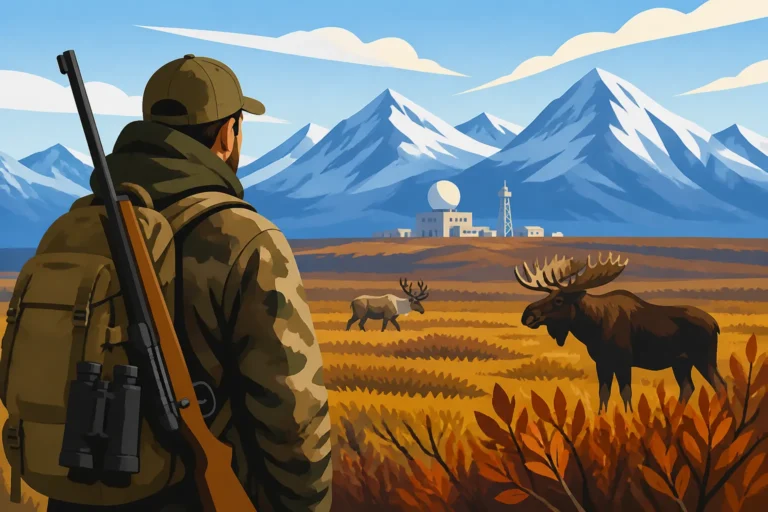
Another huge chunk of land near Fairbanks falls under the jurisdiction of the military. We're talking about substantial tracts controlled by Fort Wainwright and Eielson Air Force Base. These installations are active training grounds, and for very good reason, public access, especially for hunting, is heavily restricted or outright prohibited. These are not public lands in the traditional sense, and wandering onto them with a firearm without explicit permission is a serious offense that can lead to federal charges.
While some military lands occasionally offer limited hunting opportunities to authorized personnel or through specific permit systems, these are exceptions, not the rule. For the average public land hunter, you should consider the boundaries of Fort Wainwright and Eielson as hard closures. It's crucial to consult with the base's outdoor recreation or natural resources offices well in advance if you even suspect you might be near their boundaries. Just assuming a piece of land is open because it looks undeveloped is a dangerous gamble here. You might be able to find details on Fort Wainwright Hunting Access Permits, though often these are for specific populations, and it's always best to check directly. The same caution applies, for instance, even further south with Getting a Hunting Permit for JBER if you're ever near Anchorage's military land.
Private Holdings and Native Allotments
As you move out from the immediate Fairbanks area, you'll quickly encounter a checkerboard of private property. Many Alaskans own larger parcels of land, some of which might appear wild and remote but are in fact privately held. Hunting on private land without explicit permission from the landowner is trespassing, and it's a quick way to lose your hunting privileges and face legal trouble. This is a common frustration, seeing prime habitat but knowing it's someone else's property.
Adding another layer of complexity are Alaska Native Allotments. These are private lands held by individual Alaska Natives, and they are not public land, even if they are surrounded by state or federal property. They are a form of private ownership, and access requires permission. Identifying these can be tricky without proper mapping tools, as they don't always have obvious fences or markers. It's a critical distinction to understand: just because it looks like remote wilderness doesn't mean it's open for public hunting. Detailed information about navigating Hunting on Alaska Native Corporation Land or understanding Native Allotment Boundaries on a Map can be incredibly helpful for any hunter trying to avoid unintentional trespassing.
Specific State and Federal Closures Around Fairbanks
Beyond the urban and private land issues, several specific state and federal designations create further closures or restrictions on hunting opportunities in the Fairbanks area. These are often established for wildlife management, public safety, or to protect specific resources, and they all require careful attention from hunters.
Controlled Use Areas (CUAs) and Their Limitations
Alaska has a number of Controlled Use Areas (CUAs) that restrict the methods of transportation allowed for hunting. While a CUA isn't a complete "no hunting" zone, it effectively closes specific types of hunting for many people. For example, some CUAs might prohibit the use of aircraft or motorized vehicles (like ATVs) for hunting or for access beyond a certain point during specific seasons. This means that if you rely on an ATV to get deep into the backcountry, a CUA could render that method illegal, thereby closing that area to your preferred style of hunting.
Near Fairbanks, you might encounter CUAs designed to reduce hunting pressure in accessible areas or to maintain a more primitive hunting experience. For instance, a CUA might allow hunting on foot but ban aircraft access for a specific big game species during its season. Always check the current regulations for any CUA you plan to hunt within, as the rules can vary greatly. Understanding Alaska Controlled Use Areas and What They Restrict is crucial, as misinterpreting the rules can lead to citations and forfeiture of game.
Highway Corridors and Buffer Zones
A very common and often overlooked closure near Fairbanks and other Alaskan population centers are the highway corridors and associated buffer zones. For public safety and to maintain a reasonable aesthetic experience for travelers, hunting is prohibited within a certain distance of many major roads. This typically means a five-mile buffer on either side of highways like the Parks Highway, the Richardson Highway, the Steese Highway, and the Elliott Highway as they pass through more populated or frequently traveled areas near Fairbanks.
Imagine driving along the Parks Highway, seeing a moose just off the road, and thinking it's an easy shot. Without checking the regulations, you might be illegally hunting within a closed corridor. These buffers are in place to prevent accidental shootings, minimize disturbance to residential areas adjacent to the highways, and ensure a modicum of public peace. It's not just about the pavement itself; it's a significant swath of land on either side. It's critical to know Buffer Zones Along Alaska Highways and how they apply to your intended hunting spots, especially if you're using road access to get anywhere. Even highways that lead to remote areas, like the Steese and Elliott Highway Access in Alaska, can have these crucial corridors.
National Wildlife Refuges and Preserves
The Fairbanks area is also surrounded by various federal lands managed by different agencies. While some are open to hunting, others are strictly closed. For example, certain sections of the Alaska State Game Refuge or the Tanana Valley State Forest might have specific hunting restrictions, even if they aren't outright closed. Furthermore, understanding the distinction between a National Preserve and a National Park is vital. National Parks, such as portions of Denali, are generally closed to hunting, while adjacent National Preserves often allow it with specific regulations.
While there might not be a huge National Park right on Fairbanks' doorstep that impacts local, short-range hunts, it's essential to be aware of how different federal land designations operate. Always confirm the specific regulations for any federal land, such as National Wildlife Refuges, as their rules can differ significantly from state land.
How to Navigate and Verify Open Hunting Areas
Given the complex tapestry of land ownership and regulations around Fairbanks, simply heading out with a guess is a recipe for trouble. Being a responsible hunter means doing your homework, leveraging modern tools, and consulting official sources. It's all about making sure you're legal, safe, and respectful of the land and its rules.
Essential Mapping Tools for Identifying Closures
In this day and age, a paper map is a good start, but digital mapping tools are an absolute game-changer for hunting in Alaska, especially around complex areas like Fairbanks. Applications like onX Hunt and GoHunt are indispensable for visualizing land ownership, identifying restricted areas, and understanding game management unit (GMU) boundaries. These tools layer private property, public land, military reservations, and regulatory closures right onto a topographical map, often with satellite imagery.
Using an app like onX Hunt can be a game-changer for visualizing these complex land ownership boundaries. You can see at a glance where private parcels cut into public land, where military bases begin, and even identify specific regulatory zones. It highlights federal land (like Bureau of Land Management or National Forest), state land, and Native Corporation lands, helping you understand where you need permission versus where general public access is permitted. This kind of detailed information helps you steer clear of a significant closure issue, allowing you to quickly identify alternative access points or hunting spots that are actually open.
Many hunters also find GoHunt's mapping and data useful for scouting and identifying access points, especially when planning for areas around the periphery of these closed zones. Their tools often include overlays for hunt unit boundaries, historical harvest data, and specific regulations, which can inform your decision-making processes. Before you even leave home, you can scout potential access points, identify areas that are clearly off-limits, and mark areas that require further investigation. This saves countless hours of driving around only to hit a "No Trespassing" sign.
Consulting Official Regulations and Local Authorities
While mapping apps are powerful, they are tools, not the final authority. The most critical step is always to consult the official hunting regulations published by the Alaska Department of Fish and Game (ADF&G). These booklets are your bible for legal hunting. They outline all seasons, bag limits, weapons restrictions, and, crucially, specific area closures. You can pick up a physical copy or download the latest version from the ADF&G website. Remember, what you read online or on an app is usually a good reflection, but the official regulations are what you must abide by.
Pay close attention to the general regulations, then zoom into the specific Game Management Units (GMUs) that encompass the Fairbanks area (e.g., portions of Unit 20). Each unit or subunit might have unique rules, including local closures or special conditions. For comprehensive understanding, knowing Where to Get the Alaska Hunting Regulations Booklet and understanding When Alaska's Hunting Regulatory Year Begins (typically July 1st) are foundational steps. If you have any doubt, call your local ADF&G office. Their wildlife troopers and biologists are there to help clarify any confusion about land status or specific closures. It's far better to ask than to unknowingly break the law.
Planning Around Known Restrictions
Once you've identified the closed areas around Fairbanks, your next step is to plan your hunt around them. This might mean driving a little further, hiking a little deeper, or considering a different species or season that aligns with open areas. For instance, if the primary road corridors are closed, look for trailheads or access points that are beyond those buffers. If military lands block direct access, identify routes that circumvent them entirely.
This is where pre-hunt scouting becomes invaluable. Use satellite imagery to identify potential access roads, old logging trails, or river systems that might provide entry into open hunting grounds. Scouting a Unit From Satellite Imagery Before You Fly can give you an incredible advantage, allowing you to spot natural breaks in terrain, old burns where moose might feed, or even subtle changes in vegetation that indicate different land ownership. By understanding the closures upfront, you can focus your scouting efforts on genuinely open and accessible terrain, maximizing your chances of a successful and legal hunt.
| Closure Type | Typical Location Around Fairbanks | Primary Reason for Closure | How to Verify / Avoid |
|---|---|---|---|
| Urban/Suburban Areas | Fairbanks City, North Pole, Ester | Public safety, residential density | Consult local ordinances, use mapping apps for city limits |
| Military Reservations | Fort Wainwright, Eielson AFB | Active training, national security | Strict "no entry" unless explicitly permitted, check base rules |
| Private Land/Allotments | Scattered throughout rural areas | Private property rights | Use mapping apps (onX Hunt), obtain explicit permission |
| Highway Corridors | Along Parks, Richardson, Steese, Elliott | Public safety, aesthetic preservation | Check ADF&G regs for specific distances (e.g., 5 miles) |
| Controlled Use Areas | Specific designated areas | Wildlife management, hunting method control | Read ADF&G regs carefully for transport restrictions |
| National Parks | Portions of Denali (not immediate Fairbanks) | Resource preservation, non-consumptive use | Differentiate from National Preserves, check specific unit rules |
Common Misconceptions and Frustrations
Hunting near Fairbanks, or any developed area in Alaska, comes with its own set of unique frustrations and common misunderstandings. It’s easy to get discouraged when you see vast tracts of seemingly open country only to find out it's off-limits. Validating these feelings and addressing the root causes can help hunters adjust their expectations and strategies.
The "Public Land Myth" Near Developed Areas
One of the biggest misconceptions, particularly for hunters new to Alaska or coming from states with different land ownership patterns, is the idea that all undeveloped land is automatically public and open to hunting. This couldn't be further from the truth, especially near a population center like Fairbanks. As we've discussed, large swaths of land are private, belong to Native corporations, or are under military jurisdiction. Just because there's no fence, no "No Trespassing" sign, or even a visible dwelling doesn't mean it's public hunting ground.
This can be incredibly frustrating. You might drive for miles, seeing promising habitat, only to pull up your onX Hunt app and discover you're surrounded by private property or a restricted zone. It's a harsh reality that the wild appearance of a landscape doesn't always equate to public access. Always, and I mean always, verify land status before you plan your hunt. This mindset shift—from "assume it's open unless marked closed" to "assume it's closed until proven open"—is vital for ethical and legal hunting in complex land ownership areas.
Changing Regulations and Emergency Orders
The rules of the game are not set in stone, and this can add another layer of frustration. Alaska's hunting regulations, especially those for species with fluctuating populations or those managed by quota, can change. Sometimes, seasons can be closed early via Emergency Order if harvest quotas are met or if biological concerns arise. This means an area you planned to hunt, which was open when you last checked the regs, might suddenly be closed just before or even during your hunt.
It's a bitter pill to swallow when you've invested time, money, and energy into planning a hunt, only to have a season or area close unexpectedly. This is why staying current is critical. Regularly check the ADF&G website for emergency orders, news releases, and any updates to the regulations. Understanding Alaska Emergency Orders That Close a Season Early and knowing Where Alaska Posts Season Changes can prevent a lot of heartache and wasted effort. It's a dynamic system, and successful hunters are those who adapt and stay informed.
The Impact on Local Hunters
These numerous closures and restrictions disproportionately affect local Fairbanks hunters. Residents who live close to town often have less time to travel to truly remote, unrestricted areas. They might be looking for a quick after-work hunt or a weekend outing with family, and the proximity of closures severely limits their options. What was once easily accessible hunting ground for generations of locals might now be developed, privatized, or designated a restricted zone.
This loss of easily accessible hunting areas can lead to increased pressure on the remaining open lands, making it harder for everyone to find game. It also forces local hunters to expend more resources—time, fuel, and effort—to pursue their passion. It's a challenge many urban and suburban hunters face across Alaska, and it underscores the need for thorough planning and a deep understanding of the regulations to ensure a successful and compliant hunting experience.
Disclaimer
This article is for general informational purposes only and does not constitute professional advice. Laws, prices and regulations vary by location and change over time. Consult a qualified professional for guidance on your specific situation.