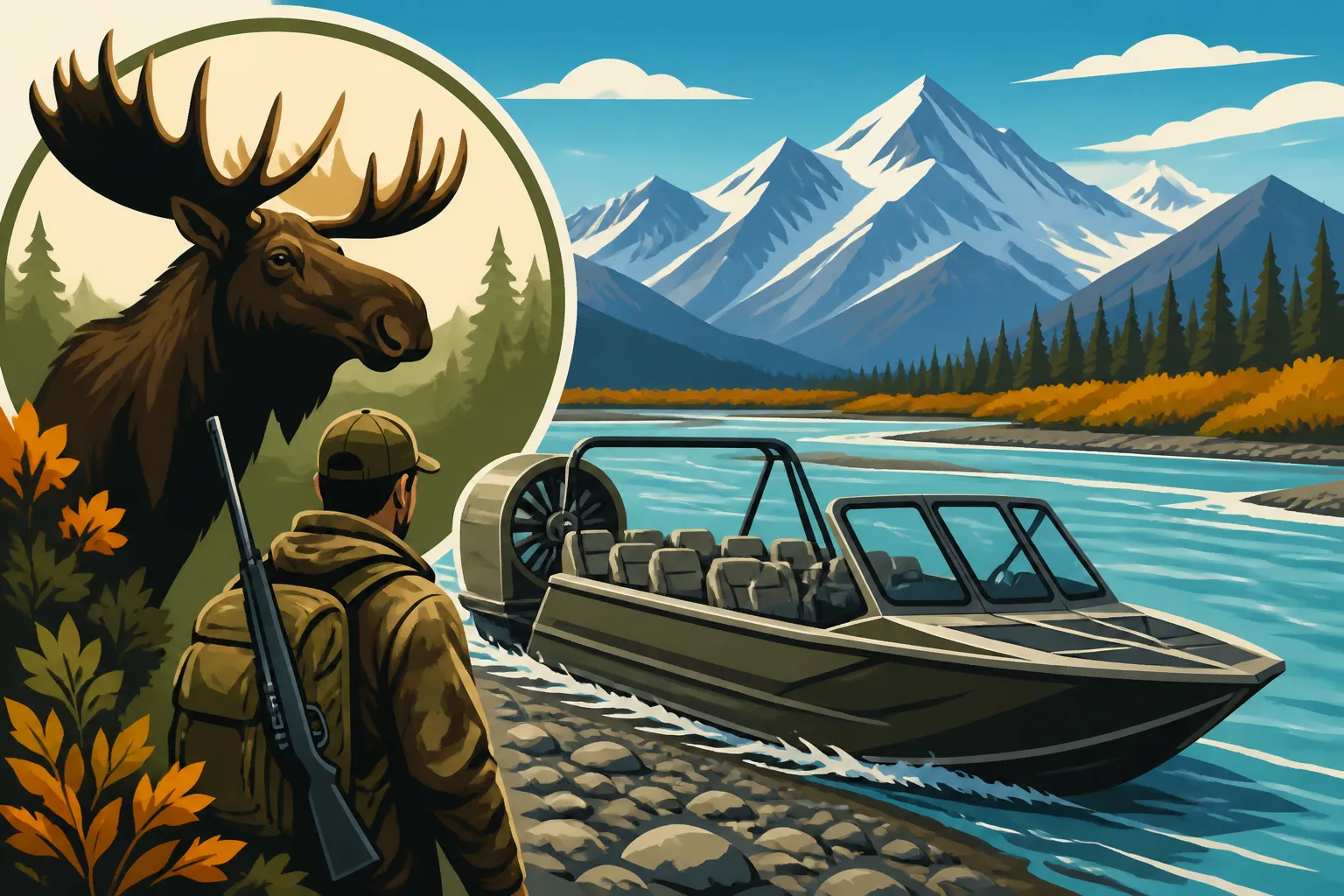
Susitna River Jet Boat Access
Many Alaska hunters feel the pull of truly remote country, envisioning untouched valleys and undisturbed game populations far from the road system. The challenge, of course, is how to actually get there. While bush planes are often the first thing that comes to mind, they can be incredibly expensive and weather-dependent. For those looking to open up vast, otherwise inaccessible hunting grounds, utilizing jet boat access along the Susitna River is an incredibly effective and often more flexible solution. This guide will walk you through the ins and outs of planning, preparing for, and executing a successful hunting adventure using this incredible Alaskan waterway.
The Allure of Susitna River Access for Hunters
The Susitna River, one of Alaska's largest and most iconic rivers, carves its way through some of the most diverse and game-rich landscapes in the state. From its headwaters in the Alaska Range to its vast delta emptying into Cook Inlet, the "Susitna" (often called "the Susitna" by locals) offers unparalleled access to areas that remain largely untouched by traditional road hunters. This isn't just a scenic float; it's a highway into the heart of wild Alaska, allowing you to bypass dense, featureless timber and penetrate deep into prime habitat for a variety of big game.
Imagine being able to load up a significant amount of gear, fuel, and supplies, then power your way miles upstream, passing countless spots where road hunters can only dream of reaching. This capacity to haul more equipment means you can set up a comfortable camp, bring better optics, and even pack out heavier loads of meat without the crushing burden of a pure backpacking hunt. The river itself becomes your lifeline, offering both transportation and a reliable water source, creating a unique blend of adventure and logistical advantage that few other methods can provide.
Unlocking Vast Untamed Territory
The sheer scale of the Susitna River drainage is difficult to grasp until you've seen it firsthand. It drains an area roughly the size of West Virginia, creating a mosaic of river bottoms, willow flats, mature spruce forests, and access points to adjacent uplands and mountains. Many of these areas are simply too far from established trails or roads to be practical for most hunters, making them a true frontier. With a jet boat, you're not limited to a quick day trip; you can establish a camp far from any human presence and spend days or even weeks exploring drainages that feed into the main river or its larger tributaries.
This deep penetration into the backcountry often translates into a hunting experience where game animals are less pressured. You might find moose that haven't heard a grunt tube in weeks, or brown bears that have rarely encountered humans outside of a fleeting moment. The ability to push beyond the initial layers of easy-access country is what draws many seasoned Alaskan hunters to the Susitna. It's a commitment, certainly, but the rewards in terms of solitude and quality hunting can be immense.
Prime Species and Habitat Considerations
The Susitna River corridor is famous for its robust populations of Alaska-Yukon moose. The extensive willow and alders along the riverbanks, coupled with periodic burn scars further inland, create ideal browse for these giants. During the rut, the river bottom becomes alive with calling bulls, and having a jet boat allows you to cover vast stretches of river, stopping to call from different locations, or quickly repositioning to intercept a bull that's responding. Float Hunting Alaska Rivers for Moose and Caribou is a prime example of the kind of hunt you can plan here.
Beyond moose, the region offers excellent opportunities for black bear and, in some areas, brown bear (or grizzly, depending on how far inland you are). The salmon runs that pulse through the Susitna and its tributaries draw bears to the river in late summer and early fall, offering unique hunting scenarios. Caribou can also be found in the upper reaches of the drainage as they migrate through, though their movements are less predictable than moose. For those interested in predators, wolves and wolverine also frequent the vast wilderness the Susitna opens up. Knowing the specific habitats is key; for example, understanding Moose Habitat in Alaska Burn Scars can drastically improve your chances.
Navigating the Susitna: Challenges and Techniques
While a jet boat offers incredible freedom, the Susitna River is not for the faint of heart or the inexperienced boater. This is a powerful, dynamic river, constantly changing, and presenting unique challenges that demand respect, skill, and careful preparation. Unlike a calm lake, the Susitna has strong currents, ever-shifting gravel bars, snags, and shallow sections that can quickly turn a dream hunt into a nightmare if you're not ready.
Learning to read the water, understanding your boat's capabilities, and being intimately familiar with river running techniques are non-negotiable prerequisites. Many experienced Alaska jet boaters recommend spending considerable time on easier rivers or with a seasoned mentor before tackling a major river like the Susitna on a critical hunting trip. The consequences of a mistake can range from a damaged prop to being stranded miles from anywhere with no cell service.
Reading the Water: Identifying Hazards and Channels
The most critical skill for a Susitna jet boater is the ability to "read the water." This means more than just looking for deep spots; it involves understanding the subtle (and sometimes not-so-subtle) cues that indicate depth, current, and hazards. Look for changes in water color – darker water usually means deeper channels, while lighter, milky green water often signifies shallow gravel. Ripples and boils can indicate submerged obstructions or strong currents.
Gravel bars are perhaps the biggest challenge. They shift with every major rain event or spring runoff, meaning what was a clear channel last year might be a dead end this year. Identifying the main current, which often follows the deepest part of the river, is crucial. Pay close attention to the way the water flows around bends and islands; the outside bend is often deeper, while the inside bend tends to accumulate gravel. Always scan far ahead, looking for V-shaped ripples pointing upstream (indicating a rock or snag) or smooth, glassy sections of water that could signal dangerously shallow stretches.
Boat Handling and River Running Skills
Operating a jet boat effectively on a river like the Susitna requires a distinct skill set. Unlike prop-driven boats, jet boats excel in shallow water but require constant forward momentum to steer. Losing thrust means losing steerage, which can be disastrous in a swift current. You need to be comfortable with throttle control, learning to "walk" the boat over shallow spots at just the right speed without running aground.
Maneuvering in current, especially when coming alongside a bank to unload or scout, demands precision. You'll need to learn how to ferry across the current, how to spin the boat to head downstream quickly, and how to use the current to your advantage rather than fighting it. Practice docking on uneven banks, anchoring in swift water, and recovering from minor groundings. These skills are honed over time and are far better practiced before you have a loaded boat, a downed animal, and a looming storm on the horizon.
Essential Gear and Safety for Susitna River Hunts
A successful Susitna River hunting trip isn't just about the boat and your skills; it's equally about bringing the right gear and prioritizing safety. The remote nature of these hunts means you are largely self-sufficient, and preparedness for anything the Alaskan wilderness can throw at you is paramount. This includes everything from the boat itself to the contents of your emergency kit and how you communicate with the outside world.
Think about the longevity of your trip and the potential for unexpected delays due to weather or river conditions. Packing for an extra few days, having redundancy in critical gear, and planning for worst-case scenarios are not overly cautious; they are simply good practice when venturing into remote Alaska.
Choosing the Right Jet Boat for Alaskan Conditions
When it comes to jet boats for Alaska hunting, bigger isn't always better, but ruggedness and reliability are absolutely non-negotiable. Most serious Susitna hunters opt for aluminum hull jet boats, typically 18 to 22 feet long, with a strong, reliable outboard jet motor (or sometimes an inboard). The aluminum hull is vital for durability against hidden rocks and gravel. Look for boats with reinforced bottom plates and a robust transom.
Engine size matters for carrying capacity and pushing through strong currents. A 150-250 horsepower outboard jet is common, but remember that a jet pump significantly reduces the effective horsepower compared to a prop. Consider fuel capacity carefully; calculate your fuel consumption rate and then double or triple the amount you think you'll need for your trip, factoring in extra for scouting, repositioning, and potential weather delays. A sturdy bow guard, robust anchor system (with plenty of rope), and reliable bilge pumps are also absolute must-haves. Many outfitters who run these rivers swear by custom-built Alaskan models designed to handle the abuse.
Critical Safety Equipment and Emergency Planning
Your safety kit should be extensive. Beyond standard Coast Guard requirements (life jackets for everyone, fire extinguisher, horn), you need additional items suitable for remote Alaska. A satellite communication device like an InReach or Zoleo is essential for check-ins and emergency SOS. Signal Devices and Check-In Plans for Solo Alaska Hunts are critical to establish before you leave. A waterproof VHF radio can be useful for communicating with other boaters if you’re near a populated area or if you’ve arranged for a second boat to be nearby, but don't count on widespread reception in truly remote areas.
Carry a comprehensive first-aid kit, bear spray (and know how to use it), and a firearm appropriate for bear defense, especially if you plan to hunt in grizzly country. A spare prop or jet impeller, along with the tools to change it, is non-negotiable. Have multiple ways to start a fire, extra warm clothing in dry bags, a good repair kit for your boat, and at least two anchors. File a detailed float plan with a trusted contact who knows your route, expected return time, and who to call if you don't check in.
Planning Your River Hunt: Logistics and Regulations
A successful Susitna River hunt requires meticulous planning well before you ever push off from the launch ramp. This isn't a spur-of-the-moment trip; it involves extensive research into game management units, understanding specific regulations, and leveraging modern tools to scout your desired hunting grounds. Ignoring these steps can lead to frustration, missed opportunities, or even legal trouble.
The logistical challenges of a remote river hunt can be substantial, from fuel management to meat care in the field. Every detail needs to be considered to ensure a safe, legal, and ultimately rewarding experience.
Pre-Trip Scouting and Mapping with Modern Tools
Before you even think about putting your boat in the water, spend countless hours poring over maps and satellite imagery. This is where tools like onX Hunt and GoHunt truly shine. Using onX Hunt, you can overlay public and private land boundaries, identify potential camping spots on high ground, mark river hazards like known gravel bars or rapids, and trace potential game trails leading away from the river. It allows you to visualize the terrain in incredible detail, helping you identify willow flats for moose, or clearings for glassing. Scouting a Unit From Satellite Imagery Before You Fly is a transferable skill here.
GoHunt offers fantastic resources for researching specific hunt units, including draw odds (if applicable to your target species), harvest statistics, and a wealth of information about the general hunting pressure and success rates in various areas. Combine this data with onX Hunt's mapping capabilities to pinpoint areas that see less pressure or offer prime habitat for your target species. Pay special attention to access points further upstream – where can you safely anchor? Are there natural clearings for a wall tent or good spots to pull a small skiff into a tributary?
Understanding Alaska's River Access Laws and Seasons
Alaska's hunting regulations are complex and can vary significantly by Game Management Unit (GMU). The Susitna River flows through several units, each with its own season dates, bag limits, and specific regulations for species like moose, caribou, and bears. You absolutely must consult the current Alaska hunting regulations booklet for the year you intend to hunt. Pay close attention to any "Antler Restrictions" for moose, as well as specific brown bear sealing requirements. You'll also need to understand the differences between Alaska Harvest Tickets, Registration Permits and Draw Permits for the species you intend to hunt.
Beyond game regulations, be aware of land ownership. While much of the land along the Susitna is state-owned public land, there are also parcels of private land, Native Corporation lands, and even federal designations like National Preserves. Always know whose land you are on and respect private property. Some areas might have specific rules for motorized access, such as "Alaska Controlled Use Areas and What They Restrict", which could impact where you can hunt or even land your boat. Familiarize yourself with the "same-day-airborne rule" even though you're in a boat; while it applies specifically to aircraft, the spirit of fair chase is always important. Always err on the side of caution and ensure your access and hunting methods are fully compliant.
Remember, a jet boat allows you to reach amazing places, but it's your responsibility to hunt legally and ethically once you're there.
| Jet Boat Feature | Importance for Susitna Hunting | Considerations |
|---|---|---|
| Aluminum Hull (Heavy Gauge) | Essential for surviving encounters with rocks, gravel, and submerged snags in shallow, fast water. | Look for reinforced bottom plates (e.g., 1/4 inch thick) and welded construction. |
| Outboard Jet Motor | Allows operation in very shallow water where prop-driven boats would be damaged or stuck. | Needs adequate horsepower (150-250 HP often) to push heavy loads against current. Less efficient on fuel than props. |
| Fuel Capacity (Auxiliary Tanks) | Critical for extended trips far upstream where fuel resupply is impossible. | Calculate consumption carefully; always bring more than you think you need. Securely mount and vent extra tanks. |
| Bow Guard/Diamond Plate | Protects the bow from damage when bumping banks or shallow obstacles. | Provides a stable platform for stepping off the boat. |
| Heavy-Duty Anchor System | Essential for safely stopping, holding position in current, and securing the boat overnight. | Use at least two anchors (river anchor and a lighter stern anchor) with plenty of robust rope. Consider a breakaway system for snagged anchors. |
| High Sides/Freeboard | Keeps water out in choppy conditions and helps contain gear and downed game. | Offers more protection from the elements and provides a sense of security when loaded. |
| Bilge Pump(s) | Removes any water that enters the boat, whether from spray, rain, or a leak. | Have at least one primary and one backup bilge pump, both functional and accessible. |
| Navigation Electronics | GPS/Chartplotter (Garmin, Lowrance, etc.) is vital for tracking progress and marking waypoints. | Load detailed river maps if available. Supplement with physical maps and a compass as backups. |
| Dry Storage | Protects vital gear (sleeping bags, electronics, extra clothing) from constant spray and rain. | Built-in compartments or robust dry bags are essential. Nothing ruins a hunt faster than wet gear. |
Disclaimer
This article is for general informational purposes only and does not constitute professional advice. Laws, prices and regulations vary by location and change over time. Consult a qualified professional for guidance on your specific situation.