Alaska Game Management Units and How They Are Numbered
Trying to make sense of Alaska's vast hunting regulations can feel like deciphering a secret code, especially when you encounter terms like "GMU 13A" or "Unit 20E." This intricate system of Game Management Units (GMUs) is crucial for every hunter, yet it often creates confusion and frustration, leading to missed opportunities or, worse, unintended violations. This guide will walk you through the ins and outs of Alaska's GMU numbering system, helping you understand how these areas are defined, why they matter so much, and how to navigate their specific rules to plan your next successful hunt.
The Basics of Alaska's Game Management Unit System
When you pick up an Alaska hunting regulations booklet or look at a map, you'll immediately notice that the state isn't just one big hunting ground. Instead, it's meticulously carved up into distinct regions, each with its own set of rules and characteristics. This division is the foundation of wildlife management in a state as immense and diverse as Alaska. Understanding these fundamental building blocks is the first step toward becoming a more informed and effective hunter here.
What is a GMU and Why Does it Matter?
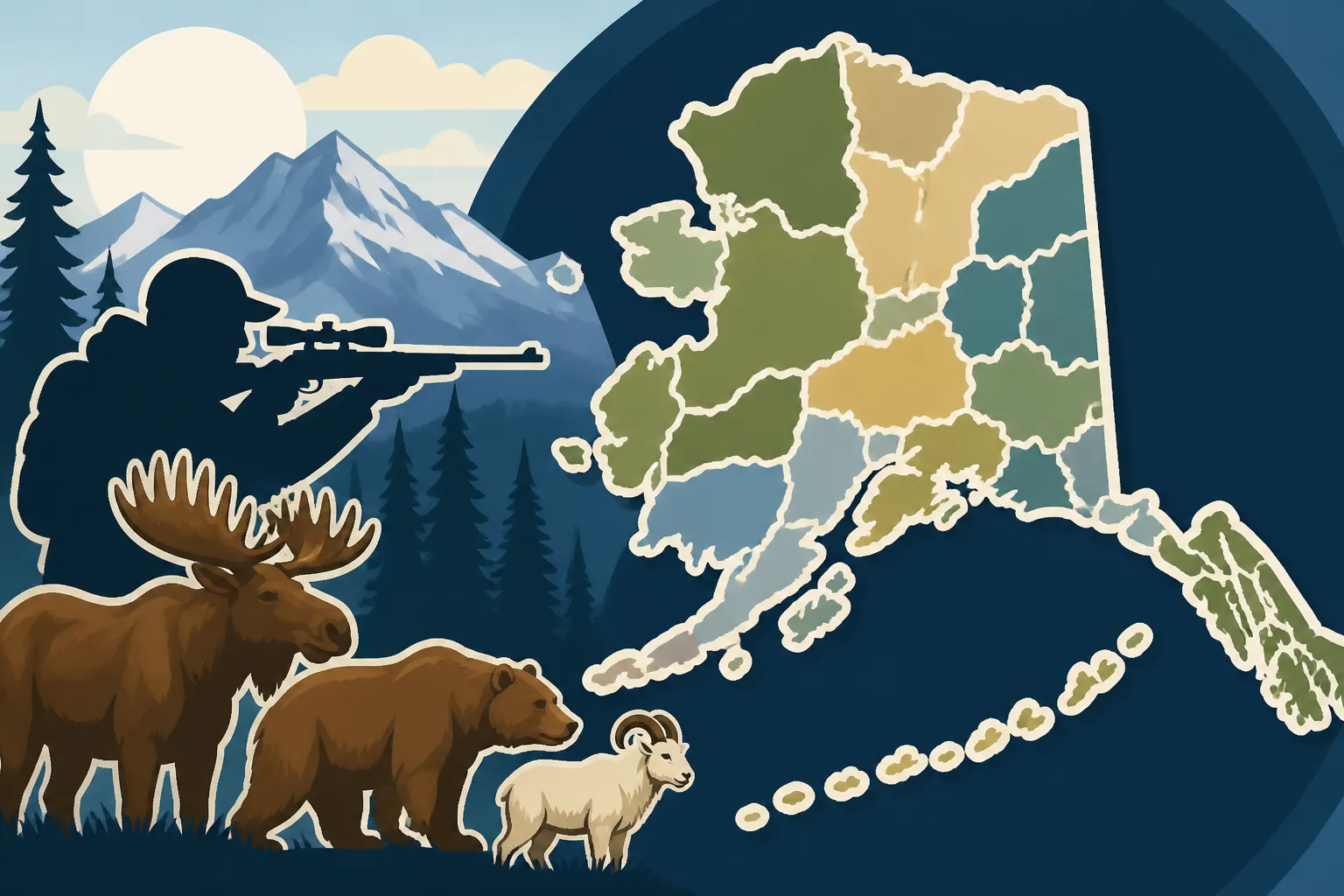
At its heart, a Game Management Unit (GMU) is simply a designated geographical area established by the Alaska Department of Fish and Game (ADF&G) for the purpose of managing wildlife populations and regulating hunting activities. Think of it as a specific district on a very large map, each with its own local laws for hunters. Each GMU is assigned a number, and sometimes even letters for further subdivisions, which helps state biologists monitor animal populations, set appropriate harvest quotas, and design specific seasons to ensure healthy wildlife numbers for the long term.
For hunters, the GMU designation is paramount. It determines everything from what species you can hunt, to when you can hunt them, what weapons are allowed, and even how many animals you can take. If you plan a trip without knowing the exact GMU you'll be hunting in, you're essentially walking into a maze blindfolded. A common frustration is planning a hunt for, say, moose in early September, only to discover too late that the specific GMU you're in doesn't open until mid-September, or perhaps only allows spike-fork bulls. This kind of oversight can derail an entire expensive and hard-earned adventure. Knowing your GMU is the bedrock of legal and successful hunting in Alaska.
The Numerical Naming Convention 1-26 and Beyond
Alaska's GMU system uses a numerical sequence from 1 to 26 to broadly categorize the state's vast territory. These numbers generally progress from east to west and south to north. For instance, Unit 1 covers the southeastern panhandle, a region known for its dense rainforests and abundant Sitka blacktail deer. As you move north and west into the interior, you'll encounter units like 13 in the central Matanuska-Susitna Valley, famous for its caribou and moose, or Unit 20 around Fairbanks, encompassing vast interior forests and tundra. Finally, Unit 26 stretches across the Arctic Slope, a remote land of polar bears, caribou, and muskox.
It's not just a random numbering. These units often correspond to major geographical features or ecological zones, which makes a certain amount of logical sense once you get the hang of it. For example, Unit 9 covers much of the Alaska Peninsula, a place synonymous with massive brown bears. While the numbers provide a broad geographical framework, it's crucial to remember that each of these numbered units is then often broken down further into subunits, adding another layer of detail that hunters must contend with. This progression from general to specific is how the state manages its incredibly diverse ecosystems and animal populations effectively.
GMU Boundaries: Rivers, Mountains, and Imaginary Lines
The boundaries of Alaska's GMUs are defined by a mix of natural features and survey lines, which can sometimes be incredibly precise and other times frustratingly vague on the ground. Often, major rivers, mountain ranges, and coastlines serve as clear, easy-to-identify demarcation points. For example, a river might divide two units, meaning if you step across that river, you're in a different hunting district with potentially different rules. You might be hunting moose in a unit with a specific antler restriction, but just across the river, the adjacent unit might have a different rule entirely.
However, many boundaries are also defined by latitude and longitude lines, or other surveyed lines that don't have any obvious physical markers in the backcountry. Imagine standing on a vast, featureless expanse of tundra, trying to figure out if you're east or west of a specific meridian. This is where modern navigation tools become absolutely indispensable. Relying solely on a paper map and compass, while a fundamental skill, can be challenging when dealing with invisible boundaries. Misidentifying your exact location relative to a GMU line, especially in dense brush or heavy fog, is a common reason for inadvertent violations. It's a key reason why many seasoned Alaska hunters invest in tools that show real-time GPS locations overlaid with GMU boundaries.
Deciphering the Unit and Subunit Structure
Once you grasp the concept of the numbered GMUs, the next hurdle is understanding the subunit system. If the GMUs are the big chapters in Alaska's hunting regulations, the subunits are the specific paragraphs within those chapters, containing highly localized details that can make or break a hunt. Ignoring these smaller divisions is a surefire way to run afoul of the regulations, as the devil truly is in the details when it comes to Alaskan hunting.
Understanding Major Units e.g., Unit 13, 20, 9
Let's dive into some of the more well-known major units to illustrate how they work. Take Unit 13, often called the "Nelchina Basin." It's centrally located and accessible by road, making it popular for moose and caribou hunters. Because it's so large and diverse, Unit 13 isn't just "Unit 13." It's broken down into subunits like 13A, 13B, 13C, 13D, and 13E. Each of these subunits will have its own specific regulations regarding season dates, bag limits, and even weapon restrictions. What might be a general season hunt in 13A could be a draw permit hunt in 13B, or have different antler restrictions in 13C. It’s enough to make your head spin if you don’t have a clear map.
Similarly, Unit 20, which surrounds Fairbanks and stretches into the vast interior, has numerous subunits (20A, 20B, 20C, 20D, 20E, 20F), each offering different experiences and regulations for everything from moose to caribou and bears. Then there's Unit 9 on the Alaska Peninsula, renowned for its coastal brown bears. This unit, too, is subdivided (9A, 9B, 9C, 9D, 9E), and the specific subunit you're in can dictate the timing of your bear hunt, whether it's a fall or spring season, and even the method of take. The sheer scale and ecological variety within these larger numbered units necessitate this granular approach to management.
The Alphabet Soup: How Subunits Further Divide the Land
The alphabetical designations (A, B, C, etc.) added to the GMU number are crucial. These subunits are smaller, more manageable areas that allow ADF&G to tailor regulations to very specific local conditions. For example, a particular subunit might contain a unique caribou migration corridor, or a valley with a high density of moose, or a crucial sheep lambing ground. By creating subunits, managers can implement precise rules to protect vulnerable populations or allow for increased harvest opportunities where populations are robust. This is where you'll often find the most variation in hunting rules.
Consider a hypothetical scenario: you're planning a caribou hunt in Unit 20. You might find that Unit 20E, known as the Fortymile country, has specific federal subsistence hunt dates and quotas that differ greatly from, say, Unit 20A, the Tanana Flats, which might be a general season hunt with specific antler restrictions. It's not uncommon for hunters to be excited about a general season for a species in a large unit, only to discover that the specific area they want to hunt falls within a subunit that requires a draw permit or has a closed season altogether. This "alphabet soup" is the reality of hunting in Alaska, and becoming proficient at navigating it is a core skill for any serious hunter. The detailed management reflects the state's commitment to sustaining its wildlife resources.
Why Subunits Create Specific Hunting Opportunities
The subunit system, while complex, also creates highly specific and sometimes unique hunting opportunities. Because regulations can be so finely tuned, certain subunits might offer limited-entry draw hunts for trophy animals that have better odds or later seasons than the general hunts. For instance, some subunits might be designated as "Controlled Use Areas" (CUAs) which restrict specific types of access, such as aircraft, during hunting season. Alaska Controlled Use Areas and What They Restrict This can create a more remote, wilderness experience for hunters willing to go in by foot, boat, or ATV.
For example, you might find an archery-only season in a particular subunit to reduce pressure on game, or a muzzleloader season designed to extend hunting opportunities into later months. These specialized regulations often result from input from local communities, biological surveys, and the Alaska Board of Game process, ensuring that the rules reflect the unique characteristics of each micro-region. Understanding these nuances can allow you to pinpoint areas with less pressure, better game populations, or specific weapon opportunities that align with your preferred hunting style. It's about finding those hidden gems within the vast Alaskan wilderness.
| GMU Range | General Region | Primary Game Animals | Key Characteristics |
|---|---|---|---|
| 1-3 | Southeast Alaska | Sitka Blacktail Deer, Brown Bear, Black Bear, Mountain Goat, Moose | Coastal rainforest, islands, highly boat-dependent access |
| 4-6 | Southcentral Coast | Brown Bear, Black Bear, Mountain Goat, Moose | Coastal mountains, rugged terrain, marine and road access |
| 7-10 | Kenai Peninsula, Kodiak, Alaska Peninsula | Moose, Brown Bear, Black Bear, Mountain Goat, Sitka Blacktail Deer | High hunter pressure on Kenai; remote, large bears on Peninsula/Kodiak |
| 11-14 | Copper River Basin, Mat-Su, Central Interior | Moose, Caribou, Dall Sheep, Black Bear, Brown Bear | Road-accessible, vast interior plains and mountains, popular for big game |
| 15-16 | Susitna Valley, Cook Inlet | Moose, Brown Bear, Black Bear, Caribou, Dall Sheep | Mixture of accessible and remote, wetlands and mountains |
| 17-19 | Bristol Bay, Middle Kuskokwim | Moose, Caribou, Brown Bear, Black Bear | Remote, float plane access, vast drainages |
| 20-21 | Interior Alaska (Fairbanks to Yukon) | Moose, Caribou, Dall Sheep, Black Bear, Brown Bear, Wolf | Extensive road access, deep backcountry, major rivers |
| 22-26 | Western and Arctic Alaska | Caribou, Muskox, Moose, Brown Bear, Wolf, Wolverine | Extremely remote, tundra, specialized federal subsistence rules |
Navigating Regulations by GMU
One of the most critical aspects of planning an Alaska hunt is recognizing that the regulations are almost entirely GMU-specific. You can't just read the general state hunting laws and assume you're covered. Every single hunt plan must start with identifying the specific GMU and subunit you intend to hunt, and then meticulously reviewing the regulations for that particular area. This is where many eager but unprepared hunters get into trouble.
Season Dates and Bag Limits Vary Wildly
Imagine you've been dreaming of an Alaska moose hunt for years. You know the general moose season often opens in early September. However, if you simply show up with that knowledge, you might be in for a rude awakening. In some GMUs, the moose season might open in late August, giving you a head start. In others, it might not open until mid-September, or perhaps it's a very short season of only 7-10 days. The bag limits also vary dramatically. While some areas might allow you to take one bull, others might have antler restrictions, requiring a bull with at least 50-inch antlers or three brow tines on one side. Alaska Moose Antler Restriction Areas
This variability extends to every species. A general black bear season might run for months in one unit, while in another, it might be restricted to specific spring or fall periods, or have a reduced bag limit. Deer seasons on the islands of Southeast Alaska will have different opening and closing dates and bag limits than those on Kodiak. This hyper-local management is designed to respond to localized population dynamics, winter severity, and even human pressure. It means that what you learn about hunting in one part of the state might not apply just a few hundred miles away, even for the same species. Always, always verify the specific season dates and bag limits for your exact GMU and subunit.
Permit Hunts and Registration Areas Tied to Specific GMUs
Beyond the general season hunts, Alaska also employs an extensive system of draw permits and registration permits, almost all of which are tied to specific GMUs or subunits. Draw permits, like those for Dall sheep or certain high-demand moose or caribou hunts, are limited in number and require you to apply well in advance through a lottery system. If you draw a permit, it will explicitly state the GMU and subunit where it is valid. Hunting outside that designated area, even if it's adjacent, would be a violation. Alaska Harvest Tickets, Registration Permits and Draw Permits
Registration permits, on the other hand, are generally available on a first-come, first-served basis, but they also apply to specific GMUs. These hunts are often used for species where managers need to closely monitor harvest numbers, like certain caribou herds or black bear hunts. They might open with an announcement, and then close by emergency order once a quota is met. Again, the permit will specify the legal hunting area. Hunters need to pay close attention to news releases and emergency orders issued by ADF&G, as a registration hunt can close early with little notice if the quota is reached in that specific GMU. Checking your target GMU for any permit requirements is a non-negotiable step in your hunt planning process.
Special Restrictions: Controlled Use Areas and Weapon Limits
Further complicating matters, many GMUs and subunits have additional special restrictions that can significantly impact your hunt. One of the most common are Controlled Use Areas (CUAs), which are often established to manage hunter access or reduce pressure on game. For instance, some CUAs might prohibit the use of aircraft for hunting or even for transporting hunters or gear during certain periods. This means you might need to reconsider a fly-in hunt if your target GMU falls within one of these zones.
Weapon restrictions are another critical consideration. While rifles are generally allowed throughout much of Alaska, specific subunits might have archery-only or muzzleloader-only seasons. The Dalton Highway corridor, for example, has an archery-only zone that limits firearm use in a strip alongside the road. Dalton Highway Corridor Firearm Restrictions Other areas might have restrictions on magazine capacity or minimum bullet energy requirements. Beyond these, there can be closures around airports, private land, or buffer zones along highways where hunting is prohibited. You might also encounter limitations on motorized vehicle use, such as ATVs, during certain times of the year or in specific terrain. Thoroughly reviewing the "Special Provisions" section for your chosen GMU in the regulations booklet is paramount to ensure your equipment and access methods are legal.
Real-World Examples of GMU Complexity
Let's ground this discussion in some tangible examples that illustrate the challenges and specific opportunities presented by Alaska's GMU system. These scenarios highlight why understanding the nuances of these geographical designations is not just a regulatory formality, but an essential part of effective and ethical hunting.
Moose Hunting in Unit 13: A Case Study in Subunit Detail
Unit 13, located in Southcentral Alaska, is a prime example of why subunits matter. As mentioned, it's divided into 13A, 13B, 13C, 13D, and 13E. Each of these can have wildly different moose regulations.
Take Unit 13A, stretching between the Denali and Glenn Highways. Unit 13A Between the Denali and Glenn Highways Historically, this area has been known for its healthy moose population. However, hunting pressure and varying winter conditions often lead to dynamic management. You might find that 13A has a general season with specific antler restrictions, such as "spike-fork or 50-inch spread or three brow tines." Now, imagine crossing an invisible line into Unit 13B, the Lake Louise country. Here, the season might open later, or it might even be a drawing permit hunt for residents only, with no general season at all. A hunter who plans for a general season hunt in "Unit 13" without specifically looking at "13A" or "13B" could easily find themselves in violation, or simply unable to hunt legally.
Furthermore, within these subunits, there can be specific federal subsistence regulations that apply only to federally qualified rural residents, particularly on federal lands. A nonresident hunter or a state-qualified resident hunter might be operating under entirely different rules within the same geographic area. This level of detail means that simply knowing "Unit 13 has moose" is utterly insufficient for planning a legal and successful hunt. You need to identify your specific hunting location down to the subunit, understand the land status (state, federal, or private), and then cross-reference all those factors with the current regulations.
Brown Bear on the Alaska Peninsula Unit 9: Understanding the Nuances
The Alaska Peninsula, predominantly covered by Unit 9, is world-renowned for its large coastal brown bears. Brown Bear Country in Alaska's Unit 9 However, hunting here is far from uniform. Unit 9 is further divided into 9A, 9B, 9C, 9D, and 9E, and each subdivision has distinct management goals and regulations. For instance, the timing of spring and fall bear seasons can vary by weeks or even months between these subunits, influenced by denning patterns, salmon runs, and historical harvest data.
A guided brown bear hunt, which is required for nonresidents for this species, would need to specify the exact subunit. A guide operating in Unit 9D might have a different season length or bag limit than a guide operating in 9E. Nonresidents are required to have a guide for brown bear, Dall sheep, and mountain goat. Alaska's Brown Bear, Sheep and Goat Guide Requirement This is because the state wants to ensure responsible harvesting of these iconic species, which often reside in remote, difficult-to-access areas with complex regulations. The size and distribution of these magnificent animals can differ greatly even within a single GMU, making subunit-specific rules essential for sustainable management of Alaska's Alaska Brown Bears on the Coast Versus Interior Grizzlies.
Caribou Herds and Their GMU Migrations
Caribou are perhaps the most migratory big game animal in Alaska, and their movements make GMU lines particularly tricky. While a caribou herd like the Nelchina (largely within Unit 13 and parts of 12 and 14) or the Western Arctic Herd (spanning Units 23, 24, and 26) has a vast range, the regulations often apply only to specific portions of their migration corridor, within certain GMUs. Caribou Herds of Alaska and How They Move
A caribou hunt often involves monitoring herd movements closely. You might plan to hunt caribou in Unit 13, but the herd could push into Unit 12 or 14, changing the legal hunting options. Furthermore, many caribou hunts, especially for residents, are registration hunts that are subject to emergency closures. If the quota is met in one GMU, the season might close there, even if caribou are still present, while an adjacent GMU might remain open. This means a hunter needs to be acutely aware of not just their location, but also the real-time status of the hunt in their specific GMU. It's not enough to simply know a herd is "in the area;" you need to know exactly which regulated "area" the caribou are occupying. This dynamic nature adds another layer of complexity, requiring hunters to be flexible and well-informed.
Tools and Resources for GMU Navigation
Given the complexity of Alaska's GMU system, relying solely on intuition or outdated information is a recipe for disaster. Fortunately, there are a number of excellent tools and resources available that can help hunters accurately navigate these intricate regulations and plan their hunts with confidence.
Official ADF&G Maps and Regulations Booklets
The first and most authoritative source for all GMU-related information is the Alaska Department of Fish and Game (ADF&G). Their annual hunting regulations booklets are indispensable. These are not just summaries; they are the official legal documents that detail every season date, bag limit, weapon restriction, and special provision for every GMU and subunit in the state. You absolutely need to get your hands on the current year's booklet for your planned hunting region. Where to Get the Alaska Hunting Regulations Booklet Read it cover to cover, paying particular attention to the GMU maps and the fine print under your chosen unit and subunit.
ADF&G also provides large-scale GMU maps, often available at their offices or online. These maps are the definitive visual representation of unit and subunit boundaries, often showing rivers, roads, and key geographical features that help define those lines. While paper maps are essential for backcountry navigation when electronics fail, they can be cumbersome for quick reference. However, they are invaluable for initial planning and for understanding the broad lay of the land. Don't skimp on this foundational research; it's the bedrock of a legal hunt.
Digital Mapping Applications and Their Power
In today's age, digital mapping applications have revolutionized how hunters interact with GMU boundaries. Tools like onX Hunt and GoHunt are incredibly powerful for overlaying GMU boundaries directly onto satellite imagery or topographic maps, right on your smartphone or GPS device. This means you can see your real-time location in relation to unit lines, even in the most remote areas without cell service, provided you've downloaded the maps beforehand.
For example, with onX Hunt, you can zoom in on a specific drainage and instantly see if it falls within Unit 13A or 13B, or if there's a small section of private land to avoid. This can be a game-changer for avoiding unintentional trespassing or accidental GMU violations. GoHunt, while often focusing on western draw odds, also provides robust mapping features that can show boundaries, land ownership, and other critical data layers. These apps often update their maps with the latest regulatory changes, although it's always wise to double-check with the official ADF&G regulations. They allow you to mark waypoints, track your path, and even identify land ownership, which is crucial in Alaska's mosaic of state, federal, and native corporation lands. How to Check Alaska Land Status Before a Hunt The ability to visualize these invisible lines on the ground is an enormous advantage and can provide immense peace of mind.
Asking the Right Questions: Local Knowledge and Biologists
While maps and apps are invaluable, they don't replace human intelligence. Local knowledge is gold in Alaska. Talk to hunters who have experience in the specific GMU you're targeting. They might offer insights into common access points, difficult terrain, or subtle changes in game movement that aren't apparent on a map. Always be respectful of local knowledge and be prepared to share your own experiences responsibly.
Furthermore, don't hesitate to call the ADF&G area biologists responsible for your chosen GMU. Their job is to manage the wildlife and inform the public. They can often clarify specific regulations, provide updates on herd health, or offer insights into areas that might be experiencing unusual conditions. For instance, if you're planning a mountain goat hunt in Unit 6, the local biologist might be able to tell you if the goat population has been affected by a recent harsh winter or if certain drainages are experiencing high pressure. Remember, they want hunters to be legal and ethical, so they are generally very helpful resources. Being proactive in your research and engaging with these experts can save you a lot of trouble and potentially lead to a more successful hunt.
Common Pitfalls and How to Avoid Them
Even with the best intentions and diligent research, Alaska's GMU system presents challenges that can trip up even experienced hunters. Being aware of these common pitfalls and actively working to mitigate them is crucial for a smooth and legal hunting experience.
Misinterpreting Boundaries on the Ground
This is perhaps the most common source of unintentional violations. On a map, a GMU boundary might look like a clear, distinct line, perhaps following a river, a ridge, or a specific latitude/longitude. In the field, especially in vast, untracked wilderness or dense fog, those lines can become incredibly ambiguous. A small tributary might be mistaken for the main river, a subtle rise in terrain for a prominent ridge, or a GPS unit might be off by just enough to put you in the wrong area.
Imagine you're hunting near a river that forms a GMU boundary. You might be focused on tracking a bull moose, and without constantly checking your GPS, you could easily cross that river into an adjacent GMU with different antler restrictions or even a closed season. The best way to avoid this is constant vigilance with your navigation tools. Always carry a reliable GPS device with pre-loaded GMU boundary layers (like those found in onX Hunt or similar apps), along with a backup paper map and compass. Frequently confirm your position, especially when approaching known boundary lines. Mark boundary lines on your map and in your GPS before you ever leave home. If you're unsure of your exact location, err on the side of caution and either confirm your position unequivocally or move to an area you know is legal.
Overlooking Subunit-Specific Rules
Many hunters get the broad GMU right but miss the critical details within its subunits. They might read the general regulations for "Unit 13" but fail to notice that their specific hunting spot is in "Unit 13D," which has a completely different season for their target species, or a special weapon restriction. This oversight is particularly common in units with complex management, like the moose hunts in the Interior or caribou hunts that span multiple subunits.
The solution here is simple but demanding: read the regulations thoroughly. Don't just skim. When you find the section for your target GMU, pay extreme attention to any subsections or special provisions that refer to specific alphabetical subunits. Highlight them. Make notes. If you're planning a hunt with partners, ensure everyone has read and understands the specific rules for the exact subunit you'll be hunting. It's also wise to check the "emergency orders" section of the ADF&G website right before your hunt, as subunit regulations can change rapidly due to population fluctuations or other factors, sometimes closing a season early or modifying rules.
Relying on Outdated Information
Regulations change. Every year, the Alaska Board of Game meets to review proposals and make adjustments to hunting seasons, bag limits, and other rules. Alaska Board of Game Meeting Cycle What was legal last year might not be legal this year. Relying on an old regulations booklet, advice from a buddy who hunted an area five years ago, or an unverified online forum post is a recipe for trouble.
This is especially true for draw hunts, registration hunts, and areas that see significant changes in game populations. A caribou herd that was open for a long general season last year might be under a tighter quota or even closed this year due to population declines. A specific antler restriction for moose might be eased or tightened based on management goals. Always obtain the most current hunting regulations booklet, either online as a PDF or a physical copy, for the year you intend to hunt. Cross-reference any information you receive from secondary sources with the official ADF&G regulations. Make it a habit to check the ADF&G website for emergency orders and news releases right up until you depart for your hunt, as these can announce closures or changes that happen quickly. This due diligence is the best defense against unknowingly violating a regulation due to outdated information.
The Future of GMU Management and What It Means for Hunters
Alaska's wildlife management system is not static; it's a dynamic process that constantly adapts to changing environmental conditions, wildlife populations, and human uses. For hunters, this means that understanding the GMU system is an ongoing effort, requiring vigilance and engagement with the processes that shape hunting opportunities.
Adaptive Management and Emergency Orders
The core principle behind Alaska's GMU system is adaptive management. This means that wildlife managers continuously monitor game populations, habitat conditions, and harvest levels, and then adjust regulations as needed. When populations are thriving, seasons might be extended or bag limits increased. When populations decline due to harsh winters, disease, or overharvest, seasons might be shortened, bag limits reduced, or entire areas closed through emergency orders.
Emergency orders are a critical aspect of this adaptive approach. They are real-time changes to regulations that can happen at any point during the hunting season. For example, if a specific caribou herd's harvest quota is met in a particular GMU, an emergency order might close that season immediately. Similarly, a severe late-winter die-off of moose calves in a given area could trigger an emergency closure or highly restricted season for the following year in that specific GMU. As a hunter, this means that even if you've done your homework months in advance, you still need to check for emergency orders in your target GMU right before you head into the field. This constant possibility of change is why staying informed through official ADF&G channels is so vital.
Public Input and the Board of Game Process
The changes to GMU regulations don't happen in a vacuum. They are the result of an extensive public process that centers around the Alaska Board of Game. This board, comprised of members appointed by the governor, is responsible for setting all hunting and trapping regulations for the state. Every few years, the board holds intensive meetings that focus on specific regions of Alaska, reviewing proposals from ADF&G biologists, hunters, guides, conservation groups, and the general public.
As a hunter, you have the opportunity to provide input on these proposals. If you have strong feelings about a season length in a particular GMU, an antler restriction, or a management strategy, you can submit a proposal or testify at a board meeting. This public input is a cornerstone of Alaska's wildlife management. It allows hunters to be active participants in shaping the future of hunting in the state, ensuring that local knowledge and hunter perspectives are considered alongside scientific data. Understanding how this process works empowers you to not just follow the rules, but to help influence them for the betterment of Alaska's wildlife and hunting heritage.
The Ever-Evolving Nature of Alaska Hunting
Ultimately, hunting in Alaska is an experience defined by constant evolution. The landscape changes, animal populations fluctuate, and regulations adapt. The GMU system is the framework through which this dynamic relationship is managed. For you, the hunter, this means embracing a mindset of continuous learning and adaptation. What you learned about GMU 20A ten years ago might still hold some truth, but the specifics of a bull-only hunt or a road closure could easily have changed.
The vastness of Alaska and the incredible diversity of its ecosystems demand this level of detailed, localized management. While it can seem overwhelming at times, mastering the GMU system is an essential part of becoming a truly knowledgeable and responsible Alaska hunter. It’s not just about knowing where to go, but about understanding why you can hunt there, when, and how. By staying informed, utilizing the best available tools, and engaging with the process, you'll be better equipped to pursue your passion in the Last Frontier, ensuring that its wild bounty remains for generations to come.
Disclaimer
This article is for general informational purposes only and does not constitute professional advice. Laws, prices and regulations vary by location and change over time. Consult a qualified professional for guidance on your specific situation.