Alaska’s Dalton Highway Corridor Hunting Rules
The vastness of Alaska is legendary, but sometimes, that very scale can make understanding local hunting regulations feel like an impossible task. Nowhere is this more apparent than when you look at the Dalton Highway, often perceived as a wild, open frontier for hunting. However, the reality of hunting along this remote stretch of road is far more nuanced, requiring a deep understanding of its specific corridor rules, firearm restrictions, and land access to avoid costly mistakes and ensure a successful, legal hunt. This guide will meticulously break down everything you need to know about navigating the Dalton Highway Corridor for your next Alaska hunting adventure.
The Dalton Highway: More Than Just a Road to the Arctic
When you picture the Dalton Highway, you probably envision a ribbon of gravel stretching into the endless tundra, surrounded by untamed wilderness. And you'd be right, mostly. But for hunters, it's critical to understand that this isn't just a road; it's a designated corridor with very specific rules that deviate significantly from general Alaska hunting regulations. Failing to grasp these distinctions can turn a dream hunt into a legal nightmare.
A Remote Artery Through Wild Country
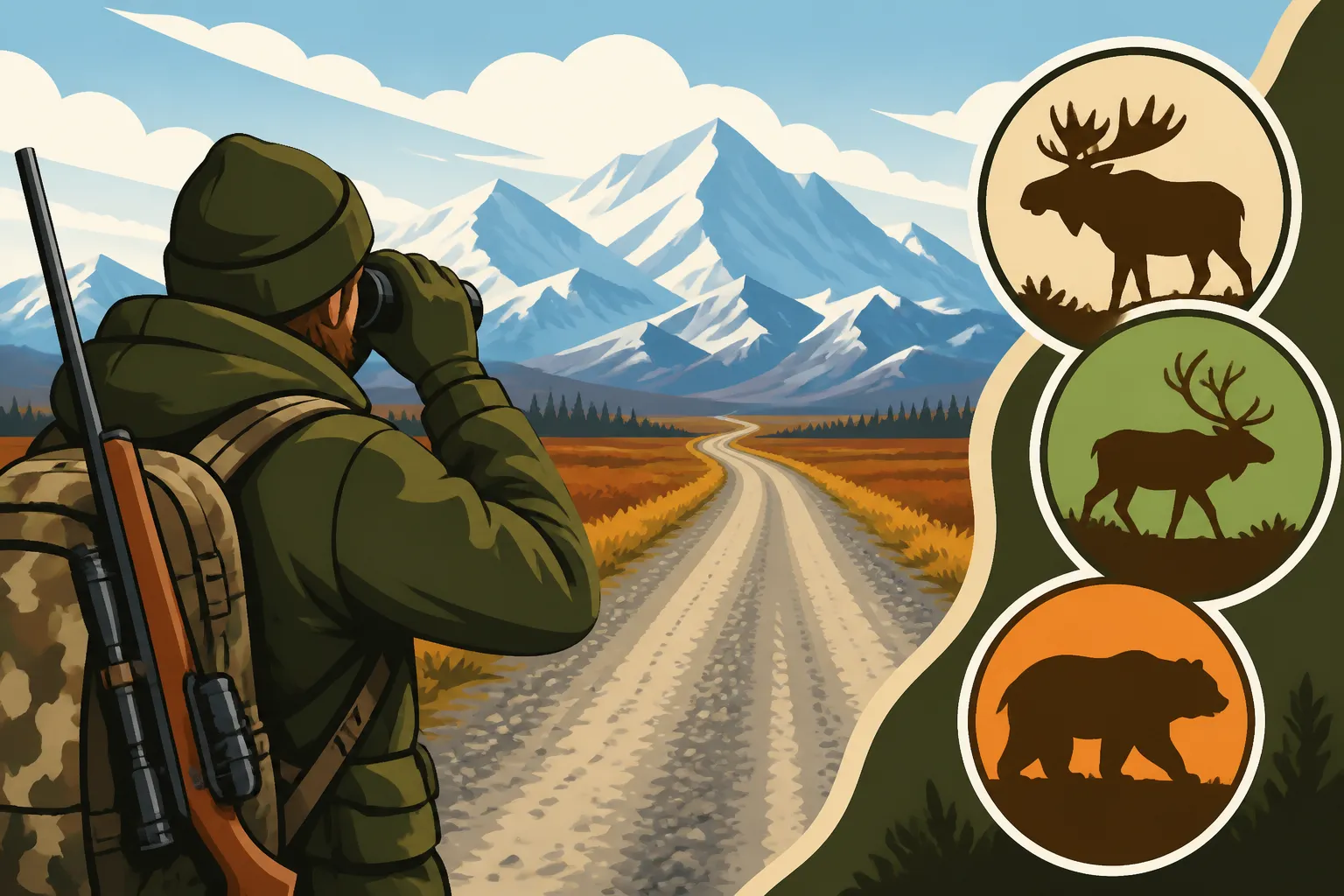
The James W. Dalton Highway, often simply called the Dalton Highway, is an almost 414-mile-long gravel road in Alaska that begins north of Fairbanks and ends at Deadhorse, near the Arctic Ocean and the Prudhoe Bay oil fields. It was originally built as a supply road for the Trans-Alaska Pipeline System and continues to serve as a vital lifeline for industrial operations and remote communities. For the intrepid traveler, it offers a glimpse into true Arctic solitude and breathtaking landscapes. For hunters, it offers unparalleled (though restricted) access to areas that would otherwise require expensive bush plane flights or weeks of arduous backpacking. The sheer distance and remoteness mean that any hunt planned here demands meticulous preparation, self-reliance, and a rock-solid understanding of its unique framework. Many hunters dream of pulling a bull caribou off the Dalton, and while it's possible, it's not a simple roadside affair.
Why the Corridor Exists: Protecting Infrastructure
The reason for the Dalton Highway's unique hunting rules stems directly from its purpose: to support the Trans-Alaska Pipeline. This massive piece of infrastructure, along with the road itself, requires a specific level of protection and management. Imagine a hunter pulling off the road, firing a rifle indiscriminately, and accidentally striking the pipeline, or worse, a worker. The potential for damage, environmental disaster, or human injury is immense.
Because of these very real concerns, the state established a "corridor" around the highway and pipeline. This corridor isn't just about hunting; it's about regulating all activities within a certain distance of this critical infrastructure. This means that rules regarding firearms, camping, and even where you can pull over are much stricter than in other, truly wide-open areas of Alaska. It's a delicate balance: providing access to hunters while safeguarding a national asset. Understanding this foundational "why" helps hunters appreciate the necessity of these seemingly restrictive rules, rather than just seeing them as inconvenient hurdles.
Understanding the Dalton Highway Corridor Boundaries
The most fundamental concept to grasp when hunting the Dalton Highway is the specific definition of its corridor. It's not just "near the road"; it has precise legal boundaries that determine permissible activities. Ignorance of these lines in the sand is the quickest way to end up with a citation.
The Five-Mile Buffer Zone Explained
The primary regulation defining the Dalton Highway Corridor for hunting purposes is the "five-mile corridor rule." This rule states that within five miles of the centerline of the Dalton Highway (three miles in some specific segments, particularly near Sagwon), hunting with a rifle or any firearm other than a shotgun using shot, or a bow and arrow, is prohibited. Essentially, much of the Dalton Highway within this buffer zone is either a shotgun-only or archery-only area. This rule applies uniformly across large stretches, creating a distinct hunting environment compared to the rest of Alaska.
This isn't a suggestion; it's a hard and fast legal boundary. A hunter might think they're "far enough" from the road, but if they're within that five-mile mark and discharge a rifle at big game, they've broken the law. This is where relying on good mapping tools becomes absolutely essential. Using an app like onX Hunt, where you can clearly see the five-mile buffer zone delineated, can be a lifesaver. You can layer public land maps and the corridor boundaries directly on your phone, making it easy to identify legal hunting areas before you even leave your vehicle. Without precise knowledge of this buffer, a hunter could inadvertently put themselves in a precarious legal position, even if they have good intentions.
North and South: Where the Rules Change
While the five-mile corridor is a general rule, it's crucial to understand that specific Game Management Units (GMUs) and sections of the Dalton Highway have additional or slightly modified rules. For example, Dalton Highway Corridor Firearm Restrictions delves into the finer points of where specific firearm types are permitted or banned.
- South of the Yukon River Crossing (GMU 20B): This section, closer to Fairbanks, tends to have more general hunting rules apply once you're outside the immediate road buffer, though pressure can be higher.
- North of the Yukon River (GMU 25 and 26): As you head further north into Units 25 and 26, you enter increasingly remote country. The five-mile corridor is still enforced, but once you get beyond it, the vastness of the landscape offers different hunting opportunities, primarily for caribou. Understanding Alaska Game Management Units and How They Are Numbered is vital here, as each unit can have different season dates, bag limits, and specific regulations that supersede the general corridor rules once you step outside the buffer. For instance, Unit 26B, which encompasses a significant portion of the northern Dalton, has specific caribou regulations and is a major destination for many hunters.
The varying regulations between GMUs mean that a solid understanding of your chosen unit, in conjunction with the corridor rules, is non-negotiable. Don't assume the rules from one section of the Dalton apply to another; always consult the current Alaska Hunting Regulations booklet for the specific GMU you plan to hunt.
Navigating Land Status Along the Corridor
Alaska's land ownership mosaic is complex, and the Dalton Highway Corridor is no exception. You'll encounter state lands, federal lands (often managed by the Bureau of Land Management or as part of national wildlife refuges/preserves), and sometimes Native Corporation lands. The legal access for hunting can differ greatly depending on who owns the ground beneath your boots. Land Status in Alaska: State, Federal and Native Corporation is an excellent resource for understanding this broader context.
For instance, much of the land immediately adjacent to the Dalton Highway is state land, but as you move away, you might quickly transition onto BLM land, or even into areas managed by the Arctic National Wildlife Refuge, which has its own set of federal regulations that run concurrently with or even take precedence over state rules. Hunting on Native Corporation land almost always requires a specific access permit, which can be difficult to obtain and often comes with a fee.
A good GPS with up-to-date land ownership overlays, like those provided by onX Hunt, is absolutely critical. Imagine you've spotted a herd of caribou just beyond the five-mile buffer, only to discover, too late, that they've crossed onto private Native land where you don't have permission. This scenario, unfortunately, plays out for unprepared hunters every season. Always know whose land you're on, and if in doubt, err on the side of caution or seek explicit permission.
| Corridor Rule | Restriction | Specifics | Affected Species |
|---|---|---|---|
| Five-Mile Firearm Buffer | No rifles/shotguns with slugs | Within 5 miles of Dalton centerline (some areas 3 miles) | Big Game (Moose, Caribou, Bear) |
| Shotgun-Only | Shotguns with shot allowed | Within 5 miles of Dalton centerline | Small Game, Waterfowl, possibly Bear (check regs) |
| Archery-Only | Bows and arrows allowed | Within 5 miles of Dalton centerline | Big Game (Moose, Caribou, Bear) |
| Land Status | Access varies | State, Federal (BLM, Refuge), Native Corp. | All |
| Camping | Restricted | Specific pullouts, designated sites, or off-corridor | N/A |
Firearm Restrictions and Safety Within the Corridor
Given the sensitivity of the Trans-Alaska Pipeline and the sheer number of people (even if it feels sparse) traveling and working along the Dalton, firearm restrictions are among the most important rules to follow. This isn't just about legality; it's about common sense safety in a remote, working environment.
Shotgun-Only and Archery-Only Sections
As touched on earlier, the five-mile corridor dictates where you can legally use various firearms for big game. For many big game species like caribou or moose, within that five-mile band, your only options are a shotgun loaded with shot (typically for birds or sometimes even bear with slugs, but check specific regulations for that) or archery equipment. Using a rifle for big game inside this zone is a serious violation.
This setup significantly changes the dynamics of a hunt. A hunter expecting long-range rifle shots across the tundra might be severely disappointed if they can't legally step beyond the buffer or if the game isn't cooperating within bow range. It forces hunters to adapt their methods, perhaps focusing on stalking skills for bowhunting or utilizing close-range shotgun tactics for black bears that might wander through. It's not uncommon to see vehicles parked with hunters carrying bows or shotguns, patiently waiting for an opportunity within the legal corridor. This specific regulation of Dalton Highway Bow-Only Corridor is something every hunter needs to internalize before they ever pack their gear.
Hunting Pressure and Ethical Considerations
Because the Dalton Highway offers some of the most accessible "remote" hunting in Alaska, it sees considerable pressure, especially during the caribou migration. This concentration of hunters, often confined to operating around the five-mile corridor, can lead to ethical challenges. Sky-lining animals, shooting too close to the road, or taking questionable shots due to perceived urgency can all become issues.
It's critical for hunters to maintain high ethical standards. This means knowing your effective range with your chosen weapon, passing on shots that aren't clean, and respecting other hunters. While the Dalton is remote, it's not a free-for-all. Pressure often drives game further from the road, making the hunting harder but also reinforcing the need to get off the beaten path – beyond that five-mile buffer – to find less pressured animals. Always remember that the rules are in place not just for safety, but to manage the resource and ensure a fair chase.
Transportation of Uncased Firearms
Beyond the act of hunting, how you transport firearms along the Dalton is also subject to rules, particularly within the five-mile corridor. While Alaska generally has liberal open-carry laws, when you're specifically within the corridor and not actively hunting legally permitted small game with a shotgun, it's best practice to keep firearms cased and unloaded. This shows respect for the corridor's intent and avoids any potential misunderstandings with law enforcement or pipeline personnel.
Think of it this way: you're traveling through a sensitive area. While you might be legally entitled to open carry in other parts of the state, the unique nature of the Dalton Highway means discretion is always wise. It's about demonstrating you understand and respect the regulations. For anyone flying into Alaska, remember that Firearms Transport Through Anchorage and other urban centers will have their own specific rules you must follow before you even get to the Dalton. Always check current airline and airport regulations for weapon transport.
Species and Seasons: What You Can Hunt (and Where)
While the Dalton Highway Corridor restricts how you can hunt, it still offers opportunities for various species, particularly once you venture beyond the immediate five-mile buffer zone. Understanding what animals you can expect to encounter, and when, is key to planning a successful hunt.
Caribou: The Primary Draw of the Dalton
Without a doubt, caribou are the main reason many hunters make the trek up the Dalton Highway. The highway cuts through the range of several major caribou herds, most notably the Central Arctic Herd and, further south, segments of the Fortymile Herd. During their migrations, these herds can sometimes come relatively close to the highway, offering opportunities for hunters who are prepared to hike beyond the five-mile rifle restriction. Caribou Herds of Alaska and How They Move provides excellent background on these magnificent animals.
However, hunting caribou here is far from a guarantee. Their migrations are notoriously unpredictable, heavily influenced by weather, forage, and even insect pressure. A hunter might plan their trip for a specific week, only to find the caribou are 50 miles away or have already passed through. Furthermore, caribou hunting regulations change frequently based on herd health and population numbers. For example, the Fortymile caribou herd quota for the season often means that hunters need to stay updated on emergency orders that can close a season early. This is where a resource like GoHunt can be invaluable for tracking season dates and draw odds. Always consult the Alaska Department of Fish and Game (ADF&G) website for the latest season dates, bag limits, and reporting requirements for the specific GMU you plan to hunt.
Moose and Bear Opportunities
While caribou often steal the spotlight, the Dalton Highway corridor also offers opportunities for moose and both black and brown bears, especially once you push further from the road. Moose generally prefer more vegetated areas, like willow thickets in drainages or old burns, which means you'll typically need to venture well off the highway to find them. However, they are present, particularly in the southern stretches of the corridor and in the river bottomlands that parallel the road.
Black bears are also common, found in various color phases, and opportunities exist to hunt them. Brown bears (grizzlies in the interior) are present throughout the region, but their densities are lower than coastal brown bears, and hunting them requires extreme caution and meticulous planning. Remember, non-residents require a guide for brown bear, Dall sheep, and mountain goat. If you're targeting bear, understanding their behavior around Bear Safety While Butchering a Kill in Alaska is paramount, especially when working a kill site in remote country.
Season dates for moose and bear can vary significantly by GMU and often require specific harvest tickets or locking tags. Always cross-reference the state regulations for the exact area and species you intend to hunt.
Small Game and Waterfowl Along the Route
For those seeking a less intense hunt or wanting to fill camp pots, the Dalton Highway corridor also offers chances for small game and waterfowl. Ptarmigan – willow, rock, and white-tailed – are common in the tundra and willow habitats, often providing excellent opportunities for shotgun hunters within the corridor. Spruce grouse and ruffed grouse can be found in timbered areas further south.
During migration periods, various waterfowl species also use the wetlands and rivers adjacent to the highway. These opportunities are generally less restrictive in terms of weapon choice within the five-mile buffer, as shotguns with shot are usually permitted. Waterfowl and Ptarmigan as Camp Meat is a great article to prepare for supplementing your camp provisions. Remember to adhere to federal migratory bird regulations, including purchasing a federal duck stamp, in addition to state hunting licenses and permits. These smaller game animals can provide a welcome diversion and fresh meat, and they offer a way to experience hunting in the corridor even if big game isn't cooperating.
Access and Logistics: Getting There and Staying Legal
The Dalton Highway isn't your typical paved road. It's a rough, gravel highway that demands a well-prepared vehicle and a self-reliant mindset. Logistical planning for access, camping, and emergencies is paramount for a safe and legal hunt.
Designated Access Points and Parking
Unlike many state and federal lands with established trailheads and parking lots, access along the Dalton Highway is often informal. However, that doesn't mean it's unregulated. There are designated pull-offs and informal parking areas, but many sections are sensitive or restricted due to pipeline access roads or private land. Randomly pulling off the highway and driving cross-country is often illegal and environmentally damaging.
Hunters must be vigilant about respecting "No Trespassing" signs, especially for Native Corporation lands or pipeline easements. Look for areas where other hunters are legitimately parked, but always verify land status yourself. This is another area where a robust mapping system like onX Hunt, with its land ownership overlays and ability to drop waypoints, becomes indispensable. It allows you to identify legal parking spots and potential walk-in access points that respect private property and sensitive areas. Remember, your vehicle must be parked in a manner that does not obstruct traffic or pipeline maintenance access.
Camping and Overnight Stays
Camping along the Dalton Highway has specific rules that often surprise unprepared hunters. Dispersed camping (setting up camp anywhere) is generally permitted on BLM land, but within the immediate pipeline corridor, it's often restricted to designated campgrounds or specific pull-offs to prevent damage to infrastructure and for safety reasons.
There are formal campgrounds, like the one at the Yukon River Crossing, which offer basic amenities. Beyond that, many hunters rely on informal pull-offs, but you must be aware of the "five-mile corridor" and any specific signage. Leaving a long-term camp unattended, especially for multiple days, can also lead to issues. Be prepared for harsh weather conditions, including strong winds and rapid temperature drops. Carry bear-resistant food containers and practice strict bear safety protocols, particularly given the prevalence of both black and brown bears in the area. Camping Limits on Alaska State Land can vary, so always check the specific rules for the land management agency whose land you are on.
Emergency Preparedness and Communication
The Dalton Highway is one of the most remote roads in North America. Cell service is virtually nonexistent outside of a few isolated spots, primarily at the Yukon River Crossing. This means you need alternative communication methods and a solid emergency plan. A satellite communication device, such as an InReach or a satellite phone, is not just recommended; it's essential. This allows you to check in with contacts, receive weather updates, and, most importantly, call for help in an emergency. Signal Devices and Check-In Plans for Solo Alaska Hunts highlights the absolute necessity of these tools.
Beyond communication, your vehicle must be mechanically sound and equipped for rough gravel roads. Carry multiple spare tires, extra fuel, tools, and emergency survival gear. Expect long waits for assistance if your vehicle breaks down. For hunters venturing beyond the road, a well-stocked first-aid kit, emergency shelter, and sufficient food and water are non-negotiable. Always inform someone of your itinerary and expected return time. The remoteness of the Dalton is part of its allure, but it demands respect and thorough preparation.
Planning Your Dalton Highway Hunt: Essential Tools and Mindset
A successful Dalton Highway hunt isn't just about knowing the rules; it's about preparation, adaptability, and the right mental approach. This is Alaska, after all, and it will test you.
Mapping Your Strategy with Digital Tools
Gone are the days when a paper map and compass were your only navigational aids (though you should still carry them as a backup!). Today, digital mapping tools are indispensable for a Dalton Highway hunt. As mentioned, onX Hunt allows you to view detailed topographic maps, satellite imagery, land ownership boundaries, and crucially, the five-mile Dalton Highway corridor restrictions. You can pre-download maps for offline use, mark waypoints for potential access points or game sightings, and track your movements.
Another excellent resource is GoHunt, which can help with researching hunt units, past success rates, and drawing permits if you're looking at draw-only hunts adjacent to the corridor. While the Dalton is largely general season for caribou, understanding surrounding draw opportunities can be part of a broader strategy. These tools help you visualize the terrain, plan your hikes, and ensure you're always aware of where you are in relation to the legal hunting zones and land ownership boundaries. Taking the time to study these maps thoroughly before your trip, marking areas of interest and potential challenges, will dramatically increase your chances of a successful and legal hunt. Downloading Offline Maps Before a Fly-In is a useful skill that applies equally to road-based hunts in areas without cell service.
Physical Fitness and Self-Reliance
A Dalton Highway hunt, even if road-accessible, is still a demanding endeavor. Expect to do a fair amount of walking, potentially over uneven tundra, through willow thickets, and across river drainages, often while carrying heavy gear. If you are successful, you'll be quartering an animal and packing out hundreds of pounds of meat, likely over difficult terrain and possibly in challenging weather. Backpack Hunting in Alaska: Gear Weight and Meat Loads offers great advice on preparing for heavy loads.
The self-reliant mindset is equally important. You are far from amenities, medical help, or quick assistance. You need to be prepared to fix minor vehicle issues, treat your own injuries, navigate in bad weather, and make sound decisions under pressure. This isn't a guided hunt where someone else handles all the logistics. This is a true test of your outdoor skills and preparedness. Don't underestimate the physical and mental toll of hunting in such a remote environment.
Respecting the Land and Its Keepers
Hunting on the Dalton Highway means respecting not only the wildlife and the rules but also the environment itself and the people who live and work there. This includes adhering to Leave No Trace principles – pack out everything you pack in, and leave no trash behind. The delicate Arctic ecosystem takes a long time to recover from human impacts.
Furthermore, remember that the Dalton is a working highway. You'll share the road with large trucks (often called "haulers") that have the right-of-way and can throw significant debris. Pull over completely when they approach. Respect the employees and contractors working along the pipeline. And if you encounter local residents, particularly those engaged in subsistence activities, show them courtesy and respect their traditions. This isn't just an ethical guideline; it's about being a responsible visitor in someone else's backyard.
Common Misconceptions and Legal Pitfalls
Despite the clear regulations, the Dalton Highway generates a surprising number of misconceptions among hunters. Dispelling these myths is crucial for avoiding legal trouble and ensuring an enjoyable trip.
The "Anyone Can Hunt Anywhere" Myth
Perhaps the most dangerous misconception is that because the Dalton Highway is so remote and wild, "anyone can hunt anywhere" once they get off the pavement. This is fundamentally untrue. As we've detailed, the five-mile corridor significantly restricts rifle hunting, and land ownership changes frequently, meaning you can't just wander onto Native Corporation or private land without permission.
This myth can lead to serious citations for hunting in a prohibited area, trespassing, or using an illegal weapon. The remoteness doesn't equate to a lack of rules; it simply means the rules might be enforced differently, but they are still enforced. Game wardens regularly patrol the Dalton, and they know the area intimately. Do not gamble on not getting caught; instead, invest in the knowledge and tools (like mapping your strategy with digital tools) that ensure you are always hunting legally.
Reporting Requirements and Mandatory Sealing
Alaska has strict reporting requirements for harvested game, and missing a deadline can result in fines or impact your ability to hunt in the future. For many species harvested along the Dalton, especially caribou, a harvest ticket is required, and reporting success or failure by a specific deadline is mandatory. Alaska Harvest Ticket Reporting Deadlines are published annually.
For certain species, like brown bear and wolf, mandatory sealing of the hide and skull by ADF&G personnel is required within a specific timeframe after the kill. This usually means transporting your trophy to an ADF&G office in a larger community like Fairbanks. Failing to seal a trophy is a serious offense. Alaska Sealing Requirements for Bear and Wolf Hides outlines these processes. Do not assume that because you are in the middle of nowhere, these obligations don't apply; they absolutely do, and planning for them is part of a responsible hunt.
Understanding Federal Versus State Regulations
The Dalton Highway passes through areas where both state and federal hunting regulations apply. Federal lands, such as National Wildlife Refuges or National Preserves, often have specific federal regulations that operate alongside, or sometimes even override, state laws. For instance, some federal areas may have different season dates, access rules (like motorized vehicle restrictions), or even permit requirements.
While hunting largely falls under state jurisdiction, understanding Federal Subsistence Hunting on Alaska Public Lands and other federal land management rules is vital, especially if you plan to venture far off the highway onto federal lands. Always consult both the Alaska Hunting Regulations and the specific regulations for the federal land management agency (e.g., BLM, US Fish & Wildlife Service) for the area you intend to hunt. This layered regulatory environment is a hallmark of Alaska hunting, and the Dalton Highway is a prime example of where it comes into play.
Disclaimer
This article is for general informational purposes only and does not constitute professional advice. Laws, prices and regulations vary by location and change over time. Consult a qualified professional for guidance on your specific situation.