What Each Alaska Unit Number Means on a Map
You've finally got that Alaska map spread out on your kitchen table, dreaming of your next big adventure, when BAM! You're hit with a barrage of numbers: Unit 13, Unit 20A, Unit 8. What do they all mean? This can be incredibly daunting, transforming your excitement into a frustrating puzzle. Understanding Alaska's Game Management Unit (GMU) system is absolutely fundamental to successful and legal hunting in the Last Frontier, and this guide will demystify those numbers, helping you unlock the secrets of Alaska's diverse hunting landscapes.
The Foundation: Why Alaska Needs Game Management Units
Alaska is enormous, truly vast, and unlike anywhere else. It’s a place where you can find temperate rainforests, barren arctic tundra, towering mountain ranges, and sprawling river deltas, all within its borders. Managing game across such an immense and varied landscape is a monumental task, and that's precisely why the Game Management Unit system was created. It's not just a bureaucratic numbering scheme; it’s a vital tool for ensuring sustainable hunting opportunities for everyone, from local subsistence users to out-of-state trophy hunters.
The Sheer Scale of Alaska's Wilds
Imagine trying to manage moose populations in a state larger than Texas, California, and Montana combined, with ecosystems ranging from the temperate rainforests of Southeast to the polar deserts of the North Slope. It’s simply not feasible to apply one-size-fits-all regulations. The scale demands a granular approach, breaking down the state into manageable chunks where biologists can study localized animal populations, habitat conditions, and hunting pressure. Without these divisions, setting appropriate bag limits, seasons, and permit requirements would be impossible. Each unit, therefore, becomes its own little world, with its own unique challenges and opportunities for wildlife management.
Tailored Management for Diverse Ecosystems
Alaska’s GMUs allow for highly specific wildlife management. For example, a moose population in the coastal areas of Southcentral Alaska might face different environmental pressures and have different genetics than a herd living deep in the Interior. Similarly, the challenges of managing brown bears on the salmon-rich Alaska Peninsula are vastly different from those facing grizzly bears in the remote Brooks Range. This system allows the Alaska Department of Fish and Game to set specific regulations for each unit, or even subunits, that are tailored to the local wildlife and ecological conditions. This means one unit might have an antler restriction on moose, while a neighboring unit might allow "any bull" harvest, all because the health and structure of the local populations dictate it. This localized approach is critical to maintaining healthy game populations and quality hunting experiences, which is precisely what Alaska Game Management Units and How They Are Numbered aims to explain in detail.
Cracking the Code: The Logic Behind the Numbers
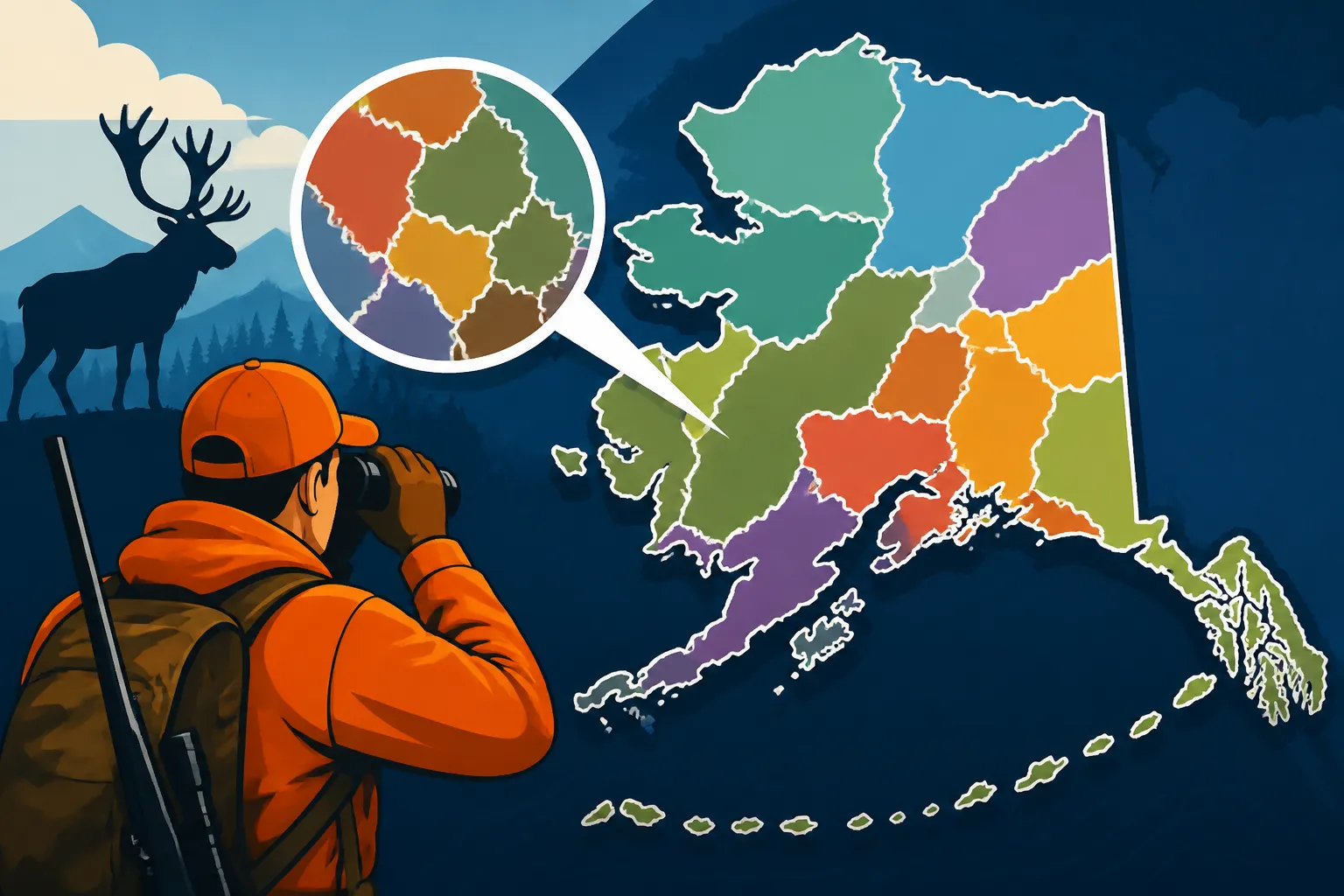
At first glance, the GMU numbers might seem completely random, but there’s a general logic to how they're laid out across the state. They typically start in the Southeast and roughly progress westward and northward. Think of it as a loose, counter-clockwise spiral or sweep across the map, usually following major geographical boundaries rather than arbitrary lines on a grid. This system helps to group areas with similar ecological characteristics and management challenges, making it easier for both hunters and managers to understand their specific context.
Geographic Progression: North, South, East, West
The numbering system usually begins with Unit 1 in Southeast Alaska, moving up the Panhandle and then sweeping across the Gulf of Alaska coast. As you head north into Interior Alaska, you'll encounter units like 20 and 21, and further north into the Arctic, you’ll find units in the high 20s. While it's not a perfectly linear progression like counting left to right on a page, there's a definite pattern that aligns with Alaska's geography. This general understanding can be a huge aid when you're first looking at a map and trying to orient yourself. For example, if you see a unit number in the low single digits, you're almost certainly looking at Southeast Alaska. If you see something in the high teens or twenties, you're likely in the Interior or Arctic. This spatial awareness becomes instinctive with a little practice and familiarity with the map.
Major Geographic Features as Boundaries
One of the most helpful aspects of the GMU system is that unit boundaries frequently follow natural, easily identifiable geographic features. Instead of arbitrary straight lines that bisect mountain ranges or rivers, you'll often find units defined by the centerline of a major river, the crest of a mountain range, or a long stretch of coastline. This makes it far easier to identify where you are in the field and helps prevent accidental border crossings that could lead to a regulation violation. Imagine standing on a ridge line; if the crest of that ridge is the unit boundary, it’s much clearer than trying to guess where an invisible line falls. Large rivers like the Yukon, Kuskokwim, or Susitna often form significant boundaries, as do mountain ranges such as the Chugach or Alaska Range. Understanding this principle can save you a lot of headache when interpreting maps, especially when trying to differentiate between State Land Versus Federal Land in Alaska, where access rules can shift dramatically.
Unit Spotlights: A Glimpse into Key Regions
To really understand what each Alaska unit number means, it helps to dive into a few specific examples. Each unit has its own character, its own dominant landscapes, and often its own reputation for specific game. Knowing these general characteristics can help you narrow down your hunting goals and focus your research on areas that align with your aspirations, whether you're chasing massive moose antlers or full-curl sheep.
Interior Hotbeds: Units 13 and 20A for Moose and Caribou
When people think of Interior Alaska hunting, Units 13 and 20A often come to mind. Unit 13, located in Southcentral Alaska, is famous for its vast caribou herds, particularly the Nelchina herd, and its healthy moose populations. It’s also quite accessible in many areas, with roads like the Denali and Glenn Highways running through or near parts of it, making it a popular destination for road-system hunters. However, its popularity also means specific regulations, like antler restrictions for moose, are often in place to manage harvest pressure. This unit offers a mix of tundra, willow flats, and scattered timber, providing excellent habitat for both species. Understanding the specific subunit you're in, such as 13A or 13B, is critical, as seasons and bag limits can change dramatically from one to the next.
Unit 20A, located in the heart of Interior Alaska near Fairbanks, is another legendary GMU, particularly for moose. It's often talked about as a prime area for Alaska Moose: Where the Biggest Bulls Live, known for producing some truly enormous bulls thanks to its rich habitat. The unit is characterized by vast tracts of boreal forest, river bottoms, and extensive burn scars that create prime browse for moose. Access here can range from road-system opportunities to remote fly-in or river-boat accessible areas. Like Unit 13, it sees significant hunting pressure, and strict antler restrictions are a common feature of its regulations. Both 13 and 20A exemplify units where understanding the nuances of the numbers and subunits is paramount to a successful hunt.
Coastal Giants: Units 8 and 9 for Brown Bear and Deer
Moving to the coast, Units 8 and 9 offer a stark contrast in landscape and species focus. Unit 8 encompasses the Kodiak Archipelago, a place synonymous with massive brown bears and abundant Sitka blacktail deer. The rugged, emerald-green mountains, dense alder thickets, and numerous salmon streams define this unit. Hunting here is often boat-based, navigating the intricate coastline, or involves extensive backpack trips into the island's interior. The sheer size of the bears and the challenging terrain make this a bucket-list destination for many. The regulations here for brown bears are extremely strict, often requiring a guided hunt for nonresidents.
Unit 9 covers a significant portion of the Alaska Peninsula, stretching from Iliamna Lake down towards the Aleutian Chain. This unit is arguably the undisputed heavyweight champion of Alaska Brown Bears on the Coast Versus Interior Grizzlies, known for producing some of the largest bears in the world. The landscape here is characterized by vast, open tundra, braided rivers, and dramatic volcanoes, all heavily influenced by salmon runs that draw bears from miles around. Access is almost exclusively by air taxi, often involving beach landings or remote gravel strips. Deer are also present in the northern sections, but the draw here is undeniably the formidable brown bear. These coastal units highlight how the GMU system allows for highly specialized management of iconic species in unique, rugged environments.
Arctic Wilds: Units 23 and 26 for Caribou and Sheep
Heading north, Units 23 and 26 represent the vast, remote, and often treeless landscapes of Arctic Alaska. Unit 23, in Northwest Alaska, is home to the immense Western Arctic Caribou Herd, which can number in the hundreds of thousands. Hunting here is primarily for caribou, often following the migratory routes of these nomadic animals. This is true wilderness, with minimal infrastructure and harsh weather conditions. Access is typically by small aircraft, flying into remote strips or lake landings, or by riverboat. The challenges of hunting here are considerable, but the reward of experiencing one of the world's largest caribou migrations is unparalleled.
Unit 26 covers the vast North Slope, stretching from the Brooks Range north to the Arctic Ocean. This is a land of endless tundra, braided rivers, and the iconic Brooks Range mountains, which hold populations of Dall Sheep in Alaska's Brooks and Alaska Ranges. Hunting here is extremely remote and physically demanding, primarily targeting caribou and Dall sheep. Weather conditions are notoriously severe, and proper preparation for extreme cold, wind, and isolation is paramount. Access is almost always via air taxi to remote strips. The regulations in these northern units often reflect the unique subsistence needs of local communities, highlighting the complex interplay of state and federal management on public lands.
Beyond the Number: Understanding Subunits and Special Areas
Just when you think you've got the main unit numbers down, Alaska throws in another layer of complexity: subunits and special management areas. These distinctions are absolutely crucial because they often contain the most specific and restrictive regulations. Ignoring them is not an option, as it could easily lead to a violation of hunting laws. It's not enough to know you're in Unit 13; you need to know if you're in 13A, 13B, or 13C, and what special rules apply to that particular piece of ground.
The Importance of Subunit Specifics
Almost all of Alaska’s major Game Management Units are further divided into subunits, usually designated by letters (e.g., 20A, 20B, 20C, and so on). These subunits are established to allow for even finer-tuned management. Imagine a large GMU that spans a major river system and a mountain range. The game populations and hunting pressure in the river bottoms might be very different from those high in the alpine. By creating subunits, managers can implement specific seasons, bag limits, or weapon restrictions that reflect these localized conditions. For instance, Unit 20A might have a late-season general hunt for moose, while an adjacent subunit, say 20B, might be a drawing permit only area. Always, always check the subunit you intend to hunt. Your harvest ticket or draw permit will explicitly state the subunit it is valid for, and failure to pay attention to this detail is a common mistake that can have serious consequences. This level of detail is critical for understanding Alaska Harvest Tickets, Registration Permits and Draw Permits.
Controlled Use Areas: What they Restrict and Why they Matter
In addition to subunits, Alaska also has numerous "Controlled Use Areas" (CUAs) scattered throughout the state. These areas are established to regulate specific methods of access or hunting to achieve particular management goals. The most common restriction in a CUA is a ban on aircraft for hunting purposes, often referred to as "same-day airborne" restrictions or a complete ban on aircraft use during hunting season. This might be implemented to reduce pressure on certain game populations, provide a more equitable hunting opportunity, or maintain a wilderness experience. For example, some CUAs might allow aircraft for transport to a designated landing strip, but you cannot hunt the same day you've been airborne within that area. Others might restrict all motorized vehicles, requiring hunters to rely on foot, horse, or boat. These areas are clearly marked on maps and are always detailed in the Alaska hunting regulations. Before you even pack your bags, it’s imperative to identify if your chosen hunting unit falls within a CUA and understand exactly what those restrictions entail.
Your Map, Your Hunt: How to Use Unit Information Effectively
Knowing what the unit numbers mean is only the first step. The real art lies in using this information to plan and execute a safe, legal, and successful hunt. This involves careful cross-referencing, utilizing modern tools, and constantly verifying details. Don't underestimate the homework required; Alaska hunting is not for the unprepared. The regulations are complex, and the consequences of misinterpretation can be severe.
Cross-Referencing Regulations with Unit Maps
This is the cornerstone of responsible Alaska hunting. You cannot simply look at a map, pick a unit, and go. Every single hunt in Alaska requires you to obtain the most current hunting regulations booklet, either online or in print, and cross-reference your chosen GMU and subunit with the species-specific rules. The regulations will detail the opening and closing dates, bag limits, legal animal definitions (e.g., spike-fork moose, full-curl ram), weapon restrictions, and any permit requirements for that specific unit. For instance, a brown bear hunt might require a specific drawing permit in Unit 9E, but a registration permit in another part of Unit 9. This is where How Alaska Sets Its Hunting Seasons becomes incredibly relevant, as these rules are specific to each area and population goal. A discrepancy between what you think the rules are and what they actually are can quickly turn a dream hunt into a nightmare. Always verify, then verify again.
Digital Tools for Seamless Navigation
In today's world, digital mapping tools have become indispensable for Alaska hunters. Applications like onX Hunt and GoHunt allow you to overlay GMU and subunit boundaries directly onto detailed topographic maps, satellite imagery, and even land ownership maps. This functionality is a game-changer. You can literally see the boundaries as you scout from home or navigate in the field, helping you avoid accidental trespass or regulation violations. These apps often allow you to download maps for offline use, which is critical in remote Alaska where cell service is non-existent. Downloading Offline Maps Before a Fly-In is not just a suggestion; it's an absolute necessity for safe navigation. Using these tools to mark potential hunting spots, escape routes, and even emergency landing zones can be the difference between a successful, safe hunt and a truly dangerous situation. Many of these platforms also provide valuable data layers showing public versus private lands, which is crucial for determining legal access points within any given unit.
The Ever-Changing Landscape: Why Staying Current is Key
Alaska's hunting regulations are dynamic, adapting to wildlife population changes, habitat conditions, and hunter demand. What was legal last year might not be this year, and what's open today could close tomorrow due to unexpected circumstances. This constant state of flux means that staying current with the very latest information is not merely good practice—it's essential for legal and ethical hunting. Never assume. Always check.
Emergency Orders and Quota Hunts: Unexpected Changes
One of the most critical aspects of staying current involves tracking Emergency Orders (EOs) and understanding how quota hunts operate. Emergency Orders are issued by the Alaska Department of Fish and Game (ADF&G) to change hunting seasons or bag limits on short notice. This can happen for a variety of reasons: a severe winter impacting a game population, unexpected harvest numbers, or a major wildfire altering habitat. An EO can open a season, extend one, or, more commonly, close a season early, sometimes with only a few days' notice. This is particularly true for registration hunts that close when a specific harvest quota is met. Imagine flying into a remote unit for caribou, only to discover the season closed a day before you landed. This happens. Hunters must actively monitor the ADF&G website or local offices for these announcements. It's a key part of understanding Alaska Emergency Orders That Close a Season Early.
Annual Regulatory Cycles: The Importance of New Regulations
Beyond emergency changes, Alaska's hunting regulations undergo an annual review and revision process by the Alaska Board of Game. New regulations are typically released in the spring, well in advance of the fall hunting seasons. These new regulations might involve subtle changes to season dates, alterations to legal animal definitions, or new permit requirements for specific GMUs or subunits. Relying on an outdated regulation booklet, even by a single year, can lead to serious legal trouble. Always download or pick up the latest copy. This annual cycle also includes important deadlines for drawing permit applications and registration permits, which are often unit-specific. Keeping track of these dates, especially for popular draws in units like 13 or 20A, is vital if you hope to secure a tag for your desired area. Always consult the official ADF&G source for the most accurate and up-to-date information for your chosen Where to Find Unit Maps for Alaska and their corresponding rules.
Understanding Alaska Game Management Units
| Unit Numbers | General Geographic Region | Primary Habitat Types | Common Big Game Species | Common Access Methods |
|---|---|---|---|---|
| 1-5 | Southeast Alaska (Panhandle) | Temperate Rainforest, Coastal Mountains | Sitka Blacktail Deer, Black Bear, Brown Bear | Boat, Float Plane, Road System (limited) |
| 6-7 | Prince William Sound / Kenai Peninsula | Coastal Mountains, Glaciers, Forest | Moose, Mountain Goat, Black Bear, Brown Bear | Boat, Road System, Hike, Float Plane |
| 8 | Kodiak Archipelago | Rugged Islands, Dense Alder, Coastal | Kodiak Brown Bear, Sitka Blacktail Deer | Boat, Float Plane, Backpack |
| 9-10 | Alaska Peninsula / Aleutian Islands | Open Tundra, Braided Rivers, Volcanic | Alaska Brown Bear, Caribou (limited), Moose | Air Taxi (wheel/float), Boat |
| 11-13 | Wrangell-St. Elias / Nelchina Basin | Mountains, Tundra, Boreal Forest | Moose, Caribou, Dall Sheep, Black Bear | Road System, ATV, Air Taxi, Hike |
| 14-16 | Cook Inlet / Susitna Valley | Boreal Forest, River Bottoms, Mountains | Moose, Black Bear, Brown Bear, Caribou (limited) | Road System, ATV, Boat, Air Taxi |
| 17-19 | Bristol Bay / Kuskokwim River | Wetlands, Tundra, Boreal Forest | Moose, Caribou, Black Bear, Brown Bear | River Boat, Air Taxi |
| 20-21 | Interior Alaska (Fairbanks, Yukon Flats) | Boreal Forest, Burn Scars, River Systems | Moose, Caribou, Black Bear, Grizzly Bear | Road System, ATV, River Boat, Air Taxi |
| 22-24 | Seward Peninsula / Western Alaska | Tundra, Treeless Plains, Rivers | Caribou, Moose, Muskox, Grizzly Bear | Air Taxi, ATV, River Boat |
| 25-26 | Eastern Interior / Arctic Slope | Tundra, Brooks Range Mountains, Rivers | Caribou, Dall Sheep, Grizzly Bear, Muskox | Air Taxi, Backpack, River Boat (limited) |
Disclaimer
This article is for general informational purposes only and does not constitute professional advice. Laws, prices and regulations vary by location and change over time. Consult a qualified professional for guidance on your specific situation.