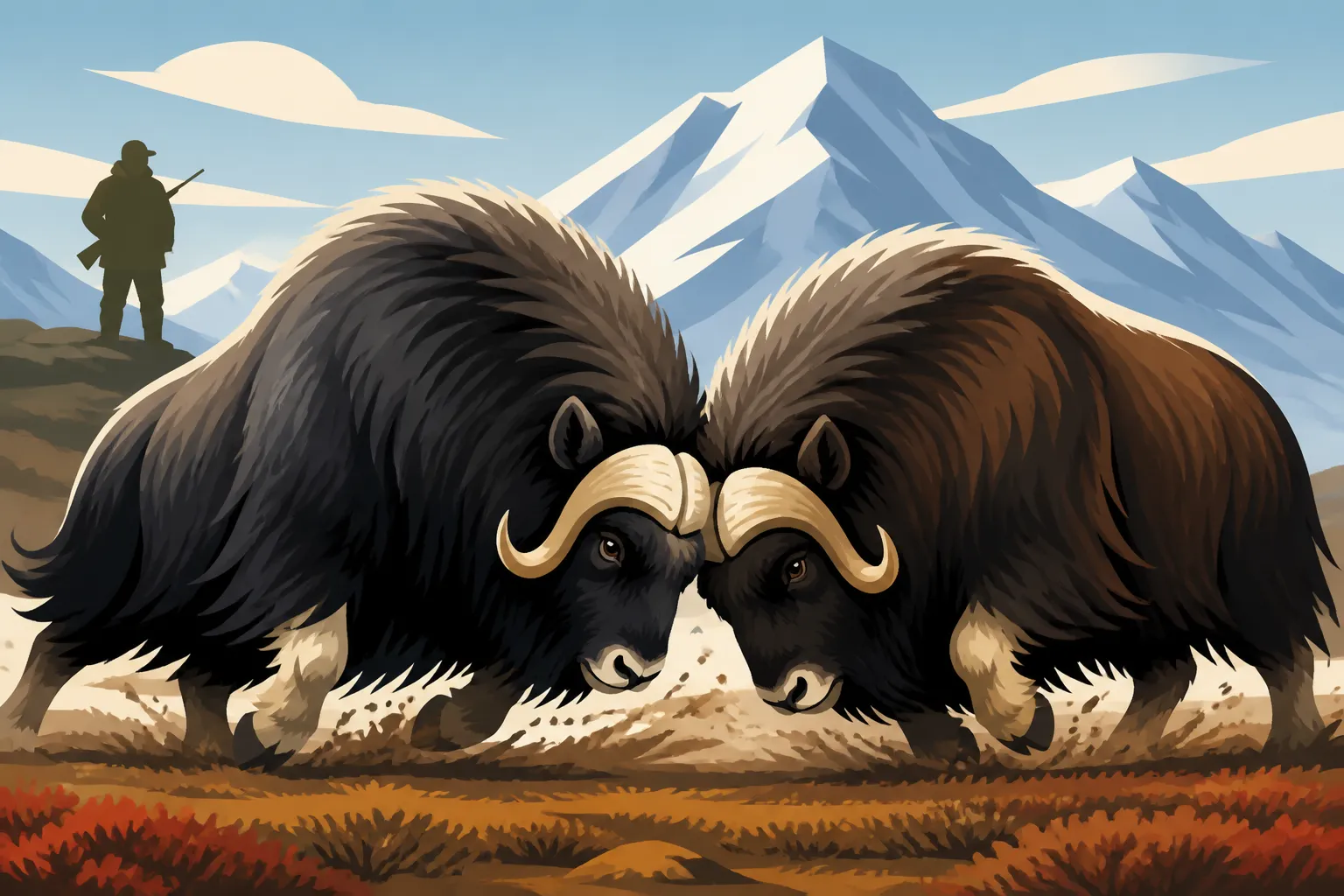
How Muskox Bulls Fight in the Rut
When you think about the Alaska rut, your mind might immediately jump to the thunderous calls of a bull moose or the silent, intense stalk of a ram. But in the vast, windswept Arctic, another incredible spectacle unfolds: the fierce, bone-jarring clashes of muskox bulls. These ancient animals engage in head-on collisions that are nothing short of brutal, all in the primal quest for dominance and breeding rights. This guide will take you deep into the heart of the muskox rut, explaining exactly why and how these massive bulls fight, and what makes their battles so uniquely powerful.
The Seasonal Drive: Why Muskox Bulls Fight
The muskox rut is a time of intense competition, driven by the biological imperative to pass on genes. Unlike some other big game species, the muskox bull's entire strategy revolves around direct, physical confrontation to establish his place in the breeding hierarchy. It's a high-stakes game where only the strongest and most resilient will succeed.
The Urge to Breed and Dominance Hierarchy
Muskox herds, particularly during the rut, operate on a clear hierarchy among the males. Only the most dominant bulls will gain access to the cows. This isn't a popularity contest; it's decided by raw power. As the rut approaches, typically in late summer and early fall, the testosterone levels surge in mature bulls. This hormonal surge fuels an undeniable urge to assert their dominance. They're not just fighting for the thrill of it; they're fighting for the future of the herd, in a sense, ensuring that the strongest genetics continue. For a hunter looking to understand these animals, recognizing the signs of this dominance struggle is key. Resources like GoHunt can sometimes offer insights into rut timing and activity patterns, which can be invaluable when trying to predict these behaviors.
The establishment of this dominance hierarchy is crucial for maintaining order within the herd during the breeding season. Without it, you'd have constant, chaotic fighting. Instead, through these battles, a pecking order is established, and the subordinate bulls generally respect it, though they might still challenge the dominant bull if they sense a weakness. This ritualized combat minimizes prolonged injuries across the population, allowing for a more efficient breeding cycle. It's a natural selection process playing out right before your eyes, dictating which individuals contribute to the next generation of calves that face the harsh Arctic winters.
Pre-Fight Displays and Vocalizations
Before the thunderous crack of horn on horn, muskox bulls engage in a series of dramatic displays designed to intimidate and assess their rivals. These preliminary rituals are often just as captivating as the full-blown fight itself. It usually starts with a visual standoff. Two bulls might eye each other from a distance, heads often lowered, presenting their massive boss — the thick, bony plate on top of their skull from which their horns emerge. They may paw the ground, kicking up dust or tundra, a clear sign of agitation and challenge.
As the tension escalates, vocalizations become more prominent. Muskox bulls emit deep, guttural grunts and roars, a primal sound that echoes across the barren landscape. These vocalizations serve multiple purposes: to warn off competitors, to signal their presence to cows, and to pump themselves up for the impending conflict. They'll also perform a distinctive head-swinging motion, where they violently swing their heads from side to side, further showcasing their impressive horns and neck musculature. Sometimes, these displays alone are enough to deter a less confident bull, leading to one contender backing down. But often, they are merely the prelude to an even more intense physical confrontation. Understanding these cues is paramount, whether you're observing wildlife or Hunting Alaska's Brooks Range and Arctic Hunting Areas yourself.
The Brutal Dance: Stages of a Muskox Battle
When the preliminary displays aren't enough, muskox bulls commit to a full-contact battle that ranks among the most impactful in the animal kingdom. These aren't drawn-out wrestling matches; they are concussive displays of raw power. The sheer force involved is staggering, a testament to their incredible adaptations for survival in one of the planet's harshest environments.
The Head-On Charge and Impact
The signature move of a muskox bullfight is the head-on charge. The bulls will back up from each other, sometimes by a considerable distance—up to 50 yards or even more. They then lower their heads, almost to the ground, and sprint towards each other with surprising speed, accelerating over the rough tundra. Their powerful legs drive their massive bodies forward, building immense momentum. The goal is a direct, skull-to-skull impact.
The sound of two muskox bosses colliding is unforgettable – a deafening crack that can be heard for miles. It's not just a loud sound; it's the audible release of incredible kinetic energy. Imagine two boulders slamming together. The impact is absorbed primarily by the massive boss and the thick, spongy bone structure underneath, which acts like a natural shock absorber. Their thick hides and dense neck muscles also help distribute the force. While it looks devastating, these animals are built for it, a true marvel of evolution. This is very different from the fighting style of, say, How Muskox Bulls Fight in the Rut, which involves much less head-to-head collision.
The Aftermath and Continued Contention
Immediately after the initial collision, the bulls will often recoil from each other, momentarily stunned by the force. They might stand still for a few seconds, shaking their heads, before either resuming their aggressive postures or, in some cases, one bull deciding he's had enough. If neither backs down, they will typically repeat the charge. A full battle can consist of multiple rounds of these head-butts, interspersed with more posturing, grunting, and circling.
The goal isn't necessarily to inflict fatal injury, but to prove stamina and sheer striking power. A bull that can absorb multiple impacts and keep coming back, charging with undiminished ferocity, is demonstrating his superior strength. Sometimes, a bull might be driven off by the repeated trauma, staggering away to concede defeat. Other times, the fight might end simply because one bull tires, or perhaps takes a blow that throws him off balance, allowing the other to claim a temporary victory. These encounters rarely end in serious injury, but they are incredibly draining. A guide service specializing in Muskox in Alaska: Nunivak, Nelson and the North Slope can often speak to the frequency and intensity of these battles based on their field experience.
Physical Adaptations for Survival: Built for Battle
The muskox isn't just a tough animal; it's a living tank, specifically engineered by nature for its Arctic environment and its unique form of combat. Every aspect of its physiology, from its skull to its musculature, plays a role in its ability to withstand and deliver devastating impacts during the rut.
The Oomingmak's Helmet
The most striking adaptation for muskox fighting is undoubtedly the skull and horn structure. The common Inuit name for muskox, "Oomingmak," means "the bearded one," but perhaps a more fitting name could be "the helmeted one." Their horns are truly magnificent, forming a massive, thick boss that covers the entire crown of the head. This boss is composed of solid bone, sometimes several inches thick, acting as a natural, impenetrable helmet. The horns then curve downwards, sweeping out and forward, forming sharp points that can be used for defense but are primarily designed to absorb and deflect blows during head-on charges.
Beneath this bony helmet, the muskox skull itself is incredibly robust. Studies have shown that the bone structure in the forehead is exceptionally dense and specialized to dissipate the shockwaves generated by high-speed impacts. This unique architecture protects the brain from concussive forces that would shatter the skull of almost any other animal. It allows them to literally ram their way to dominance without suffering debilitating brain injuries. This intricate design is a fascinating example of evolutionary specialization, making their battles possible. When handling a skull from an animal harvested in a Alaska Muskox Season Structure hunt, you can really appreciate the density.
Muscle and Momentum
Beyond the impressive headgear, the muskox possesses a body built for generating and withstanding immense force. They are stocky, powerfully built animals with thick necks and shoulders packed with dense muscle. This musculature provides the power for their charges and the resilience to absorb the recoil from impact. Their short, stout legs provide a stable base and powerful propulsion, allowing them to accelerate quickly over uneven terrain.
The sheer body weight of a mature bull muskox, which can often exceed 600-800 pounds, combined with their charging speed, translates into incredible momentum. This is the physics behind their devastating head-butts. The mass provides the inertia, and the muscles provide the acceleration. This isn't just about protection; it's about the ability to deliver a blow that is so overwhelming that it forces a rival to retreat. The dense fur, known as qiviut, while primarily for insulation against the cold, also adds another layer of cushioning, further contributing to their "tank-like" defense system. Understanding their physical prowess is crucial to appreciating the dynamics of their rut.
Observing the Rut: Safety and Ethics for Hunters
Witnessing muskox bulls fight in the rut is an incredible experience, showcasing the raw power and ancient instincts of the Arctic. For those fortunate enough to observe, whether as wildlife enthusiasts or hunters, safety and ethical considerations are paramount.
Respecting Their Space
When observing muskox, especially during the rut, maintaining a respectful and safe distance is absolutely critical. Rutting bulls are highly agitated and can be unpredictable. While their primary focus is on each other, a startled or threatened bull can be extremely dangerous. These animals are accustomed to using their formidable mass and horns for defense against predators, and they won't hesitate if they feel encroached upon. Remember, even though they look slow and ponderous, they can move with surprising speed and agility when provoked.
It’s always best to use binoculars or a spotting scope for observation, allowing you to stay well out of their comfort zone. If you notice signs of agitation—head swinging, grunting, pawing the ground, or direct stares—you are too close and should slowly and calmly increase your distance. Never get between two rutting bulls, and always have an escape route in mind. Respecting their space isn't just about your safety; it's about allowing these magnificent animals to carry out their natural behaviors undisturbed. For planning such an endeavor, mapping tools and data from sources like GoHunt can sometimes help identify remote locations where these animals might be observed without causing disturbance.
Understanding Behavior for Hunting Strategy
For hunters pursuing muskox, observing and understanding bull behavior during the rut can offer significant strategic advantages. Knowledge of their fighting rituals and dominance displays can help in locating mature, dominant bulls, which are often the most sought-after for their impressive bosses. The active rut can make bulls less cautious as their focus is intensely on mating and competition, potentially presenting unique opportunities. However, this also means they can be more aggressive and unpredictable.
A hunter who understands the nuances of the muskox rut—such as Muskox Herd Structure and Rutting Bulls and how these battles determine access to cows—is better equipped to make ethical and effective decisions in the field. This understanding includes knowing when to approach, when to hang back, and how to interpret their body language to ensure a safe and successful hunt. It’s not just about finding an animal; it’s about understanding its world and its seasonal rhythms, a crucial part of being a responsible hunter in Alaska's unique ecosystems. Always consult official regulations for specific Alaska Muskox Season Structure and permit details, as these hunts are often highly regulated.
| Rut Behavior Trait | Description | Significance for Bulls | Hunter Observation Relevance |
|---|---|---|---|
| Pawing Ground / Dust Kicking | Bulls scrape the ground with hooves, sometimes throwing dirt. | Expresses aggression and frustration, signals readiness to fight. | Indicates active rut behavior; may reveal an agitated bull. |
| Head Swinging | Violent side-to-side movements of the head, showcasing horns. | Visual intimidation display, asserts physical prowess. | Confirms a bull is actively engaged in rutting displays. |
| Guttural Grunts / Roars | Deep, resonant vocalizations emanating from the chest. | Auditory challenge to rivals, signals presence to cows. | Helps locate bulls in thick fog or distant terrain. |
| Head-On Charge | Bulls back up, then sprint to collide head-on. | Primary method of combat, tests strength and stamina. | Observe from a safe distance; don't interfere with battle. |
| Recoil & Re-engage | Brief pause after impact, then repositioning for another charge. | Indicates neither bull has conceded; battle continues. | Shows the intensity and duration of a fight; determines the dominant bull. |
| Subordinate Retreat | One bull turns and walks or runs away from the dominant bull. | Concedes defeat, establishes the hierarchy. | Helps identify the dominant breeding bull in a herd. |
Disclaimer
This article is for general informational purposes only and does not constitute professional advice. Laws, prices and regulations vary by location and change over time. Consult a qualified professional for guidance on your specific situation.