Muskox Qiviut and Winter Survival
When you think about the sheer brutality of an Alaskan winter, especially way up in the Arctic, it's hard to imagine anything surviving, let alone thriving. The winds rip, temperatures plummet far below zero, and the landscape is a frozen expanse. Yet, the mighty muskox not only endures but flourishes in these extreme conditions, and a huge part of their secret lies in an extraordinary natural fiber: qiviut. This guide will dive deep into what makes qiviut so incredibly special, how it helps muskox brave the harshest winters, and why this unique underwool is so prized, even by those of us who just appreciate the sheer resilience of Alaska's game.
What is Qiviut and Why Is It So Special?
Let's get right to the heart of it: qiviut is not your everyday wool. It's truly in a league of its own, a marvel of natural engineering that allows the muskox to laugh in the face of an Arctic blizzard. This isn't just a thick coat; it's a finely tuned insulation system.
The Unparalleled Insulation of Muskox Underwool
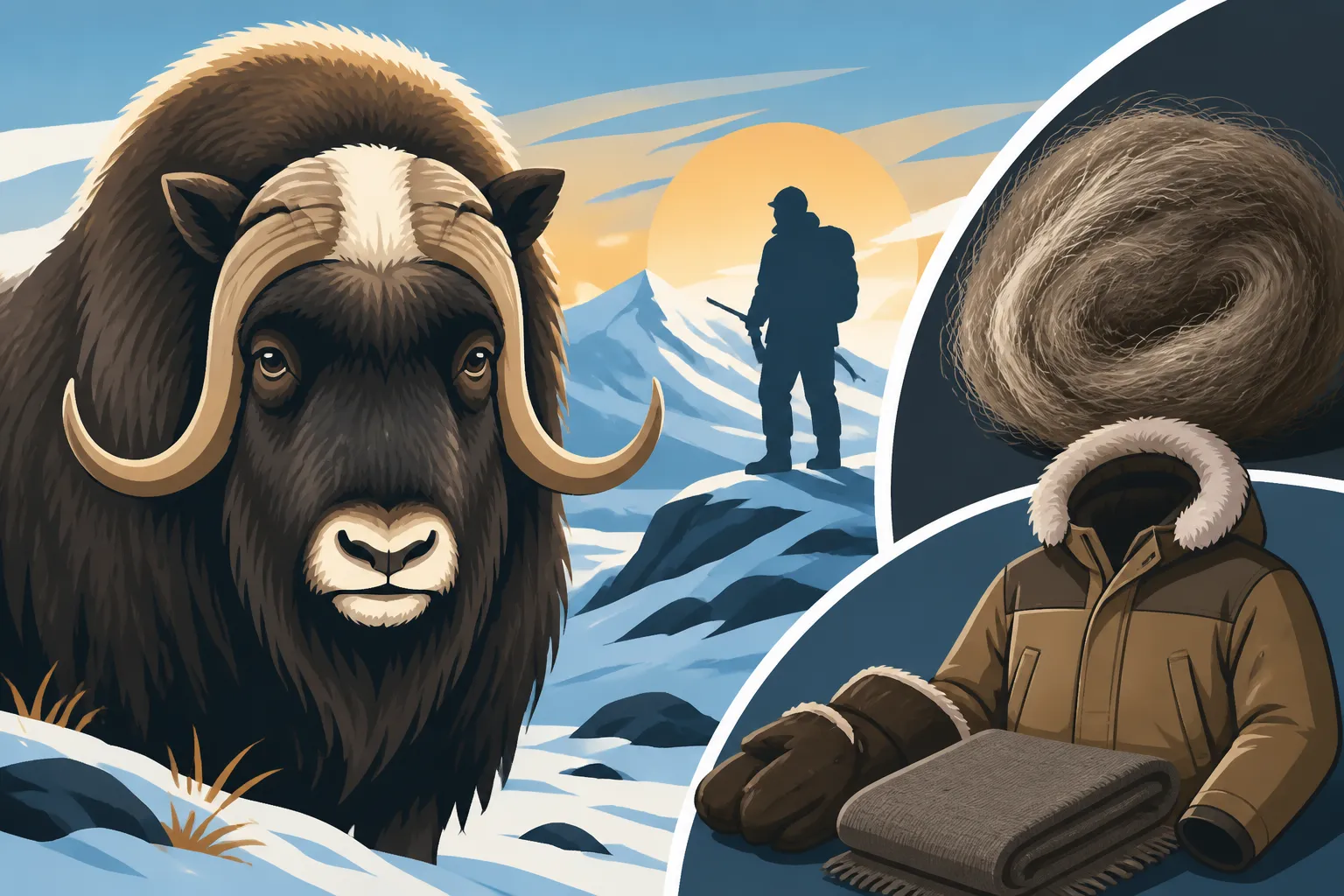
Imagine something that feels softer than cashmere, is eight times warmer than sheep's wool by weight, and won't shrink even when you accidentally toss it in the dryer. That's qiviut. It's the ultra-fine, downy undercoat of the muskox, a precious layer that grows close to their skin. Unlike sheep's wool, which has scales that interlock and can cause shrinking and itching, qiviut fibers are smooth. This smoothness contributes to its incredible softness and its non-felting properties.
The magic of qiviut's warmth comes from its structure. The fibers are not only incredibly fine but also hollow, allowing them to trap a huge amount of air. This trapped air creates an insulating barrier that prevents body heat from escaping and external cold from penetrating. Think of it like wearing a high-tech synthetic puff jacket, but entirely natural and utterly silent. It's lightweight, too, which is critical for an animal that needs to move and forage without expending excessive energy just to carry its insulation. When you hold a piece of raw qiviut, the lightness is almost shocking for something so warm.
How Muskox Produce and Maintain Their Winter Coat
Muskox are built for extremes, and their coat is a testament to that. They actually have a two-layer coat system that works in perfect harmony. The outer layer consists of long, coarse guard hairs that can sweep the ground, protecting the inner qiviut from snow, ice, and wind. These guard hairs are incredibly tough and form a shaggy, almost prehistoric-looking mantle. Below this protective shield lies the precious qiviut, growing densely during the short Arctic summer and fall, ready for the onslaught of winter.
As the seasons turn, the qiviut grows thick and dense, providing the essential warmth needed for survival. Then, as spring slowly creeps back into the Arctic, the muskox naturally begin to shed this undercoat. This isn't like a dog shedding fur all at once; it comes off in large, soft sheets and tufts, often snagging on rocks, willows, and tundra plants. It’s during this shedding period that humans can gently collect the fiber, which makes it a truly renewable and sustainable resource. The muskox themselves maintain their coat by rubbing against rocks and shrubs, helping to free the shedding qiviut and preparing for the lighter summer coat before the cycle begins anew.
Qiviut's Role in Muskox Winter Survival Strategies
The ability to generate and maintain such an effective insulating layer is perhaps the single most important adaptation that allows muskox to survive in places where most other large mammals would simply freeze.
Thermal Regulation in Extreme Arctic Conditions
Imagine temperatures plunging to -40°F with a wind chill that makes it feel like -70°F. This isn't an unusual day in some parts of Alaska where muskox roam, like on Nunivak Island or the North Slope. Thanks to their qiviut, these animals can maintain a stable core body temperature even when the surrounding air is unimaginably cold. The tightly packed, hollow fibers create such an efficient thermal barrier that very little body heat is lost. This isn't just about comfort; it's about survival. Every calorie saved from not having to generate extra heat through shivering is a calorie that can be used for movement, digestion, and staying alive.
This exceptional insulation also helps them in other ways. When heavy snow falls, the qiviut prevents it from melting against their body, meaning the snow acts as an additional insulating layer. They can bed down in snow drifts and remain remarkably well-insulated. This thermal efficiency is a game-changer when food is scarce, as they don't have to burn precious energy reserves just to stay warm. It's a key reason why you see muskox standing calmly in blizzards, seemingly unfazed by the fury of the elements. Understanding the conditions where these animals thrive can even help when using tools like GoHunt to scout hunting units.
Adaptations Beyond the Fleece: Behavioral and Physiological
While qiviut is undeniably the star of the show for winter survival, muskox have a suite of other adaptations that complement their incredible coat. Their physical build is a prime example: they are stocky, compact animals with relatively short legs, which minimizes their surface area-to-volume ratio, further reducing heat loss. Their sturdy hooves are also adapted for scraping through snow and ice to reach the meager vegetation below.
Behaviorally, muskox are fascinating. When threatened by predators, or even just for communal warmth during the fiercest storms, they often form a tight defensive circle with their calves in the center, presenting a wall of formidable horns to the outside. This isn't just for defense; it also helps to create a microclimate within the herd, shielding individuals from the worst of the wind and cold. You can see examples of this herd behavior when researching topics like Muskox Herd Structure and Rutting Bulls. Physiologically, they have a slower metabolism compared to some other Arctic ungulates, which means they require less energy to sustain themselves. Their digestive systems are also incredibly efficient, allowing them to extract maximum nutrients from low-quality forage like sedges, mosses, and willows found in their Muskox in Alaska: Nunivak, Nelson and the North Slope habitats. These combined adaptations are a masterclass in Arctic survival.
Human Uses and the Rarity of Qiviut
Given its astonishing properties, it's no surprise that qiviut is highly sought after by humans, but its scarcity and the unique way it's obtained make it a luxury fiber.
Harvesting and Processing the Precious Fiber
Unlike sheep, muskox are not shorn. Their qiviut is typically gathered in one of two ways. On muskox farms (often called muskoxen domestication projects), the qiviut is carefully combed from the animals during their natural spring shed. This gentle process yields clean, long fibers without harming the animal. In the wild, qiviut is collected from the tundra after the animals have shed it naturally. People walk the landscape, gathering the tufts and sheets that have snagged on vegetation. This makes it one of the most sustainable and ethical fibers in the world, as it's truly a gift from the animal.
Once collected, the raw qiviut must be "dehaired." This labor-intensive process separates the fine qiviut underwool from the coarser guard hairs that inevitably get mixed in during shedding or combing. The guard hairs are removed, leaving behind only the incredibly soft, downy qiviut ready for spinning into yarn. This meticulous hand-processing contributes significantly to its cost and explains why you don't see qiviut mass-produced. The resulting yarn is then used to create exquisite garments known for their warmth, lightness, and incredible softness.
The Value and Scarcity in the Commercial Market
The commercial market for qiviut is niche and high-end, and for good reason. Its unique qualities combined with its limited availability and labor-intensive processing make it one of the most expensive natural fibers on Earth. You won't find qiviut sweaters in every clothing store; instead, it's crafted into luxurious items like scarves, hats, and occasionally blankets that are designed to provide extreme warmth without bulk.
Organizations, often local cooperatives in Arctic communities, are key players in the qiviut market. They provide income for remote communities by transforming this wild fiber into finished goods, keeping traditional skills alive and supporting local economies. The value isn't just in the material itself, but in the story and the sustainability behind it. For those who hunt or simply admire these animals, understanding the cultural and economic significance of qiviut adds another layer of appreciation for the muskox. If you're researching a hunt or just curious about Alaskan wildlife, resources like GoHunt can often provide insights into the regions where these unique animals and their fiber are found.
Hunting Muskox in Alaska and Respecting Their Resilience
For hunters, the muskox represents one of Alaska's most unique and challenging big game opportunities. It's a hunt steeped in respect for an animal that has truly mastered Arctic survival.
Planning a Hunt for This Arctic Survivor
Hunting muskox in Alaska is primarily a draw permit hunt, meaning opportunities are limited and highly coveted. Areas like Nunivak Island and certain regions of the North Slope are known for their muskox populations. The process of obtaining a permit requires careful planning, often years in advance, and a thorough understanding of the regulations specific to these limited-entry hunts. You'll find details on these permits and their odds when looking at resources like Alaska Muskox Season Structure or Nunivak Island Muskox Permit Odds.
These aren't hunts for the faint of heart; they often involve remote travel, harsh weather, and physically demanding conditions. Hunters frequently work with licensed guides or transporters to access these distant hunting grounds. Whether you're researching the terrain of Arctic Slope Hunting in Unit 26A or the unique ecosystem of the Seward Peninsula Muskox and Caribou Country, it's vital to prepare for extreme cold and logistical challenges. Every aspect of the hunt, from gear to physical conditioning, must be geared towards an environment where warmth and survival are paramount, mirroring the very adaptations of the muskox itself. This is where researching with tools like GoHunt can really shine, giving you a comprehensive look at hunt unit specifics and historical success rates.
Appreciating the Adaptations from a Hunter's Perspective
As a hunter, encountering a muskox in its natural habitat offers a profound appreciation for its resilience. To see these animals, often in a tightly knit herd, enduring winds that would make you question your own sanity, truly underscores the effectiveness of their qiviut and their other survival strategies. It changes your perspective, making the hunt less about just the trophy and more about the experience of being in such an extreme environment alongside such a tough animal.
Understanding how a muskox survives also makes you a more informed hunter. Knowing how they conserve energy, how they use the terrain for shelter, and how their physical makeup allows them to thrive gives you a deeper respect for the animal you're pursuing. Whether you're observing how Muskox Bulls Fight in the Rut or simply watching a herd graze in a snow-blown valley, the lessons in natural resilience are endless. It's a testament to life’s tenacity in one of the planet's harshest environments. This deep understanding is part of what GoHunt aims to provide its users, beyond just harvest data.
Comparing Qiviut to Other Insulating Fibers
To truly grasp the magic of qiviut, it's helpful to see how it stacks up against other popular insulating materials. Each fiber has its strengths, but qiviut occupies a unique position.
| Feature | Qiviut | Merino Wool | Cashmere | Synthetic Fleece | Down (Feather) |
|---|---|---|---|---|---|
| Warmth-to-Weight | Exceptional (8x warmer than sheep's wool) | Very Good | Excellent | Good | Excellent (Highest) |
| Softness | Extremely soft (softer than cashmere) | Soft, can be itchy for some | Very soft | Soft, but can pill | Very soft (material surrounding) |
| Wet Performance | Maintains warmth when wet | Maintains warmth when wet | Can lose some insulating power when wet | Maintains warmth when wet | Loses significant warmth when wet |
| Shrinking | Does not shrink or felt | Prone to shrinking and felting if not treated | Minimal shrinking with proper care | Does not shrink | Not applicable (shell material is key) |
| Durability | Good, but delicate in garment form | Good | Moderate, prone to pilling | Good to excellent | Good (depends on shell fabric) |
| Cost | Very High | Moderate to High | High | Low to Moderate | High |
| Source | Muskox undercoat | Sheep's wool | Goat undercoat | Polyester | Ducks/Geese |
This table illustrates why qiviut holds such a special place. Its ability to provide extreme warmth while remaining incredibly soft and performing well even when damp sets it apart from many other fibers. It’s a testament to the muskox's incredible adaptation for winter survival in Alaska.
Disclaimer
This article is for general informational purposes only and does not constitute professional advice. Laws, prices and regulations vary by location and change over time. Consult a qualified professional for guidance on your specific situation.