What Moose Eat in a Ten-Year-Old Burn
It's incredibly frustrating when you're glassing a vast Alaskan landscape, trying to pinpoint where the moose are, and all you see is a patchwork of old timber, new growth, and those tell-tale blackened scars of past wildfires. You know moose love burns, but a "burn" isn't a single thing; it changes dramatically over time. If you’ve ever wondered what exactly draws a hungry bull moose to a ten-year-old burn scar, and how to read those revitalized landscapes to find them, you're in the right place. This guide will walk you through the specific plant life that flourishes in these areas, how moose utilize them for prime feeding, and how you can use this knowledge to your advantage.
The Transformative Power of Wildfire: A Moose Oasis in the Making
When a wildfire rips through an Alaskan forest, it can seem like total devastation. Trees are consumed, the ground is scorched, and the landscape is utterly transformed. But for a species like the Alaska-Yukon moose, these fires are not merely destructive events; they are often the catalyst for incredibly productive habitat that supports robust populations and impressive antler growth. The key is understanding the ecological timeline and knowing when a burn area truly becomes a magnet for these majestic animals.
Understanding the Post-Fire Succession Timeline
Immediately after a fire, the ground might seem barren, but it’s actually teeming with potential. The ash enriches the soil, releasing nutrients that were locked away in older vegetation. Sunlight, which was previously blocked by the dense canopy, now floods the forest floor. This sets the stage for a rapid succession of plant growth. In the first few years, you might see pioneer species like fireweed explode, but these aren't typically the primary moose browse that supports an entire population. It takes a little more time for the woody shrubs and deciduous trees that moose truly thrive on to establish themselves. This early stage is vital, though, as it prepares the ground for the succulent growth to come.
As the years tick by, different plants take hold, each contributing to the evolving ecosystem. You'll notice certain species aggressively colonizing the burn, outcompeting others, especially those that need more shade. This ecological dance is critical because it dictates what kind of menu will be available for moose. Thinking about this succession is key when you're trying to figure out if a burn is "hot" or not for moose. It’s not just about if a fire happened, but when it happened. A two-year-old burn might offer some tasty morsels, but it’s unlikely to sustain the sheer volume of high-quality forage that moose need, especially larger bulls preparing for the rut.
The "Ten-Year Sweet Spot" for Moose Forage
From a moose's perspective, a burn scar really starts to hit its stride around the ten-year mark, sometimes stretching out to fifteen or twenty years. This period is often considered the "sweet spot" because it represents a stage where the most valuable browse species have reached an optimal size and density. Young willows, birch, and aspen have had enough time to grow beyond mere saplings, developing into sturdy, multi-stemmed bushes and small trees. These plants are packed with nutrients, and their growth form—often dense and multi-branched—provides an abundance of palatable twigs and leaves at a height easily accessible to browsing moose.
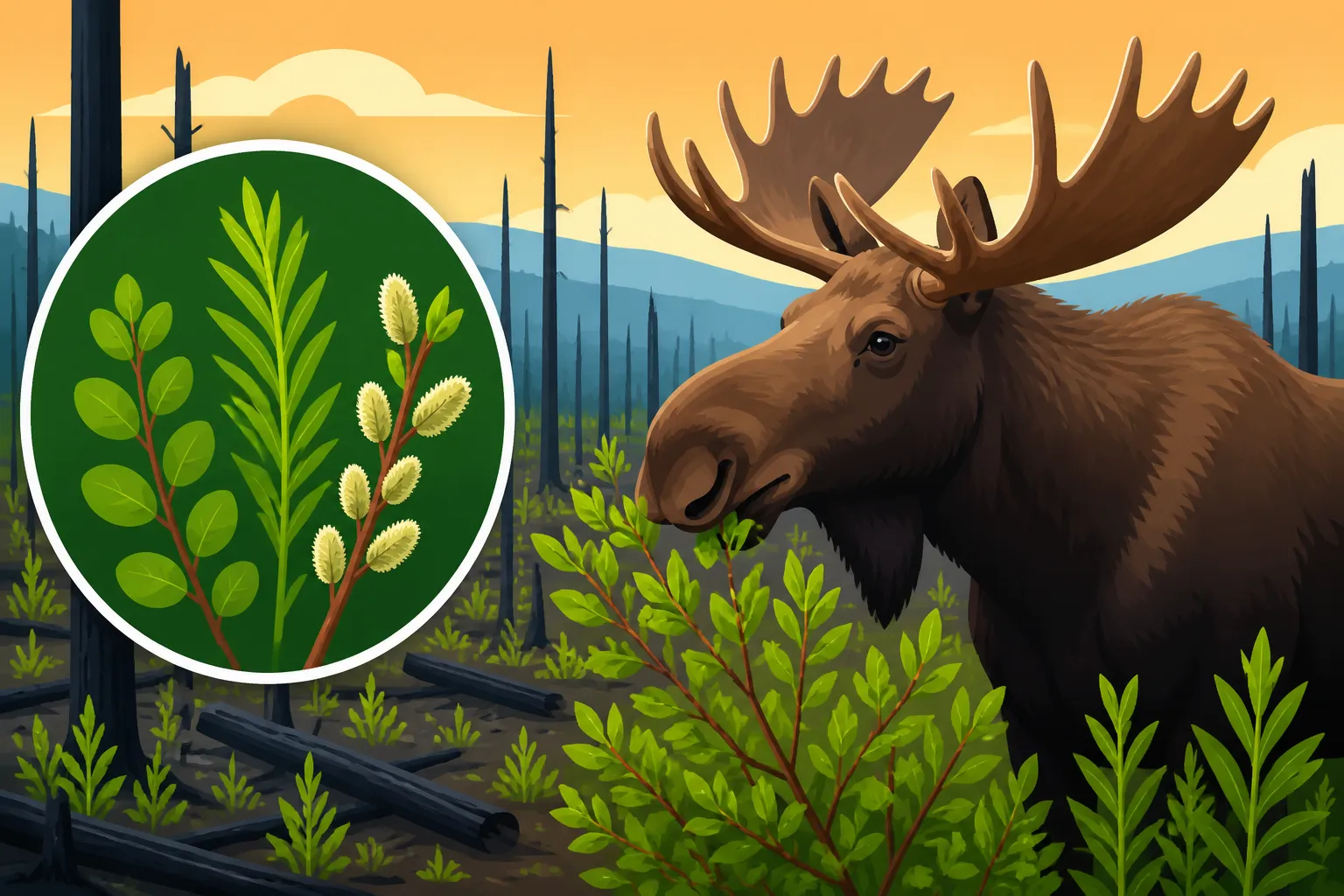
Imagine walking through a burn that’s about ten years old. Instead of charred stumps and sparse grass, you'll likely find yourself pushing through thickets of head-high willows, interspersed with stands of young birch and aspen. This dense, regenerating cover offers not only a prime food source but also crucial concealment for moose, making it an ideal place for them to feed without feeling exposed. The combination of abundant, nutritious forage and protective cover makes these ten-year-old burns incredibly attractive to moose, from cows with calves to massive bulls. If you're trying to figure out What Moose Eat in a Ten-Year-Old Burn, you'll find it's a gourmet buffet compared to older, more mature forests.
Key Browse Species Thriving in a Regenerated Burn
So, what exactly are these delectable dishes on the moose’s post-fire menu? It’s not just random greenery; specific plants absolutely flourish in the conditions created by a ten-year-old burn, offering the critical nutrition necessary for a species that can grow antlers over 60 inches wide. Understanding these key species is like having a secret decoder ring for identifying prime moose country.
Willow, Birch, and Aspen: The Moose Mainstays
Hands down, willows are the undisputed champions of moose browse in Alaska, and they absolutely explode in burn scars. After a fire clears out the older, shading trees, willow seeds find fertile ground, and existing rootstock quickly resprouts with incredible vigor. A ten-year-old burn often boasts dense stands of willow, with stems ranging from knee-high to well over a moose’s head, providing an enormous quantity of highly palatable and nutritious twigs. Moose will strip the leaves and tender new growth, especially in summer, but their diet heavily relies on the woody stems throughout the year. The sheer volume of this growth in a burn is often why Willow Regrowth and Moose Numbers are so closely linked.
Birch (paper birch, dwarf birch, resin birch) and aspen also make up a significant portion of a moose's diet, especially in these regenerating areas. Like willow, they are pioneer species that thrive in the sunlight-rich, disturbed soil of a burn. Young birch and aspen shoots are highly digestible and offer essential nutrients. You'll often find moose browsing on the young suckers of aspen that emerge from the roots of fire-killed trees, creating dense stands of highly accessible forage. While less critical than willow, these species add vital diversity to the moose's diet, ensuring a broad spectrum of nutrients.
The Understory Buffet: Fireweed, Cranberry, and More
Beyond the woody browse, the understory of a ten-year-old burn also offers a variety of opportunistic plants that contribute to a moose’s diet. Fireweed, for example, is one of the first plants to colonize burned areas, and while it's more prominent in the first few years, it can persist and offer substantial forage in subsequent years, particularly its leaves. While it won't sustain a moose alone, it adds to the diversity of the summer diet.
You'll also find various cranberry species, blueberry, and other shrubs that produce berries. While these aren't the primary caloric drivers, they do provide important vitamins and minerals, especially in late summer and fall. Moose will often feed on the leaves of these plants, not just the berries. Certain sedges and grasses can also thrive in the open, sun-drenched areas of a burn, providing a supplemental food source. The beauty of a ten-year-old burn is that it often represents a mosaic of different successional stages within itself, offering varied forage across different pockets, making it an incredibly rich environment for moose.
Here’s a quick overview of some common browse in a ten-year-old burn:
| Browse Species | Primary Importance | Growth Form in Burn | Moose Preference |
|---|---|---|---|
| Willow | High-value woody browse, year-round | Dense, multi-stemmed shrubs (2-15 ft tall) | Very High |
| Birch | Woody browse, leaves, bark | Young trees, suckers, shrubs (5-20 ft tall) | High |
| Aspen | Woody browse, suckers, bark | Dense clonal stands (5-20 ft tall) | High |
| Fireweed | Succulent leaves, early colonizer | Herbaceous stalks (2-8 ft tall) | Moderate (especially leaves) |
| Cranberry | Leaves, berries | Low-growing shrubs | Moderate |
| Blueberry | Leaves, berries | Low-growing shrubs | Moderate |
Strategies for Locating Moose in Burn Scars
Finding moose in these expansive, regenerated burn areas isn't always as simple as just "driving to the burn." You need a strategy to narrow down vast tracts of land. The landscape of a ten-year-old burn, while rich, can still be incredibly dense and challenging to navigate. Successfully locating moose often comes down to leveraging modern scouting tools and combining that with solid on-the-ground observation skills.
Interpreting Satellite Imagery and Burn Maps
Before you ever set foot in the field, satellite imagery and specialized burn maps are your best friends. Tools like GoHunt or similar mapping platforms often include layers that show past wildfire perimeters and their ages. By focusing on burns within the 8- to 15-year range, you can quickly identify high-probability areas for moose. What you're looking for on satellite imagery isn't just the burn itself, but specific features within the burn.
Look for areas where the burn scar intersects with or is adjacent to old growth timber, especially spruce forests. Moose often use these mature stands for bedding cover, especially in winter or during hot summer days, but they will venture into the burn for feeding. Also, pay close attention to water sources – small lakes, beaver ponds, or slow-moving streams winding through the burn. Moose are never far from water. When Scouting a Unit From Satellite Imagery Before You Fly, specifically look for the lighter green hues indicating vigorous new growth within the darker burn perimeter, and use elevation data to find benches or slight rises where moose might bed. Don't be afraid to mark potential glassing knobs or travel corridors you identify from the map; this can save you valuable time in the field.
On-the-Ground Reconnaissance: Reading Sign and Topography
Once you're in the field, it's time to become a detective. A ten-year-old burn will have plenty of moose sign if it's being utilized. Look for fresh tracks in muddy areas near water, or along game trails that cut through the dense willow thickets. Droppings (pellets) are another clear indicator; fresh, moist pellets mean a moose has been through recently. Perhaps the most obvious sign, however, is the browse itself. Moose are messy eaters, and they will leave behind tell-tale ragged breaks on willow, birch, and aspen stems where they’ve torn off leaves and twigs. In a highly used area, you'll see a distinct browse line, where all the palatable vegetation up to a moose's reach has been heavily fed upon.
Topography also plays a critical role, even within a relatively flat burn. Look for slight depressions, drainage bottoms, or small hummocks. Moose, especially large bulls, often seek out these micro-features for bedding or thermal cover. Understanding Old Burns and Where Moose Feed in Them requires you to consider not just the plants, but how the land itself directs moose movement and provides security. Even small elevation changes can offer better vantage points or protection from wind and sun. When hunting in dense areas, don't just walk through; stop often, listen, and glass every opening. Moose can disappear remarkably quickly even in relatively sparse cover.
Seasonal Variations and Hunter Tactics in Burned Areas
The appeal of a ten-year-old burn isn't static; it changes with the seasons, influencing where moose feed, bed, and even rut. Adapting your hunting tactics to these seasonal shifts is crucial for success, ensuring you're in the right place at the right time.
Summer Forage and Early Season Opportunities
During the long days of summer and early fall, a ten-year-old burn is an absolute paradise for moose. The regenerating willows, birch, and aspen are bursting with succulent, protein-rich leaves and new growth. This is when moose pack on the pounds, and bulls grow impressive antlers. You'll often find them feeding extensively during the cooler parts of the day—early morning and late evening—and then bedding down in the denser pockets of cover within the burn, or sometimes just outside it in mature timber, during midday heat.
For early season hunters, these burns present fantastic opportunities. Moose are often less wary, focused intently on feeding. Spot-and-stalk can be effective if you can get a vantage point, but often it requires still-hunting slowly through the thickets, paying close attention to the wind. Remember, the goal for the moose during this time is maximum calorie intake to prepare for the rigors of winter and the upcoming rut. Therefore, finding the densest, most nutritious patches of browse within the burn is often the key to locating animals. Understanding What Moose Eat in a Ten-Year-Old Burn can help you narrow down your search in these prime feeding conditions.
Fall Rutting Grounds and Winter Survival
As fall approaches and the leaves begin to turn, a ten-year-old burn can transform into prime rutting habitat. The dense cover and abundant forage make it an ideal place for bulls to establish territories and for cows to gather. You’ll hear and see more activity as bulls begin to Calling Bull Moose During the Alaska Rut and challenge each other. The thick vegetation provides concealment for both bulls and cows during courtship and sparring. Identifying travel corridors between dense feeding areas and bedding thickets within the burn becomes critical during this time, as moose will be moving more actively.
Once winter descends, these burn areas still offer crucial forage, particularly the woody stems of willow and birch that remain accessible above the snow line. While moose might seek out more protective timber during the harshest storms, they will consistently return to the burns to browse. A ten-year-old burn's vigorous regrowth ensures a higher density of available winter browse compared to older, more mature forests. For hunters targeting late-season opportunities, understanding how moose utilize these areas for Winter Range and Moose Survival in Interior Alaska can be key. The balance of plentiful, nutrient-rich browse and available cover, even light cover, makes the ten-year-old burn an incredibly resilient and productive habitat throughout the year.
Disclaimer
This article is for general informational purposes only and does not constitute professional advice. Laws, prices and regulations vary by location and change over time. Consult a qualified professional for guidance on your specific situation.