Average Antler Spread on a Mature Alaska Bull
One of the most nerve-wracking moments for any Alaska moose hunter is staring through your optics at a bull, heart pounding, trying desperately to figure out if it's legal before the light fades or it steps into the brush. That quest for a "mature" bull, particularly one with a decent spread, is a common one, but what does "average" even mean in the Last Frontier? This guide is going to break down what an average antler spread looks like for a truly mature Alaska bull and how to develop your eye for judging it accurately in the field, helping you avoid mistakes and focus on ethical hunting.
The Elusive Definition of a "Mature" Alaska Bull
Before we can even talk about average antler spread, we really need to nail down what "mature" means when we're talking about an Alaska bull moose. It’s not just about a big rack; it’s about the whole package: age, body size, and the overall development of its antlers. Many hunters dream of the massive 60-inch-plus bulls you see in magazines, but the reality is that those giants represent the absolute top tier, not the average for a mature animal. Understanding the typical progression of a bull's life can help temper expectations and guide your hunt effectively.
Age Classes and Antler Development
Moose grow their antlers annually, and their rack can tell you a lot about their age and health. A yearling bull might just have "spike-fork" antlers – a single spike or a fork on each side, often quite small. These are easily passed over. As a bull ages, its antlers become more substantial, developing wider palms and more points. A bull in its prime, usually between 5 and 9 years old, will typically have its largest and most impressive antlers. Beyond that, an older bull, say 10 or 11 years old, might actually see a decline in antler mass or even spread, sometimes developing more spindly or "cactus" racks as its body dedicates resources elsewhere. So, "mature" often refers to that prime window where antler growth is maximized.
It's crucial to understand these age classes, especially when you're hunting in areas with specific antler restrictions, such as "spike-fork" only, or specific brow tine counts. The legal definition of a bull often hinges on these details, not just spread. For example, some units might require three brow tines on one side, or a specific spread. Knowing the general progression helps you assess more than just the width, giving you a more complete picture of the animal in front of you. When you’re out there, observing several bulls of different ages throughout your hunt, even if they're not what you're after, can greatly sharpen your judgment.
Body Size as an Indicator of Maturity
While antlers are the most obvious indicator of a bull, don't underestimate the importance of body size. A truly mature bull will have a massive body, often appearing much deeper through the chest and shoulders than a younger animal. Their neck will be thick and powerful, blending almost seamlessly into their shoulders, especially during the rut when they're swollen with testosterone. Young bulls, even those with decent antler growth for their age, will often look more "leggy" or lanky, with a more defined neck that appears separate from their shoulders.
When you're trying to quickly assess a bull at a distance, its overall body mass can be a powerful clue. Imagine a young bull as a teenager – tall and gangly – versus a mature bull as a heavyweight boxer – solid and imposing. The sheer bulk of a mature bull also impacts how it moves, often with a more deliberate, heavy step compared to the more agile movements of a younger animal. This holistic view is vital, particularly when trying to determine if a bull meets legal requirements like the Alaska 50-Inch Moose Spread Rule, as antler size often correlates with overall body development. A robust body usually signals an animal that has had good nutrition and has reached its physical peak.
Factors Influencing Antler Spread Beyond Age
It's easy to assume that all mature bulls will have a similar antler spread, but that's simply not true. Just like human genetics influence height and build, a variety of factors can significantly affect the size and configuration of a bull moose's antlers, leading to a wide range of spreads even among bulls of the same age class. This variability is what makes field judging so challenging and why hunters often lament missed opportunities or close calls.
Genetics, Nutrition, and Habitat Quality
Genetics play a huge role in antler potential. Some moose simply carry the genes for wider, more palmated racks, while others, even with perfect nutrition, may never grow a truly exceptional spread. This is why you might see a smaller, younger bull with a surprisingly good spread for its age, or an older bull that just never developed that iconic wide rack. It's a genetic lottery, to some extent.
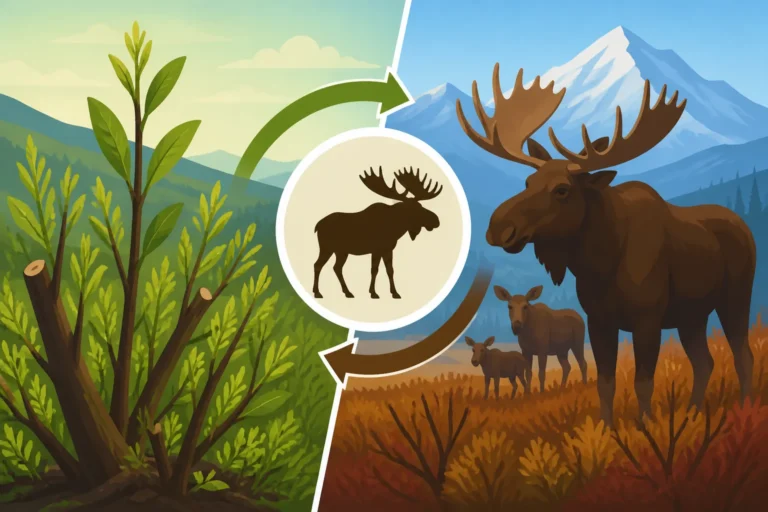
Beyond genetics, nutrition is paramount. Moose that live in areas with abundant, high-quality forage, especially willows and other browse rich in minerals, tend to grow larger antlers. Think about the rich habitat found in some of Alaska's prime moose country, like the large burn scars that offer lush regrowth. Moose feeding in these areas often demonstrate superior antler development. Conversely, bulls in poorer habitat or those that have endured severe winters might have smaller, less impressive antlers, even if they are mature. A single harsh winter can set back antler growth for a year or two, and prolonged poor conditions can lead to consistently smaller racks in a population. Many hunters use resources like GoHunt to research game management units and understand which areas historically produce larger animals, often correlating with better habitat. Understanding the Moose Habitat in Alaska Burn Scars can give you an edge in finding these healthy, well-fed animals.
Geographic Variation in Antler Size
Alaska is enormous, and the landscape varies dramatically from the coastal rainforests to the interior boreal forests to the arctic tundra. This geographic variation significantly impacts moose populations and their antler development. The general rule of thumb is that the largest Alaska-Yukon moose, those truly massive animals, tend to come from interior Alaska. These regions, with their vast expanses of willow flats and mixed forests, provide the ideal conditions for moose to grow to their maximum potential, both in body size and antler spread. Areas like the Kenai Peninsula, while having dense moose populations, might typically produce bulls with good mass but perhaps not the extreme spreads seen further north.
For instance, a mature bull from the central interior might regularly hit the 55-60 inch mark, while a mature bull from a more marginal habitat area might top out closer to 45-50 inches on average. It's not that the latter isn't a mature, impressive animal, but the genetic and environmental ceiling for antler growth can be different. This makes it challenging to apply a single "average" figure across the entire state. When you're researching potential hunting areas, it's worth digging into local harvest reports to get a better feel for what constitutes a good, mature bull in that specific unit. You can also glean a lot from local outfitters or experienced resident hunters who spend years in a particular region.
Estimating Antler Spread in the Field
Okay, let's get to the nitty-gritty: how do you actually judge that antler spread when a bull is standing a few hundred yards away, often obscured by brush or at an awkward angle? This is where experience, a few trusted tricks, and a good dose of patience come in. It's often said that if you have to guess, it's probably not big enough, especially if you're chasing that magical 50-inch mark.
Using Your Rifle as a Measuring Stick
One of the most classic and effective methods for field judging a bull moose's spread is to use your rifle as a known reference point. Before your hunt, take the time to measure your rifle from the muzzle to the end of the stock. Let's say your rifle measures approximately 42 inches. Now, practice holding your rifle horizontally and estimating how many "rifle lengths" it takes to cover a certain distance.
When you spot a bull, bring your rifle up and sight down the barrel. If the bull's antlers extend significantly beyond the length of your rifle, you're likely looking at a bull approaching or exceeding the 50-inch mark. If the antlers appear to be about one and a half times the length of your rifle, you're getting into some serious spread. This method, detailed in articles like Measuring a 50-Inch Spread Against Your Rifle, isn't perfect, but it provides a tangible, consistent reference that can be quickly employed in the field. Practice this at home by measuring various objects and then estimating them with your rifle. The more you do it, the more accurate you'll become under pressure.
Relative Proportions: Body to Antler Ratio
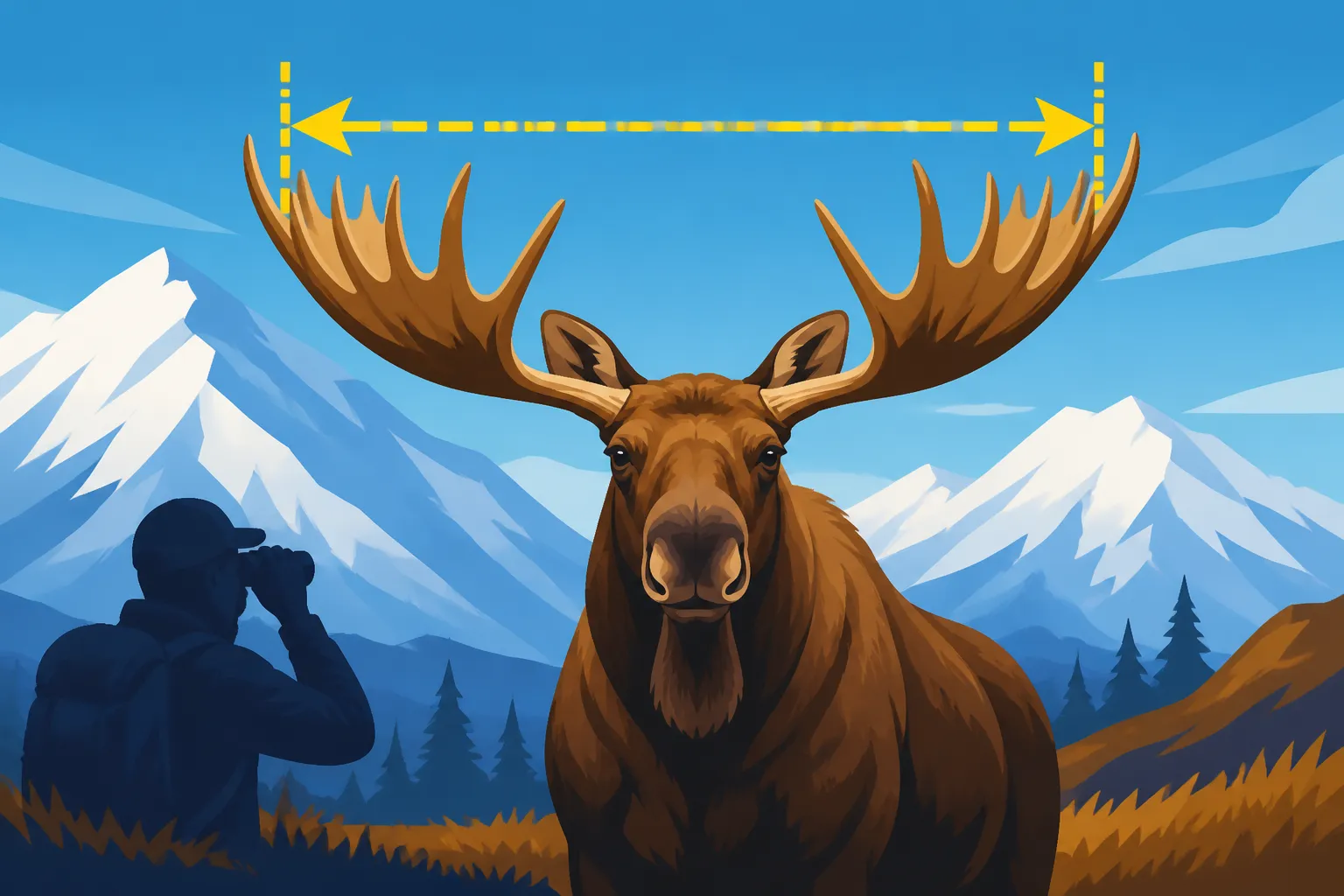
Another crucial aspect of field judging is looking at the relative proportions of the bull's body to its antlers. A truly wide-antlered bull will often appear to have antlers that are significantly wider than its body. The distance between the tips of its ears can be a good starting point for comparison, as this is typically around 20-24 inches for a mature bull. If the antler spread looks to be at least twice the width of its ears, you're in the ballpark for a good spread.
Also, pay attention to how far the antler tips extend beyond the bull's ears when it's facing you head-on. For a 50-inch bull, those tips will often extend well past the ears. For a truly massive bull, the tips can extend dramatically beyond the shoulder width. This visual comparison requires practice and careful observation, often through a spotting scope or good binoculars. Remember, antlers can trick you with foreshortening, so try to get multiple angles if possible. A bull facing directly towards or away from you can make the spread seem smaller than it is, while a quartering angle can sometimes exaggerate it.
Beyond Spread: Other Markers of a Legal Bull
While antler spread is a primary indicator of a mature and often legal bull in many Alaska hunt units, it's not the only criterion. Alaska has a variety of antler restriction rules, and focusing solely on spread can lead to misidentification and, potentially, an illegal harvest. A truly seasoned hunter understands that looking at the whole picture is what really counts.
Brow Tines and Palmation
Many units in Alaska have regulations that require a certain number of brow tines, or specific configurations of palmation, for a bull to be legal. For example, some units might require a bull to have at least four brow tines on one side, or antlers with a minimum of three points on one side. A bull with an impressive spread but lacking the required brow tines would be illegal in such an area. It’s absolutely critical to know the specific regulations for the unit you are hunting. Ignorance of the law is never an excuse.
Palm width and overall mass also contribute to the "quality" of a bull, even if not explicitly defined by regulations beyond spread. A bull with deep, wide palms and many points often signifies a healthy, prime animal, regardless of its exact spread measurement. These features contribute to the overall visual appeal and weight of the rack. Learning to count Brow Tine Counts on Alaska Antler-Restricted Bulls accurately in the field, often with the bull moving, is a skill that takes considerable practice and good optics.
The "Spike-Fork" Distinction
Some harvest tickets or registration hunts specify a "spike-fork" antler configuration as a legal bull. This means that a bull must either have only a single unbranched spike on each side, or have one or more branches forming a fork or point on each side. The nuance here is critical. A bull with a main beam and then only one branch, thus forming a "fork," could be legal, while a bull with more than one branch on a side might not be, depending on the exact wording of the regulation. Conversely, if you're looking for a mature bull that isn't spike-fork, understanding this distinction means you're passing up younger animals.
This rule is designed to protect younger bulls and allow them to mature, increasing the chance of larger, older bulls in the population. It's a common source of confusion for new hunters, and even experienced ones can misjudge a quickly moving animal or one partially obscured by cover. Always double-check the regulatory definitions for your specific hunt area. You can find comprehensive details in the Alaska hunting regulations booklet, which is an essential read before any hunt. Many hunters consult online resources like GoHunt to cross-reference regulations and better plan their approach.
General Average Antler Spread for a Mature Bull
So, what’s the actual average? For a truly mature Alaska-Yukon bull moose in its prime (typically 5-9 years old) and in good habitat, you can expect an average antler spread to be in the range of 50 to 60 inches. This is a broad range, to be sure, reflecting the variations discussed above. Bulls pushing 65+ inches are exceptional trophies, while those in the 45-inch range might still be legal and mature, just perhaps not as genetically inclined or in as prime habitat.
It's important to differentiate between "average" and "legal minimum." Many antler-restricted units use the 50-inch rule as a minimum legal requirement. While a 50-inch spread is certainly a respectable bull, it represents the lower end of what a prime-age bull is capable of producing in good conditions. Hunters often aim for something larger, but ultimately, a legal bull in your freezer is the goal.
Here's a quick reference table to help visualize these categories:
| Age Class | Antler Spread (Approximate) | General Characteristics | Hunting Considerations |
|---|---|---|---|
| Yearling (1-2) | < 30 inches | Spikes, small forks, thin beams, small body | Generally protected, unless "spike-fork" legal; pass for maturity |
| Young (3-4) | 30-45 inches | Developing palms, short tines, slender body, less mass | Legal in some units, but often passed to grow; good for meat |
| Mature (5-9) | 50-60 inches | Wide palms, multiple points, thick beams, massive body, pronounced dewlap | Prime target for most hunters; check specific regulations (brow tines, spread) |
| Exceptional (8+) | 60+ inches | Very wide, deep palms, many long tines, immense body, often very dominant bull | Rare, highly sought-after trophy; requires significant skill and luck |
| Older (10+) | Varies, sometimes smaller | Can be wide but sometimes less mass, more broken tines, or "cactus" racks; very large body | Still very large body, but antlers might be past peak; check for legality carefully |
Ultimately, becoming proficient at judging antler spread and other legal requirements comes down to practice. Spend time behind your binoculars and spotting scope, observing every moose you see. Study photos, watch videos, and discuss judging techniques with experienced hunters. The more time you spend looking at moose, the better you’ll get, ensuring that when the moment of truth arrives, you're confident in your decision. Whether you're planning a trip to the Kenai, scouting the interior, or preparing for a fly-in hunt, developing your eye for moose is an ongoing process. Understanding When Moose Seasons Open Across Alaska Units for your chosen area is the first step, then it's all about diligent scouting and patient observation.
Disclaimer
This article is for general informational purposes only and does not constitute professional advice. Laws, prices and regulations vary by location and change over time. Consult a qualified professional for guidance on your specific situation.